
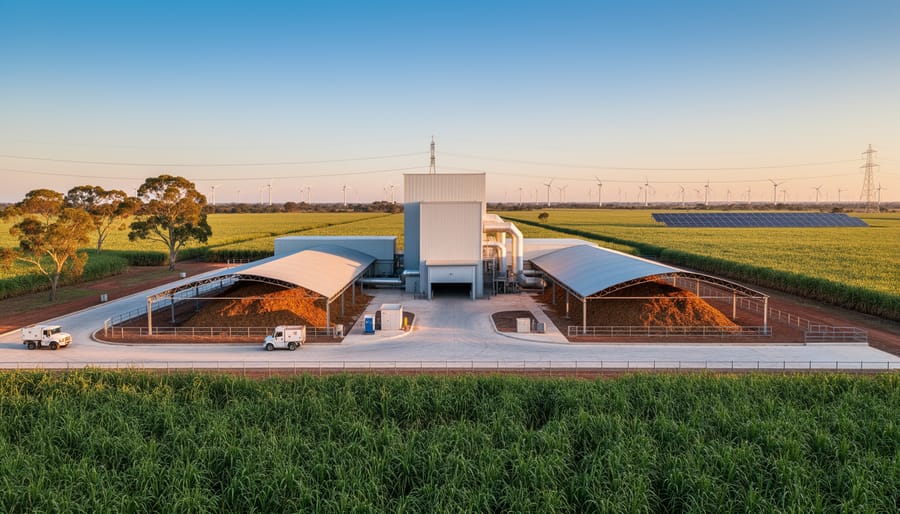
Australia’s energy future is being rewritten by an unlikely hero: organic waste transformed into reliable power. While solar panels sit idle at night and wind turbines fall silent on still days, bioenergy facilities across the country are converting everything from sugar cane bagasse to municipal waste into round-the-clock electricity, proving that energy security and environmental responsibility aren’t opposing forces.
The bioenergy market operates on a beautifully simple principle: turn yesterday’s problem into tomorrow’s solution. What once filled landfills now fuels homes, businesses, and entire regional communities. This transformation isn’t just environmentally elegant; it’s economically compelling. As global energy markets swing wildly and geopolitical tensions threaten supply chains, Australia’s homegrown bioenergy sector offers something increasingly precious: independence.
Consider Queensland’s sugar mills, which now generate enough surplus electricity from crushing season waste to power thousands of homes. Or South Australia’s organic waste facilities converting household scraps into grid-ready energy. These aren’t distant possibilities or government pipe dreams. They’re operating realities, creating jobs in regional areas while slashing emissions and strengthening our energy resilience.
The dynamics driving this market reveal a rare convergence where policy incentives, technological maturity, and environmental necessity align. Understanding these forces matters because bioenergy represents more than an alternative fuel source. It’s a practical pathway to energy sovereignty, regional prosperity, and measurable climate action, proving that Australia’s transition to renewable energy can be both ambitious and achievable.
The Push and Pull: What’s Driving Bioenergy Markets Today
Why Energy Markets Are Finally Taking Bioenergy Seriously
The energy landscape is experiencing a remarkable transformation, and bioenergy is finally stepping into the spotlight it deserves. For years, this renewable resource remained overshadowed by solar and wind, but the tide has decisively turned. Three powerful forces are reshaping how markets view bioenergy’s potential.
First, climate commitments are no longer just talk. Australia’s pledge to achieve net-zero emissions by 2050 has created genuine urgency among energy providers and investors. Bioenergy offers something unique: the ability to generate reliable baseload power while actively reducing emissions. Unlike intermittent renewables, it keeps the lights on when the sun sets and the wind drops, making it invaluable for grid stability.
Second, recent fossil fuel price volatility has been a wake-up call. The rollercoaster ride of oil and gas prices exposed our vulnerability to global market shocks. Locally sourced biomass from agricultural waste, forestry residues, and urban organic matter offers price stability that imported fuels simply cannot match. Regional communities particularly appreciate this energy independence, keeping dollars circulating within Australian economies rather than flowing overseas.
Third, technological improvements making bioenergy competitive have dramatically changed the economics. Advanced gasification systems, more efficient anaerobic digesters, and smarter feedstock processing mean bioenergy projects now deliver compelling returns on investment. What once required heavy subsidies increasingly stands on its own merits, attracting private capital and institutional investors who previously dismissed the sector. The market has finally recognized that bioenergy isn’t just environmentally responsible; it makes solid business sense.
Australia’s Unique Position in the Global Bioenergy Trade
Australia sits on a goldmine of bioenergy potential that most of us haven’t fully recognised yet. With vast agricultural lands producing millions of tonnes of crop residues annually, abundant forestry waste, and rapidly growing urban organic waste streams, we’re uniquely positioned to become a significant player in the global bioenergy market.
Consider Queensland’s sugar cane industry, which generates approximately 10 million tonnes of bagasse each year. Forward-thinking mills are already converting this waste into electricity and biofuels, but there’s enormous room for expansion. Similarly, Western Australia’s wheat belt produces straw that could power regional communities while creating new income streams for farmers.
Our livestock sector presents another opportunity. With one of the world’s largest cattle populations, Australian feedlots and dairies are increasingly capturing methane emissions to generate renewable energy, turning an environmental liability into a valuable resource.
What sets Australia apart is our stable political environment, advanced agricultural practices, and existing export infrastructure. As Asian nations pursue decarbonisation goals, they’re looking for reliable bioenergy partners. By strengthening our bioenergy supply chains, we can meet this growing demand while creating regional jobs and reducing our own carbon footprint. The opportunity is here now for Australia to lead.
From Farm Waste to Energy Independence: Real Stories Making It Happen
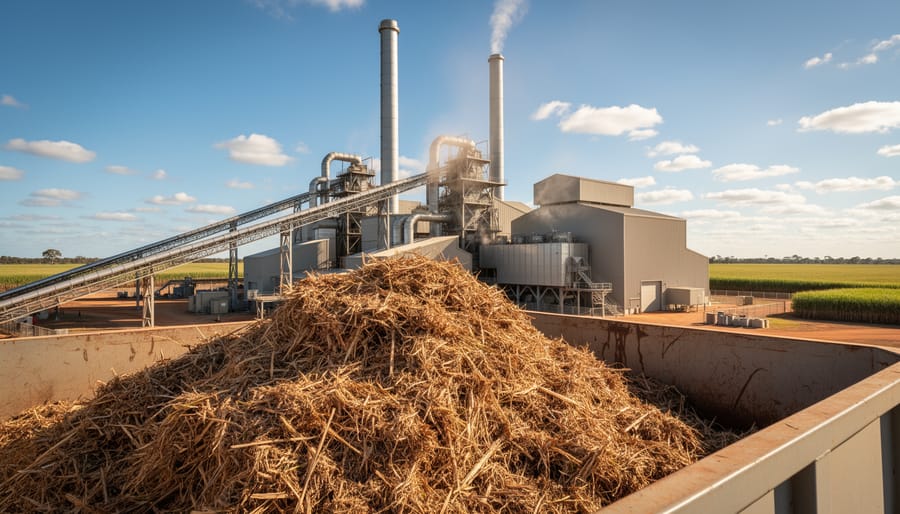
The Queensland Sugarcane Mill Powering Its Own Town
In the heart of Queensland’s sugarcane country, Proserpine Mill demonstrates how agricultural waste can become a powerful energy asset. This family-owned operation has transformed bagasse, the fibrous remnant left after crushing sugarcane, into a reliable electricity source that powers not just the mill itself, but provides enough surplus energy to light up homes throughout the local community.
The numbers tell an impressive story. During crushing season, which runs from June to November, the mill generates approximately 30 megawatts of electricity from bagasse alone. After meeting its own substantial energy needs, the facility exports around 12 megawatts back to the grid, enough to power roughly 10,000 homes. This means what was once considered waste material now underpins the region’s energy security.
The economic benefits extend well beyond cheaper electricity bills. The mill employs over 200 workers during peak season, with many positions directly linked to the bagasse-to-energy operations. Local suppliers, maintenance contractors, and transport operators all benefit from this circular economy model, creating a ripple effect throughout the region.
What makes this approach particularly brilliant is its timing. The crushing season aligns perfectly with Queensland’s winter months when residential heating demands increase. This natural synchronization means the community receives clean, locally-generated power precisely when it’s needed most, reducing strain on the broader electricity network and demonstrating how agricultural regions can achieve genuine energy independence through smart use of available resources.
Melbourne’s Waste-to-Energy Revolution
Melbourne is leading the charge in transforming what was once destined for landfill into valuable energy resources. The city’s waste-to-energy initiatives showcase how urban centres can tackle two pressing challenges simultaneously: mounting waste management costs and the need for renewable energy sources.
At Melbourne’s organic waste processing facilities, food scraps from households and businesses are no longer seen as rubbish but as fuel. Through anaerobic digestion, microorganisms break down organic matter in oxygen-free environments, producing biogas that generates electricity and heat for thousands of homes. One facility alone diverts over 120,000 tonnes of organic waste annually from landfills while powering local communities.
The beauty of this system lies in its circular economy approach. Restaurants contribute their kitchen waste, which becomes renewable energy, while the nutrient-rich digestate left over returns to agricultural lands as high-quality fertiliser. This closes the loop beautifully.
Local councils have embraced the revolution too, rolling out purple-lidded organics bins across suburbs. Residents appreciate knowing their banana peels and coffee grounds are doing meaningful work rather than producing methane in landfills. It’s a fair dinkum example of how everyday actions contribute to energy security, proving that sustainable solutions can be both practical and profitable whilst strengthening Melbourne’s resilience against energy market fluctuations.
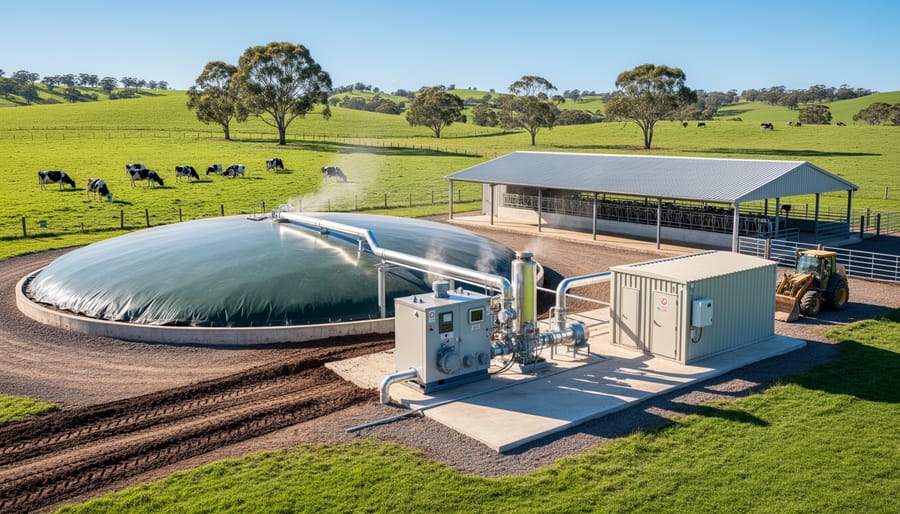
The Dairy Farm That Cut Energy Costs by 70%
In rural Victoria, Glenview Dairy transformed their bottom line by turning waste into watts. Owner Sarah Mitchell watched her energy bills plummet by 70% after installing an anaerobic digester that converts cow manure into biogas. The system now powers the entire milking operation, refrigeration units, and even heats water for cleaning equipment.
What started as a concern about rising electricity costs became an environmental success story. The 300-cow operation diverts methane emissions that would otherwise escape into the atmosphere, whilst producing enough renewable energy to offset 150 tonnes of carbon annually. Sarah’s experience demonstrates how agricultural businesses can strengthen their energy independence whilst boosting profitability. The digester paid for itself within five years, and the nutrient-rich byproduct serves as premium organic fertiliser for their pastures. It’s a fair dinkum win for both the farm’s finances and the environment, proving that practical sustainability makes good business sense.
How Bioenergy Markets Strengthen National Energy Security
Breaking Free from Import Dependence
Australia has traditionally relied heavily on imported fossil fuels, sending billions of dollars offshore each year while remaining vulnerable to global price swings and supply disruptions. Bioenergy offers a genuine alternative, tapping into resources we already have in abundance right here at home.
From agricultural residues like sugarcane bagasse to forestry waste and organic materials from cities and towns, Australia produces enormous quantities of biomass that can be transformed into reliable energy. When we harness these domestic resources, energy dollars circulate within our communities rather than disappearing overseas. Local farmers gain new revenue streams, regional processing facilities create employment, and the economic benefits multiply across the supply chain.
This shift isn’t just good for the economy; it’s smart energy security. International fuel markets can be unpredictable, affected by geopolitical tensions, shipping delays, or sudden price spikes. Bioenergy systems built on local feedstocks insulate communities from these external shocks. Regional centres like those in Queensland and New South Wales are already demonstrating how bioenergy reduces reliance on imported fuels while strengthening local resilience.
By investing in homegrown bioenergy infrastructure, we’re building an energy system that serves Australian interests first, keeping our energy future firmly in Australian hands.
The Grid Gets Stronger with Distributed Bioenergy
Australia’s electricity grid is getting a serious upgrade, and decentralized bioenergy production is leading the charge. Rather than relying on a handful of massive power stations vulnerable to disruptions, distributed bioenergy creates multiple supply points across regions. Think of it like this: if one node goes down, the rest keep humming along.
Regional facilities processing agricultural waste, timber residues, and organic materials are now feeding power directly into local networks. When South Australia experienced grid challenges in recent years, communities with biogas plants maintained stable supply, proving the model works. In Queensland’s sugar belt, cogeneration plants run by mills now provide reliable baseload power that strengthens the entire network.
This approach delivers genuine energy security. During natural disasters or maintenance outages, decentralized systems keep communities powered. Local councils from Victoria to Western Australia are embracing this resilience, establishing bioenergy hubs that transform regional waste streams into steady, dependable electricity. The result is a grid that’s not just greener, but fundamentally stronger and more reliable for all Australians.
When Global Prices Spike, Local Bioenergy Stays Steady
When international oil and gas prices surged dramatically in recent years, Australian communities relying on local bioenergy barely felt the pinch. Take the timber mill in Albury that powers its operations with wood waste—their energy costs remained remarkably consistent while neighbouring businesses faced crippling electricity price hikes. This isn’t coincidence; it’s the beauty of local fuel sources insulated from global market turbulence.
Bioenergy operates on a different economic rhythm. While fossil fuel prices swing wildly with geopolitical tensions and OPEC decisions, bioenergy feedstocks like agricultural residues and plantation timber follow predictable, local supply patterns. A Queensland sugar mill converting bagasse to electricity knows exactly what their fuel will cost next season—it’s literally their own waste product. This stability allows businesses to budget confidently and protects communities from the boom-and-bust cycles that plague imported energy sources. Fair dinkum energy security starts right here at home.
The Economic Ripple Effect: Jobs, Investment, and Regional Growth
Where New Bioenergy Jobs Are Emerging
Australia’s bioenergy sector is creating diverse employment opportunities across multiple areas, transforming regional economies and offering pathways for workers from traditional industries. Biomass collection roles are expanding rapidly, particularly in agricultural regions where farm waste and forestry residues provide feedstock. These positions range from logistics coordinators managing supply chains to equipment operators gathering and transporting materials.
Processing plant operations represent another significant growth area. Facilities converting organic waste into energy require skilled technicians, plant managers, and quality control specialists. For example, Queensland’s sugar mills are now employing additional staff to run bagasse-to-energy operations, creating year-round employment beyond traditional harvest seasons.
Technical services are flourishing as businesses need specialists in plant maintenance, environmental monitoring, and efficiency optimization. Engineers with expertise in combustion systems, gasification, and anaerobic digestion are particularly sought after.
Research and development roles are emerging at universities, CSIRO, and private enterprises focused on improving conversion technologies and identifying new feedstock sources. These positions combine scientific innovation with practical application, driving Australia’s bioenergy sector forward while addressing climate goals. The beauty of this jobs boom is its regional distribution, bringing professional opportunities to areas that have historically relied on declining industries.
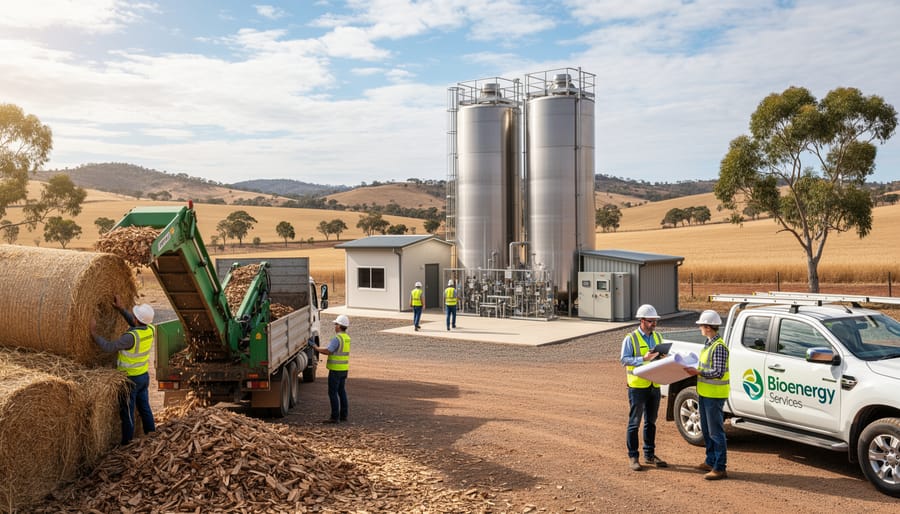
Breathing New Life into Regional Australia
Across rural Australia, bioenergy projects are proving to be genuine game-changers for communities that have long struggled with economic uncertainty. These initiatives are creating economic opportunities in regional areas that extend far beyond just energy production.
Take the Goulburn Valley in Victoria, where a bioenergy facility now converts agricultural waste from local orchards and dairy farms into renewable electricity. This project has created over 30 permanent jobs while providing farmers with an additional revenue stream from what was once considered rubbish. Similarly, in regional Queensland, sugarcane growers are capitalizing on bagasse, the fibrous residue left after crushing, to power local operations and sell surplus energy back to the grid.
These projects deliver multiple benefits to regional communities. Young people are finding reasons to stay rather than migrate to cities, with new skilled positions in plant operations, maintenance, and logistics. Local businesses are thriving as project workers spend in their communities, and farmers enjoy improved income stability. In Western Australia’s Wheatbelt region, a recently commissioned facility processing wheat stubble has injected fresh optimism into towns facing population decline, demonstrating how bioenergy can genuinely revitalize regional economies.
Navigating the Challenges: What’s Holding Bioenergy Back (and How We’re Overcoming It)
Building the Infrastructure Australia Needs
Australia’s bioenergy sector requires robust infrastructure to transform organic waste into clean energy at scale. The journey from farm gate to power grid demands sophisticated collection networks, processing facilities, and distribution systems working in harmony.
Regional hubs are emerging across the country, where agricultural residues, food waste, and forestry byproducts are gathered and converted into renewable fuels. In Queensland’s Darling Downs, new anaerobic digestion plants are processing cattle feedlot waste, demonstrating how purpose-built facilities can serve multiple farming communities. These regional processing centres reduce transport costs while creating local jobs—a win for both economics and the environment.
The good news? Infrastructure development is accelerating. Tasmania’s forestry industry is investing in wood pellet production facilities, whilst Victoria is expanding its organics collection network to divert waste from landfills. These projects showcase the practical steps being taken right now.
For those looking to participate, significant investment opportunities exist across the infrastructure value chain. From collection logistics to processing technology and distribution networks, every link requires capital and innovation. Government grants and private investment are flowing into proven technologies, making this an opportune moment for forward-thinking stakeholders to contribute to Australia’s energy independence.
Policy Support That’s Making the Difference
Australia’s policy landscape is creating genuine momentum for bioenergy, with practical support emerging that’s transforming possibilities into realities. The Australian Renewable Energy Agency has backed over fifty bioenergy projects with strategic funding, helping pioneers prove concepts and scale operations. These aren’t just grants disappearing into paperwork—they’re catalysing real facilities like the one in Goulburn that’s now converting agricultural waste into renewable electricity for 4,000 homes.
State governments are getting in on the action too. Queensland’s Biofutures 10-Year Roadmap demonstrates how targeted policy can nurture an entire industry, setting ambitious yet achievable targets while connecting innovators with resources and markets. South Australia’s approach to supporting biogas facilities has been particularly clever, streamlining approvals without compromising environmental standards.
The federal Emissions Reduction Fund, while sometimes criticised, has genuinely incentivised agricultural businesses to capture methane and generate renewable energy. What makes these policies work isn’t complexity—it’s clarity. Farmers and business owners know what support exists and how to access it. This straightforward approach means more Australians can participate in building energy security while reducing emissions, turning bioenergy from an interesting concept into a practical choice that makes economic and environmental sense.
Your Role in Australia’s Bioenergy Future
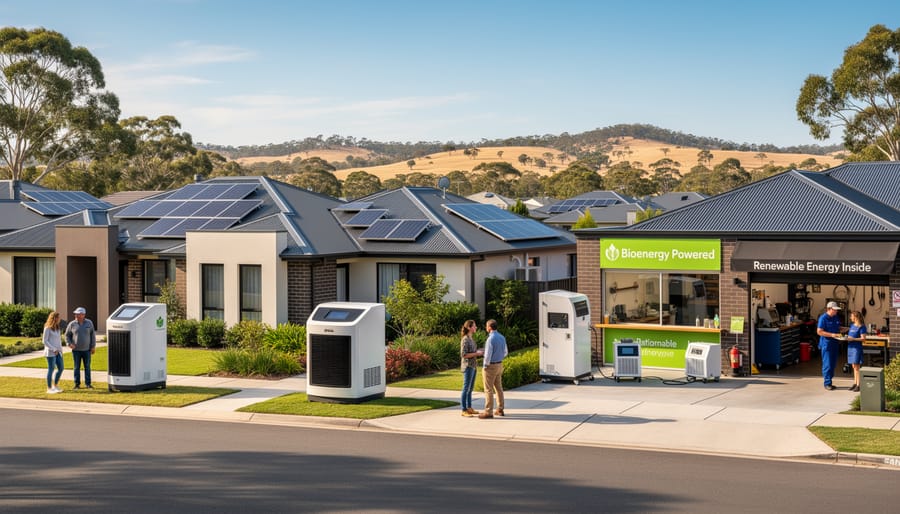
Australia’s bioenergy future isn’t just about large-scale industry shifts—it’s shaped by the choices you make today. Whether you’re a homeowner, business owner, or community leader, you have a genuine role to play in this transformative energy journey.
For individuals, start by considering where your waste goes. That food scraps bin you’re using? It’s potentially feeding into local bioenergy systems that generate electricity and reduce landfill emissions. Many councils across Australia now offer organic waste collection programs that directly support bioenergy facilities. You can also explore installing biogas systems if you’ve got a farm or large property—these clever setups turn animal waste into cooking fuel and electricity.
Business owners have even more opportunities. Restaurants and food manufacturers can partner with bioenergy companies to convert their organic waste into revenue streams rather than disposal costs. The Melbourne-based brewery that now powers its operations partly from spent grain waste? That could be your success story too.
Community groups can advocate for local bioenergy projects, which create jobs while addressing waste management challenges. Regional towns across Queensland and New South Wales have already demonstrated how agricultural communities can become energy producers, not just consumers.
The beauty of bioenergy is its scalability—your contribution matters whether you’re separating your weekly compost or managing an industrial facility. By engaging with bioenergy solutions at whatever level suits you, you’re directly strengthening Australia’s energy security while building a cleaner, more sustainable future for everyone.
Australia stands at a remarkable crossroads where market forces and environmental necessity converge to create unprecedented opportunities in bioenergy. The dynamics we’ve explored throughout this discussion reveal a sector that’s not just viable, but vitally important for our nation’s energy independence and environmental future. From the sugar mills of Queensland transforming agricultural waste into clean electricity to innovative waste-to-energy projects powering suburban communities, the evidence is clear: bioenergy isn’t just a theoretical solution, it’s a practical pathway already delivering results across the country.
The market dynamics driving bioenergy forward are robust and increasingly favorable. Rising fossil fuel prices, strengthening government incentives, and growing corporate commitment to carbon neutrality are creating powerful tailwinds for the sector. Meanwhile, the energy security benefits speak for themselves. By harnessing locally available organic materials, we’re reducing dependence on international fuel markets, creating regional employment, and building resilience into our energy infrastructure.
What makes this moment particularly exciting is that every Australian can play a role in this transformation. Whether you’re a farmer exploring opportunities to monetize agricultural residues, a business leader investigating renewable energy options, a policymaker shaping supportive frameworks, or simply a conscious citizen choosing to support sustainable practices, your actions matter. The transition to bioenergy isn’t something that will happen to us, it’s something we’re actively creating together. The potential is enormous, the technology is proven, and the time to act is now. Let’s embrace this opportunity to build a cleaner, more secure energy future for generations to come.