
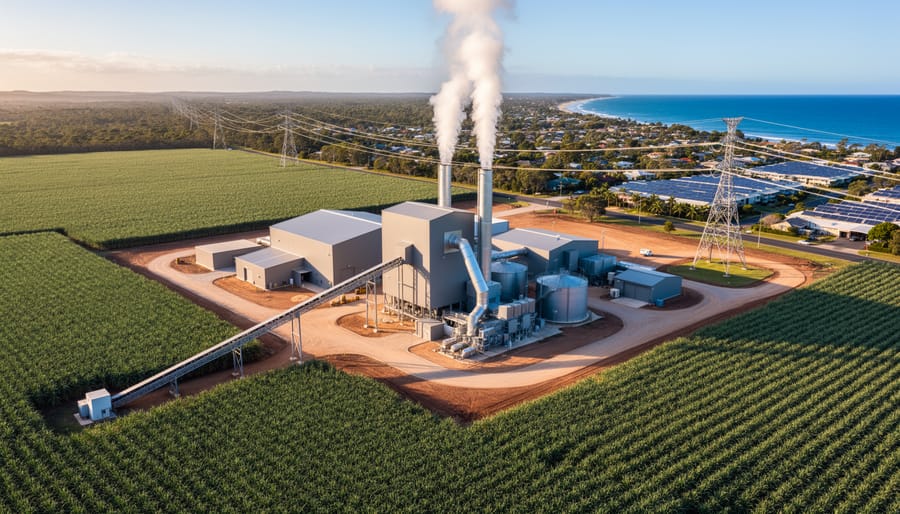
Picture a sugar cane farm in Far North Queensland transforming its waste into clean electricity, powering thousands of homes while creating jobs and slashing carbon emissions. That’s biomass energy in action, and it’s already reshaping Australia’s energy landscape in ways that matter for your community, your business, and our shared environment.
Biomass energy converts organic materials—agricultural residues, forestry waste, food scraps, and purpose-grown crops—into reliable, renewable power and heat. Unlike intermittent solar or wind, biomass provides dispatchable energy that works around the clock, making it a cornerstone technology for Australia’s transition away from fossil fuels. The process is elegantly simple: organic matter contains stored solar energy that plants captured through photosynthesis, and we release that energy through controlled combustion, gasification, or biological processes like anaerobic digestion.
What makes biomass particularly compelling for Australia is our abundance of feedstock. We generate millions of tonnes of agricultural waste annually—wheat straw, sugar cane bagasse, cotton trash, and forestry residues—that traditionally went unused or burned in open fields. Converting these materials into energy turns waste into value, creating substantial economic opportunities for regional communities while addressing waste management challenges.
The technology has matured beyond experimental trials. Across Australia, commercial biomass facilities are operating successfully, from meat processing plants generating their own power from wastewater to timber mills becoming energy self-sufficient. These success stories demonstrate biomass energy isn’t some distant possibility—it’s a practical, proven solution working today. Understanding how biomass systems function, what policies support their development, and where investment opportunities exist positions you to participate in Australia’s renewable energy transformation while contributing to genuine environmental progress.
What Makes Biomass Different from Other Renewables
The Science Behind Biomass Energy (Made Simple)
Think of biomass energy conversion like cooking with different methods – each process transforms ingredients into something useful, just as organic materials become clean energy.
Combustion is the most straightforward approach, similar to lighting a campfire. Organic materials like wood chips, agricultural waste, or sugarcane bagasse burn at high temperatures, producing heat that boils water into steam. This steam powers turbines generating electricity. It’s the same principle as a traditional power station, but instead of fossil fuels, you’re using yesterday’s crop waste or timber offcuts.
Gasification takes things further, operating like a pressure cooker for biomass. At extremely high temperatures with limited oxygen, materials break down into syngas – a mixture of hydrogen and carbon monoxide. This versatile gas can generate electricity, produce heat, or transform into liquid biofuels. Australian facilities are increasingly using this method to convert forestry residues into reliable energy.
Anaerobic digestion works differently, like composting in a sealed container. Microorganisms break down organic waste – think food scraps, manure, or sewage – without oxygen, producing biogas rich in methane. This process simultaneously generates renewable energy and reduces landfill waste. Queensland dairy farms and Victorian water treatment plants are already capturing this “free” energy from materials that would otherwise decompose uselessly.
Each method suits different feedstocks and energy needs, offering Australian communities flexible pathways to transform local waste streams into valuable power, proving that one person’s rubbish truly can become another’s renewable resource.
Australia’s Biomass Advantage: Resources We’re Already Producing
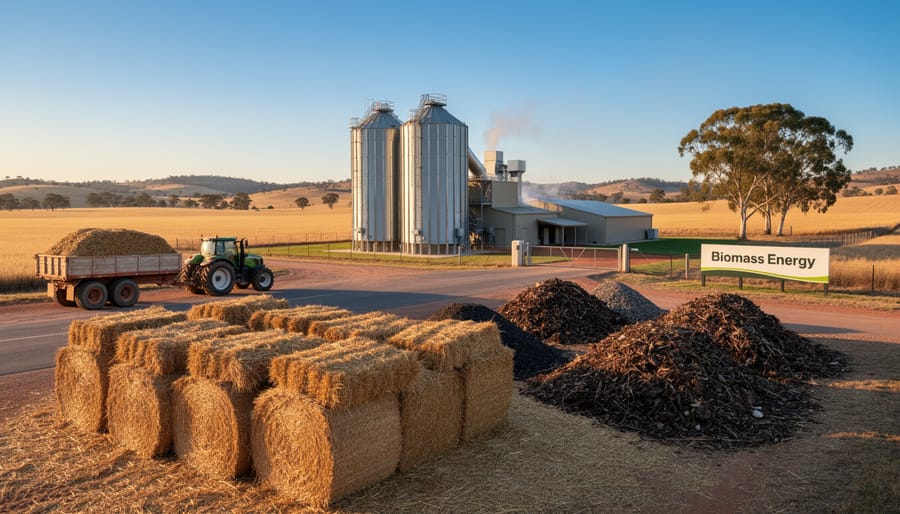
Australia sits on a goldmine of biomass resources that we’re already producing—we just need to harness them more effectively. Every year, our agricultural and forestry sectors generate enormous quantities of organic material that could power homes, businesses, and vehicles instead of going to waste.
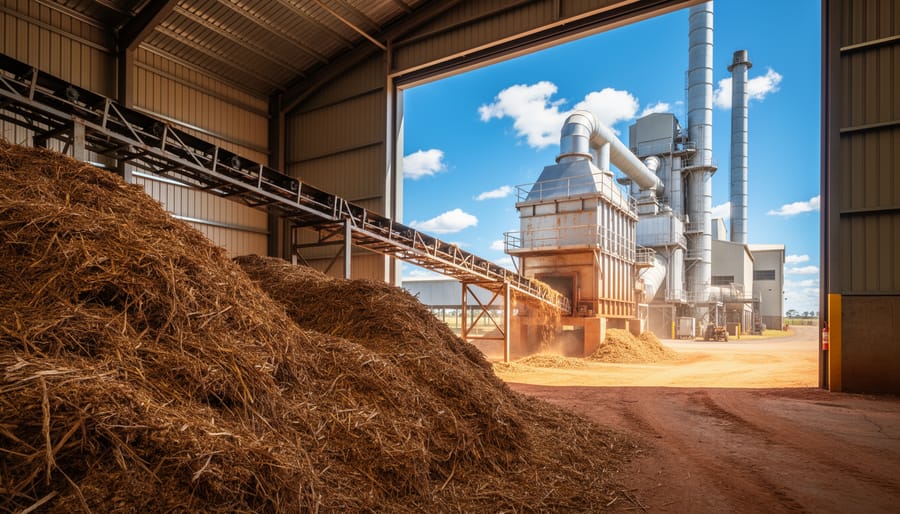
Take Queensland’s sugar industry, for instance. The state’s 24 sugar mills process around 30 million tonnes of sugarcane annually, producing massive amounts of bagasse—the fibrous residue left after crushing. Forward-thinking mills like Mackay Sugar’s Racecourse Mill have transformed this byproduct into a renewable energy source, generating enough electricity to power the facility and export surplus energy to the grid. What was once considered waste is now a valuable revenue stream and clean energy source.
Western Australia’s wheat belt tells a similar story. After harvest, wheat farms across the region produce approximately 12 million tonnes of crop residues each year. While some remains on fields for soil health, a significant portion could be collected and converted into bioenergy without compromising agricultural practices. Innovative farmers are already exploring how these residues can offset their diesel costs and create additional income.
Then there’s the livestock sector. Australia’s 25 million cattle and 70 million sheep produce manure that contains tremendous energy potential. Progressive dairy farms in Victoria and intensive piggeries in New South Wales are installing anaerobic digesters that convert animal waste into biogas for heating, electricity, and even vehicle fuel—turning an environmental challenge into an energy opportunity.
The beauty of biomass is that we’re not starting from scratch. These resources already exist across regional Australia, supporting rural economies while offering practical pathways to reduce our carbon footprint. The infrastructure for collection often exists too; we simply need the vision to connect the dots.
Where Biomass Energy Is Already Making Money in Australia
Sugar Mills Powering Regional Towns
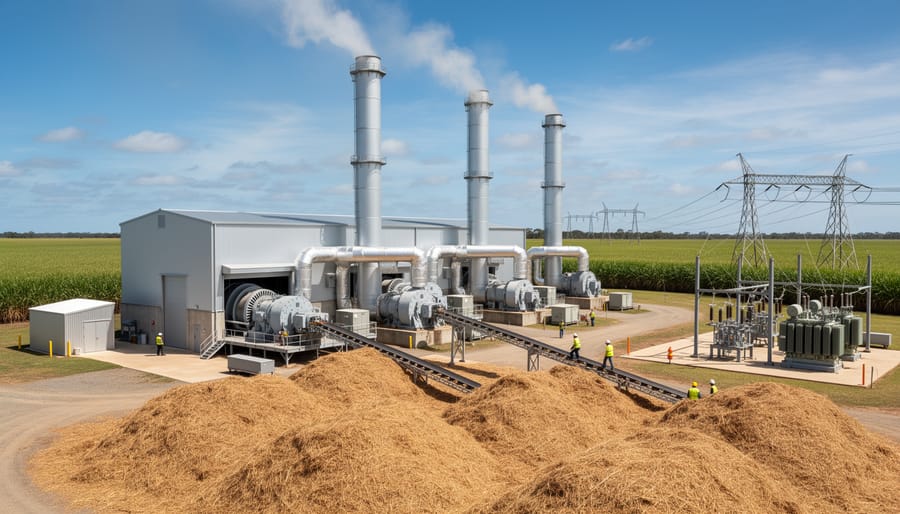
Across Queensland’s sugar cane heartland, an impressive transformation is underway. Mills that once discarded bagasse—the fibrous residue left after crushing sugar cane—are now turning this abundant waste product into clean electricity through co-generation systems. These facilities are proving that renewable energy can deliver far beyond environmental benefits.
Take Mackay Sugar’s operations, where modern co-generation plants convert bagasse into electricity that powers entire milling processes. The beauty of this system lies in its efficiency: during crushing season, mills generate more power than they need, feeding excess electricity back into the regional grid. This surplus energy lights homes, powers businesses, and reduces reliance on fossil fuels throughout North Queensland communities.
The economic ripple effects are substantial. Co-generation facilities create year-round technical jobs, from plant operators to maintenance engineers, providing stable employment in regional areas where opportunities can be limited. During crushing season, these operations support hundreds of additional workers, strengthening local economies when agricultural activity peaks.
Communities near these mills benefit from reliable, locally-generated power that insulates them from grid disruptions and price volatility. Some mills have partnered with local councils to provide discounted electricity rates, directly reducing living costs for residents. This demonstrates how biomass energy creates tangible community value beyond the balance sheet.
Queensland’s sugar industry now generates enough renewable electricity to power approximately 120,000 homes annually—a remarkable achievement that positions regional towns as renewable energy leaders while maintaining their agricultural heritage.
Turning Farm Waste Into Profit: The Biogas Revolution
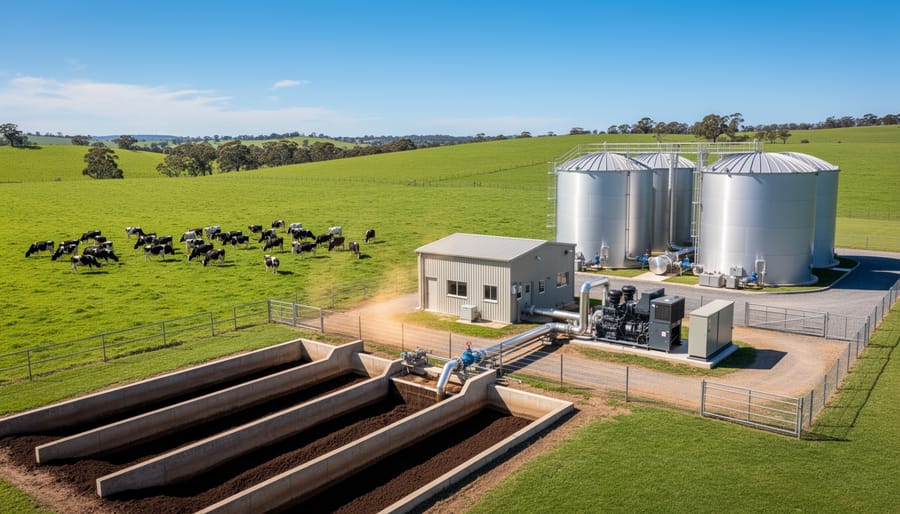
Australian farmers are turning their biggest headache into their most valuable asset. Across the country, dairy and piggery operations are installing anaerobic digesters that transform mountains of manure into clean electricity and cold, hard cash.
Take the Gippsland dairy region in Victoria, where several farms now power their entire operations using biogas from cow manure. These clever systems work by placing waste into sealed tanks where naturally occurring bacteria break down the organic matter without oxygen, producing methane-rich biogas. The gas then fuels generators that create electricity, while the leftover digestate becomes premium fertilizer.
The numbers tell a compelling story. A medium-sized dairy farm with 500 cows can generate enough electricity to power 50 homes while reducing their annual energy bills by $30,000 to $50,000. Piggeries are seeing similar results, with some operations achieving complete energy independence.
But the benefits extend beyond the balance sheet. These systems eliminate the pungent odours that plague traditional waste lagoons, dramatically reducing methane emissions that would otherwise escape into the atmosphere. Neighbours appreciate the reduced smell, while farmers gain peace of mind knowing they’re meeting increasingly stringent environmental regulations.
The digestate byproduct delivers another revenue stream. Rich in nutrients and pathogen-free after the heating process, it sells as organic fertilizer or improves soil health on-farm, reducing the need for expensive synthetic alternatives.
This biogas revolution is proving that environmental responsibility and profitability aren’t opposing forces. They’re partners in building a more sustainable agricultural future.
Industrial Applications That Keep Manufacturing Competitive
Australian manufacturers are discovering that biomass isn’t just environmentally smart—it’s commercially brilliant. Food processors are leading the charge, with companies like olive oil producers using leftover pomace and pits to fire their boilers, slashing energy bills while achieving carbon-neutral status. Timber mills across regional Victoria and New South Wales have transformed wood waste from liability to asset, feeding sawdust and bark into combined heat and power systems that generate electricity and process heat simultaneously.
Sugar mills in Queensland exemplify this perfectly, burning bagasse—the fibrous residue left after crushing sugarcane—to power their operations during harvest season, often producing surplus electricity sold back to the grid. Meanwhile, meat processing facilities are capturing methane from wastewater treatment to generate on-site power. These practical applications deliver triple wins: reduced waste disposal costs, lower energy expenses, and enhanced sustainability credentials that increasingly matter to export markets. For manufacturers facing rising energy prices and customer demands for greener products, biomass offers a competitive edge that’s both immediate and measurable.
The Market Forces Driving Biomass Growth
How Carbon Pricing Makes Biomass Competitive
Carbon pricing is transforming the economics of biomass energy, making it increasingly competitive with traditional fossil fuels. In Australia, mechanisms like the Emissions Reduction Fund and Safeguard Mechanism create direct financial value for reducing carbon emissions. When a biomass facility prevents methane from landfills or replaces coal-fired electricity, those avoided emissions translate into Australian Carbon Credit Units, each worth real dollars that improve project viability.
Consider a practical comparison: a conventional coal power station might produce electricity at $80 per megawatt-hour, but when you factor in carbon penalties under current pricing schemes, that cost can climb above $100. Meanwhile, biomass electricity from agricultural waste might cost $95 per megawatt-hour, but qualifies for renewable energy certificates and carbon credits worth $15-20 per megawatt-hour. Suddenly, biomass becomes the more attractive option economically, not just environmentally.
Renewable energy certificates add another revenue stream. Large-scale generation certificates and small-scale technology certificates provide guaranteed income for biomass projects, reducing financial risk for investors. For example, a sawmill converting wood waste to energy might receive certificates worth tens of thousands annually, making the difference between a marginal project and a profitable one.
Corporate emissions reduction targets are accelerating this trend. Major Australian companies committed to net-zero goals increasingly seek renewable energy partners, creating premium markets for biomass electricity. This demand drives long-term contracts with stable pricing, exactly what makes biomass projects bankable. The economic case strengthens yearly as carbon prices rise and renewable energy targets tighten, positioning biomass as smart business alongside smart environmental practice.
State and Federal Policies Backing Bioenergy
Australia’s policy landscape is creating genuine momentum for bioenergy, transforming what could have been regulatory hurdles into springboards for innovation. The federal Renewable Energy Target has been instrumental in driving investment, setting ambitious goals that recognize biomass as a credible contributor to our clean energy future. This isn’t just policy for policy’s sake; it’s opening doors for farmers, waste managers, and energy producers across the country.
State governments are backing this shift with targeted initiatives. Queensland’s Biofutures 10-Year Roadmap and Action Plan demonstrates how strategic planning can nurture an entire industry, while New South Wales offers rebates and incentives specifically designed to help businesses transition to bioenergy systems. These programs acknowledge the unique opportunities Australia has with our agricultural sector and abundance of organic waste.
Funding programs through the Australian Renewable Energy Agency and Clean Energy Finance Corporation are putting real dollars behind bioenergy projects, supporting everything from small-scale biogas digesters to advanced biofuel refineries. Rather than creating red tape, these regulations are establishing frameworks that give investors confidence and entrepreneurs clear pathways to success. The message from government is clear: bioenergy represents practical opportunity, and they’re committed to helping Australians seize it.
Investment Trends: Where the Smart Money Is Going
Australia’s biomass sector is experiencing a surge in capital interest, with emerging investment flowing into cutting-edge conversion technologies and regional processing facilities. Major institutional investors are backing projects that turn agricultural waste into renewable energy, recognising the dual benefit of waste reduction and clean power generation. Market analysts project the Australian biomass industry could reach $2.5 billion by 2030, driven by government incentives and corporate sustainability commitments. Exciting developments include advanced gasification systems that boost efficiency by 30% and partnerships between farmers and energy companies creating new revenue streams. Smart money is particularly targeting projects in Queensland and New South Wales, where abundant agricultural residues meet strong grid infrastructure, positioning these regions as biomass powerhouses for the decade ahead.
Environmental Benefits That Go Beyond Carbon
The Carbon Cycle Advantage: Why Biomass Is Climate-Friendly
Understanding carbon neutrality is the key to appreciating why biomass stands apart from fossil fuels. Picture this: a eucalyptus tree growing in regional Victoria spends decades absorbing carbon dioxide from the atmosphere through photosynthesis, essentially storing that carbon in its timber. When that wood is later burned for energy, it releases roughly the same amount of carbon the tree captured during its lifetime. The carbon simply completes its natural cycle, returning to the atmosphere where it began.
Contrast this with coal or natural gas. These fossil fuels locked away carbon underground millions of years ago. When we burn them, we’re introducing ancient carbon into today’s atmosphere, adding to the greenhouse gas burden rather than recycling what’s already circulating through natural systems.
A practical example makes this crystal clear. Imagine a Brisbane coffee roaster burning woodchips from local timber waste. The carbon released heated the roasting drums, but those same carbon molecules will be reabsorbed by new trees growing in managed forests. It’s a closed loop. Meanwhile, a roaster using natural gas releases carbon that hasn’t seen daylight since the Jurassic period, permanently increasing atmospheric concentrations.
This carbon neutrality principle assumes responsible practices, including replanting and sustainable harvesting. When done right, biomass energy becomes part of nature’s renewable rhythm rather than working against it. Australian producers increasingly demonstrate this balance, turning agricultural residues and forestry byproducts into climate-friendly energy while supporting regional economies.
Solving Waste Problems While Generating Power
Biomass energy systems tackle two pressing environmental challenges at once, making them remarkably efficient sustainability tools. By diverting organic waste from landfills, these facilities prevent the release of methane, a greenhouse gas 25 times more potent than carbon dioxide. At the same time, they transform this waste into clean, renewable electricity and heat for Australian homes and businesses.
The numbers tell a compelling story. According to the National Waste Report, Australia generates approximately 76 million tonnes of waste annually, with organic materials comprising roughly 35% of this total. When food scraps, agricultural residues, and green waste decompose in landfills without oxygen, they produce significant methane emissions. However, when captured and processed through anaerobic digestion or direct combustion, these same materials become valuable energy resources.
Several Australian facilities are already demonstrating the powerful impact of this approach. The Remondis organics processing plant in Sydney processes 70,000 tonnes of food and garden waste each year, generating enough electricity to power 2,500 homes while keeping this material out of landfills. Similarly, Queensland Urban Utilities operates a sewage treatment facility that converts biosolids into energy, reducing landfill waste by 30,000 tonnes annually.
These achievements represent more than just waste reduction figures. They’re creating cleaner communities, reducing transport costs associated with waste disposal, and building circular economy models where yesterday’s rubbish becomes tomorrow’s power. For Australian councils struggling with landfill capacity constraints and rising disposal costs, biomass energy offers a practical, proven solution that pays environmental and economic dividends.
Navigating the Challenges (And How They’re Being Solved)
Supply Chain and Sustainability Concerns
Sourcing biomass sustainably presents genuine challenges, but Australian projects are pioneering solutions that protect our environment while generating clean energy. The key concern revolves around where biomass comes from and how harvesting it impacts our land, forests, and food production.
Traditional supply chain challenges include competition for agricultural land and the risk of unsustainable forestry practices. However, smart operators are addressing these issues head-on by focusing on waste materials rather than purpose-grown crops. Agricultural residues like sugarcane bagasse, timber mill offcuts, and municipal organic waste provide abundant feedstock without requiring additional land clearing.
The Eden Renewable Energy project in Queensland demonstrates this approach brilliantly. They transform sawmill waste and forest thinnings into energy, using materials that would otherwise decompose or be burned in uncontrolled conditions. This creates value from waste while supporting responsible forest management that actually reduces bushfire risk.
Australian forestry operations supplying biomass increasingly follow strict certification schemes ensuring replanting, biodiversity protection, and carbon accounting. Many facilities now prioritize local sourcing to minimize transport emissions and support regional communities. By treating biomass as a circular resource rather than extracting virgin materials, these projects prove that energy generation and environmental stewardship can work together, creating sustainable jobs while protecting our unique landscapes for future generations.
Technology Advances Making Biomass More Efficient
Australian researchers and industry partners are driving remarkable technology improvements that are transforming biomass energy from a promising concept into a commercially viable powerhouse. Modern gasification systems now achieve conversion efficiencies exceeding 85%, capturing far more energy from organic materials than older combustion methods ever could.
One breakthrough comes from the University of Queensland, where scientists have developed advanced pre-treatment processes that break down stubborn plant materials more effectively. This means facilities can extract more energy from the same amount of feedstock, slashing operational costs while boosting output.
Cleaner emissions technology is another game-changer. New filtration systems and catalytic converters reduce particulate matter and nitrogen oxides by up to 90%, addressing historical environmental concerns. The Bega Valley biogas facility in New South Wales demonstrates this progress beautifully, converting dairy waste into electricity while maintaining emissions well below regulatory limits.
Digital monitoring systems powered by artificial intelligence now optimize combustion temperatures and feedstock mixtures in real-time, maximizing efficiency while minimizing waste. These smart systems learn from operational data, continuously improving performance without human intervention.
Perhaps most exciting are pilot projects testing integrated biorefineries that produce multiple products simultaneously: electricity, biofuels, and valuable biochemicals. This circular approach dramatically improves economic returns, making biomass energy increasingly competitive with traditional fossil fuels.
What This Means for Your Business or Community
For Farmers and Agricultural Businesses
If you’re running a farm or agricultural business, you’re already sitting on a goldmine of biomass potential. Start by conducting a waste audit to identify what organic materials you’re currently sending to landfill or burning off. Crop residues, animal manure, food processing waste, and spent grain can all be converted into valuable energy and revenue streams.
The Australian Government’s Clean Energy Finance Corporation and state-based programs regularly offer grants and concessional loans for biomass projects. The Clean Energy Regulator can also advise on carbon credit opportunities through the Emissions Reduction Fund, which can make projects financially viable from day one.
Connect with technology providers through industry bodies like Bioenergy Australia, which maintains directories of equipment suppliers and project developers. Many providers offer feasibility assessments at no cost to help you understand your options, whether that’s installing an anaerobic digester for biogas production or establishing a wood pellet operation.
Start small with a pilot project to test the concept before scaling up. Talk to neighbouring farms about collaborative approaches, as shared biomass facilities often make better economic sense. The Australian Renewable Energy Agency also publishes case studies showcasing what’s worked for producers just like you, providing practical roadmaps for getting started.
For Communities and Local Government
Regional communities across Australia are discovering that biomass energy offers more than just power – it’s a pathway to local jobs, energy independence, and economic resilience. By transforming agricultural waste, forestry residues, and municipal organic matter into reliable energy, towns can keep dollars circulating locally while reducing reliance on distant power grids.
Take the example of sugar-producing regions in Queensland, where mills now generate electricity from bagasse, the fibrous waste left after crushing cane. This approach creates year-round employment opportunities beyond the traditional harvest season. Similarly, timber towns in Victoria and New South Wales are converting sawmill residues into wood pellets and thermal energy, breathing new life into forestry communities.
Community-scale projects work particularly well in areas with consistent biomass supply. Councils partnering with local farmers to collect crop stubble or food processors diverting organic waste to biogas facilities demonstrate how collaborative models strengthen regional economies. These initiatives typically create 5-10 times more local jobs than equivalent fossil fuel operations, from collection and processing to facility maintenance.
For local governments exploring these opportunities, starting with waste-to-energy feasibility studies often reveals untapped resources already within your boundaries, turning disposal costs into revenue streams while advancing sustainability goals.
For Industry and Manufacturing
Australian manufacturers are discovering that biomass delivers more than just heat—it’s a triple win for the bottom line, sustainability credentials, and climate action. By replacing fossil fuels with agricultural residues, timber waste, or purpose-grown energy crops, facilities achieve reliable thermal energy while slashing carbon emissions by up to 90%. A Brisbane food processor recently saved $180,000 annually after switching their boilers to sugar cane bagasse, transforming waste into productive energy.
The business case strengthens when you factor in carbon credits under Australia’s Emissions Reduction Fund. Companies implementing biomass systems can generate Australian Carbon Credit Units, creating new revenue streams while meeting sustainability targets. This positions your operation favourably for corporate supply chains increasingly demanding verified emissions reductions.
Modern biomass systems integrate seamlessly with existing infrastructure, often requiring minimal capital expenditure compared to complete facility overhauls. Plus, they demonstrate genuine climate leadership—something that resonates with customers, investors, and regulators alike. Start by auditing your thermal energy needs and identifying local biomass sources. The pathway to cleaner, cost-effective operations is clearer than most manufacturers realise.
Australia stands at a pivotal moment in its energy transformation, and biomass energy represents a genuine opportunity to turn environmental responsibility into economic advantage. From the sugar mills of Queensland converting bagasse into electricity to innovative facilities across the country transforming agricultural waste into renewable fuel, the biomass sector is already delivering tangible results. These aren’t distant possibilities—they’re happening right now, creating jobs, reducing emissions, and strengthening regional communities.
The beauty of biomass energy lies in its accessibility. Whether you’re a farmer with crop residues, a council managing organic waste, or a business looking to reduce your carbon footprint, there’s a role for you in this transition. Australian innovators have proven that what was once considered waste can become a valuable resource, and the regulatory environment increasingly supports those willing to make the shift.
The path forward requires collective action. Now is the time to investigate how biomass solutions might work for your situation. Talk to your local council about waste-to-energy programs, explore available government incentives, or connect with industry groups championing bioenergy development. Every conversation, every feasibility study, every small-scale project contributes to building Australia’s renewable energy capacity.
The transition to cleaner energy isn’t something that happens to us—it’s something we create together. Biomass energy offers practical ways to participate today, combining environmental stewardship with economic sense. The opportunities are here, the technology is proven, and Australia’s renewable future is being built now. Will you be part of it?