
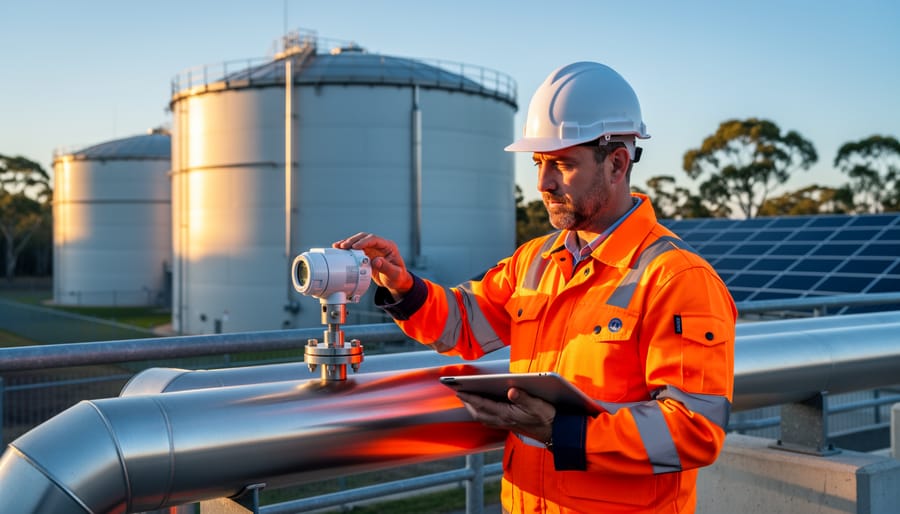
Carbon credits without credible measurement, reporting, and verification are essentially worthless—a fact that’s reshaping how Australia’s bioenergy sector proves its environmental impact. MRV systems transform bioenergy projects from well-intentioned initiatives into quantifiable climate solutions that attract investment, satisfy regulators, and deliver genuine emissions reductions.
Consider this: when a Queensland waste-to-energy facility converts agricultural residues into renewable power, how do stakeholders know exactly how much carbon dioxide has been prevented from entering the atmosphere? MRV provides the answer through systematic tracking of feedstock inputs, energy outputs, and avoided emissions—creating an auditable trail that underpins every carbon credit issued.
The Australian Carbon Credit Unit scheme demands rigorous proof that emissions reductions are real, additional, and permanent. For circular bioenergy projects—whether converting organic waste to biogas, transforming forestry residues into biofuels, or capturing methane from composting operations—robust MRV isn’t optional. It’s the foundation that separates legitimate carbon credits from greenwashing.
Yet MRV remains misunderstood. Many project developers perceive it as bureaucratic overhead rather than recognizing it as the mechanism that unlocks carbon market revenue streams. The reality is more encouraging: modern monitoring technologies, from IoT sensors to satellite imaging, have made continuous emissions tracking increasingly accessible and cost-effective.
This article demystifies MRV for Australia’s bioenergy sector, explaining the frameworks that govern carbon credit generation, showcasing successful local implementations, and providing practical pathways for project developers ready to transform their sustainability efforts into verified, tradeable assets. Understanding MRV isn’t just about compliance—it’s about positioning bioenergy projects at the forefront of Australia’s decarbonization journey while building the trust essential for scaling circular economy solutions.
What MRV Actually Means for Carbon Credits in Bioenergy

Why Circular Bioenergy Needs Different MRV Rules
Circular bioenergy stands apart from other renewable energy sources because it’s not just about generating clean power—it’s about closing the loop. Unlike solar panels or wind turbines that simply capture energy, waste-to-energy projects transform what would otherwise be landfill-bound materials into valuable energy resources. This fundamental difference demands specialized MRV approaches that can accurately track multiple environmental benefits simultaneously.
Think about an agricultural waste-to-energy facility processing sugarcane bagasse in Queensland. The MRV system needs to measure not only the carbon emissions avoided by replacing fossil fuels, but also the methane prevented from decomposing waste, the reduction in landfill volumes, and even the nutrient-rich biochar returned to farmland. Traditional renewable energy MRV frameworks simply weren’t designed to capture this complexity.
The circular bioeconomy creates interconnected benefit streams that standard measurement tools often miss. When a dairy farm converts manure into biogas, it’s simultaneously reducing methane emissions, producing renewable energy, creating organic fertilizer, and improving water quality. Each element requires verification to properly value the carbon credits generated.
This is why specialized MRV approaches for circular bioenergy must account for feedstock traceability, waste diversion rates, and co-product benefits—ensuring these innovative projects receive fair recognition for their comprehensive environmental contributions while maintaining the rigorous standards that make carbon credits credible and valuable.
The Certification Frameworks That Make Carbon Credits Trustworthy
Australian Carbon Credit Units (ACCUs) and the ERF
Australia’s Emissions Reduction Fund represents a tremendous opportunity for bioenergy projects to generate Australian Carbon Credit Units while making a real difference to our climate goals. The ERF provides the framework and financial incentive for projects that reduce greenhouse gas emissions, and bioenergy initiatives are perfectly positioned to participate in this growing market.
Under the ERF, each ACCU represents one tonne of carbon dioxide equivalent stored or avoided. For bioenergy projects, this might include diverting organic waste from landfill to produce renewable energy, or capturing methane emissions that would otherwise escape into the atmosphere. The beauty of ACCUs is that they transform environmental responsibility into tangible economic value, making sustainability genuinely viable for Australian businesses.
The MRV requirements for generating ACCUs follow a rigorous but achievable process. Projects must first be registered with the Clean Energy Regulator and align with an approved methodology that clearly defines how emissions reductions will be calculated. The monitoring phase involves collecting specific data about feedstock inputs, energy outputs, and emissions avoided. This information must be verifiable through independent auditing, typically conducted annually or at regular reporting periods.
What makes the Australian system particularly effective is its practical approach. Take the South East Queensland bioenergy facility that successfully generates ACCUs by processing food waste into renewable electricity. By carefully documenting their waste inputs and energy production, they’ve created a transparent MRV system that satisfies regulatory requirements while demonstrating clear environmental benefits.
The certification process requires preparation of a comprehensive offsets report, third-party verification, and submission to the Clean Energy Regulator. Once approved, ACCUs can be sold to generate revenue or retained to meet carbon neutral commitments. With proper planning and robust MRV systems, Australian bioenergy projects can confidently navigate this pathway to success.
International Standards Worth Knowing
While Australia’s own regulatory landscape continues to develop, many bioenergy projects here are turning their eyes to established international carbon credit standards. These globally recognised frameworks open doors to international markets and provide proven methodologies for measuring and verifying emissions reductions.
The Gold Standard, originally founded by WWF and other NGOs, has become a trusted name in high-quality carbon credits. It’s particularly relevant for Australian bioenergy projects targeting European markets or organisations with strict environmental commitments. Gold Standard’s rigorous requirements go beyond carbon measurement to include sustainable development benefits for local communities, which aligns beautifully with many Australian regional bioenergy initiatives.
Verra’s Verified Carbon Standard (VCS) represents the world’s most widely used voluntary carbon credit program. Australian projects often choose VCS for its comprehensive methodologies covering various bioenergy applications, from agricultural waste conversion to forestry residues. The system’s flexibility and market acceptance make it especially valuable for projects seeking international buyers.
The Climate Action Reserve offers methodologies well-suited to certain Australian contexts, particularly livestock waste management projects. Meanwhile, the American Carbon Registry provides another credible option for projects with North American market connections.
Why might Australian projects pursue these international certifications? Beyond accessing export markets, they provide battle-tested MRV frameworks that reduce development risk. Many successful Australian bioenergy ventures maintain dual certification, meeting both domestic requirements and international standards to maximise market opportunities. This strategic approach transforms local sustainability efforts into globally recognised climate solutions, creating value that extends far beyond our shores.
How MRV Technology Actually Works in Practice
Monitoring: What Gets Measured and How
Effective monitoring transforms bioenergy projects from good intentions into verified climate solutions. At its heart, MRV systems track three critical metrics: feedstock quantities entering the system, energy output generated, and emissions avoided compared to conventional energy sources.
Modern carbon capture bioenergy systems measure feedstock through digital weighbridges and automated tracking systems that record every tonne of organic waste processed. Energy production gets monitored via smart meters that provide real-time data on electricity and heat generated. The emissions component requires calculating the baseline—what would have happened to that waste otherwise—then comparing it against the actual project emissions.
The technology enabling this precision has evolved remarkably. IoT monitoring technologies now provide continuous data streams from sensors throughout bioenergy facilities. These devices track temperature, gas composition, moisture content, and flow rates, creating a comprehensive picture of operations. Satellite imagery and drone surveys verify land use changes and biomass growth rates, while blockchain technology creates tamper-proof records of all measurements.
A standout example comes from a Victorian agricultural waste-to-energy facility that implemented automated monitoring across its entire operation. By installing sensors at collection points, processing stages, and energy output systems, the project reduced verification costs by 40 percent while improving data accuracy. Their digital dashboard allows stakeholders to view real-time performance metrics, demonstrating transparency that fast-tracked their carbon credit certification. This approach has become a blueprint for Australian projects seeking efficient, credible MRV systems that build trust with investors and regulators alike.

Reporting and Verification: The Accountability Layer
Once bioenergy projects collect their emissions data through robust monitoring systems, the next crucial step involves transparent reporting and rigorous verification. This accountability layer transforms raw data into trustworthy carbon credits that buyers can confidently purchase.
Project developers must regularly submit detailed reports documenting all monitored activities, emission reductions achieved, and methodologies used. These reports follow strict templates established by certification standards, ensuring consistency across different projects. Think of it as a comprehensive logbook that captures every aspect of your bioenergy project’s climate impact, from feedstock sourcing through to energy generation.
Here’s where independent third-party auditors enter the picture. These qualified verification bodies act as environmental detectives, scrutinizing every claim and cross-checking data against evidence. They conduct site visits, interview staff, review equipment calibrations, and trace the entire chain of custody for biomass materials. Their role resembles that of financial auditors, but instead of examining balance sheets, they’re verifying carbon accounting and life cycle assessment calculations.
This verification process typically occurs annually, though some projects undergo more frequent audits. Auditors issue verification statements only when satisfied that reported emission reductions are accurate, additional, and permanent. This independent oversight eliminates greenwashing concerns and builds market confidence.
For Australian bioenergy projects, this accountability layer opens doors to premium carbon markets. Verified credits command higher prices because buyers trust the rigorous process behind them, creating stronger financial incentives for sustainable practices.
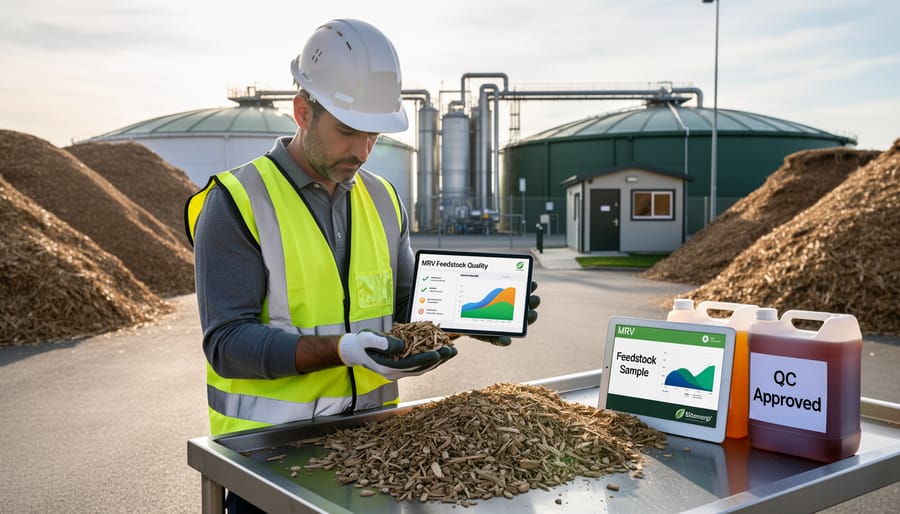
Real Australian Projects Earning Carbon Credits Through Solid MRV
Across Australia, innovative circular bioenergy projects are proving that robust MRV systems aren’t just theoretical frameworks—they’re practical pathways to generating genuine carbon credits while addressing waste challenges. These success stories demonstrate that whether you’re running a dairy farm, managing municipal waste, or operating an industrial facility, solid MRV implementation can transform environmental responsibility into measurable climate action.
In regional Victoria, the Goulburn Valley dairy cooperative has become a standout example of agricultural bioenergy done right. Their anaerobic digestion facility processes manure from over 2,000 dairy cows, generating renewable electricity while capturing methane that would otherwise escape into the atmosphere. What sets this project apart is their meticulous MRV approach. They’ve installed continuous monitoring sensors that track methane capture rates, biogas production volumes, and electricity generation in real-time. Every tonne of avoided methane emissions gets documented through automated data collection systems that feed directly into their carbon credit reporting. Since implementing their MRV framework in 2019, the cooperative has generated over 45,000 Australian Carbon Credit Units (ACCUs), providing a valuable additional revenue stream that’s helped them expand operations and bring neighbouring farms into the program.
Moving to the urban environment, Sydney’s Western Resource Recovery facility showcases how municipal organic waste can become a carbon credit goldmine through circular bioenergy. This facility diverts approximately 75,000 tonnes of food and garden waste from landfills annually, processing it through advanced composting and biogas systems. Their MRV protocol captures detailed baseline data on what would have happened to this waste—the methane generation from landfill decomposition—and compares it against their current emissions profile. The facility employs quarterly third-party verification audits, maintaining documentation standards that satisfy both regulators and carbon market buyers. Their transparent reporting has earned them premium pricing on their ACCUs, demonstrating that quality MRV doesn’t just ensure compliance; it builds market confidence.
In Queensland’s sugar belt, a mid-sized mill has transformed bagasse—the fibrous residue left after crushing sugarcane—from a disposal headache into a carbon credit success story. By installing cogeneration systems that convert bagasse into heat and power, they’ve eliminated their reliance on coal-fired energy. Their MRV system tracks fuel displacement calculations, comparing their renewable energy generation against the grid’s emission factors. What makes their approach particularly clever is integrating MRV data collection into existing operational monitoring systems, minimising additional costs while maintaining rigorous verification standards.
These projects prove that effective MRV isn’t about creating bureaucratic mountains—it’s about building credible systems that tell the honest story of your environmental impact while unlocking financial rewards for genuine climate action.
The Business Case: What MRV Carbon Credits Mean for Project Economics
Let’s talk dollars and sense. When done right, MRV systems transform carbon credits from abstract environmental certificates into genuine revenue streams that fundamentally improve project economics.
Consider the Southern Waste Solutions project in New South Wales, which captures methane from organic waste to generate electricity. By implementing a robust MRV system costing approximately $85,000 upfront, they’ve been generating around 12,000 carbon credits annually. At current Australian Carbon Credit Unit prices averaging $30-35 per tonne, that’s roughly $360,000 in annual revenue. Their payback period? Less than four months.
The financial equation becomes even more compelling for larger bioenergy facilities. A typical mid-scale biomass power plant might invest $200,000-300,000 in comprehensive MRV infrastructure, including monitoring equipment, data management systems, and third-party verification services. However, these facilities often generate 50,000-100,000 credits yearly, creating revenue streams between $1.5-3.5 million annually.
Here’s what makes this particularly attractive for Australian project developers: MRV costs generally remain stable while revenue potential grows. Once your monitoring infrastructure is established, ongoing operational costs typically run 15-25% of initial investment annually. Meanwhile, as carbon markets mature and prices potentially increase, your revenue from the same emissions reductions climbs.
The beauty of proper MRV implementation lies in its ability to unlock financing that might otherwise remain unavailable. Banks and investors increasingly view verified carbon credit streams as bankable assets. Projects with certified MRV systems often secure better loan terms and attract impact investors specifically seeking measurable environmental outcomes.
For smaller community-scale projects, shared MRV services are emerging as game-changers. Several Australian bioenergy cooperatives now pool resources, bringing per-project costs down to $30,000-50,000 while maintaining certification standards. This collaborative approach makes carbon credit generation accessible to projects that previously couldn’t justify the investment, democratising participation in carbon markets whilst delivering genuine climate benefits.
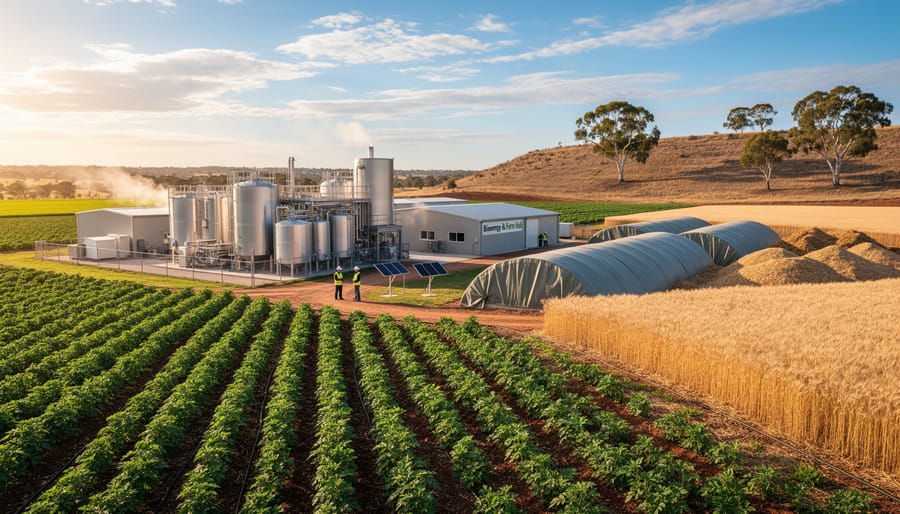
Getting Started: Practical Steps for Implementing MRV in Your Bioenergy Project
Ready to transform your bioenergy project into a carbon credit generator? Setting up an MRV system might seem daunting at first, but breaking it down into manageable steps makes the journey straightforward and achievable.
Your first decision involves selecting the right certification framework. In Australia, the Clean Energy Regulator administers the Emissions Reduction Fund, which remains the primary pathway for domestic carbon credits. For projects with international market ambitions, frameworks like Verra’s Verified Carbon Standard or Gold Standard offer global recognition. The choice depends on your project scale, target market, and specific bioenergy activities. Consider a Queensland biogas facility that started with the ERF’s landfill gas method, later expanding to international verification as their operations grew—this staged approach allowed them to build expertise gradually while generating revenue from the outset.
Next, you’ll need qualified third-party verifiers. The Clean Energy Regulator maintains a list of registered greenhouse and energy auditors who can verify Australian carbon credit units. Look for verifiers with specific bioenergy experience, as they’ll understand the nuances of organic waste streams, combustion efficiency, and fugitive emissions. Don’t hesitate to interview potential verifiers about their track record with similar projects.
Understanding costs helps with realistic budgeting. Initial setup typically ranges from fifteen thousand to fifty thousand dollars for smaller projects, covering baseline assessments, monitoring equipment, and documentation systems. Annual verification costs vary between five thousand and twenty thousand dollars, depending on project complexity. However, these investments quickly pay dividends through carbon credit sales.
Australian government support programs can significantly offset these expenses. The Clean Energy Finance Corporation offers loans and equity investments for clean energy projects, while state-based programs like the NSW Climate Change Fund provide grants for emissions reduction initiatives. Regional development agencies often have specific support packages for agricultural and waste-based bioenergy projects.
Start by conducting a preliminary emissions assessment to understand your project’s carbon abatement potential. This helps determine whether MRV investment makes commercial sense and which framework suits your needs best. Remember, every successful carbon credit project began with someone taking that crucial first step—now it’s your turn to join Australia’s growing community of verified carbon innovators.
The opportunity for Australian bioenergy projects to harness MRV carbon credits represents more than just a revenue stream—it’s a pathway to meaningful climate action with measurable impact. As we’ve explored, robust measurement, reporting, and verification systems transform bioenergy initiatives from good intentions into quantifiable contributions toward Australia’s renewable energy transition and emission reduction targets.
For project developers and organizations wondering where to start, the message is clear: proper MRV isn’t an optional extra or bureaucratic burden. It’s the foundation that unlocks value, builds credibility, and connects your work to the broader climate solution Australia desperately needs. The success stories we’ve examined, from agricultural waste-to-energy facilities to innovative forestry residue projects, demonstrate that when MRV is done right, everyone benefits—project operators secure sustainable income, investors gain confidence, and communities see real environmental progress.
Australia stands at a pivotal moment in its energy journey. The infrastructure for carbon markets exists, methodologies are established, and demand for verified credits continues growing. What’s needed now is action from organizations willing to implement rigorous MRV systems that meet international standards while addressing our unique Australian conditions.
Whether you’re managing an existing bioenergy facility or planning a new venture, now is the time to explore how MRV carbon credits can strengthen your project. Reach out to accredited verification bodies, engage with carbon market specialists familiar with Australian frameworks, and connect with industry networks to learn from others who’ve successfully navigated this journey. The climate won’t wait, but the rewards for those who act decisively—both environmental and economic—have never been more compelling. Your contribution to Australia’s clean energy future starts with that first measurable, reportable, and verifiable step.