
Carbon credits in Australia currently trade between $25 and $65 per tonne of CO2 equivalent, with prices fluctuating based on market demand, government policy settings, and the quality of underlying offset projects. Understanding these price dynamics unlocks opportunities for landholders, businesses, and renewable energy developers to participate in Australia’s growing carbon market while accelerating the transition to clean energy.
The pricing mechanism works through supply meeting demand. Companies facing emissions reduction obligations purchase credits from project developers who sequester or avoid carbon emissions through activities like reforestation, soil carbon storage, or renewable energy generation. When renewable energy policies strengthen, such as increased renewable energy targets or enhanced Feed-in Tariffs, carbon credit prices typically rise because fewer emissions-intensive activities occur, reducing the natural supply of offset opportunities.
Three primary factors drive carbon credit values in the Australian context. Regulatory frameworks like the Safeguard Mechanism set baseline requirements that create buyer demand. Project quality and verification standards determine which credits command premium prices. Market sentiment around climate action influences investor confidence and trading volumes.
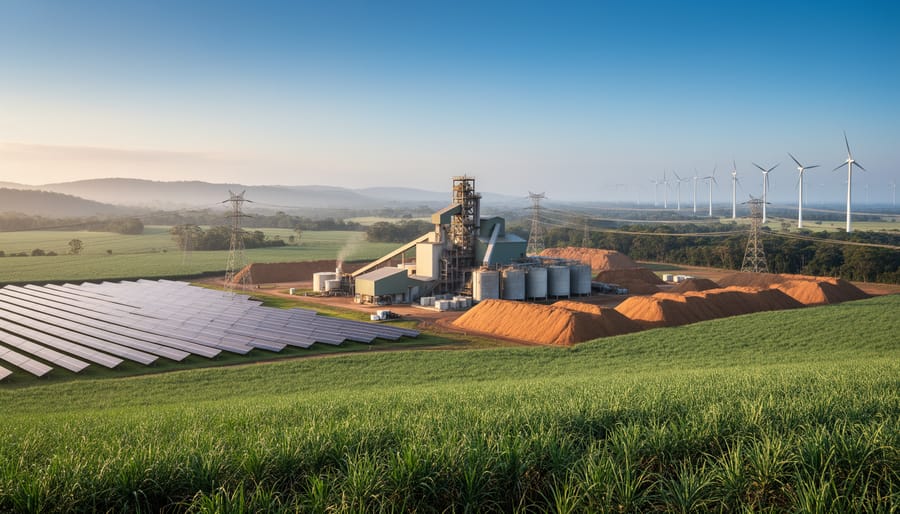
For practical application, Australian bioenergy projects generating electricity from agricultural waste or forestry residues can simultaneously claim renewable energy certificates and carbon credits, creating dual revenue streams. A sugarcane mill in Queensland, for instance, recently secured $2.3 million annually by converting bagasse to electricity while earning credits for avoided methane emissions.
This financial architecture transforms environmental responsibility from a cost center into a revenue opportunity, making sustainable practices economically compelling for organizations across regional and metropolitan Australia.
What Carbon Credits Really Mean for Australian Energy
The Price Tag on Pollution
Think of carbon credits as nature’s price tag – they put a dollar value on something that’s been free for too long: the right to pollute our atmosphere. Here’s how it works in plain terms: when a company emits a tonne of carbon dioxide, they need to purchase a credit to offset that emission. It’s like a “pollution permit” that costs money, and suddenly, pumping greenhouse gases into the air isn’t such a cheap option anymore.
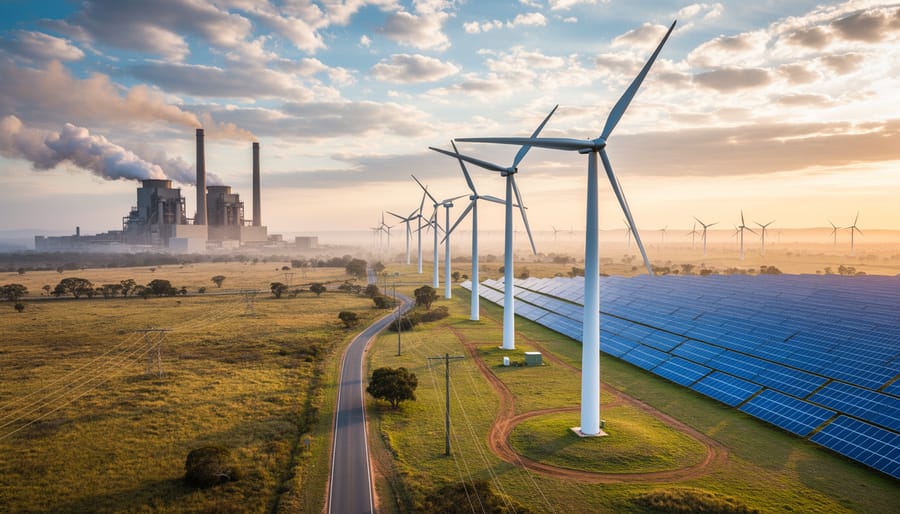
This simple mechanism creates what economists call a “level playing field” for renewable energy sources. Before carbon pricing, fossil fuels appeared cheaper because their environmental costs weren’t factored into the bill. Now, with emissions carrying a price tag, cleaner alternatives like bioenergy can compete more fairly in the marketplace.
Take Southern Oil Refineries in South Australia as a ripper example. After carbon pricing was introduced, they switched to using locally-sourced agricultural waste for energy production. Why? Because the cost of carbon credits made their old diesel generators less economical than investing in bioenergy infrastructure. The result wasn’t just good for their bottom line – it created new jobs in rural communities and reduced emissions significantly. That’s the beauty of carbon pricing: it transforms environmental responsibility from a cost centre into a competitive advantage.
Where Bioenergy Fits In
When organic waste from farms, forestry, and food processing gets converted into energy, something remarkable happens – it creates carbon credits that can be traded and priced in the market. This is where bioenergy solutions truly shine in Australia’s carbon economy.
Here’s how it works: biomass plants capture emissions that would otherwise escape into the atmosphere when organic matter decomposes naturally. By converting this material into clean energy instead, operators earn Australian Carbon Credit Units, which can be sold to businesses needing to offset their emissions. The beauty of this system is that it rewards the circular economy – waste becomes valuable.
Take the Queensland sugar mill that turned bagasse (leftover sugarcane fibre) into electricity. They now generate credits worth hundreds of thousands annually while powering local communities. Or consider the Victorian dairy farmers who installed biodigesters, transforming manure into both energy and tradeable credits.
The pricing mechanism works brilliantly here because bioenergy delivers a double win: reducing emissions while creating renewable power. As carbon prices strengthen, these sustainable choices become increasingly profitable, making environmental responsibility a genuine business opportunity for Australian industries and farms alike.
The Real Forces Behind Carbon Credit Pricing
Supply and Demand in the Carbon Market
Like any market, carbon credit prices dance to the rhythm of supply and demand. When there’s strong demand from companies needing to offset their emissions but limited credits available, prices climb. Conversely, when supply exceeds demand, prices soften.
In Australia, we’ve seen this play out beautifully in the agriculture sector. When drought-affected farmers embraced carbon farming projects, generating credits through soil carbon sequestration and vegetation management, the increased supply initially moderated prices. However, as more corporations committed to net-zero targets, demand surged, pushing prices upward again.
The energy industry tells a similar story. As coal-fired power stations retire and renewable projects ramp up, the supply of Australian Carbon Credit Units has grown from bioenergy projects converting agricultural waste into clean power. A standout example is a Victorian dairy farm that transformed methane from manure into electricity, creating valuable carbon credits while powering local homes.
Market prices also respond to policy changes and international climate commitments. When Australia strengthened its emissions reduction targets, businesses rushed to secure credits, demonstrating how forward-thinking companies can benefit from understanding these market dynamics and acting early.
Government Policy as the Game Changer
Government policies are reshaping the carbon credit landscape in ways that directly impact your bottom line and environmental goals. Federal initiatives like the Safeguard Mechanism and Australian Carbon Credit Units scheme set the foundation, establishing baseline requirements that drive demand for carbon credits. When the government tightens emissions targets, carbon prices typically rise as businesses scramble to meet compliance obligations.
State-level policies add another layer of influence. Victoria’s renewable energy targets and Queensland’s bioenergy roadmap create regional variations in credit values, offering strategic opportunities for savvy operators. These policies aren’t just bureaucratic hurdles—they’re actively strengthening Australia’s energy security while opening new revenue streams.
Consider how the NSW Government’s commitment to net-zero by 2050 has sparked a 40% increase in carbon farming projects across the state. This real-world example demonstrates how clear policy direction translates directly into market confidence and higher credit valuations.
The key takeaway? Stay informed about policy changes at both levels. Regular updates to renewable energy schemes and emissions regulations can create windows of opportunity where early movers capture premium prices for their carbon credits.
What Makes Credits More Valuable
Not all carbon credits are created equal, and understanding what separates the good from the great can help you make informed decisions about your investment. Three key factors determine credit value: permanence, additionality, and verification.
Permanence refers to how long carbon stays locked away. For bioenergy projects, this might mean ensuring biomass sources are sustainably managed to prevent future emissions. Think of it like planting a forest that’ll stand for generations rather than a crop field that’s cleared next season.
Additionality proves your project wouldn’t have happened without carbon credit funding. A Victorian bioenergy facility that converted agricultural waste into renewable energy demonstrated this brilliantly, showing their project was only financially viable through carbon credit revenue.
Verification is your quality stamp. Independent third-party auditors assess projects against rigorous standards, ensuring every tonne of carbon reduction is legitimate. Australian projects verified under schemes like the Clean Energy Regulator’s Emissions Reduction Fund typically command premium prices because buyers trust the numbers.
These quality factors create a tiered market. High-quality credits with strong permanence, clear additionality, and robust verification might fetch twice the price of basic offsets, reflecting their genuine environmental impact and reduced risk for buyers.
When Carbon Pricing Meets Renewable Energy Policies
Double Benefits or Double Trouble?
When carbon pricing meets renewable energy policies, the combination can create powerful momentum for clean energy adoption. Think of it as a one-two punch: carbon pricing makes fossil fuels more expensive while renewable energy subsidies make clean alternatives cheaper. For bioenergy projects in Australia, this dual incentive structure means better financial returns and reduced investment risk.
A brilliant example comes from a Queensland sugarcane mill that transformed its operations by capturing bagasse waste for electricity generation. With both carbon credits from avoided emissions and renewable energy certificates from clean power production, the project became significantly more viable. The mill now generates enough electricity to power 20,000 homes while earning revenue from two separate incentive streams.
However, it’s not always smooth sailing. Policy overlap can sometimes create complications that require careful navigation. Some projects might face questions about double-counting, where the same emission reduction could theoretically qualify for multiple incentives. Australian regulators have worked to address these concerns through clear guidelines that ensure transparency without stifling innovation.
The key is understanding how these policies work together in your specific situation. When properly aligned, carbon pricing and renewable incentives create a stronger business case for bioenergy projects than either policy could achieve alone. This synergy accelerates Australia’s transition to clean energy while providing genuine opportunities for forward-thinking businesses and communities.
Success Story: How One Australian Farm Turned Waste into Profit
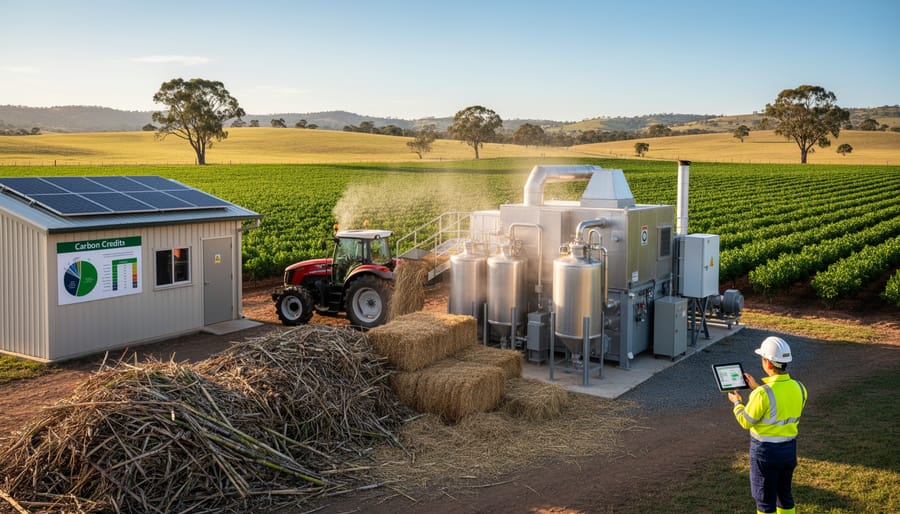
When the Henderson family’s cattle station in regional New South Wales faced mounting waste management costs, they discovered an unexpected opportunity. Their 2,000-head operation was generating substantial organic waste, but instead of seeing it as a problem, they invested in a biogas digester system in 2021.
The results have been nothing short of remarkable. By converting cattle manure and farm waste into biogas, the Hendersons now power their entire property while generating Australian Carbon Credit Units. In their first full year of operation, they earned approximately 850 ACCUs, which at current market prices of around $35 per credit translated to nearly $30,000 in additional revenue.
“We were spending about $45,000 annually on diesel and electricity,” explains Tom Henderson, the property’s third-generation owner. “Now we’re energy independent and actually making money from what used to cost us to dispose of.”
The digestate byproduct has become a valuable organic fertiliser, reducing their need for chemical alternatives by 60 percent. This circular approach has improved soil health while cutting operational costs significantly.
Beyond the financial wins, the Hendersons have noticed unexpected benefits. Their carbon-neutral status has opened doors to premium markets, with several retailers willing to pay higher prices for their beef because of the farm’s sustainability credentials.
This real-world example demonstrates how carbon credit pricing isn’t just theoretical. For Australian agricultural operations willing to invest in bioenergy solutions, the combination of energy savings, carbon credit revenue, and improved marketability creates a compelling business case that pays dividends year after year.
What This Means for Your Bottom Line
For Households and Energy Consumers
For everyday Australians, carbon pricing might seem abstract until it appears on your electricity bill. When power companies factor in carbon costs, these charges typically flow through to consumers. However, here’s the good news: supporting renewable energy sources like bioenergy creates long-term savings that outweigh initial costs.
Think of it as an investment rather than an expense. When you choose energy retailers committed to renewables, you’re backing technologies that become more affordable over time. A Melbourne family recently switched to a green energy plan and noticed their bills stabilising while traditional energy costs continued climbing.
Bioenergy projects particularly benefit households because they use local waste materials, creating jobs in your community while generating power. This means your energy dollars support Australian workers and reduce reliance on imported fossil fuels.
You can also take direct action by improving home energy efficiency, installing solar panels, or participating in community renewable projects. These choices reduce your carbon footprint while protecting your wallet from future price volatility. As carbon pricing encourages the shift to cleaner energy, early adopters position themselves ahead of the curve, enjoying stable costs and the satisfaction of contributing to Australia’s sustainable future.

For Farmers and Land Managers
For Aussie farmers and land managers, carbon credits represent a genuine opportunity to turn sustainable practices into additional income streams. By converting crop residues, animal waste, and agricultural by-products into bioenergy, you’re not just reducing waste—you’re creating a valuable commodity in the carbon market.
The process is more straightforward than many realise. When you capture and utilise agricultural waste for energy generation instead of letting it decompose and release methane, you’re actively reducing greenhouse gas emissions. These reductions can be measured, verified, and sold as Australian Carbon Credit Units through the Emissions Reduction Fund.
Take the case of grain growers in Western Australia who’ve partnered with bioenergy facilities to process their stubble and chaff. They’re earning between $15-25 per tonne of CO2 equivalent while simultaneously solving their residue management challenges. This dual benefit transforms what was once considered farm waste into a revenue generator.
The beauty of this approach lies in its scalability. Whether you’re managing a small mixed farm or a large-scale operation, opportunities exist to participate in carbon markets while contributing to Australia’s renewable energy future and improving your farm’s bottom line.
For Industry and Business
Australian businesses are discovering that carbon credit pricing isn’t just about compliance—it’s a genuine opportunity to turn sustainability into competitive advantage. By purchasing carbon credits, companies can offset unavoidable emissions while investing in renewable projects that deliver real environmental benefits. Many forward-thinking organizations are integrating carbon credits into their operational strategy, effectively reducing their carbon footprint whilst demonstrating genuine commitment to climate action.
The beauty of this approach lies in its flexibility. Businesses can choose credits that align with their values, whether supporting local bioenergy projects or broader renewable initiatives. Some Australian manufacturers have cut their effective carbon costs by 30% through strategic credit purchases combined with energy efficiency improvements. This dual approach not only satisfies stakeholder expectations but often unlocks new market opportunities, as consumers increasingly favour brands with authentic environmental credentials.
For small to medium enterprises, carbon credits provide an accessible pathway to sustainability without requiring massive infrastructure investments upfront. It’s about being smart with your resources while contributing to Australia’s renewable energy future.
Making Sense of Future Price Trends
Where Prices Are Heading
The carbon credit market is showing promising momentum as governments worldwide tighten emission reduction targets. Here in Australia, prices have steadily climbed from around $16 per tonne in 2020 to over $30 by 2023, with projections suggesting continued growth. This upward trajectory reflects our nation’s strengthening commitment to reaching net-zero by 2050.
Several factors are driving this positive trend. As renewable energy policies become more robust and the Safeguard Mechanism adjusts, demand for quality carbon credits is intensifying. Companies recognizing the value of getting ahead of regulatory requirements are entering the market earlier, creating healthy competition. This is particularly true for bioenergy projects, which are increasingly recognized for their dual benefits of waste reduction and clean energy generation.
Industry experts predict Australian Carbon Credit Units could reach $50-60 per tonne by 2030, creating substantial opportunities for landholders, farmers, and businesses investing in carbon sequestration projects. Regional communities with bioenergy facilities are already seeing the financial benefits, turning what was once considered waste into valuable environmental assets. This price growth isn’t just about compliance—it represents a genuine shift toward valuing sustainable practices and rewarding those leading the transition.
New Markets and Technologies
Exciting developments are reshaping the carbon credit landscape, creating fresh opportunities for Australian businesses and landholders. Bioenergy innovation is leading the charge, with projects converting agricultural waste into renewable energy while simultaneously capturing carbon. These dual-benefit ventures are commanding premium prices in carbon markets, as buyers increasingly value credits with measurable environmental co-benefits.
Carbon farming has emerged as a game-changer for rural communities. Farmers across Queensland and New South Wales are regenerating degraded land through clever practices like rotational grazing and strategic tree planting, earning carbon credits while improving soil health and biodiversity. Take the story of the Davidson family in regional Victoria, who’ve transformed their property into a carbon-positive enterprise, generating additional income streams while restoring native vegetation.
Technological advances are revolutionizing how we measure and verify carbon storage. Satellite monitoring and artificial intelligence now provide real-time tracking of carbon sequestration, reducing verification costs and increasing market confidence. This transparency is attracting new buyers and stabilizing prices. Blockchain technology is also entering the picture, creating tamper-proof records that combat fraud and boost market integrity. These innovations are making carbon markets more accessible to smaller participants, democratizing opportunities while driving competitive pricing that rewards genuine environmental outcomes.
Understanding carbon credit pricing isn’t just about numbers on a spreadsheet—it’s about recognizing your role in Australia’s sustainable energy transition. Every carbon credit traded represents real action toward reducing emissions, and every informed decision you make ripples outward, creating momentum for change.
Whether you’re a farmer considering bioenergy production from agricultural waste, a business evaluating carbon offset investments, or simply someone wanting to make smarter energy choices, you’re already part of the solution. The success stories across Australia—from Queensland’s bagasse-to-energy facilities to Western Australia’s innovative waste-to-bioenergy projects—demonstrate that practical, profitable pathways exist right now.
Carbon pricing mechanisms reward those who reduce emissions and fund the technologies that will power our future. By supporting bioenergy projects, you’re not just offsetting carbon; you’re helping build a circular economy where waste becomes wealth and environmental responsibility drives economic opportunity.
Take the first step today. If you’re a business owner, explore how participating in carbon markets could benefit your bottom line while reducing your environmental footprint. If you’re a landowner, investigate how agricultural residues might generate additional income through bioenergy production. Even as an everyday Australian, understanding where your energy comes from and choosing renewable options makes a tangible difference.
The transition to clean energy won’t happen overnight, but it’s happening—and it’s accelerating. By understanding carbon credit pricing and the policies that support renewable energy, you’re equipped to make decisions that matter. Australia’s sustainable future is being built right now, one choice at a time. Make yours count.