
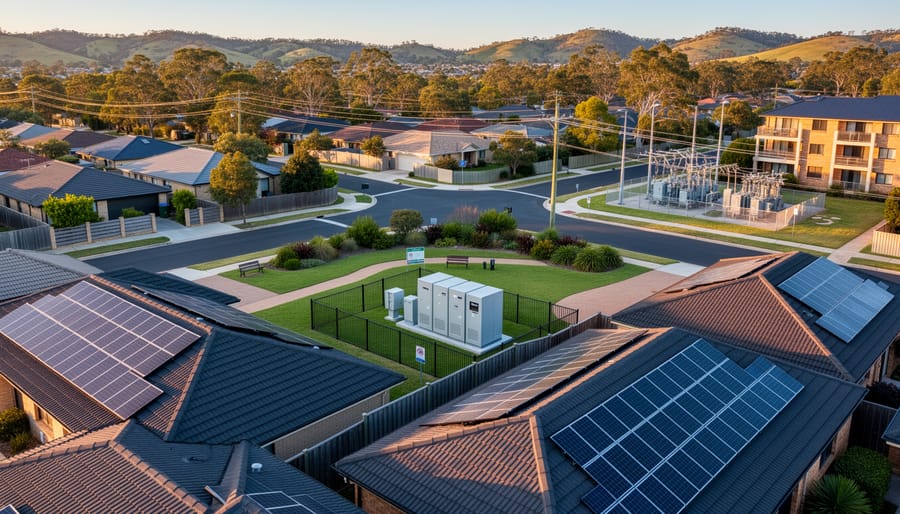
Australia’s communities are transforming how they share, store, and optimize renewable energy through digital platforms that coordinate solar panels, batteries, and grid connections across entire neighbourhoods. Energy management platforms function as the digital nervous system for community energy projects, tracking real-time generation from rooftop solar arrays, managing shared battery storage systems, and automatically balancing supply and demand among participating households and businesses.
These platforms have already proven their worth in Australian settings. The Yackandandah Community Solar Farm in Victoria uses sophisticated software to distribute clean energy among 85 local stakeholders, while Western Australia’s PowerLedger platform enables peer-to-peer energy trading across multiple apartment complexes and communities. In New South Wales, community groups are deploying platforms that aggregate solar production data from hundreds of homes, creating virtual power plants that strengthen grid stability during peak demand periods.
The technology addresses a fundamental challenge: renewable energy generation fluctuates throughout the day, but community coordination can smooth these variations and maximize local energy retention. A well-implemented platform reduces grid dependence by 40-60 percent for participating households, cuts energy costs through optimized battery charging schedules, and provides transparent reporting that keeps community members engaged with their shared energy resources.
For policymakers and community leaders, understanding these platforms means grasping both their technical capabilities and their social impact. They transform renewable energy from individual rooftop installations into coordinated community assets, creating resilience, reducing costs, and demonstrating how digital technology accelerates Australia’s clean energy transition at the grassroots level.
What Are Energy Management Platforms?
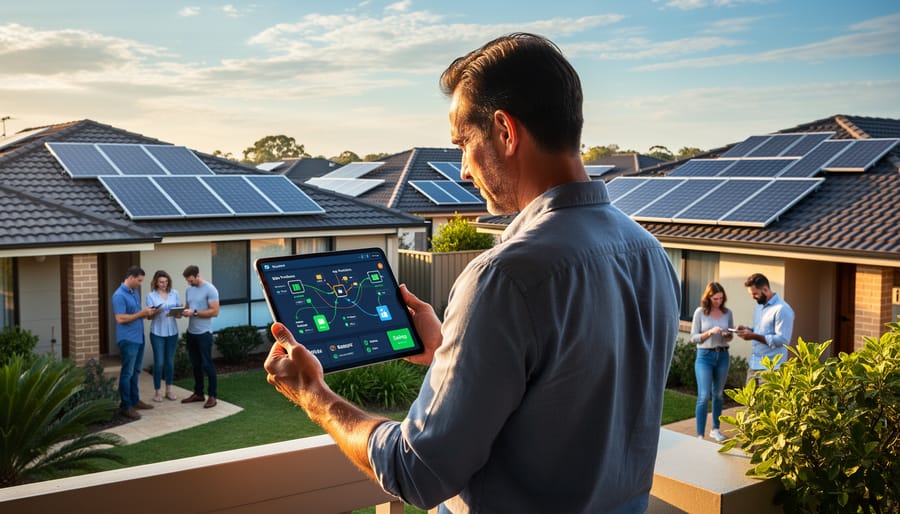
The Digital Backbone of Community Energy
At its core, digital technology enabling community energy relies on three key components working together seamlessly. Smart meters installed in homes and businesses continuously measure energy consumption and generation, providing real-time data that flows through secure cloud-based software platforms. These platforms act as the brain of the operation, processing thousands of data points every second to optimise energy distribution across the community.
Sensors placed throughout the local grid monitor everything from solar panel output to battery storage levels, creating a complete picture of the community’s energy ecosystem. The software then uses this information to automatically balance supply and demand, directing excess renewable energy where it’s needed most or storing it for later use.
Think of it like a conductor leading an orchestra—each instrument (household, solar array, or battery) plays its part, while the platform ensures they all work in harmony. This connected approach transforms individual energy users into active participants in a shared, sustainable energy network that benefits everyone involved.
Why Communities Need Energy Platforms Now
Australian households and businesses are feeling the pinch like never before. Energy bills have climbed sharply over recent years, while our electricity grid faces growing pressure from extreme weather events and aging infrastructure. Yet within this challenge lies a remarkable opportunity. Communities across the country are discovering they don’t need to remain passive consumers at the mercy of rising costs and unreliable supply.
Energy management platforms are changing the game by giving communities the digital tools to coordinate their energy resources intelligently. Instead of individual households struggling alone with solar panels that feed excess power back to the grid for minimal return, these platforms enable neighbours to share, store, and trade energy amongst themselves. They’re transforming scattered rooftop solar installations, batteries, and even electric vehicles into powerful virtual power plants that strengthen local energy security.
The timing couldn’t be better. With renewable energy technology more affordable than ever and communities eager for practical climate solutions, digital coordination platforms provide the missing piece that turns good intentions into measurable impact. They’re empowering everyday Australians to take control of their energy future while building resilience from the ground up.
Real Benefits Communities Are Seeing Today
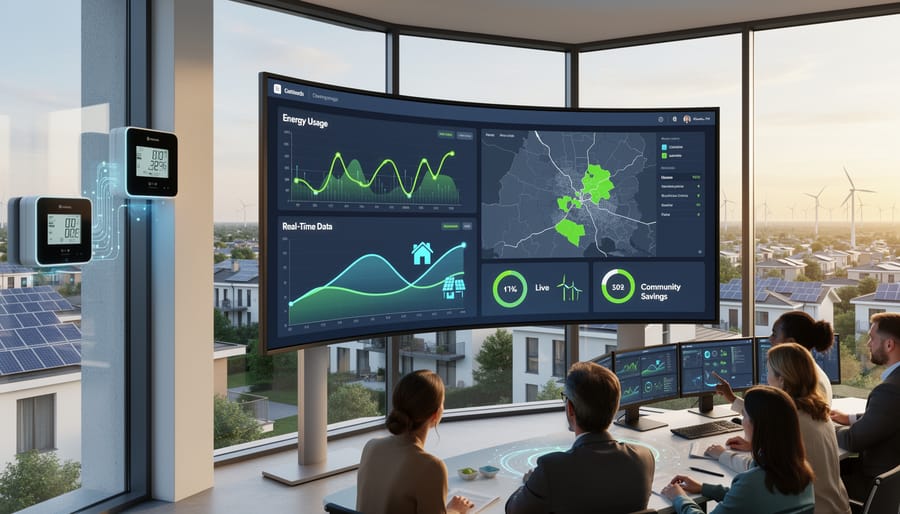
Cutting Power Bills Through Smart Coordination
Across Australia, smart communities are discovering that coordinating their energy use through digital platforms delivers serious savings on power bills. These platforms work like a neighbourhood energy conductor, helping households shift energy-hungry tasks to off-peak periods when electricity costs less and renewable generation is abundant.
Take the example of the Brooklyn microgrid project in South Australia, where residents use an energy management platform to automatically schedule washing machines, pool pumps, and hot water systems for times when solar panels are producing peak power. The result? Participating households have slashed their energy bills by up to 30 percent while supporting grid stability.
In regional Queensland, farming communities are using platforms to share excess solar energy between properties, creating virtual power plants that benefit everyone involved. These systems track generation and consumption in real-time, ensuring fair distribution and maximising the value of every kilowatt-hour produced. Participants often receive community bonus credits that further reduce their costs.
The beauty of these platforms lies in their simplicity. Most operate through smartphone apps that send notifications about optimal times to run appliances or when excess community solar power is available. Some even integrate with smart home devices to automate the process entirely, making it effortless for residents to participate while keeping more money in their pockets and reducing strain on the broader energy grid.
Building Energy Independence with Local Renewables
Across Australia, communities are taking charge of their energy future by combining local renewable resources with smart management platforms. In rural New South Wales, the township of Yackandandah has nearly achieved 100% renewable energy through a coordinated network of rooftop solar, battery storage, and bioenergy systems managed via a central platform that optimizes when and how energy is generated, stored, and shared among residents.
Meanwhile, energy co-ops in South Australia are using digital platforms to coordinate solar farms with agricultural waste-to-energy facilities, creating resilient microgrids that dramatically reduce grid dependence. These platforms track energy production in real-time, predict demand patterns, and automatically switch between solar during daylight hours and bioenergy systems when needed.
The results speak volumes: reduced electricity costs, fewer blackouts during extreme weather events, and stronger community connections. These platforms transform what could be chaotic individual systems into harmonious energy ecosystems, proving that local renewable independence isn’t just possible—it’s already happening right here in Australia.
Creating Local Jobs and Skills
Beyond the environmental benefits, energy management platforms are creating meaningful employment opportunities right here in Australia. As communities establish these systems, they’re discovering the need for skilled locals to monitor energy flows, maintain equipment, and coordinate with householders and businesses.
In regional Victoria, the Yackandandah community energy project has generated roles for energy advisors who help residents understand their consumption patterns and optimise solar generation. These aren’t just jobs—they’re careers that keep young people in country towns rather than forcing them to seek opportunities in capital cities.
The technical side requires technicians trained in both renewable energy systems and digital platform management, opening pathways for trades and IT professionals alike. Meanwhile, community coordinators bridge the gap between technology and people, ensuring everyone from young families to elderly residents can participate confidently.
What’s particularly exciting is how these roles often suit local knowledge and relationships. A neighbour who understands the community’s rhythms and challenges makes an ideal energy coordinator. Schools and TAFEs are responding too, developing training programs specifically for energy platform roles, creating a pipeline of skilled workers ready to support Australia’s renewable transition from the ground up.
How These Platforms Actually Work in Practice
Morning: Coordinating the Energy Peak
Picture a typical Australian morning: kettles boiling, air conditioners starting up, and hot water systems running simultaneously across hundreds of homes. This morning energy peak can strain local grids and drive up costs for everyone. Energy management platforms tackle this challenge head-on by intelligently coordinating when household appliances draw power. Through smart scheduling, these platforms can automatically delay non-urgent tasks like pool pumps or water heaters by just fifteen minutes, spreading demand across the morning rather than creating a single crushing spike. Community members receive friendly notifications on their phones, suggesting the best times to run washing machines or charge electric vehicles. In Melbourne’s Moreland community, residents using such a platform reduced their collective morning peak demand by 18 percent within three months, proving that small individual actions create remarkable community-wide results when coordinated effectively.
Midday: Capturing and Sharing Solar Surplus
As the sun climbs higher, rooftop solar panels across the neighbourhood hit peak production, often generating more electricity than individual households need. This is where energy management platforms truly shine. These smart systems automatically track surplus energy in real-time, creating opportunities that simply weren’t possible a decade ago.
Rather than watching excess solar fade unused or get exported to the grid at minimal rates, the platform identifies which neighbours need power at that exact moment. A household running their washing machine can instantly draw from a neighbour’s solar surplus, while any remaining energy flows into community battery storage for tonight’s dinner rush.
In Western Sydney’s Banksia Grove estate, residents have seen their energy sharing increase by 40% since implementing this technology. The platform handles all the complex calculations behind the scenes, ensuring fair compensation for energy providers while delivering affordable clean power to users. It’s like having a friendly energy coordinator working around the clock, making sure every ray of sunshine delivers maximum benefit to the community. This midday coordination transforms individual solar investments into collective community value.
Evening: Optimizing Battery and Bioenergy Use
As the sun sets and Australians return home, evening demand surges. This is when energy management platforms truly shine, orchestrating a sophisticated dance between stored energy and bioenergy systems. When solar panels stop producing, these platforms automatically trigger battery discharge, releasing the day’s captured sunshine precisely when it’s needed most. Simultaneously, bioenergy systems fueled by agricultural waste or organic materials ramp up generation to meet the evening peak.
The brilliance lies in the coordination. In regional Queensland communities, platforms have successfully reduced evening grid strain by 40 percent through smart battery timing combined with biogas generators that activate during cooking and heating hours. The system learns household patterns, predicting when the footy’s on and everyone’s boiling the kettle. It’s not just about having renewable backup; it’s about using it intelligently. By preventing all batteries from discharging simultaneously and staggering bioenergy activation, these platforms ensure stable supply while maximizing the value of every stored kilowatt-hour, turning potential evening chaos into seamless, sustainable power delivery.
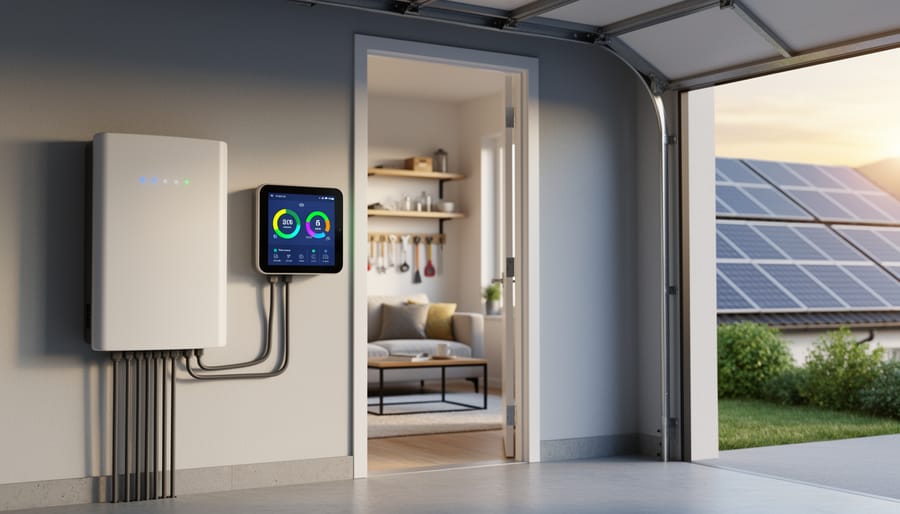
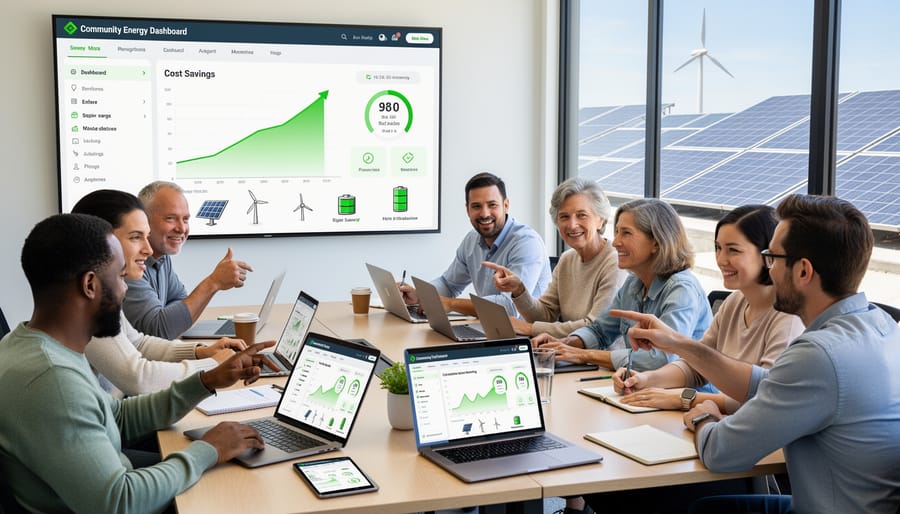
Australian Communities Leading the Way
Right across Australia, forward-thinking communities and organisations are proving that energy management platforms deliver real results. These digital tools are transforming how Australians generate, share, and consume energy, creating measurable benefits for both the environment and the hip pocket.
In Perth’s White Gum Valley, a groundbreaking initiative has demonstrated the power of smart energy coordination. This residential development uses an advanced energy management platform to connect 18 homes equipped with solar panels and battery storage. The platform enables residents to share excess solar energy with neighbours, creating a virtual mini-grid that operates alongside the main electricity network. Since implementation in 2020, participants have reduced their reliance on grid electricity by 65 percent during peak periods. The platform’s real-time monitoring shows households saving an average of 850 dollars annually on energy bills, while simultaneously cutting carbon emissions by approximately 3.2 tonnes per household each year. What makes this particularly impressive is how the technology learns from usage patterns, automatically optimising when to store energy, when to share it, and when to draw from the grid at the cheapest rates.
The New South Wales town of Yackandandah offers another inspiring example of community-powered change. This small regional community of around 1,800 residents has embraced an energy management platform as part of their mission to become 100 percent renewable. The platform coordinates energy production from multiple solar installations across community buildings, farms, and homes, creating a comprehensive picture of local energy flows. Within two years of adoption, the community increased its renewable energy self-sufficiency from 30 percent to 72 percent. Local businesses report significant savings, with the community-owned bakery cutting energy costs by 40 percent through optimised equipment scheduling based on solar availability.
These cross-community energy projects demonstrate how energy management platforms transform abstract sustainability goals into concrete achievements. The Byron Bay Community Solar Farm provides a third compelling case study. Their platform manages 6.5 megawatts of solar capacity shared among 550 local members, tracking each participant’s energy contribution and consumption. Members access their personalised dashboard showing real-time data, seasonal patterns, and environmental impact. The platform has enabled the farm to operate at 94 percent efficiency, well above industry averages, proving that sophisticated technology paired with community commitment creates powerful outcomes.
Getting Started: What Your Community Needs
Essential Infrastructure and Technology
Getting started with energy management platforms isn’t as complex as you might think. At the foundation, you’ll need smart meters installed at your property or throughout your community. These clever devices measure energy consumption in real-time, providing the detailed data that makes intelligent energy decisions possible. Think of them as the eyes and ears of your energy system.
Reliable internet connectivity is equally essential, as it allows your smart meters and devices to communicate with the platform’s cloud-based software. Most platforms work perfectly well with standard broadband or NBN connections, making them accessible across urban and regional Australia.
If you’re generating your own power through solar panels, wind turbines, or other renewable sources, you’ll want compatible inverters and monitoring equipment that can talk to your chosen platform. The good news is that most modern renewable energy systems are designed with this connectivity in mind.
Finally, smart appliances and controllable devices like hot water systems, pool pumps, and battery storage units multiply the platform’s effectiveness. These allow automated responses to price signals or excess renewable generation, turning your energy system from passive to proactive without requiring constant attention.
Finding the Right Platform for Your Community
Selecting the right energy management platform starts with understanding your community’s unique circumstances. Begin by assessing your community size and energy consumption patterns – a small neighbourhood initiative will have vastly different needs than a regional network spanning multiple towns.
Take stock of your existing energy infrastructure. Do you already have solar panels, battery storage, or plans for renewable installations? The platform you choose should seamlessly integrate with your current setup while allowing room for future growth. Consider platforms that offer scalability, so you’re not locked into a system that can’t evolve with your community’s ambitions.
Define your specific goals upfront. Are you focused on reducing bills, achieving energy independence, or maximising renewable generation? Perhaps you’re passionate about community energy education and need tools that help members understand their consumption. The Yackandandah Community Energy project in Victoria chose their platform based on goals of complete renewable transition, demonstrating how clear objectives guide technology choices.
Don’t overlook user-friendliness. The best platform means nothing if community members find it overwhelming. Request demonstrations, speak with other Australian communities using similar systems, and ensure the provider offers ongoing support. Remember, this technology should empower your community, not complicate your journey toward sustainable energy independence.
Overcoming Common Concerns
Making the shift to a digital energy management platform can feel daunting, but most concerns have straightforward solutions that make the transition smoother than you might expect.
Privacy and data security often top the list of worries. The good news is that reputable energy management platforms use bank-level encryption and comply with Australian Privacy Principles. Your energy data stays secure, and most platforms give you complete control over who sees your information. Think of it like online banking—once considered risky, now used confidently by millions of Australians daily. Energy platforms follow the same rigorous security standards.
Technical complexity is another common hesitation, particularly for smaller community groups without IT specialists. However, modern platforms are designed with user-friendly interfaces that require no coding knowledge. Many Australian providers offer training sessions, video tutorials, and responsive support teams who speak plain English. The Lake Macquarie community energy project, for instance, had participants ranging from tech-savvy university students to retirees with basic computer skills—all successfully navigating their platform within days.
Upfront costs can seem prohibitive, but context matters. Many platforms operate on subscription models with modest monthly fees, making them accessible for communities of all sizes. Some even offer free tiers for smaller projects. When you factor in the energy savings—typically 15-30% in the first year—most communities recover their investment quickly. Several Victorian neighbourhood groups reported that their platform costs were offset within six months through collective purchasing arrangements and optimised energy use.
The reality is that not adopting these platforms often costs more in missed opportunities for savings, efficiency, and community empowerment.
Australia stands at the threshold of an energy revolution, and community energy management platforms are the key that unlocks this transformation. These digital tools aren’t futuristic concepts—they’re working right now in communities across the country, proving that democratised, sustainable energy is not just possible but practical and profitable.
From the sun-soaked rooftops of Newstead to innovative councils in Victoria, Australians are already experiencing the benefits: lower energy bills, reduced emissions, stronger community bonds, and greater energy independence. These platforms have transformed the way we think about electricity—from a commodity we passively consume to a resource we actively manage together.
The technology exists, the business models are proven, and the benefits are undeniable. Whether you’re a community leader looking to slash energy costs, a policymaker seeking scalable climate solutions, or simply someone who believes their neighbourhood deserves better energy outcomes, now is the time to act.
Start by exploring what’s possible in your own community. Connect with organisations already implementing these platforms, speak with your local council about community energy initiatives, or join existing renewable energy groups. Every large-scale transformation begins with curious individuals asking, “Why not here? Why not now?”
The future of Australia’s energy system will be cleaner, smarter, and more community-focused. The question isn’t whether this transformation will happen—it’s whether your community will lead it or follow it. The platforms are ready. The opportunity is now. What will you choose?