
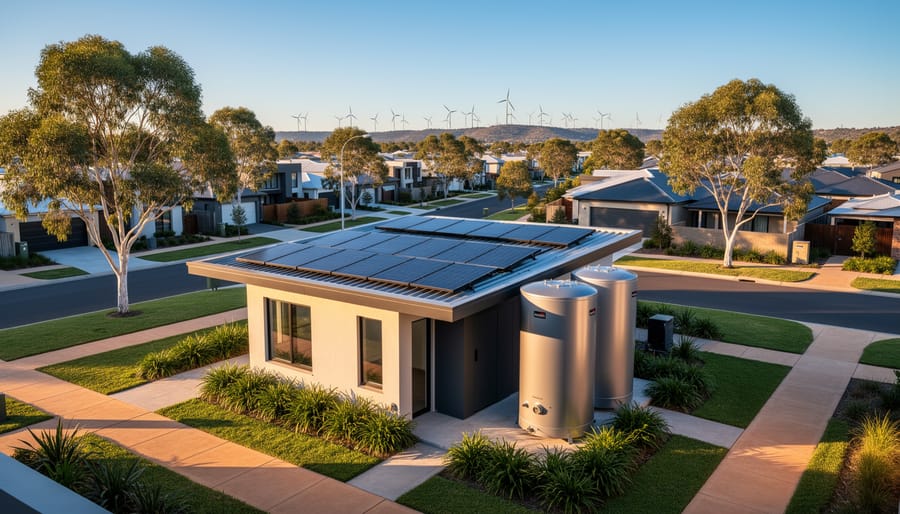
Imagine powering entire neighbourhoods with clean energy generated right where you live. Across Australia, forward-thinking communities are discovering that renewable energy isn’t just for individual households—it’s transforming how entire districts heat homes, businesses, and public spaces through shared systems that slash emissions while strengthening local economies.
District energy systems connect multiple buildings to centralised renewable heating and cooling sources, creating efficiency impossible to achieve building-by-building. From Canberra’s biomass-powered precincts to Melbourne’s solar thermal networks, these systems prove that community energy independence delivers both environmental wins and financial returns.
The renewable sources powering these systems vary dramatically in scale, technology, and application. Some tap into the earth’s constant underground temperatures. Others harness organic waste that would otherwise rot in landfills. Several convert sunshine into steam, while others capture energy from sources you’d never expect could heat your morning shower.
Understanding these eight renewable options empowers communities to choose solutions matching their unique geography, resources, and needs. Whether you’re a council member exploring sustainable infrastructure, a developer planning the next eco-precinct, or simply curious about Australia’s energy future, these technologies represent practical pathways already working in real communities today. Each offers distinct advantages worth considering as we collectively build cleaner, more resilient energy systems that benefit everyone involved.
What Makes Community District Energy Different
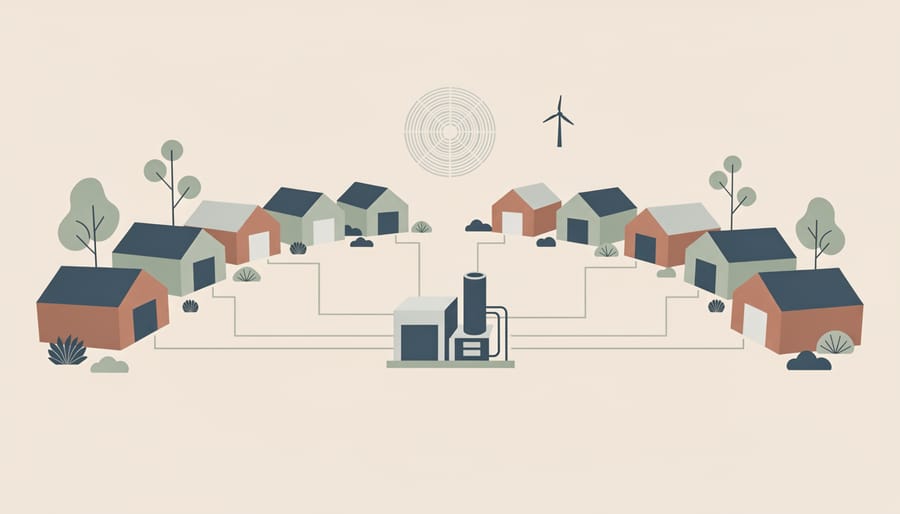
Community district energy systems represent a fundamental shift from the traditional “every building for itself” approach to heating and cooling. Rather than each home or business running its own boiler or air conditioner, district energy connects multiple buildings to a shared central plant through an underground network of insulated pipes. Think of it like the water mains that deliver clean water to your neighbourhood, except these pipes carry hot water or steam for heating, and chilled water for cooling.
What makes this approach particularly clever is the economy of scale. A centralised system can use renewable energy technologies that simply aren’t practical for individual properties. For instance, while installing a biomass boiler might be impractical for a single home, a district system serving 200 homes can efficiently burn local agricultural waste, creating heat that benefits the entire community whilst supporting regional farmers.
In Australia, we’re seeing communities embrace this collaborative approach through energy co-ops and council-led initiatives. The system is more efficient because larger equipment operates more effectively, maintenance costs are shared, and communities can negotiate better rates for fuel or installation.
A standout example comes from the Sydney suburb of Lachlan’s Line, where residents collaborated to install a shared ground-source heat pump system combined with rooftop solar thermal collectors. Since 2019, the 150-home development has reduced heating costs by 40% compared to individual systems, whilst eliminating reliance on natural gas entirely. The project demonstrates how pooling resources transforms renewable heating from an expensive luxury into an affordable reality, proving that together, Australian communities can achieve what individuals cannot.
Biomass and Bioenergy: The Foundation of Community Heat
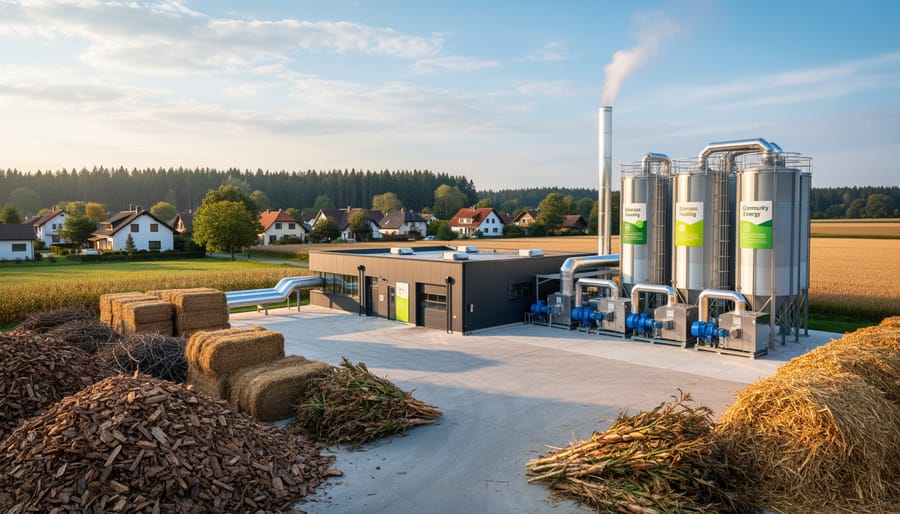
When it comes to powering district heating systems with renewable energy, biomass stands out as a proven, practical solution that’s already transforming Australian communities. Think of it as nature’s recycling program – what was once considered waste becomes a valuable energy resource.
Biomass energy harnesses heat from organic materials that would otherwise end up in landfill. Agricultural waste like wheat stubble and sugarcane bagasse, forestry residues from timber operations, and even municipal green waste can all be converted into reliable heat for entire neighbourhoods. The process is straightforward: these materials are burned in specially designed boilers that capture and distribute heat through underground pipes to homes and businesses.
The beauty of biomass district heating lies in its dual benefit. Communities reduce waste while creating local energy independence. Take the timber town of Heyfield in Victoria’s Gippsland region, where Australian Sustainable Hardwoods uses wood waste from their mill operations to generate heat and electricity. What was once a disposal problem now powers their operations and supports local jobs.
Similarly, sugar-producing regions across Queensland are finding innovative ways to utilise bagasse – the fibrous residue left after crushing sugarcane. Rather than burning it in open fields, progressive sugar mills are feeding it into cogeneration plants that provide heat and power to surrounding communities.
The economic ripple effects are remarkable. Every biomass district heating project creates employment opportunities across the supply chain – from collecting and processing feedstock to maintaining heating systems. Regional communities particularly benefit, keeping energy dollars circulating locally rather than flowing to distant fossil fuel companies.
For councils and community groups exploring renewable heating options, biomass offers a compelling starting point. It uses technology that’s well-understood, draws on locally available resources, and delivers tangible environmental benefits. The emissions from modern biomass systems are significantly lower than fossil fuels, and the carbon released was recently captured from the atmosphere, making it part of the natural carbon cycle rather than adding ancient carbon to our atmosphere.
Solar Thermal Systems for Shared Heating
While solar photovoltaic panels get most of the attention for converting sunshine into electricity, solar thermal technology takes a different approach by capturing the sun’s heat directly. This distinction makes solar thermal systems particularly valuable for community district heating networks, where the goal is to warm homes and water rather than generate power.
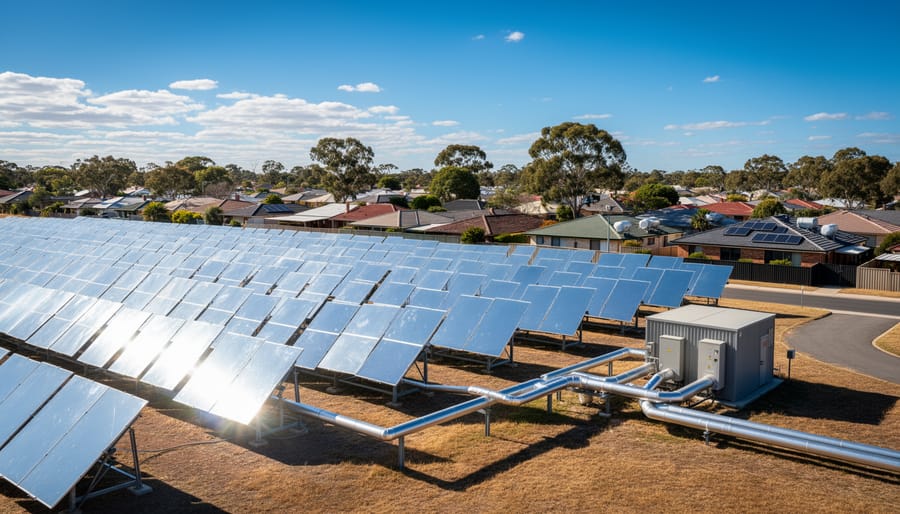
Solar thermal systems work by using collectors, often mounted on rooftops or ground-level arrays, to absorb solar radiation and transfer that heat to a fluid, typically water or a water-glycol mixture. This heated fluid then travels through insulated pipes to a central storage facility, where it’s distributed throughout the community heating network. It’s a beautifully simple concept that harnesses our most abundant natural resource.
Australia’s legendary sunshine makes it an ideal candidate for solar thermal district heating. Several forward-thinking communities are already proving the technology’s potential. In Western Sydney, a residential development has successfully integrated solar thermal collectors with communal hot water systems, reducing reliance on gas and cutting carbon emissions significantly. The project demonstrates how shared infrastructure can deliver benefits that individual households simply couldn’t achieve alone.
Regional communities across Queensland and South Australia are also exploring solar thermal district heating, particularly for aged care facilities, housing estates, and mixed-use developments. These projects combine large-scale solar thermal arrays with seasonal thermal storage, allowing captured summer heat to help warm buildings during cooler months.
The beauty of solar thermal for district heating lies in its efficiency. While solar PV converts about 15-20% of sunlight into electricity, solar thermal systems can capture up to 70% of solar energy as usable heat. For communities blessed with abundant sunshine, this technology offers a practical pathway toward sustainable, shared heating that reduces costs and environmental impact simultaneously.
Geothermal Energy: Tapping Underground Heat
Beneath our feet lies an incredible source of constant, reliable heat that’s already transforming how communities stay warm. Geothermal energy harnesses the Earth’s natural underground warmth to provide heating and hot water, making it a remarkably stable renewable option for district energy systems.
The concept is beautifully simple: the ground maintains a relatively constant temperature year-round, much warmer than winter air and cooler than summer heat. Deep geothermal systems tap into hot water reservoirs or steam found kilometres underground, where temperatures can exceed 150 degrees Celsius. These systems are perfect for large-scale district heating networks. Meanwhile, shallow geothermal systems, often called ground-source heat pumps, access the moderate temperatures found just a few metres below the surface, using pipes to transfer heat efficiently.
Australia sits on tremendous geothermal potential, particularly in South Australia, Queensland, and Victoria, where geological conditions create excellent opportunities. While we’re still developing our geothermal industry compared to countries like Iceland, exciting progress is underway. The Cooper Basin in South Australia has attracted significant interest for its deep geothermal resources, whilst several communities are exploring shallow systems for more immediate applications.
Geelong, Victoria, showcases practical implementation with ground-source heat pumps servicing commercial buildings, demonstrating how the technology works in Australian conditions. The benefits are compelling: geothermal systems require minimal land space, operate quietly, produce zero emissions at point of use, and deliver heat regardless of weather conditions or time of day.
For community planners, geothermal energy offers a particularly attractive proposition because infrastructure can be scaled progressively. Starting with a neighbourhood project can prove the concept before expanding to larger district networks, making the transition to renewable heating both manageable and remarkably efficient.
Biogas from Community Waste
Organic waste doesn’t have to be a burden—it can become a valuable energy resource. Biogas technology transforms everyday rubbish from households, farms, and food processing facilities into renewable energy for heating and electricity. When organic materials like food scraps, garden waste, and agricultural residues break down in oxygen-free conditions, they naturally produce methane-rich biogas. This gas can power heating systems, cook meals, and generate electricity, all while solving two problems at once: waste management and energy needs.
The beauty of biogas lies in its dual benefit. Instead of sending organic waste to landfills where it produces harmful greenhouse gases, communities can capture and use these emissions productively. The leftover material from biogas production also makes excellent fertiliser, creating a truly circular system where nothing goes to waste.
A brilliant example comes from the New South Wales town of Cowra, where locals faced mounting waste disposal costs and growing environmental concerns. The community partnered with a regional initiative to install a biogas system that processes organic waste from homes, local farms, and the district’s food producers. What was once destined for landfill now heats the community swimming pool and powers nearby facilities.
“We’ve turned our rubbish into something genuinely useful,” says the project coordinator. “Families know their food scraps are keeping the pool warm for their kids—that’s pretty special.”
The project has slashed waste collection costs and reduced the town’s carbon footprint significantly. It’s inspired neighbouring communities to explore similar solutions, proving that with a bit of innovation and community spirit, waste problems can become energy opportunities. For communities across Australia, biogas represents an accessible entry point into renewable energy that delivers immediate, tangible benefits.
Heat Pumps Powered by Renewable Electricity
Large-scale heat pumps are transforming how Australian communities access clean, efficient heating by extracting ambient warmth from the air around us, water bodies, or the ground beneath our feet. These clever systems work like refrigerators in reverse, capturing low-grade heat and concentrating it to useful temperatures for district heating networks. The real beauty emerges when renewable electricity from wind farms or solar arrays powers these heat pumps, creating an entirely emissions-free heating solution.
The technology is brilliantly simple yet powerful. Air-source heat pumps can deliver three to four units of heat for every unit of electricity consumed, making them incredibly efficient even in cooler climates. Ground-source systems tap into the earth’s consistent underground temperatures, while water-source variants draw from rivers, lakes, or coastal waters. When renewable electricity drives these systems, communities access heating that’s both sustainable and cost-effective over the long term.
Victoria’s planned developments showcase this potential beautifully. Several councils are exploring district energy schemes that combine large-scale heat pumps with solar and wind power, particularly in new housing estates and urban renewal precincts. The Danish town of Esbjerg offers an inspiring precedent, where massive heat pumps powered by offshore wind deliver heating to 25,000 homes.
For Australian communities eyeing similar solutions, the compelling economics and environmental benefits make heat pumps an increasingly attractive option. As our renewable electricity grid strengthens, these systems become even more viable, offering communities a practical pathway toward carbon-neutral heating that works with our existing infrastructure and climate conditions.
Waste Heat Recovery from Industry
Every day, Australian industries release enormous amounts of heat into the atmosphere during manufacturing, cooling, and processing operations. Rather than letting this energy vanish into thin air, forward-thinking communities are capturing and redistributing it through district heating networks, turning yesterday’s waste into tomorrow’s warmth.
The concept is brilliantly simple: industries like steel manufacturers, food processing plants, and breweries generate substantial heat as a byproduct. Data centres, which require constant cooling to protect servers, produce consistent warmth year-round. Even wastewater treatment plants handling millions of litres daily create recoverable thermal energy. By installing heat exchangers and connecting to community heating systems, this otherwise wasted energy can warm homes, businesses, and public facilities.
This approach embodies the circular economy at its finest. Instead of burning additional fuel to heat buildings while simultaneously cooling industrial equipment, communities create a closed loop where one facility’s excess becomes another’s resource. The environmental benefits are substantial, reducing both carbon emissions and energy costs simultaneously.
Melbourne’s Cremorne Precinct is pioneering this approach, investigating how data centre waste heat could warm nearby apartments and offices. Meanwhile, Sydney Water has explored capturing thermal energy from its treatment facilities. In South Australia, industrial partnerships are examining how manufacturing heat can serve neighbouring communities.
The beauty of waste heat recovery lies in its reliability. Unlike solar or wind, industrial processes often run continuously, providing steady, dependable warmth. For communities located near suitable industrial partners, this renewable source represents an untapped goldmine of sustainable energy, transforming inefficiency into opportunity while strengthening local economies through innovative collaboration.
Hydrogen for Seasonal Heat Storage
Imagine capturing surplus sunshine and wind when it’s abundant, then releasing that energy months later when your community needs warmth most. That’s the remarkable promise of hydrogen as a seasonal energy storage solution, and it’s already being explored in forward-thinking Australian communities.
Here’s how it works: during periods of high renewable electricity generation—think those brilliant summer days when solar panels are working overtime—excess power produces green hydrogen through a process called electrolysis, which splits water into hydrogen and oxygen. This hydrogen can be stored safely for months, essentially banking your community’s excess renewable energy for winter.
When heating demand peaks during those chilly Melbourne mornings or Canberra’s frosty nights, the stored hydrogen powers fuel cells or specially adapted boilers to provide district heating. It’s like having a massive clean energy battery that doesn’t degrade over time.
Several Australian pilot projects are testing this technology right now. The Hydrogen Park in South Australia demonstrates how hydrogen can integrate with existing gas infrastructure, while research institutions across the country are developing safe, cost-effective storage solutions scaled for community use.
While widespread adoption remains a few years away, the potential is genuinely exciting. As renewable electricity becomes increasingly affordable and hydrogen technology matures, this could revolutionize how Australian communities balance seasonal energy supply and demand. It’s about creating resilient, self-sufficient heating systems that work with nature’s rhythms rather than against them.
Hydroelectric-Powered District Heating
Communities blessed with flowing rivers and reliable water resources have discovered an elegant solution for heating: combining hydroelectric power with district heating systems. This approach harnesses clean electricity from water turbines to drive heat pumps and electric boilers, creating warmth for entire neighbourhoods while maintaining zero emissions.
The synergy is beautifully straightforward. Hydroelectric plants generate consistent, renewable electricity that powers large-scale heat pumps, which extract thermal energy from ambient sources and amplify it for distribution through insulated pipe networks. During peak electricity production periods, excess hydropower can drive electric boilers to heat water, storing thermal energy for later use. This flexibility makes hydro-powered heating remarkably efficient and reliable.
Tasmania offers a compelling Australian example, where abundant hydroelectric resources provide over 90 percent of the state’s electricity. While large-scale district heating remains limited, smaller communities are exploring how their hydro-rich grid can support localised heating networks. The Tasmanian Government’s renewable energy zones present exciting opportunities for integrating hydro-powered thermal systems.
Internationally, Iceland stands as the gold standard, though using geothermal alongside hydro. Norway provides a more applicable model, where hydroelectric power drives heat pumps serving entire districts in cities like Oslo, demonstrating how water-powered electricity seamlessly transitions into community warmth.
For Australian communities near existing hydro facilities, particularly in Tasmania and the Snowy Mountains region, this approach offers genuine potential. The technology exists, the renewable generation is proven, and the environmental benefits are undeniable. It’s simply a matter of connecting the dots between our water resources and our heating needs.
Making It Happen: Starting a Community Renewable Heat Project
Ready to turn your community’s renewable heat vision into reality? The journey begins with conversations around kitchen tables, community halls, and local council chambers. Australian communities are increasingly discovering that developing district energy systems isn’t just about infrastructure—it’s about building shared ownership of a sustainable future.
Start by gathering your neighbours and local stakeholders. Successful projects emerge from genuine community engagement where residents understand the benefits and have input into the design. Host information sessions, share success stories from other Australian towns, and identify local champions who can drive momentum. This groundwork builds the social license essential for long-term success.
Next, conduct a thorough resource assessment. What renewable energy sources are abundant in your area? Does your community have forestry residues, agricultural waste, geothermal potential, or strong solar resources? Professional feasibility studies help match your community’s heating needs with the most suitable renewable sources. Many Australian councils offer technical support or can connect you with experienced consultants.
Funding remains a common concern, but diverse opportunities exist. The Australian Renewable Energy Agency (ARENA) and state government grants regularly support community energy projects. Explore innovative financing models including community bonus credits, cooperative ownership structures, and private-public partnerships. Some communities successfully leverage local government support to reduce upfront costs and accelerate development.
Modern technology makes community energy projects more viable than ever. Advances in smart community energy systems enable efficient heat distribution and real-time monitoring, maximizing returns on investment.
Remember, you’re not alone in this journey. Networks of community energy groups across Australia share knowledge, resources, and encouragement. Start small, think long-term, and celebrate each milestone. Your community’s renewable heat project could inspire dozens more across the country.

The future of Australian energy lies not in choosing one renewable source, but in weaving together the strengths of all eight. When solar panels, wind turbines, biomass systems, geothermal heat, hydropower, biogas digesters, waste-to-energy facilities, and hydrogen technologies work in concert within community district energy networks, something remarkable happens. These systems transform neighbourhoods from passive energy consumers into active, resilient communities that generate their own clean power and heat.
Across Australia, forward-thinking communities are already proving this vision works. From the coastal towns harnessing ocean winds to rural districts turning agricultural waste into reliable baseload energy, these pioneers are creating local jobs, slashing energy bills, and dramatically cutting emissions. The beauty of integrated renewable systems is their flexibility—what works for a suburb in Queensland might look different to a community in Tasmania, yet both can achieve energy independence by selecting the right combination for their unique circumstances.
The transition won’t happen overnight, but every community that takes the first step brings us closer to a cleaner, more secure energy future. Whether you’re a resident concerned about rising power costs, a council member exploring infrastructure options, or a business owner seeking sustainable solutions, now is the time to investigate what’s possible in your neighbourhood.
Start the conversation today. Gather your community, explore local renewable resources, and connect with experienced providers who can help design a district energy system tailored to your needs. Together, we can build connected, self-sufficient Australian communities powered entirely by clean, renewable energy.