
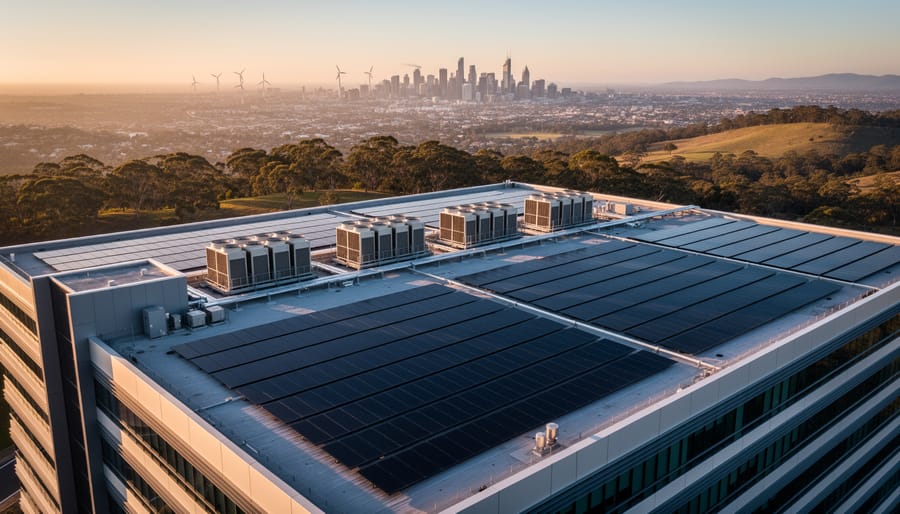
Australia’s journey toward renewable energy has unlocked innovative financing mechanisms that remove the biggest barrier to sustainable infrastructure: upfront capital costs. Energy Savings Performance Contracts (ESPCs) represent a game-changing approach where organizations upgrade to energy-efficient systems without dipping into their budgets, paying for improvements solely through the money saved on energy bills.
Picture a hospital in Melbourne replacing outdated lighting and HVAC systems with cutting-edge, energy-efficient alternatives. Under an ESPC, a specialized company funds the entire installation, guarantees specific energy savings, and gets repaid from those savings over an agreed period. If the savings fall short, the company covers the difference. It’s a risk-free pathway to modernization that’s transforming schools, government buildings, and commercial facilities across the country.
When combined with Contracts for Difference (CfDs), which stabilize renewable energy prices and protect investors from market volatility, ESPCs become even more powerful. This synergy creates bankable projects that attract private investment while delivering guaranteed environmental outcomes.
From Adelaide’s Council House 2, which achieved carbon neutrality through performance contracting, to Queensland government buildings saving millions annually, ESPCs prove that financial prudence and environmental responsibility aren’t competing interests. They’re complementary goals that forward-thinking organizations are achieving right now.
Whether you’re managing a facility, shaping energy policy, or exploring renewable energy solutions for your organization, understanding how ESPCs work alongside other financing tools opens doors to immediate action on climate commitments without compromising fiscal responsibility.
What Are Energy Savings Performance Contracts?
Energy Savings Performance Contracts, or ESPCs, represent a clever financing solution that’s helping Australian businesses, councils, and institutions slash their energy bills without upfront capital costs. Think of them as a partnership where the financial risk shifts away from you and onto experts who guarantee results.
Here’s how they work: an Energy Service Company (ESCO) conducts a thorough energy audit of your facility, identifies opportunities for savings, then designs and installs energy-efficient upgrades using their own funds. The brilliant part? They’re paid from the actual energy savings generated by these improvements. If the promised savings don’t materialise, the ESCO wears the loss, not you.
The key players in an ESPC are straightforward. On one side, you have facility owners—whether that’s a manufacturing plant in Geelong, a hospital in Perth, or a university campus in Brisbane. On the other, there’s the ESCO, a specialised company that brings technical expertise, project management, and crucially, the upfront investment capital. These arrangements share similarities with Energy-as-a-Service models, where external providers shoulder the financial burden while customers enjoy the benefits.
Let’s consider a practical Australian example. A food processing facility in regional Victoria could partner with an ESCO to upgrade their refrigeration systems, install solar panels, and optimise their biomass boiler operations. The ESCO invests $500,000 upfront, guaranteeing annual energy savings of $80,000. Over the contract period—typically 10 to 20 years—the facility pays the ESCO from these verified savings. Once the contract concludes, all equipment belongs to the facility, and they pocket 100% of the ongoing savings.
This guaranteed savings principle transforms energy efficiency from a risky capital expense into a predictable, self-funding investment, making sustainability financially accessible for organisations that might otherwise struggle with upfront costs.
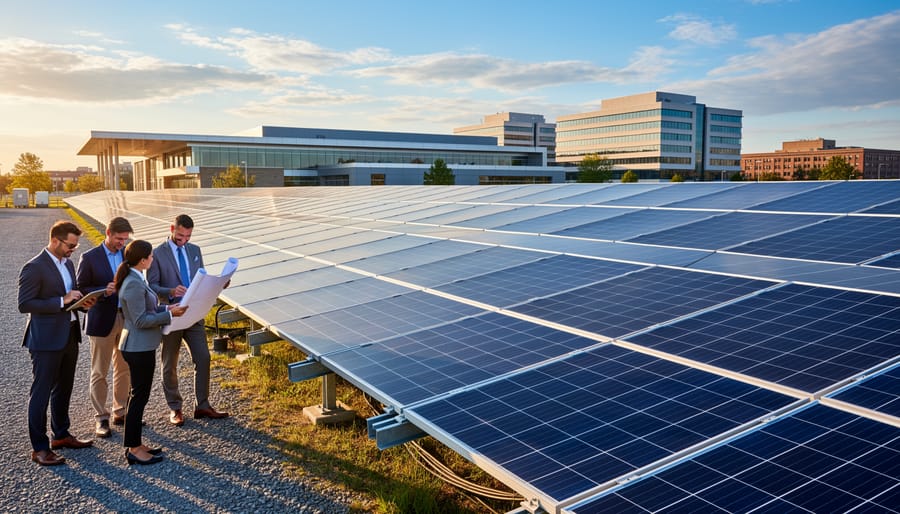
The Missing Link: Contracts for Difference in Sustainable Energy
How CfDs Protect Your Investment
Imagine locking in your electricity costs while the energy market rides a rollercoaster around you. That’s essentially what Contracts for Difference (CfDs) deliver, and it’s brilliant in its simplicity.
Here’s how the protection works: You agree on a fixed “strike price” for your energy at the start of your contract. Let’s say that’s 10 cents per kilowatt-hour. When wholesale electricity prices skyrocket to 15 cents during peak demand or market disruptions, you still pay your agreed 10 cents. The difference gets settled through the CfD mechanism, shielding your budget from those painful price spikes that can derail sustainability initiatives.
But here’s the clever bit that makes CfDs different from traditional Power Purchase Agreements. If wholesale prices drop below your strike price, there’s a balancing mechanism that keeps the arrangement fair. This two-way protection creates genuine price certainty, allowing you to forecast energy costs accurately over 10, 15, or even 20 years.
For Australian organizations investing in bioenergy or other renewable projects, this stability transforms project economics. A Queensland meat processor recently shared how their CfD arrangement meant they could confidently invest in biogas infrastructure, knowing their energy costs wouldn’t suddenly spike and undermine their return on investment. That’s the power of price certainty – it turns renewable energy from a risky venture into a sound financial decision that protects your bottom line whilst advancing sustainability goals.
The Perfect Partnership: CfDs Meet ESPCs
When you bring together Contracts for Difference and Energy Savings Performance Contracts, you create a financial powerhouse that tackles the two biggest hurdles facing renewable energy projects: upfront capital costs and revenue certainty. Think of it as a one-two punch for sustainable infrastructure.
CfDs provide price stability, guaranteeing that energy producers receive a predictable return on their investment regardless of market fluctuations. Meanwhile, ESPCs eliminate the barrier of initial capital by allowing organizations to fund installations through the energy savings they generate. This partnership is particularly brilliant for bioenergy projects across Australia, where facilities like biomass plants or waste-to-energy installations require substantial upfront investment but deliver long-term benefits.
Consider a regional hospital in Victoria that wants to install a biogas system using organic waste. Through an ESPC, they avoid the hefty capital outlay, while a CfD ensures the energy produced maintains consistent value over 15 years. The hospital enjoys reduced energy bills immediately, the project developer has revenue certainty, and the community benefits from renewable energy and reduced waste going to landfill.
This combined approach is transforming how Australian institutions, from universities to manufacturing facilities, approach energy upgrades. It’s making ambitious bioenergy projects not just possible, but financially attractive and sustainable for the long haul.
Why This Matters for Australian Bioenergy Projects
Australia’s bioenergy sector stands at a critical juncture. While our nation produces abundant agricultural and forestry waste that could power homes and businesses, many promising biomass projects never get off the ground. The culprit? High upfront capital costs and uncertainty about long-term returns that make traditional lenders nervous.
This is where Energy Savings Performance Contracts paired with Contracts for Difference become game-changers for Australian bioenergy developers. Together, these sustainable financing mechanisms directly address the two biggest barriers holding back biomass energy adoption.
Consider a typical scenario: a sugar mill in Queensland wants to convert bagasse waste into electricity but faces a $15 million capital requirement. Under an ESPC arrangement, an energy services company installs the biomass system with no upfront cost to the mill. The mill then pays from the energy savings generated, making the project immediately cash-flow positive. Meanwhile, a CfD locks in a stable electricity price, eliminating the risk of volatile energy markets that traditionally scared off investors.
For regional communities particularly, this combination opens remarkable opportunities. Agricultural processors, timber mills, and rural councils can now transform waste management problems into revenue streams. A dairy cooperative in Victoria, for example, recently partnered with an ESCO to convert cow manure into biogas, completely eliminating their grid electricity costs while creating local jobs.
The beauty of these arrangements lies in shared risk and aligned incentives. ESCOs succeed only when systems perform efficiently, while CfDs provide the revenue certainty needed to attract affordable financing. For project developers, this means turning theoretical potential into operational reality without gambling their balance sheets.
As Australia works toward ambitious renewable energy targets, bioenergy projects supported by ESPCs and CfDs offer practical pathways forward, especially in regional areas where wind and solar alone cannot meet all energy needs.
Success Stories: ESPCs Powering Australia’s Green Transition
Case Study 1: Agricultural Waste to Energy
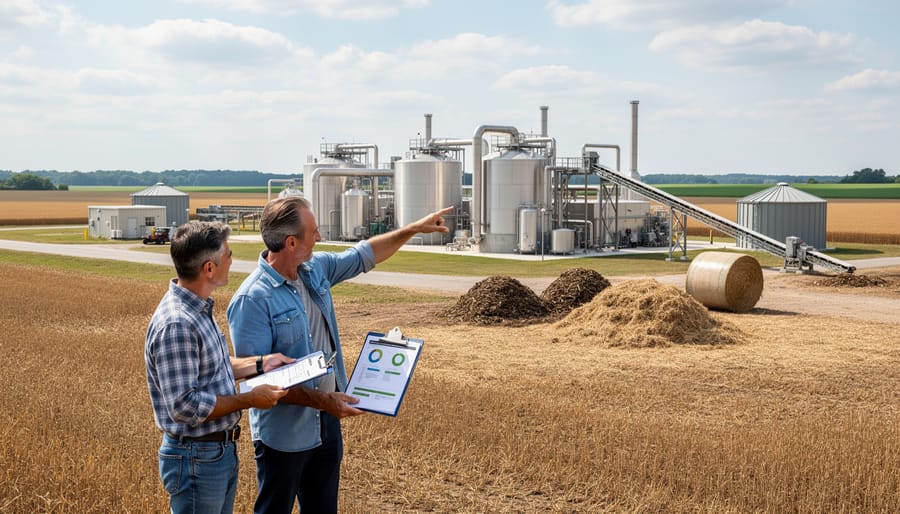
In rural New South Wales, the Thompson family’s macadamia processing facility was facing mounting electricity costs that threatened their bottom line. Rather than accepting these rising expenses as inevitable, they partnered with an energy service company through an Energy Savings Performance Contract to transform their agricultural waste into a reliable power source.
The facility generates approximately 50 tonnes of macadamia shells and husks weekly during harvest season. Previously considered waste destined for landfill, this biomass now fuels a combined heat and power system that meets 85 percent of the operation’s energy needs. The beauty of the ESPC model meant the Thompsons didn’t need to find upfront capital for the $1.2 million biomass boiler and generator installation.
Under the contract terms, the energy service company financed, designed, and installed the entire system. They guarantee minimum energy savings of $180,000 annually, which covers the contract payments over fifteen years. Any savings beyond the guaranteed amount flow directly to the business. Within the first eighteen months, the facility exceeded projected savings by 12 percent whilst simultaneously reducing their carbon emissions by 420 tonnes annually.
The system’s performance monitoring revealed another win: process heat from the biomass boiler now dries the macadamias more efficiently than their previous gas-fired system. This dual benefit of electricity generation and improved processing demonstrates how agricultural operations can turn waste streams into valuable energy assets whilst maintaining financial flexibility through performance-based contracts.
Case Study 2: Public Sector Leading by Example
When the University of Melbourne wanted to slash its carbon footprint while demonstrating leadership in sustainability, they turned to an Energy Savings Performance Contract that would transform their entire campus. This ambitious project, completed in partnership with a leading energy service company, delivered far more than reduced power bills.
The university’s ESPC bundled solar panel installations across multiple buildings, LED lighting upgrades, and an innovative cogeneration plant powered by renewable biogas. The beauty of this arrangement was simple: the energy company financed the upfront costs of around 8 million dollars, while the university repaid them through guaranteed energy savings over fifteen years. No budget blow-outs, no financial risk to taxpayers.
The results speak for themselves. The campus now generates 20 percent of its electricity from renewable sources, cutting annual emissions by approximately 3,500 tonnes. That’s equivalent to taking 750 cars off the road each year. But the benefits rippled well beyond the university gates.
During the eighteen-month installation phase, the project created 45 direct jobs for electricians, engineers, and renewable energy technicians. Local businesses supplied materials and equipment, injecting money into the surrounding community. The university also established training programs where students gained hands-on experience with cutting-edge renewable technology, preparing the next generation of sustainability professionals.
Today, the campus serves as a living laboratory, hosting regular tours for other institutions and government departments keen to replicate the model. The message is clear: public sector organizations can lead the charge toward renewable energy without gambling with public funds. Through ESPCs, they can achieve environmental goals while creating local employment and demonstrating what’s possible when financial innovation meets climate action.
Making ESPCs Work for Your Organization
Is Your Facility Ready for an ESPC?
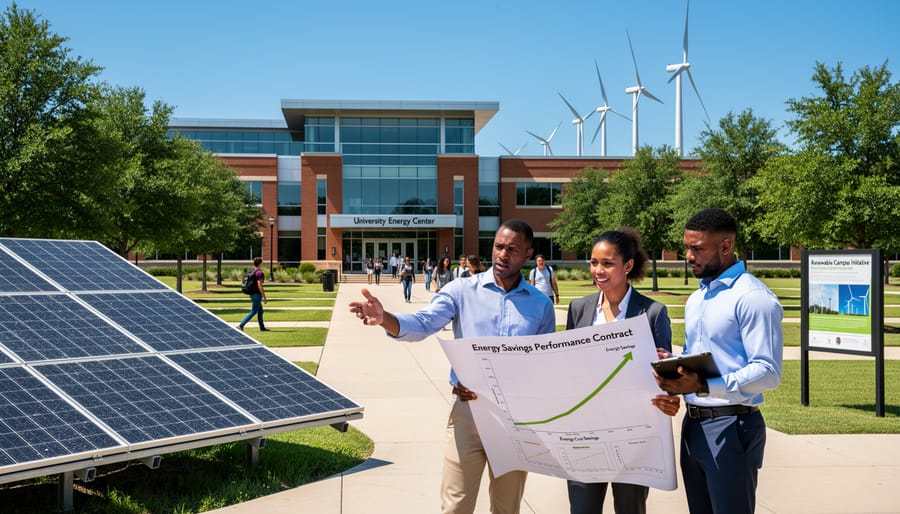
Before diving into an energy savings performance contract, it’s worth determining whether your facility is genuinely positioned to benefit from this innovative financing approach. The good news? Many Australian organisations tick the right boxes without even realising it.
Start by examining your energy bills. Facilities with annual energy costs exceeding $200,000 typically make ideal candidates, as the potential savings justify the upfront investment in energy audits and project design. However, smaller operations can still benefit when grouped together in portfolio arrangements, something we’ve seen work brilliantly across regional Queensland and Victorian councils.
Consider your facility’s age and current equipment. Older buildings with outdated heating, ventilation, and air conditioning systems, inefficient lighting, or aging boilers present enormous opportunities for improvement. Manufacturing plants, hospitals, universities, and large office complexes often fall into this sweet spot.
Your organisation’s commitment matters too. ESPCs work best when leadership supports long-term sustainability goals and understands that energy efficiency is an investment, not just an expense. You’ll need authority to enter into contracts typically spanning 10 to 20 years, so board buy-in is essential.
Physical factors also play a role. Facilities with ample roof space for solar installations, areas suitable for bioenergy systems, or land for geothermal projects offer additional opportunities beyond basic efficiency upgrades. Think about whether your operations generate organic waste that could feed into a biogas system, turning a disposal problem into an energy solution.
Finally, assess your maintenance budget. If you’re already facing significant capital expenditure for equipment replacement, an ESPC might bundle these necessary upgrades with performance guarantees, essentially making your infrastructure refresh itself through energy savings.
Five Questions to Ask Your Energy Service Company
Choosing the right Energy Service Company (ESCO) partner is crucial for successful bioenergy projects. Here are five essential questions to guide your evaluation:
1. What experience do you have with bioenergy projects in Australia? Look for ESCOs with proven expertise in biomass, biogas, or other bioenergy technologies. Ask for specific case studies demonstrating their understanding of feedstock variability, conversion technologies, and integration with existing energy systems. A strong track record in bioenergy shows they can navigate the unique challenges these projects present.
2. Can you provide examples of guaranteed energy savings you’ve delivered? Request detailed documentation of past performance guarantees, including actual versus projected savings. Successful ESCOs should confidently share stories where they’ve met or exceeded targets, and importantly, how they handled situations when adjustments were needed.
3. How do you structure performance guarantees and handle underperformance? Understanding their measurement and verification protocols is essential. Ask about their monitoring systems, reporting frequency, and compensation mechanisms if guaranteed savings aren’t achieved. This transparency protects your investment.
4. What financing options do you offer beyond traditional models? Progressive ESCOs often connect clients with impact investment funding and innovative financial structures that align with sustainability goals while minimising upfront costs.
5. Who will manage the project and what post-installation support do you provide? Understand their team’s qualifications, ongoing maintenance commitments, and how they’ll optimise system performance throughout the contract term. The best partnerships extend well beyond installation day.
The Road Ahead: Policy and Opportunities
Australia stands at an exciting crossroads in its renewable energy journey, and ESPCs combined with CfDs are proving to be powerful tools in the transition toolkit. The current policy landscape shows promising momentum, with federal and state governments increasingly recognising the value of innovative financing mechanisms that remove upfront cost barriers while delivering guaranteed outcomes.
The Clean Energy Finance Corporation (CEFC) has been actively supporting performance-based contracts, demonstrating government commitment to de-risking renewable investments. Several state governments have also introduced programs that complement ESPCs beautifully, creating a supportive ecosystem for businesses and communities ready to embrace sustainable energy solutions. When combined with renewable energy tax incentives, these mechanisms become even more attractive, multiplying the financial benefits for early adopters.
Looking ahead, opportunities are expanding rapidly. The agriculture and manufacturing sectors present enormous potential for bioenergy projects structured through ESPCs, particularly as waste-to-energy technologies mature. Regional communities are discovering that these contracts enable local energy independence while creating jobs and reducing emissions simultaneously, ticking multiple boxes for sustainable development.
The integration of ESPCs and CfDs into Australia’s broader climate goals is crucial as we work toward net zero by 2050. These mechanisms directly support emission reduction targets while fostering innovation and building investor confidence. They transform climate action from abstract policy into tangible, measurable outcomes that benefit balance sheets and the environment alike.
There’s certainly room for growth. Standardising contract templates, increasing awareness among potential users, and expanding government support programs would accelerate adoption. However, the trajectory is undeniably positive. Early success stories are inspiring others to follow suit, creating a ripple effect across industries. As more organisations experience firsthand how ESPCs eliminate financial risk while delivering guaranteed savings, these mechanisms will become standard practice rather than innovative exceptions in Australia’s renewable energy landscape.
The journey toward renewable energy doesn’t have to be a leap into financial uncertainty. By combining Energy Savings Performance Contracts with Contracts for Difference, Australian businesses and organizations have a powerful toolkit that transforms what once seemed impossible into an achievable reality. These mechanisms work together to remove the two biggest hurdles standing between good intentions and meaningful action: upfront capital costs and revenue uncertainty.
Think of it this way: ESPCs allow you to start your transition to bioenergy without draining your reserves, while CfDs ensure you won’t be left vulnerable to the ups and downs of energy markets. Together, they create a financial safety net that makes the switch not just environmentally responsible, but economically sensible. The success stories across Australia, from manufacturing facilities to agricultural operations, prove that this isn’t theoretical – it’s happening right now, delivering real results for the bottom line and the environment.
The climate crisis demands action, but that action needs to be sustainable in every sense of the word. The good news? You don’t have to choose between financial stability and environmental responsibility anymore. These financing solutions have matured to the point where the transition to bioenergy and other renewables makes sound business sense.
So here’s the challenge: take the next step. Reach out to energy service companies, investigate CfD opportunities in your region, and start conversations about what’s possible for your operations. The tools are available, the track record is proven, and the time is now. Your move toward sustainable energy isn’t just viable – it’s waiting for you to begin.