
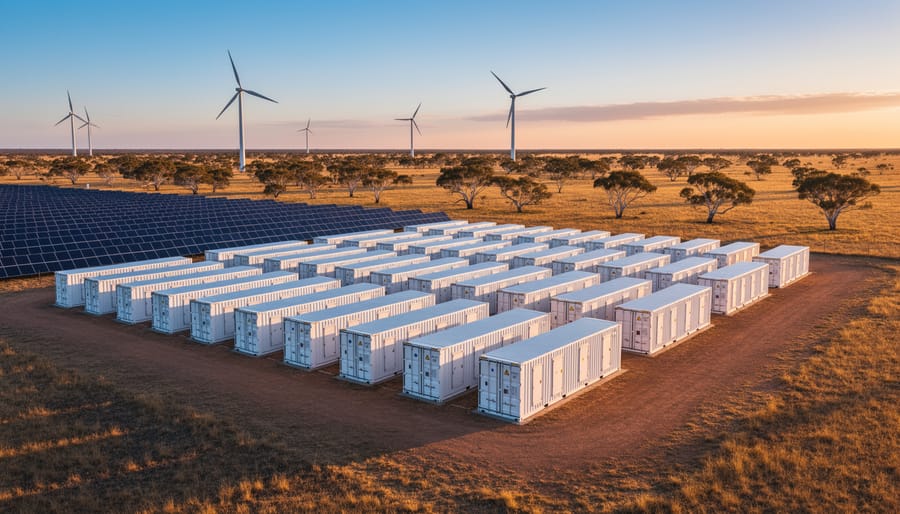
Australia’s renewable energy revolution faces a crucial paradox: solar panels generate maximum power at midday when demand is moderate, while evening peak demand arrives precisely when the sun sets. Power grid energy storage systems solve this timing mismatch, capturing excess renewable energy when it’s abundant and releasing it when communities need it most.
The transformation is already underway across the country. South Australia’s Hornsdale Power Reserve, home to one of the world’s largest lithium-ion batteries, has prevented multiple potential blackouts since 2017 while saving consumers millions in energy costs. Victoria’s Victorian Big Battery now stores 300 megawatts of renewable energy, enough to power over 200,000 homes during evening peaks. These aren’t experimental projects but working infrastructure proving that renewable energy can deliver the same reliability Australians expect from traditional power stations.
Grid storage technology functions like a massive rechargeable battery for entire communities. During sunny or windy periods when renewable generation exceeds demand, storage systems absorb the surplus electricity. When clouds roll in or wind drops, these systems discharge their stored energy within milliseconds, maintaining steady power supply without firing up fossil fuel backup generators. The speed and precision exceed what conventional power plants can achieve.
The benefits extend beyond reliability. Storage systems reduce electricity bills by avoiding expensive peak-time generation, cut carbon emissions by maximizing renewable energy use, and strengthen grid resilience against extreme weather events. Communities with storage infrastructure experience fewer outages and faster recovery when disruptions occur.
While upfront investment costs remain significant, falling battery prices and supportive government policies are accelerating deployment nationwide. The question is no longer whether grid storage works, but how quickly Australia can scale this essential technology to achieve 100% renewable energy reliability.
Why Renewable Energy Needs a Battery
Imagine turning on your kettle for a morning cuppa, only to discover the power’s out because the sun hasn’t risen yet. That’s essentially the challenge our electricity grid faces when relying solely on renewable energy sources like solar and wind. While these clean energy champions are brilliant at generating power, they come with a fundamental hiccup: they only work when nature cooperates.
Solar panels produce abundant electricity during sunny days, but what happens during Melbourne’s famously grey winter weeks or after sunset when families come home and switch on lights, heaters, and ovens? Similarly, wind turbines spin magnificently during breezy conditions, but on still summer evenings when air conditioners are working overtime across Sydney, those turbines can’t deliver the goods.
This intermittency creates what energy experts call the “duck curve” problem. In South Australia, which leads the nation with over 70 percent renewable energy, there are days when solar floods the grid at midday, only to disappear precisely when demand peaks around 6 PM. Without storage, grid operators must keep fossil fuel power stations idling in the background, ready to jump in when renewables take a break.
The grid needs constant, reliable power flowing like water through a pipe, not intermittent bursts like a temperamental garden hose. Every appliance, hospital, traffic light, and business depends on this steady supply. Think of it like this: your fridge doesn’t stop needing power just because clouds rolled in.
This is where battery storage becomes the game-changer. Just as you’d store water in a tank during rain for use during dry spells, batteries capture excess renewable energy when it’s abundant and release it precisely when needed. They’re essentially giving renewables the reliability superpower they’ve always needed, transforming intermittent generation into dependable, round-the-clock clean energy that keeps Australia powered up regardless of weather conditions.
The Energy Storage Technologies Transforming Our Grid
Battery Energy Storage Systems
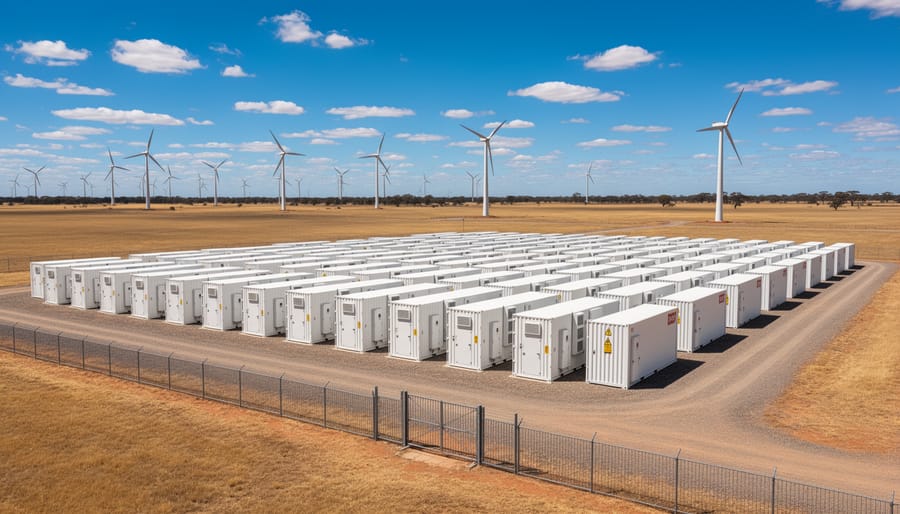
Australia has emerged as a global leader in demonstrating how battery storage systems can transform renewable energy reliability. These large-scale installations act like giant rechargeable batteries, capturing excess electricity generated during peak renewable production and delivering it back to the grid when demand surges or when the sun sets and wind drops.
The standout success story is the Hornsdale Power Reserve in South Australia, affectionately known as the “Tesla Big Battery.” When it launched in 2017, this 150-megawatt facility became the world’s largest lithium-ion battery, capable of powering roughly 30,000 homes. The project emerged from South Australia’s renewable energy ambitions and the need to stabilize a grid increasingly powered by wind and solar. Within its first year, the battery proved its worth by responding to grid disturbances in milliseconds, far faster than traditional gas generators, and saving South Australians millions in energy costs.
The beauty of this technology lies in its flexibility. During sunny, windy periods when renewable generation exceeds demand, these batteries soak up the surplus energy that would otherwise go to waste. Then, during evening peak demand or unexpected outages, they discharge that stored power almost instantaneously, smoothing out the natural variability of renewables.
Following Hornsdale’s success, other projects have sprouted across Australia. The Victorian Big Battery now provides 300 megawatts of capacity, while Queensland and New South Wales are rapidly expanding their battery networks. These installations aren’t just technical achievements—they’re practical demonstrations that renewable energy can indeed power modern life reliably, creating jobs, reducing emissions, and paving the way toward a cleaner energy future for all Australians.
Pumped Hydro Storage
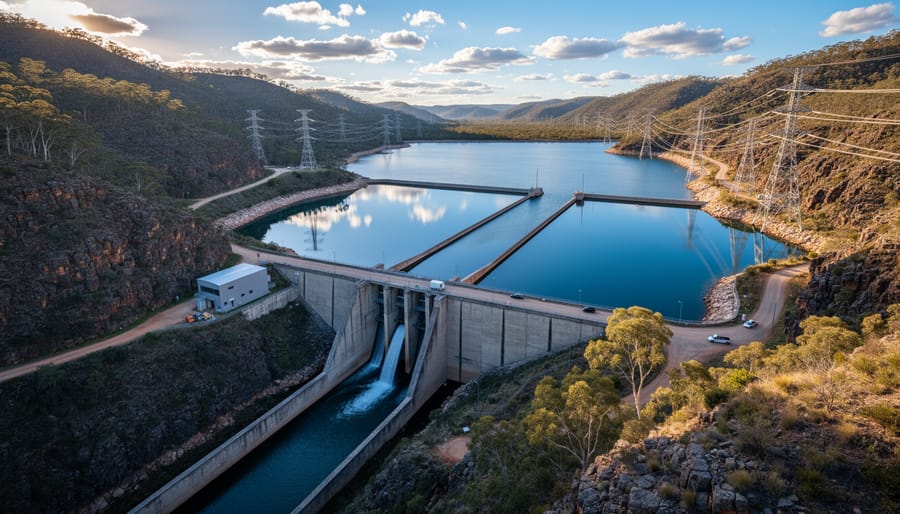
Pumped hydro storage represents one of the most elegant solutions to renewable energy storage, harnessing the simple yet powerful force of gravity. Picture two water reservoirs at different heights connected by pipes and turbines. When renewable energy like solar or wind produces excess electricity, the system pumps water uphill to the upper reservoir, essentially banking that energy for later. When demand peaks or the sun sets, water flows back downhill through turbines, generating electricity on demand. It’s like a giant rechargeable battery, but instead of chemicals, it uses water and elevation.
Australia is embracing this proven technology with extraordinary ambition. The Snowy 2.0 project in New South Wales stands as a testament to our commitment to renewable energy storage. When completed, this engineering marvel will deliver 2,000 megawatts of generation capacity and provide roughly 350,000 megawatt-hours of storage—enough to power three million homes for a week during peak demand. The project cleverly utilises existing reservoirs within the iconic Snowy Mountains scheme, connecting them through underground tunnels and a massive pumping station.
What makes pumped hydro particularly attractive for Australia is its longevity and scale. These systems can operate efficiently for over 50 years with minimal degradation, unlike battery technologies that require replacement. Projects like Queensland’s Borumba Dam expansion are also in development, recognising that different regions need localised storage solutions matched to their renewable generation patterns.
The beauty of pumped hydro lies in its dual benefit: it stores vast amounts of energy while providing grid stability through rapid response times. When the grid needs balancing within seconds, these systems can switch from pumping to generating almost instantaneously, keeping our lights on and renewable energy flowing reliably across the nation.
Emerging Storage Solutions
Australia’s energy storage landscape is rapidly expanding beyond traditional battery systems, with several innovative technologies showing real promise for grid-scale applications. These emerging solutions are already moving from laboratory testing to practical demonstrations across the country.
Thermal storage systems are gaining momentum, particularly in South Australia where molten salt technology is being integrated with concentrated solar facilities. These systems capture heat during peak sunshine hours and release it gradually to generate electricity well into the evening, effectively extending solar power generation by up to six hours. The beauty of thermal storage lies in its simplicity and longevity – using abundant materials like sand, rocks, or salt that can withstand thousands of heating cycles without degradation.
Hydrogen storage represents another exciting frontier, with several pilot projects demonstrating its potential for long-duration energy storage. When renewable electricity is abundant, it can split water into hydrogen and oxygen through electrolysis. The hydrogen is then stored and converted back to electricity when needed, or used directly in transport and industrial applications. Queensland and Western Australia are leading the charge with trials that showcase hydrogen’s versatility in supporting grid stability.
Compressed air energy storage is also being explored in disused mine shafts and underground caverns, offering a cost-effective option for regions with suitable geology. These diverse technologies aren’t competing with batteries – they’re complementing them, creating a robust, multi-layered storage ecosystem that strengthens Australia’s renewable energy transition.
How Storage Systems Actually Work With the Grid
Balancing Supply and Demand in Real Time
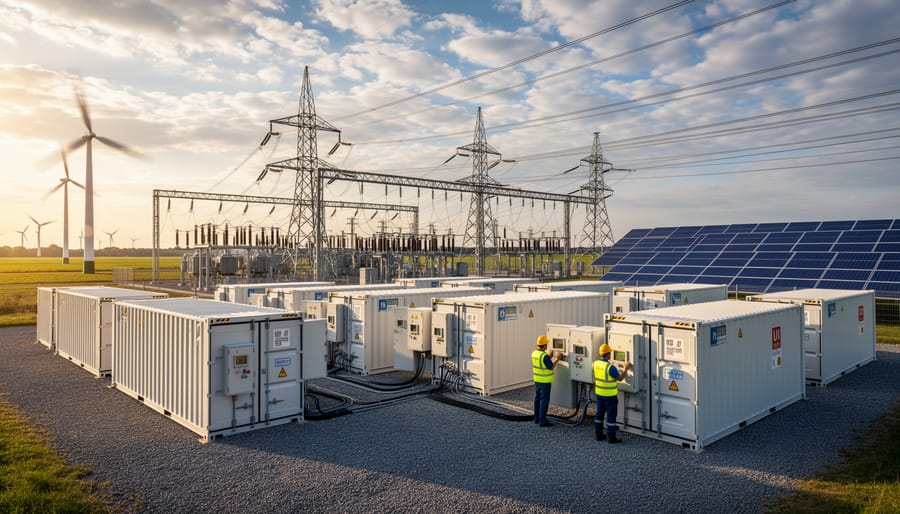
Picture the sun setting over South Australia’s Hornsdale Power Reserve—as solar panels stop generating and households flick on lights and start cooking dinner, energy demand surges while renewable supply plummets. This is where energy storage becomes the grid’s rapid response team, reacting in milliseconds to keep power flowing smoothly.
Smart storage systems act like enormous batteries that charge when renewable generation exceeds demand and discharge when the grid needs extra support. During a typical day, these systems absorb excess solar energy during the midday peak—when panels are producing more electricity than homes and businesses can use—then release that stored energy during evening peaks when everyone arrives home.
The response time is remarkably fast. When a coal plant unexpectedly trips offline or wind suddenly drops, storage systems can inject power into the grid within 140 milliseconds—faster than conventional power stations could even begin ramping up. This instant response prevents frequency fluctuations that could otherwise trigger blackouts.
In Queensland, battery installations are already smoothing out the notorious duck curve, where solar generation creates a dramatic dip in grid demand during the day, followed by a steep climb as the sun sets. By filling in these valleys and shaving down peaks, storage systems make renewable energy as reliable as traditional generation, proving that clean power can meet Australia’s needs around the clock.
Keeping the Power Flowing During Extreme Weather
When extreme weather strikes, energy storage systems serve as the grid’s emergency responders, stepping in precisely when communities need power most. During sweltering heatwaves, when air conditioners work overtime and electricity demand skyrockets, battery storage can instantly release stored energy to prevent blackouts. Similarly, when severe storms knock out transmission lines or damage generation facilities, these systems provide crucial backup power while repairs are underway.
The beauty of grid-scale batteries lies in their lightning-fast response time. Unlike traditional power stations that can take hours to ramp up, battery systems can inject electricity into the grid within milliseconds. This rapid response proved invaluable during South Australia’s extreme weather events, where the Hornsdale Power Reserve has repeatedly prevented potential blackouts by responding faster than conventional backup systems ever could.
Storage also smooths out the unpredictable nature of renewable generation during wild weather. When sudden cloud cover reduces solar output or wind speeds drop unexpectedly during a storm front, batteries bridge the gap seamlessly. This reliability has transformed how grid operators manage extreme weather events across Australia, from tropical cyclones in Queensland to bushfire-related outages in Victoria.
The technology essentially creates a safety net for our electricity supply, storing excess renewable energy during calm periods and releasing it during crises. As climate change brings more frequent and intense weather events, this capability becomes increasingly vital for keeping Australian homes and businesses powered through nature’s challenges, proving that renewable energy paired with storage can be both sustainable and remarkably resilient.
Real Benefits Australians Are Already Seeing
The proof isn’t just in the technology—it’s in the real-world results Australians are experiencing right now. Energy storage systems connected to our power grid are already delivering measurable benefits to households, businesses, and communities across the country, transforming how we generate, distribute, and use electricity.
South Australia leads the charge with the Hornsdale Power Reserve, home to one of the world’s largest lithium-ion batteries. Since switching on in 2017, this massive installation has saved the state’s electricity system more than 150 million dollars in its first few years of operation. How? By providing rapid response services that prevent price spikes during demand surges and stabilizing the grid within milliseconds when issues arise. For everyday South Australians, this translates to more predictable electricity bills and fewer concerns about supply disruptions during heatwaves when air conditioners work overtime.
Victoria’s Big Battery at Geelong is delivering similar wins. This 300-megawatt system stores excess renewable energy during off-peak times and releases it precisely when demand peaks, smoothing out price fluctuations that previously saw bills skyrocket on hot days. Energy market data shows that storage systems like this have helped reduce wholesale electricity price volatility by up to 30 percent during critical periods, savings that eventually flow through to consumers.
The blackout risk that once worried many Australians is diminishing too. During severe weather events and unexpected outages, grid-scale batteries provide backup power almost instantaneously—far faster than traditional gas generators can fire up. This rapid response capability proved invaluable during recent extreme weather events, keeping lights on in thousands of homes that might otherwise have gone dark.
Beyond the electricity meter, these projects are creating meaningful employment opportunities. The construction, installation, and ongoing maintenance of storage facilities have generated hundreds of skilled jobs in regional areas, from engineers and electricians to project managers and technicians. Communities hosting these installations are seeing economic benefits that extend well beyond the energy sector.
Perhaps most importantly for our environment, grid storage is enabling unprecedented levels of renewable energy integration. By capturing solar and wind power that would otherwise be wasted when generation exceeds immediate demand, these systems are helping Australia reduce reliance on fossil fuel generators. Recent data indicates that grid-scale batteries have already displaced millions of tonnes of carbon emissions by optimizing renewable energy use and reducing the need for coal and gas peaker plants.
These aren’t future promises—they’re current realities making a tangible difference in Australian lives today, with more projects coming online every year.
What’s Holding Back Wider Adoption
While the potential of power grid energy storage is undeniable, several factors are currently slowing its widespread rollout across Australia. The good news? Each challenge is being actively addressed with practical solutions gaining momentum.
Cost remains the most significant barrier, though it’s rapidly improving. Battery storage systems require substantial upfront investment, which can be daunting for utilities and communities. However, the economics are shifting dramatically in our favour. Over the past decade, lithium-ion battery costs have dropped by nearly 90 percent, and experts predict further reductions as manufacturing scales up and technology advances. Australian governments are also stepping in with grants and incentives that make projects financially viable today rather than waiting for tomorrow.
Infrastructure presents another hurdle. Our existing grid was designed for one-way power flow from centralised coal plants, not the dynamic, distributed network that storage enables. Upgrading transmission lines, substations, and control systems requires significant coordination and investment. The encouraging reality is that pilot projects across regional Victoria and South Australia are proving that grid modernisation can happen incrementally, learning from each installation to make the next one smoother and more cost-effective.
Regulatory frameworks are playing catch-up with technology. Energy market rules written decades ago don’t always accommodate battery storage systems that can both consume and supply electricity. Yet progress is happening. The Australian Energy Market Operator is actively updating market structures to recognise and reward the flexibility that storage provides. New regulations are emerging that allow households and businesses to participate in virtual power plants, turning what seemed like bureaucratic roadblocks into pathways for innovation.
The bridging gap between current limitations and future potential isn’t about waiting for perfect conditions. It’s about building momentum through real-world applications, learning from early adopters, and celebrating the wins along the way. Each installed battery system, each updated regulation, and each cost reduction brings us closer to a resilient, renewable-powered grid that benefits all Australians.
The Road Ahead for Energy Storage in Australia
Australia stands at an exciting crossroads in its energy journey, with grid-scale storage poised to unlock unprecedented levels of renewable energy across the nation. Over the next decade, the landscape of our power grid will transform dramatically, driven by ambitious projects, falling costs, and supportive policies that recognise storage as essential infrastructure rather than optional add-ons.
Several major projects are already in the pipeline that will reshape how we think about energy reliability. The expansion of existing facilities like the Hornsdale Power Reserve demonstrates investor confidence, while new mega-projects across New South Wales, Queensland, and Victoria promise to add thousands of megawatts of storage capacity. These aren’t just numbers on a spreadsheet—they represent real capability to keep the lights on during peak demand while maximising the value of our abundant solar and wind resources.
The economics are working in our favour too. Battery storage costs have plummeted by over 80 percent in the past decade, and this trend shows no signs of slowing. What seemed financially impossible just five years ago is now commercially viable, opening doors for community-scale projects and innovative business models that put consumers at the centre of the energy transition.
Policy support is strengthening as well, with government battery grants and state-based schemes actively encouraging deployment across multiple scales. These initiatives recognise that storage isn’t competing with renewable generation—it’s the essential partner that makes high renewable penetration achievable and reliable.
The real game-changer ahead is how storage will enable Australia to reach 82 percent renewable electricity by 2030, as targeted in national energy roadmaps. By smoothing out the variability of solar and wind, storage systems allow us to retire aging fossil fuel plants without sacrificing reliability. This means cleaner air, lower emissions, and greater energy security—all while creating thousands of jobs in manufacturing, installation, and maintenance.
The journey ahead isn’t without challenges, but the momentum is undeniable. Australia has the natural resources, technical expertise, and growing political will to become a world leader in grid storage. For environmentally conscious Australians, this represents an opportunity to support and participate in a genuine transformation that benefits both the planet and our energy bills.
What You Can Do to Support the Transition
The transition to a renewable-powered grid supported by energy storage isn’t just something happening at the policy level—everyday Australians can play a meaningful role in accelerating this shift. Here’s how you can contribute to building a more resilient, sustainable energy future.
Start by advocating for renewable energy policies in your community and state. Contact your local representatives to express support for grid-scale battery projects and renewable integration initiatives. Your voice matters, especially when projects face regulatory hurdles or require community backing. Many successful Australian storage projects, like the Hornsdale Power Reserve in South Australia, gained momentum partly through public support.
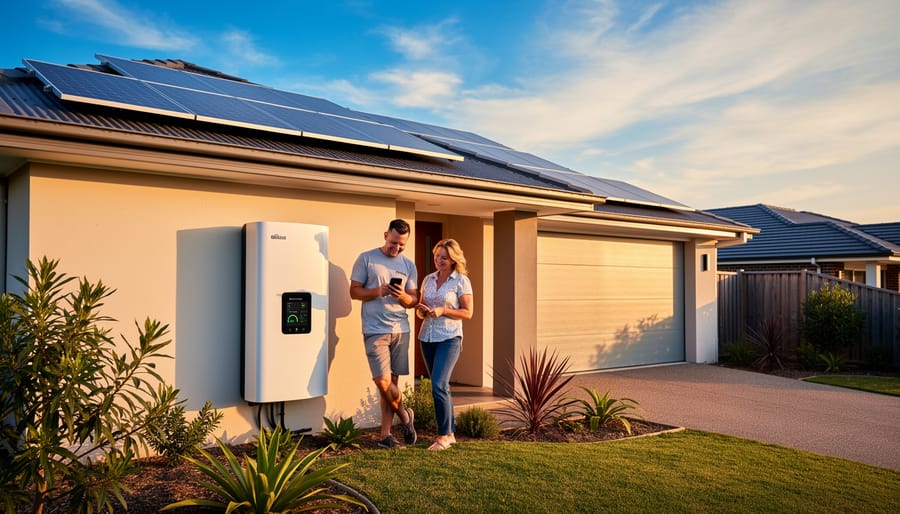
Consider investing in home battery systems if you have solar panels or are planning to install them. These systems not only reduce your electricity bills but also contribute to grid stability by storing excess solar energy for evening use. As battery costs continue falling, they’re becoming increasingly accessible for households across the country.
Take time to understand your energy usage patterns. Simply being aware of when you consume the most power can help you shift usage to times when renewable generation is abundant—typically during sunny midday hours. Many electricity retailers now offer time-of-use tariffs that reward this behaviour with lower rates.
Stay informed about energy storage projects in your area. Attend community consultations, read local updates, and learn how these facilities benefit your region. Knowledge empowers you to make informed decisions and share accurate information with others.
Finally, support businesses and organisations committed to renewable energy. Your purchasing power sends a powerful message about the future you want to see, encouraging more companies to embrace sustainable practices that rely on storage-enabled renewable energy.
The transformation of Australia’s energy landscape is no longer a distant dream—it’s happening right now, and energy storage is the cornerstone of this revolution. By bridging the gap between when renewable energy is generated and when it’s needed, storage technology has fundamentally solved the reliability puzzle that once held back solar and wind power. What was once dismissed as intermittent and unpredictable has become dependable and dispatchable, proving that clean energy can power our homes, businesses, and industries around the clock.
From the Hornsdale Power Reserve keeping South Australian lights on during peak demand to the growing network of community batteries in suburbs across the country, we’re witnessing firsthand how storage unlocks renewable energy’s full potential. These aren’t pilot projects anymore—they’re essential infrastructure delivering real results: lower energy costs, reduced emissions, and greater grid stability.
The beauty of this transition is that we’re not waiting for breakthrough technology to arrive. The solutions exist today, proven and ready to scale. Battery systems, pumped hydro, and emerging technologies are already working together to create a cleaner, more resilient energy future.
The question isn’t whether energy storage can make renewable energy reliable—we’ve already answered that with a resounding yes. The question now is how quickly we can accelerate this transition. With continued investment, supportive policies, and community engagement, Australia is perfectly positioned to lead the world in demonstrating that a renewable-powered grid isn’t just possible—it’s inevitable. The future is bright, and it’s powered by the sun, wind, and the smart storage systems that make them shine.