
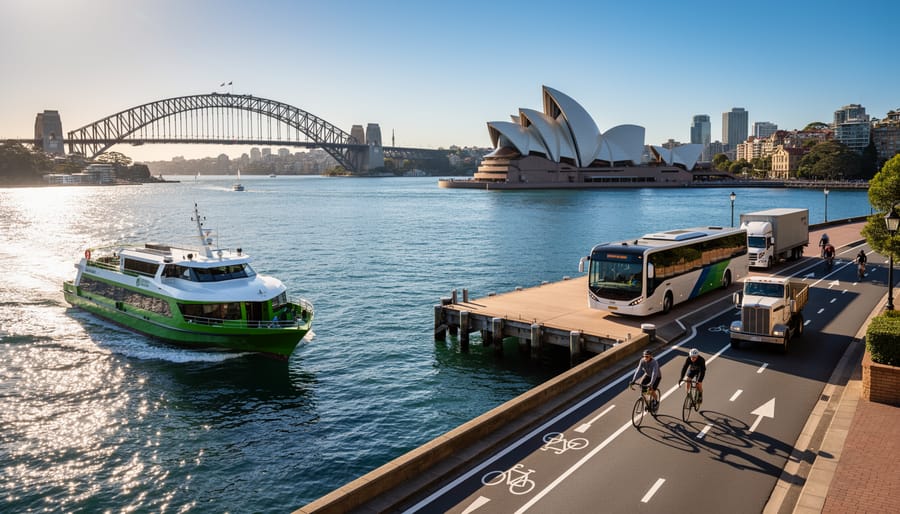
The morning commute across Sydney Harbour could soon look dramatically different. Picture ferries powered by waste cooking oil, buses running on biogas from organic waste, and freight trucks fueled by agricultural residues—all part of Australia’s accelerating shift toward green transportation that’s creating jobs, cleaning our air, and proving that environmental responsibility drives economic prosperity.
Green transportation extends far beyond the electric vehicles dominating headlines. It encompasses a rich ecosystem of sustainable mobility solutions including biofuels derived from organic materials, hydrogen fuel cells, public transit innovations, active transport infrastructure, and integrated systems that reduce our collective carbon footprint while strengthening local economies. These aren’t distant possibilities—they’re operating right now across Australian cities and regional communities, transforming how we move people and goods.
The economic case is compelling. Australia’s green transportation sector is generating thousands of skilled jobs in manufacturing, engineering, and operations while reducing our $30 billion annual fuel import bill. Regional communities are particularly benefiting, converting agricultural waste into valuable transport fuels that keep revenue circulating locally rather than disappearing overseas.
What makes this transition genuinely exciting is its practicality. Australian innovators have demonstrated that sustainable transport solutions work at scale, deliver measurable cost savings, and improve quality of life through cleaner air and quieter streets. From Brisbane’s biofuel bus trials to Melbourne’s waste-to-energy transport initiatives, we’re proving that green transportation isn’t a compromise—it’s an upgrade that benefits everyone while securing our environmental future.
What Green Transportation Actually Means for Australians
Green transportation isn’t some far-off vision of the future—it’s already happening on Australian streets, and you’ve probably seen it without realising. Simply put, green transportation means moving people and goods while creating fewer emissions and reducing our environmental footprint. The good news? There are multiple pathways to achieve this, and they’re all gaining momentum across our cities and regions.
The most visible example is electric vehicles, which you’ll now spot regularly in supermarket car parks and on suburban streets. Brisbane’s new electric bus fleet cruises through the CBD, silently transporting commuters without the diesel fumes of older models. These aren’t just passenger vehicles either—Australia Post has rolled out electric delivery vans in metropolitan areas, proving that commercial transport can embrace cleaner alternatives.
But green transportation extends well beyond battery power. Biofuel-powered buses are already serving communities across regional Queensland and New South Wales, running on fuel derived from agricultural waste and used cooking oil. This represents a brilliant bit of Australian ingenuity—transforming what would otherwise be rubbish into fuel that powers public transport. The beauty of biofuels is that these buses can use existing infrastructure while dramatically cutting emissions.
Then there’s hydrogen, which is making serious inroads. While hydrogen-powered trains aren’t yet widespread here, trial programs are underway, and overseas examples prove the technology works brilliantly for long-distance rail freight—exactly what Australia needs for its vast distances.
Don’t overlook active transport either. The expanded bike lanes throughout Melbourne and Sydney aren’t just about fitness—they’re a legitimate transport solution that produces zero emissions. Perth’s shared e-scooter network combines active transport with electric assistance, making car-free commuting practical for more people.
What makes this transition exciting is that these aren’t competing solutions—they’re complementary. Your morning might involve cycling to the train station, catching a biofuel-powered bus, or charging your electric vehicle with rooftop solar. Green transportation means having cleaner choices that actually work for Australian lifestyles.
The Bioenergy Revolution on Our Roads
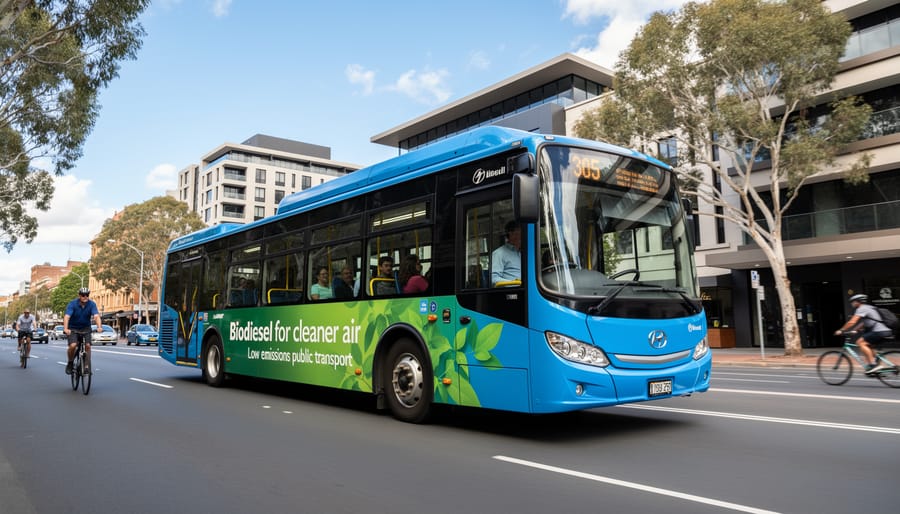
Biodiesel Buses Already Reducing Emissions in Australian Cities
Across Australia, major cities are proving that sustainable public transport isn’t just a future aspiration—it’s happening right now. Brisbane’s TransLink network has emerged as a standout success story, with its fleet of biodiesel buses demonstrating remarkable environmental benefits while maintaining reliable service for commuters.
Since introducing B20 biodiesel blend—a mixture of 20 percent biodiesel and 80 percent conventional diesel—Brisbane has recorded a significant reduction in particulate matter emissions by up to 30 percent per vehicle. This translates to cleaner air for the city’s two million residents, particularly in busy transit corridors where air quality had been a growing concern. The initiative has prevented approximately 4,500 tonnes of carbon dioxide equivalent from entering the atmosphere annually, which is comparable to taking around 1,000 cars off the road permanently.
Melbourne has followed suit with impressive results. The city’s trial of B5 biodiesel across 300 buses in the metropolitan fleet showed a 12 percent reduction in greenhouse gas emissions within the first year. What makes this achievement particularly noteworthy is that drivers reported no difference in vehicle performance, and maintenance costs remained stable—dispelling earlier concerns about biodiesel’s practicality.
Perth’s approach has been equally innovative, partnering with local biodiesel producers who convert used cooking oil from restaurants into fuel. This circular economy model not only reduces emissions but also addresses waste management challenges, creating a genuine win-win scenario.
These real-world applications demonstrate that biodiesel isn’t experimental technology—it’s a proven solution delivering measurable environmental benefits today. The success in these cities provides a blueprint for regional centres looking to reduce their transport emissions without waiting for wholesale fleet replacement or extensive infrastructure investment.
How Agricultural Waste is Fueling Our Future Transport
Every year, Australian farms generate millions of tonnes of agricultural residue—wheat stubble, sugarcane bagasse, cotton stalks, and forestry offcuts—that traditionally went to waste or were burned. Today, these leftovers are becoming the unexpected heroes of our transport revolution.
The science behind this transformation is surprisingly straightforward. Agricultural biomass contains energy-rich compounds that can be converted into biofuels through processes like anaerobic digestion or thermochemical conversion. Think of it as composting on steroids—microorganisms or heat break down plant materials, releasing gases and liquids that can power vehicles just as effectively as conventional petrol or diesel.
Australian researchers and farmers are leading the charge with impressive results. In Queensland, sugarcane mills are turning bagasse into ethanol that’s already being blended into standard fuel at service stations. Meanwhile, Victorian wheat farmers are partnering with bioenergy innovations to convert stubble into biodiesel, creating an additional revenue stream while reducing field burning.
What makes this particularly brilliant for transport is the infrastructure advantage. Unlike electric vehicles requiring charging networks, biofuels work with existing engines and distribution systems. Trucks, tractors, and heavy machinery can run on these alternatives immediately, making them especially practical for regional Australia where electric options remain limited.
The circular economy benefits are equally compelling. By integrating sustainable agricultural practices with biofuel production, farms reduce waste, lower carbon emissions, and generate extra income—all while fueling the vehicles that keep our cities and regions moving. It’s proof that yesterday’s farm waste can genuinely power tomorrow’s transport solutions.
Electric Vehicles and Beyond: The Full Green Transport Ecosystem
Why EVs and Renewable Energy Make the Perfect Pair
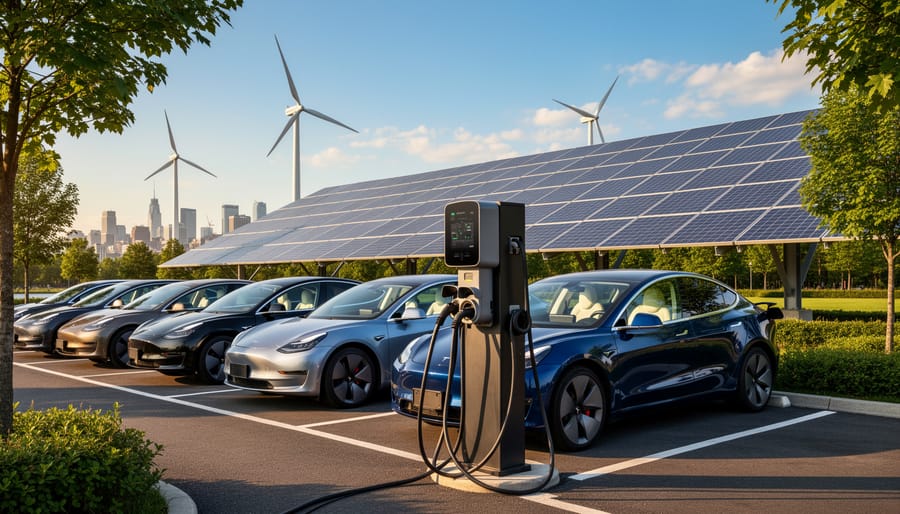
Electric vehicles alone are a great step forward, but when you charge them with electricity from coal or gas, you’re only shifting emissions from the tailpipe to the power station. The real magic happens when EVs run on clean, renewable energy – that’s when we create a genuinely sustainable transport system that slashes emissions from start to finish.
Australia is perfectly positioned to make this vision a reality. Our abundant sunshine, strong winds, and growing bioenergy sector mean we can power our vehicles with truly green electricity. Right now, renewable energy accounts for over 35 percent of Australia’s electricity generation, and that figure is climbing steadily as investment in renewable energy infrastructure accelerates across the country.
Smart charging technology is making this pairing even more effective. EVs can be programmed to charge during periods of peak renewable generation – when the sun is blazing or the wind is howling – maximising the use of clean energy and reducing grid strain. Some forward-thinking Aussie households are already combining rooftop solar with home battery systems and EVs, creating their own mini renewable transport ecosystem.
The success story of the ACT demonstrates what’s possible. The territory has achieved 100 percent renewable electricity and is now supporting EV uptake through charging infrastructure and incentives. This model shows how regions can leverage their renewable energy advantage to accelerate the transition to truly green transportation that benefits both the environment and local communities.
Hydrogen Transport: Australia’s Competitive Advantage
Australia stands uniquely positioned to become a global hydrogen powerhouse, thanks to our abundant sunshine, vast open spaces, and strong mining expertise. Green hydrogen—produced by splitting water using renewable energy—offers enormous potential for heavy transport applications where batteries fall short, including long-haul trucking, shipping, and aviation.
Several Australian companies are already making waves in this space. Fortescue Future Industries is developing hydrogen-powered trucks for mining operations, while projects in Port Kembla and Gladstone are building export-ready hydrogen production facilities. These initiatives aren’t just reducing emissions; they’re creating thousands of skilled jobs in regional areas that understand industrial-scale operations.
The beauty of hydrogen transport lies in its versatility. Existing infrastructure can be adapted, refuelling times mirror traditional vehicles, and the only emission is water vapour. For industries that can’t easily electrify—think heavy machinery or interstate freight—hydrogen provides a practical pathway to zero emissions. Combined with our renewable energy advantages and established export relationships, particularly with Asian markets seeking clean fuel alternatives, Australia’s hydrogen transport sector represents both environmental progress and genuine economic opportunity for communities nationwide.
Active Transport Infrastructure That’s Changing Our Cities
Green transportation extends beyond vehicle technology to include the infrastructure that supports how we move through our communities. Australian cities are leading the charge with innovative cycling and walking networks that reduce carbon emissions while improving public health. Melbourne’s comprehensive bike lane expansion has seen cycling trips increase by 40% in key corridors, demonstrating that when you build it, people will ride. Brisbane’s pedestrian-friendly precincts and Adelaide’s connected greenway trails show how thoughtful urban design creates alternatives to car dependency. These infrastructure improvements work hand-in-hand with biofuel-powered public transport and electric vehicles to create integrated mobility systems. The beauty of active transport infrastructure is its triple benefit: zero direct emissions, healthier residents, and more liveable cities. Local councils across Australia are investing in protected bike lanes, wider footpaths, and bike-sharing programs that make sustainable choices the easy choices for everyday journeys.
The Economic Engine Behind Green Transportation
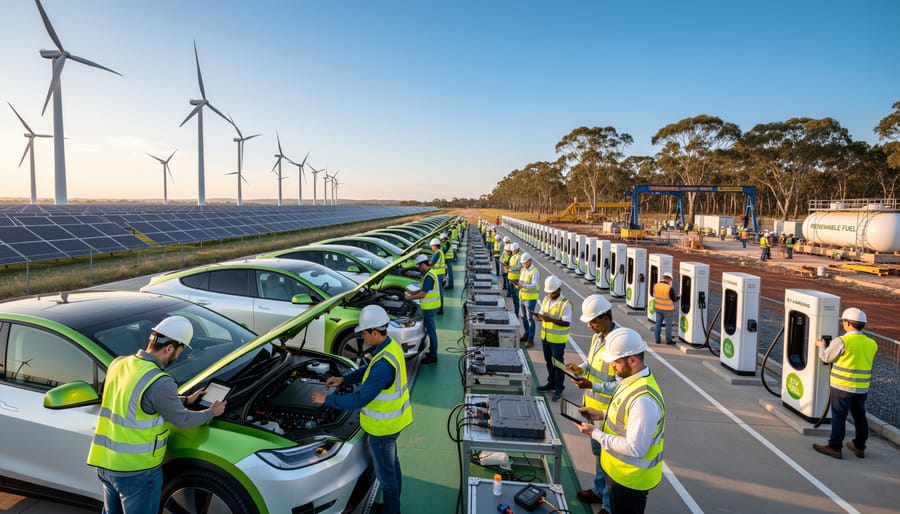
Jobs Being Created Right Now in Green Transport
Australia’s green transport revolution is creating diverse career opportunities right across the sector, offering exciting prospects for workers at all skill levels. Manufacturing plants producing electric buses and renewable fuel vehicles are hiring engineers, technicians, and assembly workers, with facilities in Melbourne and Adelaide already expanding their workforce to meet growing demand.
The maintenance sector is experiencing particularly strong growth. Diesel mechanics are retraining as electric vehicle technicians, while new roles are emerging for specialists who can service hybrid systems and battery technologies. These aren’t temporary positions either – they’re building long-term careers with strong earning potential and job security.
Biofuel production facilities represent another thriving employment area. From Queensland to Western Australia, new plants converting agricultural waste into renewable diesel are recruiting chemical engineers, plant operators, and logistics coordinators. These facilities often partner with local farming communities, creating regional employment hubs that strengthen rural economies.
Public transport authorities across Sydney, Brisbane, and Perth are recruiting drivers and fleet managers familiar with alternative fuel systems. Infrastructure development is generating construction jobs too, as charging stations and hydrogen refueling networks expand nationwide.
Perhaps most encouraging is the support sector – roles in policy development, environmental consulting, and sustainability management are multiplying. Training providers are also hiring educators to prepare the next generation of green transport workers, ensuring Australia has the skilled workforce needed to sustain this growing industry for decades to come.
Regional Australia’s Transport Opportunity
Regional Australia stands at the threshold of a remarkable economic transformation through green transport innovations. While city dwellers might think of electric cars when they hear about sustainable transport, our agricultural heartlands are discovering something equally exciting: turning farm waste into fuel that powers everything from trucks to tractors.
Farmers across the country are already seeing the benefits. Agricultural residues like sugarcane bagasse, wheat stubble, and livestock manure—materials that once presented disposal challenges—are now valuable resources for producing biodiesel and bioethanol. This means regional communities aren’t just consumers of green transport solutions; they’re becoming producers, creating local jobs and keeping energy dollars in their communities.
Take the grain-growing regions of Western Australia, where cooperatives are exploring biofuel production from crop residues. These initiatives create employment in processing facilities, logistics, and distribution—opportunities that help stem the flow of young people to cities. Meanwhile, transport companies servicing regional areas are increasingly running their fleets on locally produced biofuels, reducing costs and emissions simultaneously.
The beauty of this opportunity lies in its practical simplicity: regional Australia already has the raw materials, the land, and the agricultural expertise. Green transport innovation simply adds value to what’s already there, building resilience and prosperity in communities that deserve both.
Real Barriers and How We’re Overcoming Them
Let’s be straight—transitioning to green transportation isn’t without its hurdles. Infrastructure gaps, upfront costs, and concerns about vehicle range remain genuine challenges for many Australians. But here’s the good news: these barriers are being knocked down faster than you might think, and practical solutions are already making a difference.
Take charging infrastructure, for example. While it’s true that regional areas have fewer charging stations than our cities, Australia’s electric vehicle charging network has grown by over 500% in the past three years. State governments are investing heavily in charging corridors along major highways, and innovative approaches like solar-powered charging stations are popping up across the country. Some petrol stations are even transforming into multi-fuel hubs, offering biofuel, hydrogen, and electric charging options under one roof.
The cost barrier is real but shifting. Yes, electric vehicles typically carry higher price tags upfront, but running costs tell a different story. Fleet operators who’ve made the switch report fuel savings of 60-70% compared to diesel, and maintenance costs drop significantly without traditional engines to service. Government incentives, including tax breaks and rebates in several states, are helping bridge that initial investment gap. For freight companies exploring sustainable logistics solutions, these savings add up quickly across entire fleets.
Range anxiety? It’s becoming yesterday’s worry. Modern electric vehicles now offer 400-600 kilometre ranges, plenty for most daily needs. Meanwhile, biodiesel vehicles require zero range adjustments—they simply fuel up at existing service stations with renewable alternatives.
The reality is that early adopters are paving smoother roads for everyone else. Each challenge addressed creates momentum for the next breakthrough. We’re not waiting for perfect solutions; we’re building them as we go, and that’s exactly how transformative change happens.
The future of green transportation in Australia isn’t some distant dream—it’s happening right now, on roads, rails, and waterways across the nation. But the pace of change depends on choices we make today, both individually and collectively.
You don’t need to wait for perfect solutions to make a difference. Start small: next time you’re replacing a vehicle, consider an electric or hybrid option. Support local businesses using biofuels or electric fleets. When you see proposed bike lanes or public transport improvements in your community, speak up in favour. Contact your local representatives about green transport infrastructure. These actions create ripples that build into waves of change.
For business leaders, the message is equally clear: investing in sustainable transport isn’t just good for the planet—it’s increasingly good for your bottom line. Companies pioneering fleet conversions and biofuel adoption are discovering competitive advantages while building resilience against future fuel price volatility.
The transformation is already underway. Aussie ingenuity is turning agricultural waste into aviation fuel, powering buses on renewable energy, and creating thousands of jobs in emerging green industries. Our children might well ask us about the days when vehicles ran solely on fossil fuels, the way we wonder about horse-drawn carriages.
Every sustainable choice you make accelerates this transition. Together, we’re not just reducing emissions—we’re building a cleaner, more prosperous Australia. The journey has begun. Will you be part of it?