
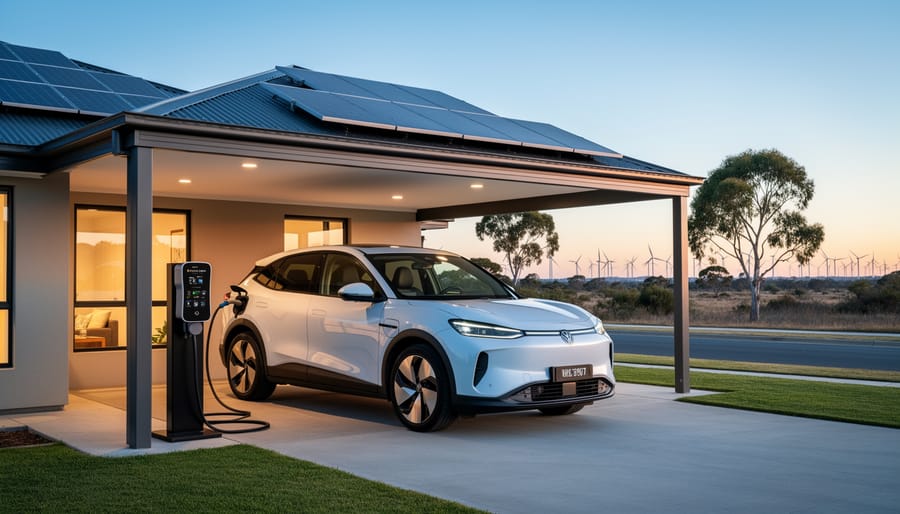
Picture this: your car charges overnight when electricity is cheapest and cleanest, then sells power back to the grid during peak demand, earning you money while supporting renewable energy. This isn’t science fiction. Smart electric vehicles are transforming how Australians power their homes, stabilize our energy grid, and accelerate the transition to 100% renewable electricity.
A smart electric vehicle goes far beyond a traditional EV with a battery. It’s a mobile energy storage system that communicates with your home, the electricity grid, and renewable energy sources in real-time. Through vehicle-to-grid technology, or V2G, these intelligent machines can draw power when solar and wind generation peaks, then return that energy when the sun sets or the wind calms. For Australian households already embracing rooftop solar, this creates a powerful synergy: your EV becomes the missing link between intermittent renewable generation and reliable, 24/7 clean power.
The numbers tell a compelling story. The average Australian EV battery holds 60-100 kilowatt-hours of energy, enough to power a typical home for several days. With over 180,000 EVs already on Australian roads and projections suggesting millions more by 2030, we’re looking at a distributed energy network with unprecedented flexibility and resilience. Early adopters in South Australia and the ACT are already demonstrating how smart charging can reduce electricity bills by up to 70% while providing critical grid services during peak demand periods.
This article explores how smart EVs are reshaping Australia’s energy landscape, the practical steps to integrate them into your sustainable living strategy, and why they represent one of the most significant opportunities in our renewable energy transition.
What Makes an Electric Vehicle ‘Smart’?
Think of a smart electric vehicle as the difference between a basic mobile phone and a smartphone. While a standard EV simply stores energy in its battery for driving, a smart EV actively communicates with the electricity grid, your home, and even smart energy monitoring systems to optimize energy use in both directions.
The game-changer here is bidirectional charging technology, often called vehicle-to-grid or V2G. Imagine your EV not just as a car, but as a mobile battery bank on wheels. When you’re not driving, which is typically 95% of the time for most vehicles, your smart EV can feed stored electricity back into your home or the wider grid during peak demand periods. It’s like having a mate who not only borrows your tools but returns them when you need them most, often with a bit extra.
This capability relies on intelligent communication systems that allow your vehicle to talk with energy providers, understanding when electricity is cheapest and cleanest to charge, and when it’s most valuable to send power back. Picture it as a continuous conversation between your car and the grid, finding the sweet spot that benefits your wallet and the environment.
What truly distinguishes smart EVs from their standard cousins is this integrated intelligence. Standard EVs are one-way streets, only drawing power. Smart EVs operate more like roundabouts, directing energy flow where it’s needed most. They’re equipped with sophisticated software that monitors grid conditions, energy prices, and your driving patterns, making split-second decisions to optimize charging and discharging.
For Australian households with rooftop solar, this technology becomes even more powerful. Your smart EV can store excess daytime solar energy and release it during evening peak periods, turning your garage into a mini power station that supports grid stability while reducing your energy bills.
Smart Charging: Your EV’s Brain at Work
Timing Is Everything: Load Management Benefits
Picture your neighbourhood at 6pm on a sweltering summer evening. Air conditioners are cranking, families are cooking dinner, and traditionally, this is when the electricity grid faces its biggest challenge. Now imagine thousands of electric vehicles plugging in simultaneously, all demanding power at once. Without smart charging technology, this scenario could overwhelm our infrastructure.
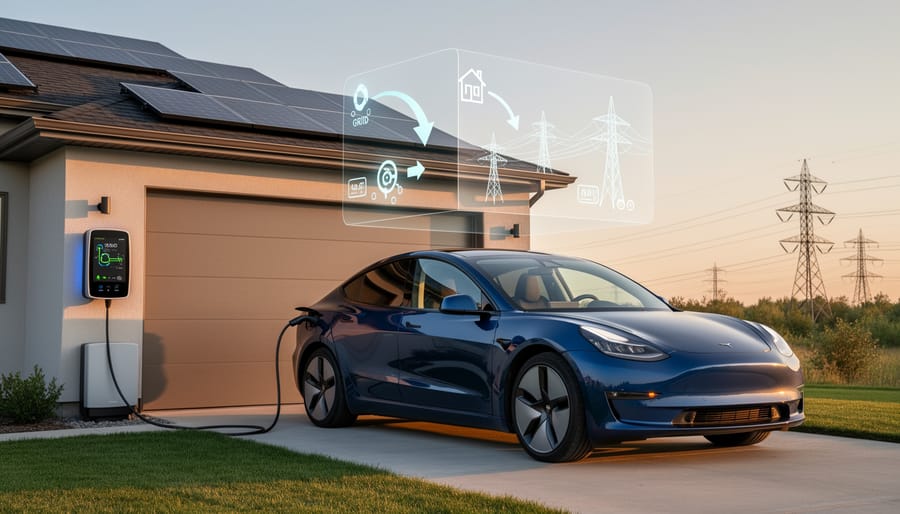
This is where smart EV charging becomes a game-changer. Instead of automatically drawing power the moment you plug in, smart chargers communicate with the grid to identify the best times to charge your vehicle. During peak demand periods when coal-fired plants would typically fire up, your EV can wait. Then, between midnight and dawn when wind turbines are spinning strongly along Australia’s southern coast and solar farms await the sunrise, your vehicle charges using abundant, clean energy.
AI-powered energy forecasting systems predict these optimal windows with remarkable accuracy, ensuring your car is fully charged by morning while supporting grid stability. South Australian trials have demonstrated that coordinated smart charging can reduce peak demand stress by up to 30 percent, all while owners enjoy lower electricity rates during off-peak hours. It’s environmental responsibility meeting practical savings.
Saving Money While You Sleep
Here’s the good news: smart charging can significantly reduce your electricity bills while you’re tucked up in bed. Australian electricity providers increasingly offer time-of-use tariffs, where power costs substantially less during off-peak hours, typically between 10pm and 7am. By programming your EV to charge during these periods, you’re tapping into cheaper electricity rates that can save hundreds of dollars annually.
Take the example of Sarah from Brisbane, who switched to a time-of-use tariff with her provider. She now pays just 12 cents per kilowatt-hour overnight compared to 35 cents during peak afternoon hours. For her Tesla Model 3, this translates to charging costs of around 6 dollars for a full battery instead of 17 dollars, saving her approximately 280 dollars monthly.
Smart charging systems automatically schedule your vehicle to draw power when rates are lowest, requiring no effort on your part. Some systems even monitor your daily driving patterns and ensure you have sufficient charge for the next day’s journey while maximizing savings. Combined with rooftop solar panels, many Australian households are discovering they can charge their EVs for virtually nothing, with excess daytime solar generation stored in the grid and retrieved overnight at minimal cost. The financial benefits make sustainable transport increasingly accessible for everyday families.
Vehicle-to-Grid (V2G): Turning Your Car Into a Power Station
How V2G Actually Works
At its core, V2G technology transforms your electric vehicle from a simple mode of transport into a mobile power station. The magic happens through three interconnected systems working together seamlessly.
The heart of V2G is the bidirectional charger, which does something conventional chargers can’t – it allows electricity to flow both ways. Think of it like a two-way street: when you plug in overnight, power flows from the grid to charge your battery. During peak demand periods, that same charger can reverse direction, sending stored energy back to the grid. It’s remarkably straightforward technology that’s already being used across Australian trials.
Behind the scenes, sophisticated grid communication systems act as the brains of the operation. These systems constantly monitor grid conditions, electricity prices, and your vehicle’s charging needs. They determine the optimal times to charge your EV (usually when renewable energy is abundant and cheap) and when to export power back (during peak demand when it’s most valuable).
The third component is your EV’s battery management system, which protects your vehicle’s battery health. It ensures that participating in V2G doesn’t compromise your battery’s lifespan or your driving range. The system sets charging thresholds – for instance, maintaining your battery between 20% and 80% during grid services – while guaranteeing you’ll always have sufficient charge for your daily commute.
What makes this particularly exciting is how seamlessly it operates. Once configured through a simple app, the entire process runs automatically in the background while your vehicle is parked.
Real Benefits for Australian Households
Smart electric vehicles are transforming from simple transport into powerful energy assets for Australian families, delivering tangible benefits that extend far beyond getting from A to B. When connected to the grid through vehicle-to-grid technology, your EV becomes a mobile power station that can actively contribute to your household’s energy strategy.
The most exciting advantage is the potential to earn income by selling stored electricity back to the grid during peak demand periods. Through peer-to-peer energy trading platforms, you can sell excess power when prices are high and recharge when electricity is cheaper, typically overnight. Some Australian households are already offsetting their vehicle running costs by hundreds of dollars annually through strategic energy arbitrage.
Energy independence becomes genuinely achievable when you pair your smart EV with rooftop solar panels. You’re essentially creating your own mini power station, charging your vehicle with sunshine and reducing reliance on the traditional grid. This combination shields you from volatile electricity prices while shrinking your carbon footprint.
Perhaps most valuable during Australia’s bushfire season and extreme weather events is the backup power capability. When the grid goes down, your EV can keep essential household appliances running for days. It’s like having a massive battery bank on wheels, providing peace of mind and genuine resilience when you need it most.
Smart EVs and Renewable Energy: A Perfect Match
Australia’s abundance of sunshine and wind makes it a natural leader in renewable energy, but there’s a challenge that’s been holding us back: what happens when the sun doesn’t shine or the wind doesn’t blow? This is where smart electric vehicles enter the picture as unexpected heroes in our clean energy story.
Think of your smart EV as more than just transport – it’s a mobile battery on wheels. During the day, when rooftop solar panels across the country are generating more electricity than homes can use, that excess energy can flow into parked electric vehicles. This simple concept solves one of renewable energy’s biggest headaches: storing power for when we actually need it.
The timing couldn’t be more perfect. Most Australians head off to work in the morning, leaving their EVs plugged in at home or the office throughout the sunniest part of the day. This natural alignment between solar generation peaks and EV charging patterns creates what energy experts call a beautiful synergy. Your car charges when clean energy is most abundant and cheapest, often when the grid would otherwise waste that excess power.
Through solar energy integration and vehicle-to-grid technology, smart EVs can actually give power back to the grid during evening peak demand periods. Imagine thousands of electric vehicles across Sydney or Melbourne acting as a distributed battery network, storing daytime solar energy and releasing it when families return home and switch on appliances.
South Australia’s Hornsdale Power Reserve demonstrated how battery storage can stabilize the grid, but imagine multiplying that capacity across hundreds of thousands of electric vehicles. Each car becomes a mini power station, helping smooth out the ups and downs of renewable energy supply.
This isn’t just theory. Early adopters in Queensland are already experiencing this reality, charging their vehicles with rooftop solar during the day and occasionally selling power back to the grid during peak times. They’re not only driving emissions-free – they’re actively supporting Australia’s renewable energy transition while potentially earning credits on their electricity bills.
The message is clear: smart EVs aren’t just compatible with our renewable energy goals – they’re essential to achieving them. Together, they create a resilient, clean energy ecosystem that benefits everyone.
Success Stories: Smart EVs in Action Across Australia
Across Australia, forward-thinking communities and businesses are already experiencing the transformative power of smart EV charging and vehicle-to-grid technology. These pioneering projects aren’t just testing concepts—they’re delivering real results that benefit both participants and the broader community.
In the Australian Capital Territory, the Realising Electric Vehicle-to-grid Services (REVS) trial has been a game-changer. ActewAGL partnered with the Australian National University to connect Nissan Leaf EVs to the grid, allowing them to feed stored energy back during peak demand periods. Participants reported earning up to 900 dollars annually while supporting grid stability. One participant, Sarah Chen from Canberra, shared: “I’m essentially getting paid to park my car at home. It’s brilliant knowing my vehicle helps balance renewable energy when the sun isn’t shining.”
Over in South Australia, the City of Adelaide launched a smart charging network that coordinates public charging stations with solar generation from nearby installations. The system intelligently directs EVs to charge when solar output peaks, maximizing clean energy use. Local delivery company GreenFleet Adelaide reduced their charging costs by 35 percent within the first year while cutting emissions significantly.
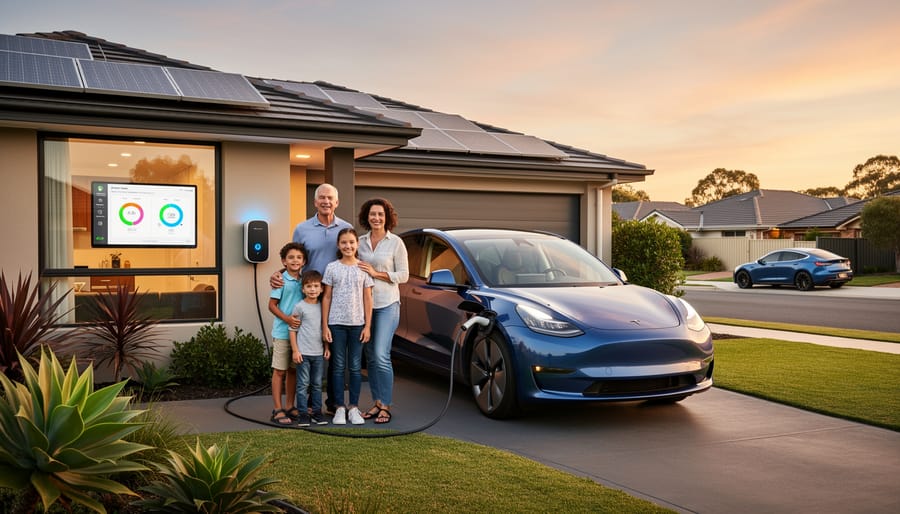
Queensland’s Energex has rolled out innovative trials in suburban Brisbane, where households with rooftop solar and EVs participate in coordinated charging programs. The technology automatically charges vehicles during midday solar peaks and can discharge power back to homes during evening demand. Participant James Murphy from Wynnum noted: “We’ve slashed our electricity bills and feel like we’re genuinely contributing to a cleaner energy future. It’s practical climate action that actually saves money.”
These success stories demonstrate that smart EV technology isn’t some distant possibility—it’s happening right now across Australia, creating financial benefits for participants while strengthening our renewable energy infrastructure. As these programs expand, more Australians will have opportunities to join this exciting transition toward smarter, cleaner transportation and energy systems.
The Environmental Impact: Beyond Zero Emissions
The environmental story of smart EVs extends far beyond the tailpipe emissions they eliminate. When integrated with Vehicle-to-Grid technology, these vehicles become mobile batteries that can reshape Australia’s entire energy ecosystem.
Consider the numbers: Australia currently relies on fossil fuel peaker plants during high-demand periods, typically firing up gas turbines on scorching summer afternoons when air conditioners work overtime. These peaker plants are carbon-intensive and expensive to operate. Research from the Australian National University suggests that just 1.8 million EVs with V2G capability could replace the need for these peaker plants entirely across the National Electricity Market.
The carbon reduction potential is substantial. A typical petrol vehicle emits around 4.6 tonnes of CO2 annually. Switching to an EV powered by Australia’s current grid mix cuts that figure to roughly 2 tonnes. But here’s where it gets exciting: when smart EVs charge during solar-rich daytime hours and feed clean energy back during evening peaks, they actively support renewable energy integration while pushing that figure closer to zero.
South Australia offers a compelling success story. During a recent trial in Adelaide, 50 homes with V2G-enabled vehicles reduced their collective grid demand by 35% during peak periods while earning credits for the clean energy they supplied. Scale this approach nationally, and we’re looking at preventing millions of tonnes of CO2 emissions annually.
The transformation isn’t just theoretical. As more Australians drive electric and participate in smart charging programs, they’re creating a distributed energy network that makes renewable sources like solar and wind more viable. Each smart EV becomes a tool for accelerating Australia’s transition to clean energy, proving that personal choices can drive systemic environmental change.
What’s Holding Us Back (And How We’re Overcoming It)
Let’s be honest: the transition to smart electric vehicles isn’t without its hurdles. But here’s the encouraging bit – for every challenge we face, there’s already a solution being rolled out across Australia and globally.
Infrastructure remains the most talked-about obstacle. While charging stations are multiplying rapidly, we need more to support widespread adoption, particularly in regional areas. The good news? State and federal governments have committed substantial funding to expand charging networks along major highways and in rural communities. Private companies are stepping up too, with service stations, shopping centres, and workplaces increasingly installing charging points. It’s a bit like the early days of petrol stations – they didn’t appear overnight, but they got there.
Standardization presents another puzzle. Different charging protocols and communication systems between vehicles and grids can complicate things. However, industry bodies are actively developing universal standards, and newer smart EVs are being built with interoperability in mind from the ground up. This collaboration between manufacturers, energy providers, and technology companies is creating seamless integration that benefits everyone.
The regulatory framework is still catching up with the technology’s rapid evolution. Questions around electricity pricing for vehicle-to-grid services, grid connection standards, and consumer protections need clear answers. Fortunately, policymakers are working closely with industry experts and grid maintenance technology specialists to develop guidelines that protect consumers while encouraging innovation.
Cost remains a consideration, though battery prices continue falling steadily. Combined with government incentives and lower running costs, the total cost of ownership is becoming increasingly competitive with traditional vehicles.
The timeline for full transition? Most experts suggest we’ll see widespread adoption within the next decade, with infrastructure and regulations catching up progressively. It’s not instantaneous change, but it’s steady, purposeful progress toward a cleaner transport future.
Getting Ready: What Australian Drivers Need to Know
Making the switch to a smart EV might feel like a big leap, but Australian drivers are discovering it’s more straightforward than they imagined. The key is understanding what you need and taking advantage of the support available.
When shopping for your smart EV, look beyond range and price. Ask dealerships about V2G capability—not all EVs can send power back to the grid yet, though major brands like Nissan, Mitsubishi, and newer models from Hyundai and BYD are leading the charge. Check whether the vehicle supports bidirectional charging and what home equipment you’ll need. Most smart EVs require a compatible wallbox charger, typically costing between $1,500 and $3,000 installed.
Home infrastructure doesn’t need to be complicated. A qualified electrician can assess whether your switchboard needs upgrading—most modern Australian homes manage perfectly well with their existing setup. The charger installation usually takes just a few hours. If you’re keen on V2G participation, you’ll also need a bidirectional charger and an energy retailer offering V2G programs. Companies like AGL and Origin Energy are rolling out these services across the country.
The financial incentives make smart EVs even more attractive. Federal and state governments offer various rebates and stamp duty exemptions, with some states providing up to $3,000 off the purchase price. Several energy retailers also offer special time-of-use tariffs for EV owners, letting you charge during off-peak hours for significantly less. South Australian EV owners, for example, have saved hundreds annually by charging overnight when renewable energy floods the grid.
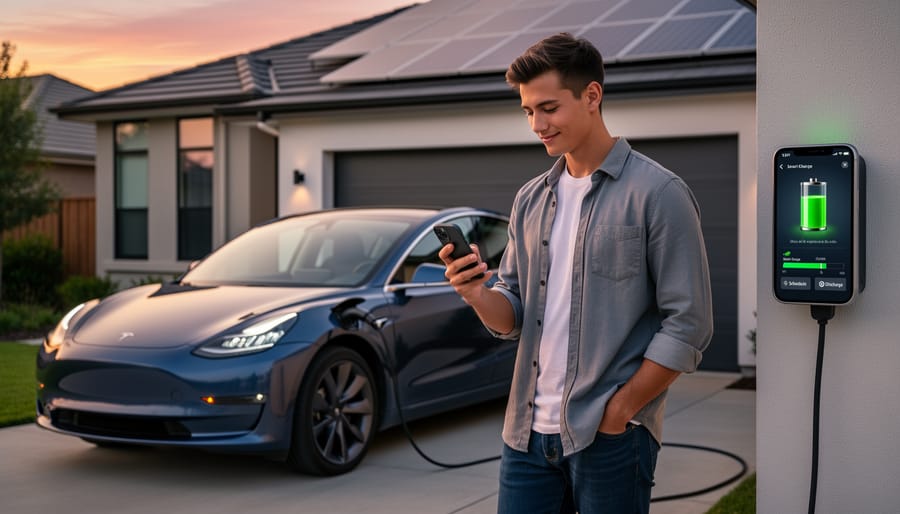
Joining a V2G program is simpler than most people think. Start by contacting your energy retailer to see if they offer V2G services in your area. The Australian Renewable Energy Agency provides updated information about trial programs and participating companies. Many programs handle the technical side automatically—your car simply communicates with the grid through your charger, with you maintaining full control through a smartphone app.
The beauty of this technology is that it works quietly in the background while you get on with life, turning your driveway into a mini power station that benefits both your wallet and Australia’s clean energy future.
Australia stands at a pivotal moment in its energy transformation, and smart electric vehicles represent far more than a shift in how we travel—they’re a cornerstone of our sustainable future. The connection between your EV and the energy grid creates ripples that extend well beyond your driveway, contributing to grid stability, maximizing renewable energy use, and reducing our collective carbon footprint. Every smart EV charging at off-peak times, every vehicle supporting the grid through V2G technology, and every kilowatt-hour stored in your battery becomes part of a larger solution to Australia’s energy challenges.
The beauty of this revolution lies in its accessibility. You don’t need to be an engineer or energy expert to participate—simply choosing a smart-enabled EV and engaging with intelligent charging systems makes you part of Australia’s clean energy story. Whether you’re considering purchasing your first electric vehicle, advocating for better charging infrastructure in your community, or supporting policies that encourage smart energy integration, your role matters.
Think of yourself not just as a driver, but as an energy citizen. The decisions we make today—from the vehicles we choose to the charging habits we adopt—shape the energy landscape for generations to come. Australia’s abundant renewable resources combined with smart EV technology offer us an extraordinary opportunity to lead in sustainable transport and energy innovation. The question isn’t whether this transformation will happen, but how quickly we can embrace it together. Your journey toward smarter, cleaner energy starts with a single decision. What will yours be?