
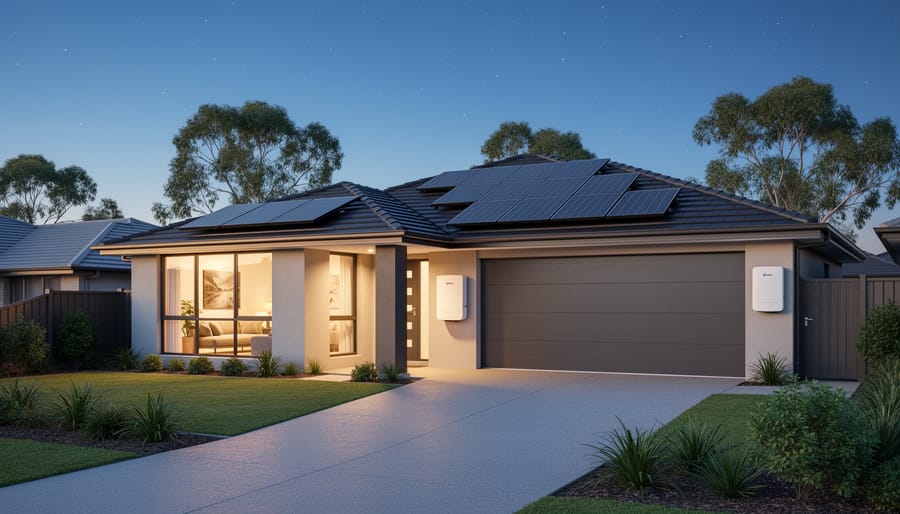
Australia’s solar revolution has reached a critical turning point. While rooftop panels now crown more than three million homes across the country, the sun’s greatest limitation remains unchanged: it doesn’t shine at night. This simple reality has transformed energy storage from a luxury into an essential component of any serious solar investment.
The numbers tell a compelling story. Australian households with solar panels typically use only 30% of the energy they generate, sending the rest back to the grid for minimal feed-in tariffs. Meanwhile, they purchase expensive electricity during peak evening hours when solar production has ceased. Storage solutions flip this equation entirely, allowing homes and businesses to capture daytime abundance and deploy it precisely when needed.
Battery technology has evolved dramatically over the past five years. What once cost upward of $15,000 for a basic home system now offers triple the capacity at similar or lower prices. Lithium-ion batteries have improved in efficiency, lifespan, and safety, while emerging alternatives promise even greater performance. For businesses, large-scale storage systems are unlocking energy independence previously unimaginable outside major industrial operations.
Beyond individual benefits, storage solutions are reshaping Australia’s entire energy landscape. They’re stabilizing grids stressed by renewable variability, reducing reliance on fossil fuel peaker plants, and creating virtual power plants that transform ordinary households into active grid participants. The question is no longer whether to invest in solar storage, but which solution best matches your energy goals and budget.
Why Solar Energy Storage Changes Everything
The Solar Power Time Gap
Here’s a puzzle many Australian households are discovering: your solar panels work hardest when you need them least. Picture a typical weekday – your rooftop system is pumping out maximum power between 11am and 2pm, right when most Aussies are at work or school and the house sits empty. Meanwhile, when everyone’s home cooking brekkie or firing up appliances after work, the sun’s either just rising or already setting.
This mismatch creates what experts call the solar power time gap. Your panels might generate enough electricity throughout the day to cover your entire household’s needs, but without somewhere to store that midday surplus, you’re forced to export it to the grid for minimal feed-in tariffs while buying expensive power back during morning and evening peaks.
For businesses, the pattern’s similar but reversed in some cases. Retail shops and offices using daytime power can benefit immediately, but restaurants, entertainment venues, and shift-based operations face the same challenge as residential users. The good news? This timing puzzle is precisely what modern solar energy storage solutions are designed to solve, turning your excess sunshine into evening power and transforming how we think about energy independence.
What Happens When You Store Sunshine
Storing solar energy transforms how Australians experience renewable power, delivering benefits that extend well beyond environmental responsibility. When you capture sunshine in batteries, you’re essentially bottling your own clean electricity to use whenever needed—even when clouds roll in or the sun sets.
The most immediate advantage is energy independence. Rather than relying solely on the grid, households and businesses become their own power providers, which proves particularly valuable in remote areas where grid access can be unreliable. This shift supports decentralized power grids that strengthen Australia’s overall energy security.
Financial benefits follow quickly. By storing excess solar generation during the day and using it during peak evening hours, you avoid purchasing expensive grid electricity when rates spike. Many Australian families report reducing their electricity bills by 70-90% after installing storage systems.
Perhaps most reassuring is backup power during outages. When storms knock out grid power—an increasingly common occurrence—your stored sunshine keeps essential appliances running. From refrigerators preserving food to medical equipment staying operational, battery storage provides genuine peace of mind.
These practical advantages make solar storage not just an environmental choice, but a smart investment in resilience and financial stability.
Battery Storage Systems: The Powerhouse of Your Solar Setup
Lithium-Ion Batteries: The Current Champion
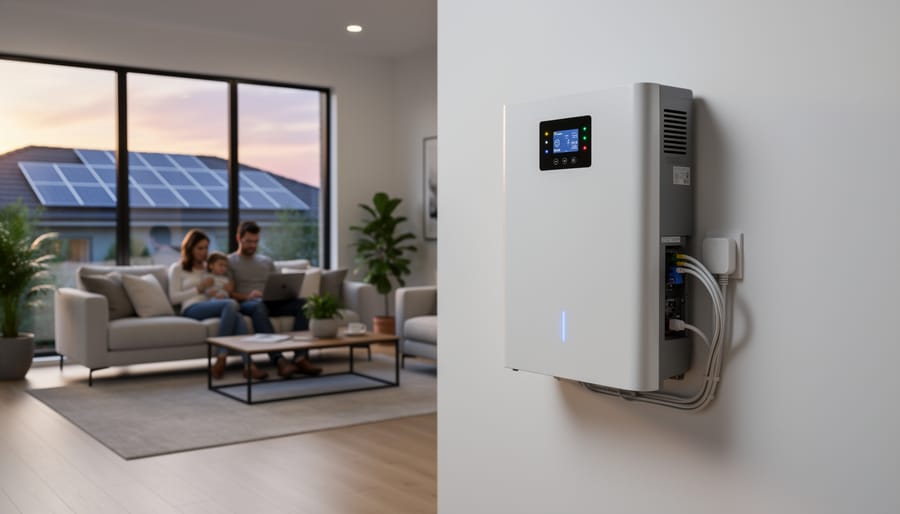
When it comes to storing solar energy in Australian homes and businesses, lithium-ion batteries have emerged as the clear frontrunner, and for good reason. These remarkable storage systems have transformed from expensive novelties into practical, everyday solutions that are making renewable energy dreams a reality across the country.
The secret to lithium-ion’s dominance lies in its impressive efficiency, with modern systems converting and storing around 90-95% of the energy they receive. This means very little of your hard-earned solar power goes to waste. They’re also built to last, with quality lithium-ion batteries typically offering 10-15 years of reliable service and maintaining their capacity far better than older battery technologies.
Perhaps most exciting is the dramatic cost reduction we’ve witnessed over the past decade. Prices have dropped by more than 80%, making solar storage accessible to everyday Australians rather than just early adopters with deep pockets. This trend shows no signs of slowing down.
Australian households have embraced trusted brands like Tesla Powerwall, sonnenBatterie, LG Chem, and Enphase, each bringing unique advantages to different situations. A Perth family recently shared how their Tesla Powerwall system eliminated their evening electricity bills entirely, while a Brisbane business found that their sonnenBatterie installation paid for itself within five years through reduced grid dependence.
This combination of proven performance, increasing affordability, and strong manufacturer support explains why lithium-ion batteries continue to lead Australia’s clean energy revolution, empowering thousands to take control of their energy future.
Emerging Battery Technologies Worth Watching
The solar storage landscape is evolving rapidly, with emerging battery technologies promising to make renewable energy more accessible and affordable for everyday Australians.
Solid-state batteries are generating excitement across the industry. Unlike traditional lithium-ion systems, they use solid electrolytes instead of liquid ones, offering greater energy density and improved safety. This means more storage capacity in a smaller footprint—perfect for homes with limited space. Several Australian research institutions are partnering with global manufacturers to bring these innovations to market within the next few years.
Flow batteries present another compelling option, particularly for larger installations. These systems store energy in liquid electrolyte tanks, making them easily scalable and incredibly long-lasting. A community energy project in regional Victoria is already trialling flow battery technology, demonstrating how it can provide reliable backup power for entire neighbourhoods.
Sodium-ion batteries are also gaining traction as a more sustainable alternative. Using abundant materials like salt instead of scarce lithium, these batteries could dramatically reduce costs while maintaining solid performance. For Australian communities seeking genuinely sustainable solutions, sodium-ion technology represents a fair dinkum breakthrough that aligns environmental responsibility with practical energy needs.
Real Australian Homes Making It Work
When the Morrison family from Ballarat decided to add a 13.5kWh Tesla Powerwall to their existing rooftop solar system in 2022, they weren’t sure what to expect. Fast forward eighteen months, and the difference has been remarkable.
“We’ve basically said goodbye to those painful evening electricity bills,” says Emma Morrison, a teacher and mum of three. “Our solar panels were brilliant during the day, but we were still drawing heaps from the grid when everyone came home in the afternoon and evening. Now the battery kicks in, and we’re running almost entirely on stored sunshine.”
The Morrisons estimate they’ve cut their grid electricity usage by roughly 85 percent, saving around 180 dollars each month. During last summer’s heatwave, when their neighbors faced eye-watering bills from constant air conditioning, the family barely noticed a difference in their costs.
Beyond the savings, Emma appreciates the peace of mind. “When there’s a blackout in the neighborhood, our lights stay on and the fridge keeps running. We’ve even charged our electric vehicle during outages, which feels pretty futuristic.”
The system paid for itself faster than expected, thanks to Victoria’s solar battery rebate scheme. “It’s one of the best investments we’ve made in our home,” Emma reflects. “We’re saving money while doing our bit for the environment—that’s a proper win-win.”
How Solar Storage Integrates With the Broader Energy Grid
Virtual Power Plants: Your Battery Helps Your Neighbours
Imagine thousands of home batteries working together as one massive power station—that’s the exciting reality of Virtual Power Plants (VPPs). These innovative networks connect privately-owned solar batteries across neighbourhoods, suburbs, and entire regions, creating a decentralised energy resource that benefits everyone involved.
Here’s how it works: when you join a VPP program, your battery becomes part of a coordinated fleet managed through adaptive energy systems. During peak demand periods, the VPP operator can draw small amounts of stored energy from participating batteries, feeding it back into the grid when it’s needed most. In return, you receive financial compensation—either through reduced electricity bills, direct payments, or enhanced feed-in tariffs.
South Australia has pioneered this approach with remarkable success. The SA VPP program has already connected thousands of households, demonstrating how collective action creates grid stability whilst rewarding participants financially. During the extreme heatwaves of 2023, VPP batteries supplied crucial power during evening peaks, preventing potential blackouts whilst earning homeowners additional income.
The beauty of VPPs lies in their win-win nature. You maintain control over your battery for personal use, the grid gains flexible storage capacity without building expensive infrastructure, and your community benefits from improved energy security. As more Australians install solar batteries, VPPs represent a powerful pathway toward a resilient, community-powered energy future.
Grid-Scale Storage Solutions
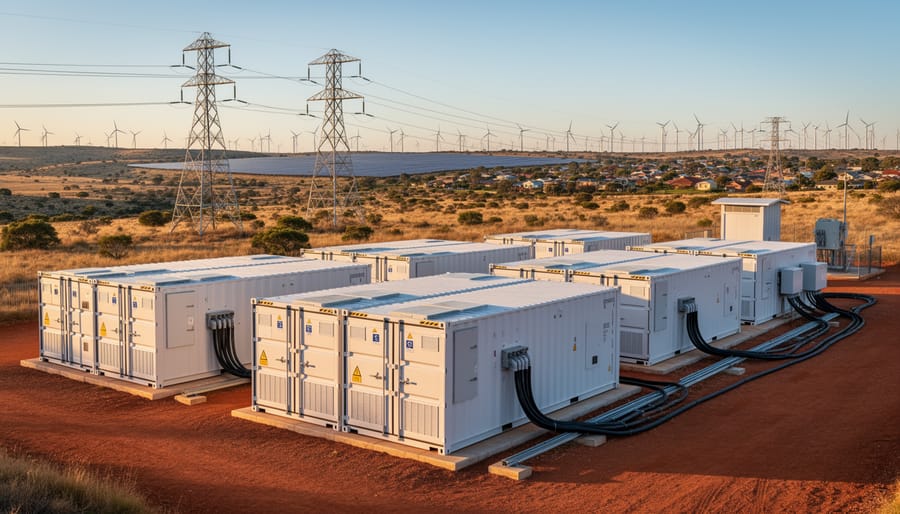
When solar panels generate more electricity than the grid needs during sunny days, large-scale storage systems step in to capture that energy and release it during peak demand periods. Across Australia, grid-scale storage solutions are transforming how we manage renewable energy at regional and state levels, making solar power reliable around the clock.
Battery installations are leading this revolution. The Hornsdale Power Reserve in South Australia, home to one of the world’s largest lithium-ion batteries, has become a global success story since its 2017 launch. This massive facility can store 194 megawatt-hours of energy, enough to power thousands of homes during evening peak demand. It’s proven that batteries can respond to grid fluctuations within milliseconds, preventing blackouts and stabilizing electricity prices. Following this success, Victoria’s Victorian Big Battery and New South Wales’ Wallgrove Battery are expanding Australia’s grid-scale storage capacity, with more projects in the pipeline across every state.
Pumped hydro storage offers another proven solution, particularly for longer-duration energy storage. This technology works like a giant rechargeable battery, using excess solar energy to pump water uphill to a reservoir. When electricity is needed, the water flows back down through turbines, generating power. Tasmania’s existing pumped hydro facilities have operated successfully for decades, and Snowy Hydro 2.0 represents Australia’s most ambitious expansion, promising to store enough energy to power three million homes for a week.
These grid-scale solutions create a safety net for renewable energy, ensuring that solar power generated today can meet tomorrow’s needs. They’re essential infrastructure for Australia’s transition to 100 percent renewable energy, proving that with smart storage, sunshine becomes a reliable 24/7 energy source for entire communities.
Beyond Batteries: Alternative Solar Storage Methods
Thermal Energy Storage
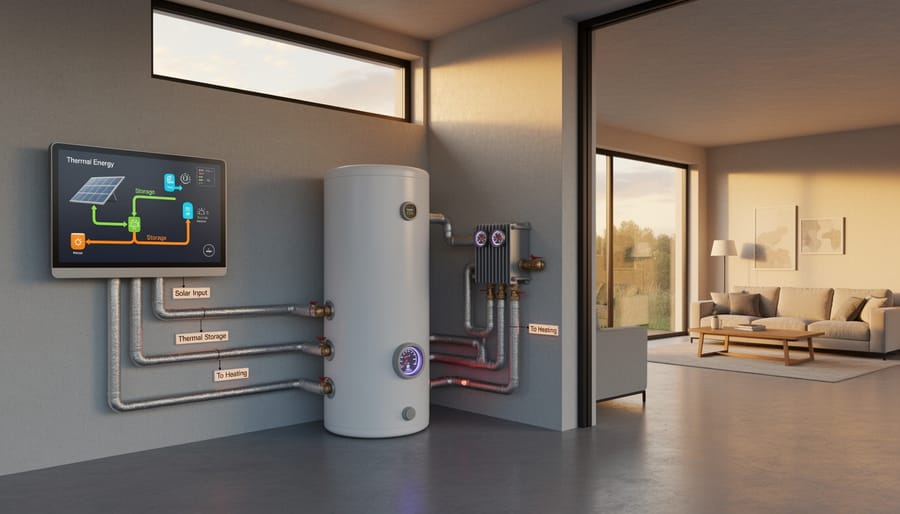
While batteries often steal the spotlight, thermal energy storage offers a brilliant alternative for capturing excess solar power as heat. This approach is particularly effective for Australian households and businesses with high hot water or heating demands, turning sunshine into stored warmth that’s available whenever you need it.
The concept is beautifully simple: solar thermal collectors absorb sunlight and convert it into heat, which is then stored in insulated tanks filled with water, molten salts, or specialized phase-change materials. A typical residential setup might heat water to 60-80 degrees Celsius during sunny periods, providing hot water for showers, washing, and space heating well into the evening and overnight.
Industrial applications take this further. Several Australian manufacturing facilities now use thermal storage systems that capture solar heat for processes requiring temperatures up to 400 degrees Celsius. One Queensland food processing plant reduced its natural gas consumption by 70 percent after installing solar thermal storage, demonstrating how this technology delivers both environmental and economic wins.
What makes thermal storage particularly appealing is its cost-effectiveness and longevity. These systems typically cost less than battery storage for equivalent energy capacity and can operate efficiently for decades with minimal maintenance, making them a smart long-term investment for sustainability-focused organizations.
Hydrogen: The Long-Term Storage Solution
When you need to store sunshine for months rather than hours, hydrogen emerges as a game-changing solution. Through electrolysis, solar power splits water into hydrogen and oxygen, creating a clean fuel that can be stored indefinitely and transported wherever it’s needed. This makes hydrogen particularly valuable for seasonal storage, bridging the gap between summer’s abundant solar harvest and winter’s higher energy demands.
Australia is already pioneering this technology with impressive results. The Hydrogen Energy Supply Chain project in Victoria’s Latrobe Valley is demonstrating how solar-powered hydrogen production can work at commercial scale, while Western Australia’s Renewable Hydrogen Plant at Denham is successfully powering local communities and heavy vehicles. These aren’t just experiments on paper; they’re real facilities proving that hydrogen storage works in Australian conditions.
The beauty of hydrogen extends beyond storage. It’s perfect for heavy-duty applications where batteries fall short, powering trucks, buses, and even ships without carbon emissions. As electrolyser costs continue dropping and Australia’s solar infrastructure expands, hydrogen storage is becoming increasingly viable for businesses and communities wanting truly sustainable, long-term energy independence. The future of seasonal solar storage is already bubbling to life.
Mechanical and Gravitational Storage
Beyond batteries, innovative mechanical and gravitational storage systems are emerging as exciting complements to solar energy. Compressed air energy storage (CAES) works by using excess solar power to compress air into underground caverns or specially designed containers. When energy is needed, the compressed air is released to drive turbines and generate electricity. Several pilot projects worldwide are demonstrating this technology’s potential, with Australian researchers exploring how our unique geology might suit large-scale CAES facilities.
Gravity-based systems offer another clever solution. These systems use surplus solar energy to lift heavy weights or concrete blocks. When power is required, the weights descend, driving generators as they fall. While still in testing phases globally, these systems promise long-duration storage without rare materials or chemical degradation. What’s particularly promising is their simplicity and longevity, with minimal maintenance requirements. As these technologies mature, they could provide cost-effective storage for communities and industrial operations, further strengthening Australia’s renewable energy future.
Making Solar Storage Work for Your Situation
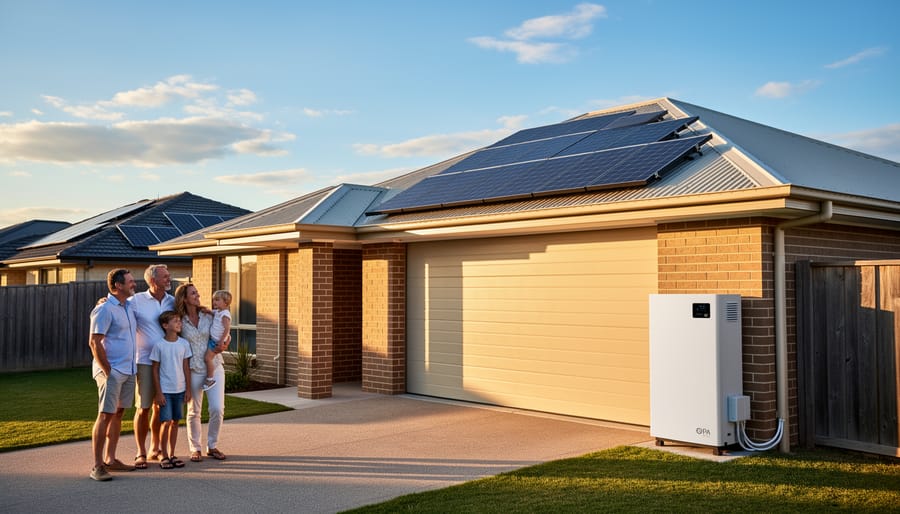
Is Storage Right for Your Home or Business?
Deciding whether solar energy storage suits your situation starts with understanding your specific circumstances. Take a good look at your energy usage patterns throughout the day. Do you consume most electricity in the evenings when solar panels aren’t generating? Storage could slash your bills by using stored daytime energy after sunset.
Consider your motivations too. Are you aiming for energy independence, lower costs, or resilience during blackouts? A Melbourne family recently installed battery storage after experiencing three power outages in six months, and they haven’t looked back since their system kept everything running smoothly.
Financial factors matter significantly. Battery systems typically pay themselves off within seven to twelve years in Australia, depending on your electricity rates and usage. Those with higher consumption or facing frequent grid disruptions see faster returns.
Businesses with peak daytime operations might benefit differently than residential users. A Perth café owner discovered storage wasn’t immediately necessary since they consumed solar energy as it was generated, though they’re reconsidering as battery prices drop.
Ask yourself: Do I have existing solar panels? What’s my daily consumption? Can I access government incentives? These questions help clarify whether storage represents a smart investment for your renewable energy journey right now or in the near future.
What to Look for When Choosing a Storage System
Choosing the right storage system transforms your solar investment from good to brilliant. Start with capacity, measured in kilowatt-hours (kWh), which determines how much energy you can store. A typical Aussie household uses around 20 kWh daily, so consider your consumption patterns carefully. Power output, measured in kilowatts (kW), indicates how much electricity flows at once – think of capacity as your fuel tank size and power output as how fast you can access it.
Efficiency matters more than many realize. Look for round-trip efficiency above 90%, meaning you’re getting back most of what you store. The Melbourne family who upgraded to a high-efficiency system discovered they were wasting less energy and maximizing their solar panels’ potential.
Warranties reveal manufacturer confidence. Reputable systems offer 10-year warranties minimum, with some stretching to 15 years. Check both the product warranty and performance guarantee, which ensures your battery maintains a certain capacity over time.
Verify your installer holds Clean Energy Council accreditation and understands Australian Standard AS/NZS 5139 for battery installation. This standard ensures your system meets safety and performance requirements specific to our climate and conditions. Don’t hesitate to ask installers about their experience with similar properties and request references from previous customers – quality installers welcome these conversations.
Incentives and Support Programs in Australia
Making solar energy storage more affordable is a genuine priority across Australia, with governments and energy providers offering practical support to ease the transition. The federal government’s Small-scale Renewable Energy Scheme provides upfront discounts through Small-scale Technology Certificates (STCs), which can significantly reduce installation costs for eligible battery systems when combined with solar panels.
Several states have introduced their own initiatives worth exploring. South Australia’s Home Battery Scheme offers subsidies up to $3,000, while the ACT’s Sustainable Household Scheme provides interest-free loans for battery installations. Victoria’s Solar Battery Rebate has helped thousands of households, offering rebates up to $1,400 for eligible systems. These programs have already enabled countless Australian families to take control of their energy future, with many reporting substantial savings on their electricity bills within the first year.
Beyond government rebates, financing options like green loans and solar-specific payment plans from major banks make battery storage achievable without upfront capital. Many energy retailers also offer virtual power plant programs, where participants receive bill credits or upfront discounts in exchange for allowing their batteries to support grid stability during peak demand—a win-win that benefits both households and the broader community.
The Future of Integrated Renewable Storage in Australia
How Storage Enables 100% Renewable Energy
Storage technology is the missing piece that transforms renewable energy from an intermittent power source into a reliable, round-the-clock solution. Think of it as a giant rechargeable battery for the entire grid—capturing excess solar energy when the sun’s blazing and releasing it during evening peak demand or cloudy days.
Australia’s renewable energy targets are ambitious, with many states aiming for net-zero emissions by 2050. Storage makes these goals achievable by smoothing out the natural variability of wind and solar generation. When solar panels produce more electricity than we need during the day, batteries store that surplus. Come evening, when families switch on lights and cook dinner, that stored energy powers homes without firing up fossil fuel plants.
South Australia is already proving this works in practice. The state’s big battery installations have prevented blackouts, stabilized electricity prices, and enabled renewable energy to consistently supply over 60 percent of their power needs. That’s not just good for the planet—it’s demonstrated that clean energy can be dependable.
For households and businesses, solar-plus-storage systems create energy independence. You’re no longer at the mercy of grid outages or time-of-use pricing. This self-sufficiency, multiplied across thousands of properties, fundamentally reshapes how our entire energy system operates—making 100 percent renewable power not just possible, but practical and affordable.
Job Creation and Economic Opportunities
Australia’s solar energy storage sector is creating thousands of new jobs right across the country, from regional manufacturing hubs to suburban rooftops. The employment growth spans diverse roles including battery system designers, installation technicians, electrical engineers, and maintenance specialists who keep storage solutions running smoothly.
Take Adelaide-based installer Sarah Thompson, who retrained from traditional electrical work to specialise in residential battery systems. “I’m now fitting two to three storage systems every week,” she explains. “The demand is incredible, and I’m training apprentices to keep up with it.”
Manufacturing facilities in Victoria and South Australia are producing battery components and complete storage units, supporting local supply chains and reducing reliance on imports. Meanwhile, maintenance contracts for commercial-scale installations provide ongoing employment in regional communities where mining once dominated.
The sector particularly benefits young Australians entering the trades, offering modern, future-focused careers with competitive wages. Training providers report surging enrolment in renewable energy courses, with storage technology modules becoming increasingly popular. This growing workforce isn’t just installing individual systems; they’re building Australia’s energy independence while creating meaningful, lasting careers that contribute to our sustainable future.
Solar energy storage has fundamentally shifted the conversation around renewables in Australia, transforming solar power from a daytime-only solution into a round-the-clock energy source that gives households and businesses genuine independence. This isn’t just about technology anymore—it’s about empowerment. When you pair solar panels with quality storage, you’re no longer at the mercy of rising electricity prices or grid outages. You’re taking control of your energy future while contributing to a cleaner, more resilient Australia.
The beauty of this transformation lies in its accessibility. Whether you’re a Sydney homeowner installing your first battery system, a Queensland farmer powering operations with solar storage, or a business reducing overheads through smart energy management, the options have never been more practical or affordable. Australian success stories prove that solar storage works across diverse applications and scales, delivering real financial returns while slashing carbon emissions.
The renewable energy transition isn’t something happening to us—it’s something we’re actively creating, one installation at a time. Every solar battery system represents a vote for energy independence, climate action, and technological progress. As storage technology continues improving and costs keep falling, there’s never been a better moment to explore your options.
The question isn’t whether solar storage will shape Australia’s energy future—it’s whether you’ll be part of making that future happen. Get curious, ask questions, compare solutions, and consider how storage might work for your circumstances. The sustainable energy revolution is here, and it’s ready to welcome you.