
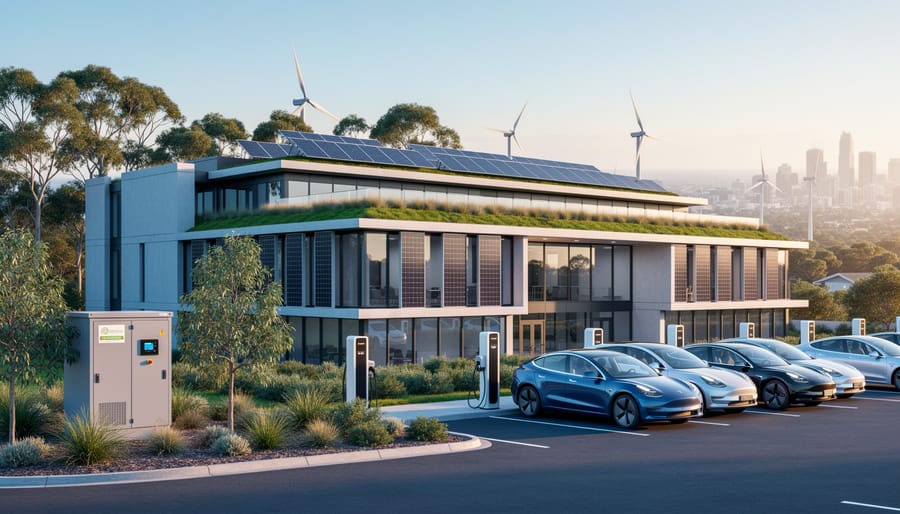
Australia’s building sector stands at a remarkable crossroads where innovation meets urgency. Zero energy designs represent buildings that produce as much clean energy as they consume annually, creating structures that actively contribute to rather than drain from our energy grid. These aren’t futuristic concepts locked in architectural journals—they’re real buildings operating across Australian cities and regional centres right now, proving that net-zero construction is both technically feasible and economically viable.
The transformation happening in our built environment goes beyond solar panels bolted onto existing structures. True zero energy design integrates renewable generation, energy efficiency, and smart systems from the ground up, with regenerative partnerships between architects, engineers, energy providers, and policymakers driving unprecedented results. These collaborations combine expertise that no single entity possesses alone, creating buildings that respond intelligently to occupant needs while maintaining energy balance throughout seasonal variations.
Bioenergy plays an increasingly sophisticated role in these systems, particularly for projects requiring reliable baseload power or thermal energy. When solar and wind fluctuate, biogas systems and biomass solutions provide consistent generation, transforming organic waste streams into valuable energy assets. This circular approach exemplifies regenerative thinking—using resources that would otherwise create disposal problems to power our built environment.
The pathway forward demands action from multiple stakeholders working in concert. Developers must prioritise energy performance alongside aesthetics and cost. Policymakers need regulatory frameworks that incentivise rather than obstruct zero energy projects. Industry professionals require updated knowledge about emerging technologies and proven implementation strategies. Together, these partnerships are reshaping how Australia builds, demonstrating that energy transition in our built environment isn’t just necessary—it’s achievable, practical, and increasingly profitable.
What Makes Zero Energy Design Different (And Why It Matters Now)
The Regenerative Twist: Going Beyond Net Zero
Zero energy is impressive, but what if buildings could actually give back more than they take? That’s the ambitious vision driving regenerative design partnerships across Australia, transforming how we think about our built environment.
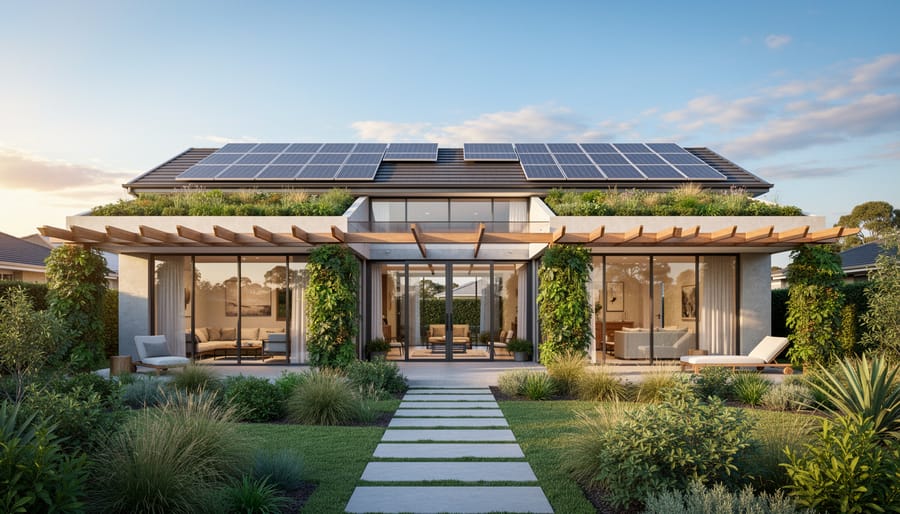
While zero energy buildings achieve a balance between energy consumption and production, regenerative designs push further by creating positive environmental impacts. These projects don’t just minimize harm; they actively heal and restore ecosystems while generating surplus energy that benefits surrounding communities.
The secret lies in sophisticated partnerships that weave together multiple systems. Bioenergy plays a starring role here, with organic waste from buildings and nearby facilities converted into renewable energy through anaerobic digestion or gasification. Some pioneering Australian projects are integrating micro-biogas systems that process food waste on-site, producing both energy and nutrient-rich fertilizer for community gardens.
A Melbourne-based commercial development recently demonstrated this approach by partnering with local councils and agricultural enterprises. Their integrated system processes organic waste from the building and surrounding restaurants, generating biogas for heating and cooling while the digestate supports urban farming initiatives on adjacent rooftops. The result? The building produces 120 percent of its energy needs annually, with the surplus feeding back into the local grid.
These regenerative partnerships also incorporate green infrastructure that supports biodiversity. Native plantings attract local bird species, while constructed wetlands naturally filter stormwater and create habitat corridors. Solar panels coexist with vegetation, creating microclimates that reduce heat island effects.
The beauty of regenerative design is its ripple effect. When buildings become active participants in ecosystem restoration, they inspire neighboring developments and catalyze broader community transformation. It’s not just about reaching zero anymore; it’s about creating abundance through thoughtful collaboration and innovative bioenergy integration.
The Partnership Model That’s Changing Everything
Who Needs to Be at the Table
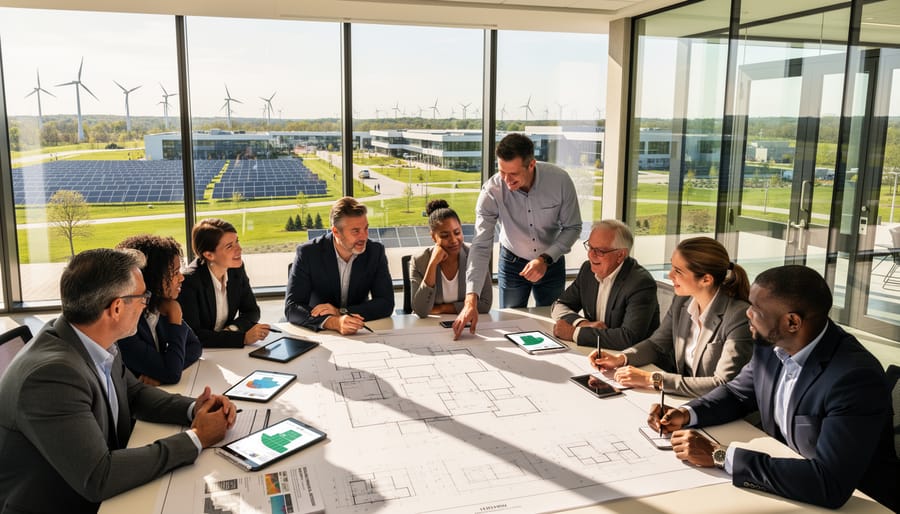
Getting zero energy designs off the ground requires bringing together a diverse group of collaborators, each playing a vital role in the journey toward regenerative outcomes. Think of it as assembling a team where everyone’s expertise matters.
First up are biomass suppliers and agricultural producers who provide the renewable feedstock that powers these systems. These local champions understand regional conditions and can ensure reliable, sustainable supply chains. Next, you’ll need architects and engineers who specialise in integrated design, capable of weaving bioenergy systems seamlessly into building plans from the earliest stages.
Local councils and regulatory bodies are essential partners too. They bring knowledge about planning requirements, can facilitate approvals, and often champion innovative projects that benefit their communities. Energy service providers and technology specialists contribute technical know-how, ensuring systems operate efficiently and connect properly to existing infrastructure.
Financial institutions and impact investors provide the capital needed to turn visions into reality, while energy innovation hubs can connect stakeholders and provide research support. Don’t overlook community representatives and building occupants either – their buy-in ensures projects meet real needs and generate lasting support.
Finally, environmental consultants help verify sustainability credentials and monitor outcomes, while facility managers maintain day-to-day operations. When this diverse group collaborates from project inception, sharing knowledge and aligning goals, regenerative zero energy designs transform from ambitious concepts into working realities that serve communities for decades to come.
How Bioenergy Fits Into the Picture
Bioenergy brings a uniquely Australian advantage to zero energy designs, tapping into our agricultural heritage and abundant organic resources. While solar panels and wind turbines often steal the spotlight, bioenergy quietly closes the loop, transforming what was once considered waste into reliable, renewable power and heat.
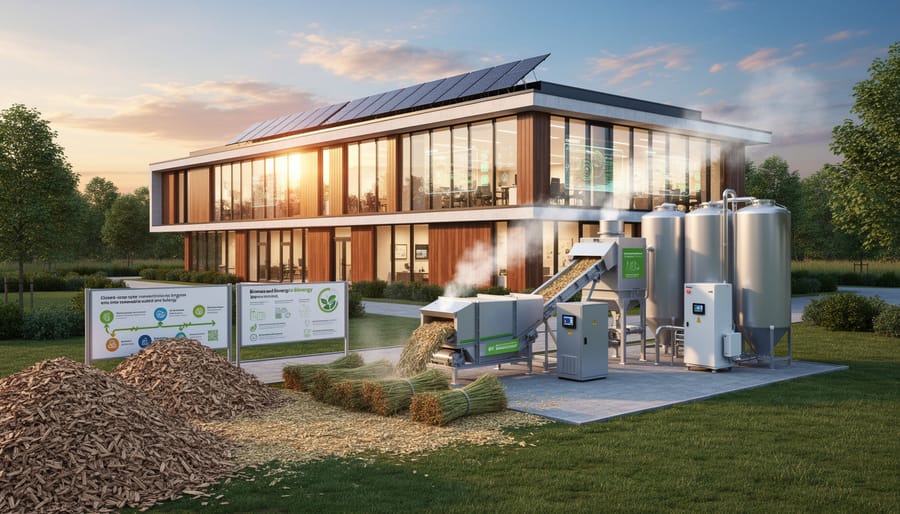
In zero energy buildings, biomass heating systems provide consistent warmth during cooler months without relying on the grid. Modern biomass boilers burn wood pellets, agricultural residues, or purpose-grown energy crops with remarkable efficiency, creating a carbon-neutral heating solution that’s particularly valuable in regional areas where forestry and farming operations generate steady organic waste streams.
Biogas systems offer even more impressive integration possibilities. A dairy farm in Gippsland demonstrates this beautifully—their anaerobic digester converts cow manure into biogas that powers their operations and heats buildings, while the remaining digestate enriches their pastures. This closed-loop approach exemplifies regenerative thinking, where energy production actually enhances agricultural productivity rather than competing with it.
For commercial zero energy developments, connecting to agricultural waste streams creates win-win partnerships. A food processing facility in South Australia now channels vegetable scraps and organic waste to an onsite biogas plant, generating enough energy to meet their heating needs while dramatically reducing landfill contributions. These aren’t futuristic concepts—they’re working models proving that bioenergy integration makes economic and environmental sense today.
The real beauty of bioenergy in zero energy designs lies in its flexibility. It provides dispatchable energy when solar and wind aren’t available, stores energy in organic form, and strengthens regional economies by creating local fuel sources. For Australian buildings serious about achieving genuine zero energy status year-round, bioenergy isn’t optional—it’s essential infrastructure that turns organic resources into reliable, renewable power.
Real Australian Projects Leading the Way
Australia is already home to inspiring zero energy projects that demonstrate what’s possible when innovative design meets collaborative partnerships. These real-world examples prove that net-zero buildings aren’t just theoretical concepts but practical solutions delivering measurable benefits right now.
The Commons in Brunswick, Melbourne, stands as a pioneering example of regenerative apartment living. Completed in 2013, this seven-storey development achieved a 7.5 Star NatHERS energy rating through thoughtful design partnerships between Breathe Architecture, residents, and sustainability consultants. The building incorporates passive solar design, natural cross-ventilation, thermal mass concrete construction, and rooftop solar panels generating approximately 25,000 kWh annually. Perhaps most impressively, the project eliminated the need for mechanical heating or cooling in individual apartments. By forming a resident cooperative early in the design process, the development team created Australia’s first carbon-neutral apartment building. Five years after completion, energy bills averaged just 65 dollars per quarter, demonstrating that zero energy design delivers ongoing financial benefits alongside environmental outcomes.
Moving north, CQUniversity’s Cairns campus showcases how educational institutions can lead the transition. Their newly constructed Engineering and Technology Building achieved a 6 Star Green Star rating through partnerships between government, university leadership, and renewable energy specialists. The building integrates 100kW of rooftop solar, energy-efficient LED lighting with occupancy sensors, and an advanced building management system that reduces energy consumption by 42 percent compared to conventional designs. The project also incorporates biomass-derived materials in construction, reducing embodied carbon. Since opening in 2019, the building has generated surplus energy during peak production periods, feeding clean power back into the campus grid. Students now learn in a living laboratory that demonstrates sustainable design principles in action.
The Lochiel Park Green Village in Adelaide represents zero energy success at community scale. This 106-dwelling development, completed progressively since 2008, emerged from partnerships between the South Australian government, developers, and residents committed to sustainable living. Each home achieved minimum 7.5 Star energy ratings through solar panels, rainwater harvesting, greywater recycling, and high-performance insulation. The community-driven energy projects approach meant residents participated in design decisions from the outset. Monitoring data shows the community generates approximately 30 percent more energy than it consumes annually. Beyond technical achievements, Lochiel Park created a blueprint for replicable zero energy communities. Residents report 70 percent lower energy bills compared to conventional homes, while community gardens and shared green spaces foster connection and wellbeing.
These projects share common threads: early collaboration between stakeholders, willingness to challenge conventional building practices, integration of renewable energy technologies, and commitment to measuring outcomes. They prove that zero energy buildings deliver tangible benefits while creating healthier, more sustainable communities for all Australians.
The Practical Benefits You Can Count On
When businesses and households embrace zero energy designs, they’re not just making an environmental statement—they’re unlocking genuine financial and community benefits that ripple far beyond their own walls.
Take the energy bills first. A commercial building in Melbourne’s Docklands recently transitioned to a zero energy regenerative design, integrating bioenergy systems with solar panels and advanced insulation. Within eighteen months, their energy costs dropped by 87 percent. That’s not a theoretical saving—it’s money staying in the business rather than flowing to energy providers. For regional manufacturers, these savings can mean the difference between staying competitive or relocating offshore.
Energy independence becomes particularly valuable during grid disruptions. When severe weather knocked out power across parts of regional New South Wales in 2022, buildings with integrated bioenergy systems continued operating normally. They weren’t just prepared—they became community assets, providing power for essential services and emergency shelters. This resilience matters increasingly as climate events become more frequent.
The job creation story deserves attention too. A bioenergy facility supporting zero energy buildings in Toowoomba has created 43 permanent positions in maintenance, operations, and organic waste management—jobs that didn’t exist three years ago. These aren’t temporary construction roles but long-term careers in regional communities that desperately need them. Workers previously commuting to Brisbane now walk to meaningful employment in their hometown.
Carbon reduction translates into measurable impact as well. A cluster of zero energy homes in Adelaide’s northern suburbs collectively eliminates approximately 420 tonnes of carbon emissions annually—equivalent to taking 91 cars off the road permanently. These aren’t abstract numbers but real atmospheric improvements that residents can connect to their daily choices.
Perhaps most compelling is how these benefits compound. Lower operating costs free up capital for businesses to expand locally. Energy independence attracts families and enterprises to regional areas. Job creation strengthens community resilience. And carbon reduction contributes to Australia meeting its climate commitments while improving local air quality. Zero energy regenerative designs deliver returns that matter today, not in some distant future.
Making It Happen: Your Roadmap to Zero Energy Partnerships
Starting Small: Entry Points for Every Scale
Zero energy design isn’t a one-size-fits-all proposition, and that’s brilliant news. Whether you’re renovating a single dwelling or planning a commercial complex, there’s an entry point that matches your scale and ambition.
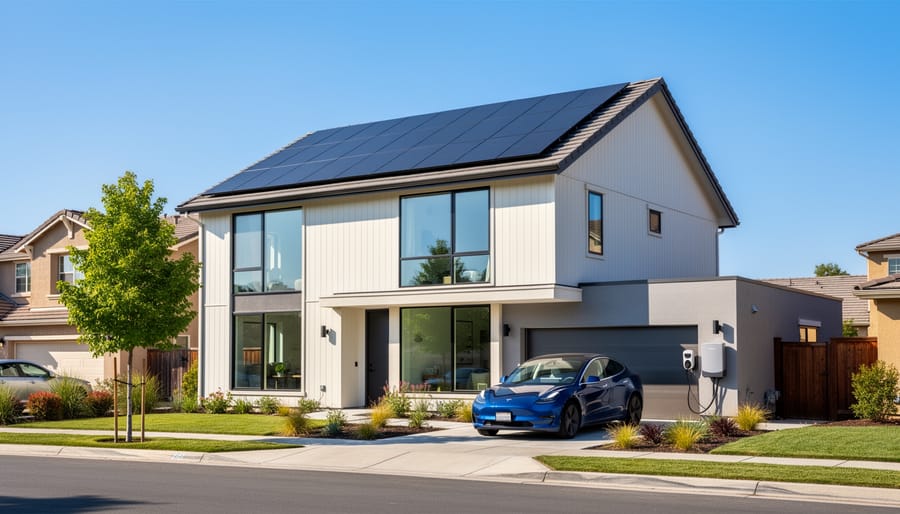
For residential projects, homeowners across Australia are starting with solar panels paired with battery storage, then adding smart monitoring systems to track energy flows. A family in Adelaide took this approach, gradually incorporating passive design principles during their renovation and eventually installing a small biomass heater fueled by sustainably sourced wood pellets. Within three years, they achieved net-zero status without breaking the budget.
Medium-sized developments like apartment buildings or small commercial centres can integrate community-scale bioenergy systems. A Melbourne office building recently partnered with a local waste management company to convert organic waste into biogas, powering their heating system while reducing landfill contributions. This collaborative model demonstrates how regenerative partnerships create mutual benefits.
For larger industrial facilities, the opportunities expand dramatically. Manufacturing plants can harness process heat recovery alongside bioenergy from agricultural residues. A food processing facility in regional Queensland now generates electricity from its own organic waste streams, selling excess power back to the grid while achieving carbon neutrality.
The key is matching technology to your context. Start where you are, build partnerships with local renewable energy providers, and scale gradually. Every project, regardless of size, contributes to Australia’s energy transition while demonstrating that zero energy design is achievable right now, not decades away.
Overcoming Common Barriers
Getting started with zero energy designs might seem daunting, but Australian projects have proven these challenges are entirely surmountable with the right approach.
The cost concern tops most lists, yet upfront investment hurdles are shrinking rapidly. Moreland Council in Melbourne demonstrated this beautifully with their community centre retrofit, which achieved net-zero status through staged implementation. Rather than attempting everything at once, they prioritised high-impact measures first, securing government rebates and accessing smart finance solutions that spread costs over time. The result? Energy bills dropped 90 percent within three years, paying back the investment faster than expected.
Coordination between architects, engineers, and energy specialists often feels complex, but successful projects show that early collaboration prevents headaches. The Commons development in Brunswick brought stakeholders together from day one, creating shared goals and regular communication rhythms. This upfront investment in relationships saved both time and money during construction.
Knowledge gaps present another common barrier. Many Australian building professionals simply haven’t worked with integrated bioenergy systems or regenerative design principles before. However, organisations like the Australian Sustainable Built Environment Council now offer targeted workshops and mentorship programmes. The Frasers Property team in Sydney credits their zero energy achievements to participating in peer learning networks, where experienced practitioners share practical insights.
The encouraging truth? Every successful zero energy project in Australia started with someone taking that first step despite uncertainty. Their documented experiences now create clear pathways for others to follow.
Where Australia’s Energy Transition Is Heading
Australia stands at an exciting crossroads in the energy transition journey, where zero energy designs are rapidly shifting from ambitious concept to achievable reality. The momentum is building across every sector, driven by innovation, determination, and a growing recognition that regenerative design isn’t just environmentally responsible—it’s economically smart.
Recent policy developments signal strong federal and state commitment to supporting net-zero buildings and regenerative energy systems. The Australian Government’s investment in renewable energy infrastructure, combined with updated building codes that encourage energy efficiency, creates a supportive framework for zero energy projects to flourish. These collaborative policy approaches ensure diverse voices shape the regulations that will define our built environment for decades to come.
Bioenergy is emerging as a crucial piece of the puzzle, particularly in regional communities where agricultural waste presents untapped potential. Forward-thinking partnerships between farmers, energy companies, and local councils are transforming what was once discarded biomass into reliable, renewable power that supports zero energy developments. These collaborations demonstrate how circular economy principles can turn challenges into opportunities.
The commercial property sector is leading the charge, with developers increasingly recognising that buildings designed to generate their own energy offer competitive advantages—lower operating costs, enhanced tenant appeal, and future-proofed assets. Educational institutions and healthcare facilities are following suit, understanding that regenerative designs align perfectly with their community-serving missions.
Looking ahead, the opportunities are tremendous. Technology costs continue dropping, making zero energy designs accessible to more Australians. Community energy projects are gaining traction, allowing neighbourhoods to collectively invest in renewable systems. Industry partnerships are maturing, bringing together expertise from construction, energy, agriculture, and finance sectors to tackle complex challenges together.
The path forward requires continued collaboration, innovation, and commitment. But the destination—a built environment that regenerates rather than depletes, that gives back more than it takes—is within reach. Australia’s energy transition isn’t just heading somewhere promising; it’s already well underway, and every partnership formed, every zero energy building completed, brings us closer to a truly regenerative future.
Australia stands at an exciting crossroads where zero energy designs and regenerative partnerships can reshape our built environment and accelerate our renewable energy transition. The success stories emerging across the country demonstrate that these aren’t distant aspirations but achievable realities today. From Canberra’s pioneering commercial buildings to Melbourne’s community energy projects, we’re witnessing how collaborative approaches transform ambitious goals into tangible outcomes.
For homeowners and building occupants, now is the time to explore retrofit opportunities or specify zero energy features in new construction. Small changes add up, and professional guidance can help identify the most cost-effective pathways tailored to your situation.
Industry professionals and developers have a golden opportunity to lead this transformation. By embracing regenerative design principles and forming strategic partnerships with renewable energy providers, you’ll not only meet rising regulatory requirements but position your projects at the forefront of market demand.
Policymakers can amplify this momentum by strengthening incentives for bioenergy integration, streamlining approval processes for innovative zero energy developments, and supporting cross-sector collaboration frameworks that bring together diverse expertise.
The evidence is clear: combining zero energy design with regenerative partnerships creates buildings that actively contribute to healthy ecosystems while dramatically reducing energy costs and emissions. Australia’s abundant renewable resources, innovative spirit, and growing network of sustainability champions position us perfectly to become a global exemplar in this space. The future isn’t something to wait for; it’s something we’re building together, one zero energy project at a time.