
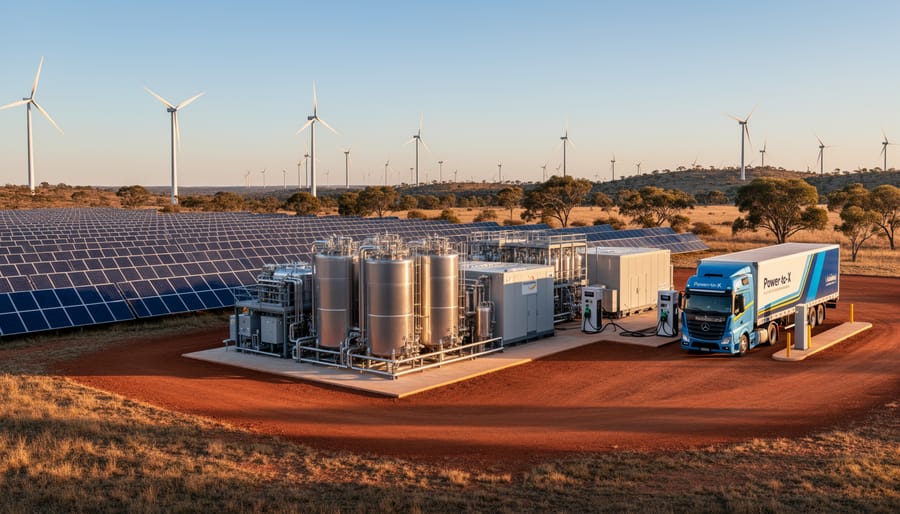
Picture this: excess electricity from wind and solar power that would otherwise go to waste, transformed into clean fuels that can power trucks, ships, and even aircraft. This isn’t science fiction. It’s happening right now across Australia, and it’s called Power-to-X technology.
Every sunny afternoon and windy night, Australian renewable energy farms generate more electricity than the grid can handle. Traditionally, this surplus energy simply disappears, wasted because batteries can’t store it all and demand doesn’t match supply. Power-to-X technology solves this problem brilliantly by converting that excess renewable electricity into hydrogen, ammonia, methanol, and synthetic fuels that can be stored indefinitely and used whenever needed.
Think of it as nature’s energy storage system. When renewable generation peaks, Power-to-X facilities capture that surplus and transform it into portable, versatile fuels. These renewable fuels can then decarbonize industries that batteries simply cannot reach. Heavy transport, aviation, shipping, and industrial manufacturing all need energy-dense fuels that can travel long distances and deliver powerful results. Power-to-X delivers exactly that, using only renewable electricity, water, and captured carbon dioxide.
Australian companies are already proving this technology works. From Queensland hydrogen hubs powering mining equipment to Victorian facilities producing green ammonia for export, real projects are generating real results and creating real jobs. These aren’t experimental pilot programs destined to remain forever in the trial phase. They’re commercial operations with customers, revenue, and expanding capacity.
The beauty of Power-to-X lies in its practicality. It takes Australia’s greatest renewable energy challenge, managing oversupply, and transforms it into our greatest opportunity, becoming a clean fuel powerhouse for the Asia-Pacific region.
What Power-to-X Actually Means (And Why It Matters for Australia)
The Basic Process Behind Power-to-X
At its heart, Power-to-X is surprisingly straightforward—it’s about transforming renewable electricity into storable fuels and chemicals. Think of it like this: when the sun’s shining brightly or the wind’s blowing a gale across Australia’s vast landscapes, we often generate more electricity than we can use right then. Rather than letting this energy go to waste, Power-to-X captures it and converts it into something we can store in a tank or transport in a truck.
The process begins with electrolysis, which is essentially splitting water molecules using electricity. Just as a battery separates charges, an electrolyser breaks water (H2O) into its basic components: hydrogen and oxygen. The hydrogen becomes the star player here—it’s an incredibly versatile energy carrier that contains no carbon.
From there, the magic continues. That hydrogen can either be used directly as a clean fuel or combined with captured carbon dioxide through a process called synthesis. When hydrogen meets CO2 under the right conditions with special catalysts (think of them as chemical matchmakers), they form synthetic fuels like methanol, diesel, or even jet fuel. These fuels look and behave just like their fossil-based cousins, but with one game-changing difference: they’re created using renewable energy.
What makes this particularly exciting for Australia is that we’re not just talking theory. Real facilities across the country are already proving this technology works in practice, turning our abundant renewable resources into exportable energy products.
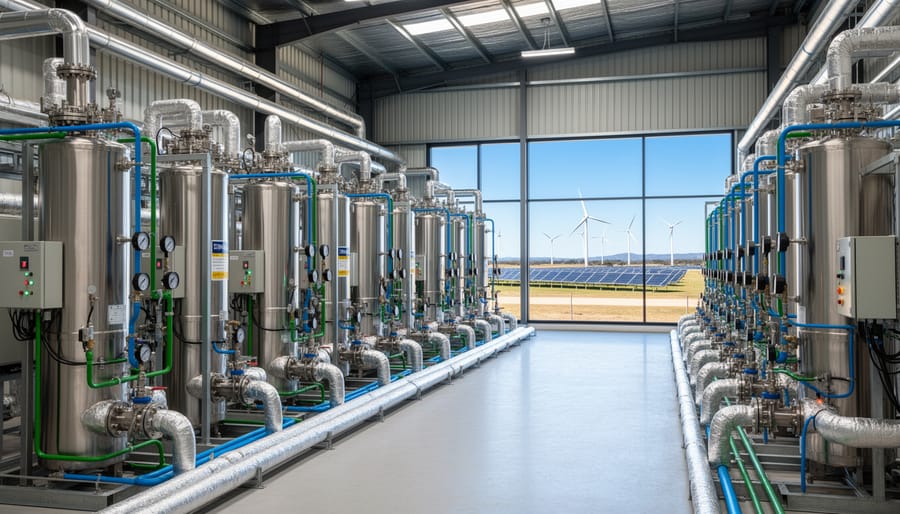
Different Types of Power-to-X Fuels
Power-to-X technology creates a diverse family of clean fuels, each with unique strengths for different applications. Green hydrogen, produced through green hydrogen production using renewable electricity and water, leads the pack as a versatile energy carrier powering fuel cell vehicles, industrial processes, and energy storage systems. Synthetic methane mirrors natural gas properties, making it perfect for existing gas networks without costly infrastructure changes.
E-diesel and e-kerosene represent game-changers for transport sectors struggling to electrify. These synthetic fuels work in conventional engines and aircraft, offering immediate decarbonisation pathways for long-haul trucking and aviation. Australian mining companies are already testing e-diesel in remote operations, reducing diesel dependence while maintaining operational reliability.
Ammonia deserves special mention as both a hydrogen carrier and direct fuel. It stores easily, ships safely, and releases no carbon when burned. Japanese and Korean energy companies are partnering with Australian producers to establish ammonia export corridors, positioning Australia as a clean fuel powerhouse. Each Power-to-X fuel addresses specific industry needs, creating practical pathways toward Australia’s renewable energy future.
Real Power-to-X Projects Already Working in Australia
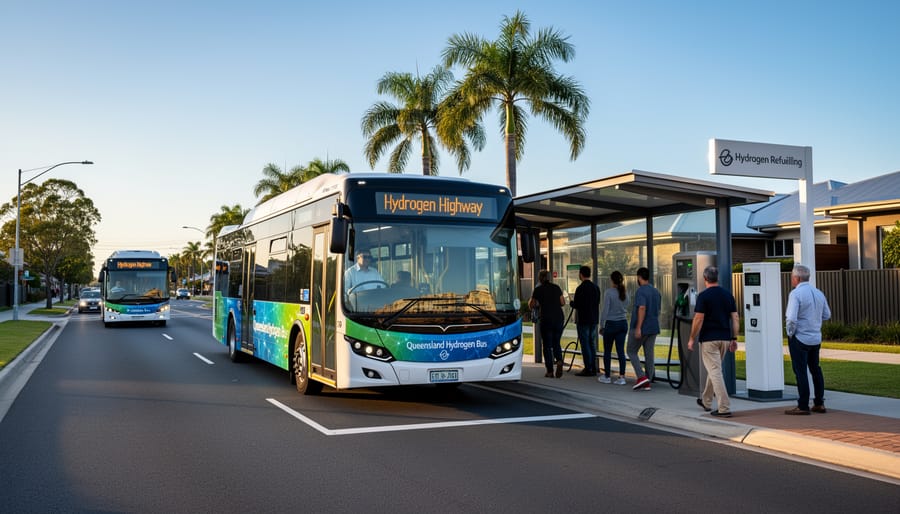
Queensland’s Hydrogen Highway Takes Shape
Queensland is pioneering Australia’s transition to hydrogen-powered transport with remarkable momentum. The state’s Hydrogen Highway project now connects production facilities from Gladstone to Cairns, creating a practical refuelling network that’s already supporting commercial vehicles on real roads.
In Gladstone, the state’s largest green hydrogen production plant uses solar and wind power to produce 100% clean hydrogen fuel. This facility supplies hydrogen to a growing fleet of heavy vehicles, including rubbish trucks operating in Brisbane’s northern suburbs and inter-city coaches running the coastal route. The trucks have been quietly collecting bins for over twelve months, proving hydrogen’s reliability in everyday applications.
Transport company Toll Group recently introduced hydrogen-powered freight trucks to their Queensland fleet, completing regular runs between Brisbane and Townsville without the range anxiety associated with battery-electric alternatives. Each truck refuels in under fifteen minutes, matching diesel convenience while producing only water vapour.
Brisbane City Council’s hydrogen bus trial has expanded beyond expectations. What started with two buses in 2022 now includes twelve vehicles carrying commuters daily. Passengers report the buses run noticeably quieter than their diesel predecessors, while council data shows 85% lower emissions per kilometre travelled.
These aren’t prototype vehicles gathering dust in research facilities. They’re working machines demonstrating that hydrogen technology has well and truly arrived, offering practical solutions for Australia’s transport sector today.
Western Australia’s Export Ambitions
Western Australia is positioning itself as a global powerhouse in renewable hydrogen and green ammonia exports, with several game-changing projects already underway. The state’s abundant solar and wind resources, combined with vast land availability, make it the perfect launchpad for large-scale Power-to-X production targeting energy-hungry Asian markets.
The Asian Renewable Energy Hub in the Pilbara region exemplifies this ambition, planning to produce millions of tonnes of green hydrogen and ammonia annually. Japanese trading giants like Marubeni and Korean energy companies have already signed partnerships, recognizing WA’s potential to become their clean energy supplier. These aren’t distant dreams—construction timelines are locked in, with first exports expected within years.
The Yara Pilbara fertiliser facility is transitioning to green ammonia production, demonstrating how existing infrastructure can be repurposed for renewable fuel manufacturing. Meanwhile, projects like Fortescue’s hydrogen ventures are creating thousands of jobs in regional communities, proving that export ambitions deliver local benefits too.
These partnerships showcase genuine international confidence in Australia’s renewable capabilities. With shipping routes to Japan, South Korea, and Singapore relatively short, WA is perfectly positioned to become the renewable energy supplier for the Asia-Pacific region, turning our sunshine and wind into exportable prosperity.
South Australia’s Integrated Approach
South Australia is leading the charge by weaving together multiple renewable technologies into functioning fuel ecosystems that work brilliantly in real-world conditions. The state’s approach combines sprawling wind farms across the Mid North region with extensive solar arrays in the Riverland, all feeding into cutting-edge Power-to-X facilities that transform this clean electricity into usable fuels.
Take the Hydrogen Jobs Plan as a prime example. This initiative links renewable energy generation directly to hydrogen production facilities, creating green hydrogen that powers heavy transport and supports industrial processes. Rather than treating each technology as a standalone project, SA’s strategy ensures wind turbines and solar panels work hand-in-glove with electrolysers and storage systems.
The Whyalla Hydrogen Hub demonstrates this integration beautifully. Local renewable energy powers the conversion process, producing hydrogen fuel that’s already being trialled in freight trucks and mining equipment. This isn’t just about generating clean electricity anymore—it’s about creating complete supply chains where renewable power becomes storable, transportable fuel that replaces diesel and natural gas across multiple sectors, proving the concept works magnificently on Australian soil.
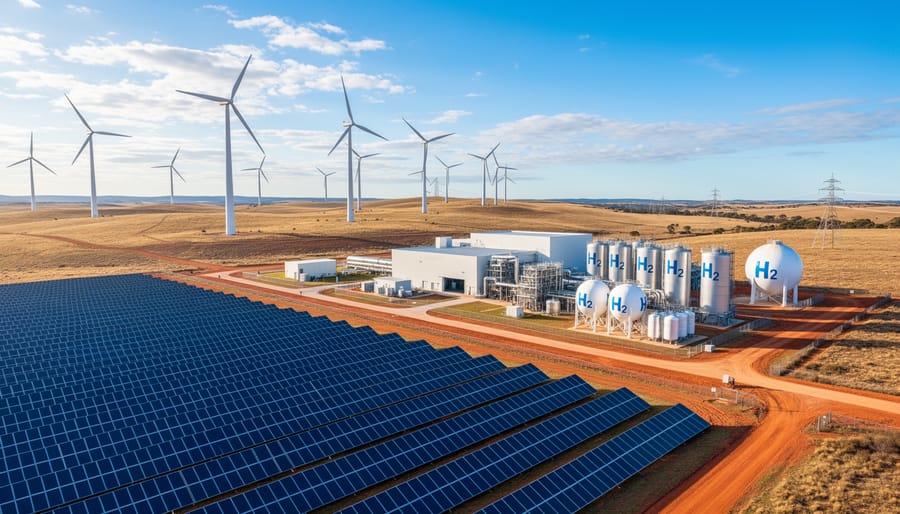
How Power-to-X Solves Australia’s Renewable Energy Challenges
Storing Sunshine and Wind for When You Need It
One of the biggest challenges with solar and wind power is their intermittent nature—the sun doesn’t always shine, and the wind doesn’t always blow when we need electricity most. While batteries work brilliantly for short-term storage, they’re not always practical for keeping energy banked for weeks or months. That’s where Power-to-X technology shines as one of the most promising energy storage solutions.
Think of it as bottling sunshine and wind for later use. When renewable sources generate more electricity than the grid needs, Power-to-X facilities convert that excess energy into storable fuels like hydrogen or synthetic methane. These renewable fuels can be stored indefinitely in existing infrastructure—tanks, pipelines, and facilities we already have across Australia.
This approach complements battery technology rather than replacing it. Batteries handle daily fluctuations beautifully, while Power-to-X fuels provide the long-duration storage needed for seasonal variations or extended cloudy periods. A South Australian facility recently demonstrated this concept by converting excess solar energy into hydrogen, which was stored for three months before being used to power industrial equipment during winter’s peak demand. This dual approach means we’re never left in the dark, regardless of weather patterns.
Creating New Export Industries
Australia stands at the threshold of an extraordinary economic transformation. As the world shifts away from fossil fuels, our nation has the opportunity to replace coal and gas exports with clean alternatives like green hydrogen and ammonia—turning our renewable energy abundance into a powerful export industry.
The numbers tell a compelling story. Industry analyses suggest that green hydrogen exports could generate over 16,000 jobs by 2030, with that figure potentially climbing to more than 28,000 positions by 2040. These aren’t just numbers on a spreadsheet—they represent real opportunities for workers in regional communities, particularly those currently dependent on fossil fuel industries.
Several Australian companies are already leading the charge. The Asian Renewable Energy Hub in Western Australia, for instance, plans to produce green hydrogen and ammonia for export to Asian markets, creating thousands of construction and operational jobs. Similarly, projects in Queensland and South Australia are attracting billions in investment, positioning these states as future renewable fuel powerhouses.
The beauty of this transition lies in its timing. Many of our traditional trading partners, especially Japan and South Korea, have committed to achieving carbon neutrality and are actively seeking reliable green fuel suppliers. Australia’s geographic proximity, established trade relationships, and world-class renewable resources make us the natural choice.
This isn’t about abandoning our role as an energy exporter—it’s about evolving it. We’re transforming sunlight and wind into exportable energy carriers, ensuring our resource economy thrives sustainably for generations to come while helping the world achieve its climate goals.
The Industries Ready to Use Power-to-X Fuels Today
Heavy Transport Goes Green
Heavy transport has long been one of the trickiest sectors to decarbonise, but synthetic fuels and hydrogen are changing that story across Australia. Long-haul trucks that can’t easily run on batteries are finding new life with hydrogen fuel cells, while aviation and shipping explore drop-in synthetic fuels that work with existing engines.
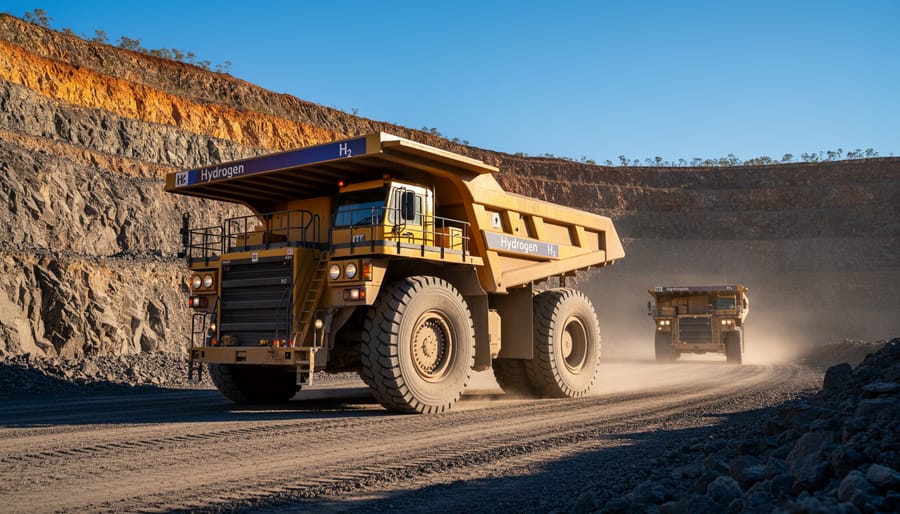
Take Fortescue Future Industries, which is pioneering hydrogen-powered haul trucks at its Pilbara mining operations. These massive vehicles, once diesel guzzlers, now run on green hydrogen produced onsite from renewable energy. It’s a game-changer for an industry that moves mountains, literally.
Meanwhile, Brisbane-based Jet Zero Australia is developing sustainable aviation fuel from renewable sources, aiming to power domestic flights without requiring aircraft modifications. The beauty of synthetic fuels is their compatibility with current infrastructure, making the transition smoother for operators.
In shipping, several Australian ports are installing hydrogen refuelling stations to support the next generation of cargo vessels. Port of Newcastle leads the charge, preparing infrastructure for hydrogen-powered ships that could revolutionise coastal freight.
These aren’t pie-in-the-sky dreams. They’re happening now, proving that even our heaviest polluters can go green while keeping Australia’s economy moving.
Agriculture’s Fuel Transformation
Australian farms are leading a quiet revolution in energy independence, transforming how agriculture powers itself through innovative Power-to-X solutions. Imagine diesel tractors running on green hydrogen, irrigation systems powered by renewable electricity stored as synthetic fuels, and fertilizer produced right on the property using nothing but air, water, and clean energy.
Power-to-X technology is making this vision reality across rural Australia. Farms are converting excess solar and wind energy into synthetic fuels that power heavy machinery without modifications. This means no more diesel supply chain vulnerabilities or price fluctuations—just reliable, farm-produced energy.
Green ammonia production represents a game-changer for agricultural sustainability. By using renewable electricity to create fertilizer on-site, farmers eliminate the massive carbon footprint of traditional ammonia production and transport. Several pioneering properties in Queensland and South Australia are already demonstrating this approach, achieving genuine carbon-neutral farming while reducing input costs.
Electrified irrigation pumps paired with hydrogen storage ensure water delivery continues even during cloudy periods or calm nights. This reliability, combined with energy independence, makes Power-to-X an increasingly attractive investment for forward-thinking agricultural operations committed to environmental stewardship.
Mining Operations Switch to Hydrogen
Australia’s mining sector is pioneering a remarkable shift toward cleaner operations, with several companies now testing hydrogen-powered haul trucks and heavy machinery at remote sites across the country. This innovation tackles one of mining’s biggest environmental challenges: the massive diesel consumption required to run enormous equipment in isolated locations. Anglo American’s nuGen truck program in Queensland demonstrates how hydrogen fuel cells can power 290-tonne haul trucks, eliminating around 500 tonnes of diesel per truck annually. Meanwhile, Fortescue Metals Group is converting its entire fleet to renewable energy sources, including hydrogen-powered machinery at Pilbara operations. These trials prove hydrogen isn’t just a laboratory concept but a practical solution delivering real results. The technology works brilliantly in remote mining environments because hydrogen can be produced on-site using renewable electricity and water, eliminating the logistical nightmare of transporting diesel to far-flung operations. Early results show comparable performance to diesel equipment with dramatically lower emissions, making this transition both environmentally responsible and operationally sensible for Australia’s critical mining industry.
What Makes Power-to-X More Effective Than Traditional Biofuels
While both Power-to-X and traditional biofuels deserve their place in Australia’s renewable energy future, Power-to-X technology offers some distinct advantages that make it particularly compelling for our unique circumstances.
The most significant benefit is eliminating land competition. Traditional biofuels require vast agricultural areas to grow feedstock crops, putting them in direct competition with food production. Power-to-X sidesteps this entirely by creating fuels from hydrogen, carbon dioxide, and renewable electricity. For a nation already grappling with limited arable land and competing agricultural demands, this is a game-changer. You won’t find farmers choosing between growing wheat for bread or crops for fuel.
Water efficiency presents another clear advantage. Conventional biofuel production can be quite thirsty, demanding substantial irrigation in a country where water security remains a constant concern. Power-to-X facilities, particularly those using captured carbon dioxide and electrolysis, require significantly less water overall. In regions where every drop counts, this efficiency matters enormously.
Power-to-X also integrates seamlessly with existing renewable infrastructure. Those massive solar and wind farms across Queensland and South Australia generating excess electricity during peak production? Power-to-X facilities can absorb that surplus energy, converting it into storable liquid fuels rather than letting it go to waste. It’s like having a giant battery that produces transport fuel.
Efficiency comparisons reveal Power-to-X’s strength in energy density and scalability. While biofuels face natural limitations on yield per hectare, Power-to-X production scales with available renewable electricity and technology improvements.
That said, this isn’t about declaring a winner. Traditional biofuels excel in certain applications, particularly where organic waste streams already exist. The real beauty lies in combining both approaches. Some Australian facilities are already doing exactly this, using agricultural waste for biogas while simultaneously producing synthetic fuels through Power-to-X processes. It’s about choosing the right tool for each specific challenge, creating a diverse, resilient renewable energy portfolio that serves Australia’s future.
The Economics Starting to Stack Up
Here’s the reality that’s getting Australian businesses excited: Power-to-X technology is shifting from an expensive experiment to a genuinely viable investment. Just five years ago, producing green hydrogen cost around $8-10 per kilogram. Today, several Australian facilities are hitting the $5 mark, and industry projections suggest we’ll see $3 per kilogram by 2030. That’s not just incremental improvement, that’s transformation.
Take the example of the Yara Pilbara facility in Western Australia. When they announced their green ammonia project, they weren’t just making headlines, they were making business sense. With abundant solar and wind resources and existing infrastructure, they calculated they could produce renewable ammonia at prices competitive with conventional production within three years. That’s not a distant dream, that’s commercial reality unfolding right now.
The federal government’s $2 billion Hydrogen Headstart program is accelerating this momentum, providing production credits that bridge the gap between current costs and market competitiveness. State governments are chipping in too. Queensland’s Hydrogen Industry Development Fund and South Australia’s Hydrogen Jobs Plan are turning theoretical projects into actual construction sites employing real Australians.
What’s particularly encouraging is how quickly the economics improve with scale. The first commercial facilities might need support, but each successive project learns from the last. Port of Newcastle is already planning facilities that will benefit from lessons learned by pioneers in Port Hedland and Gladstone. Meanwhile, equipment costs are dropping as manufacturers ramp up production of electrolysers and other critical components.
For businesses considering the switch, the payback periods are becoming remarkably attractive. Mining companies replacing diesel with green ammonia are looking at 7-10 year returns, which aligns perfectly with normal equipment replacement cycles. Transport operators are finding similar numbers, especially when factoring in Australia’s relatively high diesel prices and the volatility of fossil fuel markets.
Perhaps most tellingly, private investment is flooding in without waiting for every government incentive to be announced. When heavyweight players like Fortescue and Santos commit billions to Power-to-X projects, they’re not being charitable, they’re reading the market signals that say this technology’s time has arrived. The economics aren’t just stacking up anymore, they’re making compelling business cases across multiple industries.
Australia stands at the threshold of an extraordinary energy transformation, and Power-to-X technology is the key that can unlock our nation’s renewable energy leadership on the global stage. This isn’t just another promising technology gathering dust in research labs—it’s happening right now, converting our abundant sunshine and wind into practical, storable fuels that can power everything from trucks traversing the Outback to ships navigating our vast coastline.
The evidence speaks for itself. From Darwin’s hydrogen initiatives to South Australia’s renewable ammonia projects, Australian ingenuity is already demonstrating how Power-to-X can turn our geographical advantages into economic opportunities. We’re not simply keeping pace with the rest of the world; we’re pioneering solutions that other nations will follow.
For individuals, this technology means cleaner air, more sustainable transport options, and participation in a carbon-neutral future. Businesses can reduce emissions while maintaining operational efficiency, tap into emerging green markets, and future-proof their operations against climate-related risks. Policymakers have the chance to position Australia as the renewable energy powerhouse of the Asia-Pacific region, creating thousands of jobs while meeting our climate commitments.
The time for waiting has passed. Whether you’re researching solar installation for your home, considering hydrogen vehicles for your fleet, or developing energy policy frameworks, every action toward Power-to-X adoption matters. Support local renewable projects, advocate for supportive policies, and invest in clean technology solutions.
Australia’s renewable potential is limitless—our sunshine, our wind, our innovation, and our determination to build a cleaner future. Power-to-X technology gives us the tools to transform that potential into reality. The question isn’t whether we can lead the renewable energy revolution—it’s how quickly we’ll embrace the opportunity. Let’s make Australia synonymous with renewable energy excellence.