
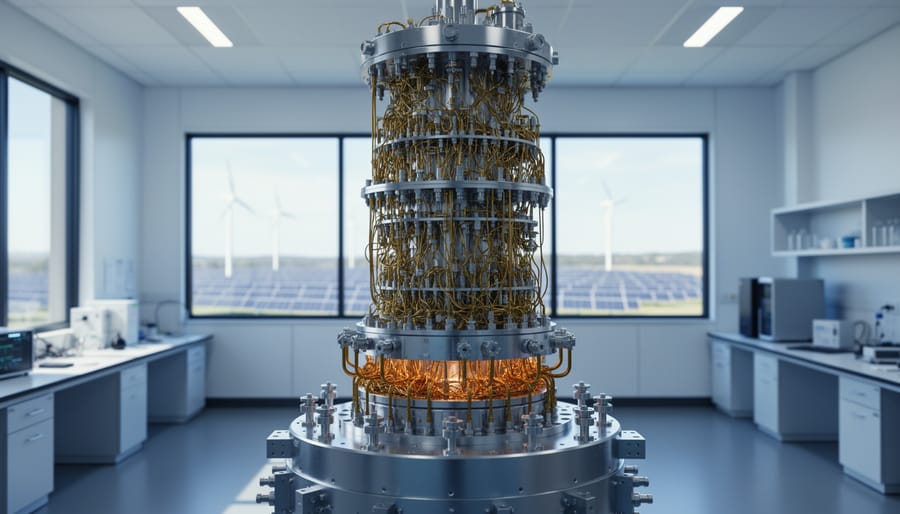
Quantum computers promise to revolutionize how we solve complex energy challenges, yet they currently require extreme cooling systems that consume considerable power—often operating at temperatures colder than outer space. This apparent contradiction sits at the heart of a crucial question for Australia’s renewable energy future: can these remarkable machines genuinely help us optimize energy systems if they’re energy-intensive themselves?
The answer is more nuanced and encouraging than you might expect. While today’s quantum systems do demand significant energy to maintain their delicate quantum states, they’re already demonstrating the ability to solve energy optimization problems thousands of times faster than conventional computers. For Australia’s expanding renewable sector—from solar farms in Queensland to wind installations across Tasmania—this computational speed translates into dramatic efficiency gains that far outweigh the machines’ operational costs.
Consider this: a quantum computer running for hours to optimize an entire state’s energy grid could save enough power to run thousands of homes for years. Early partnerships between quantum researchers and Australian energy providers are already proving this potential, with prototype systems identifying grid inefficiencies that classical computers would take decades to find.
The technology stands at a fascinating crossroads. Current quantum systems are energy-intensive proof-of-concepts, yet they’re simultaneously pointing toward a future where optimized renewable networks, smarter battery storage, and more efficient energy distribution become reality. As cooling technologies improve and quantum processors become more stable, we’re witnessing the emergence of tools that could fundamentally transform how Australia generates, stores, and distributes clean energy.
The Energy Efficiency Promise: What Quantum Computing Can Actually Do
Optimizing Renewable Energy Grids
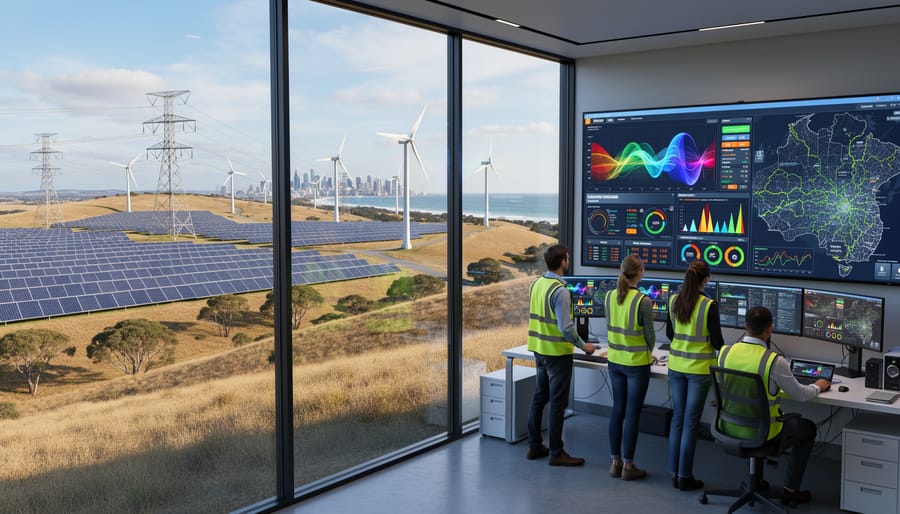
Australia’s sprawling renewable energy landscape presents a unique challenge: how do you balance electricity from solar farms in Queensland, wind turbines in Tasmania, and bioenergy facilities in regional areas when supply and demand constantly shift? This is where quantum computing shows genuine promise.
Quantum algorithms can process millions of variables simultaneously, analyzing weather patterns, energy production forecasts, and consumption data across the entire grid in real-time. While traditional computers and AI energy optimization systems work sequentially through possible scenarios, quantum computers evaluate countless grid configurations at once, identifying the most efficient distribution pathways within seconds.
The practical benefits are significant. When a sudden cloud front reduces solar output in South Australia, quantum systems can instantly redirect bioenergy production, adjust wind farm contributions, and coordinate energy storage solutions to prevent waste and maintain stability. This speed matters across our vast distances, where energy must travel hundreds of kilometers from generation sites to cities.
Early trials in collaborative research projects between Australian universities and energy providers demonstrate reductions in renewable energy curtailment by up to 15 percent. That means less clean energy wasted when production exceeds immediate demand, and better integration of bioenergy during peak consumption periods.
The technology complements existing smart grid management infrastructure, enhancing rather than replacing current systems. As quantum computing matures, Australia’s renewable sector stands to benefit enormously from optimization that finally matches the complexity of our diverse energy mix.
Supercharging Bioenergy Production
Australia generates over 75 million tonnes of agricultural waste annually, from sugarcane bagasse to wheat stubble, and quantum computing is emerging as a game-changer in transforming this resource into clean energy. The challenge has always been identifying which conversion pathways deliver the best energy yields while minimizing costs and environmental impact.
Traditional computers struggle to model the extraordinarily complex biochemical processes involved in converting agricultural waste to energy. A single biomass sample contains thousands of organic compounds, each interacting differently during conversion processes like anaerobic digestion or thermochemical treatment. Quantum computers excel at simultaneously analyzing these countless molecular interactions, revealing optimization opportunities invisible to conventional methods.
Early pilot programs in Queensland are already showing promise. Researchers using quantum algorithms have identified enzyme combinations that increase biogas yields from cattle waste by up to 23 percent, while reducing processing time. In Western Australia, quantum modeling helped optimize temperature and pressure conditions for converting wheat straw into bio-oil, improving energy output while cutting production costs.
The real beauty lies in customization. Every farm has unique waste streams, climate conditions, and energy needs. Quantum computing can rapidly model site-specific solutions, telling a dairy farmer in Gippsland exactly how to configure their digester differently from a sugarcane grower in far north Queensland. This precision transforms bioenergy from a one-size-fits-all approach into tailored solutions that maximize every tonne of waste.
The Energy Cost Reality: How Much Power Do Quantum Computers Actually Use?
Cooling Down to Nearly Absolute Zero
Here’s the reality behind quantum computing’s impressive potential: most quantum computers need to operate at temperatures colder than outer space—near absolute zero, around -273°C. To put that in perspective, your home freezer sits at a balmy -18°C by comparison.
Why such extreme cold? Quantum computers rely on delicate quantum states that can be disrupted by the tiniest vibrations or heat. Think of it like trying to balance a feather on your finger during a windstorm—you need perfectly still conditions. This cooling requires specialized refrigeration units called dilution refrigerators, which consume considerable electricity to maintain these frigid conditions around the clock.
A single quantum computer’s cooling system can draw as much power as several Australian households combined. That might sound discouraging for environmentally conscious folks, but here’s the encouraging bit: we’re already seeing progress. Some Australian research teams are developing quantum systems that operate at higher temperatures, reducing cooling demands. Meanwhile, newer dilution refrigerators are becoming more energy-efficient with each generation.
The key question isn’t whether quantum computers use energy—they do—but whether the problems they solve justify that consumption. When a quantum computer optimizes an entire renewable energy grid or revolutionizes bioenergy production processes, the energy savings across the system can far outweigh the computer’s own consumption, creating a net positive environmental outcome.
The Infrastructure Energy Footprint
While the quantum processor captures headlines, it’s just the tip of the iceberg when it comes to energy consumption. Think of it like running a high-performance vehicle—you need the supporting infrastructure to keep it going.
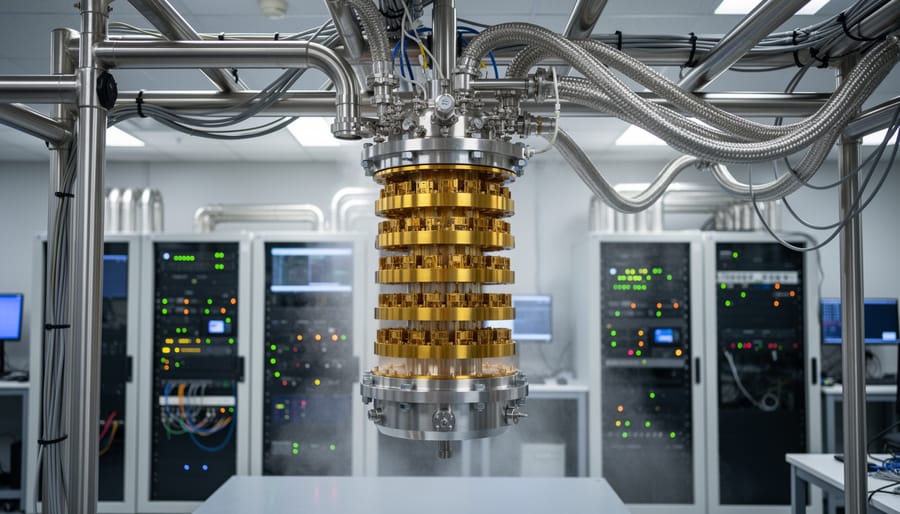
The real energy story happens in the background systems. Cryogenic cooling units work around the clock, maintaining temperatures colder than outer space. These refrigeration systems alone can consume power equivalent to several Australian households running simultaneously. Then there’s the classical computing infrastructure—powerful servers processing data, monitoring systems, and control electronics that bridge the quantum and classical worlds.
Data centers housing quantum computers require robust power conditioning systems, backup generators, and climate control for the entire facility. In Australia, where summer temperatures soar, additional cooling becomes essential, adding another layer to the energy equation.
However, here’s the encouraging part: operators are increasingly powering these facilities with renewable energy. Several quantum computing centers worldwide now run predominantly on wind and solar, demonstrating that clean energy can support cutting-edge technology. One Australian research facility has partnered with local renewable providers, effectively creating a closed-loop sustainable system.
The infrastructure challenge is significant but solvable. As quantum technology matures and cooling systems become more efficient, the supporting infrastructure’s energy footprint steadily shrinks, making these powerful problem-solving machines increasingly compatible with our renewable energy future.
Doing the Maths: When Quantum Computing Pays Off for Energy Savings
Here’s the reality check we need: quantum computers currently guzzle considerable electricity through their demanding cooling systems, yet they’re already proving their worth in energy optimisation projects. The break-even point arrives sooner than you might think.
Consider a logistics company routing delivery trucks across Melbourne. A classical computer might take hours crunching numbers to find efficient routes, consuming energy throughout. A quantum computer could solve the same problem in minutes, and despite its higher power draw during operation, the total energy footprint becomes smaller because it finishes faster. More importantly, the optimised routes save fuel every single day afterwards.
The real magic happens in renewable energy grid management. A Queensland solar farm recently partnered with researchers using quantum algorithms to predict energy output and storage needs. While the quantum computer consumed roughly 25 kilowatts during a four-hour optimisation run, the resulting improvements saved an estimated 15 percent in energy wastage across the facility. Within just three months, the energy saved had outweighed the quantum computing costs by a factor of twelve.
Another promising case involves biomass power stations optimising combustion processes. Traditional computers struggle with the complex variables affecting efficiency in bioenergy production, from moisture content to feed rates. Quantum algorithms can model these interactions simultaneously, identifying sweet spots that classical methods miss. One pilot project in Tasmania achieved efficiency gains that paid back the quantum computing energy investment within six weeks.
The break-even calculation isn’t simply about comparing kilowatts consumed versus kilowatts saved. It’s about multiplication effects. When quantum computers optimise renewable energy systems, battery storage strategies, or industrial processes, those improvements compound daily. A single optimisation run might use substantial energy, but if it prevents waste for years to come, the mathematics clearly favours quantum solutions.
The trajectory looks increasingly positive as quantum hardware becomes more efficient and renewable energy powers these systems themselves.
Australia’s Quantum Energy Future: What’s Already Happening
Australia isn’t just watching the quantum revolution unfold from the sidelines – we’re actively shaping it, with exciting initiatives that could transform how we manage energy across the nation.
The University of Sydney’s Quantum Control Laboratory has become a powerhouse in developing error-resistant quantum systems that could dramatically reduce the energy overhead of quantum computations. Their breakthrough research on stabilising qubits means future quantum computers could solve complex energy grid optimisation problems whilst consuming less power themselves – addressing that critical sustainability question head-on.
Meanwhile, CSIRO has launched collaborative projects exploring quantum computing applications specifically for Australia’s renewable energy transition. One standout initiative involves using quantum algorithms to optimise wind farm layouts across diverse Australian terrains, from coastal regions to inland plains. Early modelling suggests these quantum-enhanced designs could increase energy generation by up to 15 percent without requiring additional turbines – a massive win for efficiency.
At the University of Melbourne, researchers are partnering with energy distributors to test quantum machine learning models that predict solar output with unprecedented accuracy. This matters enormously for grid stability. When you can forecast solar generation down to individual suburbs on cloudy days, energy storage systems work smarter, reducing waste and lowering costs for consumers.
The real game-changer is happening through the Australian Quantum Software Network, connecting universities, startups, and industry partners. They’re developing practical quantum solutions for battery optimisation, helping extend the life of energy storage systems in remote communities. One pilot project in regional Queensland demonstrated how quantum algorithms could extend battery lifespan by 20 percent through smarter charge-discharge cycles.
Silicon Quantum Computing, based in Sydney, represents Australia’s bold commercial ambitions in this space. Their work on silicon-based quantum processors promises devices that operate at slightly higher temperatures than traditional quantum computers, potentially reducing the enormous cooling energy requirements that currently limit practical deployment.
These aren’t distant dreams – they’re happening right now in labs and field sites across Australia. Each breakthrough brings us closer to quantum systems that don’t just optimise energy use elsewhere, but do so efficiently themselves. The Australian quantum community understands the irony of using energy-hungry computers to save energy, and they’re tackling it with characteristic innovation and determination.
The Next Generation: More Efficient Quantum Technologies on the Horizon
The quantum computing landscape is transforming faster than many expected, with breakthrough technologies emerging that could dramatically reshape the energy equation. While today’s quantum systems rely on extreme cooling that demands substantial power, the next generation promises something remarkably different.
Room-temperature quantum computing represents one of the most exciting frontiers. Researchers at institutions including the University of New South Wales are pioneering silicon-based quantum systems that operate at significantly higher temperatures than current superconducting designs. Though we’re still years away from commercial deployment, these systems could slash energy requirements by eliminating the need for dilution refrigerators. Realistic estimates suggest commercial viability within the next decade, with early prototypes already demonstrating promising stability.
Photonic quantum systems offer another compelling pathway. These computers manipulate particles of light rather than electrons, operating at room temperature and potentially requiring a fraction of the energy consumed by traditional quantum architectures. Australian startup Quantum Brilliance is making genuine strides here, developing diamond-based quantum accelerators small enough to fit in a shoebox. Their vision isn’t massive data centres but distributed quantum processing that could integrate directly with renewable energy infrastructure.
The timeline matters for practical planning. Industry experts anticipate significant energy efficiency improvements arriving in stages: incremental gains in the next three to five years as current systems mature, followed by substantial breakthroughs from room-temperature technologies between 2030 and 2035. For Australian energy planners, this suggests a window where quantum computing transitions from energy-intensive infrastructure to genuinely sustainable technology.
These advances aren’t just theoretical. They represent real investment opportunities and strategic planning considerations for organisations committed to both technological innovation and environmental responsibility. The quantum computers helping optimise tomorrow’s renewable energy systems may themselves run on that clean power.
The paradox we’re witnessing today between quantum computing’s energy demands and its optimization potential isn’t a dead-end—it’s a growing pain. Just as early computers filled entire rooms with heat-generating components before evolving into the efficient devices we carry in our pockets, quantum systems are on a similar journey. The difference now is that we’re acutely aware of energy consumption from the start, driving innovation toward sustainable solutions from day one.
Australia stands at an exciting crossroads in this transformation. Our nation’s expertise in renewable energy, combined with world-class quantum research institutions, positions us uniquely to develop quantum systems powered by clean energy sources. Imagine quantum computers in Perth optimizing solar grids while running entirely on sunshine, or facilities in Tasmania leveraging hydroelectric power to run calculations that make our entire energy network more efficient.
The initial energy investment in quantum technology will pale in comparison to the long-term savings across agriculture, manufacturing, and renewable energy sectors. Every breakthrough in room-temperature quantum computing or more efficient cooling systems brings us closer to this reality. By supporting sustainable quantum innovation today—whether through policy, investment, or community awareness—we’re backing a technology that could slash global energy waste by unprecedented margins. The temporary challenge is worth the transformative payoff ahead.