
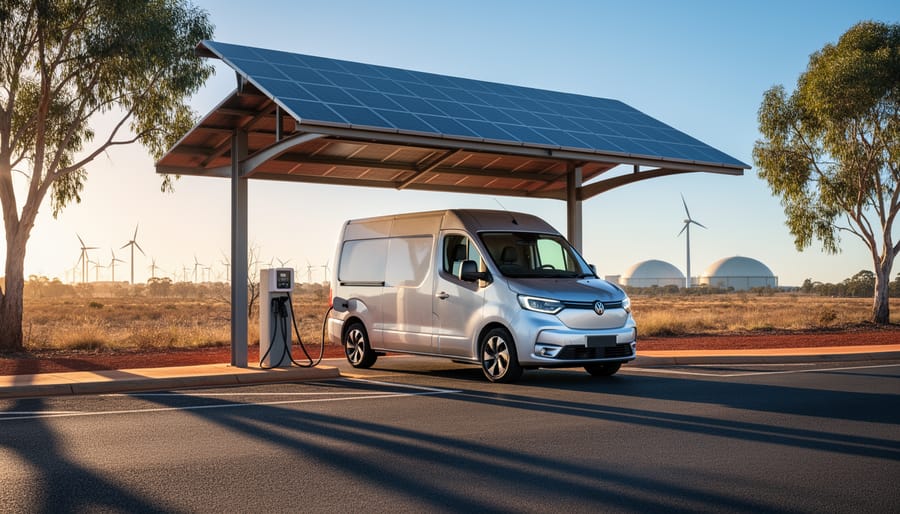
Transport offsets promise to neutralize the carbon footprint of your daily commute, business fleet, or freight operations—but do they actually deliver the climate action Australia desperately needs? Every time you drive to work, catch a flight to Melbourne, or order goods delivered to your door, you’re contributing to the transport sector’s massive 18% share of Australia’s total greenhouse gas emissions. Carbon offsetting has emerged as the go-to solution, allowing individuals and companies to balance their transport emissions by funding environmental projects elsewhere. Yet beneath the appealing simplicity lies a complex reality that every environmentally conscious Australian should understand.
Traditional transport offsets operate on a straightforward premise: calculate your vehicle’s emissions, purchase credits equivalent to that carbon output, and support projects like tree planting or renewable energy installations that theoretically absorb or prevent equivalent emissions. It sounds brilliant in theory. The challenge? Many offset schemes lack transparency, deliver questionable long-term results, or simply shift the problem rather than solving it. Some projects would have happened anyway, while others fail to deliver promised carbon reductions decades into the future.
The good news is that Australia stands at the threshold of a genuine transport transformation. Rather than relying solely on offsets that compensate for pollution after the fact, we’re discovering that bioenergy-based transport solutions and electrification powered by renewables can eliminate emissions at the source. This shift represents more than incremental improvement—it’s a fundamental reimagining of how Australians move people and goods while protecting the climate future our children deserve.
Understanding both the limitations of conventional offsets and the potential of emerging alternatives empowers you to make genuinely sustainable transport choices today.
What Transport Offsets Actually Mean
The Basics: Offsetting Your Carbon Footprint on Wheels
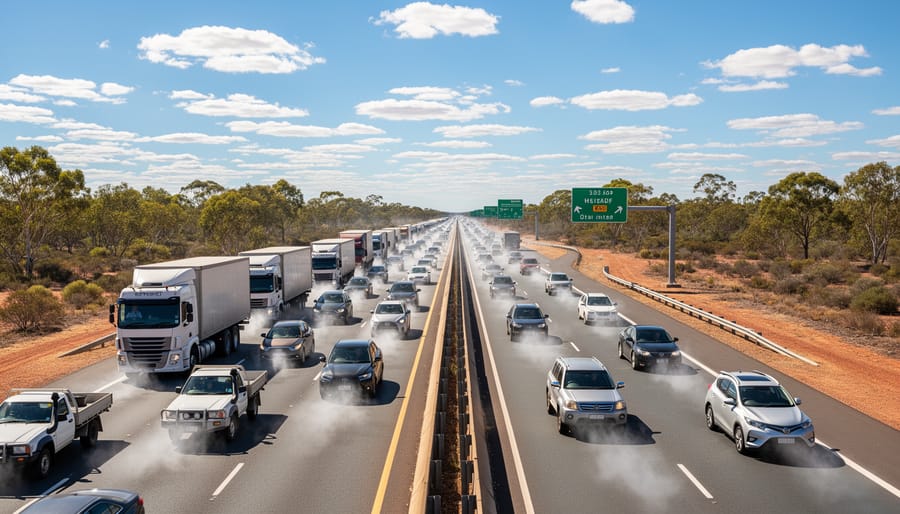
Understanding how transport offsets work starts with measuring emissions. When you drive your car, catch a train, or ship goods across Australia, carbon calculators convert your travel distance and vehicle type into tonnes of carbon dioxide equivalent. A typical petrol car generates about 180 grams of CO2 per kilometre, while trucks and freight transport produce significantly more depending on load and distance.
Once calculated, these emissions can be offset through purchasing carbon credits. Each credit represents one tonne of CO2 either prevented from entering or removed from the atmosphere. These credits come from verified projects like reforestation, renewable energy installations, or methane capture programs. In Australia, reputable offset providers ensure credits meet recognised standards like the Verified Carbon Standard or Gold Standard.
Here’s the practical bit: many Australian transport companies now offer offset options at purchase. Airlines add a few dollars to ticket prices, freight companies bundle offsets into shipping costs, and even fuel retailers provide offset choices at the pump. A Melbourne-based courier service, for instance, recently achieved carbon neutrality by combining route optimisation with quality offset purchases, showing how accessible this solution has become for businesses committed to environmental responsibility.
Where Your Offset Money Goes
When you purchase transport offsets, your money typically flows into verified Australian projects making tangible environmental impacts. A significant portion funds renewable energy initiatives—think solar farms in Queensland’s sunshine belt or wind projects along Victoria’s coastline that replace fossil fuel-generated electricity. These projects directly reduce emissions entering our atmosphere.
Tree planting programs represent another popular destination for offset funds. Native reforestation projects across New South Wales and Tasmania not only sequester carbon but restore wildlife habitats and prevent soil erosion. The bonus? These trees keep capturing carbon for decades.
Some effective carbon offset programs support biomass energy facilities that convert agricultural and forestry waste into clean fuel, creating a circular economy. Perth’s waste-to-energy plants exemplify this approach, turning rubbish that would release methane in landfills into useful electricity.
Methane capture projects at landfills and farms also receive offset funding. These initiatives prevent powerful greenhouse gases from escaping while sometimes generating renewable energy.
The key is transparency. Reputable offset providers detail exactly where your dollars go and provide regular updates on project progress, ensuring your contribution creates genuine climate action.
Why Traditional Transport Offsets Fall Short
The Verification Problem
While transport offset programs promise to neutralize emissions, verifying their actual impact remains remarkably challenging. The fundamental question is straightforward: how do we know these projects are delivering real carbon reductions?
Consider a tree-planting offset program in Southeast Asia that Melbourne-based companies purchased to neutralize their fleet emissions. Independent auditors later discovered many trees had been counted twice, while others never survived their first year. Similarly, a cooking stove project in Africa claimed carbon credits that didn’t account for local communities already transitioning to cleaner fuels independently.
The verification problem extends beyond intentional misrepresentation. Even well-meaning projects struggle with baseline measurements. How much carbon would have been emitted without the offset project? What happens if protected forests burn down five years later? These aren’t merely technical questions; they’re fundamental challenges that undermine offset credibility.
Australian businesses face particular risks when purchasing international offsets, as monitoring conditions thousands of kilometres away proves nearly impossible. A Sydney logistics company discovered this difficulty when their purchased wind farm credits couldn’t be independently verified due to limited project transparency.
The good news? This verification challenge is driving innovation toward direct emissions reduction through proven technologies like biofuels, where results are measurable, immediate, and genuinely transformative for Australia’s transport sector.
When Offsetting Delays Real Action
Here’s the hard truth: sometimes offsets become a convenient excuse to delay the real work that needs doing. When transport companies purchase offsets rather than investing in cleaner vehicles or rethinking their operations, they’re essentially putting a green band-aid on a growing problem.
Think of it like this – if your ute’s engine is burning oil and belching smoke, you wouldn’t just plant a tree in your backyard and call it fixed. You’d get the engine sorted. Yet that’s precisely what happens when businesses rely solely on offsets instead of pursuing genuine climate action.
The challenge is particularly acute in Australia’s transport sector, where aging fleets and long distances make electrification complex. When offsets become the primary strategy, the necessary conversations about biofuels, electric vehicle infrastructure, and route optimization get pushed down the priority list. Budget that could modernize fleets instead gets channeled into overseas offset schemes.
Several Australian transport operators have learned this lesson. After years of purchasing offsets, they discovered their actual emissions kept climbing because their underlying operations hadn’t changed. The wake-up call prompted them to invest in biofuel-compatible engines and efficiency improvements alongside strategic offset use.
The key is balance. Offsets can play a supporting role during transition periods, but they shouldn’t replace the fundamental transformation our transport networks need. Real progress means uncomfortable investments, operational changes, and embracing homegrown solutions like bioenergy that create lasting infrastructure improvements rather than temporary carbon accounting fixes.
The Transformation: Bioenergy and Transport Offsets Done Right
Biofuels: Offsets Built Into the Tank
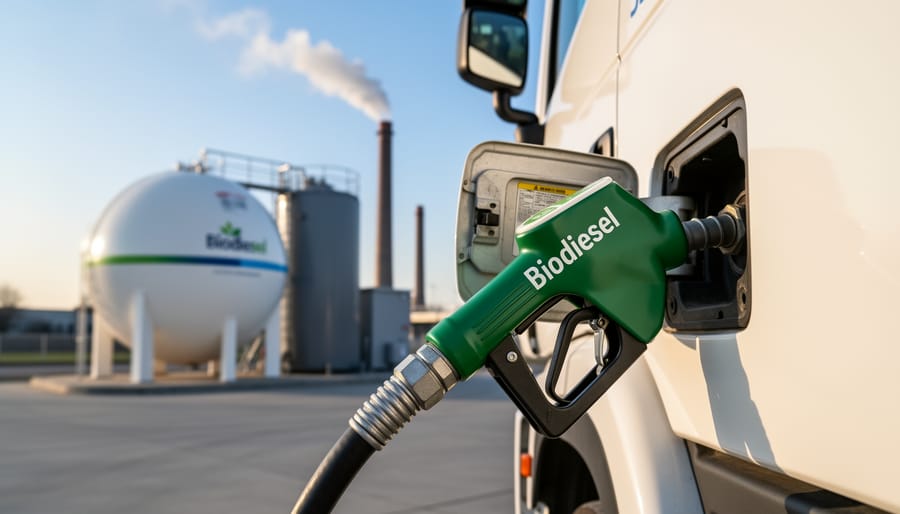
Unlike traditional carbon offsets that promise future environmental benefits, biofuels deliver emission reductions the moment they hit your tank. When you fill up with biodiesel or ethanol, you’re burning fuel that absorbed carbon dioxide during plant growth, creating a much tighter carbon loop than fossil fuels extracted from underground reserves.
Australia’s biofuel sector is already making significant strides in this space. Companies like Southern Oil Refining in Gladstone transform used cooking oil from fish and chip shops across Queensland into biodiesel that powers local transport fleets. It’s a brilliant example of circular economy thinking – yesterday’s dinner waste becomes today’s clean fuel.
Sugarcane ethanol production in northern Queensland demonstrates another success story. Mackay and Bundaberg regions produce ethanol from molasses, a byproduct of sugar refining that would otherwise generate methane in landfills. When blended with petrol as E10, this ethanol reduces emissions by approximately 65 percent compared to straight petroleum.
The beauty of biofuels lies in their immediacy. There’s no waiting period, no verification delays, and no questions about whether offset projects will deliver promised results decades down the track. The carbon reduction happens right now, in your engine, as the fuel combusts.
For transport operators looking to reduce their carbon footprint without waiting for electric vehicle infrastructure to catch up, biofuels offer a practical bridge technology. Many existing diesel engines can run on biodiesel blends without modification, making the transition remarkably straightforward for fleet managers across Australia.
The Circular Economy Advantage
Here’s where transport offsets move from theory to transformation. The circular economy approach turns a potential problem into a powerful solution, capturing emissions before they’re released while simultaneously addressing Australia’s growing waste challenge.
Think about this: every day, Australian households and businesses generate thousands of tonnes of organic waste. Traditionally, this waste ends up in landfills where it breaks down anaerobically, releasing methane—a greenhouse gas 28 times more potent than carbon dioxide. But forward-thinking operators are flipping this script entirely.
Waste-to-energy transport solutions capture this organic material before it reaches landfills, converting it into renewable natural gas or bioethanol that powers vehicle fleets. The beauty lies in the double benefit: you’re preventing methane emissions and replacing fossil fuels simultaneously.
Take Sydney’s recent fleet conversion success story. A major logistics company now runs 40 trucks on biomethane derived from food waste collected across metropolitan Sydney. They’re not purchasing questionable overseas offsets—they’re creating genuine carbon reductions right here in Australia. The trucks collect waste, process it into fuel, and run on that very fuel. It’s circular economy brilliance in action.
Melbourne’s waste management sector tells a similar tale. By diverting organic waste from landfills and transforming it into transport fuel, operators have slashed their carbon footprint by up to 85 percent compared to diesel alternatives. These aren’t paper reductions or theoretical calculations—they’re measurable, verifiable emissions eliminated from our atmosphere.
This approach represents transport offsets evolved: rather than compensating for emissions elsewhere, you’re preventing them from occurring in the first place while powering the vehicles that make it all possible.
Success Stories: Australian Transport Offset Innovations
From Farm to Fuel: Agricultural Transport Transformation
Across rural Australia, a quiet revolution is reshaping how farms power their transport fleets. Instead of purchasing carbon offsets from distant projects, innovative farmers are creating genuine carbon neutrality right on their properties by converting agricultural waste into biofuel.
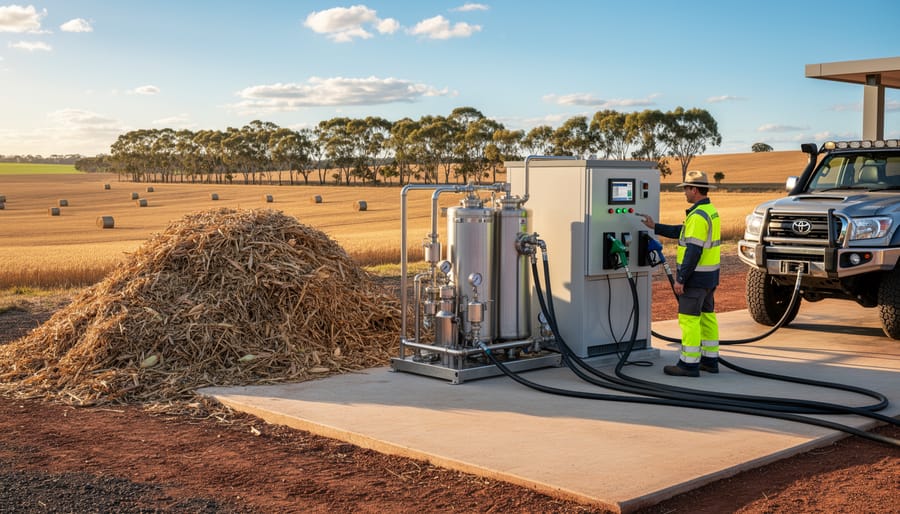
Take the Jensen family’s wheat operation in the Riverina. They’ve installed an on-farm biorefinery that transforms crop stubble, which they once burned, into renewable diesel for their tractors and trucks. What was previously an emissions problem has become their energy solution, eliminating both burning emissions and the need for fossil diesel.
The numbers tell a compelling story. This single farm now diverts 200 tonnes of agricultural waste annually, producing enough biofuel to run their entire transport fleet whilst reducing their carbon footprint by 85 percent compared to conventional diesel. The remaining emissions are offset by the carbon sequestered in their biochar production process, achieving true carbon neutrality.
Similar transformations are happening at livestock operations using animal waste and sugarcane farms processing bagasse. These farmers aren’t just offsetting their transport emissions through purchased credits. They’re fundamentally eliminating them through circular agriculture practices that turn waste streams into valuable fuel sources, proving that the most effective transport offset is one you don’t need to buy because you’ve eliminated the emissions at source.
City Buses Running on Better Offsets
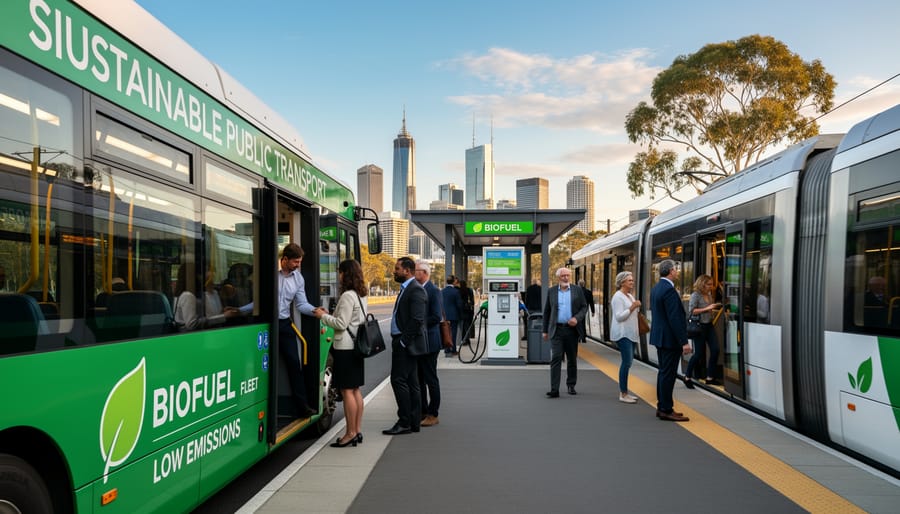
Brisbane is showing the rest of Australia how it’s done. The city has embarked on an ambitious journey to transform its public transport fleet, with council buses now running on renewable bioenergy derived from organic waste collected throughout the region. What sets this initiative apart isn’t just the fuel switch – it’s the comprehensive offset program they’ve implemented for emissions that can’t yet be eliminated.
Rather than purchasing cheap offsets from overseas projects with questionable verification, Brisbane Council partnered with local biochar producers to ensure every tonne of unavoidable carbon is genuinely removed from the atmosphere. The biochar, produced from agricultural waste in regional Queensland, gets returned to farming communities to improve soil health – creating a closed loop that benefits everyone involved.
The program’s transparency has won over even the sceptics. Real-time dashboards show residents exactly how much bioenergy each bus route consumes, the emissions avoided compared to diesel, and the precise location of biochar projects offsetting remaining emissions. Passengers can scan QR codes at bus stops to see the journey their transport emissions take.
This model demonstrates that offsets don’t have to be a cop-out. When combined with genuine emissions reduction through bioenergy adoption and paired with local, verifiable carbon removal projects, offset programs can form part of a credible climate action strategy. The key is ensuring transparency, local benefit, and treating offsets as a temporary bridge rather than a permanent solution.
Making Your Transport Offsets Actually Count
Questions to Ask Before Buying Offsets
Before investing in transport offset programs, it’s essential to ask the right questions to ensure your contribution makes a genuine difference. Start by checking verification standards—look for programs certified by internationally recognised bodies like the Gold Standard or Climate Action Reserve, which provide transparent monitoring and reporting.
Additionality is crucial. Ask whether the offset project would have happened anyway without your investment. True offsets fund new initiatives that wouldn’t exist otherwise, creating real emissions reductions rather than just claiming credit for existing projects.
Investigate co-benefits beyond carbon reduction. Quality programs deliver positive outcomes for local communities, such as improved air quality, job creation, or biodiversity protection. In Australia, some successful programs have combined emissions reduction with Indigenous land management, creating meaningful employment opportunities in regional areas.
Check the permanence guarantee—will these carbon reductions last, or could they be reversed? For transport projects involving biofuels or electric vehicle infrastructure, this means understanding long-term maintenance and operational commitments.
Finally, examine the project location. Local Australian projects often provide greater transparency and verifiable impact. Don’t be afraid to request detailed documentation showing exactly where your offset dollars go and the measurable outcomes achieved. Remember, informed choices drive real climate action.
Beyond Offsets: Direct Transport Emission Reductions
While offsets play a role in addressing transport emissions, the most powerful solutions come from directly reducing what comes out of your exhaust pipe in the first place. Think of it this way: preventing emissions beats compensating for them every time.
Electric vehicles represent the most transformative shift happening right now across Australian roads. From Brisbane to Broome, Aussies are discovering that EVs slash running costs while eliminating tailpipe emissions entirely. The range anxiety of yesterday has given way to practical, everyday transport solutions that work brilliantly for most journeys.
Biofuels offer an immediate alternative for those who aren’t ready to go electric. Australian-produced biodiesel and ethanol blends can power existing vehicles with dramatically lower emissions than conventional petrol or diesel. These fuels, often derived from agricultural waste and sustainably grown crops, support local farming communities while reducing carbon footprints. Many service stations already stock E10 ethanol blends, making the switch remarkably straightforward.
Transport efficiency measures deliver surprising results too. Simple choices like combining errands, carpooling with neighbours, or choosing active transport for short trips add up quickly. Businesses are finding that optimizing delivery routes and maintaining vehicle fleets properly cuts both emissions and costs.
The beauty of these direct reduction strategies is that they work alongside renewable energy projects to accelerate Australia’s transition toward genuine sustainability. Rather than viewing offsets as the complete answer, consider them part of a comprehensive approach where reducing emissions directly takes centre stage.
The journey toward genuine transport emission reductions represents more than just a shift in accounting practices—it’s a fundamental transformation in how we power our movement across this vast continent. Rather than simply offsetting emissions elsewhere while continuing business as usual, we’re embracing solutions that actually eliminate carbon at the source through bioenergy and genuinely sustainable transport technologies.
Australia stands at a remarkable crossroads. With our abundant agricultural resources, innovative spirit, and growing commitment to environmental stewardship, we’re perfectly positioned to become global leaders in this transformation. The success stories emerging from biodiesel producers, ethanol manufacturers, and forward-thinking transport companies demonstrate that practical, profitable alternatives already exist. These aren’t distant dreams—they’re working solutions happening right now on Australian roads.
The path forward starts with individual action. If you’re in transport logistics, investigate biofuel suppliers in your region. For policymakers, consider how incentives can accelerate bioenergy adoption. Business owners can audit their fleet operations and explore renewable alternatives. Even individuals can support companies prioritizing genuine emission reductions over paper offsets.
This transformation won’t happen overnight, but every journey begins with a single step. By choosing authentic solutions over convenient carbon credits, we’re not just offsetting our transport impact—we’re reimagining it entirely. That’s the real opportunity before us, and it’s one we can’t afford to miss. Australia’s transport future is renewable, and it starts with choices we make today.