
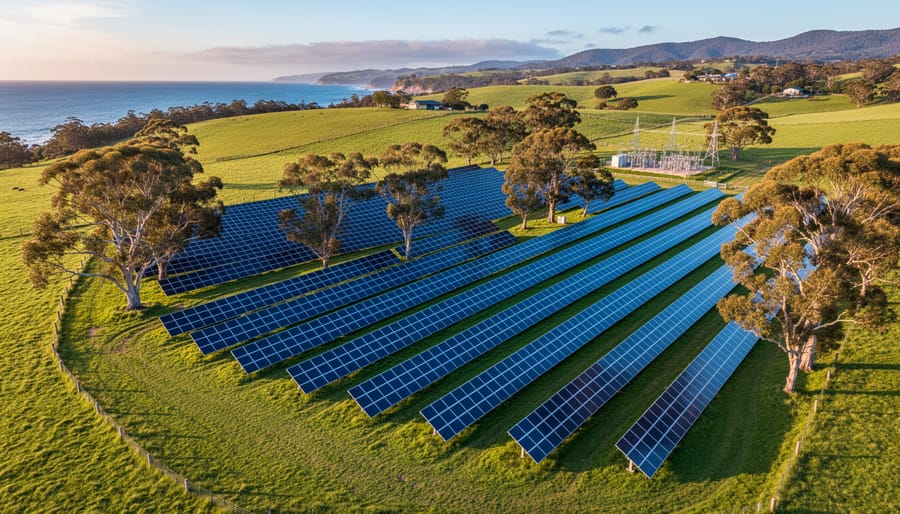
A single acre of solar panels generates between 350,000 to 450,000 kilowatt-hours of electricity annually in Australia, enough to power approximately 50 to 60 average homes. This figure translates to roughly 250 to 400 solar panels producing between 100 to 150 kilowatts of capacity, depending on panel efficiency, orientation, and your location’s sunlight hours. In sunnier regions like Queensland and Western Australia, output pushes toward the higher end, while southern states typically see slightly lower generation.
Understanding this output potential matters because it directly impacts your investment returns, land use decisions, and contribution to Australia’s renewable energy targets. A single acre solar installation offsets approximately 300 tonnes of carbon dioxide emissions yearly, equivalent to removing 65 petrol cars from our roads. For landowners considering solar farming, this represents substantial environmental impact from relatively modest land allocation.
The economics prove equally compelling. Based on current wholesale electricity prices and feed-in arrangements, one acre typically generates between $25,000 to $45,000 in annual revenue, with costs recovering within 5 to 7 years. Projects like the Shoalhaven Solar Farm demonstrate how proper planning and location selection maximize these returns while supporting local communities through job creation and sustainable energy supply.
Whether you’re a farmer exploring income diversification, a council member evaluating renewable infrastructure, or an investor assessing solar opportunities, grasping per-acre output provides the foundation for informed decision-making in Australia’s rapidly expanding solar sector.
The Shoalhaven Solar Farm: Bringing Clean Energy to NSW’s South Coast
Project Scale and Community Benefits
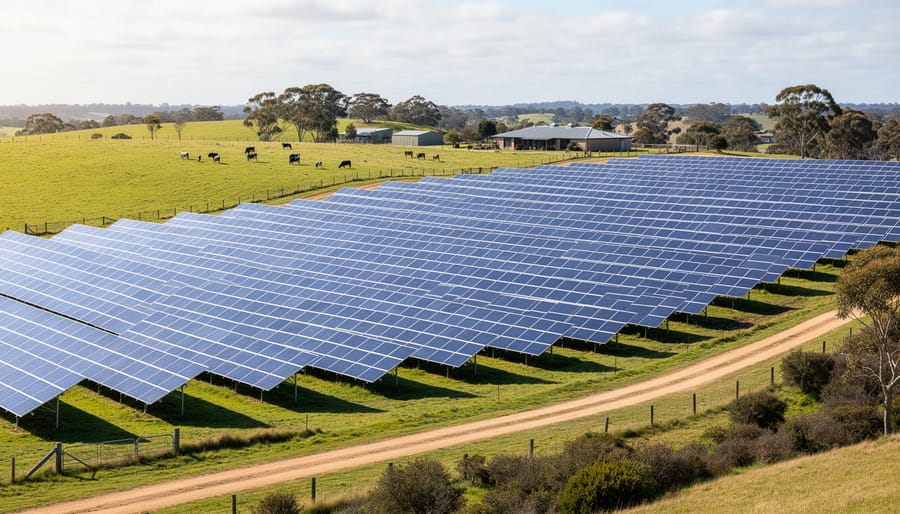
The Shoalhaven Solar Farm represents a significant leap forward for regional renewable energy in New South Wales. Spanning approximately 340 acres of carefully selected land, this project delivers an impressive 110 megawatts of clean electricity—enough to power roughly 30,000 homes across the region. To put this in perspective, each acre contributes approximately 324 kilowatts to the total capacity, demonstrating the remarkable efficiency of modern solar technology.
Beyond the numbers, this project has delivered genuine benefits to the local community. During construction, it created over 200 jobs for tradespeople and labourers, many sourced from Shoalhaven and surrounding areas. Now operational, the farm continues to employ local technicians for ongoing maintenance and monitoring. The community development fund established as part of the project has already supported grassroots environmental initiatives and educational programs in nearby schools, helping young Australians understand the practical benefits of renewable energy. For Shoalhaven residents, this isn’t just about clean power—it’s about building a sustainable future while strengthening the local economy and creating opportunities that will benefit the region for decades to come.
Why Solar Farms Make Sense in the Shoalhaven Region
The Shoalhaven region on the New South Wales South Coast presents ideal conditions for solar energy generation, making it a standout location for solar farm development. With average annual solar irradiance levels exceeding 5.5 kilowatt-hours per square metre per day, the area receives abundant sunshine throughout the year, translating directly into robust energy production from photovoltaic systems.
The region’s temperate coastal climate strikes the perfect balance between ample sunshine and moderate temperatures. Unlike inland areas where extreme heat can reduce panel efficiency, the Shoalhaven benefits from cooling coastal breezes that help maintain optimal operating temperatures for solar panels. This means consistent, reliable output year-round.
Geographically, the Shoalhaven offers relatively flat terrain with minimal shading obstacles, allowing for efficient panel placement and maximum sun exposure from dawn to dusk. The area’s established electrical infrastructure also provides straightforward grid connection opportunities, reducing installation costs and complexity.
Perhaps most compelling is the region’s commitment to sustainable development. Local communities have embraced renewable energy projects, recognizing both environmental and economic benefits. Success stories from neighbouring solar installations demonstrate strong local support and proven viability, making the Shoalhaven not just technically suitable, but culturally ready for the clean energy transition that benefits everyone.
Breaking Down 1 Acre Solar Farm Output: The Real Numbers
Power Generation Capacity Per Acre
A typical one-acre solar farm in Australia generates between 394 and 447 megawatt-hours annually, which translates to roughly 150 to 175 kilowatts of installed capacity. To put this in perspective, that’s enough clean energy to power approximately 60 to 70 average Australian households each year—a remarkable achievement from just a single acre of land.
The actual output depends on several key factors that savvy solar developers consider carefully. Panel efficiency plays a starring role, with modern photovoltaic technology converting between 15 and 22 percent of sunlight into usable electricity. The beauty of today’s solar panels is they’re constantly improving, meaning projects installed now will generate more power per square metre than those from even five years ago.
Orientation and tilt matter enormously in the Australian context. Panels facing north at an optimal angle capture maximum sunlight throughout the day, whilst tracking systems—though more expensive upfront—can boost output by 25 to 35 percent by following the sun’s path across our expansive skies.
Location makes a significant difference too. A solar farm in sunny Queensland might generate 20 percent more electricity than an identical setup in Tasmania, simply due to variations in solar irradiance. Regional weather patterns, shading from nearby trees or structures, and even dust accumulation during dry spells can influence your bottom line.
The good news? Australian conditions are among the world’s best for solar generation, with abundant sunshine and falling technology costs making even modest-sized installations increasingly viable for landowners and communities seeking practical renewable energy solutions.
What That Means for Aussie Households
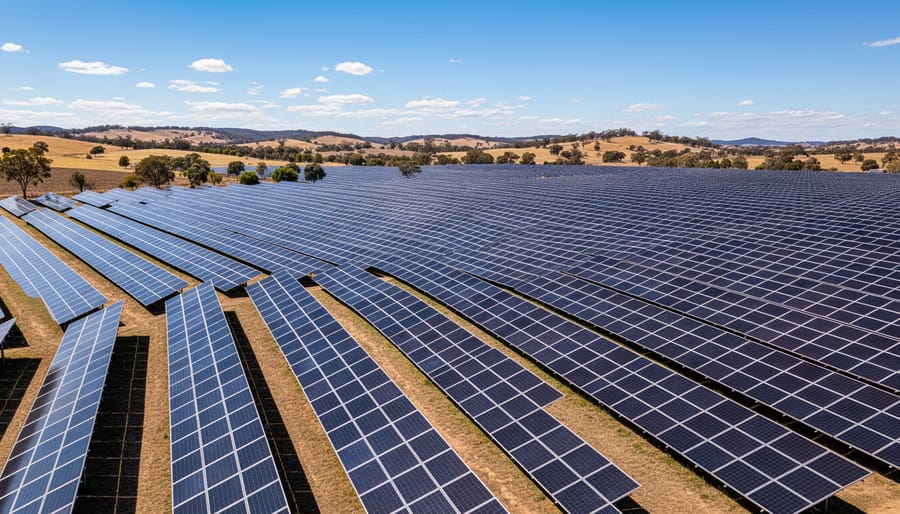
So what does a 1-acre solar farm actually deliver for everyday Australians? Here’s the good news: depending on location and equipment quality, a single acre of solar panels typically generates enough electricity to power between 15 to 25 average Australian homes annually. That’s quite remarkable when you think about it.
To put this in perspective, the typical Aussie household uses roughly 18-20 kilowatt-hours per day. A well-designed 1-acre solar installation producing around 350-500 megawatt-hours yearly can comfortably meet those needs for multiple families. Imagine replacing your quarterly power bill with clean energy generated right here on Australian soil.
The Shoalhaven Solar Farm Project demonstrates this beautifully at scale. With its substantial footprint, it’s powering thousands of homes across the region while simultaneously reducing carbon emissions equivalent to taking hundreds of cars off our roads each year. For households increasingly concerned about energy costs and climate impact, these numbers represent genuine hope. Every acre dedicated to solar represents families enjoying reliable, affordable electricity while contributing to Australia’s renewable energy transition. That’s a win worth celebrating.
Seasonal Variations in the Shoalhaven
The Shoalhaven region experiences significant seasonal variations in solar output throughout the year, directly impacting what a 1-acre solar farm can generate. During summer months (December to February), the farm operates at peak capacity, with longer daylight hours and more direct sunlight producing approximately 40-45% more energy than winter periods. A typical summer day might see the farm generating 150-180 kWh, while winter days (June to August) typically yield 90-110 kWh due to shorter days and lower sun angles.
These variations matter for planning purposes. Advanced renewable energy forecasting helps grid operators manage these fluctuations effectively. The good news? Even during cooler months, the Shoalhaven’s relatively mild climate means solar farms maintain solid productivity year-round. Spring and autumn deliver consistent mid-range outputs, making the annual average reliable for investment calculations. Understanding these patterns helps landowners and investors set realistic expectations while demonstrating that solar remains a dependable renewable energy source across all seasons in this productive region.
From Sunlight to Your Switch: How Solar Farms Actually Work
The Journey of a Sunbeam
Picture a sunbeam touching down on your acre of solar panels on a crisp Shoalhaven morning. That ray of light carries energy that’s travelled 150 million kilometres, and now it’s ready to power Australian homes and businesses.
When sunlight strikes the photovoltaic cells in your solar panels, something remarkable happens. The light particles, called photons, knock electrons loose from atoms within the silicon cells, creating an electrical current. Think of it like a domino effect at the atomic level—one tiny collision sets off a chain reaction that generates direct current (DC) electricity.
But here’s where the magic continues. Your home and the electrical grid run on alternating current (AC), not DC. This is where solar inverters step in as the translators of your solar farm. These clever devices convert that raw DC power into grid-ready AC electricity, ensuring every watt you generate can be used immediately.
From there, the transformed electricity flows through metres and transformers, joining the grid like a tributary merging with a river. Your sunbeam, now transformed into usable power, travels through transmission lines to homes, schools, and businesses across the region. What started as morning light on your acre becomes the energy brewing someone’s coffee, powering their computer, or keeping their lights on—clean, renewable, and ready when needed.
Storage and Distribution
Once your 1-acre solar farm generates electricity, it needs somewhere to go. Most Australian solar farms feed power directly into the grid through an inverter system that converts DC electricity from the panels into AC electricity suitable for homes and businesses. This real-time distribution means your solar farm becomes an active contributor to Australia’s renewable energy supply throughout daylight hours.
For times when the sun isn’t shining, many solar operations are exploring battery storage solutions. While standalone 1-acre farms typically don’t include large-scale batteries due to cost considerations, they benefit from grid-connected systems where traditional power sources fill gaps during cloudy days or nighttime. However, as battery technology becomes more affordable, even smaller solar farms are beginning to incorporate storage, allowing them to capture excess midday generation and release it during peak evening demand. This evolution represents an exciting opportunity for landowners to maximize their investment while supporting grid stability and renewable energy goals across the country.
Environmental Impact: Beyond Just Clean Electricity
Carbon Footprint Savings Per Acre
A one-acre solar farm delivers impressive environmental benefits that extend far beyond clean electricity generation. Each acre typically prevents approximately 160 to 200 tonnes of carbon dioxide emissions annually – equivalent to taking around 35 to 43 passenger vehicles off Australian roads permanently. To put this in perspective, that’s like removing emissions from a decent-sized street in your suburb every single year.
The carbon savings also translate to nature-based equivalents. A one-acre solar installation provides the same environmental benefit as planting roughly 2,600 to 3,200 native tree seedlings and nurturing them for ten years. Imagine transforming marginal farmland into a forest’s worth of climate action without occupying additional space.
For Australian landowners considering solar development, these figures represent tangible contributions to national emissions reduction targets. The Shoalhaven region’s solar projects alone demonstrate how distributed renewable energy creates cumulative impact across communities. When you multiply these savings across hundreds of solar farms nationwide, the collective benefit becomes transformative.
These emissions reductions aren’t theoretical – they’re verified, measurable outcomes that help Australia transition toward cleaner energy while maintaining productive land use. Every acre installed represents real progress in combating climate change whilst generating reliable income for property owners.
Biodiversity and Land Stewardship
A one-acre solar farm doesn’t mean sacrificing biodiversity or productive land use. In fact, thoughtful planning creates opportunities to enhance both energy generation and environmental outcomes. This approach, increasingly popular across regional Australia, demonstrates how renewable energy can work hand-in-hand with nature rather than against it.
Agrivoltaics represents one of the most exciting developments in this space. By raising solar panels higher off the ground, farmers can continue grazing sheep beneath them while generating clean electricity above. This dual-use approach has proven particularly successful in the Southern Tablelands and coastal regions, where farmers report that sheep thrive in the partial shade provided by panels, especially during hot Australian summers. The panels also reduce water evaporation from soil, creating more favourable conditions for pasture growth.
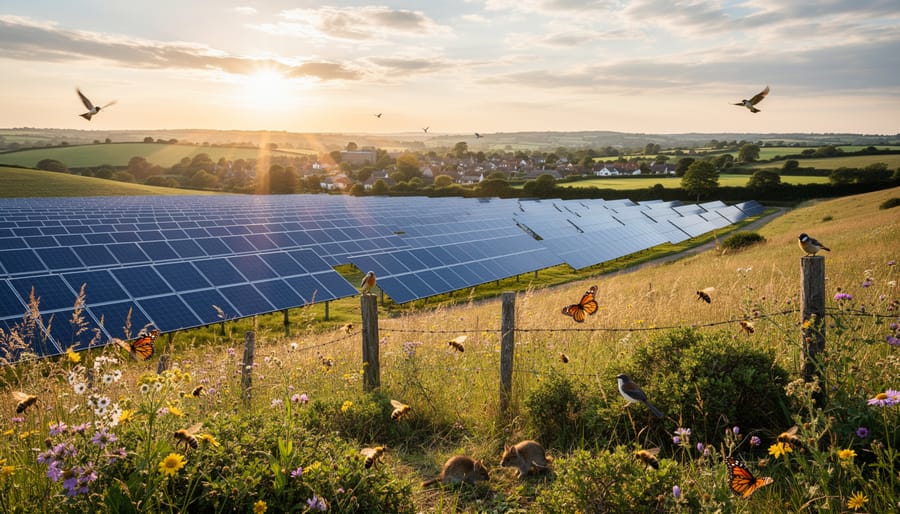
Beyond livestock, solar farms can become havens for native vegetation and wildlife. Ground cover beneath and between panel rows provides habitat for small marsupials, insects, and ground-dwelling birds. Some operators deliberately plant native grasses and wildflowers, transforming what might have been monoculture farmland into diverse ecosystems. These pollinator-friendly zones support local bee populations and other beneficial insects.
Maintaining ecological balance requires careful consideration during planning stages. Conducting environmental assessments helps identify significant habitats or species corridors worth preserving. Minimal ground disturbance during installation, avoiding pesticide use, and creating wildlife corridors between panel rows all contribute to positive biodiversity outcomes. When done right, a one-acre solar farm becomes more than an energy generator; it’s an active participant in landscape restoration and environmental stewardship.
Economic Returns: What Landowners and Communities Can Expect
Income Potential for Agricultural Landowners
For agricultural landowners, solar farms present a compelling income opportunity that can rival or exceed traditional farming returns. In Australia, lease payments for solar installations typically range from $1,000 to $2,500 per acre annually, depending on location, solar irradiance levels, and proximity to grid infrastructure.
Consider a real-world example from regional New South Wales: a sheep farmer leased 10 acres of marginally productive land to a solar developer, securing $15,000 yearly with a 25-year agreement. This reliable income stream transformed his farm’s financial stability, eliminating the uncertainty of drought, market fluctuations, and crop failures that plague traditional agriculture.
The beauty of solar leases lies in their predictability. Unlike wheat or cattle prices that shift with global markets, solar income remains steady throughout the contract period, often including annual escalation clauses of 2-3 percent. Some arrangements even allow continued agricultural use beneath panels, creating dual income streams from both energy generation and grazing.
For landowners with underutilized acreage, particularly properties with poor soil quality or limited water access, solar farms offer a practical pathway to financial resilience while contributing to Australia’s renewable energy transition. It’s farming the sunshine, and the harvest never fails.
Local Jobs and Skills Development
Building a one-acre solar farm creates genuine opportunities for local communities, with benefits extending well beyond construction. During the initial phase, projects typically require electricians, labourers, equipment operators, and project managers, often engaging 15-25 workers depending on system complexity. These aren’t just short-term gigs either – they’re stepping stones into Australia’s booming renewable energy sector.
The Shoalhaven region has witnessed this firsthand, with solar developments creating pathways for school leavers and career changers alike. Local TAFEs and training providers now offer nationally recognised qualifications in solar installation and maintenance, responding directly to industry demand. These courses cover everything from electrical systems to safety protocols, making renewable energy careers accessible to people without university degrees.
Once operational, solar farms require ongoing maintenance teams for panel cleaning, vegetation management, and technical monitoring. While smaller than construction crews, these positions offer stable, long-term employment in regional areas where such opportunities can be scarce.
Perhaps most promising is how these projects spark broader economic activity. Local businesses benefit from increased demand for accommodation, catering, and services during construction, while the presence of renewable infrastructure attracts further investment in clean energy ventures. For young Australians especially, solar farms represent something powerful: the chance to build meaningful careers while contributing to environmental solutions.
Success Stories: Solar Farms Transforming Australian Communities
Across Australia, solar farms are proving their worth as genuine community game-changers. Take the Clare Solar Farm in South Australia, where a modest installation on previously underutilized agricultural land now generates enough power for approximately 15,000 homes. The project employed 150 locals during construction and continues supporting the regional economy through ongoing maintenance roles.
In regional Queensland, the Oakey Solar Farm stands as a beacon of possibility. Built on a former military airfield, this facility transformed dormant land into a productive asset generating 25 megawatts. The local council reports increased revenue from rates, while nearby businesses experienced a welcome boost from workers and visitors. What’s particularly inspiring is how the project coexists with grazing sheep beneath the panels, demonstrating that solar energy and agriculture can thrive together.
The Bungala Solar Project near Port Augusta showcases the power of large-scale thinking. Following the closure of coal-fired power stations, this region embraced renewable energy wholeheartedly. The solar farm now provides clean electricity to 82,000 homes while creating meaningful employment opportunities. Local residents speak proudly of their community’s transformation from fossil fuel dependence to renewable leadership.
These successes mirror developments at Australia’s largest solar farms, demonstrating scalability across different sizes. Even smaller one-acre installations contribute meaningfully to local grids and property incomes.
The common thread? Communities that embraced solar energy discovered economic resilience, environmental stewardship, and renewed optimism. These aren’t just power stations; they’re symbols of Australia’s commitment to a cleaner, more sustainable future that benefits everyone.
Understanding that a single acre can generate between 200-400 MWh annually puts renewable energy into perspective. For the Shoalhaven region and communities across Australia, this represents more than just numbers on a page—it’s tangible proof that sustainable energy transitions are both achievable and practical.
The Shoalhaven Solar Farm demonstrates how regional Australia is leading the charge toward a cleaner energy future. When you consider that each acre contributes enough electricity to power dozens of homes while reducing carbon emissions significantly, the case for solar becomes undeniable. This isn’t just about meeting renewable energy targets; it’s about creating resilient communities, supporting local economies, and protecting the landscapes we call home.
Australia’s renewable energy future depends on collective action. Whether you’re a landowner considering solar opportunities, a policymaker shaping energy strategy, or simply someone who cares about leaving a healthier planet for future generations, your support matters. The transition to sustainable energy isn’t just inevitable—it’s already happening in places like Shoalhaven. By backing these initiatives, you’re investing in cleaner air, stable energy prices, and a thriving environment for all Australians. The time to act is now.