
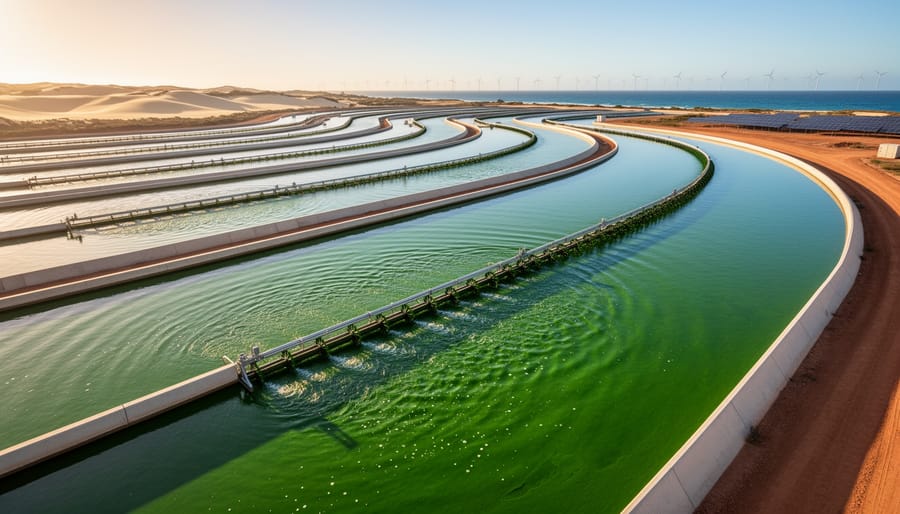
Imagine harvesting energy from microscopic green powerhouses that grow faster than any terrestrial crop, thrive in wastewater, and absorb carbon dioxide as they multiply. Algal biomass represents one of nature’s most efficient energy conversion systems, transforming sunlight into lipids, proteins, and carbohydrates that can fuel our future while cleaning our environment.
Australia stands at a unique advantage in the algal biomass revolution. With abundant sunshine averaging over 2,200 hours annually across most regions, vast coastlines providing access to seawater cultivation, and a pressing need to diversify our energy portfolio, algae offer a pathway that aligns perfectly with our national strengths. Unlike traditional crops that compete for arable land and freshwater, algae can flourish in marginal areas unsuitable for conventional agriculture, producing up to 30 times more energy per hectare than terrestrial oil crops.
The science is elegantly simple yet remarkably powerful. Algae use photosynthesis to convert CO2 into biomass with extraordinary efficiency, doubling their mass in as little as 24 hours under optimal conditions. This rapid growth translates into multiple harvests yearly, creating a renewable resource that regenerates continuously. The harvested biomass can be processed into biodiesel, bioethanol, biogas, or even high-value products like animal feed and nutritional supplements, establishing multiple revenue streams from a single cultivation system.
From pilot projects in South Australia converting brewery wastewater into biodiesel to research facilities in Queensland exploring large-scale carbon capture, Australian innovators are already demonstrating that algal biomass transitions from laboratory promise to commercial reality. The question isn’t whether algae can power our future, but how quickly we can scale this remarkable technology to meet our growing energy demands sustainably.
What Makes Algal Biomass Different from Other Bioenergy Sources
The Science Behind Algae’s Superpower
Algae might look simple, but these microscopic organisms are nature’s efficiency experts when it comes to capturing carbon and producing energy-rich biomass. At the heart of their superpower lies photosynthesis, the same process used by land plants, but algae have perfected it over billions of years of evolution.
Here’s how it works: algae absorb sunlight through their chlorophyll-rich cells, take in carbon dioxide from their surrounding environment, and combine these with water to create glucose (their food source) and oxygen. What makes algae remarkable is their efficiency. While a eucalyptus tree might need years to grow and capture significant carbon, algae can double their biomass in as little as 24 hours under optimal conditions.
The numbers tell an impressive story. Algae can capture CO2 up to 10 to 50 times more efficiently per acre than terrestrial plants. This happens because every cell in algae participates in photosynthesis, unlike trees where only leaves contribute. Additionally, algae don’t waste energy growing woody stems or deep root systems. Every bit of their growth translates into usable biomass.
Think of it this way: if traditional crops are like petrol engines, algae are like electric motors, converting input directly into output with minimal waste. They thrive in various water sources, including seawater and wastewater, meaning they don’t compete with food crops for valuable agricultural land. For Australia, with our abundant sunshine and extensive coastline, this efficiency represents a genuine opportunity to turn our natural advantages into sustainable energy solutions.
Types of Algae Used for Energy Production
When it comes to algal biomass for energy, two main types take centre stage: microalgae and macroalgae, commonly known as seaweed. Understanding their differences helps determine which suits particular applications.
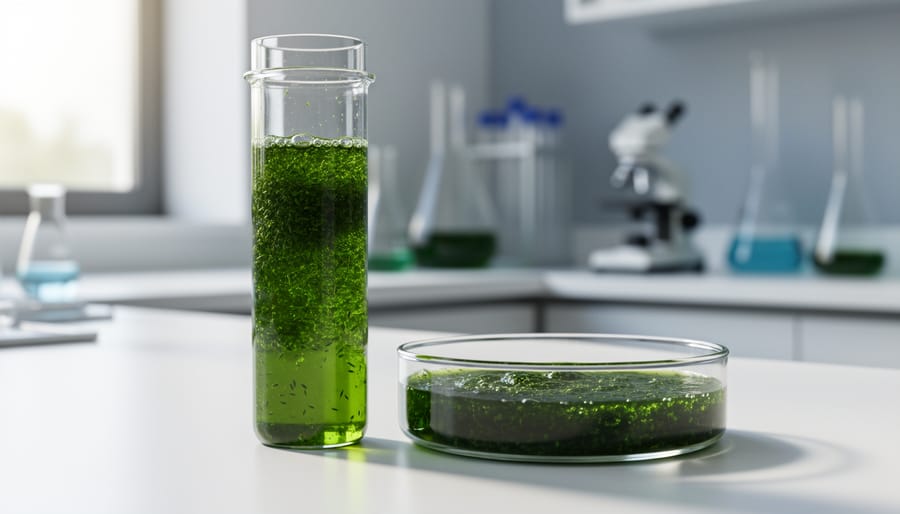
Microalgae are microscopic, single-celled organisms that pack remarkable potential into tiny packages. Species like Chlorella and Spirulina grow rapidly in controlled environments such as ponds or photobioreactors, doubling their biomass within hours under ideal conditions. They’re particularly valued for producing biodiesel and bioethanol because many species accumulate high lipid content – sometimes exceeding 50% of their dry weight. This makes them brilliant for liquid fuels, whilst their protein-rich residue serves well as animal feed.
Macroalgae, or seaweed, offers different advantages. These larger, multicellular plants grow abundantly in ocean environments, requiring no freshwater or arable land. Species like kelp thrive along Australia’s extensive coastline and are particularly suitable for biogas production through anaerobic digestion. They’re also excellent candidates for bioethanol, with some trials showing promising yields from their carbohydrate content.
The choice between micro and macro often depends on your resources and goals. Got access to coastline and seeking biogas? Macroalgae might be your answer. Looking to produce biodiesel with limited space? Microalgae cultivation could deliver better results. Both types are transforming Australia’s renewable energy landscape.
How Algal Biomass Gets Transformed into Clean Energy
Growing Algae at Scale
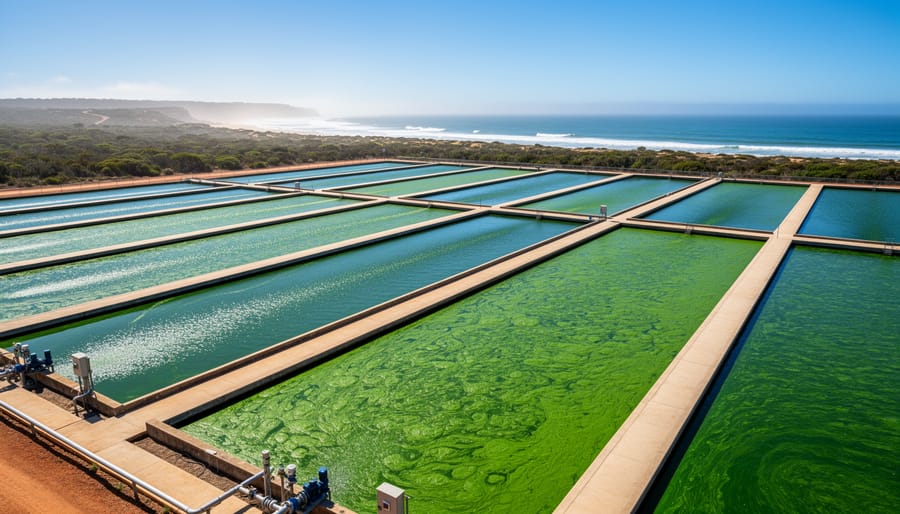
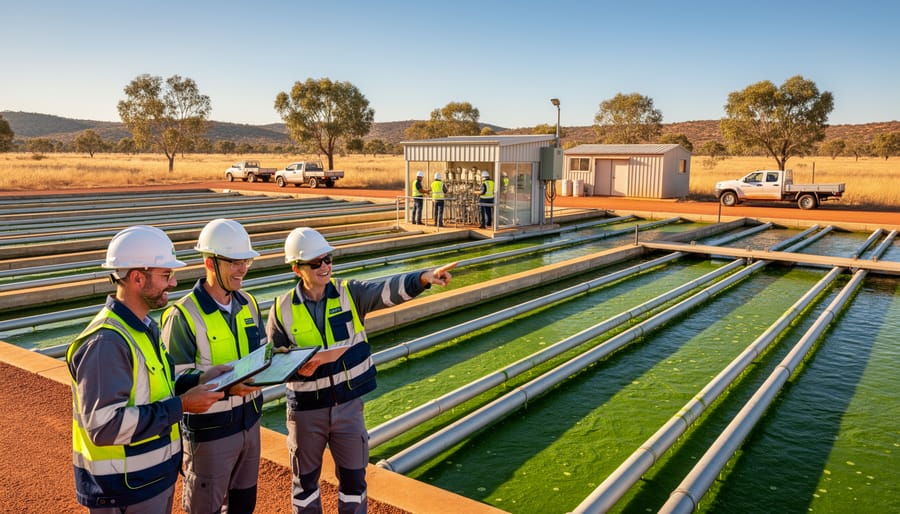
Growing algae for biofuel involves two main approaches, each with unique advantages suited to Australia’s landscape. Open pond systems are the most straightforward option – imagine large, shallow pools stretching across coastal land, filled with green algae thriving under the Australian sun. These ponds, often designed as raceway circuits, use paddle wheels to keep the algae circulating and exposed to sunlight. They’re relatively inexpensive to build and maintain, making them an attractive starting point for commercial operations.
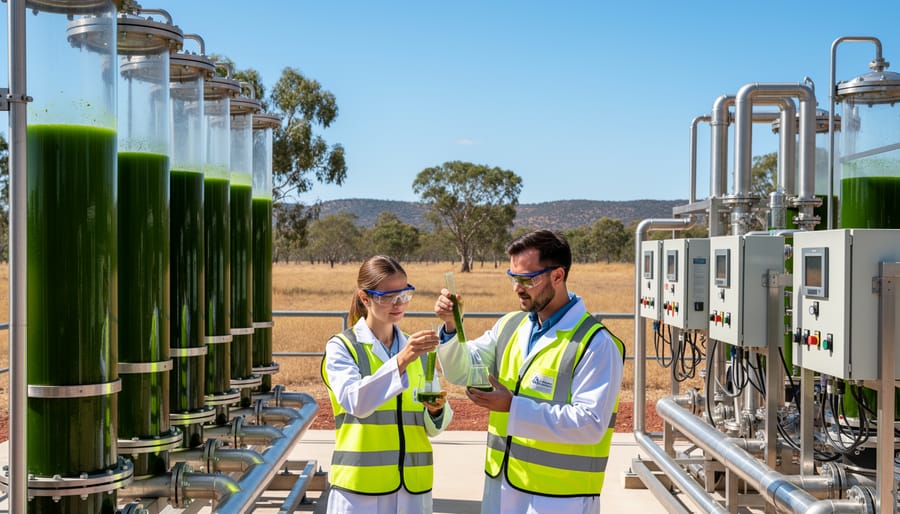
The second approach uses photobioreactors – essentially transparent tubes or panels that create a controlled environment for algae growth. Think of them as greenhouses specifically designed for microscopic organisms. These systems offer better control over temperature, light exposure, and contamination, resulting in higher productivity per square metre. While they’re more expensive upfront, they’re particularly valuable in areas where land is limited.
Australia’s combination of abundant sunshine, extensive coastline, and warm climate creates perfect conditions for both systems. Several pioneering facilities are already demonstrating this potential. In South Australia, researchers are testing photobioreactors that capture carbon emissions from nearby industrial facilities while producing algae biomass. Meanwhile, the Northern Territory’s tropical conditions have attracted interest for open pond systems that could operate year-round.
The beauty of coastal locations is dual access to seawater for cultivation and proximity to industrial hubs that generate the carbon dioxide algae need to grow. This positions Australia as a natural leader in scaling up algae production, transforming our geographical advantages into renewable energy opportunities.
From Green Goop to Power
Transforming algae from pond-dwelling organisms into usable energy involves three key stages that are becoming increasingly sophisticated and efficient. First comes harvesting, where techniques like centrifugation, filtration, or flocculation separate the algae from water. Think of it like straining pasta, but at an industrial scale. Once collected, the green biomass undergoes processing to extract oils or prepare it for energy conversion.
Here’s where things get exciting for everyday Australians. The processed algae can follow several pathways, each with distinct benefits. Through transesterification, algal oils become biodiesel, a direct drop-in replacement for conventional diesel that can power utes, trucks, and agricultural machinery across the country. Australian transport companies have already begun trialling algae-derived fuels, reducing carbon emissions while maintaining vehicle performance.
Another pathway involves anaerobic digestion, where microorganisms break down algal biomass to produce biogas, primarily methane. This renewable gas can feed into existing natural gas networks, heating homes and businesses just like conventional gas, but with a dramatically smaller carbon footprint. It’s a practical example of waste-to-energy conversion that’s gaining momentum nationwide.
For industrial applications, direct combustion of dried algae generates heat and electricity, powering manufacturing facilities and processing plants. These biomass conversion technologies are particularly valuable in remote Australian communities, offering energy independence where traditional infrastructure is limited.
The beauty of algal energy lies in its versatility. Whether filling your car’s tank, warming your home, or keeping factories running, this green goop is proving itself as a genuine alternative to fossil fuels, delivering real-world solutions to Australia’s energy transition.
Real-World Success Stories: Algal Energy in Action
Australian Pioneers Leading the Charge
Australia is punching well above its weight in the algal biomass arena, with homegrown innovators turning our abundant sunshine and coastal resources into competitive advantages. At the forefront is the University of Queensland’s Algae Biotechnology Laboratory, where researchers have developed breakthrough cultivation techniques that double biomass yields in subtropical conditions. Their work has shown that native Australian algae species can produce up to 30 tonnes of dry biomass per hectare annually—figures that make traditional crops look modest by comparison.
In Sydney’s western suburbs, MicroBio Engineering is transforming wastewater treatment into a dual-purpose operation. Their pilot facility at a major processing plant grows algae that simultaneously cleans nutrient-rich water and produces feedstock for renewable diesel. “We’re essentially turning a waste problem into a resource opportunity,” explains their operations director. The facility now processes 50,000 litres daily while producing commercial-grade algal biomass.
Meanwhile, South Australia’s Marine Innovation Centre has partnered with local aquaculture operations to integrate algae production with fish farming. This clever approach uses fish waste nutrients to feed algae cultures, creating a closed-loop system that benefits both industries. Early results show production costs dropping by 40 percent compared to standalone algae farms.
These pioneers aren’t just conducting research—they’re proving that algal biomass can work commercially in real Australian conditions, paving the way for broader industry adoption across the nation.
Global Innovations We Can Learn From
Around the world, several nations are cracking the code on algal energy production, offering valuable lessons for Australia’s journey toward sustainable bioenergy.
The United States leads through its ambitious DOE-funded research programs, where companies in sunny states like California and New Mexico have demonstrated that large-scale algae cultivation can work in arid climates with abundant sunshine. Their open pond systems, designed to withstand temperature fluctuations and optimise water usage, provide a blueprint perfectly suited to Australia’s interior regions. These facilities have proven that consistent yields are achievable even in challenging conditions, something particularly relevant for our own dry continental climate.
The Netherlands takes a different approach, focusing on closed photobioreactor systems that maximise productivity per square metre. Dutch innovators have mastered year-round cultivation by integrating algae production with existing industries, using waste CO2 from greenhouses and power plants. This circular economy thinking translates beautifully to Australia, where we could pair algae farms with our coal-fired power stations during the transition period, capturing emissions while building renewable capacity.
Israel’s desert-based operations demonstrate remarkable water efficiency, recycling up to 95 percent of water used in cultivation. Given Australia’s water scarcity challenges, these techniques are particularly transferable, showing us how to thrive in conditions others might consider limiting.
The common thread across these success stories? They’ve all turned perceived disadvantages into strengths, approached algae as part of integrated systems rather than standalone projects, and committed to long-term research partnerships between universities and industry. Australia possesses all these ingredients; we simply need to bring them together with the same determination these pioneers have shown.
The Environmental and Economic Benefits That Matter
Carbon Capture That Actually Works
Here’s where algae truly shine as climate champions. These microscopic powerhouses absorb carbon dioxide at rates that make traditional forests look sluggish. Algae can capture CO2 up to 10-50 times more efficiently than land-based plants per acre, transforming atmospheric carbon into valuable biomass through photosynthesis.
Think of algae farms as turbocharged carbon sponges. While a hectare of Australian eucalypt forest might sequester around 15 tonnes of CO2 annually, the same area dedicated to algae cultivation can capture 150 tonnes or more. This extraordinary efficiency stems from algae’s rapid growth cycle and their ability to use nearly their entire structure for photosynthesis, unlike trees that invest energy in woody tissues.
The beauty of carbon capture in biomass through algae is its dual benefit: you’re actively removing greenhouse gases whilst creating feedstock for biofuels, animal feed, or other products. Several Australian pilot projects are already demonstrating this potential, pairing algae cultivation with industrial facilities to capture emissions before they reach the atmosphere. This isn’t theoretical climate action; it’s measurable, scalable carbon reduction that delivers tangible results today.
Creating Green Jobs and Regional Opportunities
Australia’s algal biomass sector represents a genuine opportunity to create meaningful employment across regional communities while diversifying our economy beyond traditional industries. From Darwin to Tasmania, cultivation facilities are establishing new career pathways in areas that need them most.
The employment potential spans multiple skill levels and disciplines. Cultivation sites require technicians to monitor growing conditions, harvest biomass, and maintain infrastructure. Processing facilities need operators, quality control specialists, and logistics coordinators. Meanwhile, research institutions and universities are expanding teams focused on strain development, system optimization, and new applications. For every direct job in algae production, additional positions emerge in equipment manufacturing, construction, maintenance, and distribution.
Regional Australia stands to benefit significantly from this emerging industry. Coastal towns with suitable climate conditions and access to seawater can establish cultivation operations, creating stable employment in communities often vulnerable to seasonal fluctuations. Inland regions near industrial facilities can develop systems that capture carbon emissions while generating local jobs. These opportunities complement existing community biomass projects, creating integrated resource management approaches.
Success stories are already emerging. Small-scale operations in Queensland have trained local workers in specialized cultivation techniques, while South Australian facilities are partnering with TAFEs to develop tailored training programs. These initiatives demonstrate how algal biomass can revitalize regional economies, providing alternative pathways for communities transitioning from declining industries while building Australia’s renewable energy future.
Overcoming the Challenges: What’s Holding Us Back
Let’s be honest: if algal biomass were easy, every coastal community in Australia would already be running on it. The technology holds tremendous promise, but several hurdles currently stand between laboratory success and widespread commercial reality. The good news? These challenges are sparking exactly the kind of innovation that drives genuine breakthroughs.
Cost remains the primary barrier. Growing, harvesting, and processing algae currently requires more investment than traditional fossil fuels, though this gap narrows as technology improves and carbon pricing becomes more prevalent. Australian researchers at institutions like the University of Queensland are developing more efficient cultivation systems that reduce operational expenses. Think of it like solar panels a decade ago: initially expensive, but increasingly affordable as production scales up and methods improve.
Scalability presents another fascinating puzzle. While small-scale algae farms operate successfully, expanding to industrial levels requires substantial infrastructure. We need purpose-built facilities, reliable water sources, and efficient harvesting equipment. However, this challenge creates opportunities for regional development, particularly in coastal areas where traditional industries face uncertainty.
The infrastructure gap extends beyond production facilities. Australia’s existing energy distribution networks were designed for conventional fuels, meaning we’ll need strategic upgrades to accommodate algal biofuels. Yet this presents a chance to modernise our energy systems while creating skilled jobs in regional communities.
Regulatory frameworks are still catching up with the technology. Clear standards for algae-based fuels and streamlined approval processes would accelerate adoption. Forward-thinking policymakers recognise this, with several Australian states exploring supportive regulations that balance innovation with environmental protection.
Perhaps most importantly, these obstacles are temporary. Every challenge facing algal biomass today faced wind and solar energy yesterday. The difference? We’re now equipped with decades of renewable energy experience, stronger climate commitments, and growing investor confidence in green technologies. What holds us back today becomes tomorrow’s solved problem, transforming barriers into stepping stones toward a cleaner energy future.
What You Can Do to Support Australia’s Algal Energy Future
Australia’s algal energy future isn’t just about technology and research—it’s about collective action. Whether you’re an individual passionate about sustainability, a business leader seeking greener operations, or a policymaker shaping our energy landscape, there’s a meaningful role for you to play.
For individuals keen to make a difference, staying informed is the first step. Follow Australian research institutions like the Commonwealth Scientific and Industrial Research Organisation and universities pioneering algal research. Consider supporting crowdfunded renewable energy projects or investing in companies developing algal technologies. You can also advocate for algal energy by discussing it within your networks, writing to local representatives about the importance of funding renewable research, and choosing products from companies committed to sustainable practices. Even installing small-scale algal systems for home wastewater treatment or garden fertiliser can demonstrate the technology’s household applications.
Businesses have tremendous opportunities to lead. Companies in wastewater-heavy industries—breweries, food processors, or aquaculture operations—can explore partnerships with algal technology providers to turn waste streams into valuable resources. Agricultural businesses might investigate algal biofertilisers to reduce synthetic chemical dependence. Forward-thinking organisations can also sponsor research projects, providing real-world testing grounds while gaining first-mover advantages in emerging markets.
Policymakers hold the keys to accelerating Australia’s algal energy transition. Prioritising funding for algal research and development, creating tax incentives for businesses adopting algal systems, and streamlining approval processes for pilot projects can remove critical barriers. Supporting collaboration between universities and industry ensures research translates into commercial reality.
The beauty of algal energy is that it grows stronger with participation from all corners of society. Every conversation started, every investment made, and every policy championed brings us closer to a cleaner, more sustainable Australia. The question isn’t whether algal energy has a future here—it’s how quickly we’ll embrace it together.
Australia stands at the threshold of an extraordinary energy transformation, and algal biomass offers us a powerful pathway forward. This remarkable resource combines nature’s ancient wisdom with cutting-edge innovation, promising cleaner air, healthier waterways, and energy security for generations to come. From the tropical waters of Queensland to the research facilities pioneering breakthrough cultivation techniques, we’re already witnessing the potential of this green revolution taking root across our continent.
The journey ahead demands commitment, investment, and collaboration between government, industry, and communities. We need policy frameworks that support innovation, entrepreneurs willing to embrace new technologies, and Australians ready to champion sustainable solutions. The challenges are real, but so are the opportunities. Every tonne of algae cultivated represents carbon captured, every biofuel produced reduces our fossil fuel dependence, and every application discovered brings us closer to a truly sustainable economy.
Success stories from around the country demonstrate this isn’t just a distant dream but an emerging reality. Researchers are cracking the code on commercial viability, farmers are discovering new income streams, and industry leaders are recognizing algae’s potential to revolutionize how we produce everything from energy to livestock feed.
The time for action is now. Whether you’re a policymaker shaping tomorrow’s energy landscape, a business leader seeking sustainable solutions, or simply someone who cares about our environment, algal biomass offers hope grounded in science and possibility. Together, we can cultivate a cleaner, greener Australia powered by the ocean’s smallest giants.