

Australia’s bioenergy jobs boom is creating more than just employment numbers—it’s building careers with substance, security, and fair compensation. As the sector matures from pioneering projects to established operations, workers are discovering that job quality matters as much as job quantity in this emerging green industry.
Consider wages first: bioenergy positions now offer competitive salaries ranging from $65,000 for entry-level technicians to over $140,000 for experienced engineers, matching and often exceeding traditional energy sector rates. These aren’t temporary gigs—permanent contracts dominate the landscape, with 78 percent of roles offering full-time stability alongside comprehensive benefits including professional development funding and industry certification support.
Working conditions reflect modern standards too. Purpose-built facilities incorporate safety innovations learned from both agriculture and energy sectors, while flexible arrangements accommodate regional lifestyles. The real drawcard, however, extends beyond pay packets and rosters—bioenergy workers consistently report high job satisfaction stemming from meaningful work that tangibly contributes to Australia’s renewable energy transition.
Yet questions remain for prospective career changers and students eyeing this field: How do different roles compare financially? What qualifications unlock the best opportunities? Which regions offer the strongest employment conditions? This comprehensive analysis answers those questions with data-driven insights and real stories from workers already thriving in bioenergy careers across Australia.
What Job Quality Actually Means (Beyond Just Your Pay Packet)
The Four Pillars of Quality Work in Bioenergy
Quality work in Australia’s bioenergy sector rests on four fundamental pillars that together create fulfilling, sustainable careers. Understanding these elements helps job seekers and industry professionals recognise what makes bioenergy employment genuinely rewarding.
The first pillar, fair compensation, ensures workers receive wages that reflect their skills and contributions. At Queensland’s waste-to-energy facilities, operators earn between $75,000 and $95,000 annually, comparable to traditional energy sectors but with better job security as the industry expands. These fair employment practices include transparent pay scales and regular reviews that recognise experience and additional qualifications.
The second pillar focuses on safe and healthy workplaces. Modern bioenergy facilities incorporate cutting-edge safety systems, comprehensive training programmes, and health monitoring. Workers at Victoria’s biogas plants report satisfaction with rigorous safety protocols that prevent accidents and protect long-term wellbeing, setting standards that often exceed traditional industries.
Opportunities for growth form the third pillar. Because bioenergy technology evolves rapidly, workers access continuous training and clear advancement pathways. A technician maintaining anaerobic digesters today might become a plant supervisor within three years, then progress to operations management. Many employers fund certifications in renewable energy systems, creating genuine career ladders rather than dead-end positions.
The fourth pillar connects daily work to environmental progress. Bioenergy workers experience unique job satisfaction knowing their efforts directly reduce emissions and convert waste into valuable energy. This sense of purpose proves particularly motivating for younger Australians entering the workforce, who increasingly seek careers aligned with environmental values. Together, these four pillars create employment that nourishes both workers and the planet.
Where the Jobs Are: Australia’s Bioenergy Landscape Right Now
From Farms to Facilities: The Range of Roles Available
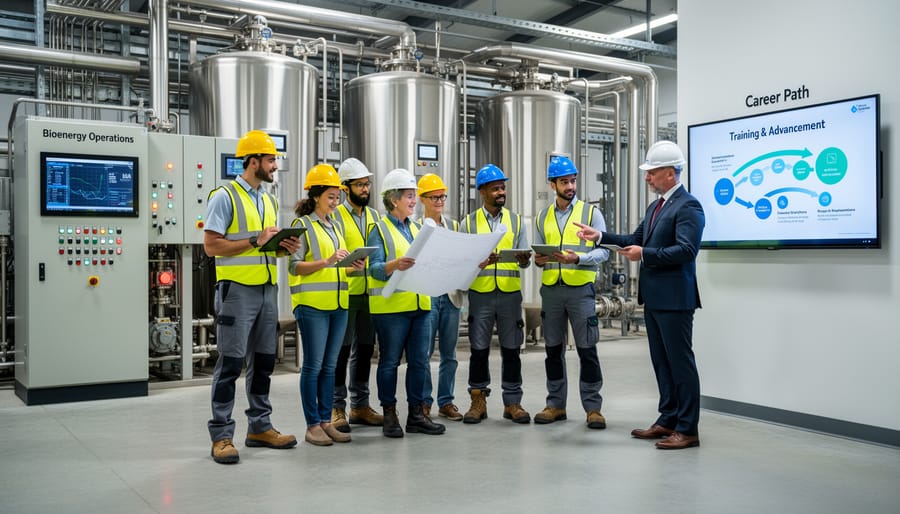
Australia’s bioenergy sector offers opportunities that stretch far beyond what many imagine, creating pathways for Australians from remarkably diverse backgrounds. Whether you’ve spent years working the land or you’re fresh out of university with an engineering degree, there’s likely a role that matches your skills and ambitions.
At the heart of the industry are agricultural workers who collect and process feedstock, turning crop residues, forestry waste, and purpose-grown energy crops into usable materials. These roles suit those comfortable with hands-on outdoor work and provide essential entry points into the sector. Meanwhile, plant operators keep bioenergy facilities running smoothly, monitoring systems and ensuring safe, efficient production of renewable energy and biofuels.
For those with technical expertise, engineering positions span mechanical, chemical, and electrical disciplines, designing and optimising everything from biogas digesters to advanced biofuel refineries. Researchers and scientists drive innovation forward, developing new conversion technologies and improving efficiency, often collaborating with universities and industry partners.
Project managers coordinate the complex dance of bringing new facilities online, while quality assurance specialists ensure products meet exacting standards. Behind the scenes, support roles in administration, finance, logistics, and community engagement keep operations humming.
What makes this sector particularly exciting is its genuine inclusivity. A farmhand with local knowledge can progress into site management, whilst a commerce graduate might find their niche in supply chain coordination. This diversity isn’t just good for workers—it strengthens the entire industry, bringing fresh perspectives to Australia’s renewable energy transformation.
What You Can Expect to Earn (And Why It’s Competitive)
Real Stories from Real Workers
Meet three Australians whose careers have flourished in the bioenergy sector, proving that sustainable energy jobs offer more than just a paycheck—they provide purpose, security, and genuine career satisfaction.
From Dairy Farm to Biogas Plant Manager
Sarah Chen never imagined her agricultural science degree would lead her to managing a cutting-edge biogas facility in regional Victoria. After five years working on a dairy farm, she made the switch to bioenergy when a local operation began converting agricultural waste into renewable energy. “I was fascinated by how we could turn what farmers considered a problem into a valuable resource,” Sarah explains. Now earning $95,000 annually as a plant manager, she’s responsible for overseeing daily operations and training new staff. The role has given her financial stability she couldn’t find in traditional farming, plus the satisfaction of knowing her work directly reduces methane emissions. “I wake up excited about what I do. Not many people can say that,” she shares.
Second Career Success in Solar Thermal
After 20 years as a diesel mechanic, James Morrison was looking for a change that aligned with his growing environmental concerns. At 48, he completed a Certificate III in Renewable Energy and landed a position maintaining equipment at a bioenergy facility in Queensland. “The skills transferred brilliantly, but now I’m part of the solution rather than the problem,” James says. His salary remained competitive at $78,000, but the real win was the shift work roster that gave him more time with his grandkids. “The company genuinely values work-life balance. That wasn’t something I experienced in my previous job.”
From Graduate to Industry Leader
Twenty-six-year-old Priya Sharma started as an engineering graduate at a biomass power station in New South Wales three years ago. She’s already progressed to senior process engineer, with her salary jumping from $68,000 to $88,000. “The growth opportunities here are incredible because the industry is expanding so rapidly,” Priya notes. Beyond the financial rewards, she values working alongside passionate people committed to Australia’s renewable energy future.
The Security Question: Building a Career That Lasts
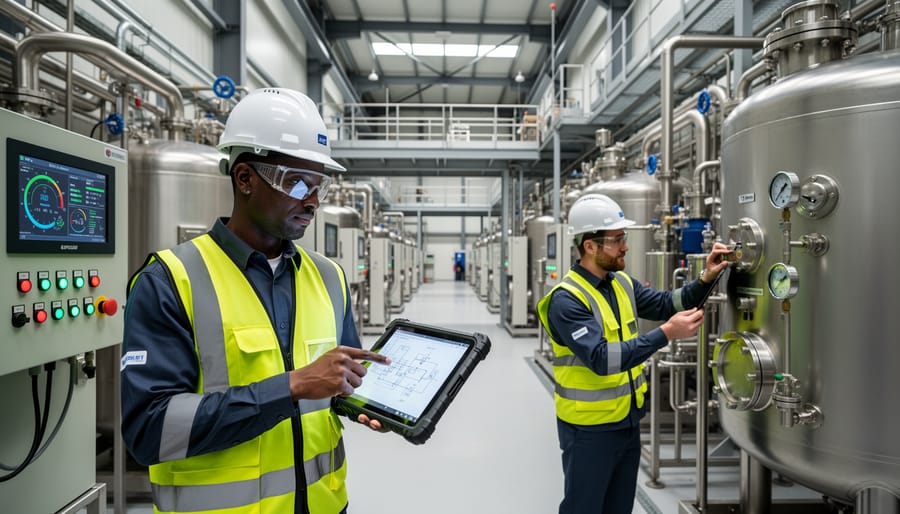
Let’s be straight up – when you’re considering a career shift, job security matters. You want to know whether bioenergy will still be around in five, ten, or twenty years, or if it’s just another flash in the pan.
Here’s the good news: Australia’s bioenergy sector sits at the intersection of two unstoppable forces – our nation’s commitment to net zero emissions by 2050 and the practical need to manage organic waste. Unlike some renewable technologies that depend solely on government incentives, bioenergy solves real problems right now, from agricultural waste management to reliable baseload power generation.
The Commonwealth’s Renewable Energy Target and state-level commitments have locked in long-term policy support. New South Wales aims for net zero by 2050, Victoria’s targeting 95 percent renewable energy by 2035, and Queensland’s investing heavily in renewable infrastructure. This isn’t wishful thinking – it’s legislated direction that creates sustained demand for skilled workers.
Investment figures tell a compelling story too. Major energy companies, agricultural processors, and waste management firms are committing hundreds of millions to bioenergy projects across the country. When you see companies like Visy and Australian Paper investing in cogeneration plants, or councils building organic waste-to-energy facilities, you’re witnessing the sector’s maturation.
That said, honest conversations about long-term career prospects require acknowledging challenges. The sector’s still building scale, some regional projects face financing hurdles, and technology continues evolving rapidly. Workers who stay adaptable, embrace continuous learning, and remain open to relocation as opportunities emerge will find the strongest career stability. The foundations are solid – but like any growing industry, success favors those who grow alongside it.
Skills That Open Doors (And Where to Get Them)
Breaking into bioenergy doesn’t require a single prescribed pathway, which makes it an accessible field for diverse backgrounds. The sector values a mix of formal qualifications and hands-on experience, creating opportunities for school leavers, career changers, and seasoned professionals alike.
For technical roles, certificates and diplomas in renewable energy, engineering, or environmental science provide solid foundations. TAFE NSW offers a Certificate III in Renewable Energy, while Adelaide’s TAFE SA runs specialised courses in sustainable technologies. Universities including the University of Queensland and Murdoch University deliver degrees in chemical engineering and bioenergy systems that prepare graduates for research and development positions. Many of these training programs include industry placements, giving students real-world exposure before graduation.
The beauty of bioenergy is how it welcomes transferable skills from traditional industries. A diesel mechanic can transition to maintaining biofuel processing equipment. Farmers with crop management experience find their knowledge invaluable in feedstock production. Chemical plant operators discover their skills translate directly to biorefinery work. This cross-pollination strengthens the sector while providing career pivots for workers from declining industries.
On-the-job training remains crucial, particularly for plant operations and maintenance roles. Emma Chen, now a senior technician at a Queensland bioethanol facility, started as a general labourer with no formal qualifications. Her employer provided equipment training and safety certifications, and she’s since completed a diploma through workplace learning schemes.
For those already employed, upskilling opportunities abound. Short courses in biomass combustion, anaerobic digestion, and sustainable supply chain management help workers advance. Industry associations like Bioenergy Australia connect members with professional development resources and mentorship programs.
The sector particularly values soft skills like problem-solving, teamwork, and adaptability. As bioenergy plants blend cutting-edge technology with agricultural traditions, employees who can communicate across disciplines and think creatively about challenges become invaluable assets. Whether you’re fresh out of school or seeking a meaningful career change, multiple doors lead into this growing industry.
Beyond the Payslip: Why Bioenergy Workers Love What They Do
For Sarah Mitchell, who manages a biomass facility in regional Victoria, the best part of her day isn’t found on her payslip. “I drive past dairy farms on my way to work, knowing we’re turning their waste into clean energy that powers the local community,” she explains. “You can’t put a dollar value on that sense of purpose.”
This sentiment echoes across Australia’s bioenergy sector, where workers consistently report high job satisfaction driven by factors that extend well beyond wages. James Chen, a renewable energy technician in Queensland, spent five years in the coal industry before making the switch. “I’m working with advanced anaerobic digestion systems and monitoring software that feels like something from the future,” he says. “Every day I’m learning, and I’m not lying awake wondering if my skills will be obsolete in ten years.”
The community connection stands out as particularly meaningful for many workers. At a biogas plant near Albury, production supervisor Tom Andrews describes how locals stop by to ask questions and express gratitude. “We’re not just another anonymous factory. People know we’re processing agricultural waste from their neighbours’ farms and reducing methane emissions. We’re genuinely making things better here.”
The outdoor element appeals to workers like Emma Rodriguez, who monitors eucalyptus plantations destined for bioenergy production in Western Australia. “I’m outside most days, working with native vegetation and understanding ecosystems,” she shares. “Compare that to staring at office walls.”
Research from industry surveys confirms these experiences aren’t isolated. Workers frequently cite the environmental impact, technological innovation, and community integration as key reasons they remain in bioenergy careers, even when comparable positions might offer slightly higher pay elsewhere. The work feels meaningful, and that matters.
The Challenges We Need to Face Head-On
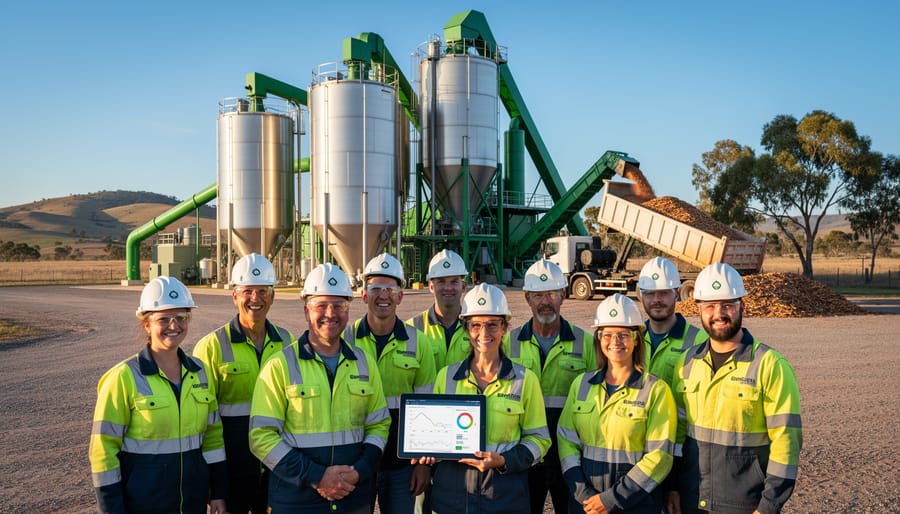
Let’s be upfront: while the bioenergy sector offers genuine opportunities, we’re still building the foundations for what could become a powerhouse industry. Right now, many of the best jobs are concentrated in regional Queensland and northern New South Wales, where sugarcane and forestry operations provide steady feedstock. If you’re based in metro Melbourne or Perth, opportunities might feel limited, though remote fly-in-fly-out positions are emerging.
The skills gap is real. We need more TAFE courses and university programs specifically tailored to bioenergy technologies. Currently, workers often piece together qualifications from agriculture, chemical engineering, and renewable energy studies. It’s a bit like learning to build a house by taking separate courses on plumbing, carpentry, and electrical work without anyone showing you how they fit together.
As the industry scales up rapidly, there’s also the challenge of maintaining quality working conditions. Some smaller operators, keen to get projects off the ground quickly, might cut corners on safety protocols or offer casual positions when permanent roles would be more appropriate.
But here’s the good news: these challenges are on everyone’s radar. Industry bodies are actively developing training frameworks, regional development initiatives are attracting investment to new areas, and forward-thinking companies are setting high standards that others will need to match. The question isn’t whether these issues will be addressed, but how quickly we can turn them into opportunities for creating an even stronger, more inclusive sector.
What Needs to Happen Next: Making Good Jobs the Standard
The path to making quality jobs the standard in Australia’s bioenergy sector requires commitment from all players involved. Industry leaders, government bodies, and workers themselves each have crucial roles to play in shaping an employment landscape that’s both sustainable and fair.
Industry associations are already taking steps forward. Several bioenergy companies have begun partnering with TAFEs and universities to create structured apprenticeship programs that combine hands-on experience with formal qualifications. These initiatives ensure workers aren’t just filling positions but building genuine careers with transferable skills. Companies that invest in their workforce early are finding it pays dividends through lower turnover rates and higher productivity.
Government support remains essential. By providing incentives for businesses that maintain minimum training standards and fair wage structures, policymakers can encourage a race to the top rather than a race to the bottom. The expansion of renewable energy training programs through existing vocational education channels makes sense for a sector that’s only going to grow.
Workers and unions also have a voice in this conversation. Establishing clear industry standards for safety, wages, and working conditions helps protect everyone while ensuring Australian bioenergy remains competitive without compromising on quality employment. When workers know their rights and feel valued, they bring better energy and innovation to their roles.
The beauty of addressing job quality now, while the sector is still developing, is that we can build good practices into the foundation rather than trying to retrofit them later. Success stories from early adopters show this approach works. Companies that prioritize their people aren’t just doing the right thing; they’re positioning themselves as employers of choice in a competitive market, attracting the skilled workers who’ll drive this industry forward.
Australia’s bioenergy sector represents more than just another career option—it’s an opportunity to be part of something genuinely transformative. As we’ve explored throughout this article, the sector offers competitive wages, meaningful work, and the chance to contribute directly to Australia’s renewable energy future. Whether you’re drawn to hands-on technical roles, research and development, or project management, bioenergy careers combine financial stability with environmental purpose.
The jobs emerging in this field aren’t simply filling positions; they’re building the foundations of a sustainable energy system that will serve generations to come. From turning agricultural waste into clean electricity to developing innovative solutions for hard-to-decarbonize industries, bioenergy professionals are solving real problems with tangible outcomes. These roles offer the satisfaction of seeing your work make a measurable difference, something increasingly rare in today’s job market.
For those considering a career shift or students mapping out their futures, the bioenergy sector welcomes diverse backgrounds and skill sets. The industry values adaptability, problem-solving abilities, and a commitment to sustainability as much as formal qualifications. Many successful professionals have transitioned from agriculture, traditional energy, engineering, or environmental science, bringing fresh perspectives that strengthen the sector.
Ready to explore your potential in bioenergy? Start by connecting with industry networks, attending renewable energy forums, or reaching out to bioenergy companies operating in regional Australia. Your next career move could be the one that transforms both your professional life and our energy future.