
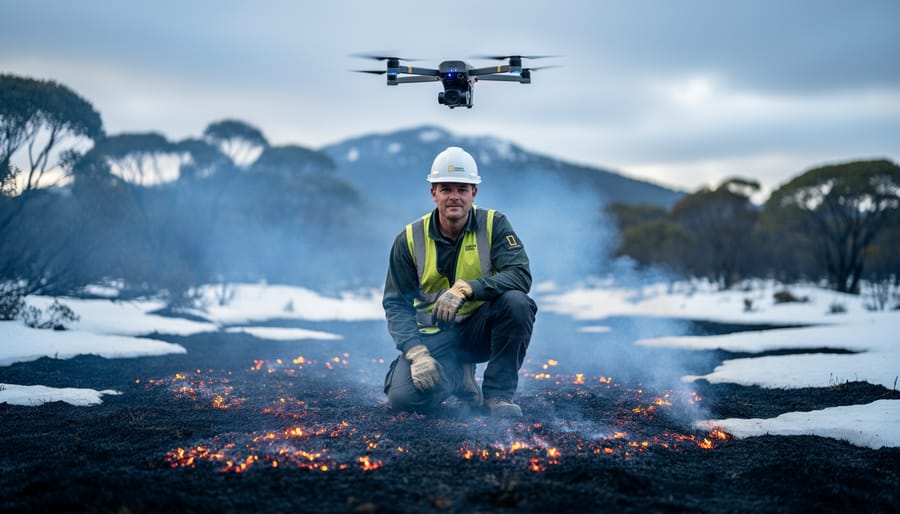
Beneath the snow and soil of Australia’s alpine regions and peatlands, an invisible threat smoulders. Zombie fires—fires that survive underground through winter, feeding on carbon-rich organic matter before re-emerging months later—pose a growing challenge to land managers as our climate shifts. These persistent blazes can travel underground for kilometres, evading conventional detection and erupting unexpectedly to threaten ecosystems, infrastructure, and the very biomass resources central to Australia’s renewable energy transition.
Unlike traditional bushfires that announce themselves with flames and smoke, zombie fires operate in stealth mode, consuming peat, tree roots, and accumulated organic debris beneath the surface. They’ve been documented in Tasmania’s highland peatlands and Victoria’s alpine regions, with warming winters creating conditions previously unseen across the continent. For bioenergy producers managing forestry residues and agricultural waste, understanding these underground fires isn’t just about fire prevention—it’s about protecting valuable biomass feedstocks and ensuring operational safety.
The good news? Emerging detection technologies combined with strategic land management practices are proving remarkably effective at identifying and controlling these hidden blazes before they cause significant damage. Australian innovators are already pioneering solutions that blend thermal imaging, soil moisture monitoring, and Indigenous fire knowledge to create comprehensive zombie fire management systems that work with our unique landscape rather than against it.
What Exactly Are Zombie Fires?
Imagine a fire that refuses to die. That’s essentially what a zombie fire is—a fire that appears extinguished on the surface but continues smoldering underground, lying dormant through winter only to spring back to life when temperatures rise. The name might sound like something from a horror film, but for land managers and communities across Australia, these persistent blazers are very real and increasingly concerning.
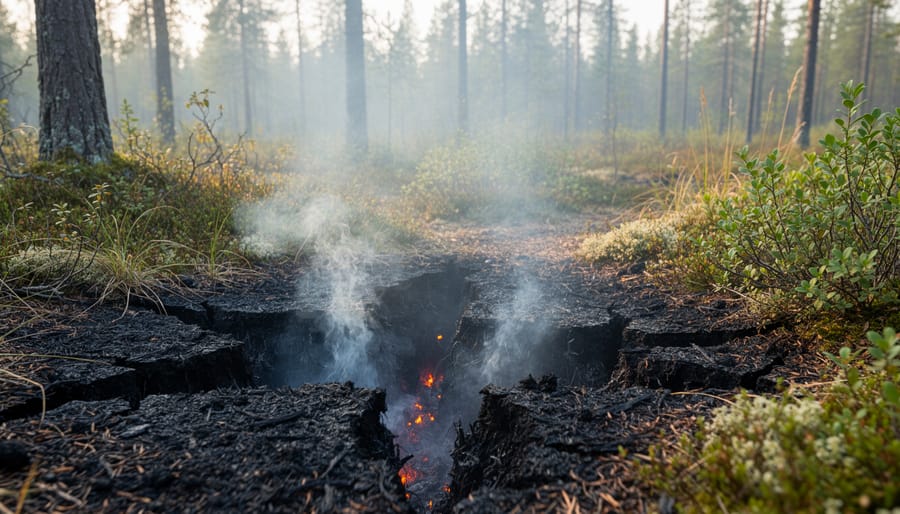
Unlike traditional bushfires that burn visibly above ground and eventually extinguish, zombie fires behave quite differently. They burrow into organic-rich soils, peat layers, and dense biomass, where they smolder slowly with minimal oxygen. This underground burning can persist for months, sometimes even surviving heavy rainfall that would typically douse surface fires. When spring arrives and conditions warm up, these hidden embers find their way back to the surface, reigniting vegetation without warning.
The science behind their survival is fascinating yet troubling. Organic soils, particularly those rich in decomposed plant matter, act like fuel stores that burn incredibly slowly. A zombie fire might creep along at just a few centimeters per day underground, making them nearly impossible to detect without specialized equipment. They produce little smoke and no visible flames while dormant, earning their ghostly reputation.
For Australia’s bioenergy sector, understanding zombie fires has become crucial. Biomass stockpiles, forestry residues, and areas with high organic content are particularly vulnerable. These fires don’t just pose safety risks—they release stored carbon back into the atmosphere and can devastate carefully managed bioenergy operations. The good news? With proper monitoring systems and management strategies, we can detect and control these underground threats before they emerge, protecting both our communities and our sustainable energy future.
Why Bioenergy Landscapes Are Particularly Vulnerable
The Perfect Storm: Biomass, Climate, and Fire Risk
Australia’s unique climate presents a fascinating challenge for bioenergy operations. Our sunburnt country experiences extended dry periods, soaring temperatures, and unpredictable weather patterns that can transform ordinary biomass storage into potential fire hazards. When you combine these conditions with the concentrated organic material at bioenergy facilities, you’ve got what fire safety experts call a perfect storm for smoldering combustion.
Think of stored biomass like a giant, tightly packed haystack. Wood chips, agricultural residues, and other organic materials naturally generate heat as they break down through microbial activity. In Australia’s warmer regions, particularly in high fire risk areas, this heat can build up faster than it dissipates. Add low humidity and poor air circulation within densely packed piles, and you’ve created ideal conditions for fires to smolder undetected beneath the surface.
The real worry isn’t always the dramatic blaze you can see. Zombie fires lurk hidden within biomass stockpiles, consuming material at temperatures between 300 and 600 degrees Celsius without visible flames. These underground fires can persist for weeks or months, waiting for the right conditions to emerge. A sudden wind change, pile disturbance during handling, or equipment operation can expose these hidden embers to oxygen, transforming a manageable situation into a full-blown emergency that threatens operations, neighboring properties, and precious lives.
The Real Cost of Ignoring Zombie Fires
When zombie fires smoulder undetected beneath bioenergy operations, the consequences ripple far beyond a single facility. The economic toll alone can be staggering—a single uncontrolled underground fire can destroy millions of dollars worth of biomass stockpiles, damage processing equipment, and halt operations for weeks or even months. For Australian bioenergy producers operating on tight margins, this isn’t just an inconvenience; it’s potentially catastrophic.
The environmental impact cuts even deeper. These persistent underground fires directly undermine the very purpose of bioenergy by releasing stored carbon back into the atmosphere. What should be a renewable energy success story becomes a source of carbon emission reversals, sabotaging hard-won progress toward climate goals. A single zombie fire burning through months of accumulated biomass can negate the carbon benefits that took years to achieve.
Safety concerns present another serious dimension. Underground fires create unpredictable hazards for workers, from sudden surface collapses to toxic smoke exposure. Communities neighbouring bioenergy facilities face air quality threats when zombie fires produce prolonged, low-level emissions that traditional monitoring systems might miss.
Perhaps most damaging is the threat to Australia’s reputation as a renewable energy leader. As the nation works to establish itself at the forefront of sustainable energy innovation, unmanaged zombie fires risk undermining public confidence in bioenergy as a reliable, clean alternative to fossil fuels.
The good news? These risks are entirely preventable. Australian facilities implementing comprehensive zombie fire detection systems demonstrate that proactive management protects investments, preserves environmental benefits, ensures worker safety, and strengthens the credibility of our renewable energy sector. The real cost isn’t in prevention—it’s in ignoring the problem.
How the Zombie Fire Detection System Actually Works
Technology That Sees Beneath the Surface
Fighting fires you can’t see requires technology that can peer beneath the forest floor. Fortunately, Australian fire managers now have access to an impressive toolkit of detection systems that make the invisible visible.
Thermal imaging cameras lead the charge in zombie fire detection. These devices work by detecting infrared radiation – essentially the heat signature that smouldering peat emits even when there’s no visible flame. When mounted on vehicles or handheld by ground crews, thermal cameras can spot temperature anomalies several degrees warmer than surrounding soil, revealing hidden fire activity up to half a metre underground. Fire services across Victoria have successfully used thermal imaging to map the extent of underground burns that would otherwise go undetected.
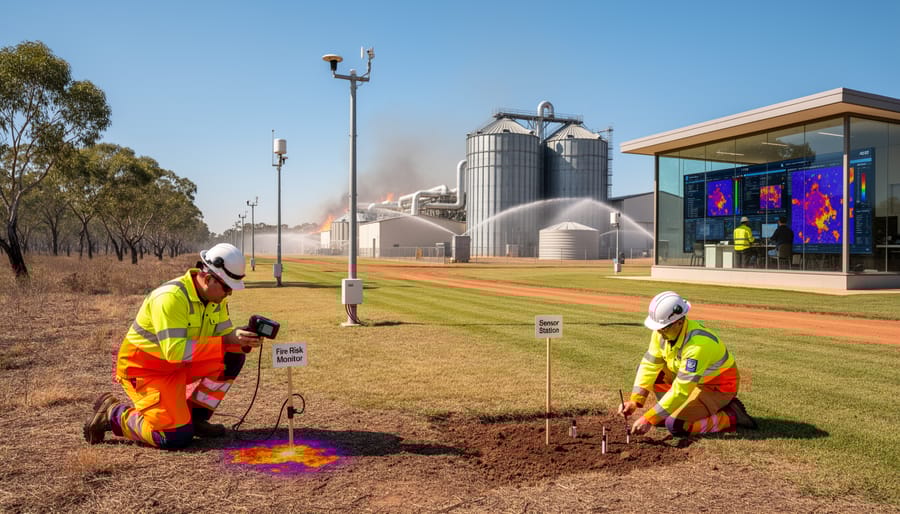
Soil temperature sensors provide continuous monitoring by measuring heat at various depths. These simple probes, inserted into vulnerable areas, send real-time data to monitoring stations. When temperatures spike above normal ranges, alerts trigger immediate investigation. Several Australian biomass facilities have installed sensor networks around their fuel storage areas as an early warning system.
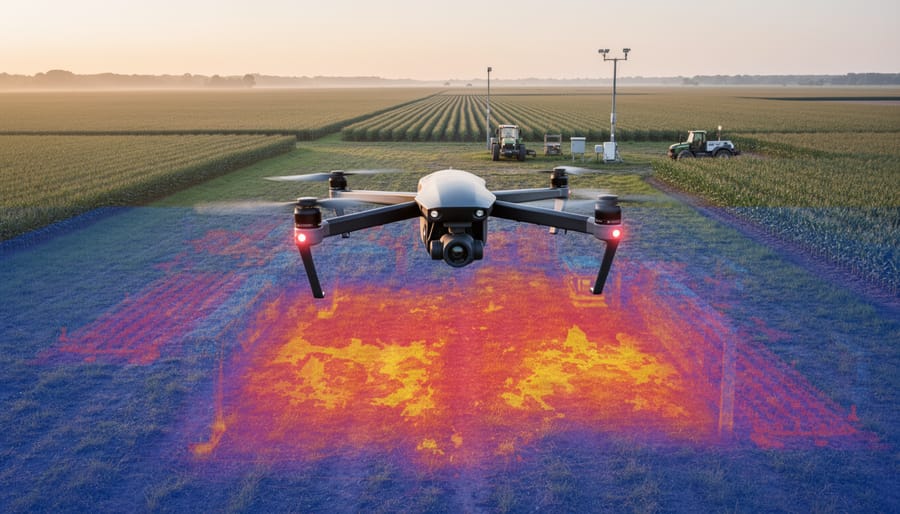
Drone surveillance has revolutionised coverage across vast landscapes. Equipped with thermal sensors, drones can survey hundreds of hectares in hours, creating detailed heat maps that pinpoint trouble spots. The New South Wales Rural Fire Service deployed drones during the 2019-20 bushfire season to detect residual heat in burned landscapes, preventing numerous zombie fire outbreaks.
Satellite monitoring adds another layer through NASA’s MODIS system and the European Space Agency’s Sentinel satellites, which detect thermal anomalies from space. While less precise than ground-based methods, satellites provide invaluable broad-scale surveillance across remote regions where regular patrols aren’t feasible.
Together, these technologies create a comprehensive detection network that keeps Australia’s bioenergy operations safer and more sustainable.
Early Warning Signs You Can Spot Yourself
You don’t need sophisticated equipment to spot potential zombie fires on your property. Start by looking for telltale smoke wisps rising from the ground, particularly during cool mornings when they’re most visible against the landscape. These thin plumes often appear in areas where fires occurred months earlier, signaling underground combustion that’s been quietly smouldering beneath the surface.
Walk your land and feel for warm patches in the soil, especially after rain when surrounding areas have cooled. Dead vegetation sitting atop noticeably warmer ground is a red flag worth investigating. Pay attention to unusual vegetation patterns too—patches where plants yellow prematurely or fail to regenerate after fire, even when neighboring areas flourish. This often indicates ongoing heat stress from below.
Check soil characteristics around previous burn sites. Crumbly, ash-like soil that’s warm to touch, or areas emitting a distinctive smoky smell weeks after a fire, warrant closer inspection. For land managers working with organic-rich soils or peat deposits, these observations become even more critical. By recognizing these early warning signs, you’re taking the first practical step toward protecting your land and contributing to safer bioenergy landscapes across Australia.
Success Stories: Australian Bioenergy Sites Getting It Right
Across Australia, forward-thinking bioenergy operations are proving that zombie fire risks can be managed effectively with the right systems in place. These success stories demonstrate that proactive monitoring isn’t just possible—it’s paying dividends in safety, efficiency, and peace of mind.
At a large-scale bioenergy facility in regional Victoria, managers implemented a comprehensive zombie fire detection system combining thermal imaging cameras with AI-powered monitoring software. Within the first six months, the system identified three separate smouldering events in their biomass stockpiles that would have otherwise gone undetected until they escalated. Site manager Rachel Thompson notes, “We’ve gone from reactive firefighting to genuine prevention. The early warnings have saved us countless hours of disruption and significantly reduced our insurance premiums.” The facility now operates 24/7 monitoring with automated alerts sent directly to mobile devices, allowing rapid response even during off-hours.
In Queensland’s sugar cane country, a cooperative of bagasse storage operators adopted a simpler but equally effective approach. After experiencing two costly zombie fire incidents in 2021, they installed strategically placed temperature sensors throughout their storage areas and developed strict moisture monitoring protocols. The investment of roughly $45,000 across three sites has already prevented four potential fire events. Cooperative spokesperson James Chen explains, “We learned that you don’t need the fanciest technology to make a real difference. Understanding your fuel characteristics and monitoring the basics consistently—temperature, moisture content, pile size—that’s what matters.” They’ve now created a regional sharing network where member sites exchange data and best practices.
A biomass processing facility in South Australia took prevention a step further by redesigning their entire stockpile management system. They reduced pile heights, improved aeration, and implemented regular turning schedules based on real-time monitoring data. Combined with thermal imaging drones conducting weekly surveys, they’ve achieved zero zombie fire incidents over three years.
These operations share a common thread: they treated zombie fire prevention as an investment rather than an expense, and the returns have been substantial in both safety outcomes and operational efficiency.
Building Your Own Zombie Fire Management Strategy
Prevention First: Reducing Your Risk Profile
The good news? Most zombie fire risks can be dramatically reduced through smart planning and everyday operational practices. Think of it as building resilience into your bioenergy operation from the ground up.
Start with moisture management—your first line of defence. Maintaining biomass feedstock at appropriate moisture levels not only improves energy efficiency but significantly reduces smouldering potential. Australian operators at Gippsland’s bioenergy facilities have demonstrated that keeping wood chip stockpiles between 25-35% moisture content creates an inhospitable environment for underground ignition while preserving material quality.
Storage practices matter enormously. Rotate biomass stockpiles regularly, ideally every 8-12 weeks, to prevent heat accumulation in the pile’s core. Position storage areas on well-drained sites away from slopes where fire could travel underground. Creating physical barriers between stockpiles—simple gravel strips work brilliantly—limits potential fire spread.
Fuel load reduction around your operation extends this protective bubble. Establish clear zones around processing facilities and storage areas, removing fine fuels and maintaining low-growing vegetation. These fire-smart bioenergy landscapes have proven remarkably effective across regional Australia.
Site selection deserves careful consideration from day one. Choose locations with minimal peat or organic soil layers where fires can smoulder undetected. Assess groundwater levels, slope angles, and prevailing wind patterns. Western Australian operations have successfully implemented these principles, demonstrating that prevention-focused design costs substantially less than retrofitting emergency responses. Prevention isn’t just smart—it’s sustainable business practice.
Response Protocols When Detection Systems Alert
When your detection system sounds the alarm for a potential zombie fire, swift and coordinated action makes all the difference. Here’s your practical response protocol to tackle these underground threats effectively.
First, verify the alert immediately. Check thermal imaging data and smoke indicators to confirm underground fire activity. Once confirmed, notify your local fire and emergency services straightaway—they’re your essential partners in managing these tricky blazes. In regional areas, Rural Fire Service brigades have increasingly specialized knowledge in handling smouldering peat and organic soil fires.
Document the detection location using GPS coordinates and photograph visible surface indicators like steam vents, dead vegetation patches, or surface cracks. This information proves invaluable for responders and helps track fire progression.
For immediate containment, establish a safety perimeter around the affected area. Unlike surface fires, zombie fires require specialized suppression techniques. Water alone won’t cut it—you’ll need sustained saturation of the underground fuel source. Fire services often employ water injection techniques, drilling small holes to reach smouldering layers beneath the surface.
Consider deploying foam suppressants that penetrate soil more effectively than water. Some Australian land managers have found success using combination approaches: initial water saturation followed by covering exposed areas with mineral soil to starve the fire of oxygen.
Coordinate closely with fire services throughout the suppression effort. They’ll assess whether excavation is necessary to expose and extinguish deep-seated combustion. Remember, these fires can smoulder for weeks, so establish a monitoring schedule with regular thermal checks even after visible signs disappear. Your vigilance today prevents tomorrow’s flare-ups.
The Future of Fire-Smart Bioenergy in Australia
Australia stands at the threshold of a remarkable opportunity to lead the world in fire-smart bioenergy innovation. As our understanding of zombie fires deepens, so too does our capacity to turn challenge into competitive advantage.
Emerging technologies are revolutionising how we approach bioenergy fire safety. Artificial intelligence systems can now predict smouldering risks with unprecedented accuracy, while satellite networks provide real-time monitoring across vast Australian landscapes. Researchers at universities and CSIRO are developing smart sensors that cost a fraction of previous models, making comprehensive monitoring accessible even for smaller operations. These innovations aren’t just preventing fires—they’re building confidence in bioenergy as a genuinely safe, scalable solution.
Policy developments are creating fertile ground for growth. State and federal governments are recognising that fire-smart bioenergy infrastructure deserves support alongside solar and wind investments. New guidelines are streamlining approval processes for operators who demonstrate robust zombie fire management systems, whilst funding programs are helping agricultural communities establish monitoring networks that benefit entire regions.
The real excitement lies in collaboration. Industry bodies, research institutions, fire services, and Indigenous land management groups are sharing knowledge like never before. Successful pilot programs in Queensland and Victoria are becoming templates for national rollout, proving that well-managed bioenergy facilities can operate safely even in high-risk fire zones.
This convergence of technology, policy, and partnership positions Australia to achieve its renewable energy targets whilst creating regional employment and reducing waste. Zombie fire management isn’t holding bioenergy back—it’s refining the industry, ensuring every facility operates to world-leading standards. For forward-thinking businesses and communities, the message is clear: the future of fire-smart bioenergy isn’t just bright, it’s already igniting.
The challenge of zombie fires in Australia’s bioenergy sector is real, but it’s far from insurmountable. As we’ve explored, these hidden threats can smolder undetected for weeks or even months, but with the right detection systems and management strategies in place, they become entirely manageable risks rather than deal-breakers for sustainable energy development.
The success stories we’ve seen across Queensland, New South Wales, and Victoria prove that Australian innovation is already leading the way. From thermal imaging drones mapping biomass stockpiles to moisture monitoring systems preventing ignition before it starts, the technology exists today to protect both our environment and our energy future. These aren’t theoretical solutions waiting in some distant tomorrow—they’re working right now, keeping facilities safe and communities protected.
The bioenergy sector represents one of our most promising pathways to a cleaner, more sustainable Australia. We can’t let the fear of zombie fires hold us back from this transition, but we also can’t be complacent. Whether you’re a facility manager who needs to implement detection systems, a policymaker who can support better regulation and funding, or simply someone passionate about Australia’s energy future, you have a role to play.
Take the next step today. Assess your current fire management protocols, reach out to technology providers, or advocate for stronger standards in your community. With vigilance, innovation, and commitment to best practices, Australia’s bioenergy sector will continue growing safely—turning organic waste into clean energy while keeping our people and landscapes protected.