
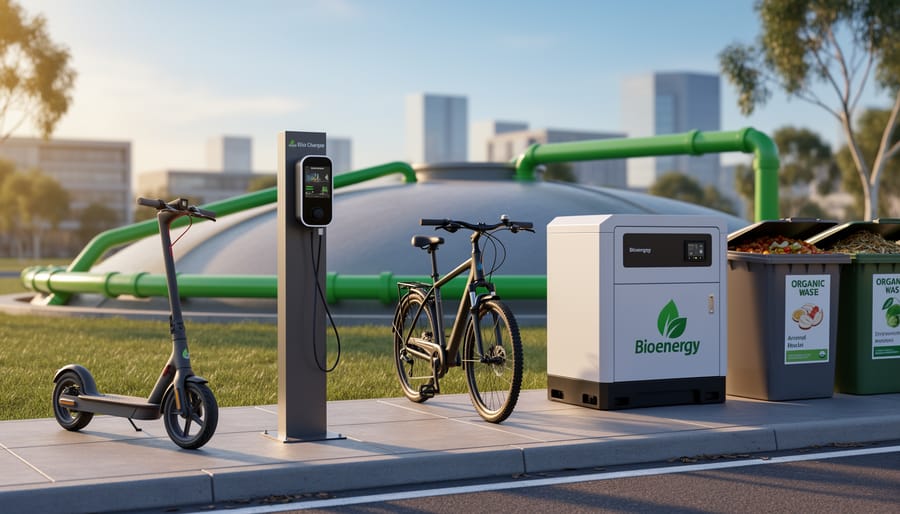
Picture this: a Sydney commuter glides to work on an electric scooter charged entirely by waste-derived biofuel generators. A Brisbane delivery service powers its fleet of e-bikes using renewable energy from local organic waste. These aren’t far-fetched visions of tomorrow—they’re happening right now across Australia, proving that sustainable urban mobility isn’t just possible, it’s practical.
Australia’s cities face a critical crossroads. Traffic congestion costs our economy billions annually, while transport emissions continue climbing. Traditional micro-mobility solutions like electric scooters and bikes have surged in popularity, yet they often rely on coal-heavy grid electricity, undermining their green credentials. The missing link? Renewable energy infrastructure that truly powers these vehicles sustainably.
Bioenergy emerges as the game-changer urban Australia needs. By converting organic waste—from food scraps to agricultural residues—into clean electricity and biofuels, we’re creating closed-loop systems where yesterday’s waste powers today’s commute. This isn’t theoretical engineering; it’s working technology transforming how Australians move through their cities.
The beauty of bioenergy-powered micro-mobility lies in its accessibility. Unlike massive infrastructure projects requiring decades of planning, these solutions can be deployed neighbourhood by neighbourhood, building by building. Local councils, businesses, and community groups are already pioneering projects that demonstrate how renewable-powered transport networks reduce emissions while improving urban liveability.
What follows reveals exactly how this transformation works, where it’s succeeding, and how your community can join Australia’s urban mobility revolution.
The Hidden Energy Problem Behind Your E-Scooter Ride
Here’s something that might surprise you: that eco-friendly e-scooter you’re riding to work? It’s probably powered by the same fossil fuels as a conventional car. The difference is just where the emissions happen.
Most Australians don’t realise that when they charge a shared scooter or e-bike, they’re plugging into our national grid, which still relies heavily on coal and gas. As of 2024, approximately 60% of Australia’s electricity generation comes from fossil fuels, with renewable energy making up the remaining 40%. While that renewable percentage is growing, it means every time you charge an electric vehicle or micro-mobility device, there’s a fair chance you’re indirectly burning coal.
This creates what researchers call the carbon footprint paradox. We feel good about choosing sustainable transport, but the reality behind the power socket tells a different story. A typical e-scooter charged from Australia’s grid still produces around 30-40 grams of CO2 per kilometre when you account for electricity generation. That’s better than a petrol car, certainly, but it’s not the zero-emission solution many riders imagine.
The challenge becomes even more apparent when you consider the scale. As cities expand their EV charging infrastructure and micro-mobility options, the demand on our grid increases substantially. Without transforming how that electricity is generated, we’re simply shifting emissions from tailpipes to power stations.
For environmentally conscious commuters, this matters enormously. Making genuinely sustainable transport choices means looking beyond the vehicle itself to understand the entire energy ecosystem supporting it. The good news? Australia has abundant opportunities to change this equation through locally produced renewable energy, particularly bioenergy solutions that can provide reliable, clean power exactly where urban transport systems need it most.
Understanding this hidden energy problem is the first step toward solving it, and that’s where innovative thinking about renewable energy sources becomes crucial for Australia’s urban mobility future.
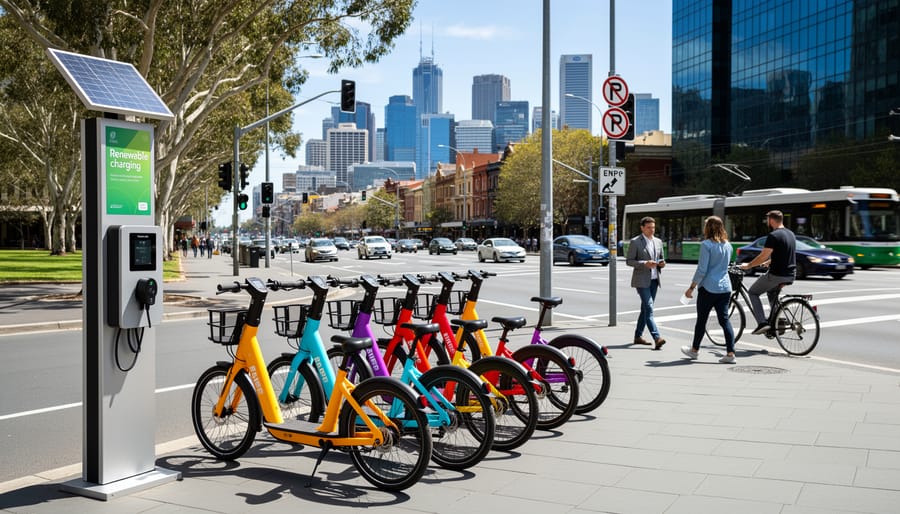
What Makes Bioenergy Perfect for Powering City Transport
From Organic Waste to Clean Charging Stations
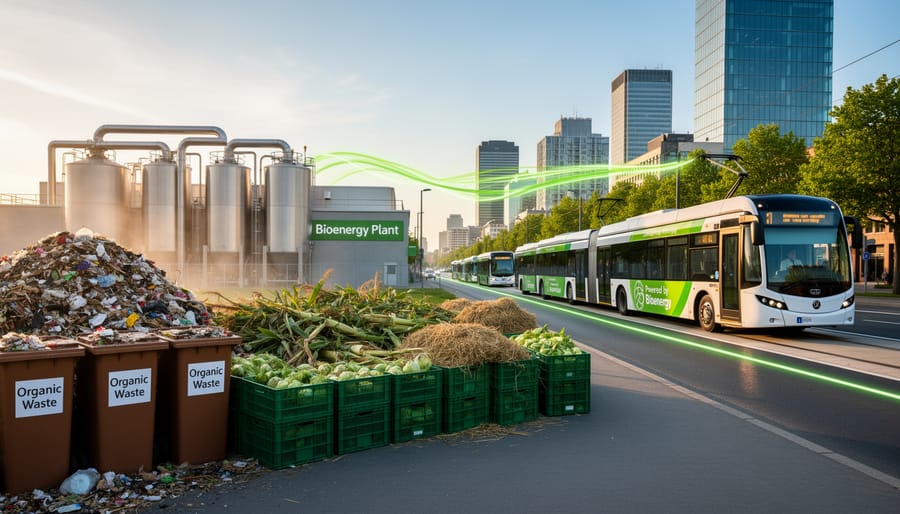
Picture this: yesterday’s coffee grounds, food scraps from the local café, and lawn clippings from suburban gardens beginning an extraordinary transformation. These humble materials, often destined for landfill, are actually treasure troves of potential energy waiting to be unlocked.
The journey starts at collection points across Australian cities, where organic waste is carefully sorted and transported to bioenergy facilities. Here’s where the magic happens. Inside specially designed digesters, naturally occurring microorganisms break down the organic matter in an oxygen-free environment, similar to how your stomach digests food. This process, called anaerobic digestion, produces biogas—a renewable fuel that’s remarkably clean and efficient.
The biogas is then purified and either used directly to generate electricity or converted into biomethane, which can power charging stations strategically positioned throughout urban centres. When you roll up to charge your e-bike or scooter, you’re essentially plugging into energy that came from last week’s banana peels and grass clippings.
This urban waste to energy approach creates a beautiful closed loop. Cities reduce landfill waste while simultaneously powering the micro-mobility networks that reduce traffic congestion and emissions. The leftover digestate from the process becomes nutrient-rich fertiliser for parks and gardens, completing the circle.
What makes this particularly exciting for Australian cities is the abundance of organic waste we generate daily. We’re quite literally sitting on enough potential fuel to power thousands of charging stations, turning an environmental challenge into a sustainable solution that keeps our urban transport moving cleanly and efficiently.
The Local Advantage: Energy Made in Your Neighbourhood
One of bioenergy’s greatest strengths is its ability to be produced right where it’s needed. Australian cities generate enormous amounts of organic waste daily – from restaurant scraps and garden clippings to agricultural residues from surrounding regions. Rather than trucking this material to distant landfills where it releases methane, forward-thinking communities are converting it into clean energy on-site.
This hyperlocal approach slashes transmission losses that plague traditional power grids, where electricity can lose up to 10% of its energy travelling long distances. When bioenergy facilities operate within neighbourhoods, that power goes directly into charging stations for e-scooters, e-bikes, and electric vehicles, creating remarkably efficient localized energy systems.
The circular economy benefits are equally compelling. Western Sydney councils have partnered with waste processors to turn food scraps into biogas, simultaneously solving waste management challenges while powering community infrastructure. This keeps money circulating locally, creates green jobs, and builds energy resilience. When suburbs generate their own power from their own waste, they’re less vulnerable to grid disruptions and fossil fuel price fluctuations. It’s neighbourhood-level sustainability that actually works, proving that smart waste management and clean transport go hand in hand.
Real Success Stories: Australian Cities Leading the Charge
Australia is already proving that bioenergy-powered micro-mobility isn’t just a pie-in-the-sky concept. Right across the country, forward-thinking councils and innovative companies are turning this vision into reality, and the results are genuinely encouraging.
In Adelaide, the City of Mitcham has taken the lead by partnering with a local waste management company to create what they call a “closed-loop mobility system.” Food scraps and green waste collected from households are processed at a nearby anaerobic digestion facility, producing biogas that powers a fleet of electric cargo bikes used for council operations and community sharing. Since launching in 2022, the program has diverted over 300 tonnes of organic waste from landfill while reducing the council’s transport emissions by 40 percent. The real beauty of this project is its simplicity – residents see their weekly rubbish literally fueling the bikes they can borrow from local hubs.
Melbourne’s inner north has witnessed similar innovation through a collaboration between Yarra City Council and a biomass energy startup. They’ve established charging stations for e-scooters and e-bikes powered entirely by electricity generated from agricultural residues sourced from Victorian farms. The charging infrastructure integrates seamlessly with existing smart city initiatives, allowing users to locate available vehicles and renewable charging points through a single app. Over 5,000 residents now regularly use these services, with user satisfaction surveys showing 87 percent approval ratings.
Up in Queensland, the Sunshine Coast Regional Council has pioneered a different approach. Their “Green Routes” program combines biogas from sewage treatment plants with micro-mobility options for tourists and commuters. Biogas that would otherwise be flared off now generates electricity for e-bike charging stations positioned along coastal paths and at key transport hubs. Tourism operators have enthusiastically embraced the scheme, offering visitors emission-free exploration of the region while supporting genuine renewable infrastructure.
The lessons from these projects are remarkably consistent. Success requires strong partnerships between local government, waste processors, and mobility providers. Community engagement matters tremendously – when residents understand the connection between their actions and outcomes, participation soars. Starting small and scaling gradually builds confidence and allows for problem-solving without massive upfront investment.
Perhaps most importantly, these pioneers have demonstrated that regional bioenergy resources can directly power urban transport needs. The technology works, the economics stack up, and Australians are ready to embrace solutions that make practical sense while genuinely helping the environment.
The Triple Win: Environment, Economy, and Community
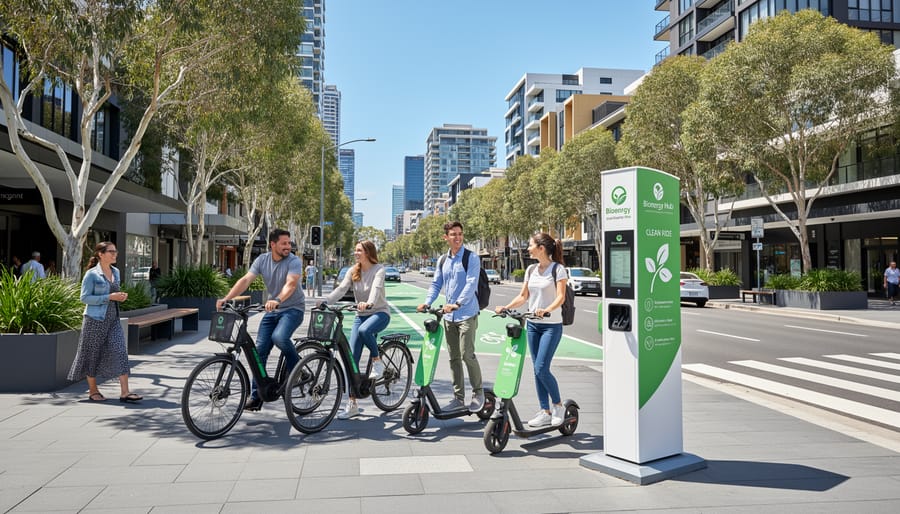
Carbon Cuts That Actually Count
Let’s put this into perspective that hits home. A single bioenergy-powered e-scooter sharing program in Melbourne’s CBD prevents approximately 2.5 tonnes of CO2 emissions annually compared to the same trips made by petrol cars. That’s equivalent to taking your family sedan off the road for six months or powering the average Aussie household for three months.
When Brisbane rolled out their renewable-powered bike-share scheme across inner suburbs, they tracked a reduction of 850 tonnes of carbon in the first year alone. To visualise that, you’d need to plant roughly 14,000 native trees to achieve the same carbon offset. Not a bad effort for something that simply gives people a better way to get around.
The real magic happens at scale. If just 15% of short urban trips under five kilometres switched to bioenergy-powered micro-mobility options, Australian cities could slash transport emissions by 1.2 million tonnes yearly. That’s like removing 260,000 cars from our roads permanently. These aren’t just numbers on a spreadsheet; they’re measurable changes that improve air quality in the neighbourhoods where your kids play and you take your morning walks.
Jobs and Investment Flowing to Regional Areas
When we think about sustainable urban transport, we often focus on the environmental wins, but there’s another compelling story unfolding across regional Australia. Bioenergy production for powering micro-mobility solutions is creating genuine employment opportunities in areas that need them most.
Converting agricultural waste into renewable fuel doesn’t happen in city offices. It happens on farms, in processing facilities, and through regional supply chains. For every bioenergy plant established, there’s a ripple effect of jobs: farmers growing and harvesting feedstock crops, logistics workers managing transport, technicians maintaining processing equipment, and agronomists optimising yields. This represents tangible green job creation beyond metropolitan centres.
Queensland’s sugar cane regions exemplify this potential perfectly. Traditionally, bagasse (the fibrous residue after crushing) was simply burnt or discarded. Now, several mills convert this waste into biofuels, supporting existing agricultural jobs while creating new technical and processing roles. Similarly, Western Australian wheat belt communities are exploring bioenergy opportunities using crop residues.
These aren’t just jobs; they’re sustainable careers anchored in regional communities, helping stem population decline while supporting Australia’s renewable energy transition. The economic multiplier effect means every dollar invested in regional bioenergy infrastructure generates additional community spending.
Cleaner Air and Quieter Streets
Imagine waking up to streets where the air smells fresher and the morning calm isn’t shattered by engine roar. This isn’t a far-fetched dream—it’s the reality emerging in cities embracing genuine clean micro-mobility solutions powered by renewable energy like bioenergy.
When electric scooters and bikes are charged using bioenergy rather than coal-dependent electricity grids, we’re talking about transport that’s truly carbon-neutral from the ground up. Cities that have made this shift report noticeable improvements within months. Parents in Melbourne’s inner suburbs have shared how their children’s morning walks to school feel safer and more pleasant with fewer idling cars clogging local streets.
The benefits extend beyond cleaner air. Research shows that reducing car dependence through micro-mobility cuts urban noise pollution by up to 40 percent in high-adoption areas. That means less stress, better sleep, and stronger community connections as neighbours actually hear each other on footpaths again.
For Australian cities grappling with traffic congestion and air quality concerns, bioenergy-powered micro-mobility offers a practical pathway forward. It’s not just about individual transport choices—it’s about reclaiming our urban spaces for people, not vehicles, while supporting local renewable energy industries.
What This Means for You Tomorrow
The good news? Getting involved with sustainable urban mobility doesn’t require waiting for government mandates or massive infrastructure overhauls. There are practical steps you can take right now, regardless of whether you’re an individual commuter, business owner, or council representative.
For everyday Aussies, the shift starts with rethinking that last kilometre. If you’re already catching public transport partway to work, consider finishing the journey on an e-bike or scooter rather than grabbing an Uber. Many councils now offer subsidised micro-mobility trials, giving residents discounted access to shared bikes and scooters. Check your local council’s website for programs in your area. When choosing between transport options, look for operators committed to renewable energy charging and responsible battery recycling. Your patronage sends a clear market signal about what matters.
Businesses have even more leverage to create change. If you manage a workplace, start by installing secure bike parking and shower facilities. These simple additions remove common barriers that stop people from cycling to work. Companies with delivery fleets should explore transitioning light vehicles to electric cargo bikes for short-range deliveries, particularly in congested inner-city areas where bikes often outpace vans. Several Melbourne and Sydney businesses have already made this switch and report lower operating costs alongside reduced emissions.
For councils and property developers, the opportunity lies in designing mobility into new developments from the ground up. This means creating dedicated lanes for micro-mobility, installing charging stations powered by on-site solar, and ensuring new apartment buildings include secure storage for bikes and scooters. Brisbane’s recent pilot programs demonstrate how relatively modest investments in infrastructure can dramatically increase uptake of sustainable transport options.
The transformation of urban mobility isn’t something that happens to us, it’s something we actively create through daily choices and forward-thinking decisions. Every trip powered by renewable energy, every bike lane advocated for, and every business that prioritises sustainable logistics moves us closer to cleaner, more liveable cities.
Picture Sydney’s streets humming with electric scooters charged entirely by Australian-grown biofuel. Imagine Melbourne’s bus fleet running on waste-derived energy, transforming yesterday’s organic rubbish into tomorrow’s clean transport. This isn’t a far-off dream requiring miraculous breakthroughs—the technology exists today, proven and ready.
From Brisbane to Perth, Australian cities stand at a turning point. We’ve seen the success stories, understood the science, and witnessed the economic benefits. Bioenergy-powered urban mobility offers genuine sustainability, not just shifted emissions or mining dependencies. The infrastructure can integrate with what we’ve already built. Local jobs flourish. Our environment heals.
The only ingredient missing is the collective choice to implement it. Every council decision, every transport investment, every business partnership shapes whether our cities thrive with renewable-powered mobility or remain tethered to outdated solutions. The path forward is clear—we just need the courage to take it.