
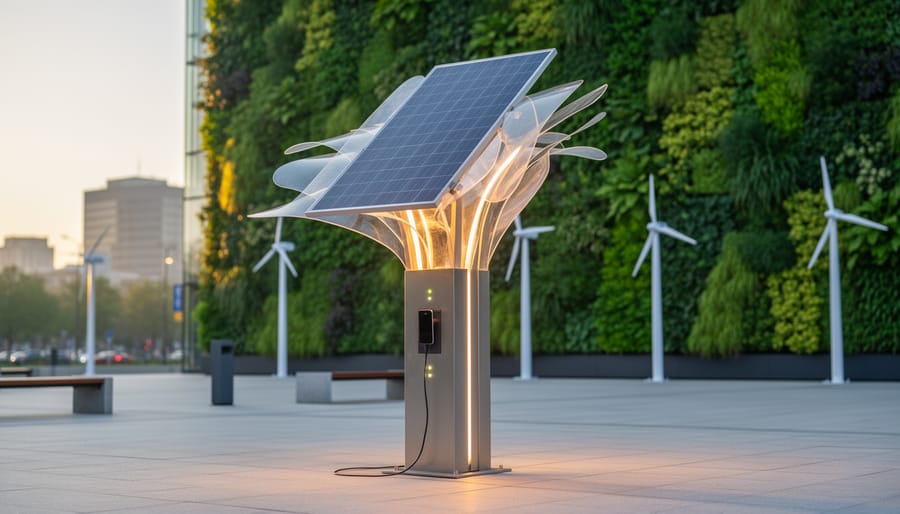
Imagine walking through your city centre and encountering a luminous sculpture that powers itself from the sun while charging your mobile phone, or a vertical garden wall that purifies air whilst generating electricity from organic waste. This is the new frontier of urban art—installations that don’t just beautify our streets but actively contribute to renewable energy generation and environmental restoration.
Urban renewable energy-optimised public art installations represent a transformative approach to city design, merging aesthetic expression with practical sustainability solutions. These innovative structures harness solar, wind, kinetic, and bioenergy technologies to generate clean power whilst serving as focal points for community engagement and environmental education. From solar-powered interactive light displays in Melbourne’s laneways to biogas-generating sculptural planters in Sydney’s public squares, Australian cities are embracing this movement as both an artistic statement and a climate action strategy.
The timing couldn’t be more critical. With urban areas accounting for over 70 percent of global carbon emissions, our cities need creative solutions that inspire rather than overwhelm. These installations prove that sustainability doesn’t require sacrifice—it can be visually stunning, economically viable, and socially enriching. They transform passive observers into active participants, demonstrating renewable energy principles in accessible, tangible ways that traditional infrastructure simply cannot achieve.
For urban planners, policymakers, artists, and community leaders, these projects offer a blueprint for reimagining public spaces. They address energy needs, activate underutilised areas, strengthen community identity, and communicate environmental values without preaching. The installations succeed because they invite interaction, spark conversation, and prove that our sustainable future can be as beautiful as it is functional. This is urban art with purpose—creating legacies that power our cities whilst inspiring the next generation of environmental stewards.
When Art Meets Energy: The Birth of a Movement
What Makes These Installations Different
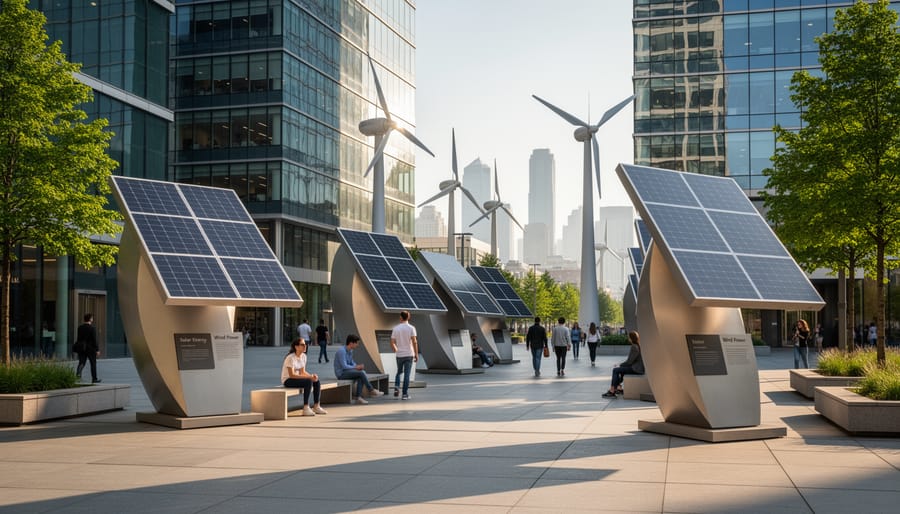
Urban renewable energy-optimized public art installations represent a brilliant fusion where creativity meets sustainability. Unlike traditional public art that focuses solely on aesthetics or cultural expression, these innovative works actively generate clean energy while beautifying our cities. They’re designed from the ground up to harness solar, wind, or kinetic energy, transforming everyday spaces into productive power sources.
What sets them apart from standard renewable energy infrastructure is their artistic vision. Traditional solar panels or wind turbines are purely functional, often viewed as industrial necessities. These installations, however, celebrate renewable technology through thoughtful design, turning energy generation into an engaging public experience that sparks conversation and inspires action.
Think of them as hardworking art—sculptures that power streetlights, interactive installations that charge your phone, or striking architectural features that feed energy back into the grid. They make sustainability visible and tangible in our daily lives, proving that environmental responsibility doesn’t mean sacrificing beauty or cultural expression.
For Australian communities embracing clean energy transitions, these installations offer a fair dinkum opportunity to demonstrate environmental leadership while creating landmarks that residents genuinely love and visitors remember.
The Australian Context: Why Now?
Australia stands at a unique crossroads where opportunity meets necessity. With some of the world’s most reliable sunshine—averaging over 3,000 hours annually in many regions—we’re blessed with renewable energy potential that most nations can only dream of. Yet our cities are expanding rapidly, with over 86% of Australians now calling urban areas home, creating pressing demand for both public infrastructure and sustainable energy solutions.
This convergence makes Australia the perfect testing ground for energy-optimized public art. Our smart city initiatives are already gaining momentum in Melbourne, Sydney, and Brisbane, where forward-thinking councils recognize that urban spaces can serve multiple purposes. These installations address three challenges simultaneously: beautifying our cities, generating clean energy, and engaging communities in the renewable transition. With federal and state governments increasingly prioritizing sustainability targets and allocating funds for innovative urban projects, there’s never been a better time to reimagine what public art can achieve. We’re not just decorating our cities—we’re powering them sustainably while creating landmarks that inspire.
Real-World Success Stories That Are Lighting Up Cities
Solar-Powered Sculptures in Australian Cities
Australia is embracing the fusion of renewable energy and public art with several remarkable solar-powered sculptures already transforming urban landscapes. In Brisbane, the Kurilpa Bridge stands as a pioneering example, featuring integrated solar panels that illuminate the pedestrian bridge’s LED lighting system. This functional artwork not only provides safe passage across the river but generates clean energy while doing so, demonstrating that infrastructure can be both beautiful and sustainable.
Melbourne’s Docklands precinct showcases solar-powered kinetic sculptures that respond to environmental conditions, creating an ever-changing visual experience powered entirely by the sun. These installations have become beloved community landmarks, drawing locals and tourists alike who appreciate the marriage of artistic expression with environmental responsibility.
In Sydney, plans are underway for a series of solar sculptures in public parks that will charge mobile devices and power ambient lighting, directly benefiting community members while raising awareness about renewable energy’s potential. Early community consultations have shown overwhelming support, with residents enthusiastic about artworks that give back to their neighbourhoods.
The public reception across Australian cities has been remarkably positive. These installations spark conversations about clean energy, inspire younger generations to think creatively about sustainability, and prove that environmental solutions needn’t be purely utilitarian. They’re living proof that when communities invest in renewable energy infrastructure with artistic vision, everyone wins – enjoying enhanced public spaces while collectively reducing carbon footprints and celebrating Australia’s commitment to a cleaner, brighter future.
Biomass-Integrated Urban Art: A Sustainable Twist
Across Australia, pioneering artists and engineers are collaborating to transform public spaces through artworks that do more than just look good—they actively contribute to renewable energy generation. These biomass-integrated installations represent a fair dinkum marriage of creativity and sustainability, proving that art can be both beautiful and functional.
Take Melbourne’s recent experimental sculpture garden, where artistic forms double as composting units. Organic waste collected from nearby cafes and restaurants feeds these sculptural digesters, which convert food scraps into biogas that powers LED lighting displays after dark. Visitors don’t just admire the art—they witness the circular economy in action, right before their eyes.
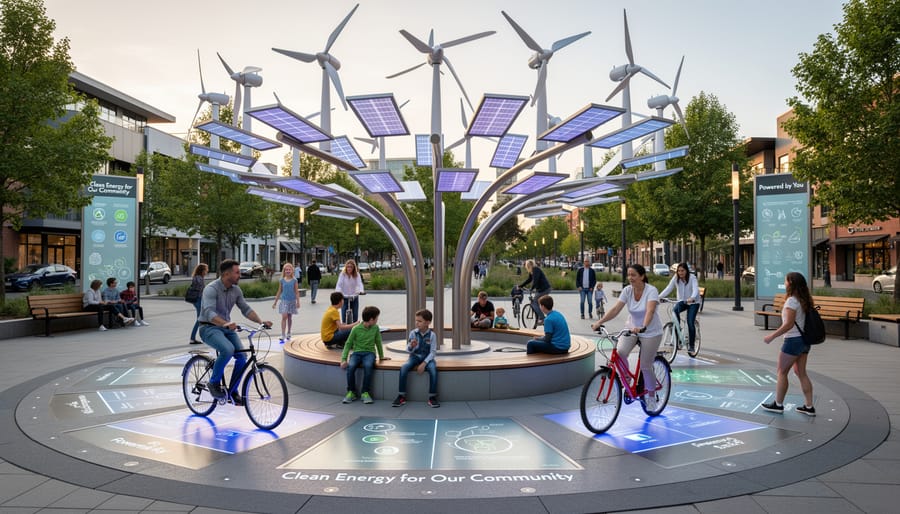
Similarly, Brisbane’s riverfront recently unveiled interactive installations featuring kinetic sculptures powered entirely by biomass energy. These pieces respond to visitor movement, creating mesmerizing light patterns and sounds while demonstrating practical urban waste energy solutions that could be scaled citywide.
What makes these projects particularly inspiring is their educational value. Information panels explain how organic materials become energy, engaging communities in conversations about waste reduction and renewable power. Children press buttons, adults snap photos, and everyone leaves understanding that sustainability can be tangible, interactive, and genuinely exciting.
These biomass-powered artworks prove that environmental responsibility doesn’t require sacrifice or compromise. Instead, they demonstrate how innovation transforms everyday waste into extraordinary experiences, setting the stage for cities where every public space contributes to our clean energy future.
International Pioneers Leading the Way
Cities worldwide are showing how renewable energy art can transform public spaces while delivering genuine environmental benefits. Copenhagen’s solar-powered “Reflections” installation along the harbour captures sunlight during the day, illuminating the waterfront each evening while feeding surplus energy back to the grid. The project has become a landmark that residents genuinely embrace, proving that functional art can strengthen community identity.
In Barcelona, wind-responsive kinetic sculptures in the Plaça del Sol generate power for local street lighting while creating mesmerising movement that draws neighbours together. What makes this particularly inspiring is how the community now gathers around these installations during festivals, turning them into focal points for celebration.
Portland’s “Energy Forest” demonstrates another approach entirely—vertical solar trees in previously underutilised spaces now provide charging stations and Wi-Fi, transforming neglected corners into vibrant meeting spots. The installation paid for itself within five years through energy savings.
These examples share a common thread: they prioritised community consultation from day one, ensuring the art reflected local character while meeting practical needs. Australian cities can adapt these lessons by engaging residents early, starting with pilot projects in high-foot-traffic areas, and measuring both energy output and social impact to build momentum for broader rollouts.
The Technology Behind the Beauty
Solar Integration: More Than Just Panels
Urban artists and engineers are reimagining solar technology as sculptural statements that generate clean energy while beautifying public spaces. Solar trees stand as particularly striking examples—metallic trunks supporting canopies of photovoltaic panels that track the sun’s movement throughout the day, mimicking nature while powering nearby amenities. In Adelaide’s city centre, one such installation generates enough electricity to run several benches with USB charging points and ambient LED displays.
Light-capturing sculptures take this concept further by transforming solar panels into artistic forms. These installations collect sunlight during the day and release it as dynamic light shows after dark, creating engaging experiences that demonstrate renewable energy’s potential. Some feature kinetic elements—moving parts powered by solar cells that respond to wind or sunlight intensity, creating ever-changing artistic displays.
These installations complement renewable urban lighting strategies by demonstrating how photovoltaic technology can serve dual purposes. Rather than viewing solar panels as purely functional equipment, this approach celebrates them as design opportunities. Australian cities are increasingly embracing these installations, recognizing they spark community conversations about sustainability while delivering measurable energy benefits and reducing grid dependence.
Kinetic Energy Capture
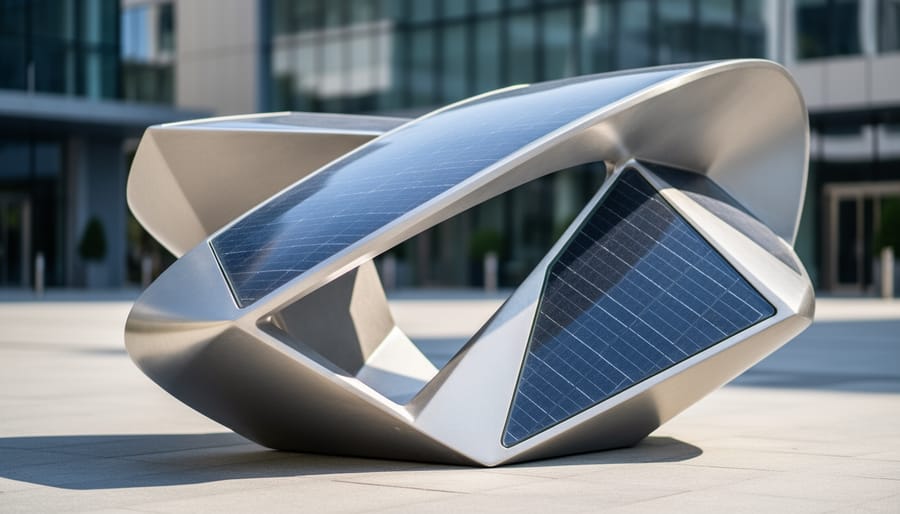
Imagine stepping on a footpath that lights up beneath your feet, or watching a sculpture spin gracefully as the breeze passes through—all while generating clean electricity. That’s the beauty of kinetic energy capture in urban art installations. These innovative pieces transform everyday movement into renewable power, turning pedestrians, wind, and even flowing water into energy sources.
In practice, pressure-sensitive tiles embedded in busy walkways capture the kinetic energy from footsteps, converting it into electricity that can power LED lighting or charge public USB stations. Wind-activated sculptures use carefully designed turbines that blend artistic form with function, generating power whilst creating mesmerising visual displays. Similarly, water wheels and flow-responsive installations in urban waterways harness natural currents to produce energy.
This approach is particularly effective in high-traffic areas like shopping precincts, train stations, and parks, where constant movement provides a steady energy stream. Australian cities are beginning to embrace these installations, recognising their dual benefit: they beautify public spaces whilst contributing to renewable energy goals, making sustainability visible and engaging for everyday Australians.
Bioenergy’s Role in Public Spaces
Biomass-derived energy is opening exciting possibilities for powering public art in Australian cities. Unlike solar or wind installations that require specific conditions, bioenergy offers reliable, continuous power that can keep illuminated sculptures glowing through the night or interactive displays running around the clock. This makes it particularly valuable for artistic installations in shaded urban precincts or heritage areas where traditional renewable infrastructure might clash aesthetically.
Several Australian councils are already exploring how organic waste from parks, food markets, and street cleaning can be converted into energy to power nearby public artworks. In Melbourne’s inner suburbs, artists are collaborating with waste management teams to design installations that visually represent the bioenergy cycle itself, transforming community waste into both power and artistic statement. These projects often connect to urban microgrids, creating resilient local energy systems that serve multiple community functions. The beauty of bioenergy in public art lies in its circular nature – communities see their organic waste transformed into cultural vibrancy, making sustainability tangible and inspiring.
The Triple Win: Community, Environment, and Economy
Carbon Reduction with Creative Impact
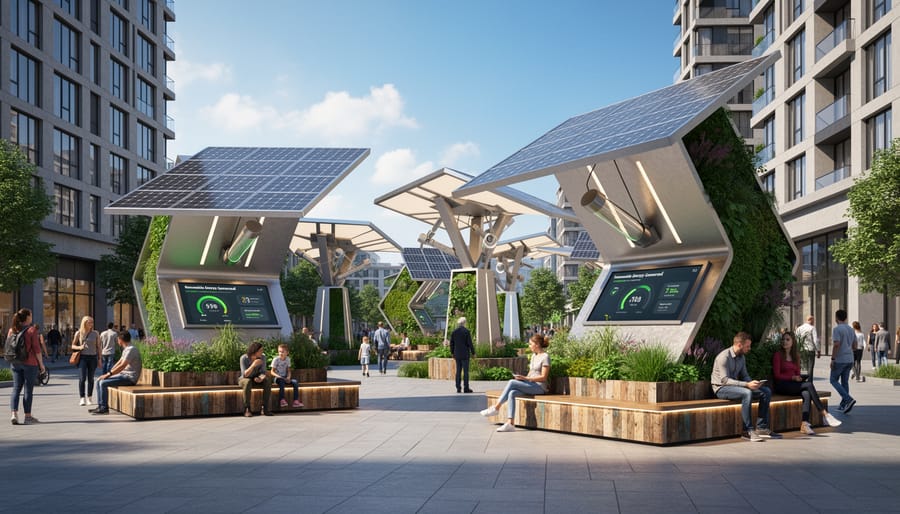
When solar-powered sculptures and bioenergy-generating murals replace conventional public art, the carbon savings quickly add up. A single mid-sized renewable energy art installation can offset approximately 2-5 tonnes of CO2 annually—equivalent to taking one car off Australian roads for a year. Multiply this across an urban precinct with multiple installations, and the impact becomes genuinely transformative for local emissions targets.
These creative pieces contribute directly to renewable energy mandates, feeding clean electricity into the grid while engaging communities in climate action. In practical terms, a large solar art installation can generate enough power to run several households or offset the energy demands of nearby public facilities like libraries or community centres.
The beauty lies in the dual benefit: these installations don’t just reduce our reliance on fossil fuels—they spark conversations about sustainability every time someone walks past. They transform abstract climate commitments into visible, tangible neighbourhood features that residents can point to with pride. By weaving renewable energy into the fabric of our cities through art, we’re making carbon reduction something everyone can see, understand, and champion in their own communities.
Creating Jobs and Industry Opportunities
Urban renewable energy art installations are creating genuine employment pathways across multiple sectors, demonstrating how sustainability and economic development work hand in hand. Artists and designers find fresh opportunities to reimagine their craft, combining creative expression with engineering principles to produce meaningful public works. These projects require electrical engineers and renewable energy specialists who understand solar, wind, and bioenergy systems, transforming theoretical knowledge into visible community assets.
Beyond the initial design and construction phases, these installations generate ongoing positions for maintenance technicians and energy system operators who ensure the artworks continue performing efficiently. Local manufacturing companies benefit too, producing specialized components like photovoltaic panels, battery storage units, and biomass conversion equipment. Australian cities embracing this movement are witnessing firsthand how public art can become a catalyst for green job creation, particularly in regional areas where traditional employment sectors face challenges. Educational institutions are responding by developing training programs that blend artistic skills with technical capabilities, preparing the next generation of creators who’ll push this exciting field forward while strengthening local economies.
Building Community Connection
These innovative installations transform ordinary public spaces into vibrant community hubs that bring people together around shared values. When a neighbourhood unveils a solar-powered light sculpture or a kinetic wind installation in a local park, it creates more than visual appeal—it sparks conversations about renewable energy and sustainable living. These artworks become natural gathering points where families meet, children play, and communities connect while experiencing clean energy in action.
The educational impact extends far beyond traditional classroom settings. As locals interact with these installations daily, they develop an intuitive understanding of how renewable energy works. A sculptural piece that lights up with solar power or responds to wind patterns demonstrates sustainable technology in ways that feel accessible and exciting rather than intimidating. This hands-on exposure is particularly valuable for young Australians, fostering environmental awareness from an early age.
Community pride strengthens when neighbourhoods showcase these forward-thinking installations. Residents become ambassadors for renewable energy, sharing their local artwork with visitors and on social media. This organic enthusiasm creates ripple effects, inspiring other communities to embrace similar projects. The result is a grassroots movement where art becomes a catalyst for broader environmental action and community cohesion.
Making It Happen: From Concept to Community Asset
Who Needs to Be at the Table
Successful energy-optimized public art isn’t created in isolation—it requires bringing together diverse voices from the start. Local councils play a crucial leadership role, providing approvals, funding support, and connecting projects to urban planning goals. Artists themselves are essential creative drivers, translating sustainability concepts into compelling visual experiences that engage communities.
Energy companies and renewable technology providers contribute technical expertise, ensuring installations genuinely generate power while remaining visually stunning. Community groups represent local interests and help projects reflect neighbourhood values and stories, building genuine ownership and pride.
Indigenous representatives should absolutely be at the table, particularly in Australia, where cultural perspectives can enrich artistic narratives and ensure respectful place-based designs. Urban planners ensure projects integrate seamlessly with existing infrastructure, while sustainability consultants verify environmental credentials.
This collaborative approach transforms what might be simple decoration into meaningful community assets. When everyone has a seat at the table from conception through completion, the results are art installations that don’t just look good—they perform brilliantly, educate effectively, and inspire communities to embrace renewable energy futures.
Funding and Support Pathways
Bringing energy-art installations to life requires financial backing, and fortunately, Australia offers several promising pathways. The Australian Government’s Renewable Energy Innovation Fund supports projects that demonstrate innovative clean energy solutions, making it an excellent starting point for proposals combining artistic vision with energy generation. Many state governments, including Victoria’s Renewable Energy Target programs and Queensland’s Advancing Clean Energy Schools program, provide grants specifically for community renewable projects that could extend to public art installations.
Local councils across Australia increasingly dedicate funding to public art with sustainability criteria. Melbourne, Sydney, and Brisbane councils have all established urban renewal grants that welcome proposals integrating renewable energy technology. Private partnerships present another avenue worth exploring. Major energy companies like Origin Energy and AGL have community partnership programs supporting renewable innovation projects. Corporate sponsors often jump at opportunities that align with their sustainability commitments while enhancing community spaces.
For artists and organizations getting started, the Australia Council for the Arts occasionally funds projects bridging environmental themes with artistic expression. Community energy cooperatives can also provide collaborative funding models, pooling resources to make ambitious installations achievable. The key is crafting proposals that clearly demonstrate both artistic merit and measurable environmental benefits.
Design Considerations That Matter
Creating successful renewable energy art installations requires thoughtful planning from the ground up. Location selection proves critical—sites need adequate sunlight or wind exposure while remaining accessible to communities who’ll benefit most. Consider solar artwork positioned on building facades that cop plenty of Queensland sun, or wind-powered sculptures in Melbourne’s breezy laneways.
Energy storage systems must be practical yet unobtrusive, often integrated into the artwork’s base or nearby infrastructure. Regular maintenance schedules keep installations running smoothly—think quarterly cleaning of solar panels or annual mechanical checks for kinetic pieces.
Community input transforms these projects from imposed infrastructure into celebrated landmarks. Engage local residents early through workshops and design consultations. They’ll offer invaluable insights about cultural significance, practical concerns, and artistic preferences that resonate with their neighbourhood.
Aesthetic integration ensures installations enhance rather than clash with existing streetscapes. The best examples feel purposeful, complementing architectural styles while making bold sustainability statements. Whether sleek and modern or playfully interactive, successful pieces balance artistic vision with technical requirements, creating genuine conversation starters about renewable energy possibilities.
What’s Next: The Future of Powered Public Spaces
The future of powered public spaces in Australian cities is brighter than ever, with exciting innovations on the horizon that promise to transform how we think about urban environments. As technology advances and costs decrease, we’re seeing remarkable potential for art installations that don’t just beautify our communities but actively contribute to our clean energy transition.
Emerging technologies are opening up entirely new possibilities. Imagine interactive sculptures that respond to weather patterns, generating power from wind, rain, and sunshine simultaneously while creating mesmerizing visual displays. Advanced piezoelectric materials are becoming more efficient, meaning future footpaths and public plazas could harvest energy from everyday foot traffic in ways we’re only beginning to explore. Meanwhile, improvements in energy storage mean these installations can power neighbourhood amenities around the clock, not just when the sun’s shining.
Australian cities are perfectly positioned to lead this movement. Our abundant sunshine, innovative spirit, and growing commitment to net-zero targets create the ideal environment for experimentation and investment. We’re already seeing councils from Brisbane to Perth expressing interest in projects that combine cultural vibrancy with environmental responsibility.
The opportunity extends beyond major metropolitan areas too. Regional communities across Australia could use energy-generating art installations to celebrate local identity while addressing practical infrastructure needs. Picture a solar-powered sculpture commemorating agricultural heritage that also charges electric vehicles for visitors, or coastal installations that harness wave energy while paying tribute to Indigenous culture.
As these technologies mature and success stories multiply, the question isn’t whether powered public spaces will become commonplace, but rather how quickly we’ll embrace them. The future belongs to cities that recognize art installations as active participants in building sustainable, resilient, and beautiful urban environments for all Australians to enjoy.
The transformation of our urban landscapes through energy-optimized public art installations represents more than just an aesthetic upgrade—it’s a genuine pathway toward sustainable, vibrant cities that benefit everyone. These installations prove that we don’t have to choose between beauty and environmental responsibility. Instead, they demonstrate how creativity and renewable energy can work together to create spaces that inspire, educate, and contribute to a cleaner future.
For Australian communities, the opportunity is enormous. Our cities are perfectly positioned to become global leaders in this movement, combining our abundant renewable resources with our rich creative spirit. Solar-powered sculptures can grace our sunny parks, wind-activated installations can dance along our coastlines, and bioenergy-driven artworks can transform our public spaces into living examples of sustainable innovation.
The call to action is clear. Policymakers can champion supportive frameworks and funding initiatives. Urban planners can integrate these installations into development projects from the ground up. Artists and designers can push creative boundaries while embracing sustainable technologies. Communities can advocate for these projects in their neighbourhoods, transforming ordinary spaces into extraordinary destinations.
The future is bright—quite literally—for Australian cities willing to embrace this vision. By investing in energy-optimized public art today, we’re not just beautifying our streets; we’re building a legacy of innovation, sustainability, and community pride. Let’s make our cities shine as beacons of what’s possible when art meets renewable energy, creating spaces where environmental consciousness and creative expression flourish together.