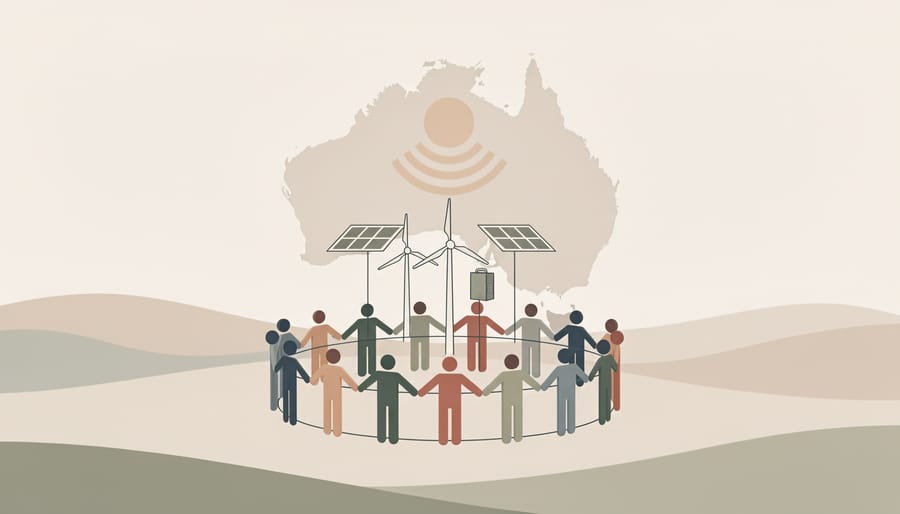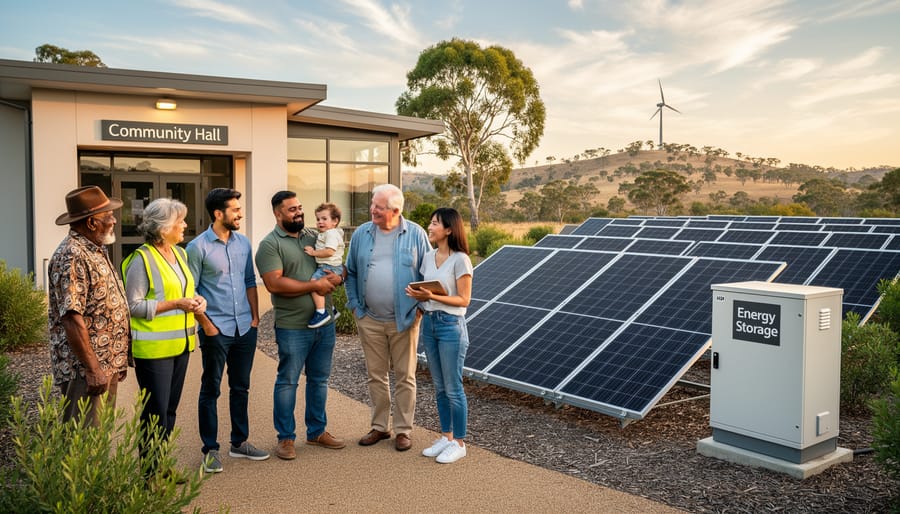
Energy communities across Australia are discovering that sharing power isn’t just about electrons flowing through wires—it’s about neighbours connecting, sustainability taking root, and local economies thriving. Community engagement platforms are transforming how Australians participate in renewable energy projects, turning passive consumers into active stakeholders who shape their community’s energy future.
These digital tools bridge the gap between renewable energy infrastructure and the people who benefit from it. When a solar farm springs up in regional Victoria or a bioenergy facility begins processing agricultural waste in Queensland, community engagement platforms ensure locals aren’t just watching from the sidelines. They’re accessing real-time data about energy production, understanding their share of clean power generation, and seeing tangible benefits reflected in their energy bills or community investments.
The success story of renewable energy hubs in places like Byron Bay and Adelaide Hills demonstrates this perfectly. Residents use these platforms to track their community’s carbon reduction, participate in energy-sharing arrangements, and vote on how surplus revenue gets reinvested locally—whether that’s funding schools, upgrading community centres, or supporting more renewable projects.
For policymakers designing energy transition frameworks and community organizers rallying support for local bioenergy initiatives, these platforms solve a critical challenge: making complex energy systems understandable and participatory. They transform technical data into compelling narratives that motivate action, build trust, and create lasting commitment to sustainable energy solutions that benefit everyone.
What Are Community-Engaged Energy Data Sharing Platforms?
Think of traditional energy monitoring like checking your bank account balance – you see the numbers, but only you benefit from that information. Community-engaged energy data sharing platforms, by contrast, work more like a neighbourhood potluck where everyone brings something to the table and everyone leaves with new recipes and ideas.
These platforms are digital tools that bring communities together to share, analyze, and act on energy data collectively. Rather than keeping consumption patterns locked away in individual households or businesses, they create a transparent space where residents, organizations, and local authorities can see the bigger picture of how their community uses and produces energy.
What makes these platforms genuinely different from your standard smart meter or energy dashboard are three essential ingredients. First, active community participation – residents aren’t just passive data points but engaged contributors who help shape what information matters. Second, transparent data sharing means everyone can see how the neighbourhood is performing, similar to how a sports team reviews game footage together. Third, collective decision-making empowers communities to identify opportunities and solve challenges as a group rather than in isolation.
Imagine your street could see that five households have solar panels producing excess energy at midday, while the local community centre runs its air conditioning hardest during that same window. A community-engaged platform reveals this pattern, sparking conversations about directing that surplus power where it’s needed most.
For Australian communities already embracing renewable energy, these platforms transform scattered individual efforts into coordinated community action. They’re particularly powerful in regional areas where collective energy solutions can deliver substantial cost savings and environmental benefits that benefit everyone, not just those who can afford the latest technology.
Why Your Community Needs a Voice in Energy Decisions
Building Trust Through Transparency
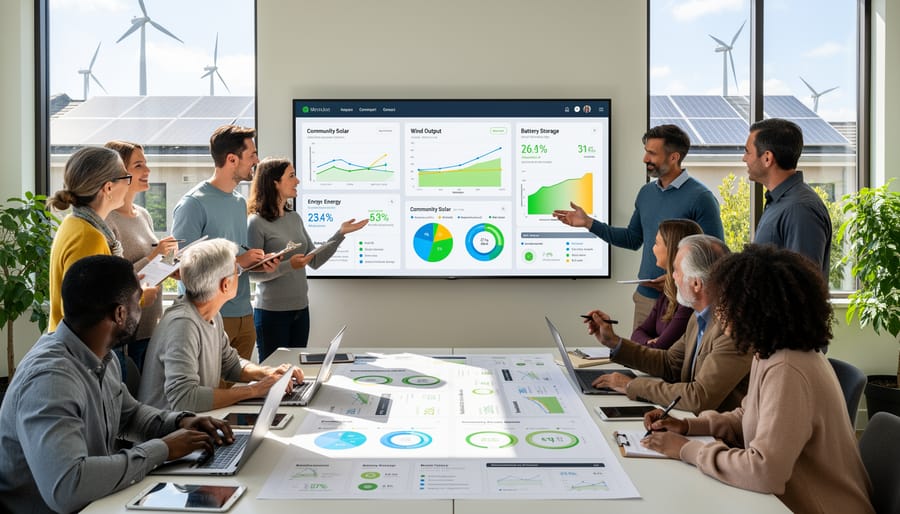
When energy data flows freely between communities, providers, and decision-makers, something remarkable happens: trust begins to flourish. Community engagement platforms break down traditional barriers by making energy information accessible to everyone involved. Rather than keeping consumption patterns, renewable generation data, and grid performance locked away, these platforms put the numbers where Australians can see them.
Consider how transparency transforms relationships. When a local council shares real-time data about community solar output, residents can track exactly how their investment contributes to cleaner energy. Energy providers who openly publish pricing structures and network capacity information demonstrate they’ve got nothing to hide. Policymakers who make engagement data publicly available show they’re genuinely listening to community feedback.
This openness creates accountability that benefits everyone. Communities spot opportunities for improvement, providers respond to concerns before they escalate, and policymakers craft better-informed regulations. One Victorian community energy group discovered through their platform that transparent reporting of their bioenergy project’s environmental impact doubled participation rates within six months. When people understand the full picture, they’re more likely to get involved and support sustainable initiatives. Open data sharing isn’t just good practice; it’s the foundation for building lasting partnerships that drive Australia’s renewable energy future forward.
Making Energy Personal and Local
Community engagement platforms transform abstract energy data into something tangible that everyday Australians can actually see and act upon. These digital tools give communities real-time visibility into where their energy comes from, how much they’re using, and what opportunities exist right in their backyard for renewable generation.
Picture a local council in regional Victoria using one of these platforms to show residents exactly how much energy their town consumes daily, alongside maps identifying ideal locations for solar farms or bioenergy facilities. Suddenly, renewable energy isn’t just a distant concept—it’s a conversation happening at the local café.
These platforms excel at breaking down complex energy information into digestible insights. Residents can explore how investing in a nearby biomass project might reduce electricity costs while supporting local farmers who supply agricultural waste. They can compare different renewable options, ask questions, and vote on priorities that matter to their community.
By connecting community power initiatives with transparent data, these platforms empower people to move beyond passive energy consumers to active participants in shaping their community’s sustainable future. Knowledge becomes the catalyst for meaningful local action.
Success Stories: Australian Communities Leading the Way
Real communities across Australia and beyond are already reaping the rewards of energy data sharing platforms, demonstrating how transparency and collaboration can transform local power systems.
In Byron Bay, New South Wales, the community-led Byron Bay Energy Network has become a shining example of grassroots energy transformation. This innovative platform connects over 800 households, allowing residents to track their renewable energy production and consumption in real-time. The platform integrates solar generation data with local bioenergy facilities that process organic waste from nearby farms and households. Since launching, participants have reduced their grid dependence by an average of 42%, while the shared data has helped optimize the timing of bioenergy production to match community demand. Perhaps most impressively, the platform fostered unexpected social connections, with neighbours sharing energy efficiency tips and coordinating equipment purchases together, cutting costs by 30% through bulk buying.
Across the continent in Denmark, Western Australia, a smaller rural community demonstrates that size isn’t a barrier to success. Their energy sharing platform links 150 properties with a central biomass heating system fueled by local agricultural residues. The transparent data dashboard shows residents exactly how much wheat straw and forestry waste is being converted into usable energy, creating genuine pride in the circular economy they’ve built. Farmers now view their crop residues as valuable commodities rather than disposal challenges, generating an additional income stream while reducing methane emissions from decomposing waste. The platform has helped the community achieve 78% renewable energy coverage, with residents reporting lower power bills and stronger community bonds.
Drawing inspiration from international success, community solar banks in Freiburg, Germany provide valuable lessons for Australian communities. Their sophisticated data platform serves 3,000 members, seamlessly integrating solar, wind, and biomass sources. The platform’s gamification features encourage energy conservation through friendly competitions between neighbourhoods, while detailed analytics help community managers optimize their bioenergy facility operations. Australian communities can adapt these proven strategies to suit local conditions, demonstrating that successful implementation is achievable regardless of starting point or resources available.
How These Platforms Actually Work
From Your Meter to Your Neighbours
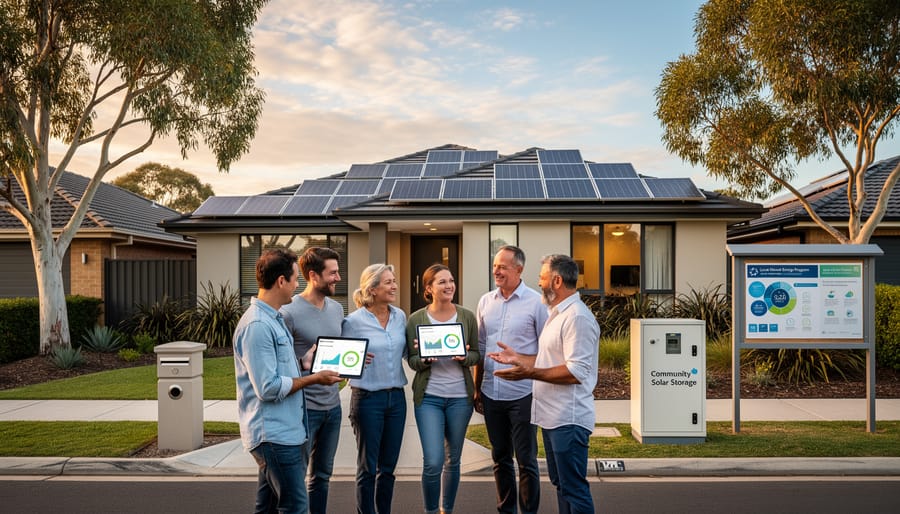
The journey from your smart meter to your community’s dashboard is simpler than you might think, and privacy sits at the heart of the process. When you opt in to a community engagement platform, your meter sends anonymized energy data through secure channels. Think of it like a postal system where the letter arrives, but your name and address remain confidential.
The clever bit happens through data aggregation. Your individual household readings combine with your neighbours’ data to create neighborhood-level insights, making it impossible to identify any single home’s usage patterns. This aggregated information then appears on community dashboards showing collective achievements, peak demand times, and renewable energy generation across your area.
Australian communities trialing these platforms have found the balance between transparency and privacy works beautifully. One Melbourne suburb reported that residents felt comfortable sharing data because they could see only community totals, never individual consumption. The system protects your privacy while giving everyone the power to celebrate wins together, whether that’s reducing evening peak demand by 15% or reaching a solar generation milestone. You control what you share, and the technology ensures your personal information stays exactly that—personal.
Turning Numbers Into Action
Data becomes truly powerful when communities transform it into collective action. Across Australia, neighbourhoods are using insights from engagement platforms to slash energy bills and accelerate their renewable transition. By analyzing shared consumption patterns, communities can pinpoint which households would benefit most from solar installations or identify commercial buildings with potential for waste-heat recovery systems.
Take the case of a regional Victorian town that discovered through their platform that peak energy usage occurred when local businesses started up each morning. This insight sparked a collective purchasing agreement for battery storage, allowing the community to store off-peak renewable energy and reduce grid dependence by 35 percent. The shared data made the business case undeniable.
These platforms also reveal opportunities for community energy efficiency upgrades that individuals might miss. When multiple households show similar inefficiency patterns, communities can negotiate bulk deals on insulation, heat pumps, or biomass heating systems, making sustainable solutions more affordable for everyone. The numbers tell the story, but motivated communities write the ending.
Getting Your Community Started
Ready to shape your community’s energy future through a data sharing platform? The journey begins with understanding your community’s unique needs and building the right partnerships.
Start by assembling a core team of interested stakeholders. This typically includes local council representatives, community energy groups, environmental advocates, and residents passionate about sustainability. In regional Queensland, the successful Sunshine Coast Energy Hub began with just twelve dedicated volunteers who met monthly for six months before launching their platform.
Next, identify potential technology partners. Organizations like the Clean Energy Council and the Australian Renewable Energy Agency (ARENA) maintain directories of platform providers offering tailored solutions for Australian communities. Many platforms offer free pilot programs lasting three to six months, allowing you to test functionality before committing financially.
Secure funding through multiple channels. ARENA’s Community Energy Program has supported numerous initiatives with grants ranging from $50,000 to $500,000. State government sustainability funds, local council innovation grants, and community fundraising can supplement these resources. The average community platform costs between $15,000 and $40,000 annually to maintain, depending on size and features.
Establish realistic timelines. Most communities spend three to four months planning, another two to three months setting up technology infrastructure, and approximately six weeks onboarding initial participants. The Bunbury Energy Collective in Western Australia went from initial concept to 200 active users within eight months.
Remember, successful platforms grow organically. Start small with enthusiastic early adopters, gather feedback regularly, and expand gradually. Within twelve to eighteen months, most communities see measurable improvements in energy efficiency and stronger neighborhood connections around sustainability goals.
The Road Ahead: Building Australia’s Energy Future Together
Australia stands at a pivotal moment in its energy journey, and community engagement platforms are emerging as powerful catalysts for change. These digital meeting grounds aren’t just reshaping how we share electricity—they’re fundamentally transforming how regional communities build resilient, prosperous futures together.
As bioenergy projects expand across rural and regional Australia, these platforms create genuine opportunities for locals to participate directly in the renewable revolution. Farmers hosting biogas digesters can share surplus energy with neighboring towns. Community-owned solar arrays can feed into micro-grids that keep power prices stable and benefits local. This isn’t just good environmental sense—it’s creating real jobs in installation, maintenance, data management, and community coordination roles that keep young Australians in their hometowns.
The ripple effects extend beyond kilowatts and job numbers. When communities actively participate in energy decisions through accessible digital platforms, they develop deeper connections to sustainability principles. Schools become living laboratories where students track renewable energy generation. Local businesses gain competitive advantages through lower energy costs. Regional councils strengthen their climate resilience while building local wealth.
Success in this space requires collaboration between technology providers, energy companies, community leaders, and policymakers working in genuine partnership. The platforms already proving their worth across Australia demonstrate what’s possible when we combine innovative technology with grassroots engagement. By embracing these tools today, we’re not just transitioning to cleaner energy—we’re building stronger, more self-reliant communities that thrive for generations to come.