
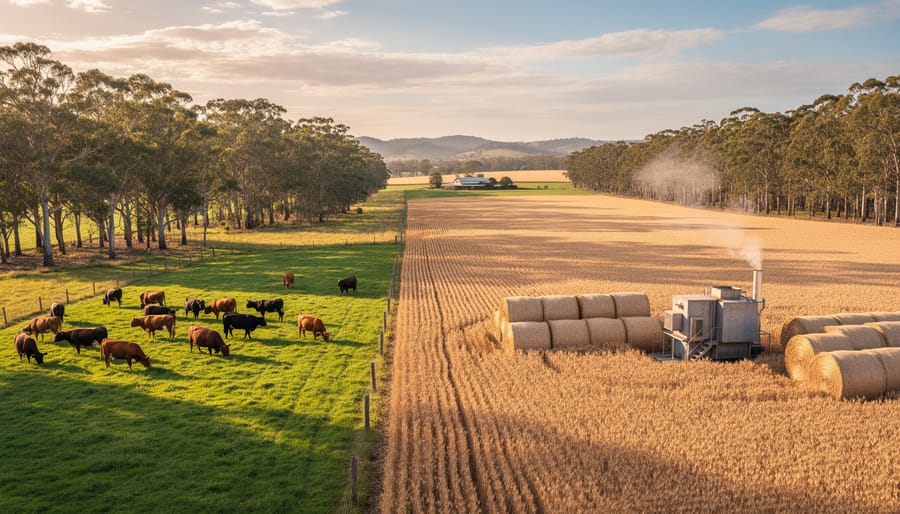
Across Australia’s agricultural heartland, a quiet revolution is reshaping how we use our land. Farmers are transforming degraded paddocks into thriving ecosystems that produce food, generate renewable energy, and restore soil health simultaneously. This isn’t wishful thinking; it’s land transformation in action, and it’s proving both profitable and planet-positive.
Land transformation means deliberately redesigning farming landscapes to serve multiple purposes. Instead of viewing land as either productive or conservation space, forward-thinking landholders are creating systems where native vegetation sits alongside crops, where biomass from agricultural waste becomes renewable fuel, and where carbon is sequestered while yields remain strong.
The evidence is compelling. Queensland sugarcane growers are converting crop residue into bioenergy while improving soil structure. Victorian livestock producers are integrating shelter belts that protect stock, support biodiversity, and provide sustainable timber. Western Australian wheat farmers are establishing perennial pastures that prevent salinity while maintaining profitability.
What makes this approach different from traditional conservation is its economic backbone. Land transformation doesn’t ask farmers to sacrifice income for environmental outcomes. Instead, it creates new revenue streams through carbon credits, biomass energy production, and premium markets for sustainably grown produce. The initial investment pays dividends through reduced input costs, increased resilience to climate variability, and access to emerging green markets.
This article explores how Australian landholders are successfully implementing land transformation, the financial returns they’re achieving, and the practical steps you can take to begin your own transformation journey.
What Land Transformation Actually Means for Aussie Farmers
Beyond Just Growing Crops: The New Role of Agricultural Land
Australian farms are breaking free from their traditional single-purpose role and becoming dynamic, multi-functional landscapes. This transformation goes far beyond simply growing wheat or raising cattle – today’s progressive agricultural land is simultaneously producing food, generating renewable energy, and healing damaged ecosystems.
Take the example of farms integrating solar panels between crop rows or installing wind turbines along fence lines. These landholders are discovering they can harvest sunlight and wind while still maintaining productive pastures underneath. Similarly, sustainable farming methods like planting native vegetation corridors not only restore wildlife habitat but also produce biomass feedstock for renewable energy.
This multi-layered approach makes brilliant economic sense. Rather than relying solely on commodity prices, farmers create multiple revenue streams from the same piece of land. A paddock might grow crops, support beehives that improve pollination, and provide biomass material – all working together rather than competing for space.
The beauty of this transformation is that it doesn’t require abandoning agriculture. Instead, it enhances farming’s value to both landholders and the broader community, creating resilient properties that contribute to Australia’s renewable energy future while maintaining food security.
The Carbon Opportunity Hiding in Your Soil
Here’s a question worth pondering: what if the solution to carbon emissions was literally beneath our feet? Australian soils hold extraordinary potential as carbon storage vaults, and transformed land can become nature’s most effective carbon capture technology.
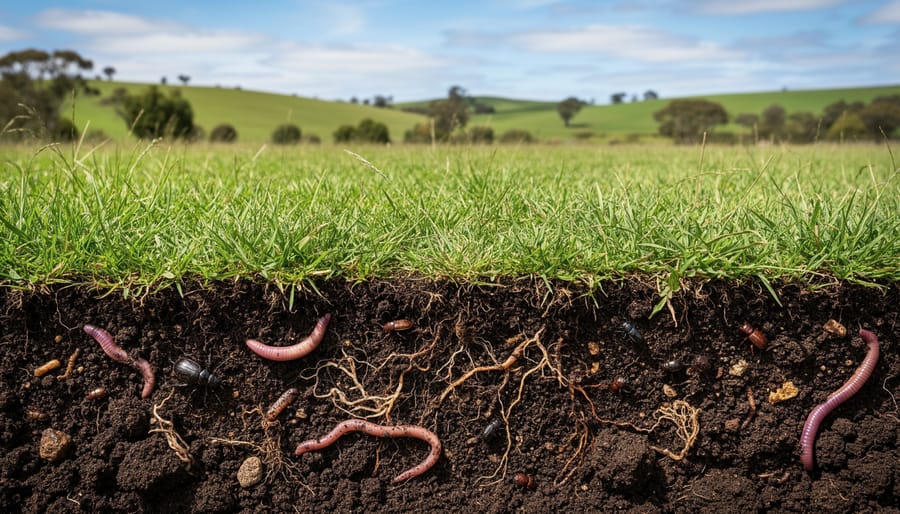
When you improve degraded land through regenerative practices, something remarkable happens in the soil. Plant roots, organic matter, and soil microbes work together to pull carbon dioxide from the atmosphere and lock it underground as stable organic carbon. Think of it as putting carbon back where it belongs, reversing decades of agricultural practices that released it skyward.
The beauty of this approach is its simplicity. A property in northern New South Wales demonstrated this perfectly, transforming former grazing land into a mixed-use operation combining native vegetation restoration with selective biomass harvesting. Within five years, soil carbon levels increased by 18 percent, effectively turning the property from a carbon source into a carbon sink.
Every tonne of carbon sequestered in soil represents roughly 3.67 tonnes of CO2 removed from the atmosphere. For landholders, this isn’t just environmental good news, it’s increasingly valuable currency through carbon credit programs, creating genuine income while healing the land.
Practical Land Transformation Strategies Working Right Now
Turning Farm Waste into Clean Energy
Australian farmers are discovering that what was once considered waste is now a valuable energy resource. Agricultural residues like sugarcane bagasse, wheat stubble, cotton gin trash, and orchard prunings can be transformed into electricity and heat through modern bioenergy solutions. This transformation turns farms into energy producers rather than just energy consumers.
In Queensland, several sugarcane mills now generate enough electricity from bagasse to power their operations and export surplus energy to the grid. One standout example is the Mackay region, where mills contribute renewable baseload power that helps stabilize the local electricity network. Down in Victoria, grain farms are experimenting with mobile biomass units that convert stubble into energy on-site, reducing the need for traditional stubble burning while generating power.
Livestock farms are also getting in on the action. Poultry litter, which combines manure with bedding material, creates excellent fuel for biomass boilers. In Western Australia, several egg producers now use their chicken litter to heat water and buildings, slashing energy bills by up to 70 percent.
The benefits extend beyond energy savings. Converting farm waste to power reduces methane emissions from decomposing organic matter, improves soil health when biochar is returned to fields, and creates additional income streams. For many Australian farmers, biomass energy represents a practical step toward self-sufficiency and sustainability while contributing to the nation’s renewable energy targets.
Agroforestry: Growing Your Energy and Your Crops
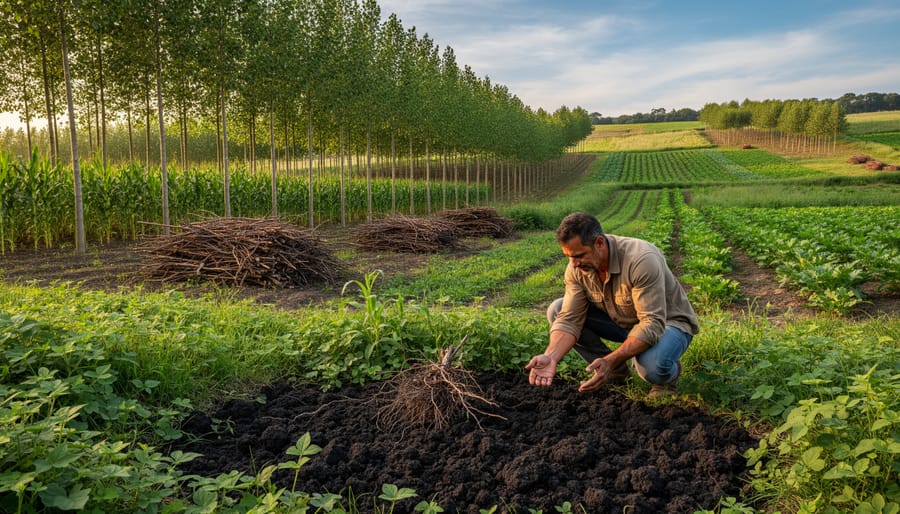
Agroforestry represents one of the most practical forms of land transformation available to Australian farmers, combining food production with renewable energy generation in a single, integrated system. By strategically planting trees alongside crops or pasture, farmers create a productive landscape that delivers multiple benefits: biomass for energy, improved soil health, enhanced biodiversity, and greater resilience against drought and extreme weather.
The approach works beautifully in the Australian context. In Western Australia’s wheatbelt, farmers are planting mallee eucalypts in alleys between crop rows. These hardy native trees send up multiple stems that can be harvested every few years for biomass energy without killing the root system. The trees then regrow, creating a sustainable harvest cycle. Meanwhile, their deep roots help combat salinity, their shade reduces evaporation, and they provide habitat for native birds that control crop pests.
Queensland’s dairy farmers are taking a similar circular economy approach by integrating leucaena trees into grazing paddocks. The trees provide high-protein fodder for cattle while producing trimmings that can be used for biomass energy or mulch, improving soil carbon and water retention.
This dual-purpose farming doesn’t require abandoning traditional agriculture. Instead, it enhances existing operations while opening new revenue streams through biomass sales or on-farm energy generation. With careful planning and species selection suited to local conditions, agroforestry transforms marginal or degraded land into productive, profitable ecosystems that work with nature rather than against it.
Regenerative Grazing That Builds Soil and Income
Rotational grazing is turning tired paddocks into thriving ecosystems while putting money back into farmers’ pockets. This approach moves livestock through different sections of land in planned intervals, giving pastures time to recover and roots time to grow deep. It’s like giving the soil a chance to take a proper breath between visits.
When cattle or sheep graze an area briefly then move on, plants respond by pushing roots deeper into the ground. These roots pump carbon into the soil, essentially turning your property into a carbon sponge. Degraded land that once grew little more than weeds can transform into productive pasture within just a few years of managed grazing.
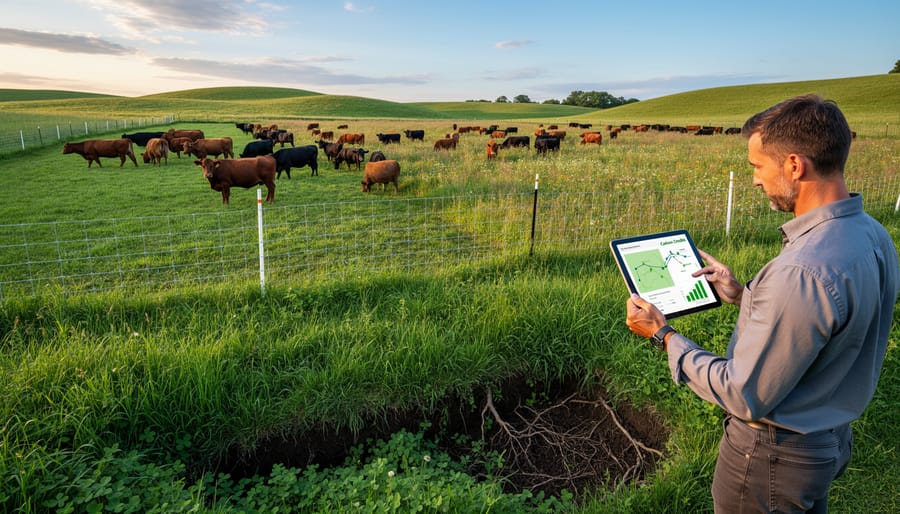
The numbers tell an encouraging story. Well-managed rotational grazing can sequester between 0.5 to 2 tonnes of carbon per hectare annually. For landholders, this translates into eligibility for carbon credit programs through the Australian Government’s Emissions Reduction Fund. Some graziers are earning an additional income stream worth thousands of dollars annually while simultaneously improving their land’s productivity.
Queensland grazier Stuart Austin transformed 2,000 hectares of degraded country using planned grazing, increasing ground cover from 30 percent to over 80 percent in five years. His story isn’t unique. Across Australia, farmers are discovering that working with natural cycles rather than against them creates resilient landscapes that support both livestock and wildlife. The beauty of this system is its simplicity: better timing, better results, better income, and land that keeps improving year after year.
The Economic Case That Makes Land Transformation Make Sense
Multiple Income Streams from the Same Piece of Land
One of the most exciting aspects of land transformation is its ability to generate multiple revenue streams simultaneously, turning what was once marginal or degraded land into a diversified income source. Rather than putting all your eggs in one basket, transformed land can work harder for you across several fronts.
Food production remains a primary income source, whether through livestock grazing, cropping, or integrated systems. But here’s where it gets interesting: the same property can simultaneously produce bioenergy feedstocks. Native grasses and purpose-grown biomass crops don’t compete with food production when strategically planted on previously unproductive areas, slopes, or buffer zones.
Carbon credits offer another income layer as restored vegetation and improved soil management sequester atmospheric carbon. Many Australian landholders are already benefiting from programs that reward these environmental improvements with tangible financial returns.
Ecosystem services, though sometimes harder to quantify, create additional value. Transformed land with enhanced biodiversity can attract ecotourism opportunities, improved water quality downstream increases land value, and better soil health reduces input costs while boosting productivity.
This stacking of income streams creates financial resilience. When commodity prices fluctuate or drought impacts one revenue source, others continue flowing. It’s this diversification that makes land transformation not just environmentally sound, but economically smart for the long term.
Support Available for Farmers Making the Switch
Making the switch to sustainable land transformation doesn’t mean going it alone. Australian farmers have access to a growing toolkit of government support designed to make the transition both practical and financially viable.
The Australian Government’s Agriculture Biodiversity Stewardship Package provides funding for landholders implementing sustainable practices, including conversion to bioenergy crops. Through this program, eligible farmers can access grants covering establishment costs and technical support during the critical first years of transformation.
State-based initiatives complement federal programs beautifully. Queensland’s Biofuture Fund, for instance, supports projects that develop renewable bioproducts, while New South Wales offers rebates through the Energy Savings Scheme for farmers adopting biomass systems. These programs recognize that sustainable investments create value beyond individual properties.
The Clean Energy Finance Corporation actively finances agricultural renewable energy projects, offering competitive rates for farmers installing biomass processing equipment or transitioning land to energy crop production. Meanwhile, the Emissions Reduction Fund allows participants to generate Australian Carbon Credit Units through improved land management practices, creating an additional revenue stream.
Regional Natural Resource Management groups provide free advisory services, helping farmers navigate available programs and develop tailored transformation plans. This boots-on-the-ground support ensures that financial assistance translates into genuine, lasting change across Australian agricultural landscapes.
Overcoming the Roadblocks: What’s Really Holding Us Back
From Knowledge Gap to Knowledge Sharing
The good news is that Australians don’t need to tackle land transformation alone. Across the country, knowledge networks are sprouting up faster than native grasses after a good rain, connecting farmers with the expertise they need to transform their properties sustainably.
Regional landcare groups now run hands-on workshops where experienced practitioners share what’s actually working on their land. These aren’t stuffy classroom sessions – they’re boots-on-the-ground field days where you can see regenerative grazing in action, learn about biomass production from those already doing it, and ask the questions that keep you up at night. In central Queensland, one farmer network has grown to over 200 members who regularly swap tips on everything from soil carbon measurement to integrating energy crops with livestock.
Universities and agricultural extension services have also stepped up, offering practical courses specifically designed for time-poor landholders. Online resources now make it possible to learn at your own pace, while mentoring programs pair newcomers with seasoned land transformers.
The best part? Most of these networks are built on the Australian tradition of mateship – farmers genuinely want to help each other succeed. This collaborative spirit is turning individual success stories into a nationwide movement, making sustainable land transformation accessible to anyone willing to learn.
Making the Transition Without Breaking the Bank
The good news? You don’t need to transform your entire property overnight. Smart land transformation happens in stages, reducing both risk and upfront costs. Start with a pilot area, perhaps converting just a few hectares to native vegetation or implementing rotational grazing on a portion of your land. This approach lets you test what works for your specific conditions without betting the farm.
Many Australian landholders begin by integrating rather than replacing. You might plant biomass crops along fence lines or waterways while maintaining existing operations. As these additions prove their worth, both environmentally and economically, you can gradually expand.
Financial support is more accessible than many realize. Government grants for revegetation, carbon farming incentives, and low-interest loans for sustainable agriculture projects can significantly offset initial costs. Local Landcare groups often provide free advice and sometimes even free seedlings. Industry bodies and university extension programs regularly run workshops on cost-effective implementation strategies.
Consider partnering with neighbors for bulk purchasing of native plants or sharing equipment costs. Some landholders have found success leasing portions of their property to renewable energy projects, generating income that funds other transformation activities. The key is starting where you are, with what you have, and building momentum gradually.
Your Next Steps: Starting Your Land Transformation Journey
Land transformation isn’t just a concept to admire from afar—it’s something you can actively support and participate in, regardless of your role in the community.
For farmers and landholders, the journey begins with assessment. Take stock of underperforming paddocks, degraded soils, or areas with erosion concerns. Connect with local Landcare groups or regional natural resource management organizations who offer free site assessments and can help you design a transformation plan suited to your property. Many Australian farmers have discovered that dedicating even a small portion of their land to native vegetation or biomass crops creates unexpected benefits, from improved water retention to new income streams through carbon credits or biomass supply agreements.
Policymakers and local council members can champion land transformation by incorporating it into regional development plans, offering incentives for sustainable land practices, and streamlining approval processes for regenerative agriculture projects. Supporting pilot programs and sharing success stories across communities helps build momentum and demonstrates commitment to sustainable futures.
Industry professionals have tremendous opportunities to develop partnerships with landholders, invest in processing infrastructure for biomass materials, or provide technical expertise in areas like soil science, renewable energy systems, or native plant cultivation. Your knowledge can bridge the gap between vision and practical implementation.
Community members can make a real difference too. Join or support local environmental groups, volunteer for tree-planting days, or simply spread the word about successful transformation projects in your area. Choosing to support businesses that prioritize sustainable land practices sends powerful market signals.
The beauty of land transformation is that every action counts—from transforming a single hectare to advocating for broader policy change. Start where you are, use what you have, and contribute to Australia’s sustainable future today.
The transformation of Australia’s landscapes into productive, sustainable ecosystems isn’t just a distant dream—it’s happening right now across the country. From Queensland cane fields generating clean energy to Victorian dairy farms creating biogas, these real-world examples prove that land transformation delivers genuine economic and environmental wins. This shift towards regenerative agriculture and bioenergy creates thousands of skilled jobs, strengthens regional communities, and builds the climate resilience infrastructure Australia needs for tomorrow. Every transformed hectare represents progress in our fight against climate change while improving farm profitability. The beauty of this transition is that you don’t need to wait for perfect conditions or government mandates to start. Whether you’re a landowner exploring bioenergy options, a business seeking sustainable supply chains, or simply someone who cares about Australia’s future, there’s a role for you. The transformation is underway—join it today.