
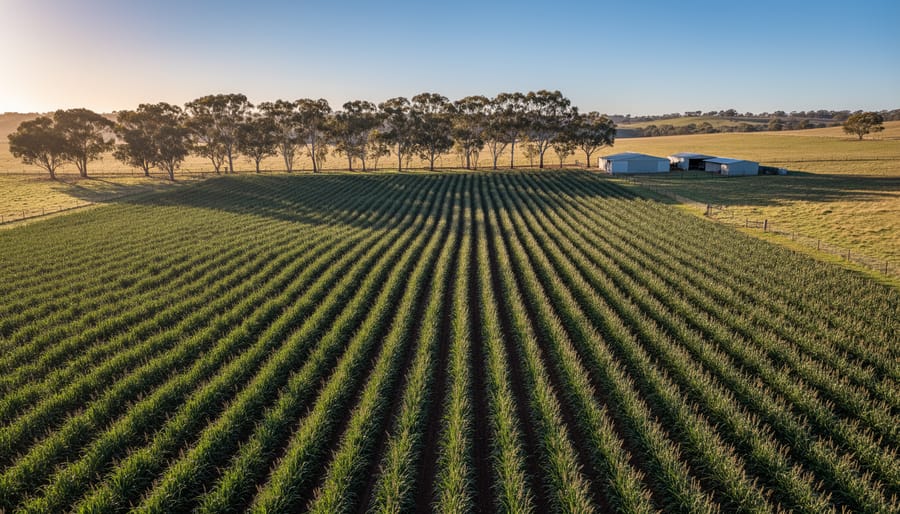
Every year, Australian farmers lose over 5 billion tonnes of precious topsoil to erosion, threatening not just crop yields but the future viability of bioenergy agriculture across the continent. The red dust storms sweeping across paddocks represent more than a visual spectacle—they’re a clear signal that urgent action is needed to protect the foundation of our agricultural prosperity.
Soil erosion doesn’t just happen; it accelerates when land is stripped for bioenergy crop production without proper protective measures. One season of unchecked erosion can remove topsoil that took centuries to form, washing away nutrients, reducing water-holding capacity, and ultimately slashing the productivity of biomass crops by up to 40 percent. For farmers investing in bioenergy’s promise, this represents a direct threat to their bottom line and long-term sustainability.
The encouraging news? Australian growers are proving every day that soil erosion is entirely preventable with the right combination of techniques. From the Darling Downs to the Murray-Darling Basin, innovative farmers are transforming vulnerable paddocks into resilient, productive landscapes using targeted erosion control strategies that actually enhance crop yields while protecting the land.
These aren’t theoretical solutions requiring decades to implement. Practical methods like contour planting, strategic ground cover management, and properly designed windbreaks deliver measurable results within a single growing season. The best part? Many erosion control techniques reduce input costs while increasing biomass production, creating a win-win scenario that makes both environmental and economic sense.
This guide cuts through the complexity to deliver proven, Australia-specific strategies that work in real conditions. Whether you’re managing 50 hectares or 5,000, you’ll find actionable solutions designed for immediate implementation, backed by success stories from farmers who’ve already walked this path and transformed their land’s future.
Why Bioenergy Crops Face Unique Erosion Challenges
The Establishment Period: Your Most Vulnerable Window
When you plant bioenergy crops like eucalyptus or sorghum, the first 6-18 months present your greatest erosion challenge. During this establishment period, seedlings are small with minimal canopy coverage, leaving vast stretches of exposed soil vulnerable to Australia’s unpredictable weather patterns.
Think of it like this: while your young plants are busy developing their root systems below ground, the soil surface remains largely unprotected. When the wet season arrives—particularly between November and March across northern Australia, or during those intense winter rainfall events in the south—your fields are sitting ducks for erosion damage.
The timing couldn’t be trickier. Many growers plant at the start of the wet season to take advantage of natural rainfall, but this also coincides with our most aggressive storm activity. A single severe thunderstorm can wash away weeks of careful preparation, creating rills and gullies that compromise the entire crop’s future productivity.
Here’s the good news: recognizing this vulnerable window means you can plan ahead. Smart growers across Queensland and New South Wales have transformed this challenge into manageable risk by implementing protective measures before planting begins. Whether it’s temporary ground cover, strategic mulching, or erosion control blankets, these early investments protect both your soil and your financial stake in the crop.
The key is understanding that establishment period erosion isn’t inevitable—it’s preventable with the right preparation. By treating these first months as a critical care phase requiring extra attention, you’re setting up your bioenergy crops for decades of productive, erosion-resistant growth.
Harvest Cycles That Leave Soil Exposed
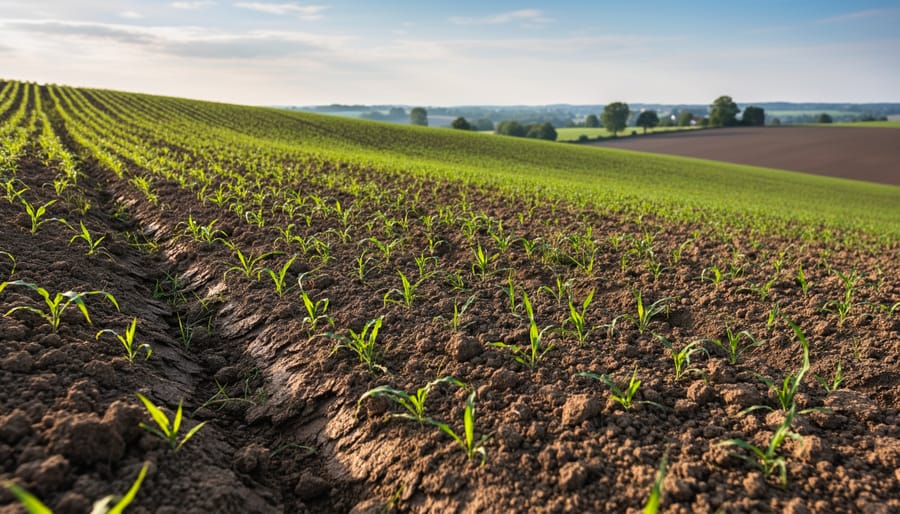
Harvest timing presents a crucial challenge for bioenergy crop producers across Australia. When crops like miscanthus, switchgrass, or energy cane are harvested, fields become temporarily vulnerable to wind and water erosion until the next growing season establishes ground cover. This window of exposure typically occurs during late autumn or winter months, coinciding with periods of heavy rainfall in many Australian regions.
Different bioenergy crops follow varying harvest schedules. Perennial grasses like switchgrass might be cut annually in autumn, leaving stubble that offers some protection but reduced compared to full growth. Energy cane harvested on rotational cycles can leave large patches of bare earth exposed for several weeks. The erosion risk intensifies on sloping land or in areas with high rainfall intensity.
Smart farm planning makes all the difference. Victorian farmers growing miscanthus have successfully minimised erosion by implementing staged harvesting across different field sections, ensuring continuous ground cover remains somewhere on the property. Others combine harvest scheduling with immediate cover crop planting or strategic timing around weather forecasts. The key lies in understanding your specific crop cycle and local climate patterns, then building protection strategies around those vulnerable periods. This proactive approach protects soil health while maintaining productive bioenergy operations year-round.
The Real Cost of Doing Nothing
When erosion takes hold in bioenergy cropping systems, the price tag extends far beyond what most farmers initially imagine. Let’s break down what inaction truly costs Australian agricultural operations.
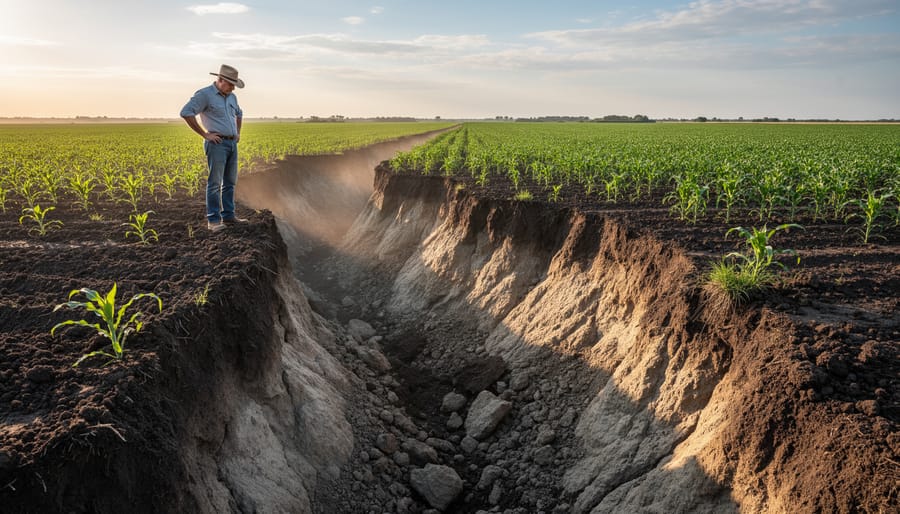
The numbers tell a sobering story. Research from Queensland’s Darling Downs region shows that unchecked erosion can strip away up to 50 tonnes of topsoil per hectare annually on sloping land. That topsoil carries an estimated $400 worth of nutrients—nitrogen, phosphorus, and organic matter—directly off your property with every significant rain event. For a 100-hectare bioenergy crop operation, that’s $40,000 in lost soil fertility each year, money you’ll need to replace through fertiliser purchases.
Beyond immediate nutrient loss, eroded land produces diminished yields that compound over time. Victorian case studies tracking miscanthus and woody energy crops on degraded sites revealed yield reductions of 15-30% compared to properly managed fields. A farmer in the Central Tablelands discovered this firsthand when erosion channels reduced his switchgrass biomass production by nearly a quarter, translating to $35,000 in lost annual revenue from a medium-sized operation.
The off-farm impacts create additional financial liabilities. Sediment washing into waterways damages downstream ecosystems, potentially triggering compliance issues under state environmental protection laws. One NSW bioenergy producer faced $15,000 in remediation costs after sediment from their property affected a nearby creek system, not to mention the reputational damage within their community.
Perhaps most concerning is the long-term land degradation that erodes your asset value. Soil scientists estimate that severe erosion can reduce productive agricultural land value by 20-40% over a decade. What begins as minor rill erosion becomes gully formation, fundamentally altering landscape productivity and requiring expensive earthworks to restore.
The environmental cost extends to healthy soil biology, which takes years to rebuild once topsoil disappears. This biological foundation determines your land’s resilience and productive capacity for generations.
The good news? These costs are entirely preventable through proactive erosion management, making intervention not just environmentally responsible but financially essential.
Proven Control Methods That Work in Australian Conditions
Contour Planting and Strategic Field Layout
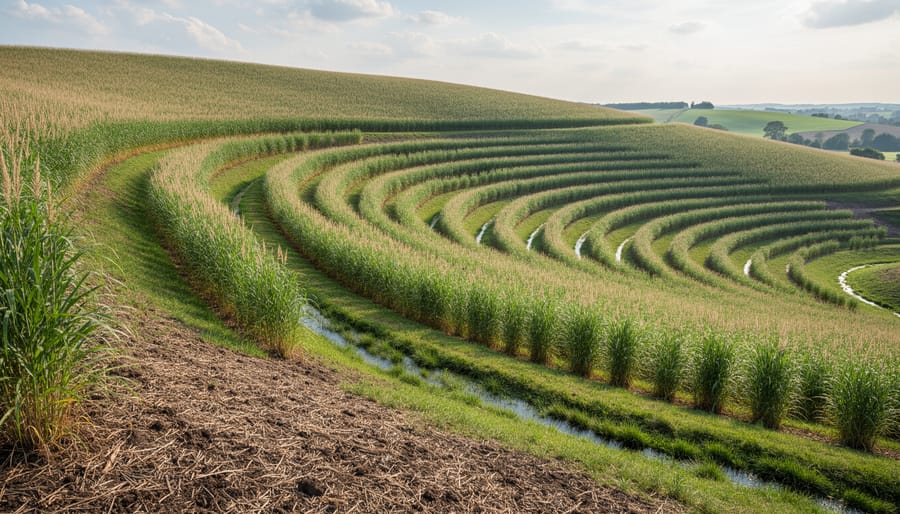
Working with the natural contours of your land rather than against them is one of the most effective ways to protect sloped bioenergy farms from erosion. Contour planting means arranging your crop rows across the slope, perpendicular to the direction water would naturally flow downhill. This simple shift creates hundreds of tiny barriers that slow runoff and give water time to soak into the soil where your crops need it.
Think of each row as a mini-dam. When planted on the contour, rows of switchgrass, eucalyptus, or other bioenergy crops catch rainfall before it gains enough speed to tear away topsoil. The difference is remarkable – farms using contour layouts can reduce soil loss by up to 50% compared to straight up-and-down planting.
A compelling example comes from a mallee eucalyptus operation in South Australia’s Mid North region. After redesigning their field layout to follow elevation lines, they noticed significantly less sediment washing into drainage channels during heavy winter rains. The bonus? Better moisture retention meant healthier crop establishment and improved yields in their second season.
Getting started requires mapping your slope’s elevation changes. Many smartphones now have apps that help identify contour lines, though professional surveying ensures accuracy for larger operations. The investment in proper layout pays dividends through reduced soil loss, better water infiltration, and lower replanting costs. Remember, erosion prevention isn’t just about protecting soil today – it’s about ensuring your land remains productive for decades to come.
Cover Crops That Protect Between Seasons
Between bioenergy crop rotations, your soil doesn’t need to sit bare and vulnerable. Smart growers across Australia are discovering that strategic companion planting strategies using native grasses and legumes create a protective shield during those critical off-season months.
Native grasses like wallaby grass and weeping grass develop extensive root systems that bind soil particles together, preventing erosion while your main crops are dormant. These hardy Australian natives handle our climate extremes beautifully, thriving through dry spells and establishing quickly when conditions improve. The beauty is they’re not aggressive competitors, so they won’t rob your bioenergy crops of nutrients when you’re ready to plant again.
Legumes bring another dimension to your erosion control toolkit. Native species such as native glycine and common hovea don’t just anchor the soil; they’re actually working underground to fix nitrogen, enriching your land for the next planting cycle. A property near Toowoomba achieved remarkable results by seeding native glycine between their eucalyptus rotations, reducing sediment runoff by 65 percent while cutting their nitrogen fertiliser costs the following season.
The timing matters. Plant your cover crops six to eight weeks before harvest, allowing them to establish a strong root network before the main crop is removed. This creates seamless protection without any vulnerable bare-soil periods.
Many growers worry these covers will become weeds, but native species respond well to simple management. A light slashing before replanting controls growth without the need for herbicides, keeping your operation sustainable from paddock to profit.
Mulching and Residue Management
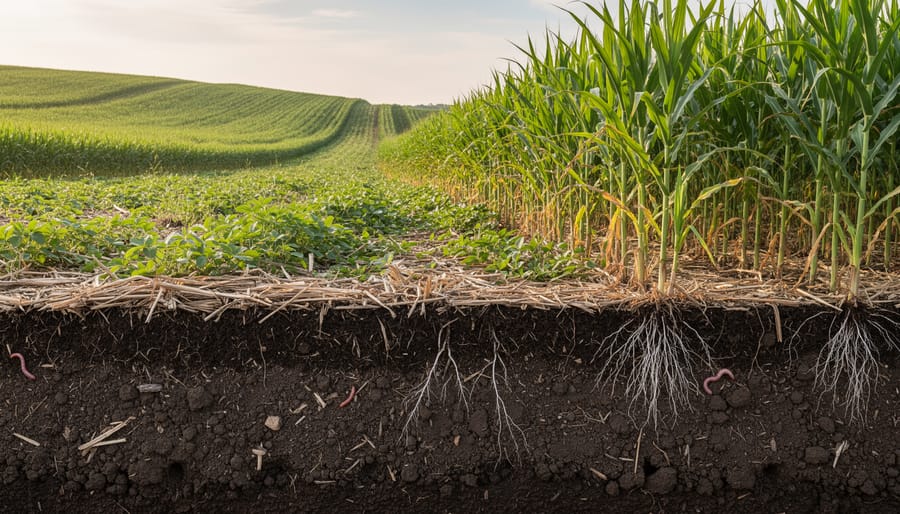
One of nature’s best erosion fighters is already on your farm – harvest residues and organic matter. Rather than burning or removing crop residues after harvest, leaving them on the soil surface creates a protective blanket that shields your land from rain impact and wind while building long-term soil health.
For bioenergy crop growers across Australia, mulching practices deliver multiple wins. Stubble from sorghum, sugarcane trash, and other energy crop residues can reduce soil loss by up to 70% when left as ground cover. These materials break the force of raindrops, slow water movement across paddocks, and give moisture time to soak in rather than run off. As they decompose, they also feed soil organisms that create the stable structure your land needs to resist erosion.
The approach is refreshingly straightforward. After harvesting bioenergy crops, aim to maintain at least 30% ground cover throughout the year – enough to see soil protection benefits without hindering your next planting. Spreading materials evenly prevents bare patches where erosion can start. For sloping country, consider laying residues perpendicular to the slope to create mini-barriers that catch sediment.
A cotton and sorghum grower in Queensland found that maintaining stubble cover reduced his irrigation needs by 15% while eliminating the gully erosion that previously plagued his property. The decomposing organic matter improved his soil structure so much that water infiltration increased noticeably within two seasons. By working with what’s already there, you’re building resilience into your farming system without significant additional cost.
Water Management Infrastructure
Effective water management infrastructure transforms how rainfall and runoff move across bioenergy plantations, dramatically reducing erosion while maximising water availability for crops.
Swales are shallow, vegetated channels built along the contour of slopes that capture and slow water flow. These earth-works allow water to soak into the soil rather than racing downhill, carrying valuable topsoil with it. On a eucalyptus plantation near Albury, strategically placed swales reduced sediment loss by 65 percent during heavy rainfall events while keeping moisture available during dry spells.
Retention ponds and dams serve dual purposes in erosion control. They capture sediment-laden runoff before it leaves your property, while creating valuable water storage for irrigation. These structures need careful positioning at natural low points to work most effectively.
Properly designed drainage systems complement these features by directing excess water away from vulnerable areas. Think of it as creating a road map for rainfall, guiding it where you want it to go rather than letting it carve its own destructive path. Australian growers are finding that investing in these structures upfront saves thousands in topsoil replacement and crop losses down the track.
Success Story: How One Queensland Farm Stopped Losing 15 Tonnes of Soil Per Hectare
When the Mitchell family purchased their 450-hectare property in Central Queensland back in 2018, they had big plans for growing Pongamia trees as a bioenergy crop. What they didn’t anticipate was watching their investment literally wash away during the first wet season.
“We lost roughly 15 tonnes of soil per hectare in those initial months,” recalls Tom Mitchell. “The runoff was cutting deep gullies through our newly planted rows, and we were hemorrhaging money watching our topsoil end up in the creek.”
The problem stemmed from their sloping terrain and the farm’s history of intensive grazing, which had left the soil compacted and vulnerable. Desperate to salvage their bioenergy venture, the Mitchells brought in a soil conservation specialist who designed a comprehensive erosion control strategy.
The solution combined multiple techniques working together. First, they established contour banks along the slope at 30-metre intervals, redirecting water flow and slowing its velocity. Between the tree rows, they planted vetiver grass strips, creating natural barriers that trapped sediment while their deep roots stabilized the soil structure. Around the property’s perimeter, they installed rock-lined diversion channels to manage heavy rainfall events.
The investment wasn’t insignificant. The entire erosion control system cost approximately 28,000 dollars, including earthworks, materials, and labour. Tom admits he hesitated at the price tag, but the alternative was watching his farming operation fail completely.
The transformation came quickly. Within 18 months, soil loss had dropped to under 2 tonnes per hectare annually. The Pongamia trees, no longer competing with erosion damage, grew vigorously. By year three, the farm was producing its first viable seed harvest. Tom calculates they’ve since saved over 85,000 dollars in avoided topsoil loss and replanting costs.
“The erosion control measures have actually improved our yields,” Tom explains. “The moisture retention from those vetiver strips means our trees handle dry spells better. It’s become part of our overall climate-resilient bioenergy practices.”
Today, neighbouring farms regularly visit the Mitchell property to see the results firsthand. The family’s experience proves that strategic investment in erosion control isn’t just environmental stewardship but solid business sense for any bioenergy operation.
Getting Started: Your First Steps This Season
Assess Your Risk Zones
Identifying erosion-prone areas on your bioenergy site doesn’t require expensive consultants or complicated equipment. Start by walking your property after a decent rain, as this reveals the story your land is telling. Look for telltale signs like gullies, exposed tree roots, sediment deposits at fence lines, and muddy water flowing off slopes.
Pay particular attention to three critical zones. First, check any slopes steeper than 5 degrees, especially those longer than 30 metres where water builds momentum. Second, examine areas where you’ve recently harvested biomass crops or cleared vegetation, as bare soil is incredibly vulnerable. Third, inspect natural drainage lines and waterways, where concentrated water flow causes the most damage.
A simple technique many Australian growers use is the “bootprint test”. After rain, walk across suspect areas and notice where your boots sink deeply or where water pools around your footprints. These compacted, waterlogged spots often signal poor infiltration and high runoff risk.
Document what you find with photos on your phone and mark problem areas on a basic property map. This baseline assessment helps you prioritize where to invest your erosion control efforts first, focusing resources where they’ll deliver the greatest protection for your bioenergy operation.
Resources and Support Available to You
You’re not alone in tackling erosion challenges on your bioenergy farm. The Australian Government offers substantial support through programs like the National Landcare Program, which provides funding for sustainable land management practices, including erosion control measures. Many states also run complementary schemes – Victorian farmers, for instance, can access grants through Agriculture Victoria’s On-Farm Infrastructure Support program.
The Landcare network across Australia connects you with local groups where experienced farmers share practical advice and proven techniques specific to your region. These community networks are invaluable for learning what actually works on Australian soils.
Technical support is readily available too. Your state’s Department of Primary Industries employs soil conservation officers who conduct free property assessments and develop tailored erosion management plans. They’ll help you identify problem areas and recommend cost-effective solutions suited to your budget and land conditions.
Several universities and research institutions, including the University of Queensland and CSIRO, offer workshops and extension services focused on sustainable agriculture practices. These sessions often feature real-world success stories from farmers who’ve successfully implemented erosion control while maintaining profitable bioenergy crops.
Don’t overlook industry associations either – Bioenergy Australia provides members with technical resources, networking opportunities, and updates on available grants. Taking advantage of these resources transforms what might seem overwhelming into manageable, achievable steps toward protecting your land investment.
The future of Australian bioenergy agriculture depends on the choices we make today. Controlling soil erosion isn’t simply about ticking environmental boxes—it’s about protecting your most valuable asset and ensuring your operation remains profitable for decades to come. Every tonne of topsoil lost represents diminished productivity, reduced water retention, and ultimately, money flowing away from your bottom line.
The good news? You don’t need to implement everything at once. Start small but start now. Perhaps it’s establishing a simple contour ploughing system on your most vulnerable slope, or planting a strategic windbreak along your northern boundary. Maybe it’s as straightforward as adopting cover cropping between your energy crop rotations. These initial steps create momentum and demonstrate tangible results that justify further investment.
Australian farmers and land managers have already proven that profitable bioenergy production and responsible land stewardship go hand in hand. From Queensland sugarcane operations using minimal tillage to Victorian plantation managers pioneering innovative mulching techniques, success stories are happening right here, right now.
As Australia accelerates toward a renewable energy future, your land can be part of this transformation—but only if it remains healthy and productive. The strategies outlined in this article work because they’ve been tested in Australian conditions by farmers just like you.
Take action today. Your soil, your business, and Australia’s bioenergy future depend on it.