
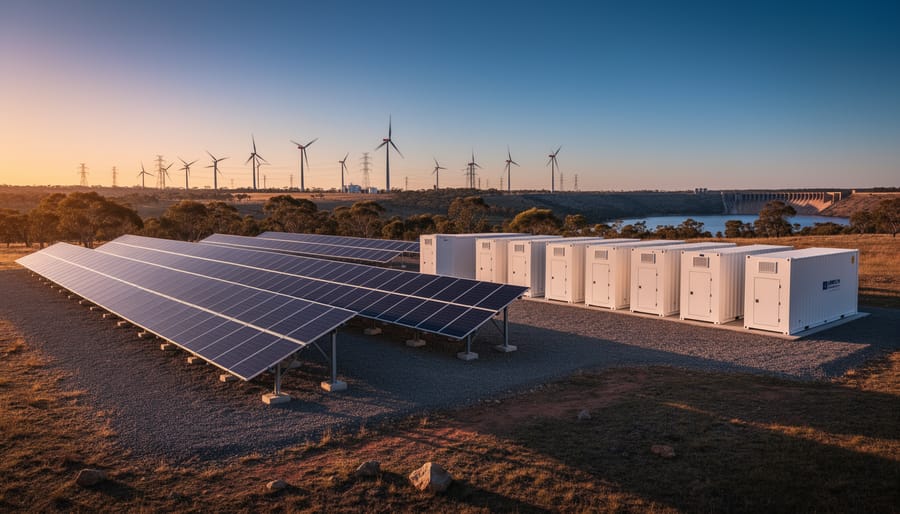
The sun doesn’t shine at night, and wind doesn’t blow on command—this simple reality has sparked one of the most important conversations in Australia’s energy transformation. Intermittency, the natural ebb and flow of renewable power generation, isn’t a fatal flaw but rather a design challenge that innovative Australians are solving right now with battery storage, smart grids, and diversified energy portfolios.
Across the nation, from South Australia’s massive grid-scale batteries to Queensland’s pumped hydro projects, we’re proving that renewable energy can power homes and industries reliably, even when nature takes a break. The key lies not in abandoning renewables but in understanding how renewable energy integration works alongside complementary technologies like bioenergy, which provides consistent baseload power that fills gaps left by solar and wind.
Whether you’re a homeowner considering solar panels, a business leader planning energy strategy, or simply curious about Australia’s renewable future, understanding intermittency empowers better decisions. The good news? Communities nationwide are already demonstrating that with proper planning, diverse energy sources, and smart technology, intermittency transforms from obstacle to opportunity. This article reveals practical solutions, real-world Australian success stories, and clear pathways forward—showing exactly how intermittent renewables are becoming the backbone of our reliable, sustainable energy system.
What Makes Renewable Energy Intermittent (The Reality Behind the Headlines)
The Daily Dance: Solar Energy’s Rhythm
Picture a typical Australian household on a sunny summer day. The rooftop solar panels spring into action at sunrise, hitting peak production around midday when the sun blazes overhead. Yet here’s the catch: at noon, most family members are at work or school, the air conditioner’s off, and energy use sits at its lowest point of the day.
Fast forward to 6 PM. Everyone’s home, the aircon’s working overtime against the afternoon heat, dinner’s cooking, and devices are charging. This is when the household needs power most. But the solar panels? They’re producing minimal energy as the sun dips toward the horizon, and by 7 PM, they’ve clocked off entirely.
This mismatch between when solar energy is abundant and when we actually need it most is the heart of solar intermittency. It’s not that solar doesn’t produce enough energy overall. Rather, it produces brilliantly at the wrong times for typical household rhythms. Without storage solutions or grid support, that valuable midday energy surplus goes unused while evening demand relies on grid power. Understanding this daily dance is the first step toward making solar work smarter for Australian homes.
When the Wind Takes a Break
Wind energy faces its own rhythm of variability across Australia’s diverse landscape. Coastal regions enjoy fairly consistent sea breezes, while inland wind farms experience different patterns throughout the day and seasons. Some days bring strong, steady winds that spin turbines at full capacity, while other days see barely a whisper.
The good news? Australia’s wind patterns are remarkably predictable compared to many other weather phenomena. Meteorologists can forecast wind conditions days in advance with impressive accuracy, allowing grid operators to plan accordingly. What’s more, when positioned strategically across different regions, wind farms rarely all experience calm conditions simultaneously.
Take South Australia’s success story – the state now generates over 60% of its electricity from wind power. They’ve achieved this by spreading wind farms across diverse locations and combining them with battery storage and gas backup. When the wind drops in one area, it’s often blowing strongly elsewhere.
The clever bit is pairing wind with solar energy. Wind often picks up during evening hours when solar panels stop producing, creating a natural complementary relationship. This tag-team approach means renewable energy can cover more hours of the day, reducing our reliance on fossil fuel backup systems.
How Intermittency Affects Your Home and Business
The Evening Energy Gap in Australian Homes
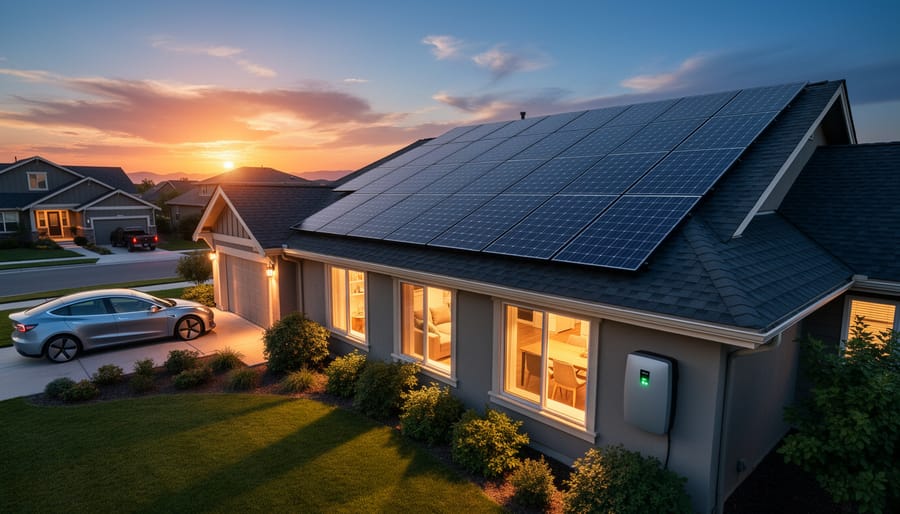
Picture this: It’s 6:30 PM on a winter evening in Melbourne. Families are arriving home from work, flicking on lights, firing up the heater, and starting dinner. The kids are charging devices, the telly goes on, and suddenly household energy demand peaks. Meanwhile, those solar panels on the roof? They’ve clocked off for the day.
This evening energy gap represents one of the most common challenges Australian households face with solar power. During summer, we might catch the tail end of sunlight, but in cooler months, peak home energy use and peak solar generation barely overlap. It’s not a failure of renewable technology, it’s simply a timing mismatch between when nature provides energy and when we need it most.
The good news? This challenge has sparked brilliant Australian innovation. From home battery systems storing daytime sunshine for evening use, to grid-scale solutions balancing supply across regions, we’re already bridging this gap successfully. Many households now time appliances like dishwashers and washing machines to run during sunny midday hours, while batteries handle the evening load. This evening energy gap isn’t a roadblock, it’s an opportunity to use energy more cleverly and invest in complementary renewable solutions that work around the clock.
Farm Operations and Renewable Reliability
Australian farms are brilliantly demonstrating that renewable energy can absolutely meet the demanding 24/7 needs of agricultural operations. The trick lies in smart integration and strategic planning.
Dairy operations face particularly tight schedules—cows need milking twice daily regardless of weather conditions. Progressive farms across Victoria and Tasmania have tackled this challenge by pairing solar installations with battery storage systems, ensuring refrigeration units and milking equipment run reliably around the clock. These smart farm solutions often incorporate backup generators for extra peace of mind during extended cloudy periods.
Irrigation presents another success story. Many Queensland cotton and grain growers schedule pumping during peak solar production hours, maximizing renewable energy use while maintaining healthy crops. Some properties combine wind turbines with solar arrays, creating complementary generation patterns—wind often picks up when sunshine fades.
A standout example is a Riverina vegetable farm that powers its entire cold storage facility with renewables plus battery backup, eliminating diesel costs while maintaining perfect temperature control for premium produce. The operation hasn’t experienced a single harvest loss since transitioning three years ago, proving that with thoughtful design, renewable systems deliver the reliability agriculture demands.
Smart Solutions Australians Are Using Right Now
Battery Storage: Your Personal Energy Reserve
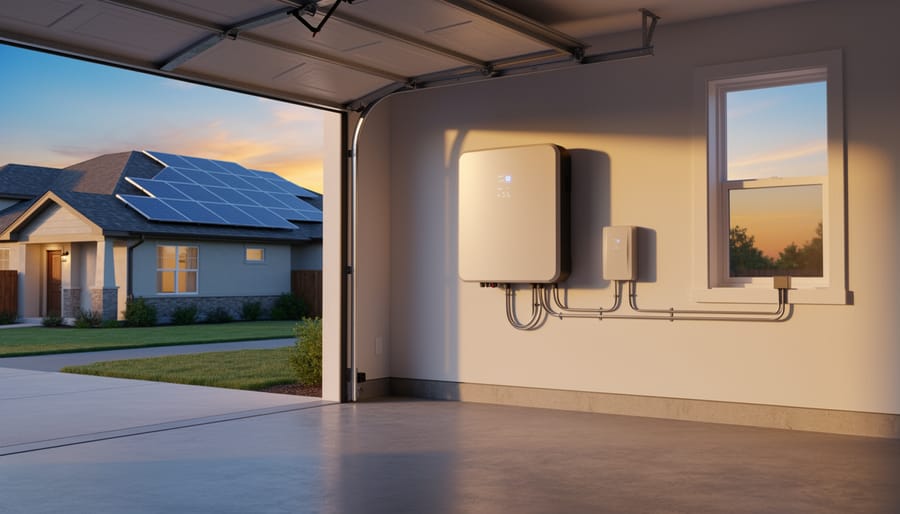
Think of battery storage as a personal energy bank account—when your solar panels produce more electricity than you need during sunny days, the excess gets deposited for later withdrawal. Modern home and business battery systems automatically charge when generation exceeds demand, then release that stored energy during evening peaks or cloudy periods, making your renewable energy supply considerably more reliable.
The technology has become increasingly practical for Australian conditions. Take the Hornsdale Power Reserve in South Australia, which pairs wind energy with the world’s largest lithium-ion battery system. Since its installation, it’s demonstrated how battery storage can respond to grid demands within milliseconds, smoothing out supply fluctuations while reducing electricity costs for consumers throughout the region.
For households, batteries like the Tesla Powerwall or locally-made Redback systems typically store 10-15 kilowatt-hours—enough to power most homes through the evening. While the upfront investment ranges from $8,000 to $15,000, many Australian families find the combination of reduced electricity bills, increased energy independence, and available government rebates makes the maths work favourably over time.
The real beauty? You’re not just managing intermittency for yourself. When thousands of homes operate smart battery systems, they collectively create a distributed network that strengthens grid stability for everyone, turning individual solutions into community-wide resilience.
Bioenergy: The Steady Backup Australians Overlook
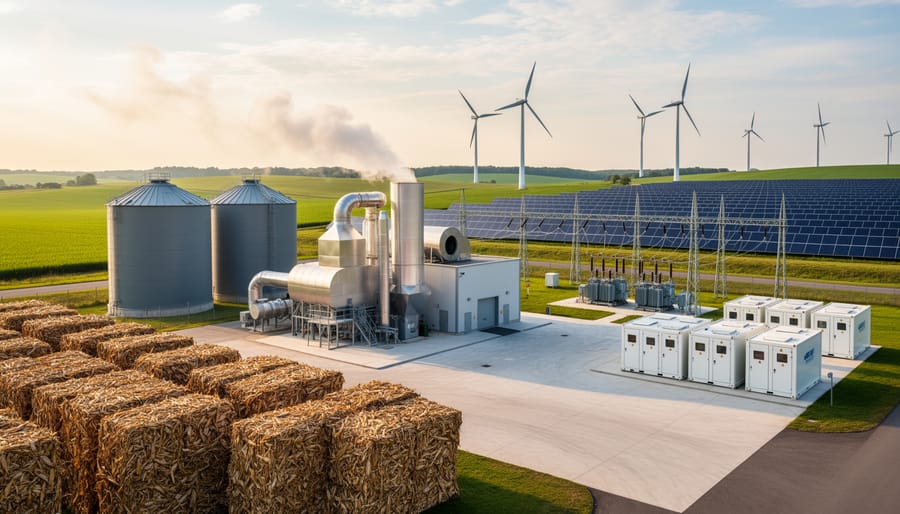
While solar panels sit idle at night and wind turbines stand still on calm days, there’s a renewable energy source quietly working around the clock that most Australians haven’t considered: bioenergy. Generated from organic materials like agricultural residues, food waste, and purpose-grown crops, bioenergy offers the consistent, dispatchable power that perfectly complements intermittent renewables.
Australia’s farms and food processors are already turning what once went to landfill into reliable electricity. Sugar mills in Queensland burn bagasse (leftover sugarcane fibre) to power their operations and feed excess electricity into the grid. Livestock farms convert manure into biogas through anaerobic digestion, creating both power and premium fertiliser. These agricultural waste-to-energy systems transform environmental problems into energy solutions.
What makes bioenergy particularly valuable is its flexibility. Unlike solar and wind, biomass facilities can ramp production up or down to match demand, making them ideal backup power sources during renewable energy gaps. They provide baseload reliability without the emissions of fossil fuels.
For Australian farmers and industries, bioenergy offers multiple benefits: reduced waste disposal costs, additional revenue streams, energy independence, and lower carbon footprints. As we build a renewable energy future, bioenergy deserves recognition as the steady, reliable partner that keeps the lights on when nature takes a break.
Smart Energy Management Systems
Modern smart energy management systems are game-changers for dealing with renewable energy’s natural ebb and flow. These clever technologies automatically adjust when your appliances run, shifting energy-hungry tasks to times when solar panels are pumping out power or wind turbines are spinning at full capacity.
Take Melbourne-based café owner Sarah Thompson, who installed a smart system that runs her commercial dishwashers and refrigeration cycles during peak solar hours. Her energy bills dropped by 40 percent in the first year, and she’s now exporting surplus power back to the grid during quiet periods.
In Brisbane, the Wilson family uses a smart controller that charges their electric vehicle overnight when wind energy is abundant and electricity rates are lowest. Their heat pump hot water system fires up around midday when their rooftop solar is performing best.
Australian businesses are catching on too. A Gold Coast manufacturing facility now schedules non-urgent production processes for times when renewable generation is highest, cutting costs while supporting grid stability. These systems work quietly in the background, learning your patterns and making thousands of tiny adjustments that add up to significant savings and reduced reliance on fossil fuel backup power.
The Grid-Scale Picture: How Australia Is Building Renewable Reliability
Virtual Power Plants: Neighbours Sharing Energy
Imagine your home battery not just storing energy for your family, but sharing surplus power with neighbours during peak demand—that’s the brilliant concept behind Virtual Power Plants (VPPs). These networks connect thousands of household battery systems, creating a distributed energy resource that rivals traditional power stations in capability and surpasses them in resilience.
South Australia leads the charge with its pioneering VPP program, already linking over 4,000 homes into a coordinated network. When one household has excess solar energy stored in their battery, the system intelligently redistributes it to neighbours who need it, or feeds it back to the grid during evening peaks. During the scorching summer of 2022, South Australian VPPs delivered crucial support during heatwave conditions, preventing blackouts while rewarding participating households with reduced electricity bills.
Tesla’s VPP in Adelaide demonstrates the model’s success—participants save an average of $400 annually while contributing to grid stability. Meanwhile, AGL’s VPP program across multiple states has enrolled thousands of Aussie households, proving the concept scales beautifully.
The beauty of VPPs lies in their simplicity for homeowners. Once you’ve installed a compatible battery system, the VPP operator handles everything else through smart software. You continue using energy as normal, but you’re now part of something bigger—a community-powered solution that transforms intermittency from a challenge into an opportunity for shared prosperity.
Mixing the Renewable Energy Recipe
Just like a good recipe needs the right combination of ingredients to create something delicious, mixing different renewable energy sources creates a far more reliable power supply than any single source alone. This is one of the smartest strategies for tackling intermittency.
Think of it this way: solar panels work brilliantly during sunny days but offer nothing at night. Wind turbines generate power when it’s breezy but sit idle during calm weather. Hydroelectric systems depend on water flow, which varies with rainfall. Bioenergy facilities, however, can produce steady, dispatchable power whenever needed, much like a reliable base ingredient that holds everything together.
When you combine these sources, their strengths complement each other beautifully. Solar might dominate midday production, wind often picks up in the evening, hydro provides flexible backup, and bioenergy fills the gaps round the clock. The result? A much smoother, more consistent energy supply.
Australian regions are already proving this recipe works. South Australia blends wind, solar, and battery storage to achieve remarkable renewable energy penetration. Tasmania combines hydro with wind power, creating one of the most reliable clean energy systems in the country. Regional Queensland facilities are increasingly adding bioenergy from agricultural waste to their renewable mix.
The beauty of this approach is that it doesn’t require any single technology to be perfect. By working together, renewable sources cover each other’s limitations, creating a resilient energy system that’s greater than the sum of its parts.
What You Can Do Today (Practical Steps for Homes and Businesses)
For Homeowners: Smart Timing and Storage Options
The good news? You don’t need expensive battery systems to make the most of renewable energy at home. Smart timing makes a massive difference, and it costs nothing.
Start by shifting energy-hungry tasks to daylight hours when solar generation peaks. Run your dishwasher, washing machine, and pool pump between 10am and 2pm. Charge devices during sunny periods rather than overnight. These simple habit changes can slash your grid reliance by 30-40% without any investment.
For those considering storage, battery prices have dropped significantly. A typical 10kWh home battery system now costs $8,000-12,000, down from double that just five years ago. Federal and state incentives can reduce this further—many Australian households qualify for rebates or interest-free loans through programs like Victoria’s Solar Homes initiative or South Australia’s Home Battery Scheme.
Not ready for batteries? Start smaller. Heat your hot water during peak solar hours using a timer (around $50 installed). This stores energy as heat rather than electricity, perfect for evening showers.
Integrating these strategies with sustainable home design principles maximizes results. Adelaide resident Michelle reduced her annual electricity costs by $900 simply by rescheduling appliance use and adding a basic timer to her hot water system—proving smart energy management doesn’t require a massive budget, just smart thinking.
For Businesses and Farms: Building Energy Resilience
For Australian businesses and farms, energy resilience isn’t just about cost savings—it’s about maintaining operations when the grid can’t guarantee supply. Smart operators are discovering that intermittency actually becomes manageable with the right strategies tailored to their operations.
Agricultural enterprises have a natural advantage here. Many farms are already generating bioenergy from waste streams—converting livestock manure, crop residues, and food processing by-products into reliable baseload power through biogas systems. Unlike solar panels that stop producing at sunset, biogas generators provide steady energy precisely when it’s needed most. A dairy farm in Gippsland now powers its entire milking operation using biogas from cow manure, with excess energy sold back to the grid, transforming a waste problem into energy independence.
Load management offers immediate wins for businesses. Manufacturing operations are scheduling energy-intensive processes during peak solar hours, slashing electricity bills by up to 40 percent. Cold storage facilities pre-cool during sunny periods, effectively using their infrastructure as a battery. One Queensland meat processor shifted freezer operations to daylight hours and cut annual energy costs by $180,000.
The real game-changer combines multiple strategies. A Western Australian vineyard integrated solar panels, battery storage, and a biomass system fueled by grape marc and prunings. They’ve achieved 95 percent energy self-sufficiency, maintaining operations during grid outages that previously cost thousands in spoiled product.
For businesses ready to take control, starting with an energy audit reveals where intermittency matters most and identifies the best combination of solutions for your specific situation.
The challenge of renewable energy intermittency isn’t a roadblock—it’s a design question we’re answering brilliantly across Australia right now. From suburban solar installations paired with home batteries to massive grid-scale storage projects powering entire regions, we’re proving every day that smart integration transforms intermittent resources into reliable, clean energy systems.
Australia’s natural advantages—abundant sunshine, strong winds, and innovative spirit—position us perfectly to lead this energy transformation. The intermittency puzzle that once seemed daunting is being solved through technologies already proven in real-world conditions. Whether it’s South Australia running on renewables for days at a time or households reducing their bills while supporting grid stability, the solutions are working.
The beauty of this transition is that it’s not just happening at utility scale. Every solar panel installed, every battery charged, every smart energy decision made in homes and businesses contributes to a more resilient, sustainable grid. You don’t need to wait for perfect technology or government mandates to participate. The tools exist today, the economics make sense, and the environmental benefits are immediate.
Think back to that morning routine we started with—the kettle boiling, the coffee brewing. Increasingly, those everyday moments are powered by sunshine captured yesterday or wind energy stored overnight. That’s not a distant vision; it’s today’s reality for millions of Australians. The intermittency challenge isn’t stopping our renewable energy future—it’s shaping a smarter, more flexible energy system that works with nature’s rhythms rather than against them. Your next step starts now.