
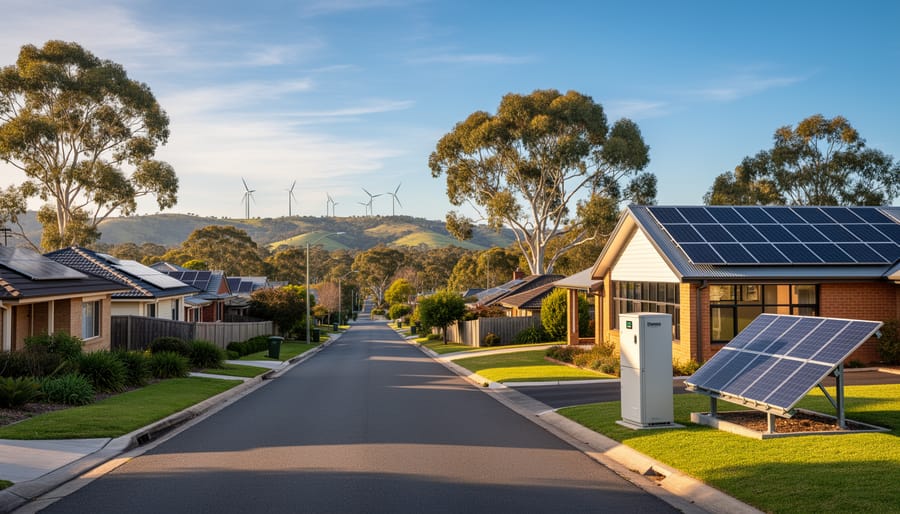
Imagine a neighbourhood where every home generates as much clean energy as it consumes, where electricity bills become a relic of the past, and where the community collectively owns the solar panels and batteries powering their lives. Zero energy projects make this vision tangible by combining energy-efficient building design with renewable energy generation to achieve net-zero energy consumption over a year. Unlike traditional developments that drain resources and inflate costs, these projects slash ongoing expenses while dramatically reducing carbon footprints.
The financial magic happens through community financing models that pool resources and distribute both investment and rewards. Rather than waiting for top-down government initiatives or corporate-driven solutions, community-powered green energy projects empower everyday Australians to take control of their energy future. Community solar gardens, energy cooperatives, and collective purchasing arrangements spread upfront costs across multiple households while delivering shared benefits through reduced electricity bills and potential returns on investment.
Success stories from across Australia demonstrate the transformative potential. The Yackandandah community in Victoria has achieved over 90 percent renewable energy through coordinated solar installations and battery storage, while urban neighbourhoods in Adelaide and Brisbane are implementing shared energy systems that cut individual costs by thousands annually. These projects prove that transitioning to zero energy doesn’t require waiting for perfect technology or government mandates.
The pathway forward combines smart financing with bioenergy integration, particularly valuable for regional communities with access to agricultural waste. By understanding proven financing mechanisms and learning from existing implementations, your community can launch its own zero energy project and join Australia’s renewable energy transformation today.
What Makes a Project ‘Zero Energy’ (And Why It Matters for Australia)
Imagine a home that powers itself—running the air conditioning on a scorching Brisbane summer day, keeping the lights on through a Melbourne winter evening, and still sending excess energy back to the grid. That’s the promise of a zero energy project, and it’s not science fiction. It’s happening right now across Australia.
A zero energy project is simply a building, home, or community that produces as much renewable energy as it consumes over the course of a year. Think of it as balancing your energy books: the solar panels on your roof, perhaps combined with a small wind turbine or bioenergy system, generate enough electricity to match everything you use for heating, cooling, lighting, and daily living.
For Australians, this concept hits close to home—literally. With electricity prices climbing and extreme weather events becoming more common, energy independence isn’t just environmentally responsible; it’s financially smart. A zero energy home in Perth’s northern suburbs, for instance, might save families thousands of dollars annually while dramatically reducing their carbon footprint.
The benefits extend beyond individual households. When communities embrace zero energy principles, they create resilience against blackouts, reduce strain on aging grid infrastructure, and contribute meaningfully to Australia’s emissions reduction targets. In regional areas where power reliability can be challenging, zero energy projects offer genuine energy security.
What makes this particularly exciting for Australia is our natural advantage. We’re blessed with abundant sunshine, increasingly affordable solar technology, and growing expertise in renewable energy systems. Cities like Adelaide and Darwin are already seeing neighbourhoods where homes collectively produce more energy than they consume, proving that zero energy isn’t just achievable—it’s practical, affordable, and scalable.
The zero energy approach transforms how we think about buildings: not as energy consumers, but as power stations in their own right. For a sun-drenched nation like ours, that shift in perspective opens remarkable possibilities.
The Money Problem (And How Communities Are Solving It)
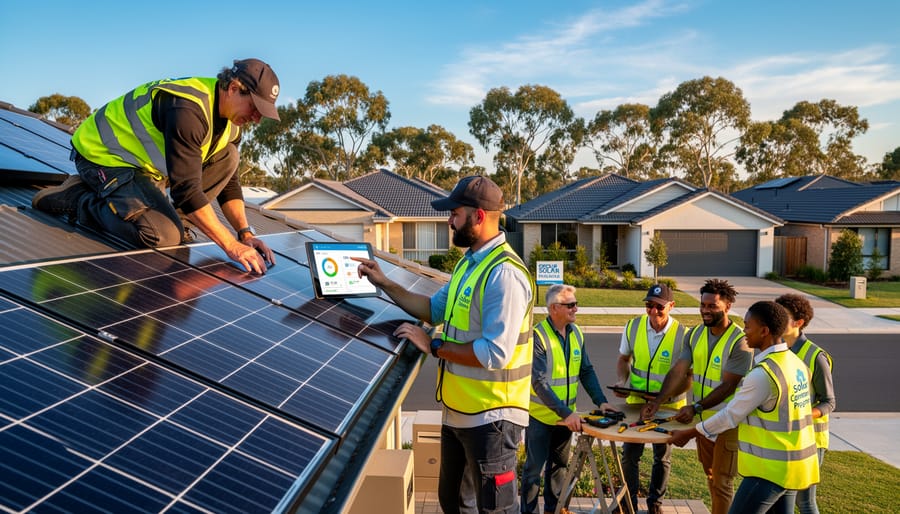
Let’s be honest: the biggest hurdle standing between most Australians and zero energy projects isn’t a lack of interest or environmental awareness. It’s money. The upfront costs of solar installations, battery storage, and bioenergy systems can feel overwhelming, particularly for everyday households, community groups, and small businesses who want to do the right thing but simply can’t write a cheque for $50,000 or more.
This financial barrier has traditionally meant that zero energy projects remained the playground of wealthy investors and large corporations, leaving regular communities on the sidelines. But here’s the good news: that’s changing, and changing fast.
Across Australia, innovative community financing models are turning the traditional funding approach on its head. Rather than waiting for one big investor, communities are pooling resources through cooperative ownership structures, community bonds, and small-scale investment options that allow dozens or even hundreds of people to contribute what they can afford.
Take the community solar garden model, where locals can buy or lease individual panels in a shared array. You don’t need a suitable roof or $20,000 in savings. Instead, you might invest $500 or $1,000 and receive energy credits proportional to your share. Similarly, community energy retailers are partnering with local councils to offer payment plans that treat renewable installations like any other essential infrastructure upgrade.
Some regional towns are even using bioenergy projects, converting local agricultural waste into electricity while creating jobs and keeping investment dollars circulating within the community. The financial returns might be modest, but they’re steady, predictable, and genuinely accessible to ordinary Australians ready to power their own clean energy future.
Community Financing Models That Actually Work
Community Energy Co-operatives
Community energy co-operatives are transforming how everyday Australians access renewable energy by pooling member investments to fund projects that might otherwise be out of reach. These member-owned organisations operate on a simple but powerful principle: when communities come together, they can achieve what individuals cannot alone. Members contribute capital through share purchases, and in return, receive both financial dividends and the satisfaction of supporting clean energy in their local area.
These co-ops typically invest in solar farms, wind installations, and increasingly, bioenergy projects that convert organic waste into reliable power. Members benefit from competitive returns on their investment while directly reducing carbon emissions and creating local employment opportunities. The model democratises renewable energy, making it accessible to renters, apartment dwellers, and anyone who can’t install their own solar panels.
A standout Australian success story is Pingala, a Sydney-based renewable energy co-operative that has helped install community solar systems across the city. Since launching, they’ve facilitated renewable energy access for hundreds of members, proving that collective action delivers real results. Their projects include solar installations on community buildings and educational programs that empower more Australians to embrace clean energy solutions.
The beauty of energy co-operatives lies in their dual purpose: generating clean power while building stronger, more resilient communities. They prove that tackling climate change doesn’t require waiting for government mandates or corporate initiatives. When neighbours invest together in renewable projects, everyone wins through lower emissions, stable returns, and genuine local ownership of Australia’s energy future.
Group Purchasing Programs
Imagine slashing the cost of solar panels by 20-30% simply by joining forces with your neighbours. That’s the power of group purchasing programs, where communities pool their buying power to negotiate better rates on renewable energy equipment. These bulk-buying schemes work beautifully for solar panels, battery storage systems, and increasingly, bioenergy solutions like biomass boilers for community facilities.
Here’s how it works in practice: A Perth community group of 50 households recently secured solar panel installations at $4,500 per home instead of the typical $6,500, saving each family $2,000. In regional Victoria, a farming cooperative negotiated bulk pricing on agricultural waste-to-energy systems, cutting individual costs by nearly 25%.
The process is straightforward. Community coordinators gather expressions of interest, approach suppliers with guaranteed volume, and secure discounted rates that benefit everyone involved. Some programs even include shared purchasing of maintenance services, creating ongoing savings beyond the initial installation.
Beyond cost savings, these programs build community connections and accelerate the transition to zero energy goals. When neighbours see multiple installations happening simultaneously, it creates momentum and normalises renewable energy adoption, turning individual decisions into collective climate action that benefits your hip pocket and the planet.
Community Bonds and Green Loans
Community bonds and green loans are transforming how everyday Australians can support renewable energy right in their own neighbourhoods. These innovative financing tools let residents invest directly in local zero energy projects, from solar farms to biomass facilities, with entry points often starting at just a few hundred dollars. Unlike traditional investments that might feel distant or complicated, community bonds create a direct connection between your money and tangible environmental outcomes you can actually see.
The beauty of this approach lies in its accessibility. You don’t need to be a wealthy investor or financial expert to participate. Many community energy cooperatives across Australia now offer bonds with modest, stable returns typically ranging from 3-5% annually, making them attractive alternatives to standard savings accounts while delivering real environmental benefits. Similar to crowdfunding renewable energy initiatives, these bonds democratise clean energy investment, ensuring that sustainability isn’t just for those with deep pockets. The low barriers mean more people can participate in building Australia’s renewable future while earning fair returns and strengthening community ties through shared environmental goals.
Real Australian Communities Leading the Charge
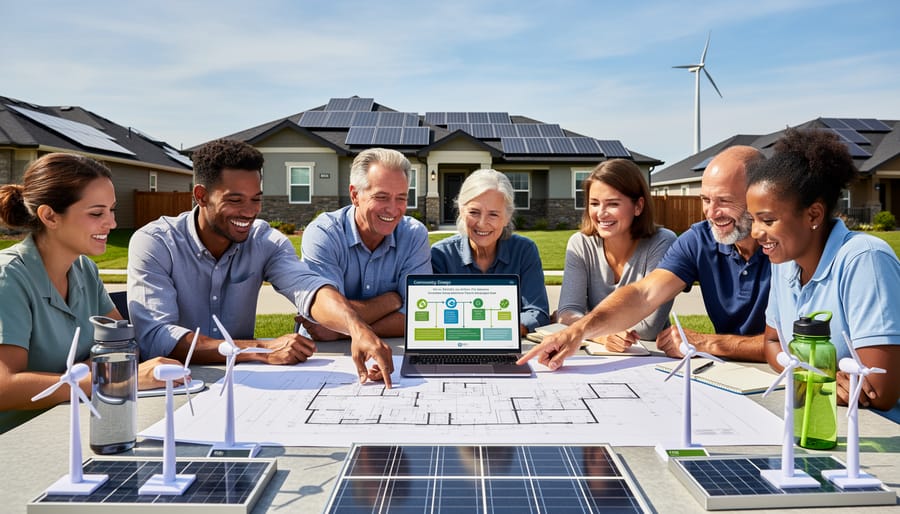
Right across Australia, communities aren’t waiting for governments or big energy companies to lead the way. They’re rolling up their sleeves and proving that zero energy projects powered by local investment can transform towns while keeping dollars in local pockets.
Take the coastal town of Yackandandah in northeast Victoria. This community of just 1,700 people set an ambitious target: 100% renewable energy by 2022. Rather than relying on outside investors, locals pooled their resources through community shares and crowdfunding. The result? Solar installations on community buildings, battery storage systems, and a peer-to-peer energy trading network that lets neighbours sell excess power to each other. The project has created 15 ongoing jobs in maintenance and system management, plus dozens of construction positions during installation. Community members have slashed their energy bills by an average of 60%, with some households now generating income from their solar exports. Beyond the numbers, residents speak proudly about reclaiming energy independence and showing larger cities what’s possible.
Down in Tasmania, the Bruny Island community took a different approach with their zero energy battery trial. Faced with unreliable grid connections across the Bass Strait, islanders invested collectively in a smart battery system that stores solar energy and distributes it when needed most. Local retiree Margaret Thompson, who contributed $5,000 to the project, now sees quarterly returns while her power bills have dropped by half. The system has prevented over 300 tonnes of carbon emissions annually and virtually eliminated the blackouts that once plagued the island during summer heatwaves. Local businesses, particularly tourism operators, report increased confidence knowing their refrigeration and booking systems won’t fail during peak season.
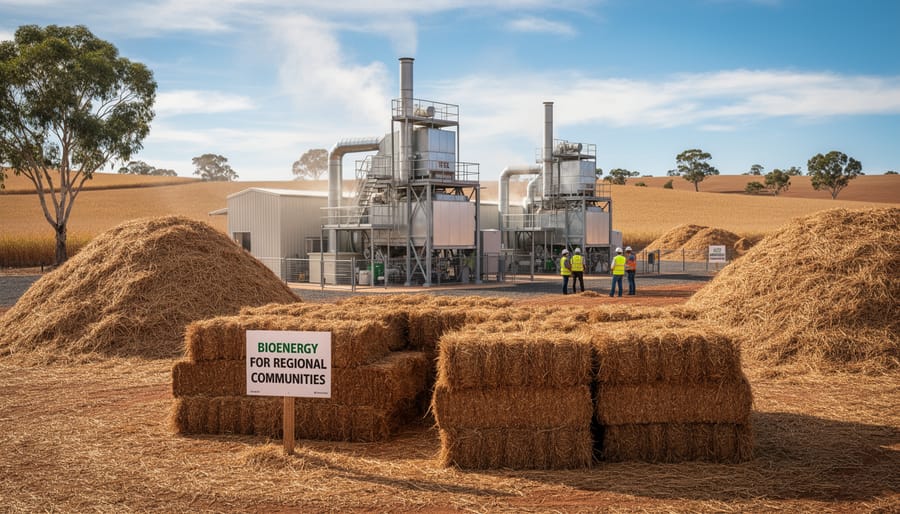
Meanwhile, in Western Australia’s wheatbelt, the town of Merredin combined biomass technology with solar in their community-funded energy hub. Using agricultural waste from surrounding farms, the facility generates both electricity and heat for the town’s hospital and schools. Farmers now have a revenue stream from stubble and crop residues they once burned, earning up to $8,000 annually per farm. The project created 23 permanent jobs in a region that desperately needed employment opportunities, and young people who’d left for the city are returning home to work in clean energy.
These communities share common threads: local ownership, practical problem-solving, and pride in building sustainable futures together. They prove zero energy isn’t just possible, it’s profitable and brings communities closer.
Bioenergy’s Special Role in Zero Energy Communities
While solar panels and wind turbines often steal the spotlight in zero energy conversations, bioenergy quietly provides the steady, reliable backbone that keeps communities powered around the clock. Think of it as the dependable teammate that shows up when the sun sets and the wind drops, turning what would otherwise be waste into valuable, locally-produced energy.
Australia’s agricultural heartland holds tremendous potential for bioenergy generation. Sugarcane bagasse, the fibrous residue left after crushing cane, already powers several Queensland mills and feeds excess electricity back into the grid. In wine regions across South Australia and Victoria, vineyard prunings that once went up in smoke during burn-offs now fuel community energy systems. Even cattle feedlots are getting in on the action, converting manure into biogas that generates electricity while solving waste management challenges.
The beauty of bioenergy lies in its circular nature. A regional town might collect food scraps from households and local restaurants, process organic waste from nearby farms, and combine it all in an anaerobic digester. The result? Clean electricity, nutrient-rich fertiliser for local agriculture, and significantly reduced landfill costs. It’s a win across the board.
Community financing makes these systems accessible to towns that might otherwise struggle with the upfront costs. By pooling resources through cooperative ownership models or community bonds, farming communities can invest in digesters or biomass generators sized to their specific needs. Regional councils often partner with agricultural cooperatives, creating arrangements where farmers supply feedstock while residents invest capital, sharing both the costs and the energy dividends.
Take the example of a Victorian farming community that collectively invested in a small-scale biogas plant. Local dairy farmers provide manure, nearby food processors contribute organic waste, and townspeople purchase community shares. The system now provides baseload power for 200 homes while creating jobs in plant operation and waste collection. It’s the kind of practical, community-driven solution that transforms zero energy from an abstract concept into daily reality, strengthening local economies while cutting emissions.
Getting Your Community Started
Ready to bring clean energy to your neighbourhood? Launching a zero energy project might seem daunting, but breaking it down into manageable steps makes the journey surprisingly achievable. Communities across Australia are already proving that ordinary people can create extraordinary environmental impact.
Start by assessing your community’s energy needs and renewable potential. Gather a small group of interested neighbours and organise an informal chat over a cuppa to discuss your vision. What energy challenges does your community face? Do you have abundant sunshine for solar panels, open spaces for wind turbines, or organic waste that could fuel bioenergy systems? Understanding your local resources helps you identify the most practical renewable solutions for your area.
Next, seek out partners who share your vision. Local councils often have sustainability officers eager to support community initiatives, while regional environment centres can connect you with experienced advisors. Don’t overlook existing community groups like neighbourhood houses or sports clubs that already have established networks and meeting spaces. These partnerships amplify your voice and bring valuable expertise to the table.
Choosing the right financing model comes next. Community bond schemes work brilliantly for communities with members who can invest upfront, while crowdfunding platforms allow broader participation with smaller contributions. Power purchase agreements let communities benefit from renewable installations without large capital outlays. Research government programs like the Australian Renewable Energy Agency grants or state-based community energy schemes that can provide seed funding or matched contributions.
Engaging your broader community requires clear communication and genuine enthusiasm. Host information sessions showing how zero energy projects reduce bills, create local jobs, and protect the environment. Share success stories from similar Australian communities to build confidence. Make participation accessible through various contribution levels, whether financial investment, volunteer hours, or simply spreading the word.
Finally, tap into government support at every level. Federal renewable energy schemes, state sustainability programs, and local council initiatives offer financial assistance, technical advice, and regulatory guidance. Many councils now have dedicated community energy facilitators who can fast-track approvals and connect you with funding opportunities.
Remember, every major community energy project started with just a few committed individuals asking “what if?” Your community’s zero energy future begins with that first conversation, and the support network waiting to help you succeed grows stronger every day.
The Hidden Benefits Nobody Talks About
When the Sunshine Coast’s Palmwoods neighbourhood launched their zero energy project in 2021, organisers expected to slash electricity bills. What they didn’t anticipate was how the initiative would transform their community in unexpected ways.
Property values in participating homes increased by an average of 12% within eighteen months, outpacing neighbouring suburbs without renewable installations. Real estate agents reported that buyers were willing to pay premium prices for homes connected to the shared solar array, viewing it as protection against future energy price hikes.
The project created seventeen local jobs during installation and three permanent positions for ongoing maintenance and community education. These weren’t just any jobs either. Young apprentices gained hands-on experience with cutting-edge technology, with two participants from the local TAFE going on to start their own renewable energy businesses serving regional Queensland.
During the 2022 storms that left thousands without power for days, homes connected to community microgrids maintained electricity for essential appliances. This resilience proved invaluable, particularly for elderly residents and families with young children who used the community centre as a charging hub for neighbours still on the main grid.
Perhaps most surprising was the social impact. Monthly community meetings evolved into barbecues where neighbours who’d barely spoken before now discussed energy data and shared gardening tips. Schools incorporated the project into science curricula, with students monitoring energy production and learning practical sustainability skills.
These ripple effects demonstrate that zero energy projects deliver value far beyond the electricity meter, creating resilient, connected communities prepared for Australia’s energy future.
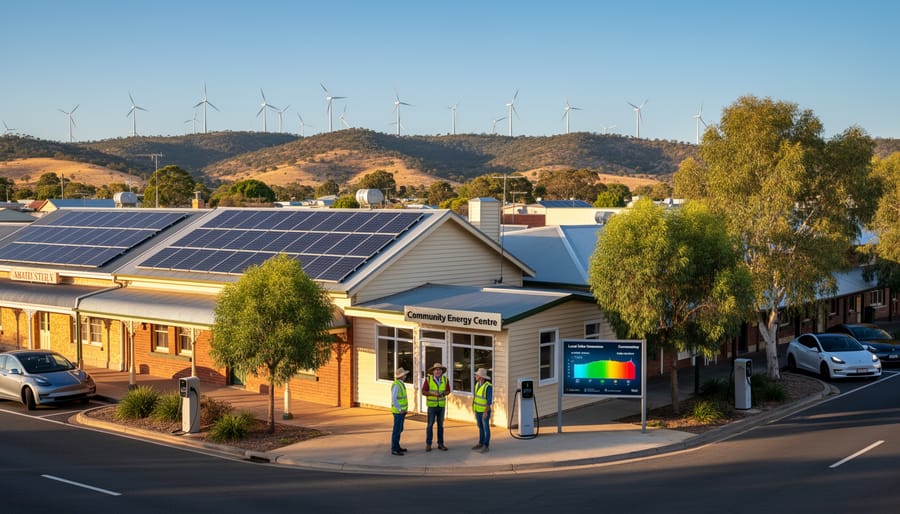
Remember the Adelaide community centre we met at the beginning, where neighbours gathered with a shared dream but limited funds? Today, that centre runs entirely on renewable energy, powered by solar panels and a biomass heating system funded through community bonds. What seemed impossible eighteen months ago has become the heartbeat of their neighbourhood—a testament to what Australians can achieve when we pool our resources and determination.
Zero energy projects aren’t reserved for wealthy suburbs or big corporations. Through community financing models like those we’ve explored, everyday Australians are proving that sustainable energy is within reach for all of us. From regional towns harnessing agricultural waste for bioenergy to urban cooperatives installing shared solar arrays, these success stories share a common thread: people coming together to invest in their collective future.
The path forward is clearer than many realise. Start by connecting with local sustainability groups, attend council meetings about renewable energy initiatives, or simply chat with neighbours who share your vision. Australia’s transition to clean energy isn’t just happening in boardrooms and parliament—it’s taking shape in community halls, local cafes, and backyard conversations across the country.
Your community could be next. The financing tools exist, the technology works, and the appetite for change has never been stronger. Whether you’re in Broome or Ballarat, the opportunity to create lasting environmental and economic benefits is waiting. The question isn’t whether zero energy projects can work in your area—it’s when you’ll take that first step to make it happen.