
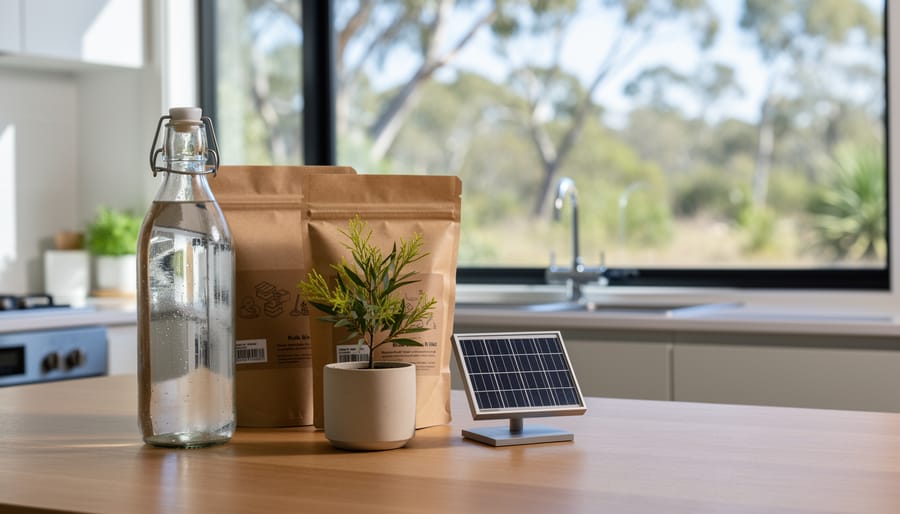
Green consumption means choosing products and services that minimize environmental harm throughout their lifecycle, from raw material extraction to disposal. It’s the practice of making purchasing decisions based on sustainability criteria like energy efficiency, renewable materials, reduced packaging, and ethical production methods.
For Australians navigating the climate crisis in 2026, green consumption has shifted from a niche interest to a practical necessity. Our buying choices collectively shape market demand, influence corporate behaviour, and determine how quickly we transition to a sustainable economy. Every dollar spent sends a signal about the products and practices we want to see more of.
This approach goes beyond simple recycling or buying organic. It’s about understanding the full environmental footprint of what we consume and actively seeking alternatives that support renewable energy, reduce waste, and protect Australian ecosystems. Green consumption intersects directly with ethical consumerism but focuses specifically on environmental impact rather than broader social concerns.
The good news? Green consumption doesn’t require perfection. Small shifts in how we shop for energy, food, transport, and household goods create measurable change. Australian households that have adopted green consumption practices are already reducing their carbon footprints by 20-30% while often saving money on energy bills and reducing waste.
This article explains how green consumption works mechanistically, breaks down the main categories that matter most for Australian households, identifies where your choices have the greatest impact, and provides straightforward strategies you can start using today. Real examples from Australian businesses and households show what’s possible when consumers demand better options.
What Green Consumption Means in Everyday Life
Green consumption is the practice of choosing products and services that reduce harm to the environment throughout their lifecycle. Instead of buying whatever is cheapest or most convenient, it means considering how items are made, what they’re made from, how far they’ve traveled, and what happens to them after you’re done with them. The shift is simple but profound: your purchasing decisions become votes for the kind of economy you want to support.
Traditional consumer behavior focuses primarily on price, convenience, and immediate personal benefit. Green consumption adds environmental impact as a core decision factor. When you choose a renewable energy provider over one burning coal, you’re practicing green consumption. When you buy furniture made from reclaimed timber instead of virgin hardwood, that’s green consumption. When you select cleaning products that biodegrade safely rather than ones laden with harsh chemicals, you’re making a green choice.
In everyday Australian life, this looks like switching to a solar-powered electricity plan or installing panels on your roof. It’s buying locally-grown vegetables at farmers’ markets rather than produce flown in from overseas. It’s choosing a bamboo toothbrush over plastic, selecting paints with low volatile organic compounds for your home renovation, or fueling your vehicle with biodiesel made from Australian canola or waste cooking oil.
- Carbon footprint
- The total greenhouse gas emissions caused by a product, service, or activity throughout its existence. Lower carbon footprints mean less contribution to climate change.
- Lifecycle assessment
- A method of evaluating environmental impacts from raw material extraction through manufacturing, use, and disposal. It reveals the true cost of a product beyond the price tag.
- Renewable resources
- Materials that regenerate naturally within a human timeframe, like timber from managed forests, agricultural crops, or bioenergy feedstocks. They contrast with finite fossil fuels and minerals.
- Circular economy
- An economic system designed to eliminate waste by keeping materials in use through reuse, repair, and recycling. Products are designed for disassembly and their components return as inputs.
- Eco-labels
- Certifications that verify products meet specific environmental standards, such as organic certification, Energy Star ratings, or the Australian Packaging Covenant’s Australasian Recycling Label. They help consumers identify genuinely sustainable options.
The distinction matters because green consumption works at scale. One person switching to green energy makes a small difference. Thousands doing it sends a market signal that reshapes how energy companies invest and operate, accelerating Australia’s transition toward renewables and bioenergy systems.
How Green Consumption Works to Drive Change

The Market Signal Effect
When you buy a product labelled renewable, recycled, or low-emission, you’re not just making a personal choice, you’re casting a market vote. Producers track sales data obsessively. A consistent uptick in demand for green alternatives tells manufacturers and retailers exactly what to invest in next.
This isn’t abstract theory. Australian supermarkets now stock dedicated plant-based sections because enough shoppers consistently chose those products. Energy retailers expanded renewable plans when sign-ups outpaced forecasts. When consumers repeatedly pick solar hot water systems over gas, installers stock more solar units, suppliers ramp up production, and prices drop through economies of scale.
The signal works in reverse too. Products that sit unsold get discontinued. Retailers reduce shelf space for high-emission goods when green competitors outsell them. Manufacturers phase out wasteful packaging or polluting processes when cleaner versions capture market share.
The key is consistency. One-off purchases create noise; sustained buying patterns create clear signals. When thousands of Australians switch to bioenergy heating pellets or choose renewable electricity, those cumulative decisions reshape what businesses produce, stock, and promote. Your purchase joins a chorus that redirects entire industries.
Supply Chain Transformation
When consumers consistently choose products with lower environmental footprints, they force entire supply chains to adapt. Suppliers who want to maintain market share must rethink how they source raw materials, manufacture goods, and move products to market. This pressure creates a domino effect: a retailer demanding sustainable packaging prompts their supplier to find renewable alternatives, which in turn drives the packaging manufacturer to adopt green logistics and cleaner production methods.
Australian businesses are responding by redesigning their supply networks around principles that reduce waste and emissions at every stage. Companies now prioritize suppliers who use renewable energy in production, source materials locally to cut transport emissions, or employ biomass and other regenerative inputs instead of fossil-fuel-based feedstocks. Food manufacturers, for example, increasingly partner with farms using agricultural waste for bioenergy, closing the loop on what once went to landfill.
This transformation extends beyond environmental credentials. Adopting a circular economy model means designing products for reuse, repair, and eventual return to the production cycle as new materials. When consumers demand this approach through their wallets, manufacturers shift from linear take-make-dispose systems to regenerative ones that keep materials and energy in productive use. The result is supply chains that become resource-efficient engines rather than waste generators, fundamentally reorienting how goods reach Australian households.
Forms of Green Consumption Australians Can Practice
Renewable Energy and Bioenergy Choices
Switching your household or business to a renewable electricity provider is one of the most direct ways to reduce your carbon footprint. In Australia, GreenPower-accredited plans guarantee your energy comes from wind, solar, or hydro sources, channeling your monthly bill toward renewable energy reduces emissions and accelerates grid transformation. Installing rooftop solar takes it further: you generate clean power on-site, slash electricity costs, and feed surplus back into the network. Battery storage extends that benefit, letting you bank daytime solar for evening use instead of drawing from fossil-fueled peak supply.
Bioenergy choices deserve equal attention, especially for heating and transport. Wood pellet boilers or biomass heaters burn agricultural and forestry waste, turning what would decompose or be burned in the open into usable warmth with near-zero net emissions. For transport, biodiesel blends (often derived from used cooking oil or crop residues) and bioethanol offer drop-in replacements for petrol and diesel, available at select Australian service stations. Electric vehicles charged on renewable grids take the cleanest route, but biofuels bridge the gap for heavy vehicles and regional areas where charging infrastructure lags.
Each choice sends capital toward Australia’s clean energy industries, proving consumer demand exists and justifying further investment in wind farms, solar arrays, and bioenergy plants. Together, these decisions build the market case for a fully renewable grid by 2050.
Sustainable Food and Agricultural Products
Food choices shape agricultural systems more directly than most consumers realise. Selecting organic produce, locally-grown vegetables, and products from farms practising sustainable farming reduces pesticide use, protects soil health, and cuts transport emissions. Regenerative farming operations build carbon-rich topsoil while producing food, turning agriculture from emission source to carbon sink.
Supporting farmers’ markets, choosing seasonal Australian produce, and buying from suppliers transparent about their practices channels money toward land stewardship rather than industrial monocultures. Reducing meat consumption, particularly grain-fed beef, lowers your dietary footprint substantially, even shifting two dinners per week to plant-based meals makes measurable difference.
The bioenergy connection runs through agricultural waste streams. Crop residues, livestock manure, and food processing by-products from sustainable farms feed anaerobic digesters and biomass plants, generating renewable energy while closing nutrient loops. Your food purchases support farms that can supply both nutrition and clean energy feedstock, strengthening the business case for dual-purpose agricultural systems across regional Australia.
Low-Impact Transport and Mobility
Switching to electric vehicles remains the most direct mobility choice for cutting transport emissions, and Australia’s charging network has expanded significantly across urban centres and major highways by 2026. For those not ready to buy an EV, choosing biofuels when available, particularly ethanol blends at petrol stations or biodiesel for compatible diesel vehicles, reduces fossil fuel dependence. Public transport, cycling, and walking for short trips deliver immediate emissions savings while improving health and reducing traffic congestion. In regional areas where alternatives are limited, combining trips, carpooling, and maintaining vehicles properly to improve fuel efficiency all contribute meaningfully. Even choosing to work from home several days a week cuts commuting emissions substantially. The key is matching transport mode to trip purpose: bikes for local errands, trains for city travel, EVs or biofuel vehicles for longer distances where public options aren’t practical.
Where Green Consumption Makes the Biggest Impact
Not every green purchase carries the same environmental weight. Strategic green consumption focuses on the sectors responsible for the largest share of emissions, where your choices can genuinely move the needle on climate outcomes.
Energy and Power
Energy decisions deliver outsized impact because they touch every aspect of daily life. Switching from coal or gas retailers to 100% renewable electricity providers cuts household emissions by roughly 4-5 tonnes of CO2 annually. Installing rooftop solar amplifies this effect while generating financial returns through feed-in tariffs. In regional Queensland, the Toowoomba Renewable Energy Hub demonstrates community-scale impact, local businesses collectively purchasing green power drove investment in new solar farms that now supply the region. Bioenergy heating systems using wood pellets or agricultural waste reduce emissions from natural gas by 80-90% for schools, hospitals, and manufacturing facilities across Victoria and Tasmania.
Food and Agriculture
What we eat matters enormously. Meat production accounts for 15-20% of Australia’s agricultural emissions, so reducing consumption even modestly, say, two meat-free days weekly, cuts your food footprint significantly. Choosing organic produce supports farming practices that sequester carbon in soil rather than releasing it through synthetic fertilizers. The Coffs Harbour region’s organic farming cooperatives have shown how consumer demand creates viable markets for regenerative agriculture at scale, while their composting programs divert 40,000 tonnes of organic waste from landfill annually, converting it to energy and fertilizer.
Transport and Mobility
Transport ranks as Australia’s third-largest emission source. Electric vehicles eliminate tailpipe emissions entirely when charged from renewables, while biodiesel blends from Australian-grown crops reduce truck and machinery emissions by 60-80%. Perth’s transition to renewable diesel for its bus fleet cut transport emissions by 15% citywide. For individuals without EV access, consolidating trips, choosing public transport, or cycling short distances still reduces your footprint measurably, the average petrol car emits about 4.6 tonnes annually, so halving driving time matters.
Targeting these three sectors simultaneously accelerates impact. A household switching to renewable power, eating less meat, and driving an EV can reduce emissions by 70-80% compared to conventional choices.

Making Green Consumption Work for You
Starting green consumption doesn’t require perfection, it requires a clear strategy and realistic first steps. Begin by auditing your highest-impact spending categories: energy, transport, and food typically account for most household emissions. Switch one area at a time rather than attempting wholesale changes that prove unsustainable.
When evaluating products, look beyond marketing claims to third-party certifications. In Australia, trustworthy labels include the Australian Certified Organic mark, Good Environmental Choice Australia (GECA) certification, and Climate Active carbon neutral certification. These verify actual standards rather than vague “eco-friendly” promises. Check certification websites directly when doubts arise, legitimate certifiers publish searchable registries of approved products.
Greenwashing remains pervasive. Red flags include unsubstantiated claims like “all natural” without specifics, irrelevant environmental boasts that distract from core impacts, and imagery suggesting sustainability without substance. A cleaning product showing forests means nothing if its ingredients pollute waterways. Demand transparency: companies genuinely committed to sustainability publish detailed environmental reports and supply chain data.
Cost concerns are valid but often exaggerated. Many green choices, LED lighting, energy-efficient appliances, reduced meat consumption, save money over time despite higher upfront costs. When premium prices exist, prioritize spending where you have the most influence. A renewable energy contract may cost more initially but shifts market demand toward bioenergy and solar at scale.
Organizations can amplify impact through procurement policies. Set clear sustainability criteria for suppliers, request environmental certifications, and favour local providers to reduce transport emissions. Renewable energy contracts for commercial operations drive particularly significant demand signals, as business consumption typically exceeds household use many times over.
Track your progress with simple metrics: percentage of renewable energy used, kilometres driven in low-emission vehicles, kilograms of organic produce purchased. Visible progress sustains motivation and reveals where adjustments deliver better returns. Green consumption works best as an evolving practice, not a one-time decision.
Common Questions About Green Consumption
Starting green consumption often feels overwhelming, but most concerns have straightforward answers grounded in Australian experience. These questions reflect the practical realities households and businesses face when shifting toward sustainable purchasing.
Is green consumption always more expensive?
Not necessarily. While some eco-friendly products carry premium prices, many green choices save money over time, renewable energy contracts often reduce bills, energy-efficient appliances cut running costs, and buying less stuff eliminates waste spending. The price gap for everyday items like organic food or cleaning products has narrowed significantly in Australian supermarkets.
Does my individual purchasing really make a difference?
Yes, especially when multiplied across communities. Each purchase signals demand to suppliers, and Australian retailers respond quickly to sustained shifts in consumer preference. Your choices also influence friends, family, and colleagues, creating ripple effects that amplify impact beyond your own basket.
Where should I start if I’m new to this?
Begin with your biggest environmental impacts: switch to a renewable energy provider, reduce single-use plastics, and choose local seasonal produce. These three changes deliver measurable benefits without requiring perfection, and you can build from there as habits form.
What about trade-offs when no perfect option exists?
Perfect rarely exists. Choose the option that addresses your priority concern, if reducing emissions matters most, pick the lower-carbon choice even if packaging isn’t ideal. Progress beats paralysis, and imperfect green choices still outperform conventional alternatives.
Can businesses practice green consumption too?
Absolutely. Businesses wield far greater purchasing power than individuals, making their procurement decisions especially influential. Australian companies are increasingly switching to renewable energy contracts, choosing suppliers with strong sustainability credentials, and redesigning supply chains around circular principles.
How do I avoid greenwashing?
Look for third-party certifications like Australian Certified Organic, Fair Trade, or Carbon Neutral, check for specific environmental claims rather than vague language, and research company track records. Genuine sustainable businesses provide transparent information about their practices and impacts.
These concerns shouldn’t stop you from acting. Most Australians practicing green consumption started with doubt and imperfect knowledge, learning as they went. The key insight is that waiting for perfect conditions or complete information delays the benefits that accumulate from consistent, thoughtful choices. Cost barriers often dissolve when you compare lifetime value rather than upfront price, and the “does it matter” question answers itself when you witness local businesses expanding their sustainable ranges in response to customer demand. Trade-offs become easier to navigate once you identify your core values, whether that’s carbon reduction, habitat protection, or supporting ethical labor practices.
Starting small builds confidence and competence. You don’t need to overhaul everything at once or achieve zero-impact perfection. Each green purchase teaches you something about labels, certifications, and the stories behind products, making future decisions faster and more intuitive.
Green consumption isn’t just about buying different products; it’s about reshaping entire markets through the collective weight of our choices. When Australians consistently choose renewable energy, support local sustainable businesses, and prioritize products with genuine environmental credentials, we create demand that redirects investment, innovation, and infrastructure toward a cleaner future.
The connection to Australia’s renewable energy transition is direct and measurable. Every decision to switch to a green energy provider, choose bioenergy heating over fossil gas, or support businesses using renewable inputs sends a signal that reverberates through supply chains. These signals have helped drive the remarkable growth in Australia’s renewable sector, with bioenergy facilities expanding to meet demand and new technologies becoming economically viable precisely because consumers demonstrated willingness to support them.
Think of each purchase as a vote. You’re not just acquiring a product; you’re endorsing a production method, supporting a business model, and funding the next generation of sustainable innovation. When enough of us vote consistently for sustainability, the market responds with better options, lower prices, and accelerated change.
The momentum is building. More Australians than ever understand their purchasing power and are using it deliberately. That collective action is what transforms individual choices into systemic change, and it’s what will define Australia’s energy landscape for decades to come.