

Community engagement isn’t about convincing people to change their behavior through campaigns and messaging. It’s about creating the conditions where collective action emerges naturally because people feel genuinely connected to both the challenge and each other. The nine principles detailed here draw directly from Australian communities that have successfully driven behavioral shifts in waste reduction, renewable energy adoption, and resource sharing, transforming abstract sustainability goals into shared local achievements.
Traditional top-down approaches to environmental change often stall because they underestimate what actually motivates people. A council might launch a composting program with perfect infrastructure and clear instructions, yet see minimal uptake. Meanwhile, a neighboring suburb achieves 70% participation because three neighbors started comparing their garden results over the fence, sparking friendly competition and shared learning that spread organically.
The difference lies in how engagement is structured. Successful community-led initiatives in Australia, from bioenergy cooperatives in regional Victoria to neighborhood solar programs across suburban Sydney, consistently apply principles that prioritize relationships over information delivery, shared ownership over expert instruction, and visible progress over distant targets.
These principles work because they align with how people actually make decisions and sustain new habits. When a community in northern Tasmania reduced household waste by 40% in eighteen months, it wasn’t because residents suddenly understood recycling better. It was because the engagement approach made waste reduction social, visible, and tied to local identity. That’s the framework you’ll find mapped out across the nine principles ahead.
Why These 9 Principles Matter for Sustainable Change
These nine principles weren’t chosen from theory books or academic frameworks alone. They emerged from decades of community research across Australian sustainability projects, particularly in regions where bioenergy facilities, renewable energy cooperatives, and agricultural transitions succeeded in changing collective behavior. From Gippsland dairy farms converting to biogas systems to Torres Strait communities implementing solar programs, the patterns kept appearing: certain approaches consistently moved people from passive interest to active participation.
What makes these principles different from generic engagement advice is their grounding in contexts where the stakes were high and the changes required genuine commitment. Installing a community biogas facility demands more than casual support; it requires farmers to modify operations, councils to adjust regulations, and residents to shift longstanding habits. The projects that achieved this transformation shared common elements, even when the communities looked nothing alike.
Selection criteria focused on principles that appeared across multiple contexts, not just one successful town or a single sector. A principle had to demonstrate effectiveness in both urban and rural settings, work for indigenous and non-indigenous communities, and apply whether the change involved individual household decisions or collective infrastructure investments. The bioenergy sector provided particularly rich examples because these projects require sustained community cooperation rather than one-time decisions, making them excellent laboratories for understanding what drives lasting behavioral shifts toward sustainability goals.
1. Start with Shared Values, Not Solutions
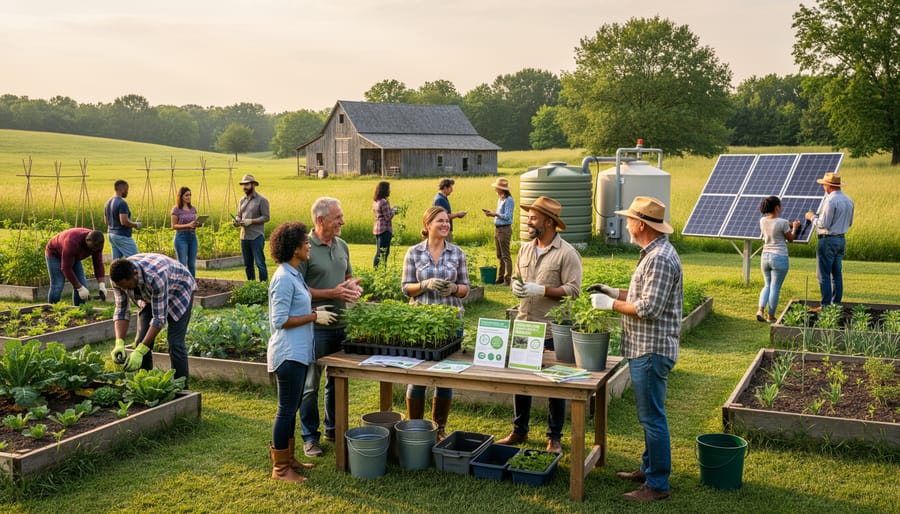
The instinct when launching a community sustainability initiative is to arrive with solutions in hand, blueprints, technology specs, implementation timelines. But communities don’t rally around someone else’s answers. They unite around shared concerns and values they already hold.
Starting with shared values means listening first. What keeps your community up at night? For a Victorian farming community near Ballarat, it wasn’t climate change in abstract terms. It was water security. Years of drought had farmers worried about irrigation costs, crop viability, and whether their kids would inherit viable properties.
When a regional sustainability coordinator approached this community about bioenergy, she didn’t lead with anaerobic digestion technology or renewable energy targets. She started conversations about water usage, agricultural resilience, and keeping farming families on the land. Only after establishing that common ground did the discussion naturally progress to how processing agricultural waste into biogas could reduce water-intensive disposal methods while generating farm income.
This values-first approach created genuine buy-in. Farmers saw the initiative as something for them, not imposed on them. They became active participants because the project addressed concerns they’d already voiced to each other over fences and at local pubs.
The shift seems subtle but it’s transformative. When you begin by acknowledging what a community already cares about, health, economic stability, local character, environmental legacy, you create space for solutions to emerge collaboratively rather than defensively. People engage when they recognize their values reflected back, not when they’re told what’s good for them.
2. Make It Local and Relevant
Global climate change and renewable energy targets can feel abstract to communities dealing with immediate local concerns. The second principle recognizes that people engage most readily when sustainability initiatives directly address the challenges they face daily, whether that’s rising power bills, agricultural waste disposal costs, or limited local employment opportunities.
In 2024, the regional Queensland town of Dalby demonstrated this principle brilliantly. The community wasn’t initially focused on reducing carbon emissions or advancing renewable energy policy. Instead, they were grappling with two pressing problems: mountains of agricultural waste from cotton ginning and grain processing that cost farmers money to manage, and young people leaving town because jobs were scarce.
When developers proposed a biomass energy facility, they didn’t lead with environmental credentials or national energy targets. They explained how converting local agricultural residues into electricity would solve the waste problem farmers were already paying to address, create 85 permanent jobs in the region, and reduce energy costs for local businesses by generating power close to where it was used.
This local framing transformed the conversation. Farmers saw a solution to their waste disposal headaches and a new revenue stream from selling crop residues. Parents saw employment opportunities that might keep their adult children nearby. Business owners saw potential relief from energy costs eating into their margins. The global environmental benefits became a welcome bonus rather than the main selling point.
3. Build Trust Through Transparency
Trust forms the foundation of any successful community engagement effort, and transparency is how you build it. When communities feel they’re getting the full picture, including the challenging parts, they’re far more likely to support sustainability initiatives for the long haul.
Honest communication means sharing what works and what doesn’t. A biomass energy project in South Australia’s Mid North region demonstrated this principle powerfully. Project developers held open forums before breaking ground, addressing concerns about odor, truck traffic, and operational costs head-on. They didn’t promise perfection. Instead, they explained mitigation strategies, shared realistic timelines for addressing issues, and committed to ongoing monitoring. This upfront honesty transformed potential opposition into collaborative problem-solving.
The approach mirrors techniques used in motivational interviewing where acknowledging ambivalence and respecting concerns creates space for genuine dialogue. Communities can spot greenwashing from kilometers away. They’ve heard plenty of promises that never materialized. When you acknowledge limitations, budget constraints, technological uncertainties, or realistic payback periods, you signal respect for their intelligence.
Transparency extends beyond initial conversations. Regular updates about progress, setbacks, and financial performance maintain credibility. The South Australian project published quarterly reports accessible to any community member, including production figures and any incidents. This ongoing openness built a reservoir of goodwill that proved invaluable when unexpected technical delays occurred.
When communities trust the information they’re receiving, they become partners in solutions rather than obstacles to overcome.
4. Enable Genuine Participation

Genuine participation transforms community members from passive recipients of information into active architects of change. Too often, sustainability initiatives follow a predictable pattern: experts develop a solution, present it to the community, collect feedback, then proceed largely unchanged. This approach creates disengagement and resistance, even when the proposed solution is technically sound.
True co-design means inviting communities to shape projects from the earliest stages, defining problems, evaluating options, making trade-offs, and determining implementation approaches. When people genuinely influence decisions that affect them, they develop ownership and commitment that consultation alone cannot achieve.
A Western Australian agricultural cooperative demonstrated this principle when exploring renewable energy options for their grain processing operations. Rather than hiring consultants to design a turnkey biogas facility, they assembled a working group of farmers, facility managers, and technical advisors who collaborated over six months to develop their solution together.
The farmers identified their primary concerns: managing seasonal waste streams, maintaining operational flexibility during harvest, and ensuring the system could be maintained by existing staff. Technical experts provided options and constraints, but the cooperative members made the key decisions about facility size, feedstock mix, and integration with existing operations. This collaborative process surfaced local knowledge about waste availability patterns and maintenance capacity that outside experts would have missed.
The resulting biogas facility reflected genuine community priorities rather than external assumptions. Because members had shaped every significant decision, they championed the project within their networks, reinforcing positive social norms around renewable energy adoption. Implementation proceeded smoothly, with none of the resistance that often accompanies imposed solutions.
5. Celebrate Small Wins Early
Early victories matter. When communities tackle ambitious goals like renewable energy adoption or waste reduction, the path can feel overwhelming. Breaking that journey into visible, achievable milestones keeps people engaged and builds confidence that larger changes are possible.
Psychological research shows that small successes trigger dopamine responses, reinforcing behavior and creating positive associations with the new practice. When community members see tangible results quickly, reduced waste, lower costs, cleaner spaces, they’re more likely to invest energy in next steps.
A community garden in southern Tasmania demonstrates this principle in action. Facing limited enthusiasm for a proposed biomass heating system for local facilities, organizers started smaller. They launched a composting initiative where residents could drop off kitchen scraps, transforming waste into nutrient-rich soil for the communal garden plots.
Within three months, participants saw flourishing vegetables and reduced bin loads. Garden volunteers began discussing the energy potential of organic waste more broadly. That visible win, healthier gardens from what was previously thrown away, opened conversations about biogas digesters and eventually led to a feasibility study for a small-scale anaerobic digestion facility serving multiple properties.
The lesson: don’t wait for the full renewable energy transition to celebrate progress. Identify quick wins that demonstrate value, create immediate benefits, and build the trust needed for bigger commitments. Each small success proves the community can work together effectively and creates advocates for the next phase.
6. Leverage Local Champions

Change rarely spreads through formal announcements or expert presentations, it travels through trusted relationships. When a respected community member adopts a sustainable practice and shares their experience, neighbours pay attention in ways they never would to government campaigns or corporate messaging.
Local champions bridge the gap between abstract environmental goals and practical reality. They speak the language of their community, understand local concerns, and demonstrate that sustainable practices work in familiar conditions. A dairy farmer discussing biogas from manure carries more weight with neighbouring farmers than any technical consultant could.
In the NSW Hunter Valley, dairy farmer Margaret Chen installed a biogas digester to convert livestock waste into energy in 2024. Rather than keeping her system private, she hosted monthly farm visits where neighbouring property owners could see the equipment running, ask frank questions about costs and maintenance, and review her energy bills showing 60% reductions. Within eighteen months, seven nearby farms had implemented similar systems, not because of subsidy programs or environmental advocacy, but because Margaret demonstrated real results in conditions they recognised.
Effective champions don’t necessarily need to be vocal advocates. They simply need to be credible within their community and willing to share honest experiences. Their influence works alongside other engagement approaches, including smart rewards that reinforce adoption, creating multiple pathways for sustainable practices to take root and spread naturally through existing social networks.
7. Make Participation Easy and Accessible
Removing barriers to participation might be the difference between a well-intentioned sustainability initiative and one that genuinely transforms community behavior. While enthusiasm for renewable energy projects often runs high among organisers, that excitement means little if community members can’t actually take part in the process.
The best community engagement creates multiple pathways for involvement rather than a single, one-size-fits-all approach. When a Northern Territory indigenous community explored options for a hybrid bioenergy system to reduce diesel dependency in their remote settlement, traditional consultation methods presented immediate obstacles. Formal evening meetings conflicted with cultural practices and family obligations. Written surveys assumed literacy levels and language comfort that didn’t reflect community demographics. Geographic isolation meant that even “local” gatherings required significant travel for residents from surrounding outstations.
The project team redesigned their engagement approach entirely. They scheduled conversations during existing community gatherings rather than creating new meetings. They offered participation through phone calls, home visits, and yarning circles that respected cultural protocols. Information was shared through visual materials and oral presentations in local languages, not dense technical documents. This flexibility transformed participation rates from token to genuine.
Several practical tactics consistently reduce participation barriers:
- Schedule meetings at varied times (evenings, weekends, school drop-off hours) to accommodate different work schedules
- Provide childcare, meals, or transport assistance when possible
- Create both in-person and online participation options
- Use plain language and visual aids rather than technical jargon
- Offer translated materials for culturally diverse communities
- Ensure physical venues are wheelchair accessible and sensory-friendly
When a regional Queensland town launched a biomass facility consultation, they discovered working families couldn’t attend weeknight meetings. By adding Saturday morning sessions at the local sports club with coffee and pastries, they doubled attendance and heard from demographics previously absent from the conversation. The slight logistical effort yielded dramatically better community input and project support.
8. Connect to Personal Benefits
People embrace change when they see what’s in it for them personally. While saving the planet matters, most Australians respond more readily when sustainability aligns with immediate, tangible benefits to their household budget, health, or livelihood.
Successful community engagement connects environmental goals to personal wins. Lower energy bills resonate more than carbon reduction targets. Cleaner air hits home harder than abstract emission statistics. Local job creation excites more than general economic modeling. The magic happens when collective environmental action delivers individual advantages people can see, feel, and count.
Queensland’s Burdekin sugarcane region shows this principle in action. When growers explored converting bagasse, the fibrous residue left after crushing sugarcane, into electricity, the pitch wasn’t about renewable energy credentials. Mill operators presented hard numbers: reduced energy costs for processing, additional revenue streams from surplus power sold to the grid, and less waste disposal expense. Individual farmers calculated what those savings meant for their operations.
The results spoke louder than any environmental appeal. Growers who adopted bagasse-to-energy systems reported energy cost reductions of 40-60% during crushing season. Some eliminated grid dependence entirely. These tangible returns created enthusiastic champions who convinced neighboring farms through spreadsheets rather than sustainability sermons.
Smart engagement links global goals to local wallets, health, and security. When promoting community initiatives, quantify individual benefits first. Pair digital marketing campaigns with personalized cost calculators. Show neighbors’ actual savings. Make personal advantage the entry point, and collective environmental impact becomes the welcome result.
9. Sustain Momentum Through Ongoing Connection

When the initial buzz fades and the novelty wears off, that’s when real community engagement proves its worth. Sustaining momentum isn’t about maintaining constant excitement, it’s about building habits, rhythms, and relationships that keep people connected to the change they’ve set in motion.
The Canberra Community Energy Cooperative offers a compelling example. After their solar farm launch generated initial enthusiasm, organisers recognised they needed more than quarterly newsletters to maintain involvement. They established monthly “energy evenings” where members could drop in, review performance data, discuss expansion ideas, and share their own household sustainability wins. Some sessions featured guest speakers; others were simply social gatherings around shared values.
The cooperative also created evolving roles that matched members’ changing circumstances. Early champions who’d spent hours on the initial campaign could step back to advisory positions, while new members found entry points through smaller tasks, monitoring social media, greeting visitors at site tours, or coordinating school education programs. This rotation prevented burnout while broadening ownership across the community.
Regular, transparent communication proved essential. The cooperative sent brief monthly updates highlighting real outcomes: kilowatt-hours generated, carbon offset, dividend projections. They celebrated milestones, not just big ones like hitting production targets, but smaller achievements like a successful school visit or a new business partnership. This steady drumbeat of progress, punctuated by opportunities to contribute, transformed initial participants into long-term stakeholders who felt the project genuinely belonged to them.
Putting the Principles into Practice
These nine principles aren’t meant to be applied in isolation or treated as a rigid checklist. They work best when woven together, each reinforcing the others to create a resilient framework for community-driven change. The most successful Australian sustainability initiatives, from regional bioenergy projects to urban waste reduction programs, have typically combined three to five of these principles simultaneously, adapting their emphasis based on local context and project stage.
Start by assessing where your community currently sits. If you’re just beginning engagement around renewable energy or sustainable practices, prioritize establishing shared values and building trust through transparency. These foundational principles create the psychological safety needed for deeper participation. A farming community exploring biogas might begin with conversations about water quality and soil health before introducing technical solutions, while an urban neighborhood might connect through concerns about energy costs and local resilience.
As momentum builds, layer in genuine participation and local champions. Let community members shape the solution rather than simply voting on pre-determined options. That Victorian farmers’ cooperative didn’t just approve an expert-designed biogas system; they co-created it based on their operational knowledge and local conditions. Their investment, both financial and emotional, grew from having genuine ownership.
Don’t wait until your project is perfect to celebrate progress. Early wins matter enormously for maintaining engagement during the inevitable challenges of collective behavioral change. A Sunshine Coast community group didn’t wait for their full-scale composting facility to celebrate; they showcased the first month’s diversion of organic waste from landfill, making the impact tangible and immediate.
Adapt these principles to your community’s pace and culture. Remote indigenous communities in the Northern Territory might emphasize different participation channels and timing than a Melbourne suburb, but the underlying principles remain sound. The flexibility lies in application, not abandonment of core concepts. Regional Queensland towns have successfully combined principles around local relevance and personal benefits when presenting bioenergy as both waste solution and job creator, while ACT urban cooperatives emphasize ongoing connection and easy accessibility for time-poor city residents.
Common Questions About Community Engagement for Behavioral Change
How long does it take to see behavioral change from community engagement?
Genuine behavioral shifts typically emerge over 6-18 months, though you’ll often see initial participation within weeks. The Victorian farming community’s transition to bioenergy showed early interest in the first month, but meaningful adoption of new practices took nearly a year as trust deepened and early adopters demonstrated results. Rushing this timeline usually backfires, communities need space to move from awareness through consideration to action at their own pace.
How do you measure success in community engagement projects?
Track both participation metrics (meeting attendance, volunteer hours, survey responses) and outcome indicators (waste diverted, energy consumption changes, new practices adopted). The most telling measure is sustained involvement beyond the initial launch phase.
What if vocal opponents dominate early meetings?
Resistance often signals unaddressed concerns rather than fixed opposition. Create multiple participation channels so quieter supporters can engage separately, address specific objections transparently, and involve respected local voices who can bridge divides.
Do these principles work differently in urban versus rural communities?
The principles themselves remain constant, but application varies. Rural communities often prioritize economic benefits and trust existing relationships, while urban settings may need more structured outreach and emphasize environmental health impacts over agricultural productivity.
Which principle should we start with?
Begin with building trust through transparency and identifying shared values. These create the foundation for everything else, without them, even well-designed participation mechanisms will struggle to gain traction.
Don’t expect perfect implementation from day one. The ACT community energy cooperative initially struggled with sustaining momentum, adjusted their approach based on member feedback, and eventually built the ongoing connection that kept people involved. Your community’s path will have its own rhythm, these principles simply provide the map, not a rigid timeline.