
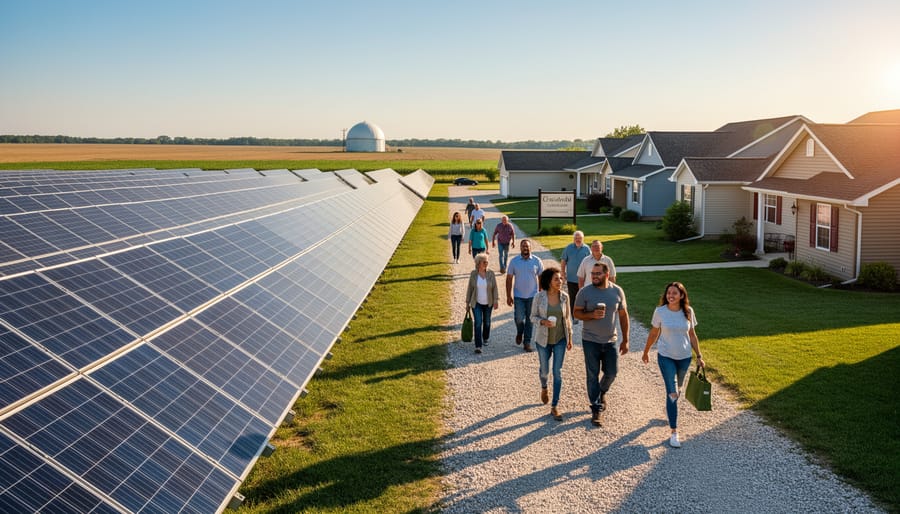
In the heart of America’s Midwest, a quiet revolution is reshaping how entire neighbourhoods access clean energy—and it holds powerful lessons for Australian communities ready to break free from traditional energy constraints. Ohio’s community solar programs allow residents, businesses, and organisations to share the benefits of solar installations without requiring rooftop panels, making renewable energy accessible to renters, apartment dwellers, and those with shaded properties.
This cooperative approach mirrors the community-driven renewable energy models gaining momentum across Australia, where neighbours are pooling resources to build shared bioenergy and solar facilities. The Ohio model demonstrates how collective action transforms renewable energy from an individual luxury into a community right, reducing costs through economies of scale while strengthening local resilience.
What makes Ohio’s experience particularly relevant for Australian audiences isn’t just the technology—it’s the proven framework for bringing people together around shared environmental and economic goals. From rural farming communities to suburban developments, Ohioans have created replicable blueprints that address common barriers: high upfront costs, property limitations, and lack of technical expertise.
For Australians exploring bioenergy cooperatives or regional renewable projects, Ohio’s journey offers tangible evidence that community-supported energy works. Their success stories reveal how proper governance structures, transparent benefit-sharing, and inclusive participation create lasting change. Whether you’re a local council officer investigating renewable options, a community group seeking energy independence, or a business leader committed to sustainability, understanding Ohio’s community solar evolution provides practical strategies for implementing similar initiatives across Australian towns and cities. The transition to renewable energy needn’t be a solitary journey—Ohio proves that communities achieve more when they harness the sun together.
What Makes Ohio’s Community Solar Model Different
The Shared Ownership Advantage
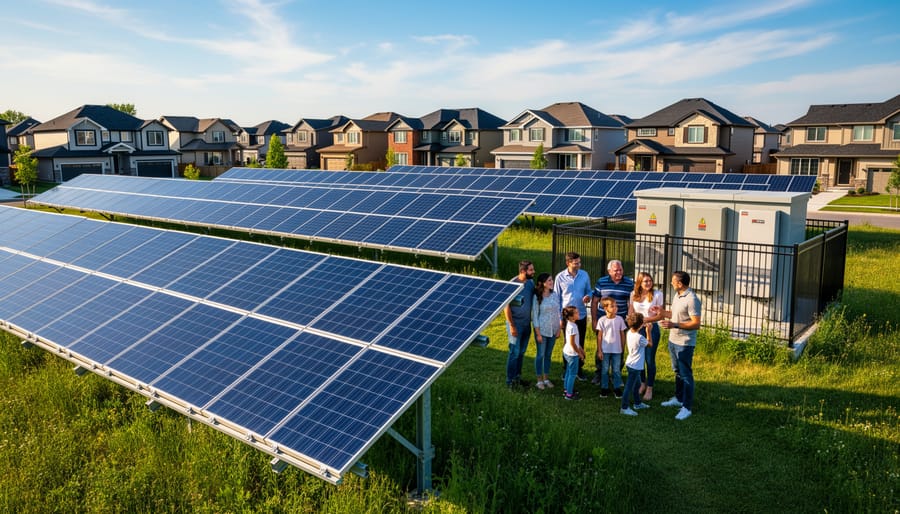
Ohio’s community solar model demonstrates how everyday people can access clean energy benefits without the upfront costs or suitable rooftops traditionally required. Through community solar programs, multiple households and businesses collectively invest in or subscribe to a single, larger solar installation located off-site. Rather than installing panels on individual properties, participants receive credits on their electricity bills proportional to their share of the solar energy produced.
This shared ownership approach removes common barriers to renewable energy adoption. Renters, apartment dwellers, and those with shaded or unsuitable roofs can now benefit from solar power. One Ohio project saw 150 residents collectively invest in a 2-megawatt solar farm, with each subscriber saving an average of 15 percent on annual energy costs while supporting local clean energy development.
The beauty of this model lies in its accessibility and scalability. Communities pool resources to achieve what individuals cannot accomplish alone, creating a powerful pathway toward energy independence. For Australian communities exploring similar renewable initiatives, whether through solar or bioenergy cooperatives, Ohio’s success offers an inspiring blueprint for democratizing clean energy access while building stronger, more resilient local energy networks.
Breaking Down Barriers to Entry
Ohio’s community solar model brilliantly dismantles the traditional roadblocks that have kept many from joining the renewable energy revolution. Instead of requiring substantial upfront investment—often tens of thousands of dollars for rooftop installations—community solar allows participants to subscribe to a shared solar farm with minimal or no initial costs. This means families and businesses can start benefiting from clean energy immediately, regardless of their financial situation.
The model is particularly transformative for renters, who make up a significant portion of urban populations. Rather than being locked out of solar benefits due to lack of property ownership, renters can now subscribe to community solar projects and receive credits on their electricity bills. It’s a fair dinkum game-changer for those who’ve felt excluded from the solar boom.
Similarly, homeowners with shaded properties, aging roofs, or heritage-listed buildings no longer face impossible choices. Community solar sidesteps these physical limitations entirely. One inspiring Ohio success story involves a retirement community where elderly residents collectively subscribed to a nearby solar farm, reducing their energy costs while contributing to environmental stewardship—proving that practical barriers needn’t prevent climate action. This accessible approach demonstrates how community-driven models can democratize renewable energy, offering valuable lessons for Australian bioenergy initiatives seeking inclusive participation.
Lessons From Ohio: Applying Community Models to Bioenergy
From Solar Arrays to Biomass Facilities
The principles that make Ohio’s community solar programs successful translate beautifully to bioenergy initiatives. Just as neighbors pool resources to invest in shared solar arrays, communities can collectively support biomass facilities that transform local agricultural waste, forestry residues, and organic materials into clean energy. The investment model remains remarkably similar: participants contribute financially to the project’s development and receive energy credits or direct power benefits in return.
In community-supported bioenergy projects, the feedstock often comes from the very land surrounding the facility. Farmers contribute crop residues like wheat straw and corn stalks, timber operations supply wood chips and sawdust, and municipal partners provide organic waste streams. This creates a circular economy where waste becomes wealth, generating both renewable energy and additional income for local producers.
The shared ownership structure addresses one of bioenergy’s biggest barriers: the substantial upfront capital required for processing facilities. By distributing investment across dozens or hundreds of stakeholders, projects become financially accessible while keeping decision-making power within the community. Participants benefit from stable energy prices, reduced waste disposal costs, and the satisfaction of supporting genuine local sustainability. The Ohio model proves that when communities unite around renewable energy, they create resilient systems that benefit everyone involved while reducing environmental impact.
The Power of Local Ownership
When communities take ownership of their renewable energy projects, something remarkable happens. Rather than seeing energy infrastructure as something imposed from outside, residents become active participants in their clean energy future. Ohio’s community solar initiatives demonstrate this beautifully, showing how local ownership transforms renewable projects from mere facilities into shared community assets.
The economic benefits are tangible and stay close to home. When community members invest in local solar projects, profits circulate within the region rather than flowing to distant corporations. This creates a multiplier effect—funds support local jobs during installation, maintenance positions over the project’s lifetime, and returns that members can reinvest in their communities. One Ohio township found that their community solar project generated enough revenue to fund local environmental education programs, creating a virtuous cycle of sustainability awareness.
Perhaps most importantly, local ownership builds genuine grassroots support for renewable energy infrastructure. When your neighbours are stakeholders, opposition often transforms into advocacy. Communities become ambassadors for clean energy, sharing their positive experiences and inspiring others to follow suit. This organic growth proves far more sustainable than top-down mandates.
For Australian communities considering similar ventures, whether solar or bioenergy projects, the lesson is clear: ownership matters. By ensuring locals have meaningful stakes in renewable initiatives, you’re not just building infrastructure—you’re cultivating a culture of environmental stewardship that will sustain momentum for generations to come.
Real Success Stories: Communities Taking Control of Their Energy
The Rural Cooperative That Cut Energy Bills by 30%
In rural Ohio’s Adams County, the Bright Horizons Solar Cooperative transformed how 47 farming families power their properties. Launched in 2021, this community solar initiative delivered remarkable results that demonstrate what’s possible when neighbours work together toward shared renewable goals.
The cooperative installed a 500-kilowatt solar array on previously unused agricultural land, with each participating household subscribing to a portion of the generated electricity. Within eighteen months, members saw their monthly energy bills drop by an average of 30 percent, freeing up funds for farm improvements and family needs. For dairy farmer Sarah Mitchell, the savings meant she could finally upgrade her cooling equipment without stretching the household budget.
Beyond financial benefits, the project eliminated approximately 420 tonnes of carbon emissions annually, equivalent to removing 90 cars from the roads. The cooperative’s structure meant even renters and those with shaded properties could access clean energy without installing panels on their own roofs.
What made this project particularly successful was the community-first approach. Monthly meetings kept everyone informed, while a simple credit system on electricity bills made tracking savings straightforward. Local contractors handled installation, creating jobs and building regional expertise in renewable infrastructure.
For Australians exploring similar models, this Ohio example proves that community solar works exceptionally well in agricultural regions where land availability meets strong community ties. The cooperative structure shares both risks and rewards fairly, making renewable energy accessible to households that might otherwise face barriers to participation.
Agricultural Communities Turning Waste Into Watts
While Ohio’s community solar initiatives have captured attention, the concept of community-supported renewable energy extends brilliantly into agricultural bioenergy projects. Farming communities across America are discovering that yesterday’s crop residue becomes tomorrow’s clean electricity, creating a powerful circular economy that benefits everyone involved.
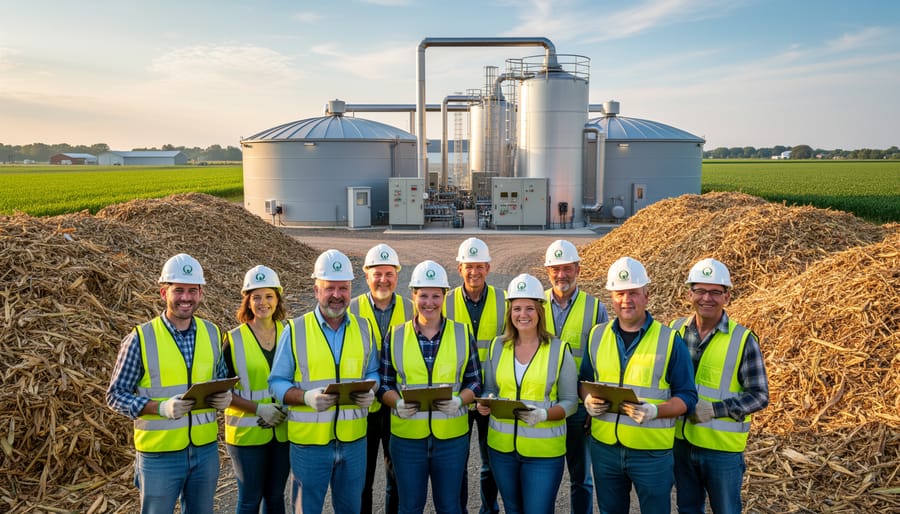
In rural Ohio, several farming cooperatives have pioneered bioenergy projects that mirror the collaborative spirit of community solar. The Greenfield Farm Collective, for instance, pools corn stover, wheat chaff, and other agricultural residues from twenty-three local farms. These materials, once burned or left to decompose, now fuel a biomass generator providing electricity for over 400 households. Farmers receive payment for their waste materials, the community gains affordable renewable power, and the environment benefits from reduced methane emissions.
What makes these initiatives particularly inspiring is their accessibility. Unlike large-scale renewable projects requiring significant capital, community-supported bioenergy can start small. The Pleasant Valley Farmers Network began with just seven farms contributing livestock manure to an anaerobic digester. Five years later, their operation powers 200 homes and produces nutrient-rich fertilizer as a byproduct, which members purchase at reduced rates.
These agricultural communities demonstrate that renewable energy needn’t be complicated or distant. They’re creating local jobs, keeping energy dollars within their regions, and proving that sustainability and profitability can work hand-in-hand. The model offers valuable lessons for Australian farming communities considering similar ventures, showing how cooperation and innovation transform waste streams into valuable energy resources.
The beauty lies in simplicity: what grows from the earth eventually returns to power it, with communities reaping benefits at every stage of the cycle.
What Australian Communities Can Learn and Apply
Australia’s Unique Bioenergy Opportunity
Australia sits on a goldmine of renewable resources that many communities haven’t yet tapped into. With vast agricultural lands producing millions of tonnes of crop residues annually and extensive forestry operations generating substantial woody waste, the country has everything needed to become a bioenergy powerhouse. The real question isn’t whether we have the resources, but how we can work together to transform them into clean, reliable energy.
Community-supported models offer a practical pathway forward, similar to how Ohio residents have pooled resources for solar projects. Imagine regional farming communities establishing shared bioenergy facilities that process local agricultural waste into electricity and heat. Rather than burning stubble or watching timber offcuts pile up, communities could convert these materials into valuable energy while reducing fire risks and greenhouse gas emissions.
The beauty of this approach lies in its accessibility. A sugar cane farming community in Queensland successfully demonstrated this by establishing a cooperative bioenergy plant that processes bagasse from multiple farms. The facility now powers 500 homes whilst providing farmers with additional income from their waste products. It’s a fair dinkum win-win situation.
Western Australia’s timber towns are exploring similar opportunities, where sawmill residues could fuel community heating systems and generate electricity. These projects create local jobs, strengthen regional economies, and give communities direct control over their energy future. When neighbours work together, sharing both investment and benefits, transforming waste into energy becomes achievable for communities of all sizes.
Regulatory and Policy Considerations Down Under
Australia’s journey toward community-driven bioenergy initiatives requires supportive regulatory frameworks that mirror the collaborative spirit of successful overseas models like Ohio’s community solar programs. Currently, Australian renewable energy policy focuses primarily on large-scale projects and rooftop solar, leaving a gap for community-scale bioenergy ventures that could transform agricultural and forestry waste into reliable power.
The good news is that momentum is building. Several states have begun exploring feed-in tariffs and renewable energy certificates specifically designed for smaller-scale biogas and biomass projects. Victoria’s leadership in supporting community energy groups through grant programs demonstrates what’s possible when government backs grassroots innovation. Meanwhile, the Australian Renewable Energy Agency has funded pilot projects that prove community bioenergy can work here.
For community-driven bioenergy to truly flourish Down Under, we need policies that simplify grid connection processes, provide fair compensation for energy fed back into the network, and offer accessible financing options for community groups. Learning from Ohio’s approach, where communities pool resources and share benefits equitably, Australian policymakers could establish clear pathways for farmer cooperatives, regional councils, and community groups to develop bioenergy projects that serve local needs.
The key is creating frameworks that recognise bioenergy’s unique advantages: it provides baseload power when the sun isn’t shining, creates regional jobs, and solves waste management challenges simultaneously. With thoughtful policy support, Australian communities could lead the way in demonstrating how collaborative renewable energy projects benefit everyone involved.
Getting Started: How Your Community Can Join the Movement
Ready to bring community-supported renewable energy to your corner of Australia? Whether you’re a farmer, local council member, or passionate community advocate, establishing a collaborative bioenergy project is more achievable than you might think.
Start by gathering interested stakeholders in your area. Host an informal community meeting at the local hall or café to gauge interest and identify potential partners. Many successful Australian renewable projects began with just a handful of enthusiastic residents discussing possibilities over coffee. Look for farmers with agricultural waste, local businesses seeking energy cost reductions, and communities taking control of their energy independence.
Next, conduct a local resource assessment. What biomass materials are available in your region? Sugarcane bagasse, forestry residues, and agricultural waste can all fuel community bioenergy systems. Connect with local agronomists or sustainability consultants who understand your region’s specific conditions.
Research available funding opportunities through programs like the Australian Renewable Energy Agency grants, state government initiatives, or community investment schemes. Many regions offer financial support specifically designed for community-led renewable projects.
Form a working group with clear roles and responsibilities. You’ll need people skilled in project management, finance, technical operations, and community engagement. Consider partnering with established renewable energy cooperatives who can share their experience and potentially provide mentorship.
Finally, start small if necessary. A pilot project demonstrating feasibility can build momentum and attract larger investment. Success breeds success, and even modest beginnings can inspire broader community participation. The journey toward energy independence starts with that first conversation, that initial meeting where possibility transforms into action.
The community solar movement in Ohio demonstrates something truly inspiring: when everyday people join forces around renewable energy, remarkable transformations unfold. These collaborative models prove that sustainable power generation isn’t solely the domain of massive corporations or government initiatives. Instead, communities themselves can drive the renewable energy revolution, sharing both the responsibilities and rewards.
What makes this particularly exciting is how these principles extend beyond solar panels. Community-supported bioenergy projects across Australia are already showing similar promise, converting agricultural waste into power whilst strengthening rural economies. When locals take ownership of their energy future, they’re not just reducing emissions—they’re building resilience, creating jobs, and demonstrating that environmental stewardship and economic prosperity can walk hand-in-hand.
The success stories from Ohio and emerging Australian projects paint a hopeful picture. They show us that transitioning to renewables doesn’t require waiting for sweeping policy changes or massive infrastructure overhauls. Change begins when neighbours gather, share a vision, and take that first step together.
For Australians keen on sustainable solutions, the opportunity has never been clearer. Whether you’re a community group, business owner, or concerned citizen, exploring community-supported renewable energy in your region could be the catalyst your area needs. Start conversations, research local opportunities, and connect with others who share your environmental values. The future of energy is community-driven, and that future is ready for you to help shape it.