
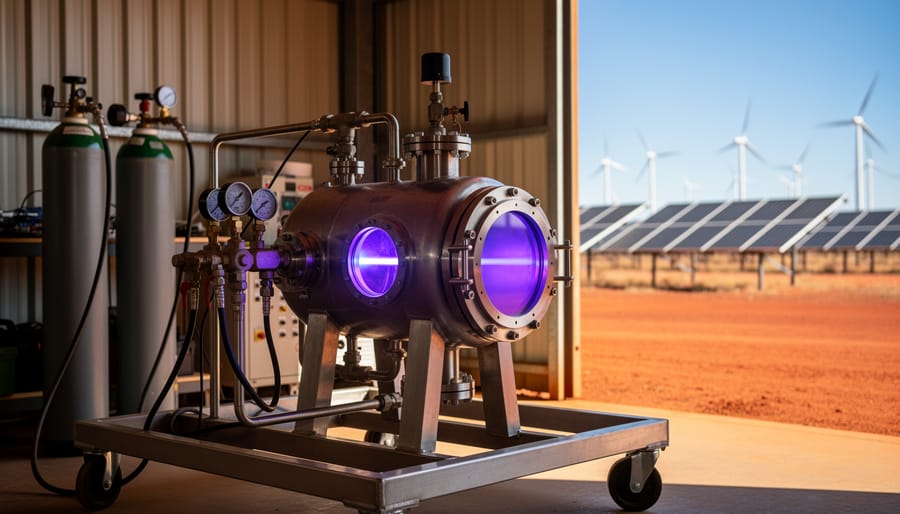
Imagine a technology that uses electricity to spark chemical reactions thousands of times faster than traditional methods, slashing energy consumption while simultaneously reducing harmful emissions. That’s plasma catalysis – a game-changing fusion of plasma physics and chemical catalysis that’s rapidly transforming how we convert greenhouse gases into valuable fuels, purify agricultural waste, and manufacture essential chemicals. Unlike conventional catalytic processes requiring intense heat and pressure, plasma catalysis operates at near room temperature, generating highly reactive particles that break molecular bonds in milliseconds. This efficiency makes it perfectly suited for Australia’s renewable energy landscape, where intermittent solar and wind power can be stored by converting excess electricity into plasma that transforms CO2 and methane into synthetic fuels, hydrogen, or ammonia.
The technology couldn’t come at a better time. Australian farmers face mounting pressure to reduce methane emissions from livestock while finding sustainable uses for agricultural waste. Plasma catalysis offers a practical solution, converting these waste streams into hydrogen fuel or nitrogen-based fertilizers on-site, turning environmental liabilities into revenue streams. Mining operations across the outback are already exploring plasma systems to process tailings and reduce Scope 1 emissions without compromising productivity.
What makes plasma catalysis particularly exciting alongside other renewable energy breakthroughs is its versatility. From small-scale dairy farms in Victoria to large industrial facilities in Western Australia, the technology scales efficiently. Recent trials at Australian universities demonstrate conversion efficiencies exceeding 80%, proving this isn’t just theoretical science – it’s ready for real-world application. As we face the urgent need to decarbonize while maintaining economic growth, plasma catalysis represents a uniquely Australian opportunity to lead global innovation in sustainable energy conversion.
What Makes Plasma Catalysis Different from Traditional Energy Conversion
The Science Made Simple: How Plasma Supercharges Chemical Reactions
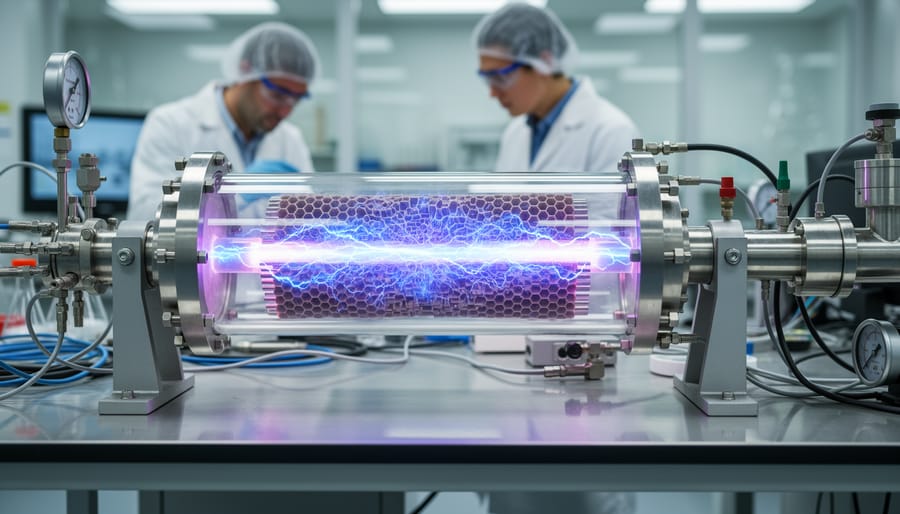
Think of plasma as nature’s ultimate chemical accelerator. When electricity passes through a gas, it creates plasma—a highly energised state that generates reactive molecules and charged particles. These tiny powerhouses become chemical matchmakers, breaking apart stubborn molecular bonds in feedstocks like agricultural waste or forestry residues.
Here’s where the magic happens: when plasma teams up with catalysts (special materials that speed up reactions), they create a dynamic duo that transforms biomass into valuable fuels and chemicals at temperatures hundreds of degrees lower than traditional methods. Instead of needing 800°C, plasma catalysis can work its wonders at just 300°C, slashing energy costs dramatically.
Picture this process like a highly efficient kitchen. Traditional methods are like slow-cooking your dinner for hours at high heat. Plasma catalysis is more like a high-tech pressure cooker that gets the job done faster, using less energy, and producing better results. The plasma creates reactive species—think of them as energised helpers—that attack the feedstock molecules, while the catalyst provides the perfect surface for these reactions to occur.
For Australian applications, this means converting eucalyptus waste, sugarcane bagasse, or wheat stubble into hydrogen fuel or valuable chemicals without the massive energy bills. A pilot project in regional New South Wales has already demonstrated 40% energy savings compared to conventional thermal processing, proving this technology isn’t just laboratory theory—it’s delivering real-world results that make renewable energy production genuinely cost-effective.
Why Temperature and Efficiency Matter for Renewable Energy
When it comes to transforming agricultural waste into renewable energy, two factors make all the difference: temperature and efficiency. Think of plasma catalysis as a game-changer that works smarter, not harder. By combining plasma technology with catalytic processes, we can break down stubborn biomass materials at significantly lower temperatures than traditional methods require—often reducing energy input by 30-50%. This is brilliant news for Australian bioenergy producers operating on tight margins.
Lower temperatures mean reduced operational costs, which directly impacts the bottom line. Processing times also speed up dramatically, allowing facilities to convert more waste into usable energy in less time. For a wheat farmer in the Riverina or a sugarcane grower in Queensland, this translates to quicker returns on investment and less energy consumed during conversion.
These advances join other energy efficiency innovations making renewable energy increasingly viable. When bioenergy facilities can operate more efficiently, they become commercially competitive without relying heavily on subsidies. This efficiency breakthrough is precisely what Australia needs to scale up bioenergy production and create a truly sustainable agricultural sector that turns yesterday’s waste into tomorrow’s power.
Real-World Applications: Turning Australian Biomass into Clean Energy
From Farm Waste to Fuel: Agricultural Biomass Conversion
Australian farmers are sitting on a goldmine of untapped energy potential. Each year, millions of tonnes of agricultural waste—from sugarcane bagasse in Queensland to wheat stubble across the grain belt—are either burned, left to decompose, or disposed of at considerable cost. Plasma catalysis is transforming this challenge into an extraordinary opportunity.
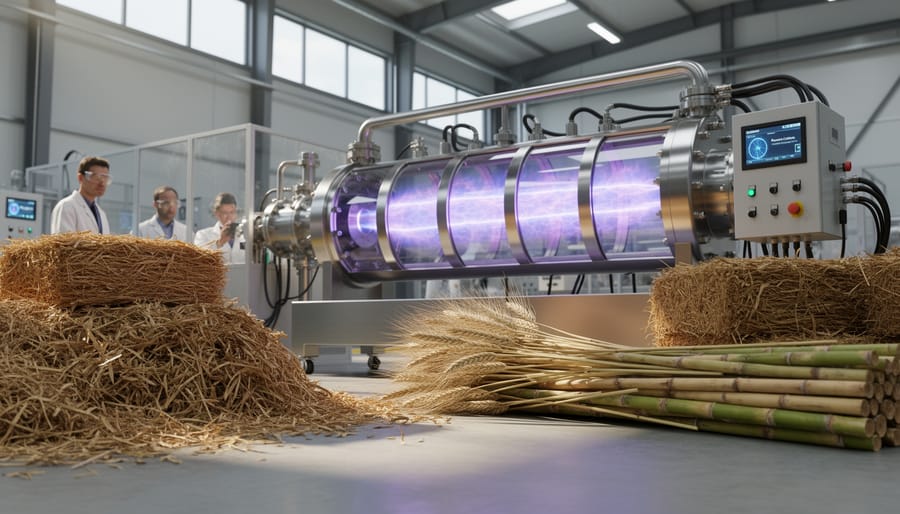
This innovative technology uses electrically charged plasma to break down agricultural residues at the molecular level, converting them into clean-burning synthetic fuels, hydrogen, and valuable chemical feedstocks. Unlike traditional combustion methods that waste energy and create pollution, plasma catalysis operates at lower temperatures while achieving remarkably higher efficiency in extracting usable energy from farm waste.
Consider the sugarcane industry: for every tonne of sugar produced, farms generate roughly 280 kilograms of bagasse. Plasma catalysis can convert this fibrous residue into synthesis gas, which then becomes renewable diesel, aviation fuel, or electricity. In Western Australia, pilot projects are already demonstrating how wheat stubble—once a fire hazard—can power rural communities while simultaneously reducing greenhouse emissions.
The real beauty lies in creating circular economy systems right on the farm. Farmers can process their own waste into fuel for machinery, generate income from excess energy production, and reduce disposal costs—all while contributing to Australia’s renewable energy targets. This isn’t just waste management; it’s farming’s next frontier, turning yesterday’s problem into tomorrow’s profit while keeping valuable resources local.
Hydrogen Production: Clean Fuel for Australia’s Future
Australia’s abundant agricultural waste and natural gas reserves present a golden opportunity for hydrogen production through plasma catalysis. This innovative technology transforms biomass and methane into clean hydrogen fuel more efficiently than traditional methods, using less energy and generating fewer emissions.
Unlike conventional hydrogen production technologies, plasma catalysis operates at lower temperatures while achieving higher conversion rates. This means we can turn crop residues, forestry waste, and even methane into clean-burning hydrogen right here on Australian soil.
The implications are massive. Australia could become a major hydrogen exporter to Asian markets while powering our own heavy transport, mining operations, and industrial processes with locally produced clean fuel. Regional communities with access to agricultural waste could establish hydrogen production facilities, creating jobs and energy independence simultaneously.
Several Australian research institutions are already piloting plasma catalysis systems, demonstrating that this technology isn’t just theoretical—it’s achievable, practical, and perfectly suited to our nation’s resource profile.
Carbon Capture and Utilization: A Double Win
Imagine turning pollution into profit—that’s exactly what plasma catalysis achieves through carbon capture and utilization. This innovative technology transforms CO2 emissions into valuable products like synthetic fuels, methanol, and industrial chemicals, creating a circular economy where waste becomes resource. For Australian industries, particularly mining and manufacturing sectors with substantial carbon footprints, this represents a game-changing opportunity. Rather than simply storing captured carbon underground, plasma catalysis converts it into marketable commodities, generating revenue while reducing emissions. A pilot project in South Australia recently demonstrated how CO2 from cement production could be converted into fuel additives, showing real promise for heavy industry. This dual benefit—environmental responsibility paired with economic advantage—makes plasma catalysis particularly attractive for businesses navigating emission reduction targets. It’s not just about cutting pollution; it’s about reimagining CO2 as a valuable raw material, turning Australia’s industrial challenges into opportunities for innovation and sustainable growth.
Success Stories: Where Plasma Catalysis Is Already Making a Difference
Australian Research Leading the Way
Australian researchers are making significant strides in plasma catalysis technology, positioning the nation as a potential global leader in this exciting field. The University of Sydney’s Plasma Processing and Physics Laboratory is pioneering work on cold plasma systems that could transform agricultural waste into valuable biofuels, with promising results already demonstrated in converting sugarcane bagasse and wheat stubble into hydrogen-rich gas.
Meanwhile, CSIRO has partnered with several Australian universities to develop plasma-assisted catalysis systems specifically designed for remote and off-grid communities. These projects focus on converting locally available biomass into clean energy, addressing both waste management challenges and energy security in regional areas.
The University of Melbourne’s research team has successfully demonstrated a pilot-scale plasma catalysis system that converts dairy farm waste into renewable energy while simultaneously reducing methane emissions. This practical application showcases how Australian innovation can deliver environmental and economic benefits simultaneously.
What’s particularly encouraging is the strong interest from Australian industry partners keen to commercialize these technologies. Several agribusinesses and energy companies are now collaborating with research institutions to scale up plasma catalysis systems, creating opportunities for local manufacturing and job creation while advancing our clean energy future.
Global Pioneers Showing What’s Possible
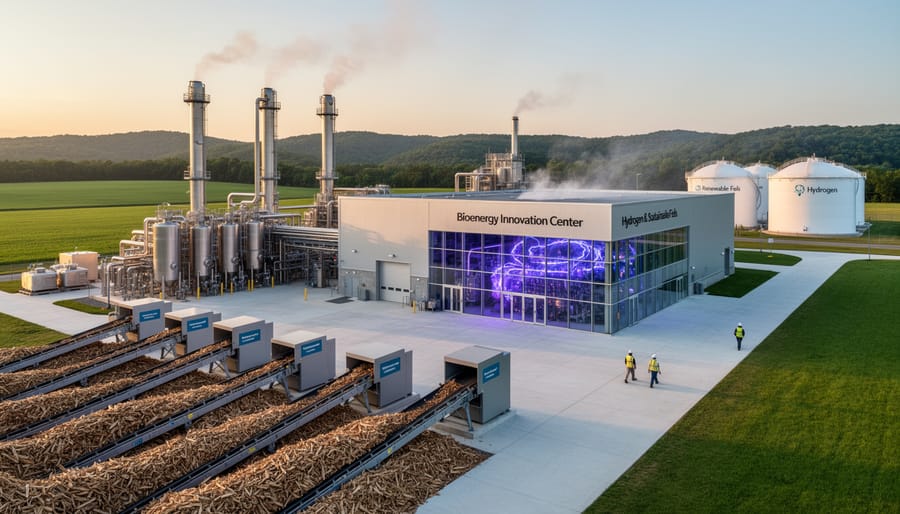
Around the world, forward-thinking facilities are proving that plasma catalysis isn’t just laboratory theory—it’s delivering real results today.
In the Netherlands, the DIFFER research institute has partnered with industrial operators to transform biogas into valuable hydrogen using plasma technology. Their pilot plant processes waste from agricultural operations, achieving conversion rates 30% higher than traditional methods while using renewable electricity. The beauty of their approach? It’s modular, meaning facilities can start small and scale up as demand grows—a lesson particularly relevant for Australia’s regional agricultural communities.
Across in Japan, researchers at Tokyo Institute of Technology have successfully deployed plasma catalysis systems that convert methane emissions from livestock operations into useful chemicals and fuels. Their innovative design requires minimal pre-treatment of the gas, making it cost-effective for farmers. One dairy cooperative now generates enough processed fuel to power their entire refrigeration system, turning what was once an environmental liability into an energy asset.
Meanwhile, North American pioneers are making waves too. A facility in British Columbia processes forestry waste through plasma-enhanced gasification, producing clean syngas that powers local manufacturing. They’ve demonstrated that even in cold climates, plasma systems maintain efficiency—welcome news for operators in Australia’s cooler regions.
These success stories share common threads: strong collaboration between researchers and industry, supportive policy frameworks, and a willingness to start with demonstration projects before full-scale deployment. Australia has all these ingredients ready to go—we just need to mix them together with the same determination these global pioneers have shown.
The Economic and Environmental Benefits for Australia
Creating Jobs in Rural and Regional Communities
Plasma catalysis technology is creating real job opportunities across regional Australia, bringing economic vitality to communities that need it most. The beauty of this technology lies in its decentralised nature—biomass processing facilities can be established close to the source material, whether that’s agricultural waste in the Riverina or forestry residues in Tasmania.
Local employment begins with biomass collection and transport, where farmers and contractors can diversify their income streams by supplying feedstock to processing facilities. These aren’t token jobs either; they’re skilled positions in facility operations, equipment maintenance, and quality control that keep money circulating within regional economies.
Take the example of small-scale bioenergy plants being explored in Western Australia’s wheat belt. These facilities require trained operators, maintenance technicians, and logistics coordinators—positions that provide stable, year-round employment compared to seasonal agricultural work. The ripple effect extends to local suppliers, service providers, and training institutions offering specialised courses in renewable energy technology.
What makes this particularly exciting for rural Australia is the opportunity to become producers rather than just consumers of energy. Communities can develop local expertise in plasma catalysis systems, creating sustainable career pathways for young people who might otherwise leave for city opportunities. This isn’t just about jobs; it’s about building resilient regional economies with a future.
Cutting Carbon While Building Energy Independence
Plasma catalysis offers Australian communities a powerful double win: slashing carbon emissions while building genuine energy independence from the ground up. By converting agricultural waste and other organic materials into clean energy right here at home, we’re cutting our reliance on imported fossil fuels and keeping energy dollars circulating in local economies.
The beauty of this technology lies in its ability to transform what was once considered waste into valuable fuel, dramatically reducing methane emissions from decomposing organic matter while creating renewable energy sources. For regional Australia, this means farming communities can generate their own power from crop residues and livestock waste, reducing both their carbon footprint and energy bills simultaneously.
When combined with advanced energy storage solutions, plasma catalysis systems can provide reliable, round-the-clock power that isn’t dependent on international fuel markets or overseas supply chains. This resilience proved particularly valuable during recent global energy disruptions, showing that local renewable production isn’t just environmentally responsible—it’s strategically smart. Australian producers adopting this technology are already demonstrating that energy security and environmental stewardship aren’t competing goals but complementary pathways toward a more sustainable, self-reliant future.
Overcoming the Hurdles: What Needs to Happen Next
While plasma catalysis shows tremendous promise, transforming laboratory breakthroughs into widespread commercial reality requires navigating some practical challenges. The good news? These hurdles are entirely surmountable with focused effort and smart collaboration.
Scaling up remains the most pressing opportunity. Current plasma catalysis systems work brilliantly at bench scale, but building larger units that maintain efficiency whilst processing significant volumes demands engineering innovation. Australian research institutions are already tackling this challenge, developing modular designs that can grow incrementally rather than requiring massive upfront infrastructure investments. Think of it like adding solar panels to your roof—start small, expand as needed.
Cost reduction naturally follows scale. Early adopters face higher equipment prices, but as manufacturers refine production processes and demand increases, costs will decrease substantially. We’ve witnessed this pattern with solar and wind technology right here in Australia, where prices dropped by over 80 percent within a decade. Plasma catalysis is positioned for a similar trajectory, particularly as local manufacturing capabilities develop.
Infrastructure integration presents another pathway forward. Existing agricultural and waste processing facilities can often retrofit plasma catalysis systems without complete overhauls. A Queensland sugarcane mill recently demonstrated this by incorporating plasma technology into their current operations, minimizing disruption whilst maximizing benefits.
Policy support accelerates progress considerably. Government incentives for clean technology adoption, research grants, and streamlined approval processes create fertile ground for innovation. Several Australian states already offer programs supporting emerging energy technologies, and expanding these frameworks to specifically include plasma catalysis would catalyze commercial deployment.
The pathway forward combines public-private partnerships, continued research funding, and pilot programs that demonstrate real-world value. With Australia’s renewable energy ambitions and agricultural expertise, we’re uniquely positioned to lead this transformation, turning today’s challenges into tomorrow’s opportunities.
Plasma catalysis represents more than just another emerging technology—it’s a genuine game-changer for Australia’s clean energy future. As we’ve explored, this innovative approach transforms agricultural waste and biomass into valuable energy with remarkable efficiency, turning what was once a disposal challenge into a sustainable solution. For a nation blessed with abundant agricultural resources and year-round sunshine, plasma catalysis offers a natural fit with our existing strengths.
The beauty of this technology lies in its practical versatility. Whether you’re a farmer looking to monetize crop residues, a council managing organic waste, or an industry seeking reliable renewable energy, plasma catalysis provides pathways forward. Australian innovators are already demonstrating what’s possible, from pilot projects converting sugarcane bagasse to commercial-scale facilities processing municipal waste.
Now is the time for action. If you’re an individual passionate about sustainability, educate yourself and advocate for clean energy initiatives in your community. Organizations and businesses can explore partnerships with research institutions developing plasma catalysis systems. Policymakers have the opportunity to create supportive frameworks that accelerate adoption through incentives and streamlined regulations.
Australia has always punched above its weight in innovation—from medical breakthroughs to renewable energy achievements. We possess the agricultural resources, technical expertise, and entrepreneurial spirit to become world leaders in plasma catalysis. By embracing this technology today, we’re not just addressing climate challenges; we’re building a more resilient, sustainable, and prosperous tomorrow. The potential is here. The pathway is clear. The future awaits our commitment.