
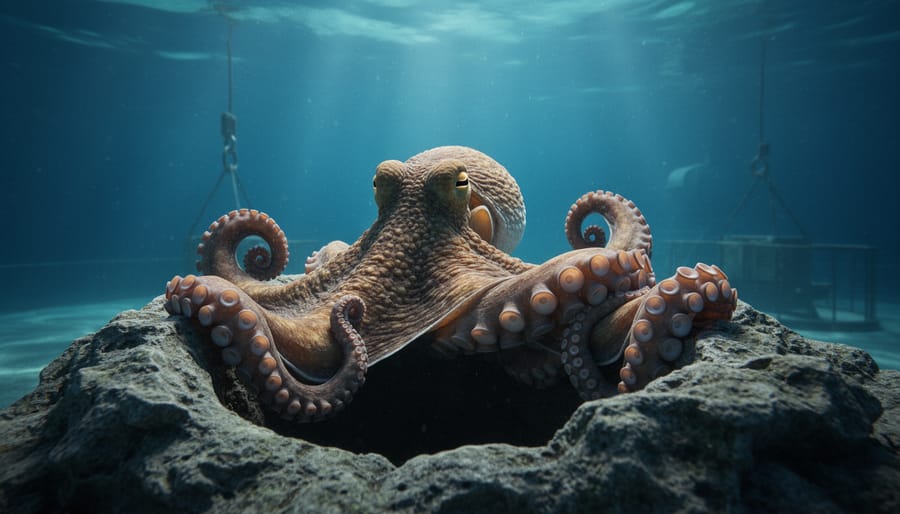
Octopus farming is the commercial cultivation of octopuses in captivity for human consumption, a practice that remains largely theoretical but has sparked fierce debate as the world’s first commercial facility nears operation in Spain’s Canary Islands. What sets octopus farming apart from other aquaculture is the profound ethical controversy surrounding it: octopuses are solitary, highly intelligent creatures with complex nervous systems, and confining them in tanks contradicts nearly everything scientists understand about their welfare needs.
The conversation around octopus farming intensified in 2024 when Washington became the first US state to ban the practice before it could begin, followed by similar legislative moves in California and Hawaii through 2025 and 2026. These bans reflect growing public concern about industrial-scale production of sentient animals that solve puzzles, use tools, and demonstrate individual personalities. Unlike farmed fish or shellfish, octopuses are carnivorous predators requiring substantial wild-caught fish as feed, raising serious questions about whether farming them can ever align with sustainable food systems.
For Australians watching these developments, the octopus farming debate offers important lessons in preventative aquaculture policy. Rather than waiting to regulate an industry after it establishes itself, governments are now evaluating the ethical and environmental costs before facilities break ground. This article explains how octopus farming operations would function, examines the scientific evidence behind welfare concerns, and explores why this particular form of aquaculture faces resistance from marine biologists, animal welfare advocates, and sustainability experts alike. The goal isn’t to dismiss innovation in food production, but to understand why some forms of aquaculture may not align with the values Australians hold about both environmental stewardship and animal welfare.
What Is Octopus Farming?
Octopus farming is the practice of breeding and raising octopuses in captivity for commercial food production. Unlike traditional fishing, which harvests wild populations, aquaculture aims to produce seafood in controlled environments. However, farming common octopus (Octopus vulgaris) presents unique challenges that set it apart from other forms of aquaculture.
- Commercial Aquaculture
- The controlled cultivation of aquatic organisms in managed facilities designed for large-scale food production and sale. Unlike small-scale or research operations, commercial aquaculture aims to produce market volumes that compete with wild-caught seafood.
- Carnivorous Species Farming
- The practice of raising meat-eating animals that require protein-rich feed derived from other animals, typically wild-caught fish. This creates a resource paradox where farming may increase rather than reduce pressure on ocean ecosystems.
- Intensive Farming Systems
- High-density production facilities where animals are kept in confined spaces to maximize output per square metre. These systems prioritize efficiency and volume but raise significant welfare concerns for intelligent, solitary species.
The concept targets the common octopus because it’s valued in Mediterranean and Asian cuisines, commands premium prices, and grows relatively quickly. Proponents view it as a way to meet rising demand without depleting wild stocks. Yet octopuses are carnivorous and solitary by nature, requiring large amounts of wild-caught fish as feed and thriving alone rather than in groups. These biological realities make octopus farming fundamentally different from cultivating filter-feeders like oysters or herbivorous fish like tilapia, raising questions about whether this form of aquaculture can ever align with genuine sustainability goals.
How Octopus Farming Works
Commercial octopus farming follows an intensive aquaculture model that begins with controlled breeding programmes. Operators collect wild broodstock or use captive-bred adults to produce eggs, which hatch into planktonic paralarvae. These tiny hatchlings require specialised care and feeding for several weeks before transitioning to juvenile octopuses capable of settling on tank substrates.
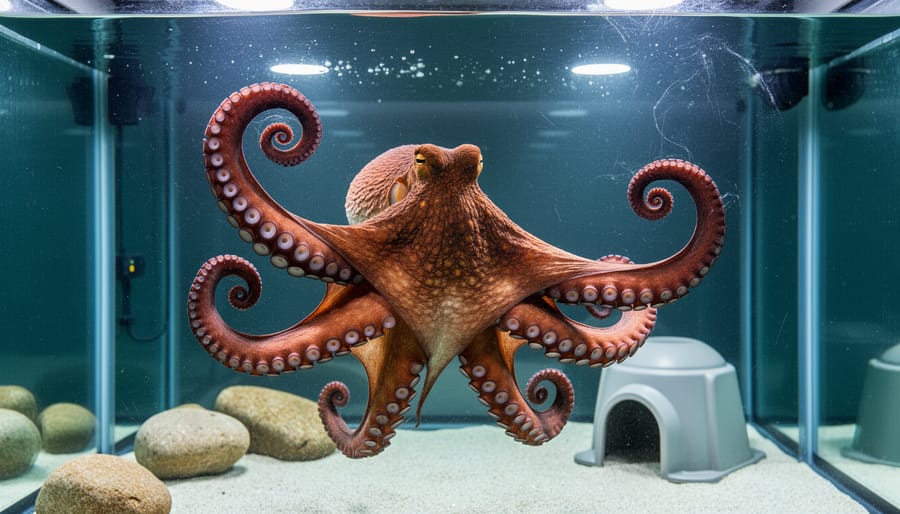
The grow-out phase takes place in densely stocked tank systems. Unlike extensive aquaculture methods that mimic natural conditions, proposed commercial operations would house multiple octopuses together in confined spaces. This presents immediate welfare challenges: octopuses are naturally solitary, territorial creatures with complex cognitive abilities. Cramming them into shared tanks creates chronic stress, increases aggression, and forces animals accustomed to roaming vast ocean territories into environments measuring just square metres.
Tank design typically includes filtration systems to manage water quality and structures meant to provide hiding spaces. Yet no amount of environmental enrichment can replicate the cognitive stimulation these problem-solving animals require. Octopuses in captivity often display stereotypic behaviours, repetitive, purposeless movements that signal poor welfare, and some resort to self-harm or cannibalism under crowded conditions.
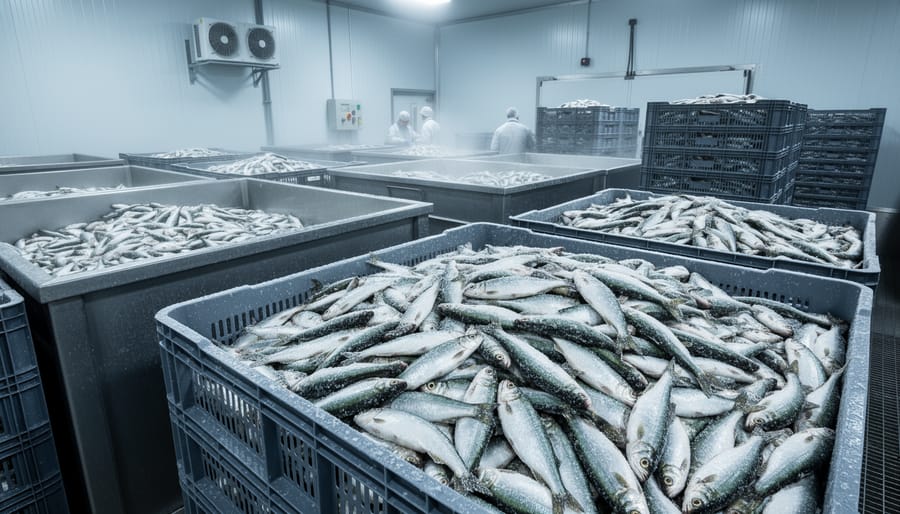
Feeding demands reveal the fundamental inefficiency of octopus farming. Octopuses are carnivorous predators requiring high-protein diets. Commercial operations would feed them pellets made primarily from wild-caught fish, including anchovies, sardines, and other forage species. The feed conversion ratio is staggering: it takes roughly three kilograms of wild fish to produce one kilogram of farmed octopus. This creates a perverse outcome where “farming” actually intensifies pressure on already depleted ocean fisheries rather than relieving it.
Growth cycles span 12 to 18 months from hatching to market size, depending on species and conditions. The common octopus reaches roughly two to three kilograms at harvest. Slaughter methods remain contentious, with proposed techniques including immersion in ice slurry, a process that causes prolonged suffering in cold-blooded animals with distributed nervous systems.
The entire operation demands constant monitoring, climate-controlled facilities, and enormous resource inputs. It’s aquaculture designed for volume and profit, not sustainability or animal welfare.
The World’s First Commercial Octopus Farm Proposal
Spanish seafood giant Nueva Pescanova has submitted plans for what would be the world’s first commercial proposal to farm octopuses at scale. The company intends to build this facility in Puerto Las Palmas, marking a potential turning point for the global seafood industry.
The proposed farm represents a significant industrial operation. Nueva Pescanova’s plans envision producing roughly one million octopuses annually, which translates to approximately 3,000 tonnes of octopus meat. That volume would make a substantial dent in current market demand, potentially reshaping how octopus reaches consumers worldwide.
For the seafood industry, this facility would break entirely new ground. No commercial octopus farm exists anywhere in the world today. While small-scale research operations have experimented with captive breeding, Nueva Pescanova’s proposal moves from laboratory curiosity to full industrial production. The company has invested years developing the breeding protocols and systems needed to raise common octopus (Octopus vulgaris) from hatchling to harvest weight.
If approved and built, the farm would establish a blueprint that other companies could replicate. Success could trigger expansion across coastal regions with suitable infrastructure, potentially creating a new sector within global aquaculture. That’s precisely why campaigners have mobilized so urgently: they’re working to prevent octopus farming from becoming established before the first facility even opens its tanks. The race between Nueva Pescanova’s timeline and regulatory prohibition efforts defines the current moment in this debate.
Types of Concerns Driving Opposition
Animal Welfare and Intelligence
Octopuses are among the ocean’s most remarkable minds. They can solve complex puzzles, use tools, recognize individual humans, and even demonstrate playful curiosity. Research shows they possess around 500 million neurons, distributed through their arms as well as their central brain, giving them cognitive abilities comparable to some mammals. They’re also fiercely solitary creatures who establish territories and actively avoid one another outside mating.
This intelligence makes intensive confinement especially troubling. Unlike fish or crustaceans, octopuses display behaviours suggesting they experience boredom, stress, and distress when kept in barren tanks. Studies document captive octopuses exhibiting repetitive movements, self-harm, and aggression toward tankmates, signs of profound welfare problems. Crowding solitary, territorial animals into industrial conditions contradicts everything we know about their behavioural needs.
The welfare challenge goes beyond space. Octopuses need environmental complexity, mental stimulation, and the ability to hide. Commercial farming systems, designed for efficiency and maximum density, can’t realistically provide these conditions at scale. For an animal this sentient, that gap between biological needs and farming realities raises questions other aquaculture practices haven’t forced us to confront quite so starkly.

Environmental Impact
The fundamental environmental problem with octopus farming lies in a counterproductive paradox. Octopuses are carnivorous predators requiring diets extremely high in protein, which means farm operations must feed them large quantities of wild-caught fish and other marine species. Studies suggest octopuses need roughly three kilograms of feed to produce one kilogram of octopus meat, creating what scientists call a poor feed conversion ratio.
This resource demand means octopus farms would actually increase pressure on already stressed wild fish populations rather than alleviating it. The industry would compete directly with existing fisheries for limited marine resources, extracting vast amounts of small fish like sardines and anchovies that form critical links in ocean food webs. These forage fish support everything from seabirds to larger commercial species.
The environmental calculus becomes even more troubling when you consider that wild octopus populations remain relatively abundant in many regions. Unlike species where farming might theoretically reduce harvesting pressure, octopus aquaculture would create entirely new demand for feed fish while offering minimal conservation benefit to wild octopuses. For a country like Australia with strong commitments to marine ecosystem health, this represents precisely the kind of resource-intensive aquaculture model that conflicts with genuine sustainability principles.
Sustainability Questions
The sustainability case for octopus farming collapses under scrutiny of basic resource mathematics. Farming carnivorous octopuses doesn’t reduce pressure on wild fish populations, it amplifies it. These animals require approximately three kilograms of wild-caught fish to produce one kilogram of octopus meat, creating what marine biologists call a “protein paradox.” The feed needed comes directly from already stressed ocean fisheries, transforming what should be a solution into another driver of overfishing.
Compare this to plant-based aquaculture systems, which can actually create net protein gains. Even other carnivorous farmed fish typically show better feed conversion ratios than the proposed octopus operations. The resource inputs extend beyond feed: octopuses need pristine water quality, extensive filtration systems, and constant monitoring, all consuming significant energy and water resources.
From Australia’s aquaculture perspective, where the industry has worked toward genuine sustainability gains through native species selection and closed-loop systems, octopus farming represents a step backward. It fails the fundamental test: using more wild resources than it produces. The regulatory momentum against it reflects recognition that some species simply aren’t suited to industrial farming without unacceptable environmental costs.
Global Regulatory Response: The Momentum to Ban
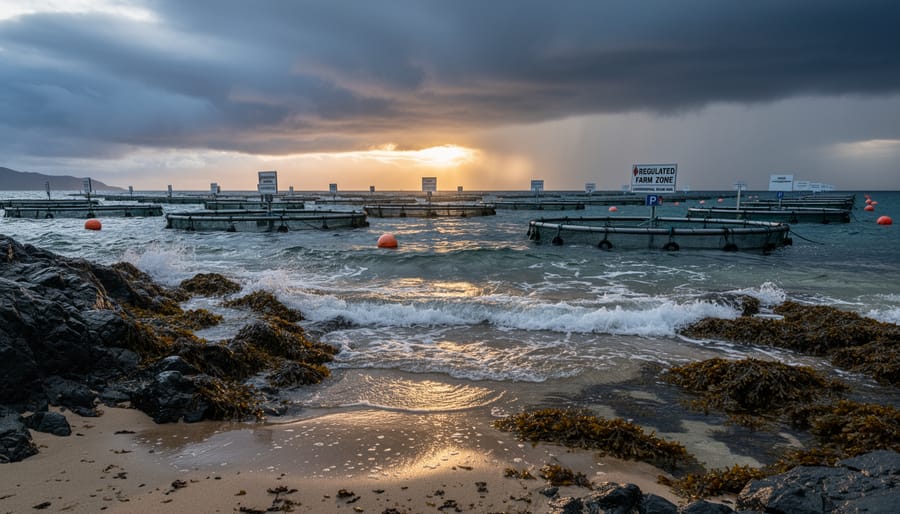
Lawmakers across the globe are racing to prevent an industry from taking root before the first commercial farm opens its doors. What began as isolated concerns has transformed into coordinated legislative action spanning three continents, with countries moving swiftly to ban octopus farming before Nueva Pescanova’s proposed facility sets a precedent.
Chile became the first Latin American nation to introduce legislation prohibiting octopus farming, reflecting the country’s growing awareness of ocean life impacts from intensive aquaculture. Mexico quickly followed, introducing its own federal ban. Both nations have significant fishing traditions and recognised the risks of establishing an industry that could undermine wild populations while failing to deliver genuine sustainability benefits.
The United States has seen renewed momentum at both federal and state levels. A federal bill to ban octopus farming and prohibit the importation and sale of commercially farmed octopuses was reintroduced in Congress. The proposed law takes a comprehensive approach, targeting not just farming operations but the entire supply chain: commercial aquaculture, sale, possession, and transport of farmed octopus would all be prohibited.
Washington State achieved a groundbreaking milestone when its Senate passed a bill to ban octopus farming with 29 votes in favour and 20 in opposition. The legislation now awaits approval from the state Governor. This marks the first time a U.S. state has moved so decisively on the issue, potentially setting a template for other jurisdictions considering preventative regulation.
The speed and scope of these regional octopus farming bans reveal a significant shift in how policymakers approach novel aquaculture practices. Rather than waiting for an industry to establish itself and then regulating problems after the fact, governments are acting proactively based on scientific understanding of octopus intelligence and the resource inefficiencies inherent in farming carnivorous species. The movement also reflects broader concerns about blue economy marine loss and the need to protect coastal ecosystem services rather than pursuing aquaculture models that could compound existing pressures on marine environments.
For Australia, this global trend offers valuable lessons in preventative regulation and the importance of evaluating new food production methods against genuine sustainability criteria before commercial interests become entrenched.
Can Octopus Farming Ever Be Ethical or Sustainable?
The question of whether octopus farming can ever meet ethical or sustainability standards depends largely on how we define those terms and what trade-offs we’re willing to accept. Some industry proponents argue that improved farming conditions, such as larger tanks with environmental enrichment and lower stocking densities, could reduce animal welfare concerns. However, these modifications face a fundamental problem: octopuses are solitary, intelligent creatures whose natural behaviors, exploring, problem-solving, and hunting, are nearly impossible to accommodate in any commercial farming setting without making the operation economically unviable.
From a sustainability perspective, the resource efficiency challenge remains insurmountable under current models. A proper life cycle assessment of octopus farming reveals a troubling paradox: producing one kilogram of octopus requires approximately three kilograms of wild-caught fish as feed. This means farming octopuses could actually increase pressure on marine ecosystems rather than relieve it, directly contradicting the core sustainability goal of aquaculture. Unless someone develops a viable plant-based or algae-derived feed that octopuses will accept and thrive on, the fundamental resource equation doesn’t add up.
Australia’s approach to sustainable aquaculture typically emphasizes species that are herbivorous or omnivorous, have lower sentience concerns, and offer positive feed conversion ratios, characteristics that make barramundi and oyster farming more defensible than octopus operations. The regulatory momentum we’re seeing globally suggests many jurisdictions have concluded that some forms of animal agriculture simply don’t align with contemporary ethical standards, regardless of incremental welfare improvements.
The emerging consensus points toward prevention rather than mitigation. Rather than attempting to make octopus farming acceptable through modifications, the focus has shifted to stopping it before commercial operations become entrenched and create economic pressures to continue despite the concerns.
Frequently Asked Questions
Why does octopus farming face ethical concerns?
Octopuses are highly intelligent, solitary animals with complex nervous systems and demonstrated problem-solving abilities. Keeping them in confined, crowded tank conditions contradicts their biological needs and raises serious animal welfare questions that don’t apply to less cognitively complex farmed species.
Why do campaigners want to ban octopus farming?
Activists argue octopus farming is both cruel to intelligent animals and environmentally counterproductive, since carnivorous octopuses require massive amounts of wild-caught fish as feed. Banning it before commercial operations begin prevents entrenching an industry that conflicts with genuine sustainability goals.
Is octopus farming a solution for protecting wild populations?
No. The high protein requirements mean farming octopuses actually increases pressure on wild fish stocks rather than relieving it. The feed conversion ratio makes octopus farming a net negative for ocean conservation.
What makes octopuses different from other farmed seafood?
Unlike fish or shellfish, octopuses display remarkable intelligence, use tools, solve puzzles, and live solitary lives in complex environments. Their cognitive abilities and behavioural needs make intensive farming conditions particularly problematic from a welfare standpoint.
Which countries are moving to ban octopus farming?
Mexico, Chile, and the United States have all introduced federal legislation to ban commercial octopus farming. Washington State has passed a Senate bill prohibiting the practice, awaiting the Governor’s approval, demonstrating growing momentum for preventative regulation and compliance measures.
These regulatory developments reflect a broader shift in how governments assess new aquaculture proposals. Rather than allowing industries to establish themselves and retroactively addressing problems, lawmakers are applying precautionary principles to farming practices that raise fundamental ethical and environmental red flags. This approach prioritizes long-term sustainability over short-term commercial interests, setting a precedent for how emerging food production methods should be evaluated before they scale.
Types or components
While commercial octopus farming hasn’t yet been established at scale, proposals and research centre around several distinct system types that mirror approaches used for other marine species.
Land-based recirculating aquaculture systems (RAS) represent the primary model proposed by Nueva Pescanova. These closed-loop tank systems maintain controlled water quality, temperature, and lighting conditions while filtering and recycling water. They require significant infrastructure investment and energy inputs to operate the necessary pumps, filters, and climate control systems.
Flow-through systems would draw fresh seawater continuously through octopus tanks before releasing it back into the ocean. This approach reduces some filtration demands but raises concerns about waste discharge into coastal waters and the environmental impact of effluent containing concentrated organic matter and metabolic waste from carnivorous animals.
Cage-based marine systems have been theoretically discussed as alternatives, placing enclosures directly in ocean environments. However, the escape risk posed by octopuses’ intelligence and physical flexibility, combined with potential impacts on surrounding ecosystems, makes this approach particularly problematic.
Each system type shares fundamental challenges: high protein feed requirements from wild fish stocks, difficulty maintaining animal welfare for intelligent solitary creatures, and resource-intensive operational demands that undermine sustainability claims.
The emerging debate around octopus farming represents a pivotal moment for sustainable aquaculture, one that Australia is uniquely positioned to learn from. As governments worldwide move to ban a practice before it even begins commercial operation, we’re witnessing something rare: preventative regulation driven by scientific understanding of animal welfare, ecological impact, and resource efficiency rather than reactive damage control.
For Australia, a nation with world-leading marine management frameworks and a commitment to sustainable seafood, the octopus farming controversy offers valuable insights. It highlights the importance of evaluating new aquaculture ventures not just on their technical feasibility or market potential, but on their fundamental compatibility with ethical food production and genuine sustainability. The resource paradox at the heart of octopus farming, requiring vast quantities of wild-caught fish to farm carnivorous species, runs counter to aquaculture’s stated purpose of reducing pressure on wild populations.
This global regulatory momentum suggests that the future of aquaculture lies not in intensively farming every commercially valuable species, but in developing systems that work with rather than against natural biology and ecological principles. Species-appropriate welfare standards, efficient feed conversion ratios, and minimal environmental footprint must become non-negotiable criteria for new ventures.
The octopus farming debate doesn’t signal the end of innovation in aquaculture. Instead, it points toward a more thoughtful, science-informed approach to marine food production. By applying the lessons from this controversy, listening to welfare scientists, respecting species’ unique needs, and honestly assessing resource inputs, Australia can continue leading the development of aquaculture systems that are both productive and genuinely sustainable, creating a blueprint for ethical food production that serves both people and planet.