
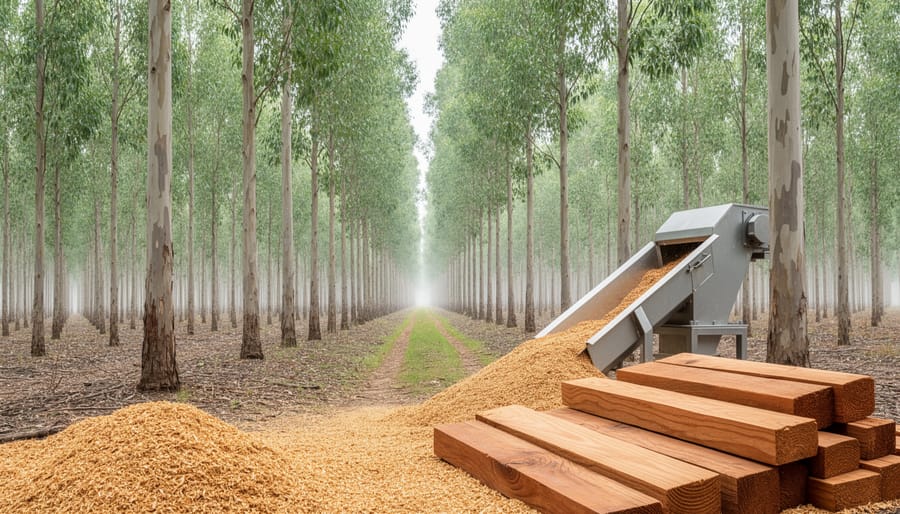
Yes, timber is renewable, but only when forests are managed responsibly. The answer isn’t quite as simple as labeling wood “green” and moving on. When trees are harvested faster than they can regrow, or when old-growth forests are cleared without replanting, timber becomes just another depleted resource. But here’s the good news: Australia has built some of the world’s strongest forestry frameworks to ensure our timber industry actually regenerates what it takes.
Think of it this way. A sustainably managed plantation operates on a cycle. Trees are planted, they grow for 10 to 40 years depending on species, then they’re harvested and replaced. During their lifetime, those trees pull carbon dioxide from the atmosphere and lock it away in their wood. When managed properly, this creates a perpetual cycle of growth, harvest, and regrowth that can continue indefinitely.
The science backs this up. Australian plantation forests now cover approximately 1.95 million hectares, and these working forests are specifically grown for timber production. They’re separate from our native forests, many of which are protected. The plantation model means we’re not relying on finite old-growth timber. Instead, we’re cultivating a resource that regenerates itself.
What makes timber particularly valuable in 2026 is its dual role. Beyond construction and products, timber waste and residues are increasingly powering Australian homes and businesses through bioenergy. Sawdust, bark, and offcuts that once went to landfill now fuel sustainable energy generation, creating a closed-loop system where nothing goes to waste.
The renewability of timber ultimately depends on human choices. Sustainable forestry practices, strong regulations, and responsible consumption ensure that Australia’s forests continue providing materials and energy for generations ahead.
The Simple Answer: Yes, Timber Is Renewable (With Important Conditions)
Timber earns its renewable badge because trees regrow. Unlike coal or oil, which took millions of years to form and disappear once we burn them, forests regenerate within human timescales. Plant a eucalyptus seedling in Australian soil, and you’re looking at a harvestable tree in 15 to 30 years, depending on species and conditions. That natural cycle of growth, harvest, and regrowth places timber squarely in the renewable category alongside wind, solar, and hydropower.
Here’s how the cycle works in practice. Trees pull carbon dioxide from the atmosphere as they grow, converting it into wood through photosynthesis. When we harvest mature trees and replant the cleared area, new seedlings begin the process again, absorbing carbon as they establish roots and shoot skyward. The forest perpetuates itself, creating a continuous supply of timber without depleting the resource base. Native forests do this naturally through seed dispersal and natural regeneration, while plantation forests rely on deliberate replanting programs.
That distinction matters enormously for Australian forestry. A resource can technically be renewable yet still cause environmental damage if we manage it poorly. Imagine harvesting trees faster than they can regrow, or clearing native forests without proper replanting. The timber might theoretically renew itself given enough time, but we’ve broken the cycle through mismanagement.
This is where forest management practices become critical. Renewability depends entirely on human decisions: how many trees we cut, which areas we protect, how we replant, and whether we maintain biodiversity alongside timber production. In Australia’s native hardwood forests, responsible management means selective harvesting that mimics natural disturbance patterns. In pine plantations, it involves carefully planned rotation cycles that allow soil recovery between harvests.
The upshot? Timber’s renewable status isn’t automatic. It requires deliberate, science-based forest management that balances production with ecological health. Get the management right, and Australian forests can supply timber and bioenergy indefinitely while supporting wildlife, storing carbon, and protecting watersheds. Get it wrong, and we transform a renewable resource into a depleted landscape.
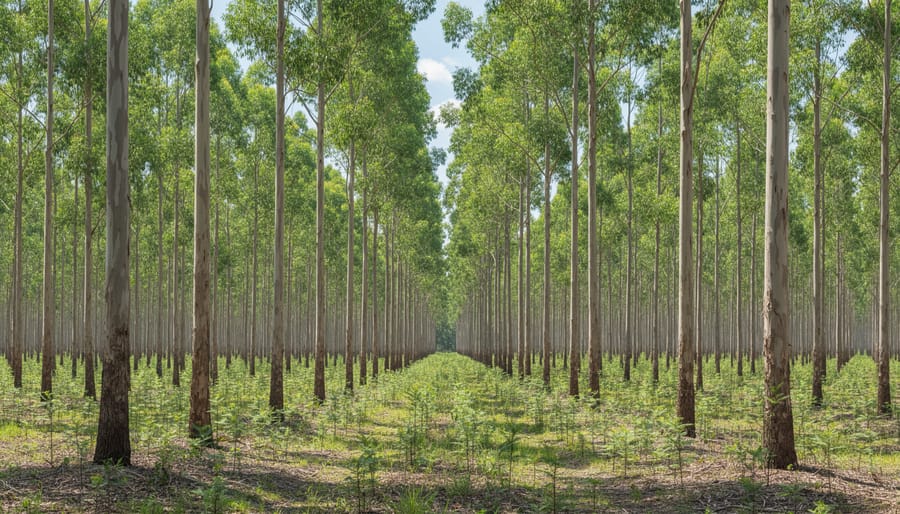
How Timber Stores Carbon (And Why That Matters for Climate Action)
From Forest to Building: The Carbon Journey
A tree’s carbon journey begins decades before it reaches a building site. As the sapling grows, it pulls CO2 from the atmosphere through photosynthesis, converting it into cellulose, lignans, and other organic compounds that form wood. Over 20, 50, or even 100 years, depending on the species, that tree becomes a carbon vault, locking away roughly half its dry weight as stored CO2.
When responsibly harvested, the tree moves to a sawmill or processing facility. This stage does require energy. Wood manufacturing uses bioenergy, often derived from sawdust, bark, and offcuts generated during processing. These residues fuel kilns and machinery, creating a largely closed-loop system where the forest provides both the product and the power to transform it.
Once the timber reaches construction sites or furniture workshops, it continues storing carbon. A wooden beam in a house frame, a plywood panel in a kitchen, or hardwood flooring in an office keeps that CO2 locked away for as long as the building stands. In Australia, where timber structures can last a century or more with proper maintenance, this represents significant long-term carbon storage.
The environmental math gets even better with long-life applications. Because these products store carbon for decades while new trees grow to replace those harvested, the net effect is carbon-negative when forests are managed sustainably. The wood biomass carbon assumption underpins much of our understanding of this cycle, confirming that timber products function as reliable carbon banks long after leaving the forest.
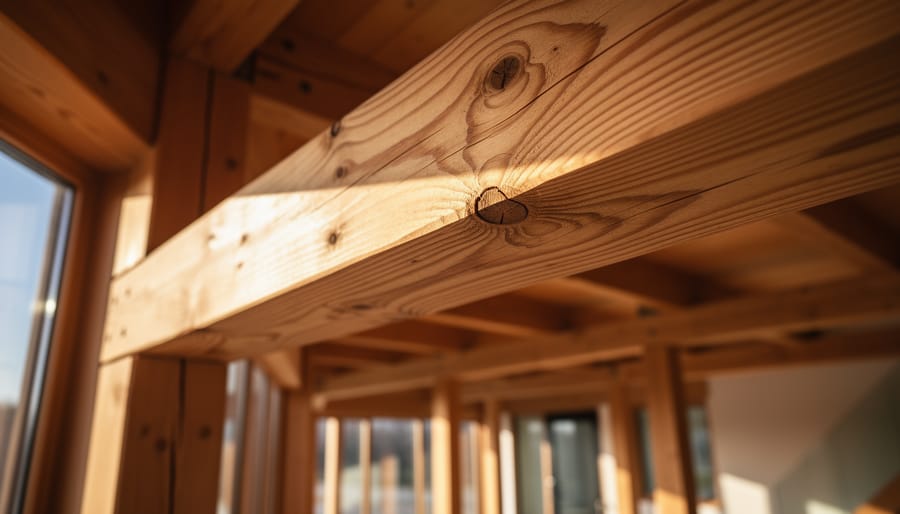
Long-Life Timber Products as Carbon Banks
When you choose a timber dining table, hardwood flooring or structural beams for your home, you’re not just buying furniture or building materials. You’re effectively creating a carbon storage vault that can lock away CO2 for decades, even centuries.
Here’s how it works in practice. That jarrah bookshelf in your living room contains carbon the tree absorbed from the atmosphere over 30, 40, perhaps 50 years of growth. As long as the bookshelf remains in use, that carbon stays locked inside the wood rather than circulating in the atmosphere as CO2. The same principle applies to the structural timber in Australian homes, heritage wooden buildings, and quality furniture passed down through generations.
The numbers tell a compelling story. Carbon stored in wood products represents a significant climate benefit, particularly when those products have long service lives. Some timber products actually achieve negative carbon footprints because the carbon they store throughout their prolonged use exceeds the emissions from harvesting and manufacturing.
This transforms how we should think about quality timber goods. A well-built hardwood chair isn’t just an investment in craftsmanship. It’s a miniature carbon bank, quietly serving the climate for generations.
Sustainable Forestry Practices That Make Timber Truly Renewable
What Happens When Forestry Goes Wrong
When forest management ignores sustainability principles, the consequences extend far beyond a single harvest. Clear-cutting without replanting turns renewable timber into a one-time resource, leaving degraded land that takes decades to recover. In some Australian regions, overharvesting has outpaced natural regeneration rates, depleting local timber stocks and destroying wildlife habitats that relied on mature forest ecosystems.
Monoculture plantations present another challenge. While they might look productive on paper, planting single-species forests creates biological deserts compared to natural woodlands. These simplified ecosystems offer poor biodiversity outcomes, increase vulnerability to pests and diseases, and often require heavy chemical inputs to maintain. The soil degradation from monoculture can be severe, reducing the land’s capacity to support healthy forests in future rotations.
Poor forestry practices also affect the forest residues climate impact as damaged ecosystems release stored carbon rather than sequestering it. When forests are managed without consideration for regeneration cycles, the entire carbon storage benefit that makes timber valuable for climate action gets reversed.
The good news? These problems are entirely preventable. Sustainable forestry practices address each of these issues through thoughtful management, appropriate harvest rates, and ecosystem-focused planning that ensures timber remains genuinely renewable for generations.
Timber for Bioenergy: Australia’s Growing Opportunity
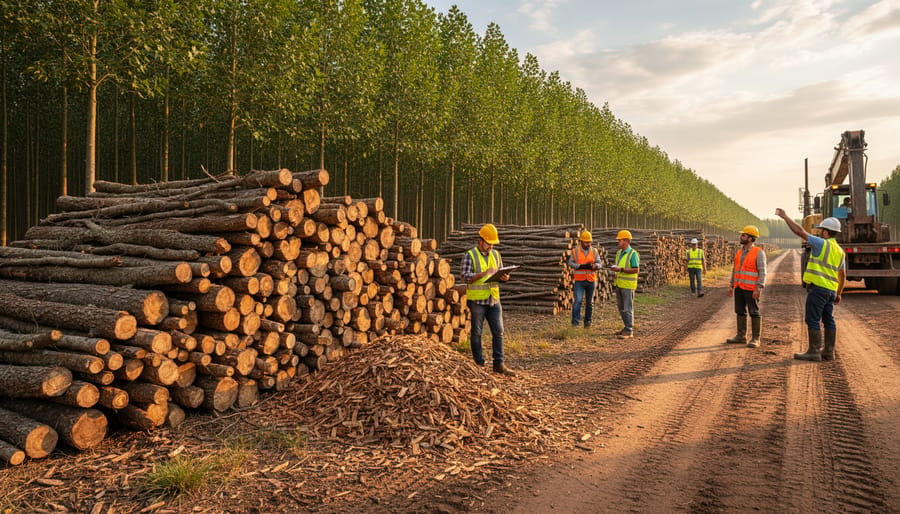
What Makes Good Bioenergy Timber
Not all timber serves the same purpose, and knowing the difference keeps Australia’s forestry sector efficient and waste-free. High-quality logs with straight grain, minimal knots, and good structural properties go to sawmills for construction timber, furniture, and long-life products that store carbon for decades. These premium logs command higher prices and deliver the greatest environmental benefit through prolonged use.
Bioenergy facilities, by contrast, thrive on what sawmills can’t use. Bark, sawdust, offcuts, crooked logs, small-diameter thinnings, and damaged timber all make excellent fuel. These residues and low-grade materials have high moisture content that doesn’t suit construction but burn efficiently when processed into wood chips or pellets. Fast-growing species like eucalyptus work particularly well for energy production because they regenerate quickly and tolerate regular harvesting.
This hierarchy ensures nothing goes to waste. A single harvesting operation can yield structural beams, furniture timber, wood chips for bioenergy, and mulch for landscaping. The waste from one process becomes the feedstock for another. Forestry operations that separate high-value timber from energy-grade material maximize both economic return and environmental outcomes, turning what would once have been slash piles or landfill into renewable power for Australian homes and industries.
Real-World Success: Australian Forestry Projects Leading the Way
Across Australia, forward-thinking forestry operations are proving that timber renewability is not just theory. These real-world examples demonstrate how sustainable management creates genuine environmental wins while supporting rural communities.
In Tasmania’s southern forests, Australian Sustainable Hardwoods has transformed former plantation land into a model of renewable timber production. Their approach combines selective harvesting with continuous replanting, ensuring forest cover never diminishes. The operation supplies both construction timber and residues for sustainable biomass energy, creating multiple income streams from the same land. What started as a 500-hectare trial in 2019 now spans over 3,000 hectares, employing 47 locals year-round. Workers describe a different pace compared to clear-cutting operations, methodical, careful, with an eye toward what the forest will look like in 2056, not just next quarter’s harvest targets.
Victoria’s Central Highlands region offers another compelling story. A cooperative of small landholders pools their timber resources to supply both the building industry and biomass facilities. By coordinating harvest schedules and sharing equipment, they have reduced life cycle emissions while maintaining healthy forest ecosystems. The cooperative’s strict replanting requirements, three native seedlings for every tree harvested, mean their collective forest area has actually expanded by 12% since operations began. Members report that diversifying into bioenergy markets has stabilized income during construction downturns, making sustainable practices financially viable.
Western Australia’s wheatbelt region presents a different model entirely. Here, agroforestry projects integrate eucalyptus belts into farming landscapes, addressing salinity while producing renewable timber. Trees reach harvest maturity in 15-18 year rotations, providing regular income alongside crops. The timber goes to local mills, while branches and processing waste fuel nearby bioenergy resources in Australia facilities. Farmers involved in the program report improved soil health across their properties, with some noting that wind protection from tree belts has increased grain yields in adjacent paddocks by up to 8%.
These projects share common threads: long-term thinking, community involvement, and recognition that sustainable forestry creates value beyond the immediate harvest. They are not perfect, and challenges remain around market access and certification costs. But they prove timber can be genuinely renewable when managed with care and commitment to regeneration.
How You Can Support Renewable Timber Practices
Supporting renewable timber practices doesn’t require drastic lifestyle changes. Small, informed decisions add up to genuine impact when thousands of Australians make them together.
Start by looking for certification labels on timber products. The Forest Stewardship Council (FSC) and Programme for the Endorsement of Forest Certification (PEFC) marks indicate that wood comes from responsibly managed forests with independent verification. These certifications track everything from replanting commitments to worker safety and biodiversity protection. When you’re buying furniture, flooring, or building materials, ask your supplier outright: “Where does this timber come from, and is it certified sustainable?” Reputable businesses welcome these questions.
For construction projects, specify Australian-grown timber when possible. Local forests managed under Australian standards reduce transport emissions and support regional employment. Pine plantations across New South Wales and Victoria, plus native hardwoods from well-managed Tasmanian operations, offer renewable options that keep money and jobs in Australian communities. You’re not just buying material; you’re voting with your wallet for sustainable land management.
Businesses have even more influence. If you run a building company, manufacturing operation, or retail outlet, audit your timber supply chain this year. Switch to certified suppliers, publicize that commitment, and watch how customers respond. Companies using sustainable timber often discover it’s a selling point, not just an ethical choice. Consider bioenergy systems that run on forestry residues or sawmill waste. These close the loop, turning what would otherwise burn as disposal fires into productive energy.
Communities can push for better forestry policy at local and state levels. Attend council meetings when land-use decisions come up. Support proposals that protect old-growth forests while expanding sustainable plantations for timber and bioenergy production. Write to your state representative asking for stronger enforcement of forestry codes and better support for forest industries transitioning to certified practices.
Share what you learn. When mates talk about building projects or home renovations, mention the carbon storage benefits of long-life timber products and where to find sustainably sourced options. Post about successful local forestry operations doing things right. Knowledge spreads faster than policy changes, and informed consumers create market pressure that moves entire industries toward sustainability faster than regulation alone ever could.
Timber is renewable, but only when we treat it that way. The answer to our opening question hinges entirely on how we manage Australia’s forests today and into the future. Left to natural cycles and supported by responsible forestry practices, trees regrow, absorb carbon, and provide sustainable material for generations. Managed poorly, we squander both the resource and the climate benefits it offers.
Australia stands at a genuine crossroads in 2026. Our forestry sector can lead the way in demonstrating what true renewability looks like: replanting outpaces harvesting, biodiversity thrives alongside production, and nothing goes to waste. Forestry residues and timber products feed our growing bioenergy industry, turning what was once waste into clean, renewable power. This isn’t abstract environmental theory. It’s practical climate action that creates jobs, strengthens regional economies, and reduces our reliance on fossil fuels.
The transition to sustainable forestry practices delivers tangible wins for everyone involved. Communities gain stable employment. Landowners see long-term returns. Builders access materials that lock carbon away for decades. Energy producers tap into reliable, renewable fuel sources. The atmosphere gains the breathing room we desperately need.
Every piece of certified sustainable timber you choose, every supplier question you ask, and every voice you raise for better forest management pushes this transition forward. Australia’s forests can be carbon banks, biodiversity havens, and economic engines all at once. We’ve got the knowledge, the land, and the opportunity. What we do with them over the next decade will define whether timber remains truly renewable for the generations who follow. The choice, refreshingly, is ours to make.