
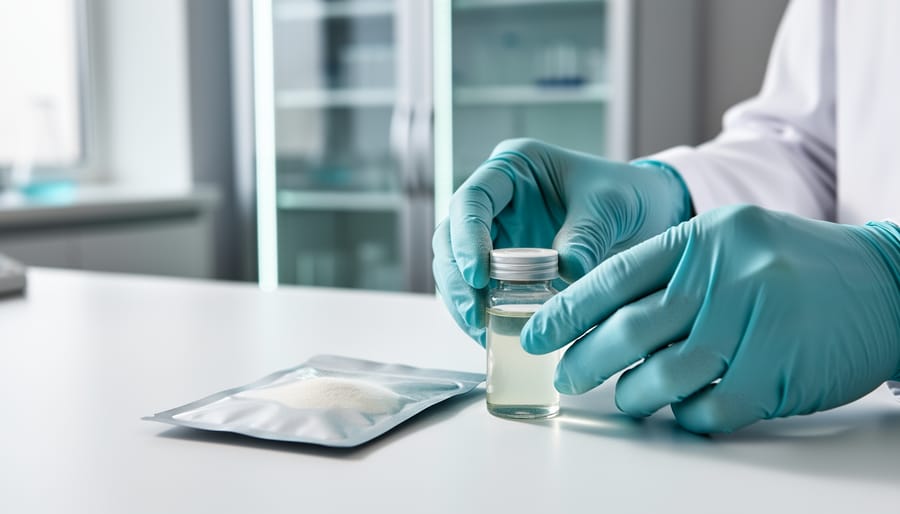
Peptide stability at room temperature describes how long a peptide keeps its structure, purity and activity when it’s stored at ordinary ambient conditions rather than in a fridge or freezer. For an example of a supplier working with peptide products, see here. Most peptides break down slowly over time through moisture, oxidation and chemical changes, and the pace depends heavily on the peptide’s makeup and whether it’s stored dry or in solution. Freeze-dried (lyophilised) peptides generally hold up far better than dissolved ones, which is why the form you’re handling matters as much as the temperature.
This matters well beyond the lab bench. Every degree of cold storage means electricity, refrigerated trucks and packaging, and that adds up across the agriculture and bioenergy supply chains we care about. If a peptide stays reliable on a shelf or in a courier van, the cold chain shrinks, energy use drops and more of these products can reach remote Aussie farms and regional communities.
In this article, we’ll explain how peptides degrade, what published stability data tends to show and why context beats raw numbers, and how to handle, ship and store peptides sensibly. The outlook is genuinely encouraging.
What Peptide Stability Really Means
Peptide stability is simply how well a peptide holds itself together over time. A peptide is a short chain of amino acids, the same building blocks that make up proteins. “Stable” means it keeps its structure and does its job, whether that’s protecting a crop or supporting animal health, long after it was made.
Here’s where it gets interesting. A peptide can look stable on paper and still struggle in practice. A lab result might show a peptide holding up beautifully under tightly controlled conditions, but a hot shed in regional Queensland is a different story. Real-world handling, heat swings and humidity all matter.
There are two main kinds of stability to know about:
– Chemical stability means the molecule stays intact, with no bonds breaking or amino acids changing.
– Physical stability means the peptide doesn’t clump together or drop out of solution, even if its chemistry is unchanged.
A peptide needs both to stay useful.
Think of fresh produce versus dried produce. A ripe mango left on the bench turns soft within days, while dried mango slices keep happily in the pantry for months. Freeze-dried (lyophilised) peptides are the dried mango: with the water removed, most breakdown reactions slow right down. Peptides in solution are the fresh fruit, far more vulnerable because water drives so much of the damage.
A few terms will help as we go:
- Peptide
- A short chain of amino acids linked together, smaller than a full protein.
- Lyophilised (freeze-dried)
- A peptide that has been frozen and dried under vacuum so it’s stored as a dry powder.
- Degradation
- The gradual breakdown or alteration of a peptide that reduces its purity or activity.
- Shelf life
- The length of time a peptide stays within acceptable quality under stated storage conditions.
- Aggregation
- When peptide molecules stick together into clumps, often making the product cloudy or less effective.
Understanding these basics makes the data much easier to read, which sets us up to look at why peptides break down in the first place.
Why Peptides Break Down at Room Temperature
Freeze-Dried Versus Dissolved: Why the Form Matters
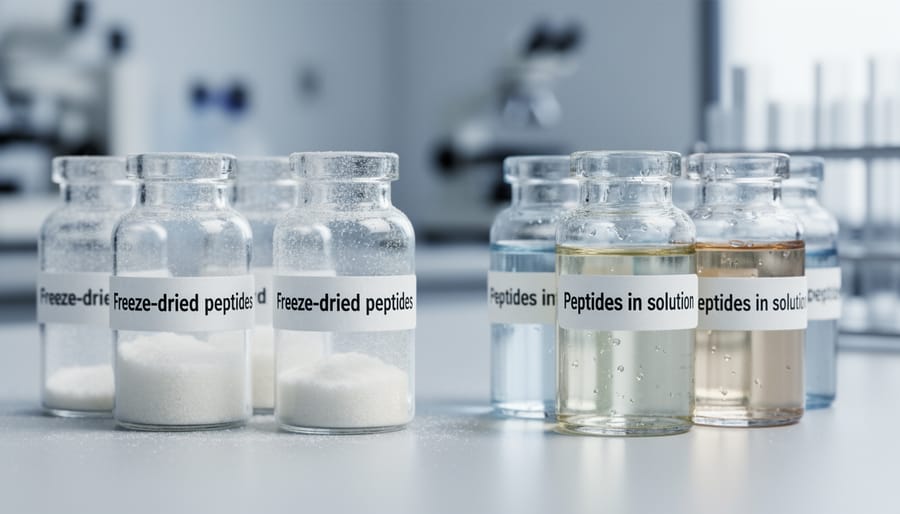
Think of the difference between a fresh tomato and a sun-dried one. The dried version sits happily in the pantry for months, while the fresh one wilts within days. Peptides follow a similar rule. A freeze-dried peptide is a dry powder with almost no water to drive chemical reactions, so it tends to hold its structure far longer at room temperature. Once that same peptide is dissolved, water becomes an active player. It fuels hydrolysis (the splitting of bonds), helps oxygen reach vulnerable amino acids, and gives molecules room to move around and clump together.
That’s why most storage advice treats the powder and the liquid as two different products. A few threats do most of the damage:
- Heat: warmer conditions speed up nearly every breakdown reaction.
- Humidity: even a little moisture absorbed by a powder can start the same reactions that liquid does.
- Oxygen: it can alter sensitive amino acids such as methionine and cysteine.
- Light: energy from light can damage certain residues, especially tryptophan.
- pH swings: acidic or alkaline conditions can trigger bond cleavage and deamidation.
- Repeated freeze-thaw: cycling stresses the peptide and can encourage aggregation.
The good news is that most of these are manageable. Keep a powder dry, sealed and out of the light, and you’ve already tackled the biggest risks. Dissolved peptides ask for more care, which is why working out the right form for your needs is such a useful first step.
What the Room-Temperature Data Suggests
How to Read a Stability Study Without Getting Lost
A stability study is really just a record of how a peptide looked at the start, then how it looked after sitting under set conditions for a set time. Once you know that, the numbers get a lot less intimidating.
Start with the type of study. Accelerated studies hold a peptide at a higher temperature, say 40°C, to speed up breakdown and predict what might happen over months. They’re handy for spotting weak points quickly, but they’re a forecast, not a guarantee. Real-time studies store the peptide at the actual temperature you care about, such as 20-25°C, and check it as the weeks and months pass. That’s the data that matters most for room-temperature decisions, because it shows what really happened rather than what a model expected.
Then look at “percent purity remaining”. It simply tells you how much of the original, intact peptide is still there compared with day one. If a sample started at 98% pure and tested at 95% after a month, most of the peptide held up. Check what the cut-off was, too. Some labs call a peptide stable until it drops below a certain purity, and that line isn’t the same everywhere.
When you read a supplier’s claims, a few good questions keep you grounded:
– Was it tested as a dry powder or in solution?
– What temperature and humidity were used, and for how long?
– Was it real-time or accelerated data?
– Which method measured purity, and was it the same at every time point?
– Does the data cover this exact peptide sequence?
Clear answers are a good sign. Vague ones are worth a follow-up.
How Better Stability Is Used in Agriculture and Bioenergy

Picture a mixed-farming operation a few hours from the nearest town, where a power outage on a 40-degree day can undo a whole delivery of temperature-sensitive products. That’s exactly where peptides that hold up at room temperature earn their keep.
In crop protection and biostimulants, a stable freeze-dried peptide can sit in the ute or the shed until it’s needed, then be mixed on the day. The same goes for animal health and feed additives, where a product that doesn’t need a fridge is far easier to deliver to a remote station. Soil and environmental monitoring benefits too, because peptide-based sensing reagents that survive ambient storage can be sent out to field sites without a cold chain or a cooler full of ice.
Here’s an illustrative scenario. A regional supplier swaps a fridge-dependent product for a dry, shelf-stable one. The cold storage space is freed up, the refrigerated freight bill drops, and fewer batches are tossed because a truck ran late or a fridge failed. It’s a small change, but it adds up across a whole supply network, much like the savings seen when farms start slashing energy costs through smarter practices.
The bioenergy link is just as practical. Many peptides and enzymes come from biomass processing and fermentation, the same kind of systems that turn crop residues and organic waste into useful products. If those outputs can be stored and shipped without constant cooling, the energy saved on refrigeration trims emissions across the whole chain, from the processing plant to the paddock.
Stability data is what makes these choices possible. It gives producers the confidence to rely on a shelf-stable product, and it shows where cold storage is still worth keeping.
Practical Ways to Get the Most From Room-Temperature Storage
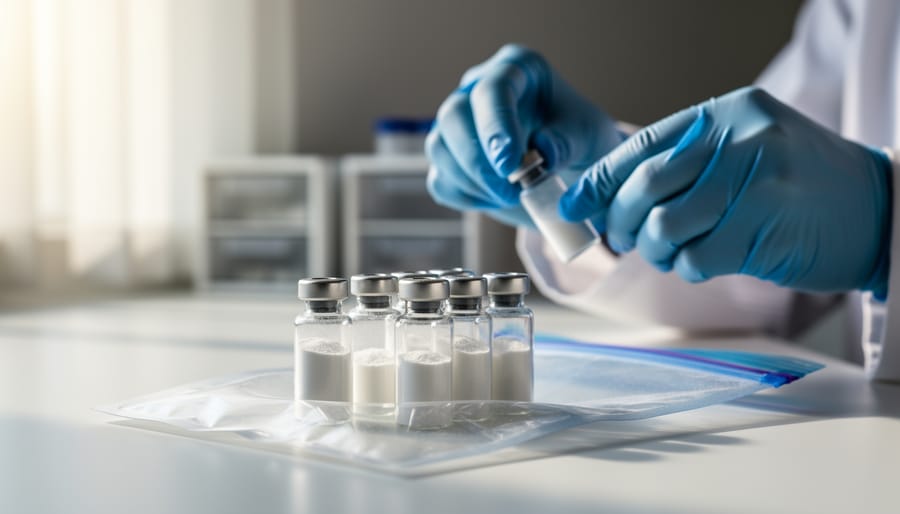
Good storage habits go a long way, and most of them cost nothing. Start by keeping peptides dry and tightly sealed. Moisture is the biggest enemy of a freeze-dried powder, so let a vial come up to room temperature before you open it, which stops condensation forming inside, and close it again promptly. A small desiccant sachet in the storage container is a handy extra, especially in humid coastal areas.
Next, protect your peptides from light and from temperature swings. A cupboard or drawer works better than a sunny windowsill, and a steady 20 to 25°C beats a daily cycle of hot and cool. If a shed or vehicle gets scorching in an Australian summer, it’s not the place to leave them.
Think small. Divide larger amounts into working aliquots so you only open what you need, rather than exposing the whole supply every time. It’s a simple way to keep the rest in good shape.
Always follow the supplier’s storage instructions for your specific peptide, since the sequence matters so much. And know when to reach for the fridge or freezer. Peptides in solution, or sequences with vulnerable amino acids, are usually safer cold. With a bit of care, you’ll protect what you’ve got and save energy where you safely can.
Common Questions About Peptide Stability at Room Temperature
How long do peptides last at room temperature?
It depends heavily on the peptide and its form. Freeze-dried powders often hold up for days to weeks, and sometimes much longer, while peptides dissolved in liquid usually degrade far faster. Always check the data for your specific peptide rather than relying on a single rule of thumb.
Do freeze-dried peptides need a fridge?
Not always for short periods. Dry, sealed powder is generally the most forgiving form at ambient temperature, but for long-term storage, refrigeration or freezing is still the safer choice unless the supplier says otherwise.
What happens if a peptide is left out overnight?
A dry, sealed peptide will usually be fine for a night, while a peptide in solution is more at risk, especially in a hot Aussie summer. If it was a one-off, the loss is often small, but follow the supplier’s guidance for that product.
How can I tell if a peptide has degraded?
Visible clues like cloudiness, clumping or a change in colour are warning signs, but many peptides degrade without any visible change. The most reliable check is a purity test, such as HPLC analysis, compared against the original data.
Most of these answers come back to the same simple idea: keep peptides dry, sealed and cool where you can, and let the data for your specific peptide guide the rest.
So, what does the data really tell us? Peptide stability at room temperature isn’t a single number you can stamp on every product. Form matters, with dry, freeze-dried powders generally holding up far better than peptides sitting in solution. The amino acid sequence matters too, since some building blocks are simply more vulnerable than others. And storage conditions, from moisture and light to temperature swings, can make or break a peptide’s shelf life. The smart move is always to check the data for the specific peptide in your hands.
Here’s the encouraging part. Every step towards more stable peptides is a step away from energy-hungry cold chains, especially across Australia’s vast distances and sun-baked roads. Less refrigeration means lower emissions, less waste and lower costs for regional growers and bioenergy producers. With careful handling and better formulations, that future is well within reach. Small gains in storage smarts can add up to big wins for sustainable farming and a cleaner energy landscape.