
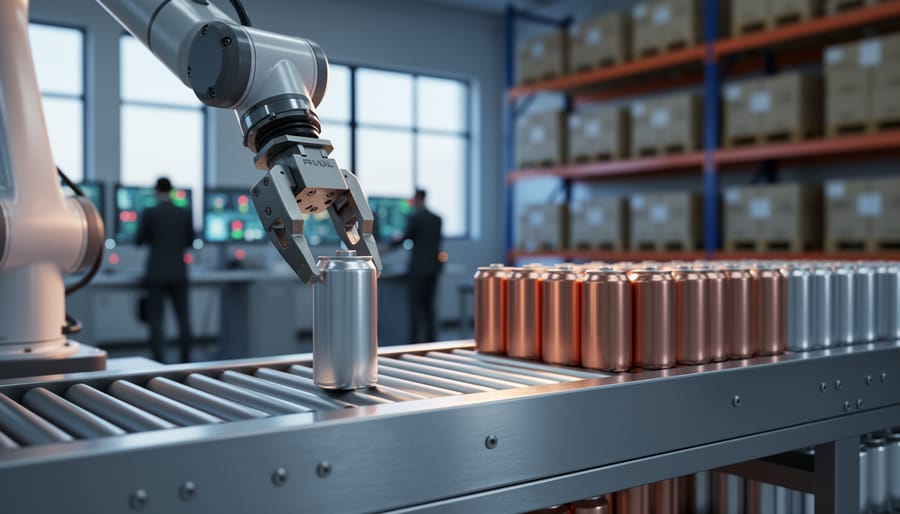
Supply chain optimization is the strategic process of making every step in the production and delivery journey as efficient, cost-effective, and responsive as possible. In battery manufacturing, this means coordinating raw material sourcing, production schedules, quality control, inventory levels, and distribution networks to deliver high-performance batteries faster and at lower cost while minimizing waste and environmental impact.
For Australia’s battery supply chain optimization has become essential. The nation is scaling up lithium-ion and next-generation battery production to power everything from electric vehicles to grid-scale energy storage, and doing it sustainably. Without optimization, manufacturers face bottlenecks, excess inventory sitting in warehouses, shipment delays, and quality inconsistencies that drive up costs and slow the transition to renewable energy.
The stakes are particularly high in 2026. Global demand for batteries continues to surge, lithium and cobalt prices fluctuate, and customers expect shorter lead times alongside verifiable sustainability credentials. Companies that optimize well can respond to these pressures with agility. They predict demand more accurately, adjust production in real time, source materials responsibly, and reduce carbon emissions across transport and manufacturing.
This article breaks down what supply chain optimization actually looks like in practice. You’ll learn how optimization mechanisms work, the core components that drive results, and real applications transforming Australia’s battery sector today. We’ll show you why optimization matters for meeting ambitious renewable energy targets and how leading manufacturers are embedding sustainability into every link of the chain. Whether you’re evaluating suppliers, planning production capacity, or advocating for greener industry practices, understanding optimization gives you the roadmap to make smarter, faster decisions that benefit both business performance and the environment.
What Supply Chain Optimization Means for Battery Production
Supply chain optimization is the strategic process of making every step in your production and delivery system work together as efficiently as possible. In battery manufacturing, this means coordinating the journey from mining lithium and cobalt, through refining and cell production, all the way to delivering finished battery packs to customers, while minimizing costs, reducing waste, and meeting sustainability targets.
Think of it as conducting an orchestra. Each section needs to play its part at precisely the right time, at the right volume, with the right instruments. When one supplier delivers materials late or a production line runs below capacity, the entire performance suffers. Optimization removes those bottlenecks and synchronizes the flow.
For Australian battery manufacturers, this coordination takes on added urgency. We’re building a local industry that must compete globally while meeting ambitious climate goals. An optimized supply chain reduces the time and money spent getting batteries to market, which translates directly into more affordable electric vehicles and home energy storage systems for everyday Australians.
- Supply chain optimization
- The strategic coordination of all activities, procurement, production, logistics, and delivery, to maximize efficiency, reduce costs, and achieve specific performance goals.
- Lead time
- The total time from ordering raw materials or components to receiving the finished product, a critical metric for managing inventory and meeting customer demand.
- Throughput
- The rate at which materials or products move through the manufacturing system, measuring how quickly inputs become finished batteries ready for delivery.
- Just-in-time delivery
- A logistics strategy where materials arrive precisely when needed for production, minimizing storage costs and reducing waste from excess inventory.
- Circular economy integration
- Designing supply chains to recover and reuse materials from end-of-life batteries, creating closed loops that reduce mining demands and environmental impact.
The beauty of optimization in battery production is that environmental and economic goals often align. Reducing transport distances cuts both carbon emissions and shipping costs. Improving material traceability supports ethical sourcing while preventing quality issues downstream. Designing for recycling creates new revenue streams from recovered materials.
When manufacturers get this right, the benefits cascade through the entire renewable energy sector. Lower battery costs accelerate EV adoption. Faster production ramps up grid storage installations. Better material efficiency extends the usable supply of critical minerals. Every improvement in the supply chain becomes a step toward Australia’s clean energy future.
How Battery Supply Chain Optimization Works
The Role of Data and Technology
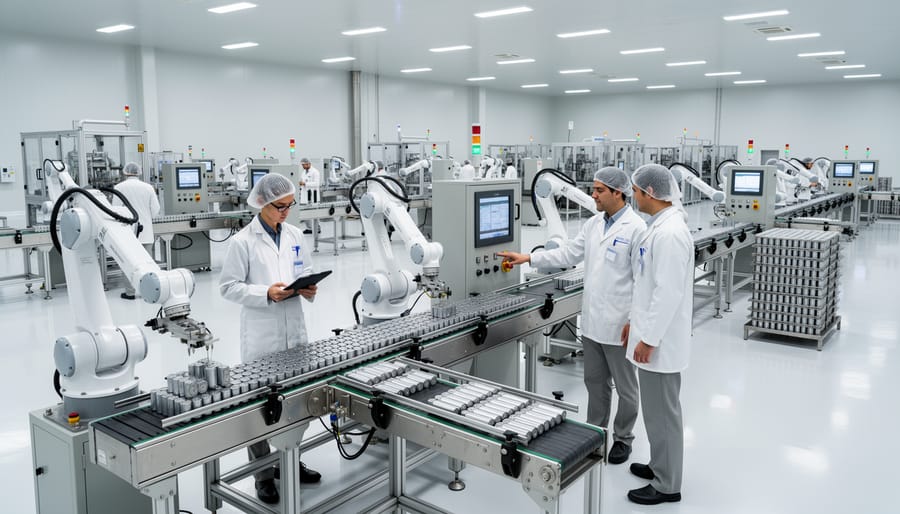
Modern battery manufacturers rely on sophisticated digital tools to keep their supply chains running smoothly. Real-time tracking systems monitor shipments of lithium, cobalt, and other critical materials as they move from mines in Western Australia or overseas ports to processing facilities and production lines. This visibility allows teams to spot delays early, whether it’s a shipping container stuck at Fremantle or a processing bottleneck at a refinery, and reroute materials before production stops.
Predictive analytics takes this further by forecasting demand patterns and potential disruptions. Software analyzes historical data, market trends, and even weather patterns to anticipate when a facility will need more raw materials or when transport routes might face delays. Australian manufacturers are increasingly adopting cloud-based platforms that connect suppliers, logistics providers, and production teams in one digital ecosystem, enabling everyone to see the same real-time information and coordinate decisions instantly.
Digital innovation has been particularly transformative at facilities like those in Queensland and Victoria, where manufacturers integrate IoT sensors throughout their operations. These sensors track everything from warehouse temperatures to machine performance, feeding data into systems that automatically adjust production schedules or alert managers to quality issues before they become costly problems. The result is faster response times, less waste, and more reliable delivery of batteries to Australian customers.
Coordinating Global and Local Sources
Australia’s battery manufacturers face a distinctive balancing act: sourcing critical minerals like lithium and cobalt from global markets while building domestic processing and assembly capabilities. This coordination challenge sits at the heart of supply chain optimization for our emerging industry.
Most raw materials still travel long distances before reaching Australian factories. Lithium carbonate might originate from Chile or China, graphite from Africa, while locally mined lithium often ships overseas for refining before returning as battery-grade material. Managing these global suppliers means navigating currency fluctuations, shipping delays, and geopolitical risks that can disrupt production schedules.
The opportunity lies in Australia’s rich mineral reserves. We hold substantial lithium, nickel, and cobalt deposits, yet historically exported raw materials rather than processing them locally. Optimization strategies now focus on shortening these loops, establishing domestic refining facilities that turn Australian ore into battery-grade chemicals without the overseas detour.
Local processing cuts transport costs and emissions while improving supply reliability. When a Perth manufacturer sources lithium hydroxide from a nearby refinery instead of importing from Asia, lead times shrink from months to weeks. This proximity lets them hold less inventory, respond faster to demand changes, and reduce their carbon footprint.
The coordination requires sophisticated planning: long-term contracts with international suppliers for materials Australia cannot yet process locally, paired with investments in domestic facilities that gradually reduce import dependence. Getting this balance right determines whether Australian battery manufacturing can compete globally while supporting the nation’s resource sector and renewable energy ambitions.
Core Components of an Optimized Battery Supply Chain
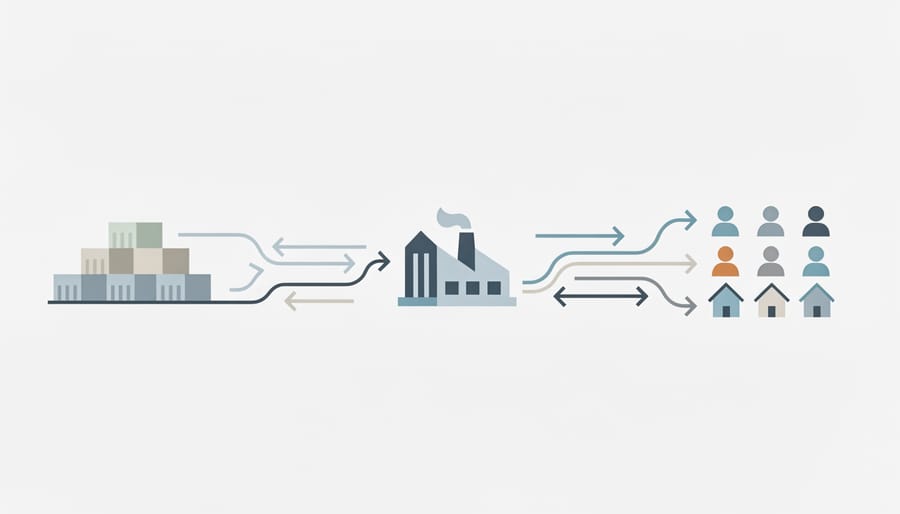
An optimized battery supply chain rests on five interconnected pillars that work together to deliver efficiency, reliability, and sustainability. Each component plays a distinct role, yet they must coordinate seamlessly to achieve the cost reductions and environmental outcomes that matter in 2026. Understanding these elements helps manufacturers, policymakers, and energy investors recognize what transforms a conventional supply chain into a genuinely optimized system.
The essential components are:
- Strategic sourcing: securing reliable, ethical suppliers for critical materials like lithium, cobalt, and nickel while managing price volatility and geopolitical risks
- Production scheduling: coordinating cell manufacturing, module assembly, and pack integration to match demand without excess inventory or capacity waste
- Distribution networks: establishing efficient transport routes and warehousing hubs that minimize carbon emissions and delivery times across Australia’s vast geography
- Quality systems: embedding continuous testing and traceability protocols throughout manufacturing to prevent defects, ensure safety standards, and maintain performance warranties
- Circular economy loops: designing take-back programs and recycling pathways that recover valuable materials from end-of-life batteries, reducing reliance on virgin raw materials
Strategic sourcing sits at the foundation because battery performance depends entirely on material quality and consistency. Australian manufacturers increasingly partner with local lithium refiners and overseas processors through long-term agreements that guarantee supply volumes and pricing stability. This reduces exposure to spot market swings and ensures materials meet environmental and labor standards, which matters to customers choosing sustainable energy solutions.
Production scheduling determines how efficiently a factory converts raw materials into finished batteries. Advanced planning systems track orders, equipment capacity, and supplier lead times to sequence manufacturing runs that minimize changeovers and idle time. A battery manufacturer supplying grid storage projects, for instance, might schedule large-format cells in batches aligned with installation timelines, rather than producing continuously and warehousing stock that ties up capital and warehouse space.
Distribution networks become critical when batteries must reach installation sites across regional and remote Australia. Optimized logistics balance transport modes (road, rail, sea) against cost, speed, and carbon footprint, often consolidating shipments to reduce empty return trips and packaging waste.
Quality assurance runs parallel to every other component, with testing checkpoints from incoming materials through final pack assembly. Traceability systems record each cell’s production batch, enabling rapid identification of issues and protecting brand reputation in a market where safety incidents can damage entire sectors.
Circular economy integration closes the loop by treating used batteries as valuable resources rather than waste. Recycling facilities recover lithium, cobalt, and other metals for remanufacturing, cutting supply chain dependence on mining and lowering the carbon intensity of new batteries by up to 30 percent compared to virgin material pathways.
Where Supply Chain Optimization Makes the Biggest Impact
Electric Vehicle Battery Production
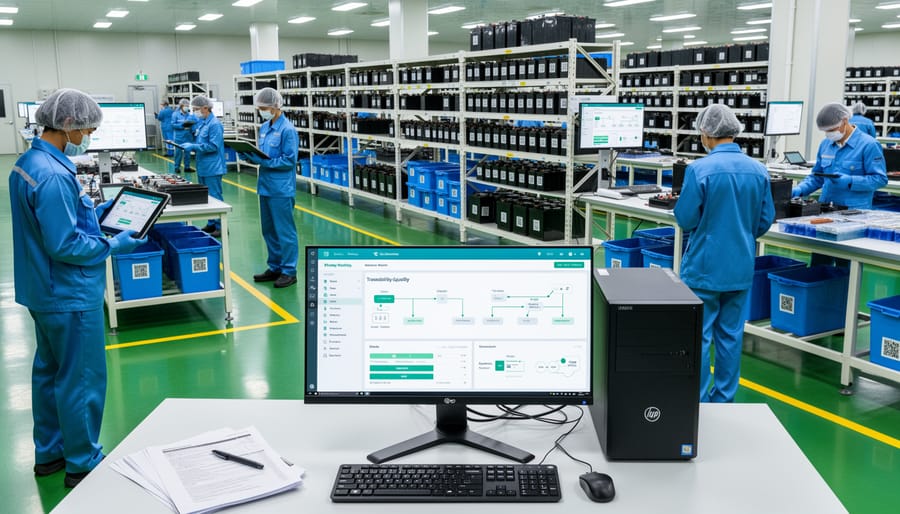
In Australia’s emerging electric vehicle market, supply chain optimization directly translates to lower battery costs and faster production times. When manufacturers coordinate lithium sourcing from Western Australian mines with regional cell production and assembly, they slash transport delays and holding costs. A streamlined supply chain can reduce EV battery manufacturing lead times from twelve weeks to six, cutting per-kilowatt-hour costs by 15-20 percent, savings that flow through to consumers at the dealership.
Smart procurement strategies lock in stable lithium and nickel supplies while digital tracking systems alert manufacturers to potential bottlenecks before they disrupt production lines. This coordination becomes crucial as Australia builds local EV battery manufacturing capacity: the faster batteries reach assembly plants, the sooner electric vehicles become competitively priced against combustion models. Optimization also extends to end-of-life planning, where efficient battery recycling systems recover valuable materials and feed them back into production, further reducing reliance on virgin raw materials and lowering total manufacturing costs.
Grid-Scale Energy Storage
Large-scale battery installations, the kind that stabilize electricity grids and store solar and wind energy for later use, place enormous pressure on supply chains. A single grid battery project can require thousands of individual cells, specialized cooling systems, and containerized housings that all need to arrive on schedule and meet strict performance standards.
When supply chains run smoothly, these massive projects come online faster. Optimized coordination means materials flow predictably from multiple suppliers, assembly happens without delays, and transport is sequenced so contractors aren’t waiting weeks for critical components. For Australia’s grid operators racing to integrate more renewable generation, this speed matters: every month saved in battery deployment means more clean energy can be reliably dispatched.
Cost reduction is equally significant. Grid batteries represent major infrastructure investments, and supply chain efficiency directly lowers the per-megawatt-hour price. Better forecasting cuts waste from over-ordering; consolidated shipments reduce freight expenses; quality controls prevent costly rework on-site. These savings make large battery storage economically competitive with gas peaking plants, accelerating the retirement of fossil fuel backup systems across the National Electricity Market.
Residential and Commercial Systems
For Australian homeowners and businesses investing in solar-plus-storage systems, supply chain optimization translates directly into faster installations and lower upfront costs. When battery manufacturers streamline their supply chains, securing predictable lithium and component deliveries, coordinating local assembly, and maintaining lean inventory, they can offer more competitive pricing on residential units like the Tesla Powerwall or Sungrow batteries that are increasingly common across Sydney and Brisbane suburbs.
Optimized logistics also mean shorter wait times. In 2025, some customers waited months for battery systems due to component shortages and shipping delays. Manufacturers who’ve tightened their supply chains now deliver units within weeks, allowing households to start saving on electricity bills and reducing grid dependence sooner. For commercial operations, warehouses, farms, manufacturing plants, reliable supply chains enable businesses to scale their energy storage without project delays, locking in energy cost savings and backup power security.
Better inventory planning reduces the risk of discontinued models or compatibility issues when expanding existing systems. This consistency matters for Australians planning phased installations or replacing aging batteries, ensuring their investment retains long-term value and spare parts remain available.
The Sustainability Connection
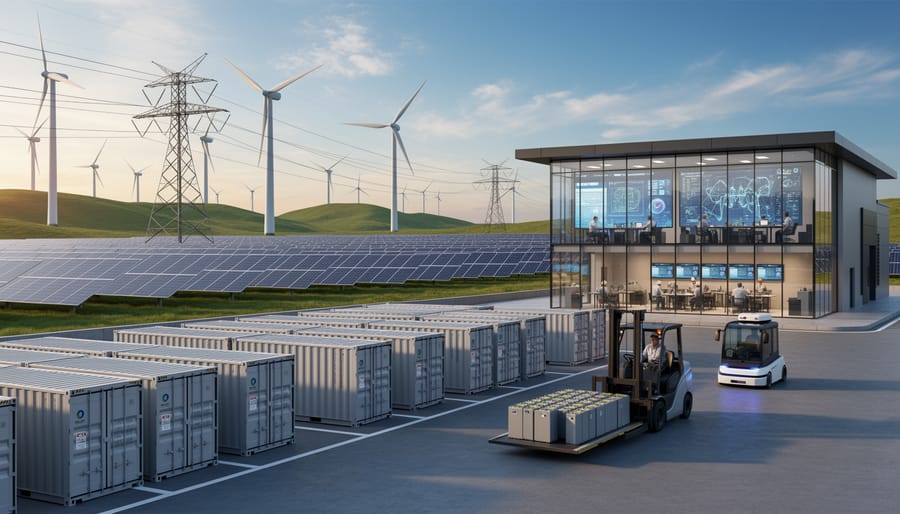
Supply chain optimization isn’t just about cost and efficiency, it’s one of the most powerful tools battery manufacturers have for reducing environmental impact. When companies streamline their supply chains, they simultaneously cut carbon emissions, minimize material waste, and create pathways for ethical sourcing that align with Australia’s renewable energy mission.
Transport represents a significant portion of a battery’s carbon footprint before it ever stores a single watt of energy. Optimized logistics reduce this burden through route planning that consolidates shipments, selects lower-emission transport modes, and locates processing facilities closer to raw material sources. Some Australian manufacturers now coordinate with local lithium refiners to minimize the distance materials travel, slashing transport-related emissions by up to 40% compared to global supply chains that ship raw ore overseas for processing.
Waste reduction happens at multiple stages. Better demand forecasting prevents overproduction and the disposal of excess materials. Quality control integration catches defects earlier, reducing scrap rates during cell manufacturing. Digital tracking systems monitor material flows with precision, identifying where losses occur and enabling manufacturers to recover and reuse components. These improvements matter: every tonne of lithium recovered and recycled eliminates the environmental cost of new extraction.
Material traceability has become central to ethical battery production. Blockchain-based tracking systems now allow manufacturers to verify the source of cobalt and ensure it comes from operations that meet labor and environmental standards. This transparency supports both corporate responsibility and compliance with emerging regulations, including EV battery safety standards that incorporate sustainability criteria.
Battery recycling depends entirely on efficient reverse logistics. Optimized collection networks and processing partnerships make it economically viable to recover lithium, cobalt, and nickel from spent batteries, creating closed-loop systems that reduce reliance on virgin materials. Companies like Redwood Materials have demonstrated net-zero supply chains by integrating recycling directly into their production planning.
The results are measurable. Tesla’s Gigafactories reduced supply chain emissions by 50% through regional sourcing and renewable energy integration. In Australia, the Townsville lithium refinery positions the country as a leader in low-emission battery materials by keeping processing local and powered by renewable sources.
Common Questions About Supply Chain Optimization in Battery Manufacturing
Supply chain optimization in battery manufacturing raises practical questions for industry professionals, policymakers, and consumers alike. Here are answers to the most common queries about how this process works and what it means for Australia’s renewable energy future.
What are the biggest challenges in optimizing battery supply chains?
Securing stable access to critical minerals like lithium and cobalt remains the primary hurdle, alongside coordinating suppliers across multiple countries with different regulatory standards. Supply chain visibility, knowing exactly where materials are and their environmental footprint, also presents ongoing difficulties for manufacturers.
How long does it take to see results from optimization efforts?
Quick wins in logistics coordination and inventory management can appear within months, but comprehensive optimization typically requires 18 to 36 months to fully implement and demonstrate measurable cost reductions and efficiency gains.
Can smaller manufacturers benefit from supply chain optimization?
Absolutely. Small and mid-sized manufacturers often see proportionally greater benefits by focusing on targeted improvements like local supplier partnerships, lean inventory practices, and shared logistics networks that reduce overhead without requiring massive capital investment.
What role does government policy play in battery supply chain optimization?
Australian government initiatives supporting critical mineral processing, manufacturing incentives, and recycling infrastructure directly enable more efficient domestic supply chains by reducing dependence on overseas processing and creating local value chains.
How does supply chain optimization affect battery prices for consumers?
Optimized supply chains reduce manufacturing costs by 15 to 30 percent over time, savings that manufacturers typically pass on partially to consumers through lower prices for electric vehicles, home battery systems, and renewable energy storage solutions.
The complexity of battery supply chains means that optimization isn’t a one-off project but an ongoing commitment. Manufacturers continually refine their processes as new technologies emerge, supplier relationships evolve, and demand patterns shift. Australian companies entering the battery manufacturing space have an advantage here: they can learn from established global players while building supply chains optimized from the ground up for sustainability and local conditions.
Policy support makes a tangible difference. When governments invest in domestic mineral refining capacity and recycling infrastructure, they reduce the distance materials travel and create more resilient local supply networks. This matters particularly for a country like Australia, which mines significant lithium but historically sent it overseas for processing. Bringing that processing home shortens the supply chain considerably.
For consumers wondering when optimization translates to lower prices, the answer depends on scale and market competition. As Australian battery manufacturing matures and supply chains become more efficient, the cost savings show up first in commercial and grid-scale projects, then gradually in residential systems as production volumes increase.
Supply chain optimization in battery manufacturing is about making every step work smarter, from sourcing lithium to delivering finished cells. It means coordinating suppliers, production, logistics and quality control so batteries cost less, arrive faster and leave a lighter environmental footprint. For Australia in 2026, this is not an abstract business concept. It is the practical mechanism that will help turn renewable energy ambitions into everyday reality.
When battery supply chains run efficiently, the benefits ripple outward. Electric vehicles become more affordable. Grid-scale storage projects get built on time and on budget. Home battery systems reach more households, giving families control over their energy bills and reducing reliance on fossil fuels. Each improvement in coordination and timing translates directly into cleaner air, more stable grids and stronger energy security.
Australia has enormous potential in this space. We have the raw materials, the engineering talent and the policy frameworks taking shape to support local battery manufacturing. What we need now is momentum. As supply chains mature and optimization tools become more accessible, smaller manufacturers will join established players. The knowledge will spread. The costs will continue falling.
This is not a distant future scenario. It is happening right now, in factories and research centres across the country. Supporting local battery initiatives, whether through purchasing decisions, investment choices or advocacy, helps build the infrastructure we need for a renewable-powered economy. Every optimized supply chain makes the next one easier to establish. Every battery produced domestically strengthens our position in the global energy transition.
The path forward is clear. Better supply chains mean better batteries, and better batteries mean a cleaner, more resilient Australia.