
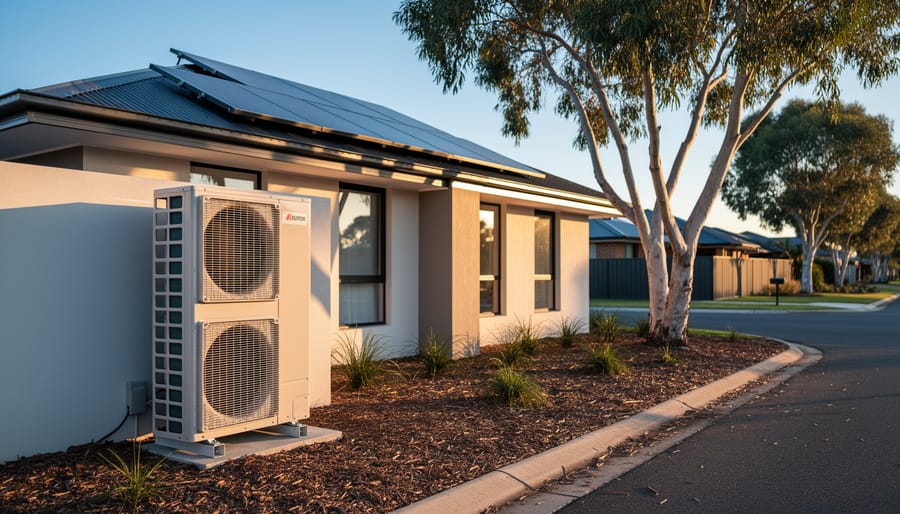
Australia’s buildings account for nearly a quarter of our national energy consumption, yet most still rely on outdated gas systems that drain household budgets and pump carbon into our atmosphere. Building electrification institutes are changing this narrative by championing the switch to all-electric homes and businesses, positioning heat pumps and other electric technologies as the cornerstone of our clean energy future.
These specialized organizations serve as knowledge hubs, policy advocates, and practical guides for homeowners, businesses, and policymakers navigating the transition away from fossil fuel appliances. By connecting communities with proven technologies and sustainable energy solutions, they’re accelerating Australia’s path toward net-zero emissions while delivering immediate financial benefits to everyday Australians.
The movement gained momentum as electricity prices began stabilizing through renewable sources, while gas prices continued their upward climb. Forward-thinking institutes recognized that electrification isn’t just environmental responsibility but economic common sense. Heat pumps, for instance, deliver three to five times more heating or cooling energy than the electricity they consume, slashing energy bills while eliminating direct emissions from homes.
From Perth to Hobart, building electrification institutes are demonstrating that the technology works brilliantly in our diverse climate zones. They’re sharing success stories from families who’ve cut their energy costs by thousands annually, businesses that’ve future-proofed their operations, and entire communities transforming their energy infrastructure. This isn’t tomorrow’s solution waiting in the wings; it’s today’s proven pathway to comfortable, affordable, zero-emission buildings across Australia.
What Is the Building Electrification Institute?
The Building Electrification Institute represents a transformative movement sweeping across Australia, dedicated to helping homes, businesses, and communities transition from fossil fuel-based gas appliances to clean, efficient electric alternatives. At its core, the institute’s mission centers on reducing greenhouse gas emissions by replacing gas hot water systems, heating, and cooking appliances with modern electric technologies—particularly heat pumps and other renewable-powered solutions.
This isn’t just about swapping appliances; it’s about reimagining how Australian buildings consume energy. The institute works collaboratively with three key groups: homeowners seeking to lower their energy bills and environmental footprint, businesses committed to sustainability targets, and policymakers crafting regulations that support Australia’s net-zero ambitions. By bridging these diverse stakeholders, the institute creates a comprehensive ecosystem for change.
The approach is refreshingly practical. Rather than overwhelming Australians with doom-and-gloom climate statistics, the institute focuses on tangible benefits—lower running costs, improved indoor air quality, and increased comfort. They recognize that many households still rely on gas for cooking, heating, and hot water, often unaware of the superior alternatives now available.
Through educational programs, technical resources, and real-world case studies, the institute demonstrates how electric heat pumps can deliver hot water at a fraction of the operating cost of gas systems, while reverse-cycle air conditioning provides both heating and cooling far more efficiently than gas heaters. They’re particularly passionate about showcasing Australian success stories—families who’ve slashed their energy bills, businesses achieving carbon neutrality, and entire communities embracing the electric transition.
The ultimate objective? Making building electrification the natural, obvious choice for every Australian, creating healthier homes and a cleaner environment for future generations.
The Case for Ditching Gas in Australian Homes
The Hidden Costs of Gas Appliances
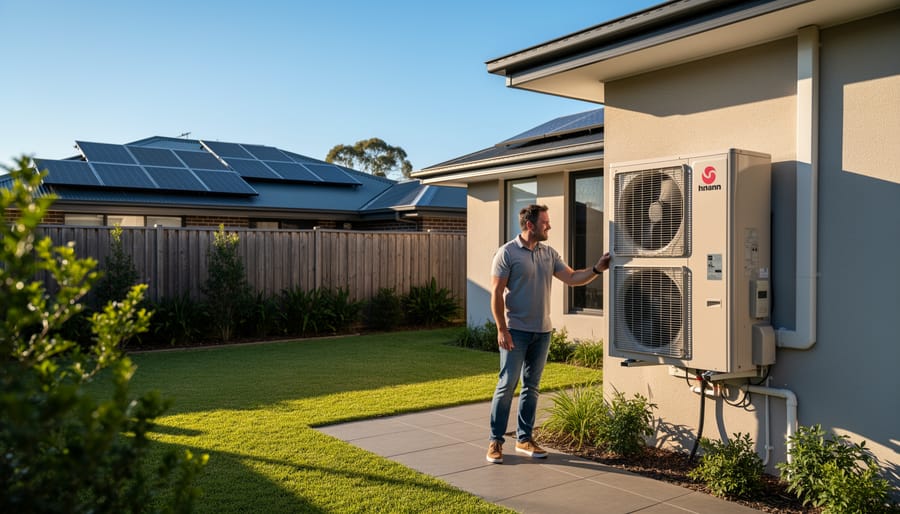
When most Australians think about gas appliances, they picture affordable, reliable energy for cooking and heating. But here’s what many don’t realise: the true cost of gas extends far beyond your quarterly bill, and it’s increasingly making less financial sense than electric alternatives.
Start with indoor air quality. Recent Australian research shows gas cooktops release nitrogen dioxide and other pollutants that can exceed safe indoor air quality levels, particularly in homes without adequate ventilation. For families with young children or anyone with respiratory conditions, this hidden health cost is significant and often overlooked in the gas versus electric debate.
Then there’s the matter of connection fees. Getting gas connected to a new home can cost thousands of dollars upfront—money that could instead go toward efficient electric appliances. Many homeowners in newly developed areas are discovering this the hard way, only to watch their neighbours skip gas entirely and pocket the savings.
Perhaps most importantly, gas prices in Australia have been climbing steadily. While renewable energy is driving electricity costs down in many regions, particularly for households with solar panels, gas remains tied to volatile global markets. The Australian Energy Market Operator projects this trend will continue, making gas increasingly less economical.
The good news? Australians are catching on. Savvy homeowners are running the numbers and discovering that modern electric heat pumps and induction cooktops aren’t just better for the environment—they’re genuinely better for the hip pocket too.
How Electrification Fits Australia’s Renewable Energy Future
Australia’s renewable energy landscape creates the perfect environment for building electrification to truly shine. When you power your home with electric appliances, you’re not just switching energy sources—you’re unlocking the full potential of the clean energy revolution happening on our rooftops and across the grid.
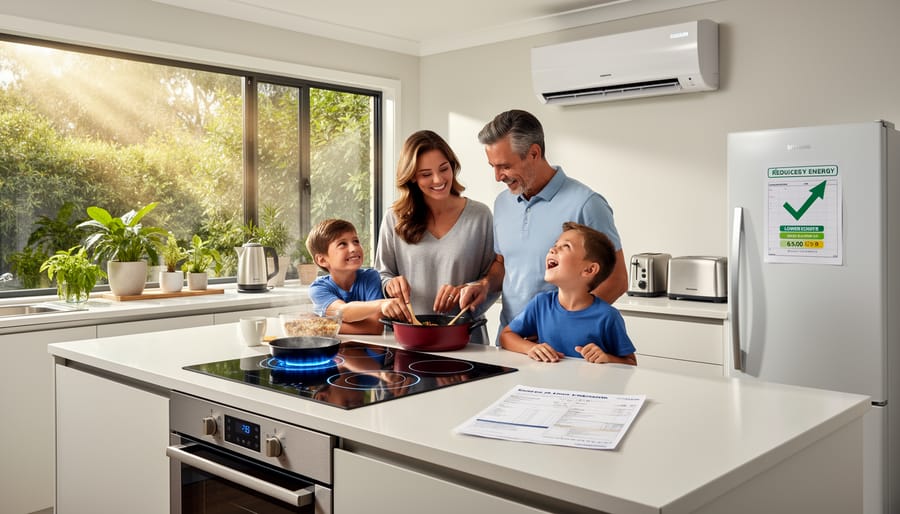
Think about it this way: your rooftop solar panels generate electricity during the day, and your electric heat pump hot water system can be programmed to heat water when the sun’s blazing. That’s free hot water powered entirely by sunshine. Add battery storage to the mix, and you can store that solar energy to run your electric cooktop, heating, and cooling throughout the evening.
The beauty of electrification is its flexibility. As Australia’s grid transitions to renewable grid energy, every electric appliance in your home automatically becomes cleaner over time. Gas appliances can’t make that claim—they’ll always burn fossil fuels, regardless of how green our electricity becomes.
Australian households leading this charge are already seeing the benefits. They’re reducing energy bills, cutting emissions, and gaining energy independence. As our nation races toward renewable energy targets, building electrification isn’t just compatible with our clean energy future—it’s essential to achieving it.
Heat Pumps: The Technology Making Electrification Practical
How Heat Pumps Work (Without the Engineering Degree)
Think of a heat pump as a refrigerator working in reverse – and working brilliantly at that. Instead of pulling heat out of your food to keep it cold, a heat pump extracts warmth from the outside air (yes, even on chilly mornings) and pumps it inside your home. During summer, it simply reverses direction, taking heat from inside and moving it outdoors.
Here’s where the magic happens: heat pumps don’t generate heat by burning fuel – they simply move it from one place to another. This clever approach makes them remarkably efficient, typically delivering three to five times more energy than they consume. Compare that to a traditional gas heater, which wastes about 20-30% of its energy up the flue, or those old electric resistance heaters that gulp electricity like there’s no tomorrow.
The beauty of this technology lies in its simplicity. A heat pump uses a small amount of electricity to run a compressor and fan, transferring heat through a special refrigerant that changes between liquid and gas states. It’s the same proven technology that’s kept Australian fridges humming reliably for decades, now scaled up to heat and cool entire homes.
For Aussie households, this efficiency translates directly to lower energy bills and reduced carbon emissions – a true win-win that’s helping families across the country make the switch without sacrificing comfort or breaking the bank.
Types of Heat Pumps for Australian Homes
Australian homes have access to several heat pump technologies, each suited to different climates and applications. Understanding which option works best for your region can help you make a confident choice for your electrification journey.
Air source heat pumps are the most popular choice for Australian households, and for good reason. These systems extract warmth from outdoor air to heat water or indoor spaces, working efficiently even when temperatures drop. For hot water heating, air source heat pumps use about 60-75% less electricity than traditional electric systems, delivering brilliant savings on energy bills. They’re particularly effective in temperate coastal regions like Sydney, Melbourne, and Perth, though modern models now perform well even in cooler climates including Tasmania and the Snowy Mountains.
For space heating and cooling, reverse-cycle air conditioners are essentially heat pumps that can both warm and cool your home. They’re ideal across Australia’s diverse climate zones, from Brisbane’s humid summers to Canberra’s frosty winters. Many Australian families already use these without realising they’re tapping into heat pump technology.
Ground source or geothermal heat pumps offer another option, drawing stable temperatures from beneath the earth’s surface. While less common due to higher installation costs, they’re exceptionally efficient for larger properties or commercial buildings, particularly in regions with extreme temperature variations.
A Darwin family might prioritise cooling capacity, while someone in Hobart would focus on heating performance. The beauty of heat pump technology is its adaptability, ensuring every Australian household can find a suitable solution that reduces emissions while maintaining comfort year-round.
Real Efficiency: Why Heat Pumps Use Less Energy
Here’s the magic behind heat pumps: they don’t generate heat from scratch like traditional heaters. Instead, they move existing heat from one place to another, and this makes them remarkably efficient. Think of it like a reverse refrigerator, pulling warmth from outside air (even on cool days) and concentrating it inside your home.
This efficiency is measured by something called the coefficient of performance, or COP. In simple terms, it’s the ratio of heat delivered compared to electricity used. A heat pump with a COP of 3 delivers three units of heat for every one unit of electricity consumed. Many modern systems achieve COPs between 3 and 4, meaning you’re getting three to four times more heating energy than you’re paying for in electricity.
This isn’t magic—it’s smart physics. While a gas heater or electric resistance heater converts energy at roughly one-to-one, heat pumps leverage the ambient warmth already present in the environment. That’s why Australian households switching to heat pumps typically see heating costs drop by 50-75%, even as they enjoy more consistent comfort. It’s a fair dinkum game-changer for both your wallet and the planet.
Success Stories: Aussie Buildings Going All-Electric
Real families and businesses across Australia are already reaping the rewards of electrification, proving that the transition from gas to all-electric isn’t just environmentally sound—it’s economically smart too.
Take the Henderson family from Melbourne’s outer suburbs. Before electrifying their 1980s brick veneer home, they were spending roughly $2,400 annually on gas heating, hot water, and cooking. After installing a heat pump hot water system, reverse-cycle air conditioning for heating and cooling, and an induction cooktop, their combined energy costs dropped to approximately $1,650 per year—a saving of $750 despite still relying partly on grid electricity. Once they added a 6.6kW solar system six months later, their bills plummeted to just $420 annually. That’s an 82% reduction in energy costs, and their household emissions dropped by 4.2 tonnes of CO2 per year. “We thought going electric would be expensive, but the savings speak for themselves,” says Sarah Henderson. “Plus, the heating works better than our old gas heater ever did.”
In regional New South Wales, the Bathurst Community Centre underwent a complete electrification retrofit supported by local initiatives. Previously, their gas heating and conventional electric systems cost the centre $8,500 yearly, with significant emissions from gas consumption during winter months. After transitioning to commercial-grade heat pumps for heating and hot water, coupled with rooftop solar, their annual energy expenses dropped to $3,200—a 62% reduction. The centre now operates as a demonstration site, showing other community organizations how electrification creates both financial breathing room and environmental benefits.
Brisbane’s Green Bean Café offers another compelling example. Owner Marcus Chen initially worried about the cost of replacing his gas cooking equipment, but after making the switch to induction cooking and installing heat pump water heating, he noticed immediate improvements. Energy bills decreased by 40%, kitchen temperatures became more comfortable for staff, and cooking precision improved. “The induction cooktops heat up faster and give us better control,” Marcus explains. “We’re saving money, keeping the kitchen cooler, and our carbon footprint has dropped significantly—it’s a win all round.”
These stories demonstrate that electrification delivers tangible benefits for everyday Australians, regardless of whether you’re running a household, community space, or business.
Making the Switch: Practical Steps for Your Building
Where to Start: Assessing Your Current Setup
Begin by creating a simple inventory of your home’s gas appliances. Walk through each room and note down what you’re currently running on gas – your hot water system, space heaters, cooktop, or ducted heating. This snapshot gives you a clear starting point for your electrification journey.
Next, prioritise based on impact and timing. If your gas hot water system is nearing the end of its lifespan (typically 10-15 years), that’s your golden opportunity to switch to a heat pump water heater. Replacing appliances as they naturally age makes financial sense and avoids the “sunk cost” trap of ditching perfectly functional equipment prematurely.
Consider your energy bills too. Hot water typically accounts for around 25% of household energy use in Australian homes, making it a prime candidate for early replacement. Space heating comes next, especially in cooler regions where running costs are substantial.
Don’t forget to check your current electrical capacity. Some older homes might need minor upgrades to support new electric appliances, though this is less daunting than many people imagine. A licensed electrician can assess your switchboard and advise on any necessary improvements, ensuring a smooth transition to cleaner, more efficient electric alternatives.
Government Rebates and Financial Support
Making the switch to electric heating and cooling is more affordable than ever, thanks to generous government support across Australia. Both federal and state governments recognise that building electrification is essential for reaching our climate goals, and they’re putting real dollars behind this transition.
At the federal level, homeowners and businesses can access various rebates and low-interest loans for energy-efficient upgrades, including heat pumps. The Small-scale Renewable Energy Scheme provides certificates that reduce upfront costs for eligible installations. Many Aussies don’t realise these incentives exist, which means they’re leaving money on the table.
State governments have stepped up with even more targeted support. Victoria’s Solar Homes Program offers rebates up to $1,000 for heat pump hot water systems, while the ACT provides interest-free loans for household electrification. NSW, Queensland, and South Australia each run their own schemes, with rebates varying based on location and household income.
The beauty of these programs is they’re designed to make sustainable choices accessible to everyday Australians. Some states even offer additional support for renters and low-income households, ensuring the benefits of electrification reach everyone. Before starting your electrification journey, it’s worth checking what’s available in your area – the savings can be substantial, often covering a significant portion of installation costs.
Finding the Right Heat Pump Installer
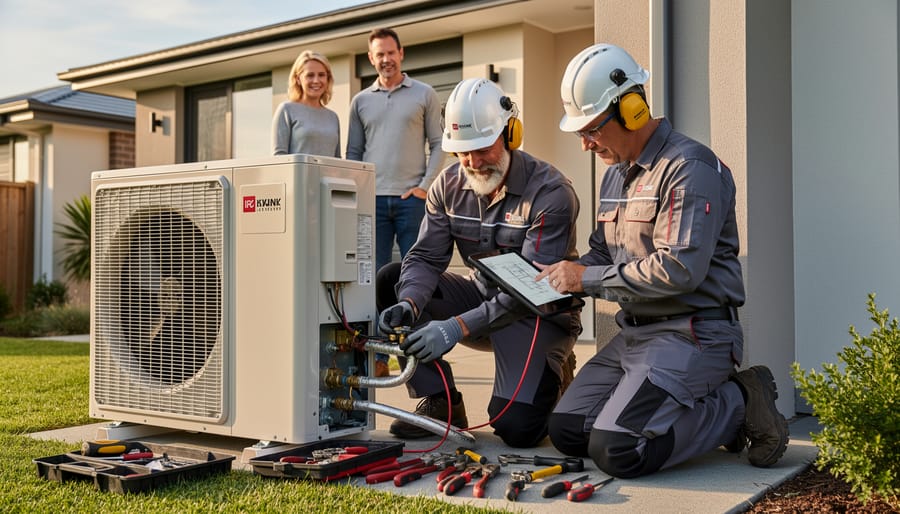
Choosing the right installer is crucial for ensuring your heat pump performs efficiently for years to come. Start by seeking out accredited professionals with specific heat pump experience – look for certifications from recognized industry bodies and ask to see examples of previous installations similar to your property.
Don’t be shy about asking questions. A quality installer should happily explain the sizing calculations for your system, discuss expected energy savings based on your home’s characteristics, and provide detailed written quotes that break down all costs. Ask about warranties on both equipment and workmanship, and request references from recent customers you can contact.
During the consultation, expect a thorough assessment of your property. The installer should evaluate your home’s insulation, existing electrical capacity, optimal unit placement for both efficiency and aesthetics, and any necessary upgrades to your electrical panel. They should also discuss noise considerations and explain the installation timeline clearly.
A professional installation typically takes one to three days, depending on system complexity. The best installers will walk you through operating your new system and answer all your questions with patience. Remember, this is a long-term investment in your home’s comfort and Australia’s clean energy future – taking time to find the right professional pays dividends.
The Bigger Picture: Jobs, Economy, and Energy Independence
The shift to electric buildings isn’t just good for the planet—it’s a powerful economic engine that’s already creating thousands of jobs across Australia. From manufacturing heat pumps and electric appliances to installing and maintaining these systems, building electrification is opening career pathways for electricians, plumbers, HVAC technicians, and energy auditors. As demand grows, training programs are expanding to equip workers with the skills needed for this booming sector, ensuring communities nationwide benefit from secure, well-paying employment.
Consider the ripple effects: when Australian households install locally manufactured heat pumps instead of importing gas heaters, those dollars support domestic jobs and strengthen our manufacturing base. Installation alone requires skilled tradies who can navigate both the technical and advisory aspects of electrification, while ongoing maintenance creates sustained employment opportunities. Early adopters in Melbourne and Brisbane have already reported robust demand for qualified technicians, with some businesses struggling to keep up with installation requests.
Beyond job creation, building electrification dramatically improves Australia’s energy security. Currently, we’re exposed to volatile international gas markets despite being a major gas exporter—a paradox that sees prices spike unpredictably. By transitioning to electric systems powered by our abundant renewable resources, we’re taking control of our energy future. Solar panels and wind farms harness resources we’ll never run out of, and they’re increasingly Australian-owned and operated.
This shift keeps energy spending within local economies rather than sending it offshore. When a Sydney household powers their heat pump with rooftop solar, that’s money saved and reinvested locally—perhaps in home improvements, education, or supporting neighbourhood businesses. Multiply this across millions of homes, and you’re looking at billions redirected into strengthening Australian communities.
Australia’s energy transition through building electrification represents more than environmental responsibility—it’s an investment in prosperity, resilience, and genuine energy independence that benefits every Australian.
Australia stands at an exciting turning point in its energy journey, and building electrification powered by heat pumps represents one of our most promising pathways toward a cleaner, more sustainable future. The transformation is already underway in homes and businesses across the country, proving that transitioning away from gas isn’t just environmentally responsible—it’s practical, economical, and achievable right now.
Every household and business that makes the switch contributes to reducing emissions, lowering energy costs, and building resilience against volatile fossil fuel prices. The success stories we’ve explored demonstrate that Australians from diverse backgrounds and climates are already experiencing the benefits firsthand. Whether you’re in tropical Darwin or chilly Canberra, heat pump technology can work for you.
Now is the time to explore how electrification can transform your space. Start by assessing your current energy use, speak with qualified professionals about heat pump options suited to your needs, and investigate available government incentives. You don’t have to make the leap overnight—small steps toward electrification create meaningful change.
By choosing to electrify, you’re not just upgrading your building; you’re joining a growing movement of Australians committed to sustainable living and a healthier planet for future generations. The energy transition needs champions at every level, and that includes you.