
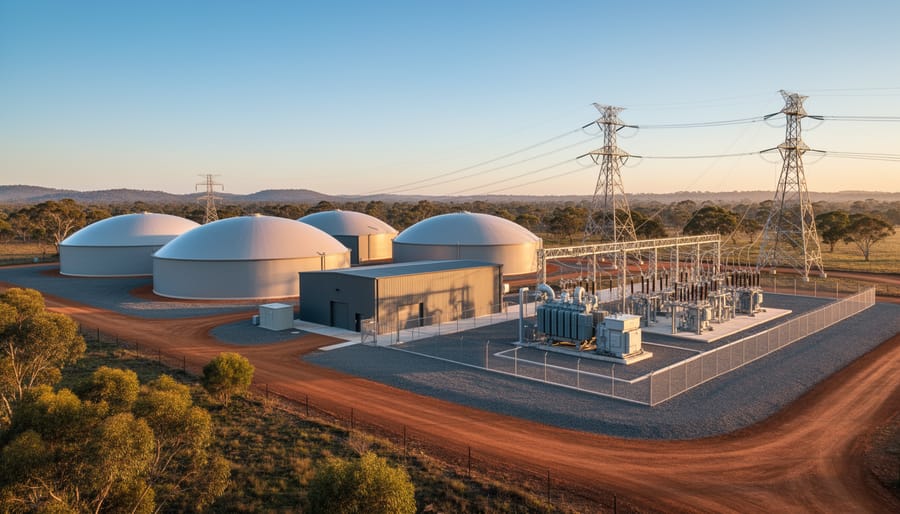
Australia’s electricity grid stands at a crossroads. While renewable energy capacity races ahead, the infrastructure connecting generators to consumers remains a complex web of technical standards, regulatory frameworks, and market rules that can make or break a bioenergy project. For developers ready to transform organic waste into clean electricity, understanding how to navigate grid connection isn’t just helpful—it’s essential for survival.
The challenge is real. Bioenergy generators across the country face connection delays stretching months or years, unexpected cost blow-outs for network upgrades, and market participation requirements that seem designed for massive coal plants rather than nimble renewable facilities. Yet the opportunity has never been greater. With energy prices climbing and Australia’s net-zero commitments driving policy change, the grid desperately needs the reliable, dispatchable power that bioenergy delivers.
This isn’t about pointing fingers at a broken system. Smart developers are already finding pathways through the complexity, turning regulatory hurdles into competitive advantages. Queensland’s sugar mills are exporting power during peak demand periods. Victorian dairy farms are earning revenue from network stability services. Western Australian waste facilities are securing premium offtake agreements by understanding exactly what grid operators value.
Success comes down to knowledge and strategy. Understanding how connection queues actually work, what triggers costly network augmentation, and which market mechanisms reward bioenergy’s unique characteristics transforms grid access from an intimidating barrier into a manageable business process. The developers thriving today aren’t the ones with the biggest budgets—they’re the ones who cracked the code on working with Australia’s evolving energy infrastructure.
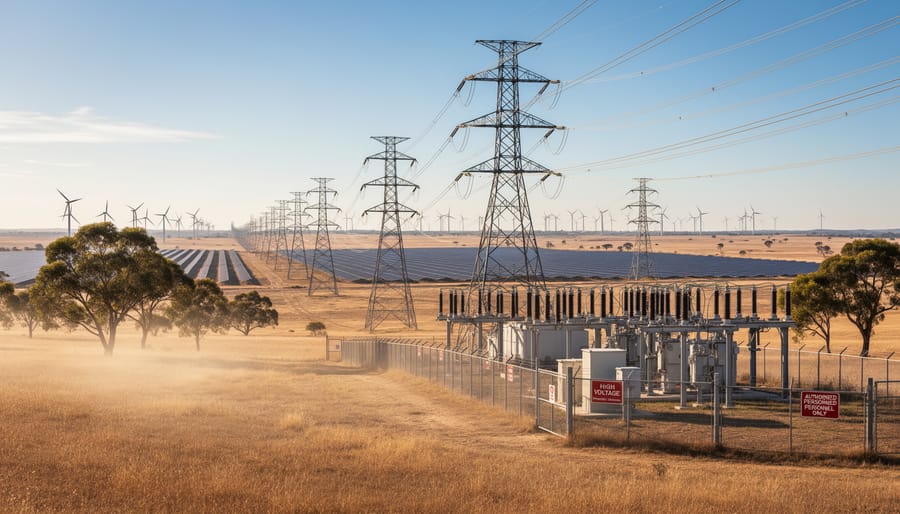
What Makes Energy Grids Tick (And Why They’re Picky About Who Gets In)
The Balancing Act: Why Grid Stability Matters
Australia’s electricity grid operates on a principle as simple as it is critical: supply must match demand every single second of every day. Think of it like a perfectly balanced seesaw – tip too far in either direction, and the whole system becomes unstable. When electricity demand exceeds supply, we risk blackouts. When supply overwhelms demand, equipment can be damaged and safety compromised.
This real-time balancing act is managed by the Australian Energy Market Operator, which constantly monitors and adjusts electricity flows across the National Electricity Market. The grid operates at a precise frequency of 50 hertz, and even small deviations can cause problems. Grid operators must forecast demand, coordinate generation from hundreds of sources, and respond instantly to unexpected changes – from a heatwave driving up air conditioning use to a sudden cloud passing over a solar farm.
For bioenergy generators, understanding this balancing act is essential because it shapes how and when you can connect to the grid. Your facility isn’t just adding power; it’s becoming part of an intricate dance of electrons. Grid operators need to know your generation patterns, reliability, and flexibility. Can you provide steady baseload power? Can you ramp up quickly when needed? These questions determine your value to the system and influence connection requirements.
The good news is that bioenergy’s reliability gives it a distinct advantage. Unlike wind or solar, biogas and biomass facilities can typically generate power consistently, making them valuable contributors to grid stability. This predictability can actually smooth your path to connection.
Where Bioenergy Fits in the Grid Puzzle
Solar and wind have revolutionized Australia’s renewable energy landscape, but they share a common limitation: they only generate power when nature cooperates. This is where bioenergy becomes a game-changer for grid stability.
Unlike its renewable cousins, bioenergy offers dispatchable power—meaning operators can fire up generation whenever the grid needs it most. Think of it as the reliable friend who’s always ready to help, whether it’s during windless winter evenings or after sunset when solar panels go dark. This flexibility makes bioenergy perfectly positioned to fill the gaps that variable renewables leave behind.
Australian grids increasingly need this “firm capacity” as coal plants retire. Bioenergy facilities can respond to demand spikes, provide essential grid services like frequency control, and even store energy in the form of biomass feedstock—nature’s battery. Progressive energy policies are beginning to recognize this unique value.
At the Condong Sugar Mill in New South Wales, bagasse-fired cogeneration demonstrates this advantage beautifully, generating power on demand while processing sugarcane. Such success stories prove that bioenergy isn’t just another renewable option—it’s the missing piece that helps the entire puzzle come together.
The Three Roadblocks Stopping Bioenergy Generators From Connecting
Technical Requirements That Catch Generators Off Guard
Getting your bioenergy facility grid-ready involves navigating a maze of technical specifications that often surprise even experienced developers. Think of it like building a bridge between two systems that need to speak the same language perfectly.
The Australian Energy Market Operator sets strict power quality standards that your facility must meet. Your generators need to maintain voltage within narrow bands, typically plus or minus 10 percent of nominal levels, and frequency must stay rock-steady around 50 Hertz. These aren’t suggestions—they’re hard requirements that protect grid stability for everyone.
Protection systems represent another common stumbling block. Your facility needs sophisticated equipment that can detect faults and disconnect within milliseconds, preventing disturbances from cascading through the network. Many developers underestimate the complexity and cost of these systems, which can run into hundreds of thousands of dollars.
Metering requirements have caught many generators by surprise too. You’ll need Australian standard compliant metering that records generation in five-minute intervals, accurately capturing your facility’s output for settlement purposes. The meters themselves must be independently verified and often remotely accessible by network operators.
Compliance testing before connection can take months. Network operators will require comprehensive documentation proving your equipment meets all specifications, followed by witnessed testing at your site. A sugarcane facility in North Queensland recently learned this lesson, adding four months to their timeline when initial tests revealed power factor issues requiring equipment modifications.
The good news? Once you understand these requirements upfront, you can budget appropriately and avoid costly delays down the track.
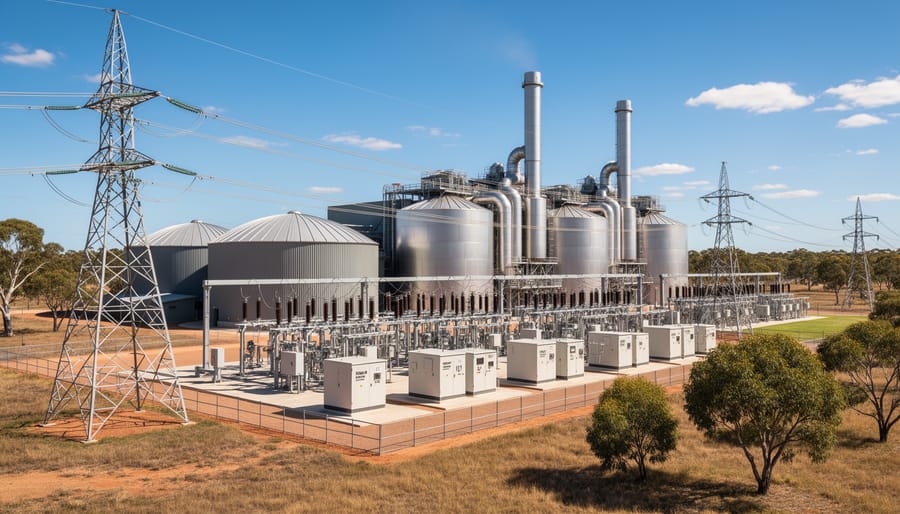
The Connection Queue: Why Timing Matters
Connecting your bioenergy generator to Australia’s electricity grid isn’t quite as simple as flipping a switch, and understanding the connection queue can save you considerable time and frustration. When you submit your application to connect, you’re entering what’s essentially a waiting list that operates on a first-come, first-served basis, though the reality is a bit more nuanced.
The Australian Energy Market Operator manages this queue, assessing each application based on available grid capacity in your specific region. Here’s where timing becomes crucial: areas with limited transmission infrastructure or high demand from existing generators can mean waiting periods stretching from several months to, in some cases, years. A bioenergy facility in regional Queensland recently experienced an 18-month wait due to local capacity constraints, while a similar project in New South Wales connected within six months thanks to recent infrastructure upgrades.
Grid capacity isn’t unlimited, and network service providers must carefully balance new connections against system reliability. Your position in the queue affects more than just when you can start generating revenue—it influences your project’s financial viability and investor confidence. The good news? By understanding these constraints early and working proactively with network operators, you can identify alternative connection points or timing strategies that accelerate your path to operation.
The Cost Factor: What You’ll Really Pay
Understanding the true cost of connecting your bioenergy facility to the grid is essential for realistic project planning. The good news? While initial expenses exist, they’re increasingly competitive with other renewable technologies, and many operators find the long-term returns worthwhile.
Connection costs vary dramatically based on your location and the grid’s current capacity. A small bioenergy plant in regional New South Wales might face initial connection fees ranging from $50,000 to $150,000 for basic infrastructure. However, if you’re connecting in an area requiring significant network upgrades—perhaps where grid infrastructure hasn’t kept pace with renewable growth—costs can climb to $500,000 or more.
The Millmerran Power Station in Queensland provides a realistic benchmark. Their biomass co-firing project required modest grid modifications because existing infrastructure could handle the additional capacity, keeping upgrade costs manageable.
Beyond connection, expect ongoing network charges averaging $2,000 to $8,000 monthly, depending on your facility’s size and consumption patterns. These cover maintenance and access to the distribution network.
Here’s the encouraging part: Australian operators report that well-planned projects typically recover connection costs within three to five years through energy sales and renewable certificates. Regional Victoria’s wood waste facilities demonstrate this beautifully, with operators achieving profitability faster than initially projected thanks to rising energy prices and supportive market mechanisms.
Navigating Market Rules: Your Roadmap to Getting Paid
Understanding the National Electricity Market (NEM)
Australia’s National Electricity Market is like a sophisticated dance floor where electricity generators, distributors, and retailers constantly coordinate to keep the lights on across the eastern and southern states. For bioenergy generators, understanding this system is your first step toward becoming part of Australia’s renewable energy transformation.
The NEM operates across Queensland, New South Wales, Victoria, South Australia, Tasmania, and the Australian Capital Territory, managing electricity supply and demand in real-time. Think of it as a massive balancing act that happens every five minutes, where electricity is bought and sold through a wholesale market. The Australian Energy Market Operator, or AEMO, acts as the traffic controller, ensuring supply meets demand precisely.
Key players in this ecosystem include generators who produce electricity, transmission companies who move it across long distances, distributors who deliver it to homes and businesses, and retailers who sell it to end users. As a bioenergy generator, you become part of the supply side, contributing renewable energy alongside solar, wind, and other sources.
Participation means more than just connecting your facility to the grid. You’ll need to register with AEMO, comply with technical standards, and decide whether to sell directly into the wholesale market or through a power purchase agreement with a retailer. Many successful bioenergy projects in regional Australia have found their sweet spot by combining grid sales with local energy supply, turning agricultural waste into both profit and community resilience while supporting the nation’s clean energy goals.
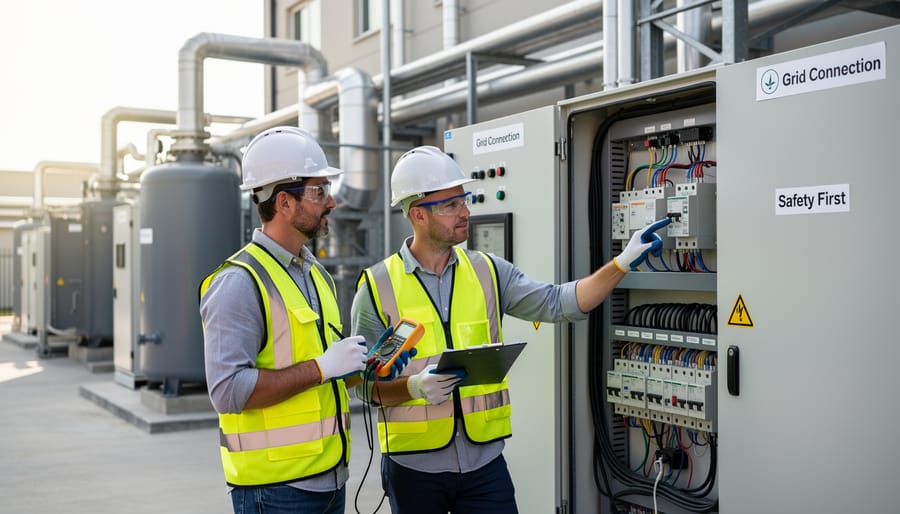
Registration Categories: Finding Your Place
Understanding which registration category fits your bioenergy operation is like choosing the right lane on a highway – it determines your journey through the market. The good news? Australia’s energy market offers multiple pathways designed to accommodate generators of all sizes.
Small-scale operations under 5 megawatts typically fall under exempt or registrable status. This lighter-touch approach suits farm-based biogas plants or local waste-to-energy facilities perfectly. You’ll avoid the hefty registration fees and extensive reporting requirements, making it easier to get started. Think of Murray Bridge’s agricultural waste facility – they chose exempt status, allowing them to focus on operations rather than paperwork.
For mid-sized generators between 5 and 30 megawatts, the semi-scheduled category offers flexibility. You’ll participate in the market without the full weight of compliance obligations faced by large coal plants. Many sugarcane bagasse facilities in Queensland have found their sweet spot here, selling excess power while maintaining manageable reporting standards.
Larger bioenergy projects exceeding 30 megawatts enter scheduled generator territory. While this requires more sophisticated forecasting and bidding systems, it opens access to premium market opportunities and ancillary services. The South Australia Bio-Hub exemplifies this pathway, transforming metropolitan organic waste into reliable baseload power.
Each category requires different technical capabilities and financial commitments. Your choice depends on your facility’s capacity, operational flexibility, and market ambitions. The Australian Energy Market Operator provides guidance materials tailored to each pathway, helping you navigate the requirements without getting lost in complexity.
Revenue Streams Beyond Just Selling Electricity
Here’s the exciting part: bioenergy generators aren’t limited to just flogging electricity to the grid. There’s a whole suite of income streams that can transform your project’s financial viability, and savvy operators are already tapping into these opportunities across Australia.
Beyond the wholesale electricity market, bioenergy facilities can earn renewable energy certificates (RECs) for every megawatt-hour of clean power generated. These certificates trade separately from electricity itself, creating an additional revenue layer that improves project economics significantly.
Then there’s the ancillary services market, where the Australian Energy Market Operator pays generators to help keep the grid stable. Bioenergy plants excel here because they can ramp production up or down relatively quickly compared to traditional baseload power stations. Services like frequency control and system restart capability can deliver substantial payments, particularly as intermittent renewables like solar and wind increase their grid share.
Don’t overlook carbon credits either. Projects that divert organic waste from landfill while generating renewable energy can create Australian Carbon Credit Units under the Emissions Reduction Fund, adding another income stream to the mix.
Some forward-thinking operators are even selling heat captured from electricity generation to nearby industrial users or district heating systems. This combined heat and power approach can double your revenue potential while improving overall efficiency. The key is viewing your bioenergy facility as a multi-product operation rather than just a power station.
Success Stories: Australian Bioenergy Generators Who Cracked the Code
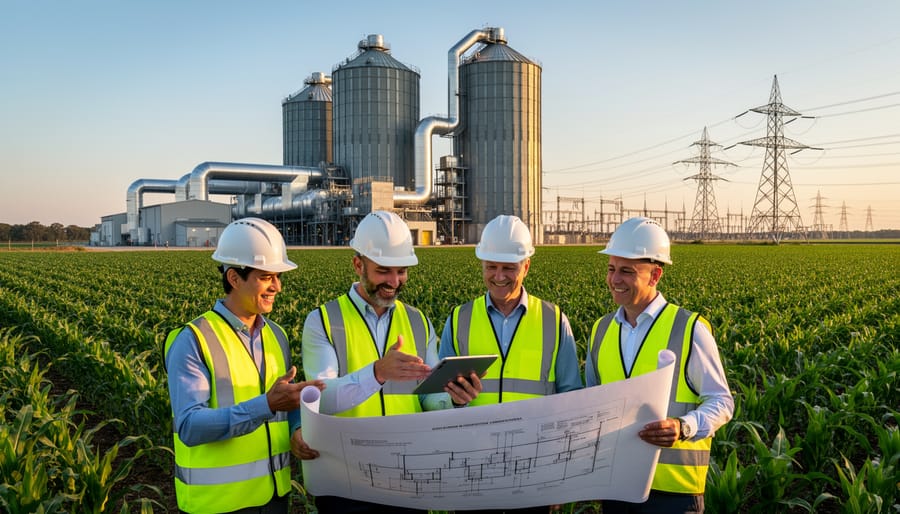
Australian bioenergy generators are proving that cracking the grid connection code isn’t just possible—it’s happening right now, creating blueprints others can follow.
Take the Yarra Valley Water’s Wollert Sewage Treatment Plant in Melbourne, a standout among successful bioenergy projects. This facility transformed a waste problem into an energy solution by capturing biogas from sewage treatment and converting it into electricity. The real victory? They navigated the grid connection process by engaging early with their local distribution network service provider and Australian Energy Market Operator. Their strategy was simple but effective: they built relationships before submitting applications, sought pre-connection advice, and invested in quality technical studies upfront. The result was a smoother approval process and a facility now generating enough renewable electricity to power approximately 2,000 homes while significantly reducing operational costs.
Queensland’s Rocky Point Cogeneration Facility offers another inspiring example. This sugarcane bagasse-fired power station doesn’t just generate renewable electricity—it supplies power directly to the grid while providing steam for the adjacent sugar mill. Their key to success was understanding market participation rules thoroughly before committing capital. They worked closely with energy market consultants to structure their participation model, ensuring they could benefit from both energy sales and environmental certificates. By timing their grid connection application to align with planned network upgrades, they reduced infrastructure costs significantly. The facility now demonstrates how agricultural by-products can become valuable energy resources while keeping money circulating in regional communities.
Perhaps most instructive is the Western Australian Lancelin Landfill Gas Project, which turned methane emissions into profit. This smaller-scale project faced the challenge many bioenergy developers encounter: proving economic viability for grid connection. Their winning approach involved partnering with an experienced energy retailer who understood the regulatory landscape and could navigate power purchase agreements. They also maximized revenue streams by claiming renewable energy certificates alongside electricity sales. The facility started small, proved the concept, and gradually expanded capacity.
These success stories share common threads: early stakeholder engagement, quality technical preparation, understanding the market rules before diving in, and willingness to seek expert advice when needed. They prove that while the path to grid connection requires persistence and planning, Australian bioenergy generators are successfully walking it every day, transforming waste into watts and challenges into opportunities.
Your Action Plan: Five Steps to Smooth Grid Access
Step 1: Start Your Conversation Early
The biggest mistake bioenergy developers make? Waiting until their facility is half-built before reaching out to their local network operator. By then, you might discover connection costs that blow your budget or technical requirements that demand expensive redesigns. Instead, pick up the phone the moment your project moves beyond the feasibility stage. Network operators and the Australian Energy Market Operator aren’t roadblocks—they’re essential partners who can guide you through connection requirements, voltage standards, and capacity constraints specific to your location. Similarly, engaging your state regulator early helps you understand market participation rules before you’ve committed to particular technologies or configurations. Think of it like this: you wouldn’t build a house without talking to the council first. Your bioenergy facility deserves the same forethought, and these early conversations often reveal opportunities you hadn’t considered, from community energy partnerships to demand response programs.
Step 2: Get Your Technical Ducks in a Row
Before you submit your connection application, you’ll need proper technical documentation in hand. This starts with a comprehensive feasibility study examining your facility’s capacity, expected energy output, and voltage requirements. You’ll also need detailed electrical diagrams showing how your bioenergy system will interface with the grid—think of it as a blueprint for your energy journey.
Engage a qualified electrical engineer early to conduct a connection impact assessment. This crucial document evaluates how your facility will affect grid stability and identifies any necessary infrastructure upgrades. Many Australian bioenergy projects have found success by completing this step before formal applications, saving months of back-and-forth communication.
Don’t forget your metering arrangements. You’ll need specifications for bi-directional meters that track both electricity you consume and export. Having these technical ducks lined up demonstrates professionalism to network operators and significantly accelerates approval timeframes, getting your sustainable energy flowing to communities faster.
Step 3: Choose Your Market Pathway
Once you’ve navigated the technical requirements, it’s time to choose how you’ll sell your renewable energy. You’ve got three main pathways, each suited to different project sizes and business goals.
Direct market participation gives you the most control but requires sophisticated market knowledge and risk management capabilities. You’ll trade directly in the National Electricity Market, responding to real-time price signals. This works brilliantly for larger bioenergy facilities with dedicated trading teams.
Aggregation services offer a middle ground that’s gaining popularity among medium-sized generators. You’ll join forces with other renewable producers, sharing resources and market expertise while maintaining independence. It’s like having a skilled navigator without giving up the steering wheel.
Power purchase agreements provide stability and predictability, particularly valuable for securing project finance. By locking in energy prices with retailers or large consumers, you’ll gain certainty that banks love. Many Australian bioenergy success stories started here, using PPAs to prove their reliability before expanding into direct market trading. Consider your project’s scale, expertise, and risk appetite when choosing your pathway.
Step 4: Budget for the Real Costs
Getting your bioenergy project connected isn’t just about technical approvals—it requires careful financial planning. Connection costs vary dramatically depending on your location and existing infrastructure, ranging from tens of thousands to millions of dollars for major upgrades. Request detailed quotes early from your network provider and factor in unexpected expenses. Beyond initial connection fees, budget for ongoing market participation costs including registration fees, metering equipment, and potentially hiring specialist consultants to navigate market rules. Many successful Australian bioenergy generators recommend setting aside a contingency fund of at least 20 percent above quoted costs. Understanding these real expenses upfront helps secure appropriate funding and prevents costly delays down the track.
Step 5: Find Your Support Network
You don’t have to navigate the grid connection journey alone. The Clean Energy Council offers invaluable resources and connects bioenergy developers with industry peers facing similar challenges. The Australian Renewable Energy Agency (ARENA) provides grants and technical support that have helped dozens of projects get off the ground. State-based programs like Sustainability Victoria offer region-specific guidance tailored to local grid conditions. Consider engaging consultants who specialize in grid connection applications—they understand the paperwork inside-out and can save you months of frustration. Industry associations also host regular workshops where you can learn from those who’ve successfully connected their facilities. These support networks turn complex regulatory hurdles into manageable steps, transforming your bioenergy vision into grid-connected reality.
The Future Is Getting Brighter for Bioenergy
Australia’s energy landscape is transforming, and bioenergy generators are set to benefit from a wave of positive developments that will make grid connection smoother and market participation more rewarding.
The Australian Energy Market Commission is actively working to streamline connection processes, recognizing that lengthy approval times have been a major hurdle for renewable projects. Recent regulatory changes are cutting through red tape, with new frameworks designed to speed up grid assessments and reduce costs for smaller generators. These reforms acknowledge that bioenergy facilities often operate differently from large-scale solar or wind farms, requiring tailored approaches rather than one-size-fits-all solutions.
Grid modernization efforts across the country are creating exciting opportunities. The rollout of smart grid technology means better integration of distributed energy resources, and bioenergy’s ability to provide dispatchable power makes it increasingly valuable. Unlike intermittent renewables, biogas and biomass facilities can generate electricity when it’s needed most, filling gaps during peak demand or when solar and wind drop off.
State governments are also stepping up. Victoria’s renewable energy zones are being designed with diverse energy sources in mind, while Queensland’s SuperGrid infrastructure project promises improved transmission capacity that will benefit regional bioenergy projects. New South Wales is investing in grid-scale batteries and flexible generation capacity, recognizing that bioenergy can work alongside these technologies.
The Australian Renewable Energy Agency continues to fund demonstration projects that prove the commercial viability of bioenergy in modern grids. These success stories are building confidence among network operators and investors alike.
Perhaps most encouraging is the growing recognition of bioenergy’s dual benefits. Policymakers now understand that supporting bioenergy means not only advancing renewable energy targets but also solving waste management challenges and supporting regional economies. This broader perspective is driving more holistic policy approaches that remove barriers and create genuine pathways for bioenergy generators to thrive in Australia’s evolving energy market.
Australia’s journey toward a cleaner, more sustainable energy future isn’t just possible—it’s already underway, and bioenergy generators have a vital role to play. While the path to grid connection and market participation comes with its challenges, the opportunities far outweigh the obstacles. Every bioenergy project that successfully navigates these systems represents more than just megawatts on the grid; it’s a tangible step toward energy independence, rural job creation, and genuine emissions reduction.
The knowledge you’ve gained about grid access requirements, market structures, and regulatory pathways equips you to move forward with confidence. Whether you’re converting agricultural waste into electricity, developing a landfill gas project, or exploring innovative biomass solutions, your contribution matters. Australian communities are already experiencing the benefits—from reduced waste going to landfill to stable, renewable power supporting local economies.
The regulatory landscape will continue evolving, and yes, there’ll be hurdles along the way. But the Australian Energy Market Operator, grid operators, and policymakers are increasingly recognizing bioenergy’s unique value as reliable, dispatchable renewable power. Your project could be the next success story inspiring others to take action.
The time to act is now. Take what you’ve learned, engage with the right experts, and begin your journey toward grid connection. Australia’s sustainable energy future needs champions like you—practical, determined individuals and organizations ready to turn organic resources into clean power. Together, we’re building something extraordinary.