
The answer is both yes and no, and understanding the distinction could reshape how Australia approaches its energy future.
Methane becomes renewable energy when it comes from biological sources rather than fossil fuels. While natural gas extracted from underground deposits releases ancient carbon into the atmosphere, biomethane captured from organic waste, agricultural operations, and landfills creates a circular carbon cycle. The organic matter absorbs carbon dioxide as it grows, releases methane as it decomposes, and that methane can power homes and vehicles without adding net carbon to our atmosphere.
This distinction matters enormously for Australia’s climate goals. Every year, Australian landfills, livestock operations, and food waste release millions of tonnes of methane directly into the atmosphere, where it traps 28 times more heat than carbon dioxide over a century. Capturing this methane transforms a potent greenhouse gas into clean, renewable energy while simultaneously preventing environmental damage.
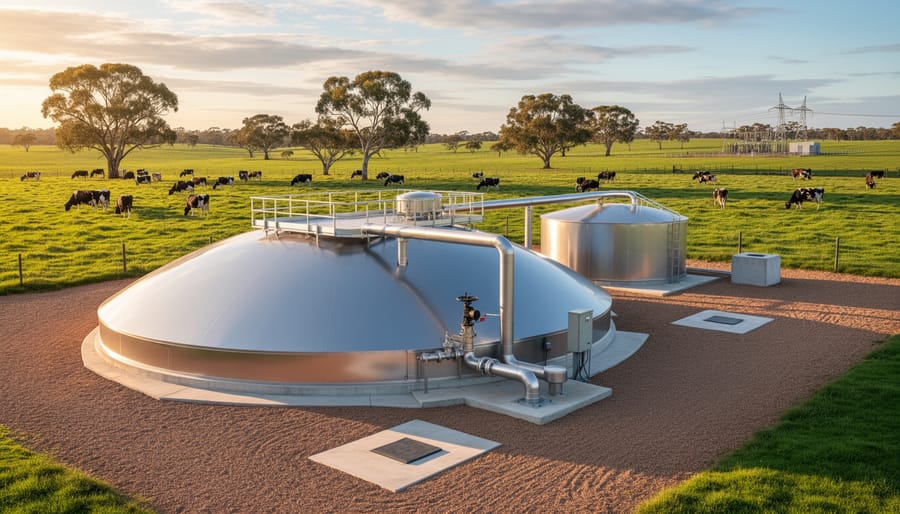
The technology already works brilliantly across Australia. Queensland’s Darling Downs facility converts cattle manure into enough electricity for 2,500 homes. Sydney’s wastewater treatment plants generate biomethane that powers their own operations. Even small dairy farms now install digesters that slash emissions while creating additional income streams.
The renewable methane sector offers something rare in climate solutions: immediate benefits without waiting for breakthrough technologies. The organic waste exists now. The capture systems work reliably. The energy grid can accept biomethane without modification. Communities gain local energy security, farmers create new revenue, and Australia reduces emissions from two sources simultaneously.
Whether methane qualifies as renewable depends entirely on its origin story. Fossil methane perpetuates climate change. Biomethane actively fights it while turning Australia’s waste streams into valuable energy resources.
Understanding Methane: The Energy Source with Two Faces
Fossil Methane vs. Renewable Methane
Not all methane is created equal, and understanding this distinction is crucial for recognizing when it genuinely qualifies as renewable energy.
Fossil methane comes from ancient organic matter trapped underground for millions of years. When we extract natural gas from geological deposits and burn it, we’re releasing carbon that’s been locked away from Earth’s atmosphere for eons. This adds new carbon dioxide to the air, directly contributing to climate change. Think of it like withdrawing from a savings account that can never be replenished—once it’s gone, it’s gone forever.
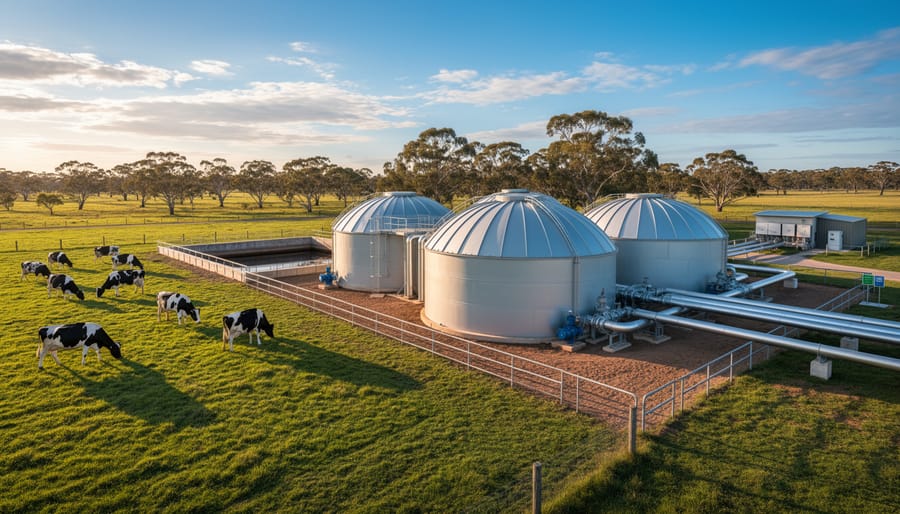
Renewable methane, on the other hand, tells a completely different story. It’s captured from organic waste that’s already part of our current carbon cycle—materials like food scraps, agricultural residues, and sewage that would decompose anyway, releasing methane into the atmosphere. By capturing this gas through anaerobic digestion or landfill gas collection, we’re intercepting emissions that would occur naturally and putting them to productive use. The carbon cycle implications are fundamentally different—the carbon released when burning renewable methane was recently absorbed by plants through photosynthesis, creating a closed loop.
Here’s the game-changer: renewable methane actually prevents worse emissions. Methane is 28 times more potent than carbon dioxide as a greenhouse gas over a century. By capturing it from waste streams and burning it for energy, we convert it to the less harmful CO2 while generating power—a genuine win-win for Australia’s clean energy future.
When Methane Becomes Renewable: Biogas and Its Sources
Agricultural Waste: From Dairy Farms to Energy Powerhouses
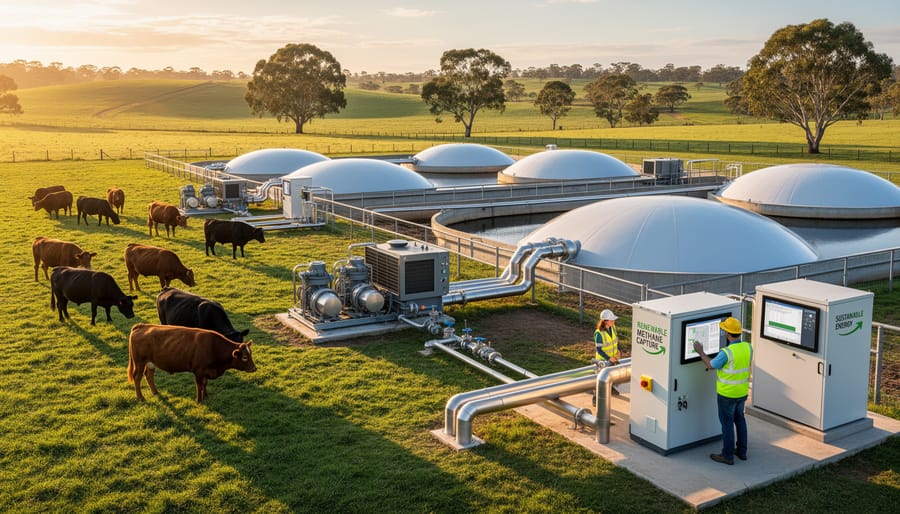
Australia’s agricultural sector is turning a challenging waste problem into a powerful renewable energy solution. When livestock manure and crop residues decompose, they naturally release methane—but rather than letting this potent greenhouse gas escape into the atmosphere, forward-thinking farmers are capturing it to generate clean, renewable energy.
Dairy farms are leading this transformation. Take the example of regional Victorian dairy operations that have installed anaerobic digesters to process cow manure. These systems capture methane as it forms during natural decomposition, converting what was once an environmental liability into electricity that powers farm operations. Some facilities even feed excess energy back into the local grid, creating an additional revenue stream while reducing their carbon footprint.
The beauty of this approach lies in its simplicity and dual benefit. Farmers simultaneously solve waste management challenges and create their own renewable energy supply. A mid-sized dairy farm with 500 cows can generate enough methane to meet most of its electricity needs, significantly cutting operational costs.
Beyond dairy, piggeries and poultry operations across Queensland and New South Wales are embracing similar technologies. Agricultural residues like sugar cane bagasse and grain processing waste also contribute to methane generation through controlled anaerobic digestion.
These success stories demonstrate that methane becomes genuinely renewable when sourced from organic waste that would decompose anyway. By capturing and utilizing this methane, Australian farmers are transforming agricultural waste into energy powerhouses—proving that sustainability and profitability can work hand in hand.
Organic Waste and Landfills: Turning Rubbish into Resources
Every day, Australian households and businesses generate tonnes of organic waste that traditionally ends up in landfills, where it breaks down and releases methane into the atmosphere. But here’s the good news: this waste stream represents a valuable renewable energy opportunity. When organic materials like food scraps, garden waste, and sewage are managed properly, the methane they produce can be captured and converted into clean energy rather than contributing to climate change.
Forward-thinking facilities across Australia are already making this happen. Sydney Water’s Malabar Resource Recovery Facility, for instance, processes biosolids from wastewater treatment to generate enough renewable energy to power thousands of homes. Meanwhile, the Wollert Renewable Organics Network in Melbourne transforms food and garden waste into both renewable gas and nutrient-rich compost, demonstrating how circular economy principles work in practice.
Landfill gas capture systems are equally promising. At Queensland’s Willawong landfill, gas extraction wells tap into decomposing waste to produce electricity for the local grid. These projects prove that what we once considered rubbish can become a reliable energy resource.
The beauty of these biogas applications lies in their double benefit: they reduce methane emissions that would otherwise warm our planet while generating renewable energy to replace fossil fuels. As Australia works toward its emissions reduction targets, capturing methane from organic waste represents a practical, achievable solution that turns an environmental problem into sustainable energy opportunity.
Methane Emissions Mitigation: Capturing the Problem Before It Escapes
The Climate Math That Makes Biogas a Game-Changer
Here’s the climate maths that might surprise you: methane is 28 to 34 times more potent as a greenhouse gas than carbon dioxide over a century. That means when organic waste breaks down in landfills or manure sits in open ponds, the methane that escapes into the atmosphere packs a serious climate punch.
But here’s where the game changes. When we capture that methane and burn it for energy, we convert it to carbon dioxide and water. While CO2 is still a greenhouse gas, it’s far less damaging than methane itself. Think of it like this: you’re trading one problem for a much smaller one while generating useful energy in the process.
The climate benefit becomes even clearer when you consider displacement. Every megawatt-hour of electricity generated from biogas is one less megawatt-hour needed from fossil fuels. At Diamond Energy’s facility in Queensland, for example, they’re capturing methane from cattle waste that would otherwise escape, turning it into renewable electricity for thousands of homes.
The maths is straightforward: capture beats release, burning beats venting, and renewable methane beats fossil fuels. By intercepting this potent greenhouse gas before it reaches the atmosphere and converting it into clean energy, biogas systems deliver a double environmental dividend that few other renewable technologies can match.
How Renewable Methane Gets from Waste to Energy
The transformation of waste into renewable methane happens through a fascinating natural process that’s been supercharged by modern technology. Understanding this journey helps clarify why some methane counts as renewable energy whilst other sources don’t.
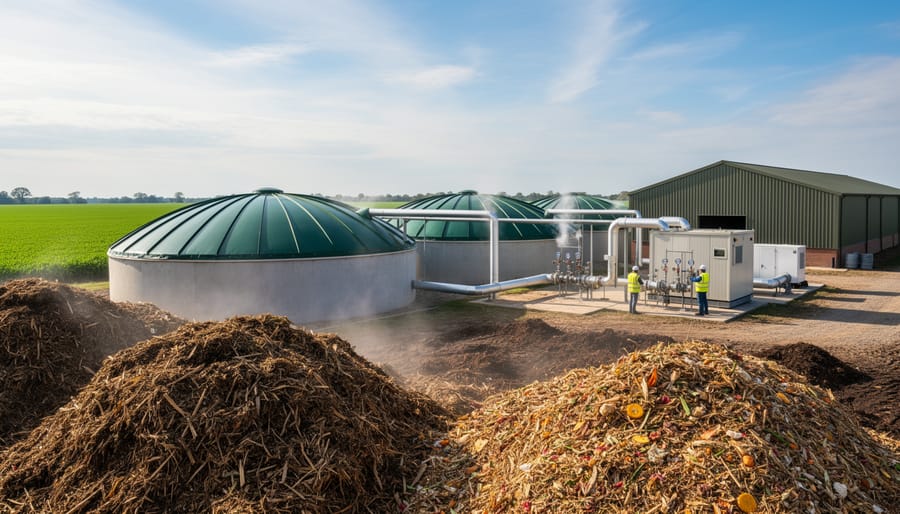
It all begins with organic waste – food scraps, agricultural residue, animal manure, or sewage sludge – collected and placed in sealed tanks called anaerobic digesters. These digesters create the perfect environment for microorganisms to thrive without oxygen, mimicking what happens naturally in swamps and landfills, but in a controlled setting.
Inside these tanks, bacteria feast on the organic matter through a process called anaerobic digestion. Think of it as nature’s recycling system working in overdrive. Over several weeks, these microscopic workers break down the waste through multiple stages, ultimately producing biogas – a mixture primarily containing methane and carbon dioxide, along with trace amounts of other gases.
The magic doesn’t stop there. Raw biogas needs upgrading before it can substitute conventional natural gas. Through various cleaning processes, unwanted elements like carbon dioxide, hydrogen sulfide, and moisture get removed, leaving behind biomethane with methane concentrations of 95-98 percent. This upgraded gas becomes virtually identical to fossil natural gas in quality and can flow through existing pipeline infrastructure or fuel vehicles.
What makes this process genuinely renewable is the continuous cycle it creates. The organic waste would decompose anyway, releasing methane into the atmosphere. By capturing it instead, we’re converting an environmental problem into an energy solution. The leftover material from digestion, called digestate, becomes nutrient-rich fertiliser that farmers can return to their fields, completing the circle.
Australian facilities are proving this technology works brilliantly at scale. Urban water treatment plants, dairy farms, and food processing facilities are already capturing millions of cubic metres of biogas annually, demonstrating that waste-to-energy isn’t just theoretical – it’s a practical reality delivering renewable power right now.
Real-World Success: Australian Pioneers Making It Work
Across Australia, pioneering businesses and communities are proving that methane capture isn’t just theory—it’s delivering real results right now. These success stories demonstrate how renewable methane systems can transform waste challenges into environmental and economic wins.
In Queensland’s dairy country, Ponderosa Dairy has become a standout example of what’s possible when innovation meets agriculture. This family-run operation installed a covered anaerobic lagoon to capture methane from cow manure that once simply released emissions into the atmosphere. Today, that captured biogas generates enough electricity to power the entire dairy operation, with surplus energy feeding back into the grid. The system processes waste from around 2,000 cows, preventing approximately 10,000 tonnes of carbon dioxide equivalent emissions annually—that’s like taking 2,000 cars off the road. Beyond the environmental benefits, the Ponderosa family has slashed their energy bills and created a new revenue stream, proving that sustainability and profitability can work hand in hand.
Melbourne’s South East Water treatment plant tells another compelling story. Their BioCNG facility takes sewage—something every household produces—and transforms it into renewable compressed natural gas that powers their fleet of trucks. The plant processes biogas from wastewater treatment, upgrading it to vehicle-grade fuel that’s indistinguishable from conventional natural gas at the pump. This closed-loop system means the trucks collecting sewage actually run on fuel derived from previous collections. It’s a brilliant example of circular economy thinking, and it’s kept over 7,500 tonnes of greenhouse gases out of the atmosphere since operations began.
Meanwhile, Golden Circle’s cannery in the Sunshine State has turned fruit and vegetable waste into an energy asset. Their anaerobic digestion system converts processing leftovers—the peels, pulp, and offcuts from pineapples and other produce—into biogas that helps power the facility. What once went to landfill now contributes to manufacturing the very products Australians enjoy at their dinner tables.
These Australian bioenergy projects share common threads: they’ve turned waste management costs into energy assets, dramatically reduced emissions, and demonstrated that renewable methane technology works in diverse Australian conditions. From tropical Queensland to metropolitan Melbourne, these pioneers are showing others the pathway forward, proving that renewable methane isn’t just viable—it’s happening today.
The Benefits Beyond Carbon: Why Renewable Methane Makes Sense
Economic Opportunities and Job Creation
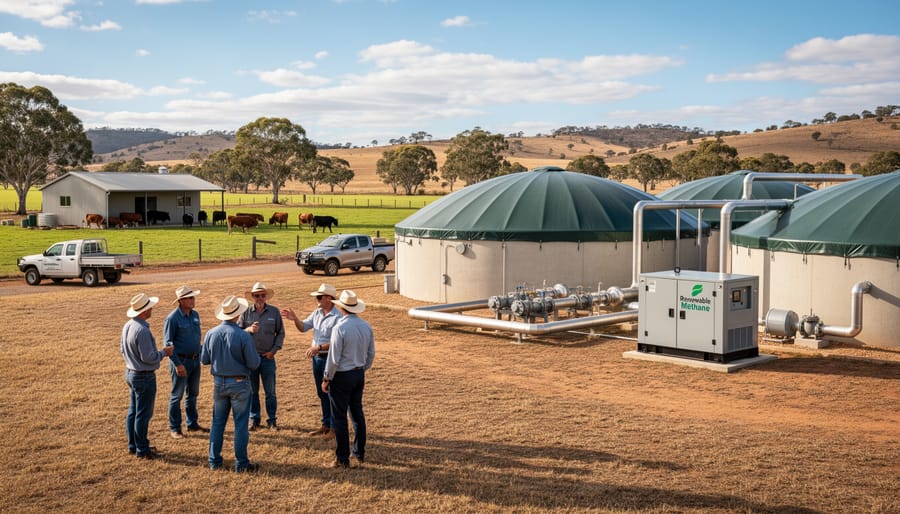
Beyond environmental benefits, biogas projects deliver tangible economic advantages to Australian communities. These facilities create diverse employment opportunities, from construction and engineering roles during setup to ongoing positions in operations, maintenance, and agricultural management. Regional areas particularly benefit, as biogas plants often process agricultural waste, keeping jobs and revenue within farming communities rather than exporting raw materials elsewhere.
Take the success story of dairy farms in Gippsland, Victoria, where farmers have transformed waste management costs into income streams. By capturing methane from manure, these operations generate electricity that powers their facilities and feeds excess energy back into the grid, creating a reliable revenue source. Similarly, food processing businesses partnering with biogas developers find new value in what was once a disposal expense.
The ripple effects extend further. Local contractors gain work installing and servicing equipment, while agricultural consultants develop expertise in integrated waste-to-energy systems. As Australia expands its renewable energy infrastructure, these projects position regional communities at the forefront of the clean energy transition, building skills and prosperity that strengthen rural economies for generations to come.
Energy Independence and Security
Renewable methane offers Australian communities and businesses a genuine pathway toward renewable energy independence, reducing our reliance on imported fossil fuels while strengthening energy security. Unlike wind and solar that depend on weather conditions, biogas systems generate electricity around the clock, providing reliable baseload power that keeps lights on and businesses running regardless of conditions outside.
Regional communities are already experiencing these benefits firsthand. The Yarra Valley Water facility in Melbourne captures methane from sewage treatment to power its operations, cutting energy costs while reducing dependence on the grid. Similarly, farms across Queensland and New South Wales are converting livestock waste into energy, transforming what was once a disposal problem into a valuable resource that powers their properties.
This energy independence proves particularly valuable during peak demand periods or supply disruptions. By producing power locally from organic waste, Australian operations can shield themselves from volatile international energy markets and supply chain vulnerabilities. It’s energy security that makes economic sense while supporting our environmental goals, proving that sustainability and reliability can work hand in hand.
Challenges We’re Working Through
Let’s be upfront: while renewable methane holds tremendous promise for Australia’s energy future, we’re navigating some genuine hurdles on the path to widespread adoption.
The most significant challenge? Infrastructure investment. Building anaerobic digesters, upgrading biogas facilities, and connecting them to existing gas networks requires serious capital. Many Australian farmers and food processors who’d love to convert their waste into energy simply can’t shoulder these upfront costs alone. It’s a bit like wanting to install solar panels before prices dropped—the technology works brilliantly, but the initial investment can be daunting.
Technical expertise presents another puzzle. Operating biogas systems isn’t quite as straightforward as flipping a switch. We need trained professionals who understand the biology of anaerobic digestion, can troubleshoot when microbes aren’t performing optimally, and maintain equipment properly. Right now, Australia faces a skills gap in this specialized area, though training programs are beginning to emerge.
Regulatory frameworks are still catching up with the technology, too. Different states have varying standards for injecting biomethane into gas networks, and navigating approval processes can feel like wading through treacle. The rules weren’t designed with renewable methane in mind, so we’re essentially updating the playbook as we go.
Here’s the encouraging bit: these challenges are spurring innovation rather than stopping progress. Governments are developing grant programs and incentive schemes to ease financial burdens. Universities and TAFEs are launching specialized courses in biogas technology. Industry groups are collaborating with regulators to streamline approval processes and establish clear standards.
Think of these hurdles as growing pains rather than permanent roadblocks. Every successful renewable energy sector—from solar to wind—faced similar challenges early on. The difference now? We’re learning from those experiences, moving faster, and building smarter solutions from the ground up. Australian ingenuity has always thrived when tackling tough problems, and renewable methane is proving no exception.
What’s Next: The Future of Renewable Methane in Australia
Australia’s renewable methane sector is poised for remarkable growth, with exciting developments that promise to transform our energy landscape. The coming years will see innovations that make renewable methane not just environmentally responsible, but economically competitive with conventional fossil fuels.
Biomethane grid injection is emerging as a game-changer. Several Australian projects are already demonstrating how purified biogas can be fed directly into existing natural gas networks, allowing homes and businesses to access renewable energy without changing any infrastructure. Projects in Queensland and Victoria are leading the way, showing how agricultural waste and urban organic materials can seamlessly replace fossil gas in our existing pipelines. This approach makes brilliant use of the infrastructure we’ve already built while dramatically reducing emissions.
Renewable Gas Certificates are creating new financial incentives for producers and users of renewable methane. Similar to renewable energy certificates for electricity, these tradeable instruments help businesses demonstrate their environmental credentials while supporting the industry’s growth. Forward-thinking companies are already positioning themselves to benefit from this expanding market mechanism.
The applications for renewable methane continue to multiply. Heavy transport operators are increasingly interested in renewable compressed natural gas for long-haul trucks, particularly in regional areas where charging infrastructure for electric vehicles remains limited. Manufacturing industries requiring high-temperature heat are discovering that renewable methane offers a practical pathway to decarbonisation without massive equipment overhauls.
Perhaps most exciting is the growing recognition from policymakers that renewable methane deserves support alongside solar and wind power. Recent policy discussions have highlighted renewable methane’s unique ability to provide dispatchable energy and leverage existing infrastructure, making it an essential component of Australia’s clean energy future rather than a temporary solution.
So, is methane renewable energy? The answer is a resounding yes – when it’s sourced responsibly from organic waste rather than extracted from fossil fuel deposits. This distinction matters enormously for Australia’s clean energy future. Renewable methane, captured through biogas systems, doesn’t just provide us with sustainable fuel; it transforms what would otherwise be pollution into power, tackles waste management challenges, and helps reduce our overall greenhouse gas emissions. It’s a win-win-win scenario that addresses multiple environmental concerns simultaneously.
The beauty of renewable methane is that opportunities exist across nearly every sector of Australian society. If you’re a farmer dealing with livestock waste or crop residues, you’re sitting on potential energy that could power your operations and generate income. Business owners in food processing, hospitality, or manufacturing can turn waste disposal costs into revenue streams. Councils managing landfills and sewage treatment facilities have ready-made opportunities to serve their communities while achieving sustainability targets. Even as an engaged citizen, you can advocate for biogas projects in your local area or support businesses making the transition.
Australia stands at a pivotal moment. With our vast agricultural sector, growing urban centres, and commitment to reducing emissions, we’re perfectly positioned to become a global leader in renewable methane technology. We’ve already seen inspiring success stories across the country, from dairy farms in Victoria to council facilities in Queensland. These pioneers have shown us the way forward – now it’s time to scale up these solutions nationwide. The potential is enormous, the technology is proven, and the environmental benefits are clear. The question isn’t whether we can embrace renewable methane, but how quickly we’ll seize this opportunity to build a cleaner, more sustainable energy future.