
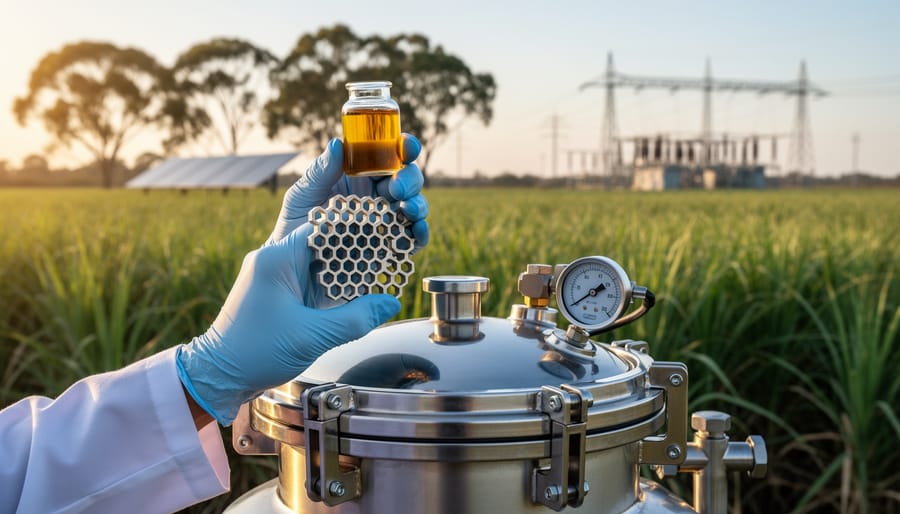
Advanced Energy Materials stands as one of the world’s premier scientific journals, publishing breakthrough research that transforms how we capture, store, and use renewable energy. For Australians navigating the transition to clean power, this journal serves as a critical bridge between laboratory discoveries and real-world solutions powering our homes, businesses, and industries.
Every month, researchers worldwide submit their most significant findings in battery technology, solar cell efficiency, hydrogen fuel systems, and bioenergy conversion. The peer-reviewed studies that make it into Advanced Energy Materials represent the cutting edge of what’s technically possible, often years before these innovations reach commercial markets. Think of it as a roadmap showing where renewable energy is headed next.
What makes this journal particularly relevant to Australia’s energy future is its focus on practical applications. Recent publications have explored advanced materials that improve solar panel performance in harsh outback conditions, next-generation batteries capable of storing grid-scale renewable energy, and novel catalysts that make biofuel production more efficient and cost-effective.
Understanding research published in Advanced Energy Materials helps policymakers craft evidence-based regulations, enables industry professionals to anticipate technological shifts, and empowers environmental advocates with the scientific credibility needed to push for meaningful change. The journal doesn’t just document scientific progress; it illuminates the pathway toward Australia’s renewable energy independence, showcasing innovations that will define our sustainable future and create opportunities for local industries to lead globally in clean technology development.
What Makes Advanced Energy Materials Research Critical for Bioenergy
At the heart of every breakthrough in renewable energy lies a simple truth: better materials create better solutions. The Journal of Advanced Energy Materials stands as a global beacon for research that’s transforming how we harness, store, and distribute energy from biomass. For Australians committed to a cleaner future, understanding this journal’s focus reveals why material science isn’t just laboratory theory—it’s the foundation of viable bioenergy systems powering homes and businesses today.
Think of advanced materials as the unsung heroes of bioenergy. When researchers develop new catalysts that break down agricultural waste more efficiently, or create membranes that purify biogas with less energy loss, they’re solving real-world challenges that once made bioenergy impractical. The journal documents these innovations, from enzyme-based materials that accelerate biomass conversion to nano-structured electrodes that boost fuel cell performance by remarkable margins.
What makes this research critical for Australia’s energy transition? Our vast agricultural sector produces enormous quantities of organic waste—sugarcane bagasse, wheat stubble, and forestry residues. Advanced materials research published in leading journals shows us how to transform these resources into reliable energy more economically. Recent studies demonstrate how improved biochar materials can simultaneously generate heat while enriching soil, creating circular economy benefits that resonate with our agricultural communities.
The connection between laboratory discoveries and practical outcomes becomes evident at bioenergy innovation centers across Australia, where material science breakthroughs translate into operational systems. When storage materials become more stable and cost-effective, bioenergy becomes a genuine alternative to fossil fuels rather than an expensive experiment.
For policymakers and industry professionals, following this research provides essential insights into where investment creates maximum impact. Advanced materials don’t just make bioenergy possible—they make it competitive, scalable, and sustainable for Australia’s energy future.
Breakthrough Materials Reshaping Bioenergy Production
Next-Generation Catalysts for Biomass Conversion
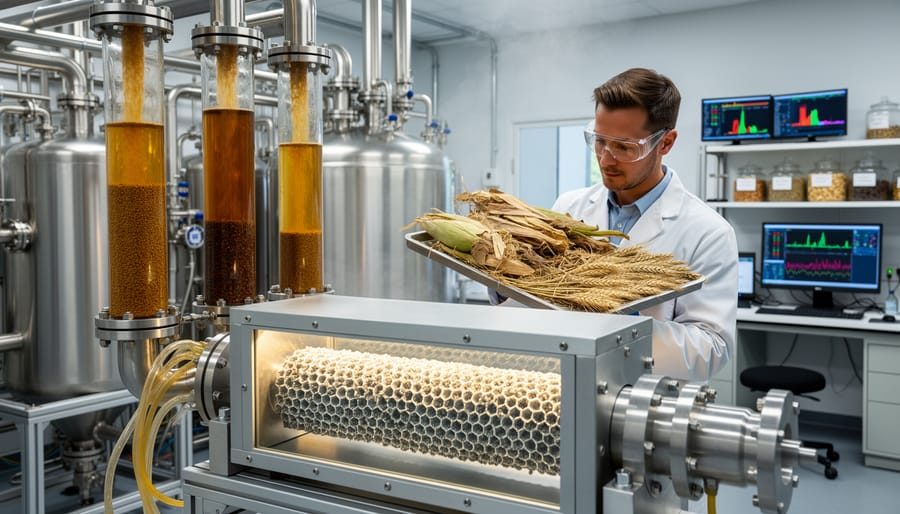
Australian researchers are leading a quiet revolution in biomass conversion through game-changing catalyst materials that are making renewable energy from organic waste more viable than ever. These innovative catalysts act like molecular matchmakers, speeding up chemical reactions that transform agricultural residues, forestry waste, and food scraps into clean energy with remarkable efficiency.
At the University of Adelaide, scientists have developed zeolite-based catalysts that dramatically reduce the energy required to break down lignocellulosic biomass—the tough, woody material that makes up most plant waste. This breakthrough means converting sugarcane bagasse and wheat straw into biofuels now requires significantly less heat and pressure, slashing production costs by nearly 30 percent compared to conventional methods.
Meanwhile, Queensland University of Technology researchers have created bio-inspired metal catalysts using earth-abundant elements like iron and cobalt, replacing expensive platinum-group metals. These affordable alternatives are proving particularly effective for converting native Australian eucalyptus waste into high-grade bio-oil, opening new revenue streams for forestry operations across regional Australia.
What makes these advances particularly exciting is their real-world scalability. Loganholme’s waste-to-energy facility has already integrated next-generation catalysts into their operations, processing 200 tonnes of organic waste daily while reducing operational costs by 25 percent. The facility demonstrates how cutting-edge research translates directly into practical solutions that work today, not tomorrow.
These catalyst innovations are removing traditional barriers to biomass conversion, making the technology economically competitive with fossil fuels while creating opportunities for regional employment and waste reduction across Australian communities.
Smart Materials for Energy Storage
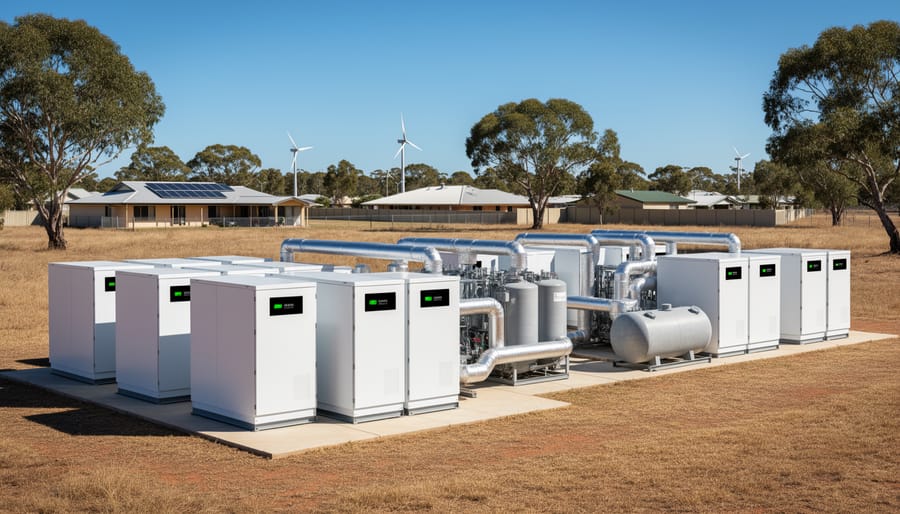
The real game-changer in making bioenergy a reliable power source comes down to one crucial factor: storage. Even the best renewable energy system faces challenges when the sun doesn’t shine or biomass production fluctuates. That’s where cutting-edge research in battery and storage materials is transforming the landscape, particularly for Australian applications.
Recent breakthroughs published in journals like Advanced Energy Materials are revolutionising how we think about energy storage solutions. These innovations focus on materials that can store bioenergy more efficiently and release it when needed most. Think of it like a sophisticated energy bank account – capturing excess power during peak production and withdrawing it during high-demand periods.
One particularly promising development involves solid-state batteries using sustainable materials derived from agricultural waste. These batteries offer higher energy density and longer lifespans than traditional lithium-ion alternatives, making them ideal for remote Australian farms and regional communities. A pilot project in regional Victoria has already demonstrated how these advanced storage systems can maintain consistent power supply from biogas generators, even during maintenance periods.
Another exciting innovation centres on flow batteries, which use liquid electrolytes to store energy. These systems scale brilliantly for large agricultural operations processing organic waste into energy. They’re particularly suited to Australia’s climate, performing reliably in extreme heat where conventional batteries often struggle.
The practical impact is clear: these smart materials are eliminating the intermittency problem that once held bioenergy back. For Australian businesses and communities, this means reliable, sustainable power that doesn’t depend on fossil fuel backup systems, making the transition to renewable energy smoother and more cost-effective than ever before.
Australian Success Stories: From Lab to Land
Across Australia, innovative materials research is making the leap from laboratory benches to productive farmland, proving that advanced science can deliver tangible environmental and economic benefits. These success stories demonstrate how cutting-edge discoveries are transforming the way we generate and use renewable energy.
In regional Queensland, a sugarcane farming cooperative has revolutionised its operations by implementing biochar-enhanced anaerobic digesters lined with advanced ceramic membranes. These materials, developed through research published in leading journals, allow the farm to process crop residues 40 percent more efficiently than conventional systems. The result? The cooperative now generates enough electricity to power 300 homes whilst creating premium soil amendments that have boosted crop yields by 15 percent. For the farmers involved, it’s been a game-changer that’s improved their bottom line while reducing waste.
Down in Victoria’s dairy heartland, a consortium of farms has adopted nano-engineered catalysts to optimise their biogas production from cattle waste. What once seemed like an academic concept has become an everyday reality, with these catalysts accelerating the breakdown of organic matter and increasing methane yields by nearly 30 percent. The dairy farmers report substantial savings on energy costs, and they’re proud to be producing clean energy rather than managing problematic waste streams.
Perhaps most inspiring is a remote Indigenous community in Western Australia that’s achieved energy independence using advanced photocatalytic materials in hybrid bioenergy applications. By combining traditional biomass resources with modern material science, the community has eliminated diesel dependency, saving over 200,000 dollars annually whilst creating local employment opportunities.
In South Australia’s wine country, vineyards are turning grape pomace and prunings into valuable energy using reactors fitted with graphene-based electrodes. These materials dramatically improve conversion efficiency, allowing wineries to offset their energy consumption while maintaining sustainable practices that appeal to environmentally conscious consumers.
These examples aren’t isolated experiments; they’re working systems delivering measurable outcomes for real Australians. Each story demonstrates that when sophisticated materials research meets practical application, everyone benefits. The technology reduces emissions, creates economic opportunities, and proves that sustainable energy solutions aren’t just feasible but financially sensible. These pioneers are showing the nation what’s possible when innovation meets determination.
The Economic and Environmental Payoff
The financial and environmental returns from advanced energy materials in bioenergy are already reshaping Australia’s renewable sector in remarkable ways. When research moves from journal pages into real-world applications, the benefits become tangible for communities, businesses, and the environment alike.
Consider the Queensland sugar industry, where upgraded catalyst materials have transformed bagasse processing at several mills. These facilities now generate surplus electricity for the grid while reducing operating costs by approximately 20 percent. More importantly, they’ve created 150 new skilled positions across regional Queensland, from materials technicians to process engineers. It’s a practical example of how renewable energy innovations deliver benefits that extend well beyond the laboratory.
The carbon emission reductions tell an equally compelling story. Advanced membrane technologies in biogas purification facilities across Victoria have collectively prevented over 80,000 tonnes of carbon dioxide equivalent from entering the atmosphere annually. To put that in perspective, that’s equivalent to taking roughly 17,000 cars off Australian roads each year. These aren’t projections or possibilities; they’re measurable outcomes happening right now.
Cost savings represent another significant payoff. Traditional bioenergy conversion methods often struggled with efficiency losses and high maintenance requirements. Modern catalyst systems developed through advanced materials research have reduced downtime by up to 40 percent at some Australian facilities, whilst extending equipment life spans considerably. For a medium-sized biorefinery, this translates to hundreds of thousands of dollars in annual savings, making bioenergy increasingly competitive with fossil fuel alternatives.
Perhaps most encouraging is the ripple effect across regional economies. Communities hosting advanced bioenergy facilities report increased investment in education and training programs, strengthened agricultural sectors through integrated waste-to-energy systems, and improved energy security. These outcomes demonstrate that advanced materials research delivers genuine prosperity whilst addressing climate challenges, creating a future where economic growth and environmental stewardship work together rather than in opposition.
How These Innovations Solve Australia’s Energy Challenges
Australia’s unique energy landscape presents both challenges and extraordinary opportunities that advanced materials research is helping to unlock. With vast distances between population centres, extreme weather conditions, and abundant renewable resources, our continent demands innovative solutions tailored to these distinctive circumstances.
The research published in journals like Advanced Energy Materials directly addresses Australia’s critical energy challenges. Take our agricultural sector, for instance. Farmers across Queensland and New South Wales are already benefiting from perovskite solar technologies that maintain efficiency even during our scorching summers when traditional panels struggle. These next-generation materials can withstand temperatures exceeding 40 degrees Celsius while continuing to generate reliable power for irrigation systems and rural communities.
Regional Australia particularly benefits from advanced battery storage solutions emerging from materials science breakthroughs. Remote mining operations in Western Australia and the Northern Territory are deploying solid-state batteries that offer longer lifespans and greater stability in harsh, dusty environments. These innovations mean less frequent replacements and reduced maintenance costs, making renewable energy genuinely viable where diesel generators once reigned supreme.
The integration of agricultural waste into bioenergy systems showcases another practical application. Advanced catalytic materials enable efficient conversion of sugarcane bagasse, wheat stubble, and forestry residues into clean energy. This dual benefit reduces fire hazards from crop waste while generating power for local grids, creating what farmers call a “win-win” for productivity and sustainability.
Perhaps most promising is how these innovations support integrated renewable systems. New materials enable seamless coordination between solar, wind, and bioenergy sources, ensuring consistent power supply despite weather variability. South Australian communities are pioneering these hybrid systems, demonstrating that advanced materials research translates directly into energy security and reduced emissions across our diverse climate zones.
Getting Involved: Opportunities for Australian Businesses and Communities
The translation of advanced energy materials research into real-world bioenergy solutions creates exciting opportunities right across Australia, and there’s a place for everyone in this renewable energy revolution.
For farmers and agricultural producers, the door is wide open to transform waste into wealth. Many regions now offer pilot programs where you can partner with research institutions testing new biomass conversion technologies. The National Farmers Federation regularly publishes guidelines on connecting with bioenergy initiatives, helping you assess whether crop residues or livestock waste could generate additional income streams while reducing disposal costs.
Industry professionals seeking sustainable manufacturing solutions can engage through collaboration networks linking businesses with materials scientists. The Australian Renewable Energy Agency funds numerous demonstration projects where companies can trial advanced bioenergy systems before full-scale investment. These partnerships often include technical support and risk-sharing arrangements, making adoption far less daunting than going it alone.
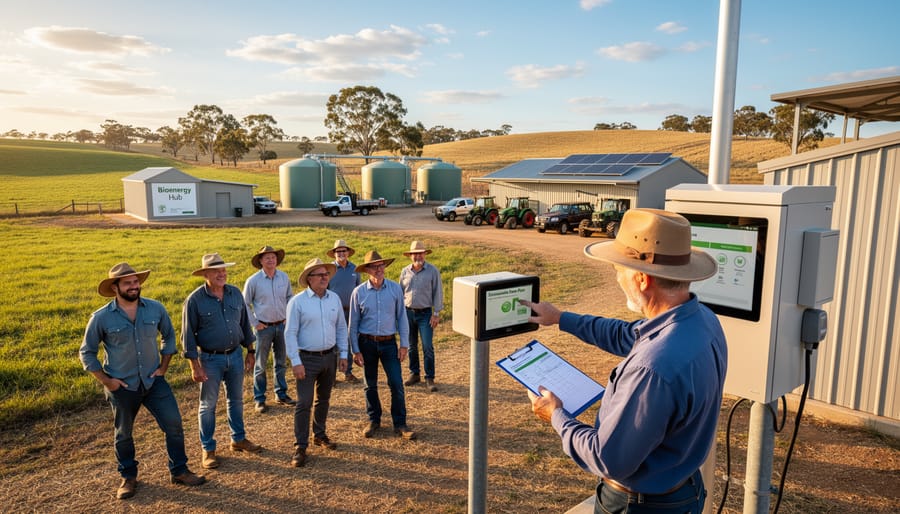
Community groups and local councils have found success establishing regional bioenergy hubs that combine agricultural waste, food processing byproducts, and green waste. Several Queensland communities now generate their own power while creating local jobs, proving that collective action delivers tangible benefits.
Policymakers can support this transformation by attending industry roundtables organized through Clean Energy Council forums, where research findings from journals like Advanced Energy Materials inform evidence-based decision-making. These gatherings connect government representatives directly with innovators making breakthroughs happen.
Start by identifying your natural entry point. Contact your state’s renewable energy office for local initiatives, attend regional sustainability expos where researchers showcase practical applications, or join industry associations focused on biomass energy. Every contribution, whether supplying feedstock, investing in infrastructure, or advocating for supportive policies, accelerates Australia’s transition to clean, sustainable energy powered by homegrown innovation.
The future of Australia’s bioenergy landscape isn’t waiting on the horizon – it’s unfolding right now in laboratories, farms, and communities across the country. The breakthroughs published in journals like Advanced Energy Materials are already transforming how we think about waste, energy, and sustainability. From Victorian food scraps powering homes to Queensland sugarcane residue becoming clean electricity, these innovations prove that advanced materials research delivers real-world impact today.
You’re not just a spectator in this transition – you’re an essential part of it. Whether you’re a farmer exploring new revenue streams from agricultural waste, a business leader seeking renewable energy solutions, or simply someone making conscious choices about energy consumption, your actions contribute to this momentum. The advanced materials enabling efficient bioenergy conversion are making sustainable choices more practical and economical than ever before.
This isn’t about waiting for perfect technology or distant solutions. Australian researchers, entrepreneurs, and communities are proving that bioenergy powered by cutting-edge materials science works now. Every biogas facility that opens, every farm that converts waste to energy, and every investment in renewable infrastructure strengthens our collective journey toward energy independence and environmental stewardship. The future is here – let’s embrace it together.