
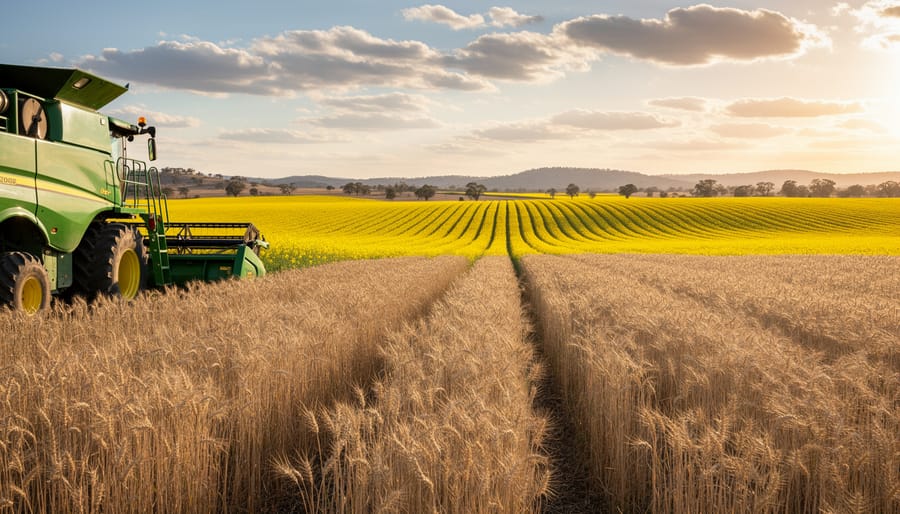
Arable farming refers to the cultivation of land to grow crops rather than raise livestock. If you’ve ever seen golden wheat fields stretching across regional Australia or driven past paddocks of canola in full yellow bloom, you’ve witnessed arable farming in action. This agricultural practice forms the backbone of our food production system, delivering everything from breakfast cereals to cooking oils.
At its core, arable farming involves ploughing, planting, and harvesting crops on land suitable for cultivation. The term “arable” comes from the Latin word for plough, highlighting the fundamental role of soil preparation in this farming method. Across Australia, arable farms produce staples like wheat, barley, and oats, alongside specialty crops such as lentils, chickpeas, and oilseeds.
What makes arable farming particularly relevant today is its dual potential. Beyond feeding populations, crop residues and purpose-grown energy crops offer valuable biomass feedstock for renewable energy production. Australian farmers are increasingly recognising this opportunity, with some dedicating portions of their arable land to crops that support both food security and sustainable energy solutions. This practical approach demonstrates how traditional agricultural knowledge adapts to meet contemporary environmental challenges while maintaining productive, profitable operations across our varied landscapes.
Arable Farming Defined: What It Actually Means
Arable farming refers to the cultivation of crops on land that can be ploughed and worked regularly. The term “arable” comes from the Latin word for plough, and it describes land suitable for growing temporary agricultural crops rather than permanent pasture or orchards.
At its core, arable land is soil that farmers can turn over, prepare, and plant with crops like wheat, barley, canola, or chickpeas. In Australia, this typically means the fertile cropping regions of New South Wales, Victoria, South Australia, and Western Australia, where farmers work the soil each season to produce grain and oilseed crops.
What makes land arable is its capacity to support crop rotation systems. Farmers plough the soil, plant a crop, harvest it, then prepare the ground again for the next season’s planting. This cycle distinguishes arable farming from other agricultural types. Pastoral farming, for instance, focuses on grazing livestock on permanent grasslands that are rarely or never ploughed. Permanent crop farming grows long-term plants like fruit trees, vineyards, or nut orchards that remain in place for years.
The distinction matters because arable land represents the most flexible and productive agricultural resource. Australian farmers might grow wheat one year, follow it with canola, then leave the field temporarily fallow to restore soil nutrients before planting again. This rotation keeps the soil healthy and productive.
Understanding what counts as arable land helps clarify its role in food production. It’s not about permanent pastures where cattle graze year after year, nor woodlands or permanent tree crops. Arable farming means actively working the soil to grow the staple crops that feed populations and support rural economies across Australia’s cropping belt.
What Counts as Arable Land (And What Doesn’t)
When agricultural officials and statisticians measure arable land, they’re not just making rough guesses about what looks farmable. They follow specific criteria that determine what counts and what doesn’t, and understanding these distinctions helps clarify the true scope of arable farming worldwide.
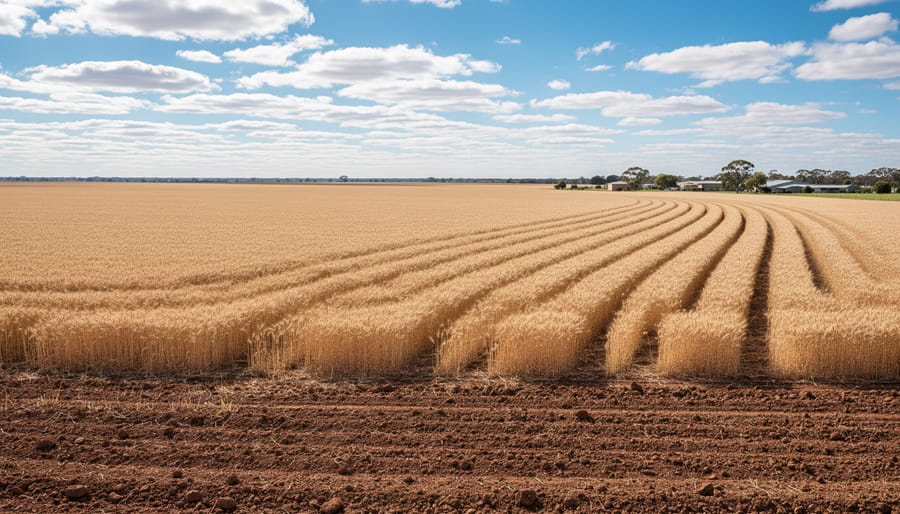
The official classification includes several distinct categories. Temporary agricultural crops form the core: think wheat fields, vegetable patches, and corn plantations that farmers rotate through different areas each season. Temporary meadows qualify too, whether they’re used for mowing hay or grazing livestock, as long as they’re part of a rotation system rather than permanent pasture. Market gardens and kitchen gardens count as arable land because they require regular cultivation and soil preparation. Even land that’s temporarily fallow gets included, provided it’s been out of production for less than five years and remains part of an active farming operation.
What’s notably excluded tells us just as much about the definition. Abandoned land from shifting cultivation doesn’t make the cut, even if it was once farmed. This distinction matters particularly in regions where traditional slash-and-burn agriculture has left behind plots that revert to forest or scrub for extended periods. Permanent crops like orchards, vineyards, and olive groves fall outside the arable category because they don’t require annual ploughing and replanting. Built-up farmland, permanent pastures, and forests are similarly excluded, regardless of their agricultural value.
The key principle underpinning all this is regular cultivation under crop rotation. Arable land isn’t just soil that could theoretically grow crops; it’s land actively worked in cycles, ploughed and prepared on a recurring basis. This working definition matters for Australian farmers and policymakers alike, as it shapes everything from agricultural statistics to land-use planning and sustainability targets. When you see figures about how much arable land exists in a region, you’re looking at actively managed cropland that’s part of ongoing food production systems, not simply every patch of dirt that might sprout something if you planted it.
How Arable Farming Works in Practice
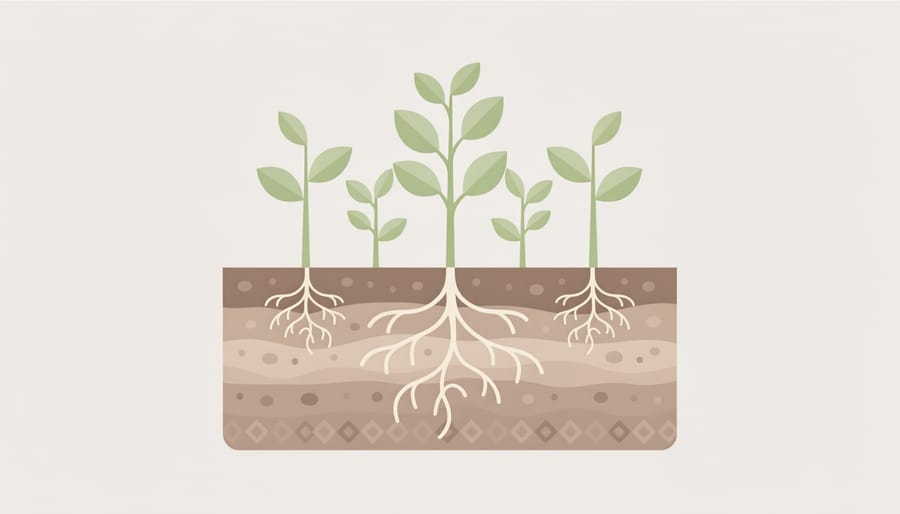
Arable farming starts with preparing the soil. Farmers use ploughs to break up and turn the earth, creating a loose seedbed that makes it easier for crop roots to establish. This process also helps manage weeds and incorporates organic matter back into the soil. After ploughing, they harrow the field to break down clods and level the surface, then drill seeds into rows at carefully measured depths and spacings.
The growing season demands constant attention. Farmers monitor moisture levels, apply fertilizers to support plant growth, and manage pests and diseases through various methods. Some rotate crops across different paddocks each season, which naturally breaks pest and disease cycles while improving soil fertility. A paddock that grew wheat one year might host canola or pulses the next, then return to cereals.
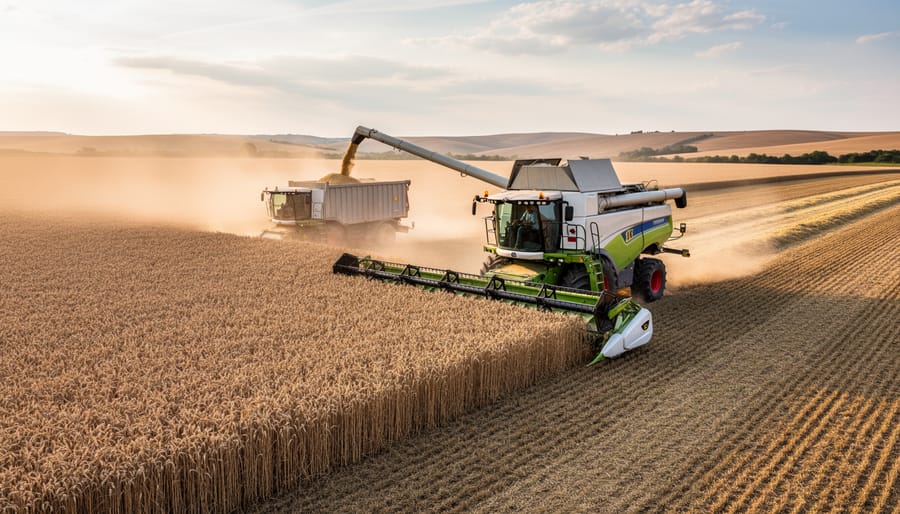
Harvest timing is critical. Combine harvesters gather mature crops like wheat and barley in a single pass, separating grain from straw in the field. The grain goes into storage bins while straw can be baled for livestock feed or left as stubble. For row crops like corn, specialized equipment strips ears from stalks or harvests whole plants for silage.
In Australia, wheat dominates arable farmland across the southeast and southwest regions. Farmers also cultivate substantial areas of barley, particularly for malting and export markets. Canola has become increasingly important as both a rotation crop and oil seed. In warmer northern districts, sorghum and cotton occupy arable land during summer months, while chickpeas and other pulses have grown in popularity due to their nitrogen-fixing properties and market demand.
Queensland and New South Wales farmers grow significant rice crops in irrigation areas when water allocations permit. The Riverina region demonstrates how arable farming adapts to local conditions, with farmers switching between rice, wheat, and other crops based on water availability and market signals.
This cycle of preparation, planting, nurturing, and harvesting repeats annually on arable land. The specific crops and timing vary by region and climate, but the fundamental process remains consistent: working the soil regularly to produce food and fiber crops through seasonal rotations.
Why Arable Farming Matters for Sustainable Food Systems
Agriculture occupies half the world’s habitable land, which means the choices farmers make on arable fields ripple across ecosystems, climate patterns, and food security for billions of people. How we manage this vast network of crop-producing land isn’t just an agricultural question, it’s central to whether we can feed growing populations while protecting the natural systems we depend on.
Arable farming produces most of the calories and protein that sustain human life. Wheat fields across Australia’s eastern grain belt, rice paddies in Asia, and maize farms throughout Africa all depend on healthy, productive arable land working season after season. When farmers apply sustainable farming methods they maintain that productivity without degrading the resource itself. Crop rotation stands out as one of the most effective tools: alternating legumes with cereals naturally replenishes nitrogen, breaks pest cycles, and builds soil structure. A field that grows wheat one year and chickpeas the next emerges healthier than one locked into monoculture.
Soil health determines whether arable land remains productive for decades or degrades within a generation. Organic matter feeds billions of microorganisms that cycle nutrients, while soil structure influences water infiltration and root development. Farmers who protect soil ecosystem services through practices like cover cropping and reduced tillage see measurable benefits: improved water retention during droughts, lower fertilizer requirements, and increased carbon sequestration. These aren’t abstract environmental wins, they translate directly into more resilient farms and stable yields across variable seasons.
The environmental impact of arable farming depends entirely on management choices. Fields managed with attention to soil biology, water efficiency, and biodiversity can produce abundant crops while supporting wildlife corridors, filtering water, and storing atmospheric carbon. Australian growers adopting precision agriculture technologies apply inputs exactly where needed, reducing chemical runoff and improving efficiency. Integrated pest management reduces reliance on broad-spectrum pesticides, allowing beneficial insects to thrive alongside crops. These practical approaches prove that productive agriculture and environmental stewardship aren’t opposing goals, they’re mutually reinforcing when farmers have the knowledge and tools to implement them effectively.
Arable Farming and Australia’s Biomass Future
Australia’s arable farms are becoming dual-purpose operations that grow food while generating clean energy. Crop residues like wheat stubble, corn stover, and sugarcane bagasse already serve as valuable biomass feedstock for biogas plants and bioenergy facilities across regional Australia. Rather than burning these leftovers in the field or leaving them to decompose, progressive farmers are selling them to energy producers or processing them on-site to create renewable fuel.
The economics make sense. A wheat farmer in the Riverina might harvest grain for the food supply chain, then bale and sell the stubble to a nearby biomass facility. This farm waste to fuel approach creates a second income stream from the same field while reducing methane emissions that would otherwise occur during decomposition.
Some landholders are dedicating portions of their arable land to dedicated energy crops. Fast-growing species like switchgrass or mallee eucalyptus can be harvested regularly without depleting soil fertility, providing consistent biomass supply for regional energy facilities. These crops often thrive on marginal arable land that wouldn’t be a farmer’s first choice for premium wheat or canola.
Regenerative arable practices boost this circular model further. Farmers using cover crops, reduced tillage, and diverse rotations build soil organic matter, which stores carbon while improving long-term productivity. These methods transform working cropland into carbon banks that sequester atmospheric carbon dioxide even as they produce food and energy feedstock.
In Western Australia’s wheatbelt, some growers are testing integrated systems where livestock graze cover crops between grain harvests, producing both meat and manure that feeds biogas digesters. The resulting biogas powers farm equipment, and the digestate returns to fields as fertiliser. It’s a closed loop that keeps nutrients cycling while reducing reliance on fossil fuels and synthetic inputs.
These innovations show that arable farming can underpin sustainable food and energy systems simultaneously. As more Australian farmers adopt these approaches, the country’s croplands become multifunctional assets supporting both rural economies and national renewable energy targets.
Understanding what arable farming means goes beyond memorising a textbook definition. It’s about recognising the foundation of how Australia and the world produces the crops that sustain us. Arable land, the soil we plough and plant with wheat, corn, and countless other crops, represents the productive heart of agriculture. This land, worked regularly under crop rotation systems, delivers food security and economic stability to communities across the country.
As Australia navigates the challenges of climate change and resource scarcity, grasping the fundamentals of arable farming becomes more relevant than ever. The way we manage these productive landscapes directly influences soil health, water quality, and our capacity to feed growing populations sustainably. Smart arable practices, from thoughtful crop rotation to integrated biomass utilisation, create opportunities to build circular systems where nothing goes to waste.
The future of Australian agriculture lies in combining traditional crop-based farming wisdom with innovative approaches to sustainability. Farmers who understand their arable land’s potential can produce abundant harvests while regenerating soil and contributing to renewable energy through crop residues and dedicated energy crops. This isn’t just about preserving farming traditions. It’s about evolving them to meet tomorrow’s needs, ensuring that Australia’s arable landscapes remain productive, resilient, and capable of supporting thriving communities for generations ahead.