
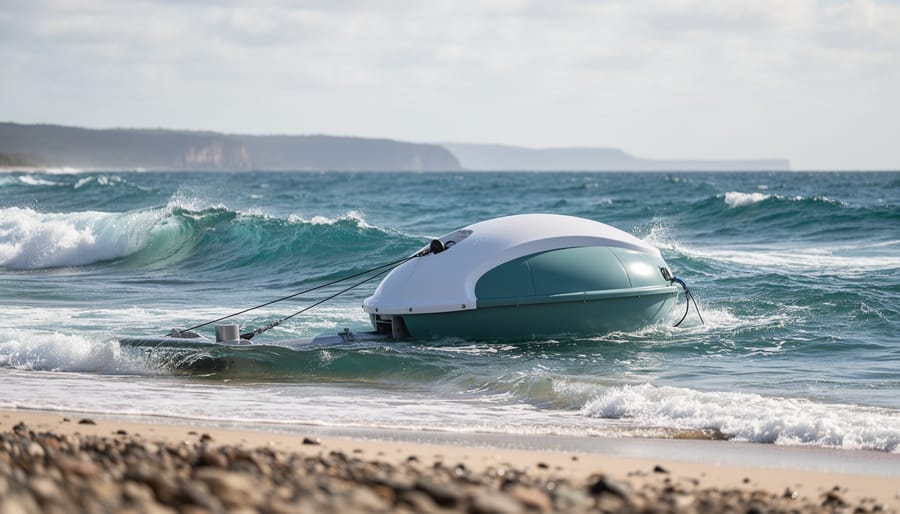
Australia’s coastline holds extraordinary renewable energy potential that’s finally moving from theory to reality. Wave energy, captured from ocean swells generated by wind activity across vast stretches of water, is emerging as a viable addition to the nation’s clean energy mix through three significant developments: a CSIRO-led modelling study examining Albany’s wave power potential, the Blue Economy CRC’s comprehensive industry report released in 2024, and Wave Swell Energy’s groundbreaking pilot installation off King Island, Tasmania.
Unlike wind and solar, wave energy delivers consistent, predictable power around the clock. The technology converts the mechanical motion of ocean swells into electricity using various converter designs, from oscillating water columns to floating buoys. For a country surrounded by some of the world’s most energetic seas, this resource remains largely untapped, representing both a challenge and an opportunity.
Recent progress signals shifting momentum. Wave Swell Energy’s capital raise pulled in $5.8 million in an oversubscribed round, backed by ARENA funding for their Bass Strait trial. Meanwhile, CSIRO researchers partnered with the University of Western Australia’s Marine Energy Research team and developer CorPower Ocean to map exactly what Western Australia’s southern coast could contribute to the grid. These aren’t abstract studies anymore. They’re concrete steps toward commercial viability, driven by Australian innovation and supported by targeted investment in real-world trials.
What Changed: Recent Wave Energy Milestones
1. CSIRO and UWA Map Wave Energy Potential in Albany
A groundbreaking Albany wave energy modelling study led by CSIRO and the University of Western Australia’s Marine Energy Research Australia team, working with wave energy developer CorPower Ocean, has charted promising opportunities for capturing ocean power along Australia’s southern coast. The research zeroes in on Albany’s waters, providing detailed data on how the region’s consistent wave patterns could be converted into reliable electricity.
Swell wave energy works by capturing the power contained in ocean swells, those long, rolling waves that travel across the ocean after being generated by distant storms and weather systems. Unlike choppy wind-driven waves close to shore, swells carry concentrated energy over vast distances. Wave energy converters use the up-and-down motion of these swells to drive generators, turning the ocean’s rhythm into usable power much like wind turbines harness air movement.
Albany sits in an ideal position. The town’s southern exposure to the Southern Ocean means it receives powerful, regular swells that have built momentum across thousands of kilometres of open water. These consistent wave patterns deliver energy day and night, unlike solar panels that depend on sunshine. The CSIRO-UWA modelling quantifies this potential, mapping where converters could be placed for maximum output and how much electricity the swells could realistically generate.
The study doesn’t just identify theoretical capacity. It examines practical factors like seabed conditions, shipping routes, environmental considerations, and connection points to the existing grid. This level of detail helps developers understand not whether wave energy could work in Albany, but how to make it work efficiently and sustainably.
2. Blue Economy CRC Delivers Industry Status Report
Between March and September 2024, the Blue Economy Cooperative Research Centre undertook a critical assessment of where wave energy stands in Australia. The Ocean Wave Energy in Australia project delivered a comprehensive report mapping both the current status of the industry and the pathways forward for commercial development.
This wasn’t just another feasibility study. The report provides the first thorough stocktake of Australia’s wave energy sector in years, examining everything from technology readiness and resource potential to regulatory frameworks and investment barriers. For an industry that has languished despite Australia’s exceptional wave resources, this assessment offers something essential: a clear-eyed view of what’s working, what’s missing, and what needs to happen next.
The timing matters. With trial projects now attracting funding and modelling studies revealing specific high-potential sites, the sector needed an authoritative reference point. The Blue Economy CRC report gives policymakers, investors, and technology developers a shared understanding of the landscape. It identifies bottlenecks in permitting, gaps in grid connection infrastructure, and opportunities for Australian innovation to lead globally.
For anyone tracking wave energy’s progress, this report serves as a crucial benchmark. It separates genuine opportunities from hype and provides evidence-based guidance on where effort and capital can make the most difference as Australia works to unlock its ocean energy potential.
3. Wave Swell Energy Secures Funding for King Island Trial
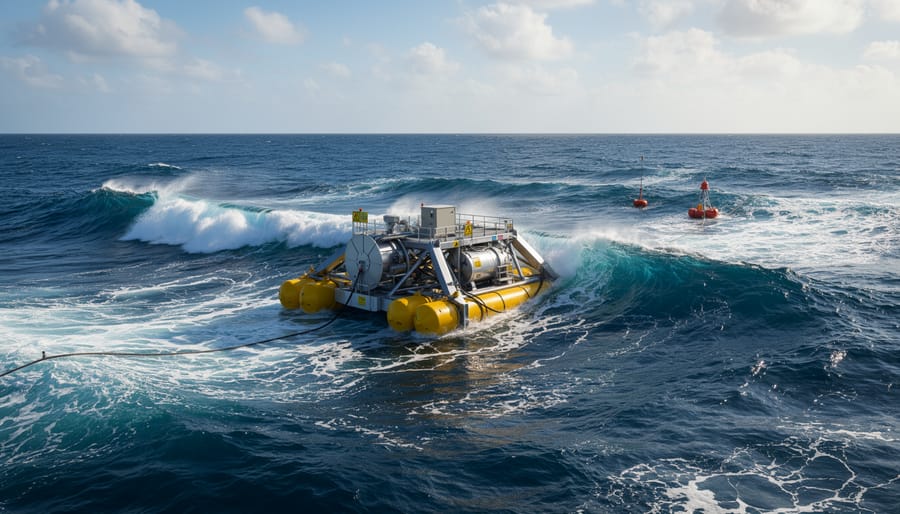
The Australian Renewable Energy Agency’s decision to back Wave Swell Energy Limited marks a pivotal moment for ocean energy in Australia. ARENA funded Wave Swell Energy to install a pilot-scale wave energy converter off King Island, Tasmania, in the Bass Strait, a location chosen for its reliable wave conditions and existing island grid infrastructure. This trial represents one of the most significant tests of wave energy technology in Australian waters, moving beyond theoretical potential to real-world power generation.
The project gained additional momentum when Wave Swell Energy successfully raised $5.8 million in an oversubscribed capital round. This strong investor response signals growing confidence in wave energy’s commercial viability. Unlike previous wave energy concepts that struggled with durability in harsh ocean conditions, Wave Swell Energy’s UniWave200 system uses a proven oscillating water column design housed in a concrete structure anchored to the seabed. As waves surge into the chamber, they compress air that drives a turbine, generating electricity without moving parts exposed to corrosive saltwater.
For King Island, the trial offers a chance to diversify its renewable energy mix beyond wind and solar. The island already runs on high levels of renewable generation, but wave energy’s predictability could help smooth out the variability that challenges grid operators. If successful, the King Island installation will demonstrate that wave energy can operate reliably in Australia’s dynamic ocean environment, potentially paving the way for larger commercial deployments at other coastal and island sites. The trial transforms wave energy from a promising idea into tested Australian clean energy innovation, with real data and operational experience to guide future projects.
Understanding Swell Wave Energy Technology
Ocean swells are the long, rolling waves you see marching across the sea in regular patterns, created by storms and weather systems sometimes thousands of kilometres away. As wind blows across the ocean’s surface over great distances, it transfers energy into the water, building waves that travel outward from the storm centre. These swells carry enormous amounts of kinetic energy, the motion of all that moving water, which wave energy technology aims to capture and convert into electricity.
The conversion process typically involves devices that respond to the rise and fall or back-and-forth motion of passing swells. Some systems use floating buoys that move with the waves to drive generators, while others capture the pressure changes as swells push air or water through chambers. Wave Swell Energy’s technology, for example, uses an oscillating water column, essentially a concrete chamber where incoming swells force air up through a turbine as the water level rises and falls.
Australia’s coastline is exceptionally well-suited for harvesting swell energy. The Southern Ocean generates powerful, consistent swells that roll across thousands of kilometres of open water before reaching Australia’s southern and western coasts. Unlike some wave energy approaches that require large breaking waves or specific seafloor conditions, swell-based systems can operate in moderate depths and capture energy from the steady, predictable wave trains that characterise Australian waters. This consistent swell climate, combined with proximity to coastal communities and industries that need power, makes locations like Albany and King Island ideal testing grounds for proving the technology works in real-world conditions.
Why Wave Energy Matters for Australia’s Renewable Future
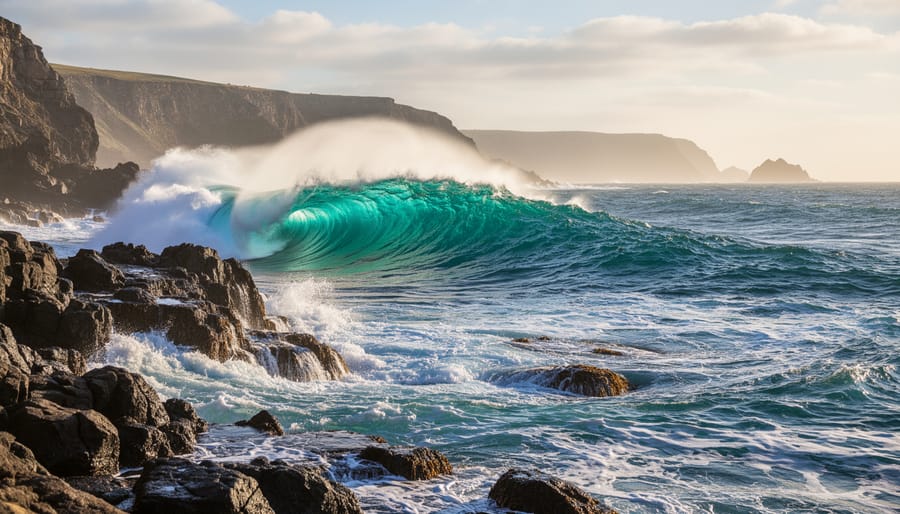
Australia’s renewable energy transition has made remarkable strides with solar and wind, but wave energy could fill a critical gap. Unlike solar panels that go dark at sunset or wind turbines that depend on breezy conditions, ocean swells deliver power with remarkable consistency. The same weather systems that create waves can be tracked days in advance, making renewable energy forecasting for wave power more reliable than forecasting for many other renewables.
Australia’s 60,000-kilometre coastline receives some of the world’s most powerful and consistent swells, particularly along the southern coast. This massive untapped resource could generate electricity when solar and wind resources dip. Wave energy peaks during winter storms when solar output drops and heating demand rises, creating a natural counterbalance in the grid.
The advantages stack up quickly:
- Predictable generation patterns enable better grid planning
- Complements solar and wind by generating during different conditions
- Abundant coastal resource along Australia’s extensive shoreline
- Energy security through diverse renewable sources
- Regional jobs in manufacturing, installation, and maintenance
- Emissions reduction without relying solely on intermittent sources
For coastal communities and industries, wave energy offers tangible benefits beyond clean power. Regional manufacturing hubs could emerge to build wave converters, creating skilled jobs in areas that have traditionally relied on fishing or tourism. Port facilities and marine industries gain opportunities to diversify, much like the offshore wind success has demonstrated in other coastal regions.
Energy-intensive coastal operations, from desalination plants to aquaculture, could access locally generated power, reducing transmission losses and grid strain. As these 2026 developments move from research to real-world trials, wave energy is shifting from theoretical potential to practical possibility in Australia’s renewable mix.
What to Watch: The Road Ahead for Wave Energy
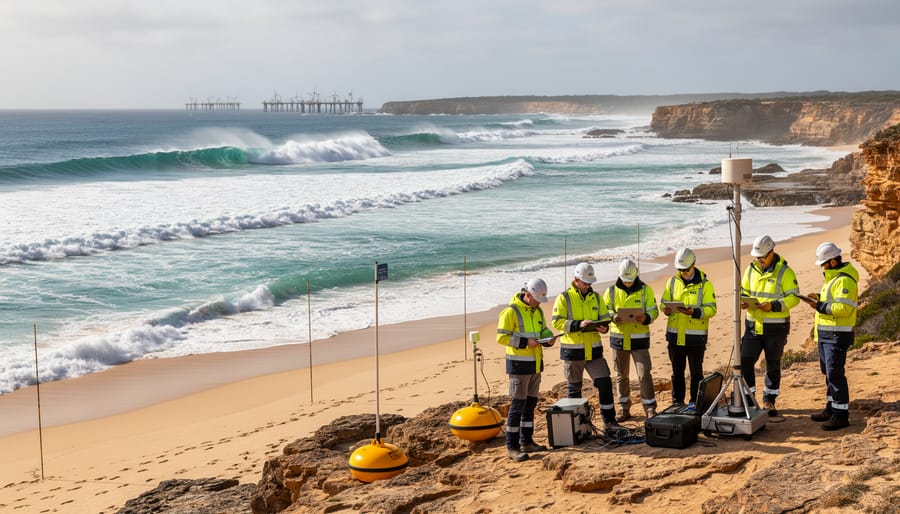
The King Island trial stands as the most immediate milestone to watch. Wave Swell Energy’s pilot converter in the Bass Strait will generate real-world performance data over the coming months, testing the technology’s durability in Australia’s marine conditions and measuring actual energy output against theoretical models. Success here could fast-track commercial deployment at other suitable sites around the country.
Commercial viability assessments will follow closely behind the trial results. The CSIRO and UWA research, combined with the Blue Economy CRC’s industry report, provides the foundation for understanding where wave energy fits economically. Watch for cost-per-megawatt-hour figures as they emerge from these studies, these numbers will determine whether wave energy can compete with established renewables in Australia’s energy market.
New trial locations will likely appear on the radar as the technology proves itself. Albany’s wave energy potential, now mapped in detail, positions Western Australia as a strong candidate for expansion. Tasmania’s coastline and Victoria’s Bass Strait waters also present promising opportunities, particularly where wave energy can complement existing grid infrastructure.
Technology refinements will continue behind the scenes. Developers are working on more efficient energy capture systems, improved materials that withstand saltwater corrosion, and integration with AI wave predictability tools to optimize generation. These advances will matter as much as the headline trials.
Policy developments deserve attention too. Regulatory frameworks for marine energy installations, grid connection standards, and funding mechanisms will shape how quickly wave energy can scale. Stay informed through ARENA announcements, state renewable energy roadmaps, and industry groups focused on marine renewables.
Common Questions About Wave Energy in Australia
How does wave energy compare to solar and wind?
Wave energy offers a key advantage over solar and wind: predictability. Ocean swells follow consistent patterns driven by weather systems, making power generation more reliable and easier to forecast. While solar and wind farms have proven commercial success, waves provide a complementary energy source that can generate electricity during different conditions, creating a more balanced renewable grid. For a detailed wind and wave comparison consider how Australia’s extensive coastline offers massive potential that hasn’t yet been tapped at scale.
When might wave energy become commercially available in Australia?
Wave energy is still in the pilot and demonstration phase. The King Island trial funded by ARENA will help prove the technology at a practical scale, but commercial viability depends on these test results and continued refinements. Realistic timeframes suggest small-scale deployments could begin in the next five to ten years, with broader commercial rollout taking longer as costs come down and the technology matures.
What are the environmental impacts of wave energy?
Wave energy converters typically sit partially or fully submerged, creating minimal visual impact compared to wind turbines. The technology doesn’t produce emissions, waste, or water pollution during operation. Potential concerns include effects on marine life from underwater noise during installation and changes to local wave patterns, though these impacts are generally considered low and are being carefully studied in trials like the King Island project.
How much energy could Australia potentially generate from waves?
Australia’s long coastline experiences consistent ocean swells that carry enormous energy potential. While exact figures depend on which coastal areas are developed and what technology is used, wave energy could theoretically contribute a significant portion of Australia’s electricity needs. The CSIRO and UWA modelling study in Albany is helping quantify this potential more precisely for specific regions.
Is wave energy expensive?
Currently, wave energy costs more than mature renewables like solar and wind because it’s still in the development stage. As with any emerging technology, costs should decrease as designs improve, manufacturing scales up, and installation processes become standardized. The pilot projects underway in 2026 aim to prove both technical performance and economic viability, bringing the technology closer to cost-competitiveness.
These questions reflect what most Australians want to know when they first hear about wave energy as a renewable option. The technology sits at an exciting inflection point where trials and research are turning theoretical potential into practical demonstrations, helping answer the commercial and technical questions that will determine its role in Australia’s energy future.
Australia’s wave energy story in 2026 is one of untapped potential meeting genuine momentum. The ocean swells rolling onto our vast coastline have carried energy for millennia, largely unharnessed, until now. The CSIRO and UWA modelling in Albany, the Blue Economy CRC’s comprehensive industry assessment, and ARENA’s backing of the King Island trial represent more than isolated projects. They’re the building blocks of a technology that could complement solar and wind in ways those alone cannot match, delivering predictable, round-the-clock generation from a resource Australia has in abundance.
These aren’t distant dreams. Trials are happening, money is flowing, and Australian innovation is leading the charge. Wave energy won’t transform the grid overnight, but the foundations are being laid right now. For anyone committed to a cleaner energy future, this is the moment to pay attention. Watch the trial results, follow the research, and consider how wave power fits into the renewable mix your community or organization supports. Australia’s waves have waited long enough, now we’re finally learning to listen to what they can offer.