
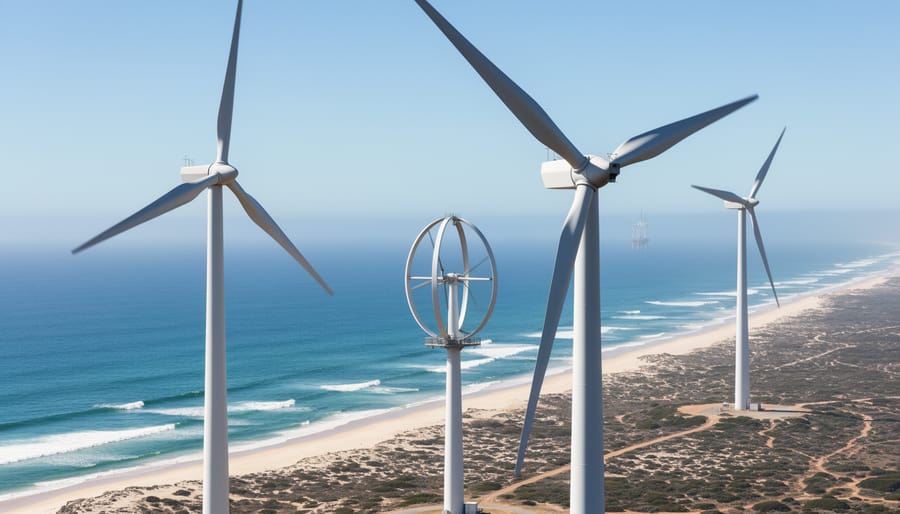
Western Australia is home to four primary types of wind turbines transforming the state’s energy landscape: horizontal axis wind turbines (the familiar three-bladed giants), vertical axis wind turbines (compact, omnidirectional units), offshore floating turbines (anchored beyond the coast), and hybrid turbines integrated with battery storage. Each design serves distinct purposes across Australia’s wind power sector, chosen based on wind conditions, available land, grid requirements, and local environmental factors.
Understanding these turbine types matters because WA’s geography presents unique opportunities. The state’s exposed coastline, vast inland spaces, and strong, consistent winds create ideal conditions for multiple technologies working in concert. From the Midwest region’s sprawling wind farms to emerging offshore projects along the southern coast, each turbine type brings specific advantages that align with different sites and energy goals.
The choice of turbine isn’t arbitrary. Developers and energy planners consider wind speed patterns, turbulence levels, proximity to transmission infrastructure, and community impact when selecting technology for WA projects. The right match between turbine type and location directly influences energy output, maintenance costs, and long-term viability.
As WA wind power continues expanding to meet renewable energy targets, knowing how these four turbine types function helps residents, industry professionals, and policymakers appreciate the engineering sophistication behind the state’s clean energy transition. The turbines spinning across WA’s horizon represent more than infrastructure. They’re creating local jobs, reducing emissions, and proving that thoughtful technology selection drives real environmental and economic results.
How We Selected These Four Wind Turbine Types
Western Australia’s wind energy landscape guided our selection of these four turbine types. Rather than covering every available technology, we focused on the turbines actually shaping WA’s renewable energy sector right now and in the near future.
Our selection criteria ensured each turbine type included here matters specifically for Western Australia:
- Relevance to WA’s wind conditions, including strong coastal winds and variable inland patterns
- Active deployment in current or planned Western Australian wind projects
- Proven performance track record in comparable Australian environments
- Scalability to meet WA’s growing renewable energy targets
These criteria eliminated experimental technologies not yet operating at commercial scale in Australia and niche designs suited to conditions WA doesn’t experience. What remains are the turbine types powering real wind farms across the state today, from the Badgingarra Wind Farm north of Perth to emerging offshore developments along the southern coast.
Each type we’ve selected addresses specific challenges in WA’s diverse landscape. Some excel in the consistent coastal winds near Albany and Geraldton. Others handle the maintenance challenges of remote regional installations where technician visits cost time and money. Together, they represent the practical technological mix driving Western Australia toward its renewable energy goals, not theoretical possibilities but working solutions already generating clean power for WA homes and businesses.
1. Horizontal-Axis Wind Turbines (HAWTs), The Workhorses of WA’s Wind Farms
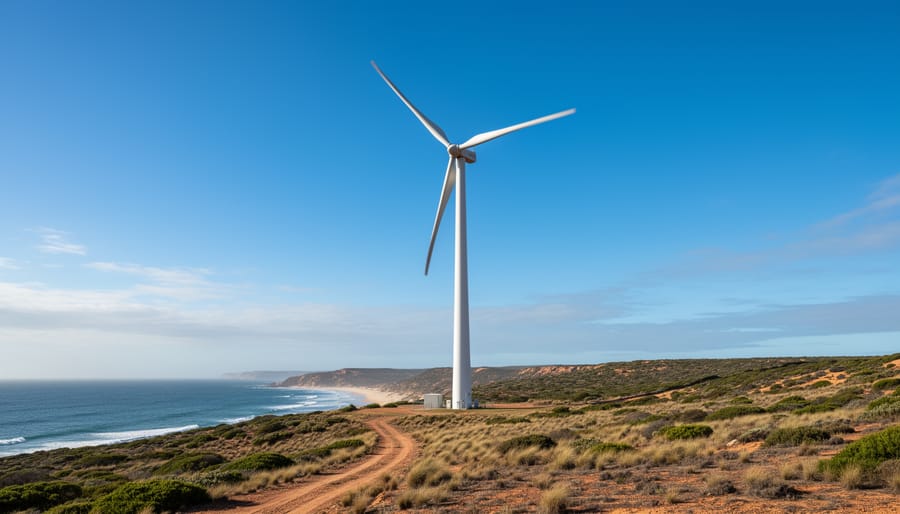
Horizontal-axis wind turbines stand as the backbone of Western Australia’s wind energy infrastructure, accounting for virtually all utility-scale wind generation across the state. These turbines feature the familiar design you’ve likely seen: a tall tower supporting a nacelle housing the generator, with three long blades rotating on a horizontal shaft perpendicular to the tower.
The three-blade configuration isn’t arbitrary. This design achieves an optimal balance between efficiency, structural stability, and cost-effectiveness. The blades capture wind energy by rotating around the horizontal axis, converting kinetic energy into mechanical power that drives the generator inside the nacelle. As wind speed increases, the blades adjust their pitch angle to maintain optimal rotation speed while preventing damage during extreme conditions.
WA’s commercial wind farms rely almost exclusively on HAWTs because they deliver proven performance in the state’s challenging environments. The Badgingarra Wind Farm, located 180 kilometres north of Perth, operates 42 HAWTs with a combined capacity of 130 megawatts. Each turbine generates enough electricity to power approximately 1,000 homes. The Warradarge Wind Farm, further north near Eneabba, uses 51 turbines producing 180 megawatts total capacity.
HAWTs thrive in Western Australia’s coastal corridors where strong, consistent winds create ideal generation conditions. The turbines can efficiently capture wind energy across a wide speed range, typically from around 3 metres per second (when they begin generating) up to 25 metres per second (when they shut down for safety). This flexibility means they generate power during the majority of windy conditions WA experiences.
The reliability factor proves particularly valuable for remote installations. Modern HAWTs operate with minimal supervision, requiring maintenance visits just two to three times annually in typical conditions. Their modular design allows technicians to replace components without dismantling entire turbines, reducing downtime and maintenance costs.
Capacity ranges for HAWTs deployed in WA projects typically span 2 to 4.5 megawatts per turbine for onshore installations, with newer models pushing toward 5 megawatts. This scalability means developers can match turbine size to site conditions and grid connection capacity, optimizing project economics while meeting WA’s growing renewable energy demand.
2. Offshore Wind Turbines, Harnessing WA’s Coastal Energy Potential
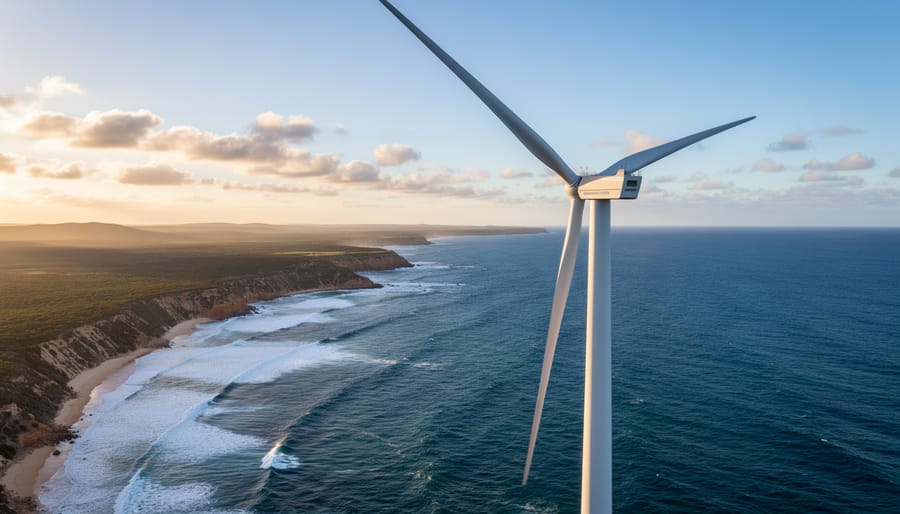
Offshore wind turbines represent a leap forward in scale and capability, designed specifically to handle the open ocean’s punishing conditions and abundant energy reserves. These giants differ fundamentally from their onshore cousins: they feature larger rotor diameters (often exceeding 160 metres), higher hub heights to capture stronger sea winds and reinforced components built to withstand saltwater corrosion and cyclone-force gusts. Where a typical onshore HAWT might generate 3-5 megawatts, offshore models commonly deliver 8-15 megawatts or more from a single turbine, dramatically reducing the number of units needed for a given capacity.
Western Australia’s coastline presents an exceptional opportunity for offshore wind. The state’s southern and western shores experience consistent, powerful winds driven by the Southern Ocean and Indian Ocean weather systems, far steadier than the variable inland breezes that affect some onshore sites. Installing turbines 15-40 kilometres offshore also addresses community concerns about noise and visual impact, placing the infrastructure beyond the horizon for most coastal residents while preserving the scenic value of WA’s beaches and headlands.
The state is actively developing its offshore wind revolution with projects proposed near Albany, Bunbury and Geraldton. These sites leverage deep-water foundations and floating turbine platforms where seabed conditions suit, technologies that WA’s oil and gas sector expertise can readily support. The transition creates local manufacturing and marine construction jobs, particularly in regional ports that become staging hubs for assembly and maintenance.
Offshore turbines also pair naturally with WA’s energy storage plans and undersea transmission cables, enabling bulk renewable electricity to reach Perth and industrial centres without the land-use conflicts onshore projects sometimes face. The technology is proven internationally, with thousands of offshore turbines operating in Europe and Asia, reducing deployment risk as WA scales up its own installations.
3. Direct-Drive Wind Turbines, Low-Maintenance Innovators
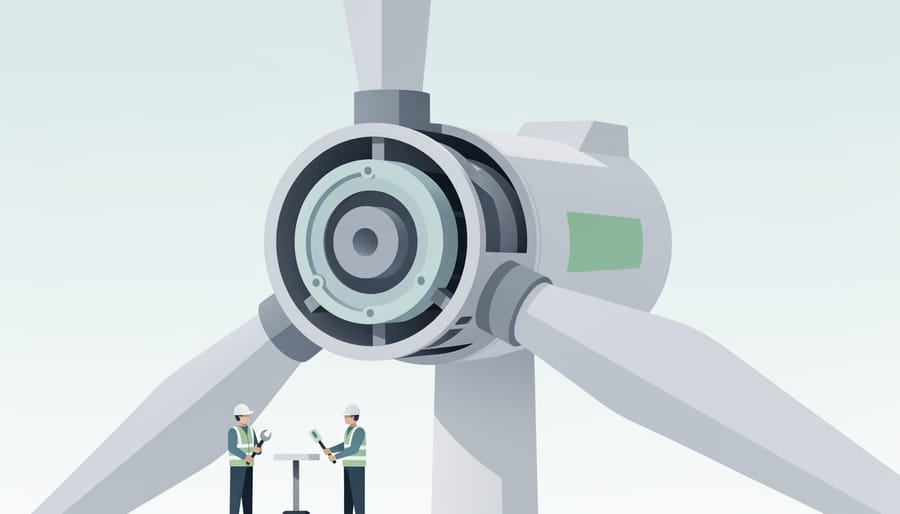
Direct-drive wind turbines strip out one of the most failure-prone components in conventional designs: the gearbox. Instead of using gears to convert the slow rotation of the blades into the high speeds generators typically need, direct-drive turbines connect the rotor straight to a specially designed low-speed generator. This simpler mechanical setup translates to fewer moving parts, less wear and tear, and significantly reduced maintenance demands, a game-changer for Western Australia’s remote wind farm locations where service teams might face hours of travel to reach a site.
The practical benefit becomes clear when you consider the realities of maintaining turbines in regional WA. A gearbox failure in a conventional turbine can mean weeks of downtime while waiting for replacement parts and specialized technicians. Direct-drive turbines avoid this vulnerability entirely. The technology also runs quieter and handles variable wind speeds smoothly, making it well-suited to areas where wind patterns shift throughout the day.
Several Australian wind farms have already embraced direct-drive technology. The Taralga Wind Farm in New South Wales uses Enercon direct-drive turbines, demonstrating the technology’s reliability across thousands of operating hours with minimal unplanned maintenance. While Western Australia’s direct-drive deployment is still developing compared to conventional HAWTs, the technology’s advantages for remote locations make it an increasingly attractive option as the state expands wind capacity into regional areas.
For projects in the Mid West or Pilbara regions, where distance from major service centers adds complexity and cost to maintenance schedules, direct-drive turbines offer a compelling value proposition. The higher upfront equipment cost gets offset by lower lifetime maintenance expenses and improved uptime, particularly over the 20-to-25-year operational lifespan typical of modern wind farms. As WA’s wind energy footprint grows beyond coastal hubs into more isolated areas, direct-drive technology provides a proven path to reliable, cost-effective generation where access and serviceability matter most.
4. Variable-Speed Wind Turbines, Adapting to WA’s Changing Winds
Variable-speed wind turbines represent one of the most sophisticated adaptations to Western Australia’s dynamic wind conditions, where coastal breezes can shift from gentle to gale-force within hours. Unlike fixed-speed models that spin at a constant rate regardless of wind strength, these turbines use advanced power electronics to adjust their rotor speed in real time, matching the energy in each gust. This flexibility means they capture significantly more electricity from variable winds, a crucial advantage across WA’s diverse wind regions, from the steady Southern Ocean flows near Albany to the gustier patterns around Geraldton.
The efficiency gains are substantial. By operating at optimal speed for each wind condition, variable-speed turbines extract 20-30% more energy compared to fixed-speed alternatives, particularly during the moderate wind speeds that dominate much of WA’s wind resource. They also reduce mechanical stress on components, extending turbine lifespan and cutting maintenance costs in remote locations where service visits are expensive and time-consuming.
Grid compatibility stands out as another critical benefit. Variable-speed technology allows these industrial turbines to deliver power at a consistent voltage and frequency, even as wind speeds fluctuate. This smooth output supports stable electricity delivery across WA’s South West Interconnected System, reducing the grid integration challenges that plagued earlier wind installations. The turbines can also respond quickly to grid operator signals, ramping power up or down within seconds to help balance supply and demand, a feature that becomes increasingly valuable as wind energy’s share of WA’s electricity mix grows.
Most modern wind farms across Western Australia now deploy variable-speed technology as standard, recognizing its superior performance in the state’s real-world wind conditions and its alignment with grid stability requirements.
What These Wind Turbines Mean for Western Australia’s Energy Future
These four turbine types, horizontal-axis workhorses, powerful offshore giants, low-maintenance direct-drive units, and adaptive variable-speed systems, collectively position Western Australia at the forefront of Australia’s clean energy transformation. Together, they’re projected to generate enough electricity to power hundreds of thousands of homes while slashing carbon emissions by millions of tonnes annually.
The diversity of these technologies means WA can deploy the right turbine for each location: efficient HAWTs where strong coastal winds blow, offshore turbines tapping the state’s vast ocean energy potential, direct-drive systems in remote areas where reliability matters most, and variable-speed turbines for forecasting wind output and grid stability.
Beyond clean electrons, this wind energy expansion is creating real opportunity. Regional manufacturing facilities are opening, construction crews are building across the state, and ongoing maintenance roles provide lasting employment in rural communities. Western Australia isn’t just installing turbines, it’s building an industry that reduces reliance on fossil fuels while strengthening regional economies and delivering cleaner air for future generations.
Frequently Asked Questions
How long do wind turbines in Western Australia typically last?
Modern wind turbines are designed for a 20-25 year operational lifespan, with regular maintenance extending their productive life. WA’s coastal turbines undergo more frequent inspections due to salt exposure, but proper servicing keeps them running efficiently throughout their design life.
Can I invest in Western Australia’s wind energy projects as an individual?
While most large-scale wind farms are developed by utility companies and institutional investors, some community wind projects and renewable energy cooperatives offer participation opportunities. Check with local renewable energy groups or investment platforms specializing in clean energy for available options.
Do wind turbines affect property values in nearby areas?
Studies on property values near wind farms show mixed results, with most indicating minimal long-term impact. In WA, community consultation during project planning and benefit-sharing arrangements often help address local concerns and build support for wind energy developments.
What happens to old wind turbines when they’re decommissioned?
Around 85-90% of a wind turbine’s components, including steel towers, copper wiring, and concrete foundations, can be recycled. The industry is actively developing better recycling methods for turbine blades, which historically posed disposal challenges.
These practical questions reflect the real considerations people have as WA’s wind energy sector expands. Understanding the full lifecycle and community aspects of wind turbines helps everyone make informed decisions about supporting renewable energy growth across the state.