
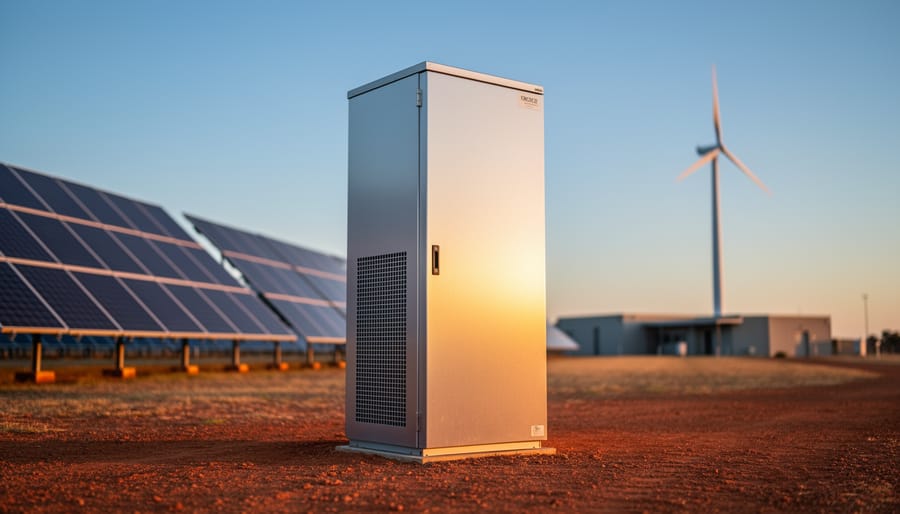
Energy storage research is the scientific study and development of technologies that capture energy for use at a later time, bridging the gap between when renewable power is generated and when it’s actually needed. This field has become the cornerstone of Australia’s renewable energy transition, solving the fundamental challenge that the sun doesn’t always shine and the wind doesn’t always blow when electricity demand peaks.
Without effective energy storage, solar panels and wind turbines can only provide power intermittently, forcing grids to rely on fossil fuel backup systems. Energy storage research aims to change that equation entirely. Scientists and engineers across Australia are developing better batteries, thermal storage systems, and innovative materials that can hold electricity generated during sunny afternoons or windy nights, then release it during evening peak demand or calm days.
The implications extend far beyond laboratory curiosity. Every breakthrough in storage capacity, charging speed, or cost reduction moves Australia closer to a fully renewable grid. Regional communities already see battery installations stabilising their power supply, while large-scale research projects test technologies that could power entire cities through multiday weather events.
Right now, researchers are exploring everything from advanced lithium compounds to metal-organic frameworks that promise dramatically higher energy density. They’re tackling real questions: How do we store enough energy to run Melbourne through a windless winter week? Can we make batteries affordable enough for every household? The answers emerging from energy storage research will determine how quickly Australia can achieve its clean energy goals while maintaining the reliable power modern life demands.
What Energy Storage Research Really Means
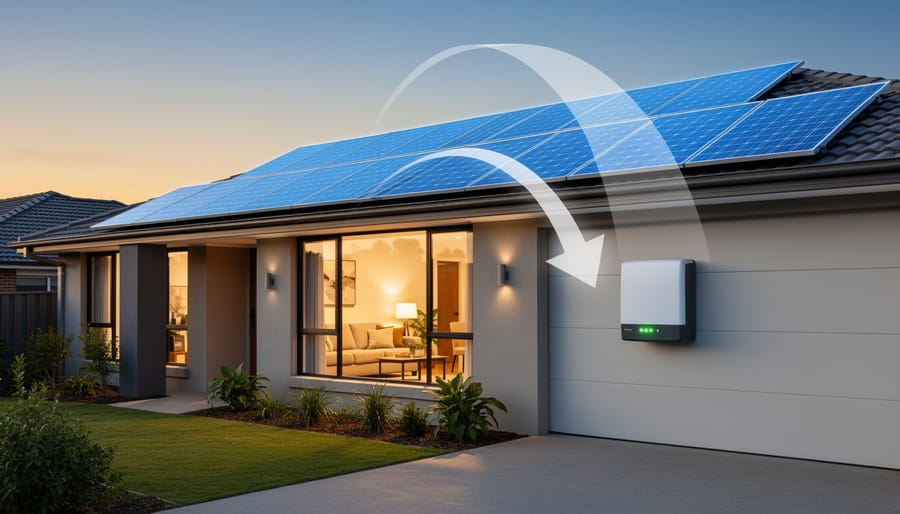
Energy storage research is the science of finding smarter ways to save renewable energy when it’s abundant and release it when it’s needed. In Australia, this challenge is especially relevant: rooftop solar panels across the country generate massive amounts of electricity during sunny midday hours, yet most households use the bulk of their power in the evening when they’re cooking dinner, running appliances, and switching on lights. Without effective storage, that daytime solar energy either goes to waste or gets sold back to the grid at low rates, while homeowners draw expensive grid power after dark.
Researchers around the world are experimenting with new materials, chemistries, and system designs to crack this puzzle. They’re testing everything from advanced battery formulations that hold more charge in smaller packages to novel chemical compounds that can store energy safely for weeks or months. The goal isn’t just to store more energy; it’s to make storage cheaper, so the technology becomes accessible to everyday Australians. Scientists are also working to extend the lifespan of storage systems, ensuring batteries and other devices can charge and discharge thousands of times without degrading.
This research happens in university labs, corporate R&D centres, and pilot facilities across Australia and beyond. Teams might test a prototype battery chemistry in controlled conditions, measure its performance under extreme temperatures typical of the Australian climate, then refine the design based on real-world data. Every breakthrough brings us closer to a future where renewable energy powers homes, businesses, and communities around the clock, not just when the sun is up.
How Energy Storage Research Works in Practice
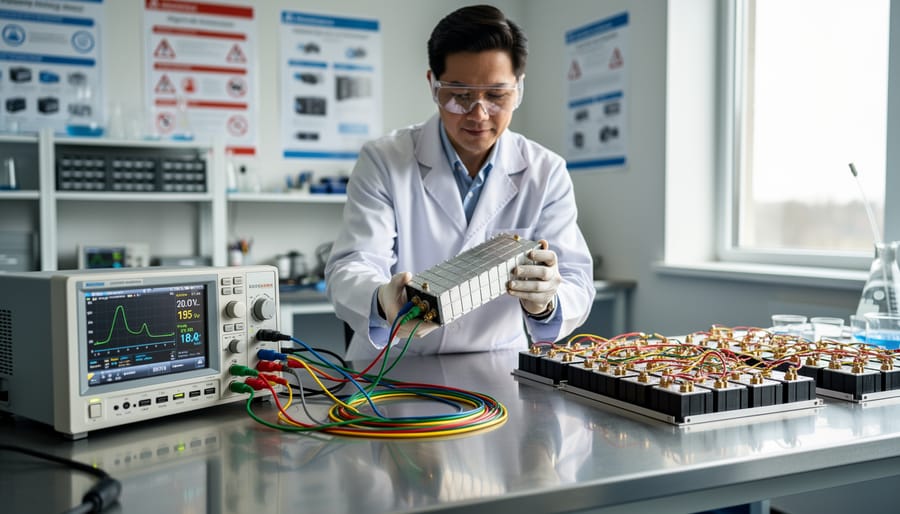
Energy storage research doesn’t happen in a vacuum. It’s a methodical process that begins with identifying real-world problems holding back renewable energy adoption. Australian researchers might start by asking: why do lithium-ion batteries degrade after a few thousand charge cycles? Can we make storage systems safer for homes? How do we cut costs without sacrificing performance?
Once a challenge is defined, scientists experiment with new materials and designs in controlled laboratory settings. At the University of Melbourne, for instance, a team might test dozens of chemical compounds to find one that stores more energy per kilogram than existing options. They’ll measure how each material behaves under different temperatures, charge rates, and voltages, collecting thousands of data points to understand what works and why.
When a promising candidate emerges, researchers build small-scale prototypes. Think of a battery the size of a drink coaster, wired to sensors that monitor its performance over hundreds of charge-discharge cycles. If it consistently outperforms current technology without catching fire or losing capacity too quickly, the research moves to the next stage.
This is where the rubber meets the road. A prototype that shines in the lab still needs to prove itself in real-world conditions. Researchers might partner with an energy company to install trial units at a solar farm in regional New South Wales, where the storage system faces temperature swings, fluctuating solar input, and the demands of actual grid operation. Engineers monitor performance daily, troubleshooting issues that never surfaced in controlled tests.
Successful trials lead to scaling up. What started as a single prototype could become a manufacturing process capable of producing thousands of units per year. Throughout this journey, researchers refine the design based on feedback, publish findings to advance the field, and work with industry partners to bring innovations to Australian households and businesses.
Different Approaches to Storing Energy
Electrochemical Storage: Batteries and Beyond
Lithium-ion batteries dominate today’s energy storage landscape, powering everything from mobile phones to Tesla Powerwalls in Australian homes. Researchers are pushing these chemistries further, testing silicon anodes to boost capacity and exploring ways to cut cobalt reliance, a metal that’s expensive and ethically fraught to mine. Labs at institutions like Monash University are refining lithium-ion designs for faster charging and longer lifespans, critical for grid-scale solar farms that need batteries cycling daily for decades.
Flow batteries represent a different approach altogether. Instead of storing energy in solid electrodes, they pump liquid electrolytes through a cell, allowing capacity to scale simply by adding bigger tanks. Australian company redT Energy has trialed vanadium flow batteries for renewable microgrids in remote communities, where durability trumps energy density. The technology suits long-duration storage, eight hours or more, that lithium-ion struggles to deliver economically.
Beyond these established chemistries, solid-state batteries are attracting global research investment. By replacing flammable liquid electrolytes with solid materials, they promise safer, denser energy storage. Sodium-ion and aluminium-ion batteries are also being explored as cheaper, more abundant alternatives, with Australian researchers testing prototypes that could slash material costs and open new markets for stationary storage across the continent’s vast renewable energy zones.
Mechanical and Thermal Storage Systems
Mechanical and thermal storage systems have been keeping the grid steady for decades, and they’re still evolving through targeted research. Pumped hydro, where water is pumped uphill during excess generation and released through turbines when demand peaks, remains Australia’s largest grid-scale storage option, accounting for over 95% of our current capacity. Researchers are now refining designs to work with smaller elevation differences and less water, opening up more sites across the country.
Compressed air energy storage works similarly: surplus electricity compresses air into underground caverns or tanks, then releases it to spin turbines when needed. Australian trials are testing more efficient heating and cooling cycles to boost round-trip efficiency beyond 70%. Thermal storage captures heat or cold in molten salt, rocks, or phase-change materials, then releases it hours or days later, ideal for industrial processes or concentrated solar plants. Some teams are even exploring gravity storage which uses heavy blocks lifted and lowered to store and discharge energy. These technologies offer long lifespans, low material costs, and massive scale potential, making them essential complements to batteries in a diversified storage mix.
Chemical Storage and Hydrogen
Hydrogen is emerging as a promising long-duration storage solution, researchers are exploring ways to convert excess renewable electricity into hydrogen gas, which can be stored for weeks or months and later burned or converted back to power when needed. Australia’s abundant solar and wind resources make it ideal for producing solar-powered hydrogen and scientists are investigating metal-organic frameworks to safely store hydrogen at lower pressures, making transport and storage cheaper and safer than traditional high-pressure tanks.
Metal-Organic Frameworks: The Next Frontier in Energy Storage
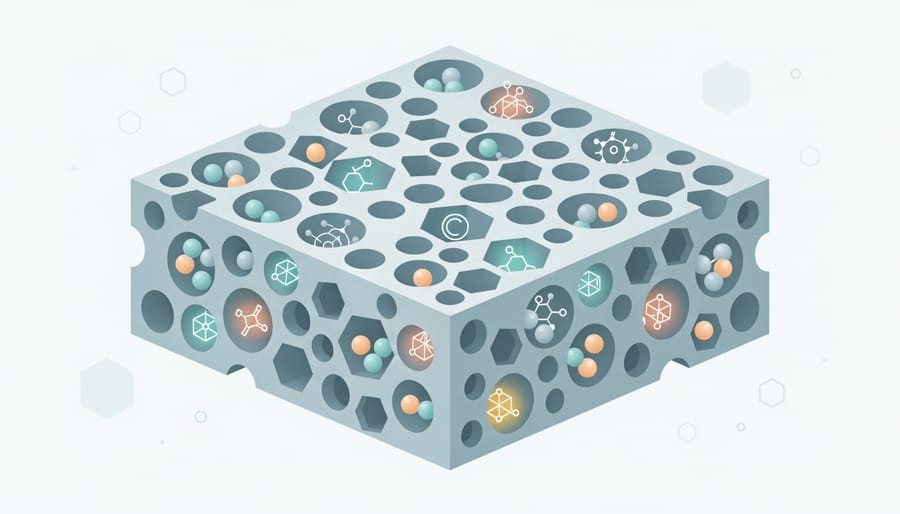
Picture a sponge so tiny you’d need a microscope to see it, yet riddled with billions of pockets that can trap molecules with precision. That’s essentially what metal-organic frameworks, or MOFs, are, and they’re generating serious excitement in energy storage labs around the world.
MOFs are crystalline materials built from metal ions connected by organic molecules, forming intricate three-dimensional structures at the molecular level. Their defining feature is porosity taken to an extreme: a single gram of some MOFs contains internal surface area equivalent to a football field. Those countless microscopic cavities can selectively capture and hold specific gases, ions, or energy carriers, making MOFs incredibly versatile for storage applications.
What makes MOFs particularly promising is their tunability. Researchers can swap metal centres and organic linkers like building blocks, tailoring the material’s pore size, chemical properties, and storage capacity for different tasks. Need to hold hydrogen molecules for fuel cells? Design a MOF with pores sized perfectly for H₂. Want to boost battery performance? Engineer a framework that shuttles lithium ions more efficiently than conventional electrode materials.
For Australia’s renewable energy transition, MOFs could solve critical storage challenges. They’re being explored to increase battery energy density, potentially doubling how much power a battery pack can hold without adding weight, vital for electric vehicles and grid storage. MOFs also show promise for safer, more compact hydrogen storage turning a gas that typically requires heavy pressurized tanks into a material you could handle more easily.
Australian universities are actively researching MOF applications, recognizing their potential to support cleaner energy systems. While still largely in the lab stage, these materials represent exactly the kind of breakthrough that could accelerate our shift to 24/7 renewable power.
Where Energy Storage Research Is Being Applied
Energy storage research is no longer confined to laboratories, it’s delivering real-world results across Australia, from massive grid batteries stabilising renewable energy supply to compact home systems slashing household electricity bills. These applications demonstrate how scientific breakthroughs translate into practical benefits for communities, businesses, and the environment.
Grid-scale batteries are perhaps the most visible success story. The Hornsdale Power Reserve in South Australia, one of the world’s largest lithium-ion battery installations, has proven that storage can smooth out renewable energy fluctuations while providing emergency backup during peak demand. Research into advanced battery chemistries and MOF-enhanced electrodes is now driving the next generation of these facilities, promising even greater capacity and faster response times. Wind and solar farms across Queensland and New South Wales are increasingly pairing generation with storage, turning intermittent renewables into dependable baseload power.
Home battery systems represent another frontier where research meets everyday life. Australian households with rooftop solar can now store excess daytime generation for evening use, cutting grid reliance and trimming bills. Companies like Redback Technologies and Sonnen are incorporating research insights, improved thermal management, longer-lasting materials, safer electrolytes, to make home batteries more affordable and reliable. Some systems even participate in virtual power plants, pooling stored energy to support the grid during peak periods while earning homeowners credits.
Storage research is making a tangible impact across multiple sectors:
- Electric vehicle batteries benefiting from higher energy density and faster charging research
- Remote community microgrids in outback Queensland and the Northern Territory replacing diesel generators
- Mining operations using battery systems to reduce diesel consumption and emissions
- Commercial buildings installing thermal storage to shift air conditioning loads away from peak hours
- Renewable hydrogen projects exploring MOF-based storage for transport fuel applications
Remote indigenous communities are seeing particularly transformative results. The Daly River Solar Farm in the Northern Territory combines solar panels with battery storage to provide clean, reliable power where diesel once dominated. Research into MOF materials is already being tested for these off-grid applications, where compact, high-capacity storage can eliminate fuel deliveries to isolated locations entirely.
The ripple effects extend beyond energy supply. Australian mining companies are trialing battery-electric haul trucks and drilling rigs, reducing operational costs while cutting emissions. Agricultural properties are using storage to power irrigation systems overnight, drawing on daytime solar. Each application validates years of research while creating new demand for innovation, pushing scientists to develop even better storage solutions.
Why Energy Storage Research Matters for Australia’s Renewable Future
Australia’s renewable energy future hinges on solving one critical challenge: storing the power we generate. Energy storage research directly addresses this bottleneck, turning intermittent sunshine and wind into round-the-clock electricity that households and businesses can rely on.
Breakthroughs in storage materials, particularly metal-organic frameworks and bio-inspired storage systems, promise to slash costs, extend battery lifespans, and boost capacity. These advances mean solar farms can dispatch power after sunset, electric vehicles can travel farther on a single charge, and remote communities can run stable microgrids without diesel generators. The result is a cleaner, more affordable energy system that cuts emissions while lowering power bills.
This research also unlocks economic opportunities. As Australia scales up storage manufacturing and deployment, we create skilled jobs in engineering, materials science, and installation. Regional areas benefit from new energy infrastructure, and local industries gain a competitive edge by tapping into cheaper, greener electricity.
Faster storage innovation accelerates our departure from fossil fuels, making renewables the backbone of the grid rather than a supplement. Every research milestone brings us closer to energy independence, climate targets, and a resilient power network that works for everyone. The momentum is building, and the payoff is a sustainable, prosperous Australia powered entirely by what nature provides.
Common Questions About Energy Storage Research
How long does it take for energy storage research to move from lab to real-world use?
The timeline varies widely depending on the technology. Incremental improvements to existing batteries might reach the market in three to five years, while completely new materials like advanced metal-organic frameworks could take ten to fifteen years of testing, scaling, and safety certification before widespread commercial deployment.
Are new energy storage technologies safe for homes and communities?
Safety is a top priority in energy storage research, with scientists rigorously testing materials under extreme conditions before any public rollout. New technologies like MOFs are being designed specifically to address safety concerns seen in older battery chemistries, reducing risks of overheating or toxic leaks.
Will energy storage research make renewable energy more affordable?
Yes, that’s one of the main goals. By developing cheaper materials, longer-lasting systems, and more efficient designs, researchers aim to cut storage costs dramatically, making solar and wind power economically competitive around the clock, which should lower electricity bills for Australian households over time.
What role does Australia play in global energy storage research?
Australia punches above its weight, with universities and research institutions leading studies on grid-scale batteries, renewable hydrogen, and advanced materials. Our abundant solar and wind resources make us an ideal testing ground for storage innovations that the whole world can learn from.
How do metal-organic frameworks compare to lithium-ion batteries?
MOFs aren’t direct replacements for lithium-ion batteries yet, they’re more of a complementary technology. While lithium-ion excels at compact, high-power applications like phones and cars, MOFs show promise for safer hydrogen storage, larger energy capacity, and specialized uses where their unique structure offers advantages current batteries can’t match.
These questions reflect what many Australians wonder when they hear about energy storage breakthroughs. The research journey isn’t instant, but the payoff, reliable, affordable renewable power, makes it worth the wait. As scientists refine technologies like MOFs and optimize proven systems, we’re building the foundation for an energy system that works for everyone, day and night, rain or shine.
Energy storage research is reshaping what’s possible for Australia’s renewable energy future, and innovations like metal-organic frameworks are accelerating that transformation. By solving the challenge of storing solar and wind power for when it’s needed most, these advances make 24/7 clean electricity a realistic goal rather than a distant aspiration.
The practical benefits are already emerging. Communities gain reliable power even when the sun isn’t shining or the wind isn’t blowing. Households reduce their electricity bills through smarter battery systems. Emissions drop as coal and gas are gradually replaced by stored renewable energy. New industries and skilled jobs grow around battery manufacturing, hydrogen production, and grid management.
For everyday Australians, this research translates into cleaner air, more stable energy prices, and a genuine pathway toward net-zero emissions. The breakthroughs happening in laboratories today will power homes, businesses, and electric vehicles tomorrow.
Supporting this transition doesn’t require a science degree. Stay informed about energy storage developments in your region, consider renewable energy options for your home, and back policies that prioritize clean energy infrastructure. Australia’s sustainable energy future is being built right now, one research breakthrough at a time.