
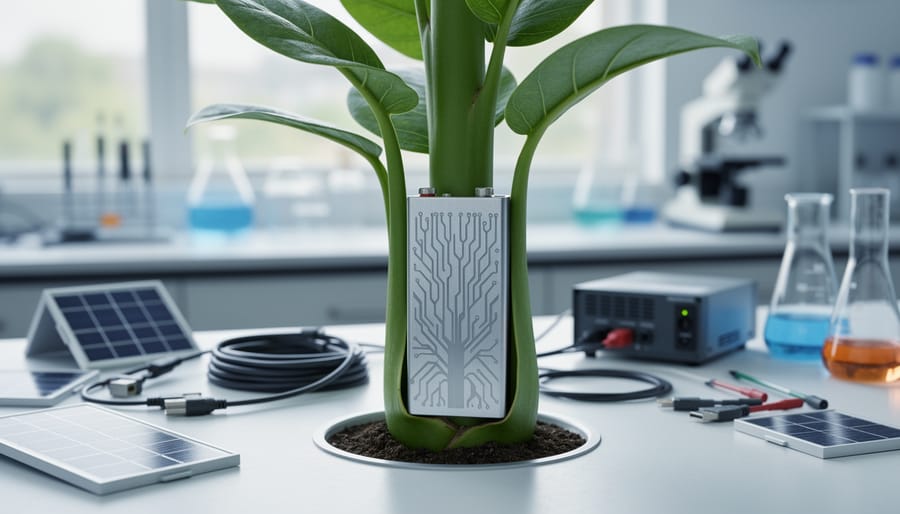
Energy storage innovation inspired by nature refers to the development of batteries, capacitors, and other storage systems that mimic biological structures and processes found in living organisms to achieve higher efficiency, sustainability, and performance than conventional technologies. Instead of relying solely on traditional lithium-ion designs, these bio-inspired approaches draw from millions of years of evolutionary problem-solving, from the way algae store energy in their cells to how trees manage water and nutrient flow.
For Australia’s renewable energy transition, this matters enormously. Solar and wind power now dominate our grid expansion, but their intermittent nature demands storage solutions that can handle rapid charge-discharge cycles, last decades without degradation, and use materials that won’t leave a toxic legacy. Bio-inspired energy storage addresses all three challenges by replacing rare-earth metals with organic compounds, creating electrode structures that mirror the branching patterns of leaves for maximum surface area, and designing electrolytes based on the ion-transport mechanisms inside living cells.
The shift is already producing results across Australian research labs and pilot projects. Scientists at several universities have developed battery electrodes that replicate the fractal geometry of fern leaves, boosting energy density by up to 40% compared to flat designs. Others are engineering storage systems using proteins and polymers similar to those in plant cell walls, materials that decompose safely at end-of-life rather than sitting in landfill for centuries.
This article explains how bio-inspired storage technologies work, the main types currently emerging from research into commercial application, and where they’re being tested and deployed in Australia. You’ll discover why biomimicry offers practical advantages beyond environmental appeal and what these innovations mean for making renewable energy reliably available when and where we need it.
What Bio-Inspired Energy Storage Means
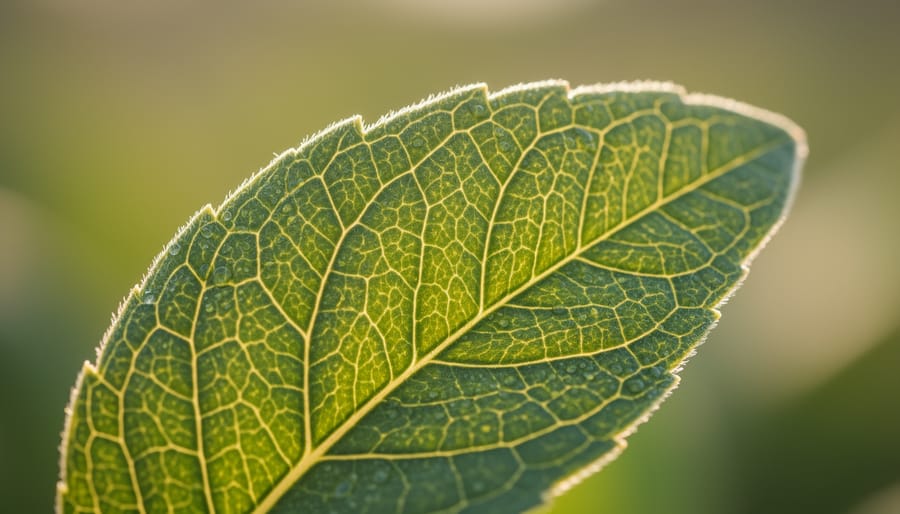
Bio-inspired energy storage draws on nature’s time-tested blueprints to solve modern energy challenges. Rather than relying solely on human engineering, scientists examine how living organisms capture, store, and release energy, then replicate those strategies in batteries, capacitors, and other storage devices.
Consider how a tree stores solar energy. Through photosynthesis, leaves convert sunlight into chemical bonds, stockpiling that energy as carbohydrates until the plant needs it for growth or repair. Researchers are developing materials that mimic this direct light-to-chemical conversion, bypassing the inefficiencies of traditional solar panels paired with separate batteries. Similarly, the electrical signals in your nervous system travel through ion channels that open and close with remarkable precision. Scientists now design battery electrodes that copy these selective ion gates, improving charge rates and longevity.
- Bio-inspired design
- Engineering approach that copies structures, processes, or systems from living organisms to solve technical problems. In energy storage, this might mean replicating the layered structure of nacre (mother-of-pearl) to create stronger, more flexible batteries.
- Biomimicry
- The practice of learning from and mimicking nature’s strategies to create sustainable solutions. It goes beyond copying shapes to understanding the underlying principles that make biological systems efficient.
- Electrochemical storage
- The process of storing electrical energy as chemical potential, which can later be converted back to electricity. Batteries use this principle, and bio-inspired versions improve it by mimicking how cells manage electron transfer.
- Biopolymer electrodes
- Battery components made from naturally occurring polymers like cellulose or lignin rather than synthetic plastics. These materials are renewable, often biodegradable, and reduce dependence on petroleum-based products.
It’s crucial to distinguish bio-inspired storage from bioenergy itself. Bioenergy generates power by burning or fermenting organic matter, wood pellets, agricultural waste, algae. Bio-inspired storage doesn’t use biological materials as fuel. Instead, it borrows nature’s design wisdom to build better storage devices, often using conventional or sustainable synthetic materials arranged in nature-inspired patterns.
Both approaches strengthen Australia’s renewable energy ecosystem. Bioenergy provides reliable baseload power from agricultural byproducts, while bio-inspired storage offers cleaner, safer ways to capture solar and wind energy when it’s abundant. Together, they create a more resilient grid that learns from the same natural systems that have sustained life on this continent for millennia.
How Nature’s Energy Storage Principles Work
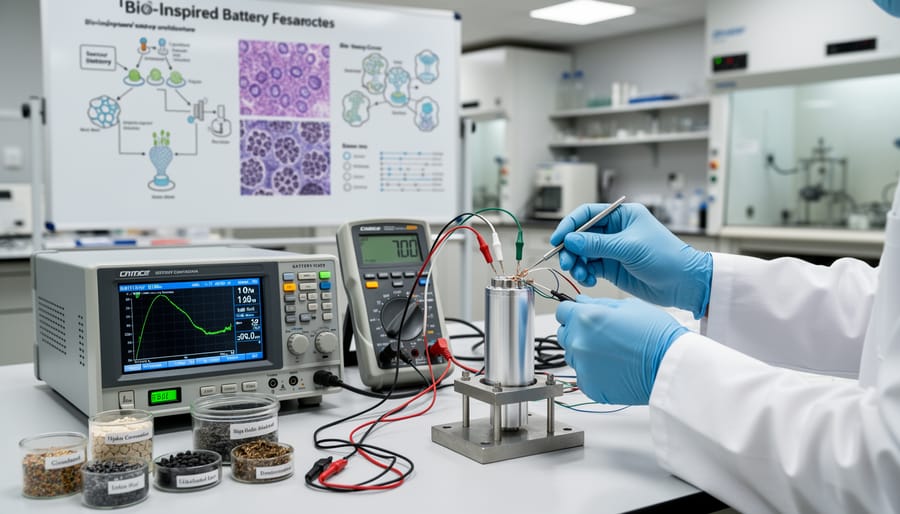
Nature has spent billions of years perfecting energy storage, and scientists are now decoding these biological blueprints to solve modern power challenges. The mechanisms organisms use to capture, store, and release energy offer elegant solutions to problems that conventional batteries struggle with, problems particularly acute in Australia’s renewable energy grid, where fast response grid support becomes critical during solar and wind fluctuations.
At the cellular level, living things rely on adenosine triphosphate (ATP) as their universal energy currency. When your muscles contract or your brain fires neurons, they’re drawing on ATP molecules that store energy in high-energy phosphate bonds. What makes this system brilliant is its efficiency: cells can break down ATP within milliseconds to release energy exactly when and where it’s needed, then rebuild it just as quickly. Engineers studying this process are developing battery chemistries that mimic ATP’s rapid charge-discharge cycles, aiming for storage systems that can respond to grid demands in seconds rather than minutes.
Photosynthesis demonstrates another masterclass in energy storage. Plant cells capture sunlight using chlorophyll and convert it through an electron transport chain, a series of protein complexes that shuttle electrons like a molecular bucket brigade. This cascade not only generates chemical energy but does so using abundant, non-toxic materials: water, carbon dioxide, and light. Researchers replicating this electron transport mechanism are creating artificial systems that combine energy generation and storage in a single device, eliminating the conversion losses that plague conventional solar-plus-battery setups.
The biological principles guiding these innovations include:
- Cellular energy storage through reversible chemical bonds that release power on demand
- Natural ion transport via selective channels that move charged particles with minimal resistance
- Photosynthetic energy conversion using cascading electron transfers for maximum efficiency
- Structural optimization through hierarchical designs that balance strength, weight, and surface area
- Self-healing mechanisms that repair damage automatically, extending system lifespan
Nerve cells offer yet another blueprint. They maintain electrical potential across their membranes using ion channels, protein gates that selectively allow sodium, potassium, or calcium ions to flow through. This creates voltage differences similar to a battery, but with remarkable precision and speed. Bio-inspired batteries borrow this selectivity to improve ion flow between electrodes, reducing internal resistance and heat generation, two major hurdles for large-scale storage in Australia’s often extreme temperatures.
Natural materials also teach lessons in durability. Bone, for instance, combines mineral crystals with organic collagen in a hierarchical structure that’s simultaneously strong, lightweight, and capable of microscopic self-repair. Scientists are now creating battery electrodes with similar composite architectures: mineral components for conductivity wrapped in organic matrices that accommodate expansion and contraction during charging cycles, dramatically reducing the cracking that shortens battery life.
These biological strategies solve precisely the challenges Australia’s renewable transition demands: rapid response to grid fluctuations, high energy density for limited installation space, safety through non-flammable materials, and longevity despite harsh operating conditions.
Categories of Bio-Inspired Energy Storage
Biomimetic Battery Designs
Scientists and engineers are translating the elegant solutions found in living organisms into next-generation battery designs that outperform conventional lithium-ion systems. Electric eels, for instance, generate powerful voltages by stacking thousands of specialized cells in series, a principle researchers now apply to create high-voltage batteries with improved energy density and faster charging capabilities. Similarly, the microstructure of human bone, with its porous yet incredibly strong architecture, inspires electrode designs that combine mechanical durability with superior electrical conductivity, making batteries more resilient to the physical stresses of charging cycles and temperature fluctuations common across Australia’s diverse climates.
One standout innovation is the pomegranate-inspired silicon anode which mimics the fruit’s structure by clustering silicon nanoparticles inside protective carbon shells. This design allows the silicon to expand and contract during charging without cracking, addressing a major weakness of silicon-based batteries while dramatically increasing energy storage capacity. Australian universities, including researchers at the University of New South Wales and Monash University, are advancing these concepts alongside work on zinc storage systems that replicate biological ion management for safer, more sustainable energy storage. These biomimetic approaches reduce dependence on scarce materials while delivering performance improvements exactly where Australia’s renewable energy infrastructure needs them most.
Plant-Inspired Solar Energy Storage
Plant-inspired storage systems tackle one of renewable energy’s toughest puzzles: capturing and storing solar power in a single integrated process, just as plants have done for millions of years. These technologies mimic the natural choreography of photosynthesis, where light energy becomes chemical fuel that’s ready when needed.
The most promising development is artificial photosynthesis which uses specially designed catalysts and semiconductors to convert sunlight and water directly into storable hydrogen fuel. Unlike conventional solar panels that generate electricity requiring separate battery storage, these systems perform both jobs simultaneously. Researchers have created devices where an artificial leaf splits water using only sunlight, releasing hydrogen that can power fuel cells or be stored for later use.
Chloroplast-inspired materials take this further by embedding light-harvesting molecules into storage electrodes, creating batteries that recharge themselves in daylight. These organic photovoltaic storage hybrids use carbon-based compounds similar to the chlorophyll that powers plant cells, offering a genuinely renewable alternative to silicon and lithium.
For remote Australian communities beyond the electricity grid, these technologies could eliminate the diesel generators currently trucking fuel across vast distances. Farming operations could integrate artificial leaf systems with irrigation infrastructure, generating hydrogen to power equipment while producing oxygen as a beneficial by-product. The technology remains experimental at scale, but field trials in Western Australia’s pastoral regions are testing prototypes that combine water purification with energy generation, addressing two critical challenges with one nature-inspired solution.
Biopolymer and Organic Storage Materials
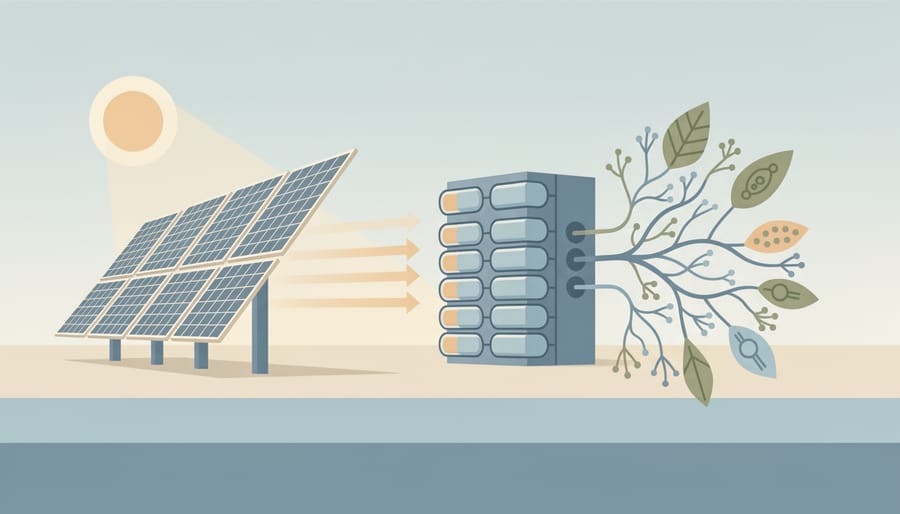
Biopolymer and organic storage materials represent a breakthrough in sustainable battery design, replacing petroleum-based plastics and toxic metals with components derived from plants and natural polymers. These technologies address two critical challenges: reducing dependence on mining rare earth minerals and preventing the electronic waste crisis that conventional batteries create.
Cellulose, the structural material in plant cell walls, has emerged as a versatile battery component. Researchers are fabricating separators (the barrier between battery electrodes) from wood pulp and cotton waste, creating components that are lightweight, fire-resistant, and fully biodegradable. Some Australian trials have demonstrated cellulose-based electrodes that perform comparably to synthetic alternatives while sourcing materials from agricultural waste streams.
Lignin, the polymer that gives trees their strength, shows promise as a sustainable electrode material. Once considered a waste byproduct of paper manufacturing, lignin-derived carbon offers electrical conductivity suitable for battery anodes. This transformation of industrial waste into energy storage components aligns perfectly with circular economy principles, particularly for Australia’s timber and agricultural sectors.
Biopolymer electrolytes present another innovation. Unlike liquid electrolytes that can leak or combust, gel-based systems derived from chitosan (found in crustacean shells) or alginate (from seaweed) provide safer operation. These materials break down naturally at end-of-life rather than requiring specialized recycling facilities, a significant advantage for remote Australian communities where battery disposal poses logistical challenges.
The environmental calculus is compelling. Mining lithium, cobalt, and nickel creates substantial ecological disruption, while biopolymer sources can often utilize existing agricultural or forestry waste. As these organic storage technologies mature, they offer pathways to truly regenerative energy systems.
Nature-Inspired Structural Innovations
Nature doesn’t waste material or energy. Over millions of years, evolution has refined structures that maximize strength while minimizing weight, optimize surface area without bulk, and repair damage automatically. Engineers are now applying these architectural principles to energy storage devices, creating batteries and capacitors that withstand Australia’s demanding conditions, from scorching outback heat to coastal humidity and vibration-heavy mining operations.
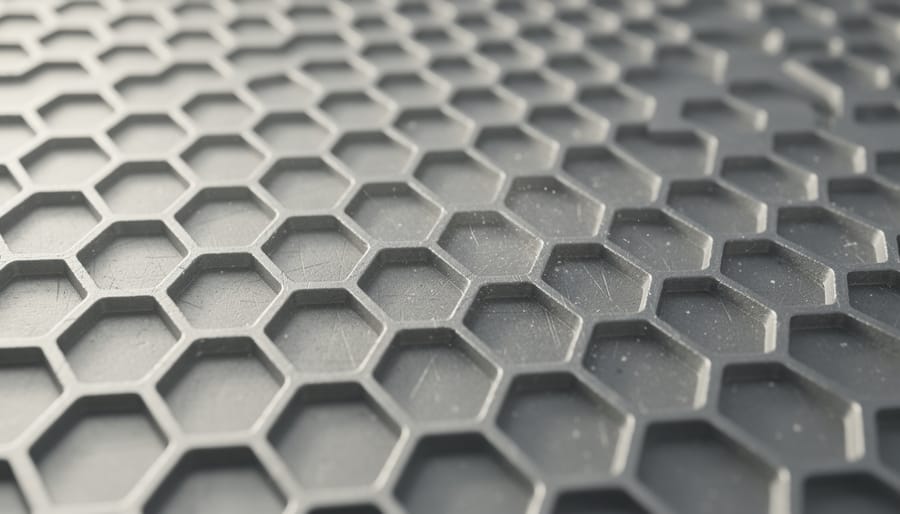
Honeycomb structures appear throughout nature because hexagonal cells deliver exceptional strength-to-weight ratios using minimal material. Battery designers have adopted this geometry for electrode scaffolds and separators, creating components that resist mechanical stress while remaining lightweight. This matters particularly for Australian applications like off-road electric vehicles and portable power systems where every kilogram counts, yet equipment must survive rough handling.
Fractal patterns, those repeating, branching structures found in trees, lungs, and river networks, maximize surface area within compact volumes. Researchers are etching fractal designs into battery electrodes, dramatically increasing the reactive surface available for energy transfer without enlarging the battery’s footprint. The result? Faster charging and higher capacity from the same physical space, crucial for grid-scale storage installations where land availability constrains expansion.
Perhaps most promising are self-healing materials inspired by human skin and plant tissues. Some experimental batteries now incorporate polymers that automatically repair micro-cracks and breaks, extending lifespan and preventing the performance degradation that typically shortens battery life in extreme temperature swings. Early trials show these materials maintaining structural integrity through thousands more charge cycles than conventional designs, a significant advantage for remote Australian installations where replacement costs include expensive logistics and downtime.
Real-World Applications in Australia and Beyond
Bio-inspired energy storage technologies are moving from laboratory concepts to real-world deployment across Australia, creating new opportunities for sustainable energy independence. These innovations are proving particularly valuable in sectors where conventional batteries face challenges, from extreme temperatures to resource availability, while opening pathways for local manufacturing and skilled employment.
Several Australian universities and research institutions are already piloting bio-inspired systems. The University of Queensland’s artificial leaf project demonstrates how plant-inspired technologies can generate and store clean hydrogen for remote applications, while Monash University researchers have developed graphene-based supercapacitors using structural principles from tree leaves, achieving charge times far faster than lithium-ion alternatives. These breakthroughs are attracting investment and positioning Australia as a leader in nature-inspired energy solutions.
The practical applications span diverse sectors where Australia has unique needs and advantages:
- Remote community microgrids using biomimetic batteries that withstand temperature extremes without cooling systems
- Agricultural energy independence through solar-storage units with plant-inspired charge management for irrigation and processing
- Sustainable transport infrastructure deploying biodegradable battery components for urban electric vehicle fleets
- Residential solar-battery systems incorporating honeycomb-structured cells for improved space efficiency and safety
- Utility-scale renewable firming with self-healing grid batteries that reduce maintenance costs across vast distances
Mining operations in Western Australia are trialing biopolymer-based storage systems that reduce reliance on imported lithium and cobalt, while creating opportunities for Australian cellulose processing industries. These systems use locally sourced materials and can be manufactured domestically, supporting regional job creation in materials science, chemical engineering, and advanced manufacturing.
Agricultural producers are particularly enthusiastic about bio-inspired solutions. A citrus farm in the Riverina region now runs irrigation pumps entirely on pomegranate-inspired silicon batteries paired with solar panels, eliminating diesel costs while demonstrating how nature-inspired technology suits farming contexts. The system’s expandable design allows gradual capacity increases as the farm grows.
Electric vehicle charging networks in Melbourne and Brisbane are beginning to incorporate fractal-patterned supercapacitors that enable ultra-rapid charging without the thermal management issues of conventional batteries. These installations not only support transport electrification but also demonstrate commercial viability, encouraging further private-sector investment in bio-inspired energy infrastructure across Australia’s major population centres.
Why Bio-Inspired Storage Matters for Sustainable Energy
Bio-inspired energy storage tackles some of the most pressing challenges in Australia’s renewable transition by fundamentally rethinking how we source and design storage systems. Traditional lithium-ion batteries depend heavily on cobalt, nickel, and lithium, minerals often extracted under questionable labour conditions and concentrated in geopolitically unstable regions. Nature-inspired technologies sidestep many of these dependencies. Biomimetic designs using abundant materials like sodium, cellulose from agricultural waste, or conductive polymers from sustainable sources reduce supply chain vulnerabilities while lowering the ethical burden of mineral extraction. For Australia, this shift means building energy resilience on materials we can source responsibly within our borders or through trusted trade partners.
Safety improvements make bio-inspired storage particularly valuable for widespread deployment. Conventional batteries carry risks of thermal runaway, toxic electrolyte leakage, and challenging disposal requirements. By contrast, systems using plant-derived separators, water-based electrolytes, or self-healing materials inspired by biological tissue dramatically reduce fire hazards and environmental contamination. These characteristics matter enormously for remote Australian communities, agricultural installations, and residential solar systems where professional maintenance isn’t always immediately available. The non-toxic nature of many bio-inspired components also simplifies end-of-life recycling, feeding into circular economy models that recover materials without harmful waste streams.
Performance in extreme conditions gives bio-inspired technologies a distinct edge in Australia’s harsh climate zones. Traditional batteries struggle with the temperature swings typical of outback regions, losing capacity in searing heat and charging inefficiently in cold desert nights. Nature-inspired designs often incorporate structural innovations borrowed from organisms that thrive in temperature extremes: porous architectures that dissipate heat like termite mounds, flexible materials that expand and contract without degrading, and molecular structures stable across wide thermal ranges. This durability extends operational lifespan and reduces replacement frequency, cutting both costs and environmental impact.
The manufacturing footprint of bio-inspired storage aligns with Australia’s climate commitments. Producing conventional batteries is energy-intensive, requiring high-temperature processing and extensive chemical refinement. Many biomimetic approaches use lower-energy fabrication methods, some operating at room temperature or using water-based processing instead of toxic solvents. When combined with complementary technologies like gravity storage for grid-scale applications, bio-inspired batteries fill niches where portable, distributed, and environmentally benign storage matters most. This technological diversity strengthens Australia’s overall energy resilience while minimizing the carbon cost of the transition itself.
Common Questions About Bio-Inspired Energy Storage
Aussies considering bio-inspired energy storage for their properties or businesses often wonder whether these nature-inspired technologies can compete with established options on practical grounds. The answers reveal an industry at a tipping point, where innovation is rapidly closing performance and cost gaps.
Are bio-inspired batteries cost-competitive with conventional options?
Currently, most bio-inspired technologies cost more upfront than established lithium-ion systems, though prices are dropping quickly as production scales up and manufacturing processes improve. Many biomimetic designs reduce long-term costs through longer lifespans, easier recycling, and lower raw material expenses.
Can I buy bio-inspired energy storage systems today?
Some technologies, particularly certain biopolymer batteries and nature-inspired structural improvements, are commercially available now through specialized suppliers, while others remain in late-stage trials or limited production. Expect broader market availability across multiple product categories by 2027-2028 as several Australian and international manufacturers scale up.
How do bio-inspired systems perform in Australia’s harsh climates?
Many bio-inspired designs actually excel in extreme conditions, with biomimetic thermal management systems handling outback heat better than conventional batteries, and flexible organic materials maintaining performance across wide temperature ranges. Field trials in northern Queensland and central Australia have demonstrated impressive resilience.
What’s the expected lifespan compared to standard batteries?
Several bio-inspired designs show promising durability, with self-healing materials potentially extending operational life beyond conventional systems. Early commercial products are targeting 15-20 year lifespans, comparable to premium lithium systems but with gentler performance degradation curves.
How can my business get involved in this transition?
Start by contacting Australian research institutions conducting bio-inspired storage trials to explore pilot program opportunities, speak with renewable energy installers about hybrid systems combining conventional and bio-inspired components, and monitor ARENA funding announcements for grants supporting innovative storage adoption.
For those weighing bio-inspired options against alternatives like solid-state batteries the decision often comes down to specific application requirements and values. A farm operation prioritizing sustainability and local materials might favour cellulose-based systems despite higher initial costs, while a commercial facility focused purely on performance metrics might wait another year or two for prices to align more closely with conventional storage.
The encouraging reality is that bio-inspired technologies aren’t asking you to sacrifice performance for environmental benefits. They’re increasingly delivering both, with Australian companies and research institutions leading several development streams. Even if you’re not ready to install bio-inspired storage today, staying informed about local trials and commercial releases puts you in position to act when the right system for your needs becomes available.
Bio-inspired energy storage technologies show us what becomes possible when we turn to nature as our engineering mentor. After billions of years perfecting energy transfer, storage, and efficiency, biological systems offer solutions that conventional battery design is only beginning to replicate. These approaches are not just environmentally friendlier alternatives. They represent fundamental shifts in how we think about storing power, using abundant materials, designing for circularity, and building systems that actually improve with time rather than degrade.
Australia stands at a crucial intersection. Our abundant renewable resources need sophisticated storage to reach their full potential, while our remote communities, agricultural operations, and mining sites demand reliable power in harsh conditions. Bio-inspired technologies address both challenges simultaneously, offering storage solutions that perform better in extreme heat, use locally available materials, and reduce dependence on volatile global supply chains.
Whether you manage a farm exploring off-grid solar, run a business planning fleet electrification, or make policy decisions affecting Australia’s energy transition, bio-inspired storage deserves your attention now. Supporting university research programs, participating in pilot projects, or simply specifying sustainable storage in procurement decisions creates market pull that accelerates commercialization.
The technologies are maturing faster than many realize. Early adopters are not taking experimental risks anymore. They are investing in systems with proven performance that align environmental responsibility with practical energy needs. By choosing solutions that work with natural principles rather than against them, we build an energy future that sustains both Australia’s economy and environment for generations ahead.