
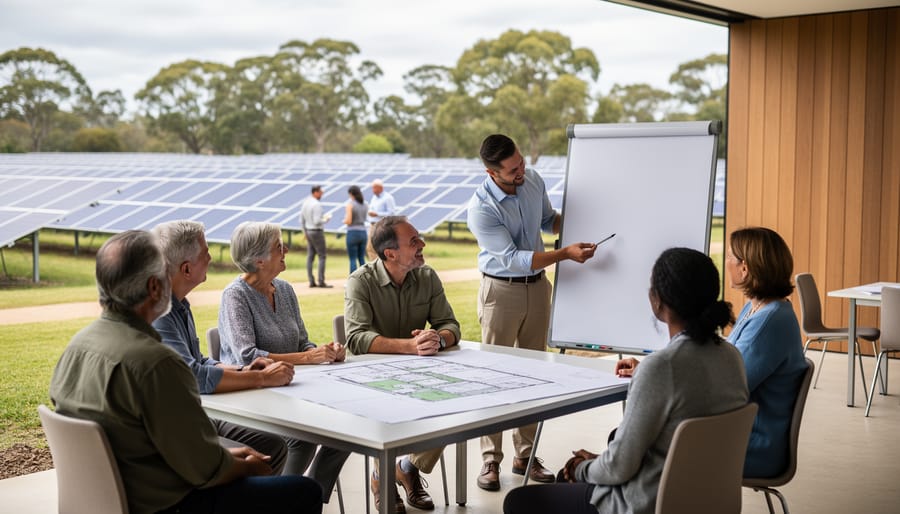
Local government community engagement for renewable energy projects succeeds when councils move beyond consultation to genuine partnership, bringing residents into decision-making from day one rather than presenting finished plans for rubber-stamping. The difference is transformative: councils that co-design community solar farms, bioenergy facilities, or district heating schemes with residents achieve 70-90% project approval rates, compared to barely 40% for traditional announce-and-defend approaches.
Across Australian communities in 2026, the most effective engagement strategies share three characteristics. First, they start early, inviting community voices before technical designs are locked in. Second, they make participation accessible through varied channels such as drop-in sessions at local cafes, online surveys, and one-on-one meetings with concerned landholders. Third, they close the feedback loop by showing residents exactly how their input shaped final decisions.
The payoff extends beyond smoother approvals. Communities actively involved in designing renewable energy projects become their fiercest advocates, volunteering to host infrastructure, recruiting neighbours, and defending projects against opposition. In regional Queensland, a council-led bioenergy initiative that began with farmer-led workshops now operates as a thriving cooperative, turning agricultural waste into electricity while returning dividends to participating properties.
For local government officers and community energy coordinators, the challenge lies not in whether to engage communities but in choosing methods that build trust, incorporate diverse voices, and deliver tangible outcomes. The following framework draws from proven Australian examples to show exactly how.
Why Community Engagement Is Critical for Energy Partnerships
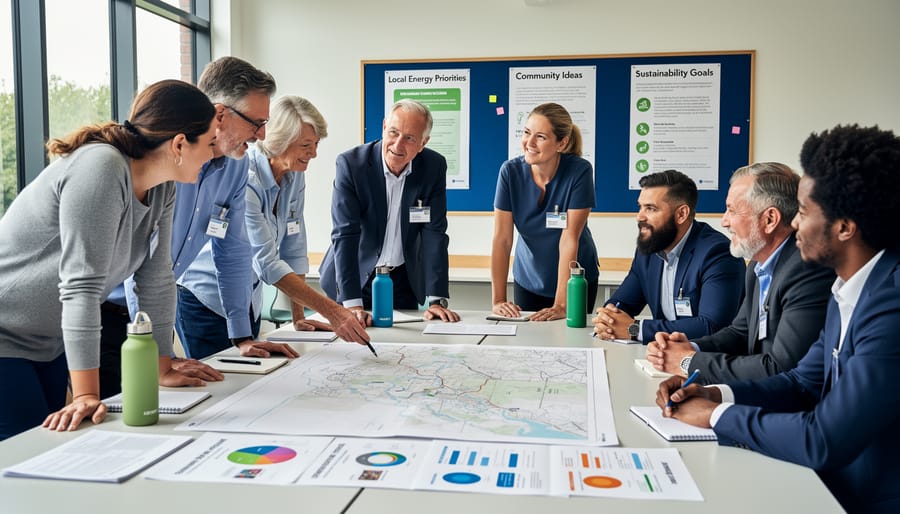
Local councils sit at a unique crossroads in Australia’s energy transition. Unlike distant state agencies or private developers, they’re embedded in the communities they serve, attending farmers’ markets, responding to rate payer concerns, maintaining local facilities. This proximity gives them credibility that no other player in the renewable energy landscape can match. When a council champions a bioenergy project or partners on solar installations, residents listen differently than when a corporation makes the same pitch.
That trust translates into something energy projects desperately need: social license. Communities grant permission not just through formal approvals but through active support, or they withhold it through objections, delays, and organized resistance. Councils that engage genuinely from the outset build understanding about why agricultural waste becomes fuel rather than landfill burden, how local jobs will emerge, and what safety measures protect neighborhoods. This groundwork means fewer contentious hearings and faster movement from concept to operation.
Beyond approvals, effective engagement makes projects smarter. Communities hold knowledge councils and consultants lack, which farms have consistent organic waste streams, where grid connections struggle during peak demand, which public land could host solar without upsetting recreation patterns. When councils structure community energy programs that genuinely listen, they tap into this local intelligence, avoiding costly mistakes and designing solutions that actually fit how people live and work.
Perhaps most importantly, real engagement unlocks resources councils couldn’t access alone. Communities contribute volunteer hours for feasibility studies, organize fundraising through local bonds, and provide ongoing labor for community-owned installations. A bioenergy facility designed with farmers becomes their project too, with agricultural suppliers motivated to deliver feedstock reliably and residents defending the investment when challenges arise. This shared ownership transforms energy infrastructure from something done to communities into something built with them, the difference between grudging acceptance and enthusiastic partnership.
Models of Engagement: From Consultation to Co-Ownership
Community engagement isn’t one-size-fits-all. The approach councils choose determines whether residents become genuine partners or passive recipients of decisions already made. Understanding the spectrum helps councils select the right model for their context and ambitions.
At one end sits the inform model, councils sharing information about planned bioenergy projects through newsletters, websites, or public notices. This creates awareness but offers no voice in project design. Residents learn what’s happening, not why it should happen or how it might work better.
Consultation moves up a level. Councils gather feedback through surveys, public meetings, or submissions on draft plans. This captures community views but doesn’t guarantee they’ll shape final decisions. Too often, consultation becomes a checkbox exercise where residents see their concerns documented but not addressed.
The involve model brings communities into problem-solving. Councils run workshops where residents help identify suitable biomass feedstock sources, debate collection logistics, or suggest locations for processing facilities. Feedback directly influences project design, though councils retain final decision-making authority.
Collaboration represents genuine partnership. Councils and communities share decision-making power through steering committees, working groups, or joint venture structures. For bioenergy projects, this might mean farmers, waste processors, and council representatives co-designing systems that work for everyone. Both parties commit to solutions they build together.
| Model | Typical Activities | Community Role |
|---|---|---|
| Inform | Newsletters, fact sheets, websites | Receive information |
| Consult | Surveys, public meetings, submissions | Provide feedback |
| Involve | Workshops, focus groups, deliberative forums | Influence design |
| Collaborate | Steering committees, joint ventures | Share decisions |
| Empower | Community-led cooperatives, trusts | Lead and own |
At the far end sits empowerment through energy co-ops or community-owned enterprises. Here, residents don’t just participate, they control the project. Councils provide enabling support (planning approvals, land access, technical advice) while communities handle governance, financing, and operations. This community ownership model builds the strongest engagement because residents benefit directly from success and bear responsibility for outcomes.
The key difference between token engagement and meaningful partnership lies in power distribution. Token approaches keep decision-making centralized while creating an appearance of consultation. Meaningful partnerships redistribute power, recognizing that communities possess irreplaceable local knowledge about agricultural waste streams, collection logistics, and what solutions will actually work in their context. For bioenergy projects requiring ongoing community cooperation, farmers providing crop residues, residents separating organic waste, this genuine partnership approach isn’t just ethical. It’s practical.
Practical Strategies for Effective Engagement
Early and Ongoing Dialogue
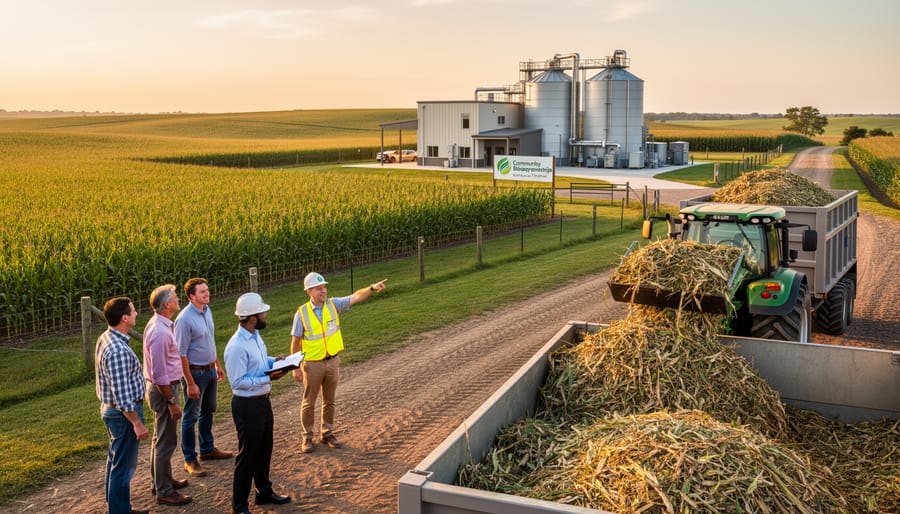
The most valuable conversations about community energy happen before councils draw up project plans, not after. Starting early dialogue means reaching out when ideas are still flexible, asking residents what energy challenges they face, what local waste streams they’ve noticed going unused, and what concerns they have about new technologies before presenting them with a finished proposal.
Face-to-face formats work best for building genuine understanding. Town hall forums let councils introduce broad concepts like bioenergy while hearing immediate reactions. Smaller workshops create space for deeper discussion about specific concerns, how biomass plants might smell, whether local farm waste could be collected efficiently, what happens to energy revenue. Door-knocking in affected neighborhoods shows councils are serious about listening, not just ticking boxes.
Agricultural communities hold crucial knowledge about seasonal waste availability, transport logistics, and which crops leave useful residues. A dairy farmer knows exactly when manure volumes peak. Grain growers understand stubble management challenges. This isn’t information councils can find in reports, it emerges through conversation.
Ongoing dialogue matters as much as early contact. Regular updates through community newsletters, drop-in sessions at local markets, and annual review meetings keep partnerships alive. Projects evolve, circumstances change, and communities need confidence that councils will stay engaged beyond the ribbon-cutting ceremony. When Dubbo Regional Council developed its organics processing facility, they maintained quarterly community forums throughout construction and into operations, adjusting processes based on resident feedback about collection schedules and odor management.
Building Diverse Participation
Getting everyone to the table for energy partnerships means going well beyond standard public meeting nights. Councils often hear from the same engaged residents again and again, while farmers managing waste streams, Indigenous communities with land knowledge, renters paying energy bills, and small businesses juggling tight margins stay silent, not because they don’t care, but because traditional engagement doesn’t reach them.
Timing matters more than councils realise. A 6pm Tuesday meeting excludes shift workers, parents doing school pickup, and small business owners still serving customers. Successful councils run sessions at varying times, breakfast briefings for business owners, weekend workshops for families, on-farm visits that respect agricultural schedules. Some Victorian councils now hold “walk and talk” sessions at local markets where people already gather, turning engagement into conversation rather than formal presentation.
Language barriers lock out entire communities. Providing translated materials in the languages your area actually speaks, Vietnamese, Mandarin, Arabic, isn’t token multiculturalism; it’s basic respect that unlocks local knowledge about community needs and energy use patterns. Partnering with existing cultural associations, business chambers, and Landcare groups means working through trusted voices rather than expecting communities to come to you.
Indigenous engagement deserves dedicated effort, not a single invited representative. Protocols matter: seek permission properly, allow time for consultation processes, and recognise that Traditional Owners often hold crucial knowledge about seasonal agricultural waste availability and land use that makes bioenergy projects viable. Several Queensland councils now employ Indigenous liaison officers specifically for renewable energy partnerships, ensuring ongoing dialogue rather than one-off consultation.
Transparent Information Sharing
People support what they understand. When councils treat energy projects as mysterious technical exercises, they create information vacuums that fill with rumor and suspicion. Transparent information sharing means making complex bioenergy concepts accessible without dumbing them down.
Start by explaining the ‘why’ before the ‘how’. If you’re considering an anaerobic digestion facility for food waste, show residents the tonnage of organic material currently trucked to landfill, the methane it generates there, and how capturing that energy locally benefits them. Use visuals, simple diagrams showing how farm waste becomes electricity often work better than dense technical reports.
Cost transparency builds credibility. Share realistic capital costs, projected energy yields, and payback periods openly. If a bioenergy project looks expensive initially but delivers decades of local energy security, explain that trade-off honestly rather than overselling immediate savings.
Address safety and emissions concerns head-on. Many Australians hear ‘biomass’ and worry about air quality. Explain modern emission controls, monitoring systems, and how sustainable sourcing guidelines prevent forest clearing. Regular progress updates, even when there’s little to report, demonstrate you’re not hiding setbacks.
Create multiple information channels: detailed project websites for those who want depth, one-page summaries for busy residents, and face-to-face drop-in sessions where people can ask the ‘silly’ questions they won’t voice at formal meetings. Consistent, jargon-free communication transforms skeptics into informed participants.
Creating Pathways for Community Investment
When communities can invest financially in bioenergy projects, engagement transforms from consultation into partnership. Australian councils have several proven mechanisms to enable this. Community bonds allow residents to lend money to a project at modest interest rates, typically 4-6%, creating local ownership while funding infrastructure like biomass processing facilities. Cooperative ownership models go further, giving members voting rights and a share of ongoing energy sales revenue. Even small buy-ins (some coops start at $500) make projects accessible to renters and lower-income households.
Local benefit schemes offer another pathway: councils can structure projects so a portion of revenue funds community initiatives like sports facilities or energy rebates for participants. This connects abstract renewable energy goals to tangible neighbourhood improvements. The key is designing these mechanisms early, with clear financial information and realistic return expectations, so residents understand both the opportunities and risks of backing bioenergy with their own savings.
Success Stories from Australian Councils
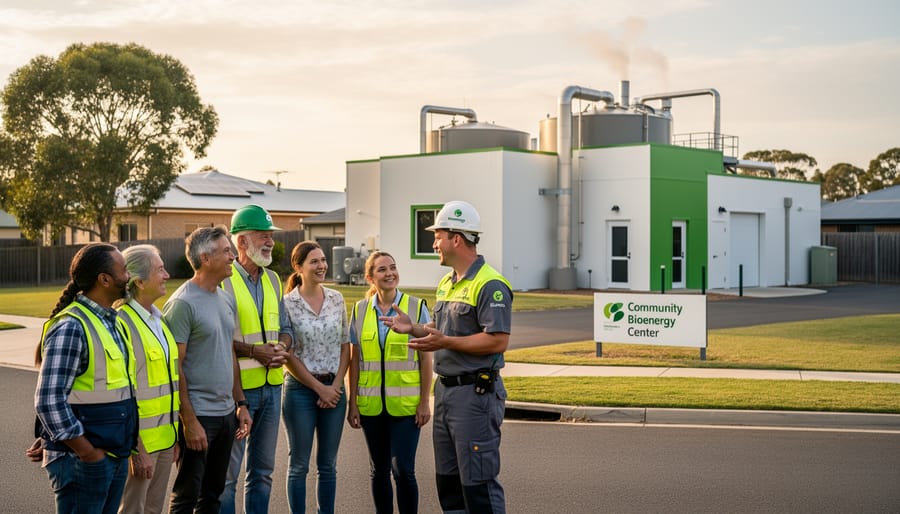
Across Australia, forward-thinking councils are proving that genuine community partnerships can transform renewable energy from plan to reality. Their experiences offer practical blueprints for others ready to move beyond consultation toward collaboration.
In regional New South Wales, Coffs Harbour City Council partnered with local farmers and waste processors to develop a bioenergy feasibility study that became a model for agricultural waste-to-energy systems. Rather than presenting a pre-designed solution, the council hosted farm visits and workshops where producers shared firsthand knowledge about seasonal waste volumes, collection logistics, and concerns about impact on soil health. This bottom-up approach identified viable feedstocks, macadamia shells, bagasse from sugar mills, and green waste, that aligned with both environmental goals and farmer economics. The project created 12 local jobs in waste collection and processing while diverting 8,000 tonnes of organic material from landfill annually. The key to success was treating farmers as technical experts, not just stakeholders to convince.
In metropolitan Melbourne, Darebin City Council took a different but equally effective path by establishing Australia’s first community-owned solar bulk-buy program in partnership with residents. Council staff ran evening information sessions in community centres, libraries, and even local pubs, making solar accessible to renters through virtual power purchase agreements and offering low-interest loans to lower-income households. By prioritizing energy education delivered in plain language and creating multiple entry points for participation, the program installed over 1,400 rooftop systems, reduced council emissions by 18 percent, and built a community network that later supported a biogas trial using food waste from local restaurants.
These partnerships share common threads that other councils can replicate:
- Starting engagement before designs are finalized, when community input can genuinely shape outcomes
- Meeting people where they are, literally and figuratively, through accessible venues and plain language
- Creating tangible economic benefits that flow directly to participants, not just abstract environmental gains
- Partnering with trusted local organizations rather than running everything in-house
- Sharing decision-making power and being willing to adapt plans based on what communities know
The lesson from both councils is simple: when you treat communities as partners with valuable knowledge and give them real influence over project design, engagement stops being a hurdle and becomes the engine that makes ambitious energy projects work.
Common Challenges and How to Navigate Them
Local councils embarking on community energy partnerships face real hurdles, but none are insurmountable with honest approach and practical adjustments.
Resource constraints top the list. Most councils juggle dozens of priorities with tight budgets and overstretched staff. The solution isn’t abandoning engagement, it’s working smarter. Partner with existing community groups who already have trust and networks rather than building everything from scratch. Regional councils can pool resources with neighbours to share expertise on bioenergy feasibility and engagement costs. Start with pilot conversations in one ward before scaling up. Even hiring a single part-time community liaison dedicated to energy projects can shift outcomes dramatically compared to adding it to someone’s already-full plate.
Community skepticism often stems from previous experiences where consultation felt performative or from genuine concerns about unfamiliar technology. Address this by acknowledging past disappointments upfront, then demonstrating different intent through actions. For bioenergy specifically, tackle common worries head-on: invite residents to visit existing facilities, share independently verified emissions data, and explain feedstock sourcing transparently. When people see their questions genuinely shape project design rather than disappear into reports, skepticism softens.
Technical complexity can paralyze both council staff and community members. Avoid drowning people in engineering specifications. Instead, translate concepts into everyday terms, how bioenergy fits local waste streams, what it means for power bills, how it compares to other options. Bring in independent experts who can explain without sales pitch. The goal is informed participation, not turning everyone into engineers.
Competing political priorities and short council terms create pressure for quick wins. Yet rushing past genuine engagement to meet deadlines usually backfires through delays, opposition, or projects that miss what communities actually need. Frame engagement as risk reduction that protects your timeline, not something slowing you down. Demonstrable local energy impact builds the political support that sustains projects across election cycles.
Remember: communities rarely expect perfection. They value honest effort, responsiveness to feedback, and councils who treat them as partners rather than obstacles. A modest project with genuine community ownership delivers more than an impressive plan that never gets built.
Frequently Asked Questions
How should a council start a community energy partnership if there’s been no previous engagement?
Begin with listening, not pitching. Host informal community conversations to understand local energy concerns and priorities before designing any project. Partner with existing trusted community groups, sporting clubs, farmers’ networks, neighbourhood houses, who can help connect you with residents councils might not typically reach.
Who needs to be at the table for effective energy partnerships?
Beyond council officers and consultants, include residents who’ll be affected, local businesses that might supply feedstock or services, Traditional Owners with cultural knowledge of the land, farmers who understand agricultural waste streams, and community organizations representing diverse voices. Genuine partnerships require people who bring different expertise and perspectives, not just those who agree with the council’s preferred approach.
What timeframe should councils expect for building meaningful partnerships?
Building trust takes time. Expect at least six to twelve months of genuine engagement before community members feel confident enough to co-design solutions or invest financially. Rushing this foundation to meet funding deadlines typically backfires, creating skepticism that’s harder to overcome than starting slowly and authentically.
Where can councils find funding to support community engagement processes?
Look beyond energy-specific grants. State government community strengthening programs, regional development funds, and federal clean energy finance schemes often include partnership-building components. Some councils reallocate existing community development budgets, recognizing that energy projects strengthen communities broadly, not just through technical infrastructure.
How do we measure whether our engagement is actually working?
Track participation breadth, not just attendance numbers. Are you hearing from renters as well as homeowners, young families alongside retirees? Monitor whether community input genuinely shapes project decisions or just validates pre-determined plans. The best measure is whether residents describe the project as “ours” rather than “the council’s”.
What if community feedback conflicts with technical advice or budget constraints?
Honest transparency builds more trust than false promises. Explain the trade-offs clearly, share the technical and financial realities, and explore creative compromises together. Communities understand constraints exist, but they lose faith when councils pretend to seek input on decisions already locked in.
These questions reflect the real concerns councils grapple with when moving from traditional top-down planning toward genuine partnership. The answers matter less than the ongoing conversation, because each community and project brings unique circumstances that no FAQ can fully anticipate. What works in a coastal town with fishing industry waste streams might not translate to an agricultural region with different seasonal rhythms and existing relationships. Use these questions as starting points for deeper local dialogue, adapting the approaches to fit your community’s particular strengths, challenges, and aspirations for a cleaner energy future.
Strong community engagement isn’t a bureaucratic requirement to be ticked off before moving forward. It’s the bedrock on which successful local energy partnerships are built. When councils treat residents, farmers, and community groups as genuine partners rather than stakeholders to be managed, they unlock not just social license but creativity, local knowledge, and collective commitment that makes bioenergy and renewable projects thrive.
You don’t need a perfect strategy to begin. Start with honest conversations. Ask what energy challenges your community faces. Listen when someone shares knowledge about seasonal waste streams or local concerns. Build trust through transparency, even when the answers aren’t simple. Small steps taken consistently matter more than grand plans that stall.
Across Australia, communities are ready to be part of the renewable energy transition. They want cleaner local energy, economic opportunities that stay in the region, and a say in their energy future. Councils that embrace this partnership approach won’t just deliver better projects. They’ll help create a more democratic, resilient energy system where communities have real power over the resources that matter most to them.
The future of community energy in Australia depends on relationships built today. Start building yours.