
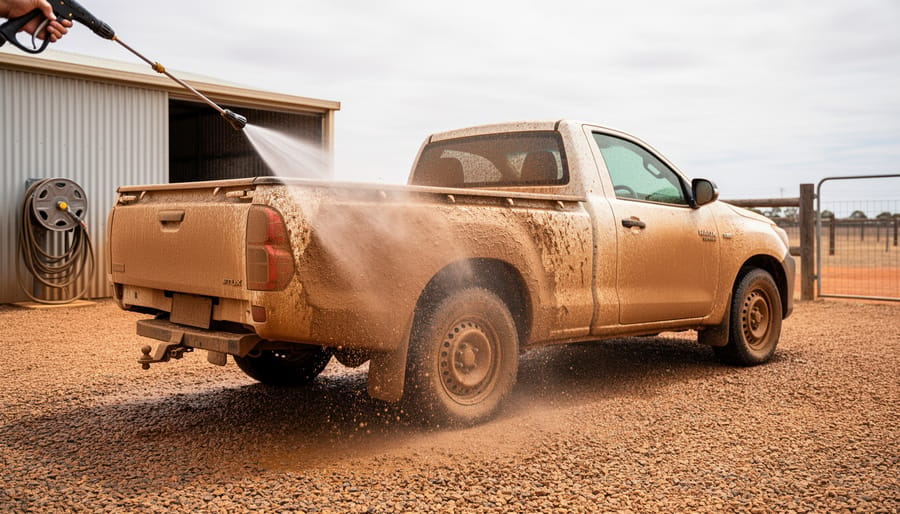
Finding the right pressure washer for your farm ute comes down to three essentials: enough power to shift heavy-duty mud and grime (1800-3000 psi for most rural applications), portability that works without mains power in paddocks, and gentleness that won’t strip paint or force water into vehicle seals. Australian farms need gear that handles the reality of sticky clay, livestock residue, and dusty outback conditions, while many rural properties are embracing renewable energy on farms to power their operations sustainably.
The choice between petrol and electric units shapes everything else. Petrol models deliver the freedom to wash anywhere across your property without wrestling extension cords, making them ideal for larger spreads where utes park far from sheds. Electric washers cost less upfront and run quieter, perfect for smaller holdings with reliable power access and compatibility with solar setups.
Testing through 2026 has revealed clear winners for different farm scenarios. The Craftsman CMEPW2100 Electric Pressure Washer, priced at $235, strikes an excellent balance for shed-based cleaning, delivering enough muscle for most jobs while staying mild enough to protect your vehicle’s finish. It’s easy to maneuver and stows accessories neatly, solving the common frustration of tangled hoses and misplaced nozzles that plague busy farm yards.
Farm vehicles cop punishment that suburban cars never see. Your pressure washer needs to cut through what working vehicles collect, from feed dust to fertilizer spray-back, without the mistakes that damage paintwork or create rust entry points. The right unit, matched to your power situation and workload, turns a grimy ute back into presentable transport in minutes, much like choosing the right pressure washer for car care in any setting.
Why Farm Vehicles Need the Right Pressure Washer
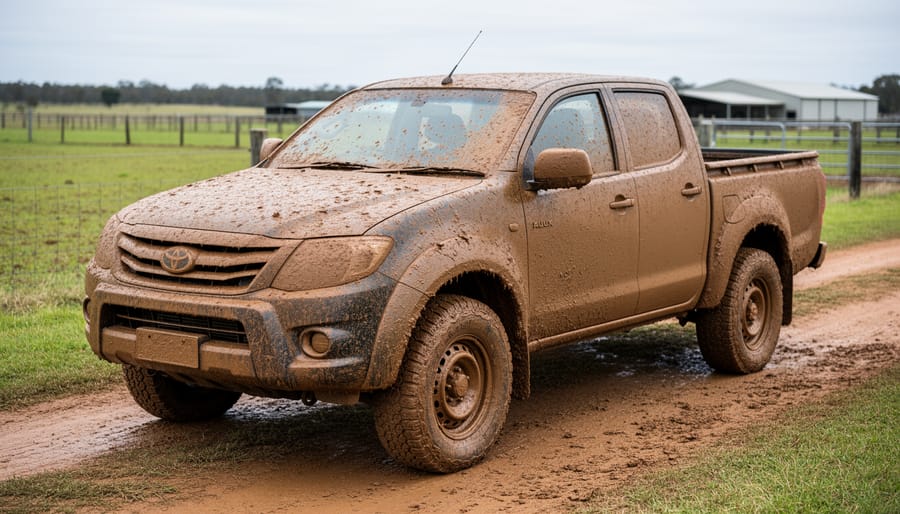
Farm utes face cleaning challenges unlike any suburban driveway vehicle. Dried mud cakes onto wheel arches and undercarriages after working paddocks in wet conditions. Livestock waste, from transporting cattle or sheep, leaves stubborn organic residue that harbours bacteria and accelerates corrosion if not properly removed. Chemical spray residue from herbicide or pesticide application creates another layer of contamination that demands thorough cleaning, both for safety and to prevent chemical damage to paintwork and seals.
A properly selected pressure washer addresses these rural-specific demands while protecting your vehicle investment. Farm utes typically cost $40,000 to $70,000 new, and maintaining their condition preserves resale value and extends service life. Models with excessive pressure (above 2000 PSI) can strip paint, damage rubber seals, and force water into electrical connections, creating expensive repair bills. Too little power, and you’ll spend hours scrubbing manually what the machine should handle.
Vehicle presentation matters beyond aesthetics. Clean equipment reflects professional farm management, important when dealing with contractors, buyers, or local council inspectors. Removing chemical residues promptly prevents cross-contamination between different farm tasks and protects anyone who handles the vehicle.
From a sustainability perspective, the right pressure washer reduces water waste compared to prolonged hosing while breaking down contaminants more effectively. This efficiency aligns with modern farming’s shift toward resource conservation. Equipment that lasts, because it’s properly maintained, means fewer vehicles manufactured, transported, and disposed of over your farming career. Choosing a pressure washer that cleans thoroughly without causing damage is fundamental equipment stewardship, keeping your ute working reliably for years rather than requiring premature replacement due to neglected maintenance or cleaning-related damage.
Electric vs. Petrol Pressure Washers: Which Suits Rural Life?
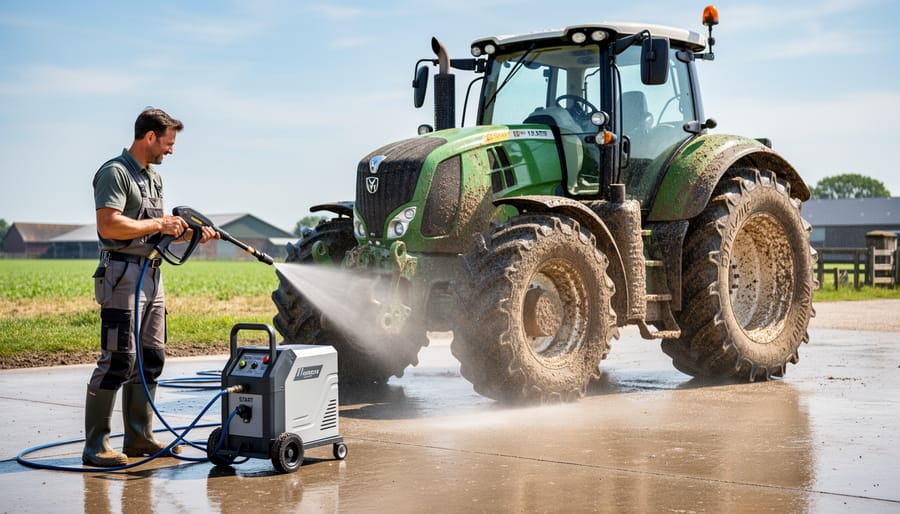
When you’re weighing up pressure washers for your farm ute, the electric versus petrol decision often comes down to where you’ll use it and what infrastructure you’ve got available. Both types can handle farm dirt, but they take very different approaches to the job.
Electric pressure washers plug into standard 240V power points, making them dead simple to operate. You flip a switch, pull the trigger, and you’re washing. They run quieter than petrol models, a real advantage if you’re cleaning near sheds or yards where noise matters. For farm utes parked near the house or workshop with reliable power access, electric models work brilliantly. They’re lighter, easier to store, and require minimal maintenance beyond the occasional filter clean. The Craftsman CMEPW2100, tested by Car and Driver in March 2026 and priced at $235, exemplifies what a good electric unit brings to farm life: powerful enough for most jobs, mild enough not to damage your vehicle, and easy to move around and store accessories.
The trade-off? Electric models typically max out around 1800-2000 PSI, which sits in the sweet spot for vehicle washing but might leave you wanting more grunt for heavy-duty yard cleaning. More critically, you need electricity. If your farm vehicles spend most of their time in paddocks or you’re cleaning equipment away from buildings, dragging extension leads across the property gets old fast.
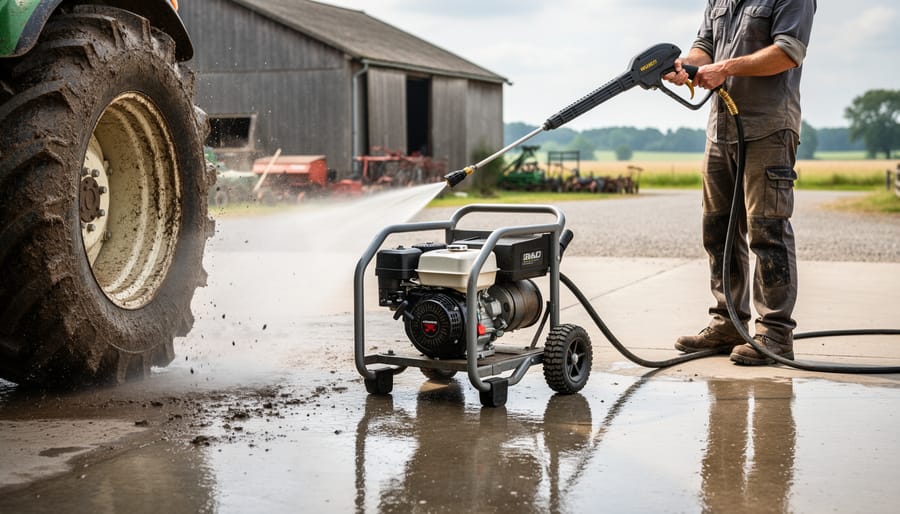
Petrol high-pressure cleaners flip the script entirely. They deliver higher pressure, often 2500-3500 PSI, and superior portability since they run independently of power points. For properties with sheds scattered across acreage, or if you regularly wash vehicles in the field, petrol units give you freedom. They’re the obvious choice for larger operations where one washer needs to tackle both delicate ute paintwork and heavy equipment caked in dried mud.
But petrol models demand more from you. They’re heavier, louder, and require fuel, oil changes, and seasonal maintenance. Starting a cold petrol engine on a winter morning is less pleasant than flicking a switch. They cost more upfront and ongoing. Environmental impact matters too, if you’re running solar power or trying to reduce farm emissions, an electric model charged from renewable energy makes better sense than burning petrol for routine cleaning.
| Feature | Electric | Petrol |
|---|---|---|
| Typical PSI Range | 1300-2000 | 2500-3500 |
| Portability | Requires power point access | Fully mobile, no electricity needed |
| Best Farm Use | Regular ute washing near buildings, properties with good power coverage | Remote paddock equipment, large operations, heavy-duty cleaning |
| Environmental Impact | Lower emissions, especially with solar power | Petrol consumption, exhaust emissions |
The right choice hinges on your farm’s layout and cleaning patterns. If your vehicles come back to a central wash bay with power access and you’re primarily maintaining presentable utes rather than stripping years of grime, electric delivers convenience without compromise. Properties spread across large acreage or those cleaning heavy machinery alongside vehicles will justify petrol’s extra power and independence. Some larger farms run both, electric for routine vehicle care, petrol for the jobs that need serious muscle or happen far from infrastructure.
Key Features to Consider When Choosing
Pressure Rating: Finding the Sweet Spot
PSI (pounds per square inch) measures the force water exits the nozzle, but higher isn’t always better for farm vehicles. Most automotive paint can withstand around 1200-1500 PSI safely, while clearcoats and decals start showing damage above 1800 PSI. For farm utes caked in mud and manure, you need enough punch to shift stubborn grime without stripping paint or forcing water past door seals.
Experts recommend staying under 1800-2000 PSI for vehicle washing. This range handles dried clay, livestock waste, and chemical spray residue without the risk of paint chipping or creating swirl marks in the clearcoat. Recent testing in March 2026 confirmed that lighter-duty pressure washers under 1800 PSI work well for cars, RVs, and boats, proving adequate for most farm cleaning tasks while protecting your ute’s finish.
Here’s the catch: the pressure at the lance tip matters more than the pump’s maximum rating. Stand too close with a 2000 PSI machine and you’re effectively hitting the surface with much higher force. Keep the nozzle 30-45 centimetres from painted surfaces and use a wider spray pattern (25 or 40 degrees) rather than a focused jet.
For delicate areas like windows, mirrors, and rubber seals, drop your pressure further by increasing distance or switching nozzles. The wheel arches and chassis can handle the higher end of your washer’s range, while the bonnet and doors need a gentler touch. Finding this sweet spot means one machine handles both heavy farm dirt and vulnerable surfaces without causing damage.
Water Flow and Cleaning Efficiency
While most farm ute owners focus on PSI ratings, water flow rate often matters more for efficient cleaning. Flow rate, measured in litres per minute (L/min), determines how quickly you can rinse away mud, livestock waste, and chemical residue from vehicle surfaces.
For farm vehicle cleaning, look for models delivering 7-9 L/min. This range provides enough volume to flush dirt effectively without excessive water consumption. Lower flow rates mean you’ll spend more time on each panel, whilst higher rates can waste water and create messy runoff around your wash area.
The relationship between pressure and flow creates what matters most: cleaning power. A pressure washer running 1800 PSI with 8 L/min will clean faster and more thoroughly than one delivering 2500 PSI with only 5 L/min. The higher flow volume carries loosened dirt away from the surface, preventing it from settling back onto clean areas.
Think of pressure as the force that breaks dirt free and flow as the volume that carries it away. Farm utes accumulate stubborn mud and organic matter that needs both actions working together. A balanced specification cleans your vehicles properly without requiring multiple passes or aggressive scrubbing that risks paint damage.
Hose Length and Maneuverability
A 10-metre hose hits the sweet spot for farm vehicle cleaning. You’ll reach around most utes and light trucks without dragging excess hose through mud or wrestling with tangles. Longer 15-metre hoses sound appealing, but they create frustrating kinks, take longer to roll up after a day’s work, and become heavy when full of water, exactly what you don’t need when you’re already tired from farm tasks.
Consider how you’ll store the hose between uses. Rubber hoses last longer than plastic in harsh sunlight, and models with built-in hose reels save time and prevent the mess of coiled hose sitting in your ute tray collecting dust. Look for pressure washers that let you clip or hang spray lances, nozzles, and brushes directly on the unit rather than storing them separately in your shed. When you’re cleaning vehicles after moving livestock or spreading fertilizer, you want everything at hand without hunting through toolboxes.
In remote farm settings where the nearest repair shop might be an hour away, simple organization prevents lost accessories and keeps your pressure washer ready whenever you need it. Choose models designed for outdoor storage if you lack covered space.
Portability and Durability for Farm Conditions
A pressure washer that performs well in a showroom won’t necessarily survive Australian farm conditions. Durability matters more than features when you’re working in dusty paddocks far from repair shops.
Build quality shows in the frame and housing materials. Metal frames outlast plastic, especially when equipment sits outdoors between uses or gets knocked about during transport. Check pump construction too, brass or stainless steel components handle farm chemicals and hard bore water better than cheaper alternatives that corrode within a season.
Weight creates a trade-off. Lighter machines (under 15kg) move easily around the ute but may tip over on uneven ground. Heavier units stay stable yet become awkward to lift into ute trays daily. Models around 20kg with sturdy wheels strike a practical balance for most farm applications.
Wheel design directly affects maneuverability on gravel driveways and rough terrain. Look for larger diameter wheels (200mm+) with good tread rather than small plastic castors that sink into soft ground or catch on rocks. Pneumatic wheels handle paddock surfaces best, though solid rubber requires no maintenance.
Sealed motors and waterproof electrics aren’t luxuries in rural settings, they’re necessities. Dust penetrates everything on farms, and equipment that can’t handle it won’t last. Similarly, accessible parts and straightforward maintenance procedures matter when the nearest service centre is two hours away.
Recommended Pressure Washers for Farm Vehicles in 2026
Based on recent testing updated in March 2026, the Craftsman CMEPW2100 Electric Pressure Washer stands out as the best overall choice for farm ute cleaning. Tested alongside seven other pressure washers for cars, RVs, and boats, this model delivers power sufficient for most jobs while remaining mild enough not to damage your vehicle. At $235 from Amazon, it hits the sweet spot for rural users who need reliable performance without breaking the bank. The unit moves around easily and includes smart accessory storage, addressing the portability concerns common on farms where you’re working across sheds, yards, and vehicle bays.
What makes this Craftsman model particularly suited to farm life is its balanced approach. It handles the heavy mud and livestock residue you’ll encounter on a working ute without risking the paint damage that higher-pressure commercial units can cause. The quiet operation matters when you’re working near livestock or residential areas, and the straightforward design means fewer components that could fail when you’re miles from the nearest repair shop.
While the Craftsman CMEPW2100 tops the current recommendations, several other brands have proven track records in rural Australian conditions worth considering:
- Kärcher models offer German engineering with widely available parts and service networks, particularly valuable for remote properties
- Kränzle units provide professional-grade durability for larger operations cleaning multiple vehicles daily
- Ryobi pressure washers integrate with existing Ryobi battery systems if you’re already invested in that tool ecosystem
- Greenworks electric models suit solar-equipped farms prioritizing renewable energy compatibility
The right choice depends on your specific setup. If you’ve got reliable electricity access near your vehicle cleaning area and want something that works straight out of the box, the Craftsman delivers proven performance. Farms with existing tool batteries might find more value in a compatible system like Ryobi, while operations cleaning commercial fleets daily may justify investing in the superior longevity of Kränzle’s professional range. Match the pressure washer to your actual workload rather than buying more power than you’ll use.
Common Mistakes to Avoid
Even experienced farmers make avoidable mistakes when selecting or using pressure washers for their utes. Learning from these common errors saves you money, protects your vehicle, and ensures you get a machine that actually handles farm conditions.
The most damaging mistake is choosing a pressure washer with excessive PSI ratings. Many buyers assume higher pressure means better cleaning, but models above 2000 PSI can strip paint, damage decals, and force water into door seals and electrical components. Farm utes endure enough wear without adding self-inflicted damage from overpowered equipment. Testing from Car and Driver recommends staying under 1800 PSI for vehicle washing, a guideline that protects your investment while still handling typical farm dirt.
The opposite problem catches people too: buying a model with inadequate water flow. A pressure washer might boast impressive PSI numbers, but if it only delivers 5 litres per minute, you’ll spend ages rinsing dried mud and livestock waste. Flow rate matters as much as pressure for farm cleaning efficiency. Look for models in the 7-9L/min range that balance speed with vehicle safety.
Portability gets overlooked until you’re wrestling a heavy, wheel-less unit across uneven ground to reach your parked ute. Farm properties aren’t paved showrooms. Choose a model with decent wheels and manageable weight, and think twice before opting for excessively long hoses (beyond 10 metres) that tangle and create storage headaches in dusty farm sheds.
Reliability concerns deserve attention that flashy marketing obscures. Amazon reviews reveal patterns: some budget models fail within months when used regularly in demanding farm conditions. A pressure washer that quits after a season costs more in the long run than a durable unit with proven longevity. Research actual user experiences, particularly from rural buyers facing similar conditions.
Finally, many farmers ignore their property’s power infrastructure when choosing between electric and petrol models. An electric pressure washer offers convenience and lower emissions, but it’s useless if your ute parking area sits 100 metres from the nearest outlet without suitable extension capacity. Match your equipment choice to your farm’s practical realities, not idealized scenarios.
Sustainable Pressure Washing on the Farm
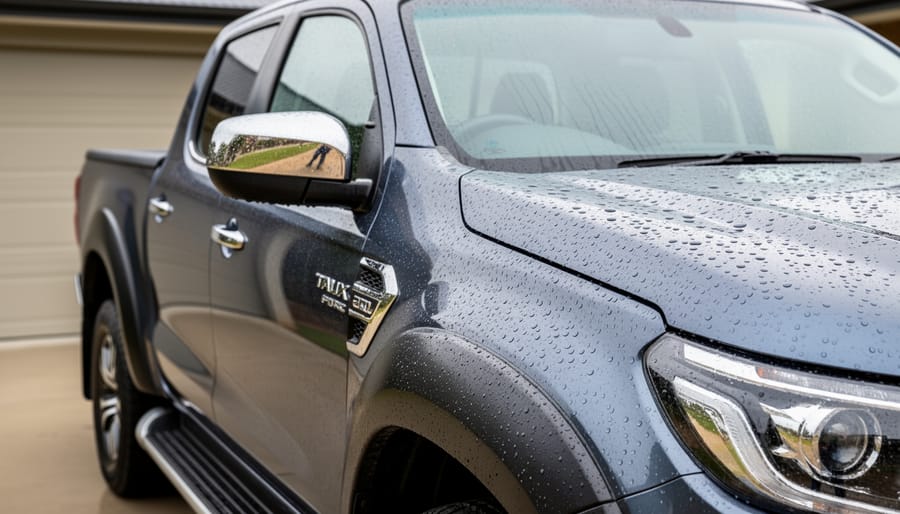
Choosing the right pressure washer means looking beyond cleaning power to consider your farm’s environmental footprint. Water conservation matters tremendously in rural Australia, where drought cycles demand smart resource management. Modern pressure washers use significantly less water than garden hoses, typically consuming 7-9 litres per minute compared to a standard hose’s 15-20 litres, meaning you can thoroughly clean a ute while using half the water of traditional washing methods.
The cleaning products you choose matter just as much as the equipment itself. Biodegradable, phosphate-free detergents break down naturally without harming soil or vegetation, particularly important when washing near paddocks or gardens. These products handle livestock waste and chemical residues effectively without leaving toxic runoff that can protect waterways and groundwater supplies.
Runoff management deserves careful attention on working farms. Direct wastewater onto gravel areas or designated drainage zones rather than straight into stormwater systems. Where possible, wash vehicles on grassed areas that can filter contaminants naturally, or install simple gravel filtration beds that catch sediment and allow cleaner water to percolate through.
For solar-equipped farms, electric pressure washers become part of your renewable energy ecosystem. Solar powered cleaning eliminates the carbon emissions and fuel costs associated with petrol models, turning vehicle maintenance into a genuinely clean operation. When you treat pressure washers as precision farm tools rather than just cleaning equipment, they fit naturally into broader sustainability practices, from water efficiency to renewable energy integration.
Main Options Compared
For farm ute cleaning, your choice boils down to three main options, each suited to different rural circumstances.
Electric pressure washers (1300-1800 PSI) offer convenience and vehicle-safe pressure. They’re ideal if you have reliable power access near your wash area and prioritize quiet operation. Models like the Craftsman CMEPW2100 deliver enough grunt for mud and grime without risking paint damage, making them the safest bet for regular vehicle maintenance. The trade-off is limited portability and dependence on mains electricity.
Petrol high-pressure cleaners (2000-3000 PSI) provide maximum power and true portability, crucial for remote properties without convenient power outlets. They excel at heavy machinery and stubborn contamination but require careful distance management when washing vehicles. You’re trading convenience for independence, accepting fuel costs and louder operation in exchange for tackling any job anywhere on your land.
Hybrid-use models (adjustable 1500-2500 PSI) split the difference, offering variable pressure settings that work for both delicate vehicle surfaces and tougher farm equipment. They cost more upfront but eliminate the need for multiple units if you clean tractors, sheds, and utes regularly.
Recommendations by Use Case
For farmers operating off-grid properties with solar power systems, the Craftsman CMEPW2100 at $235 represents the most practical choice, its electric motor draws minimal power compared to running petrol equipment, and it delivers sufficient cleaning force without risking paint damage on valuable farm vehicles. Pair this with your renewable energy setup to maintain low-emission vehicles without adding fossil fuel consumption to your washing routine.
Budget-conscious farmers needing basic ute cleaning should prioritise models in the 1400-1600 PSI range with at least 7L/min flow, these handle mud and livestock residue effectively while keeping costs under $300. Look for brands like Ryobi or Greenworks that offer replacement parts through Australian distributors, ensuring you won’t abandon the unit after minor component failures.
Remote properties without reliable electricity access require petrol models despite higher running costs. Choose units with proven reliability in agricultural reviews rather than maximum power ratings, since repair services may be hours away. Store fuel stabiliser on hand and run the pump dry before extended storage to avoid carburetor issues that plague many farm-stored petrol washers.
Mixed-use farms cleaning both vehicles and buildings benefit from models offering adjustable pressure settings, letting you switch between gentle vehicle washing and higher-pressure work on concrete yards or equipment sheds.
Frequently Asked Questions
What PSI is safe for washing my farm ute without damaging the paint?
Stick to pressure washers rated under 1800-2000 PSI measured at the lance tip. Higher pressures can strip paint, damage decals, and force water past door seals, while this range provides enough power to remove farm dirt without risking your vehicle’s finish.
Can I use an electric pressure washer on a remote farm without mains power?
Electric models require a reliable 240V power source, which limits their use on properties without grid access or generator capacity. For off-grid farms, a petrol pressure washer offers better portability and independence from electrical infrastructure, though it requires fuel storage and produces emissions.
How should I store my pressure washer during winter or long periods without use?
Drain all water from the pump, hoses, and connections to prevent freezing damage, then run the unit briefly with pump protector solution if available. Store the machine in a shed or covered area to protect seals and components from UV damage and temperature extremes, and check hoses for cracks before the next use.
Are farm chemicals and detergents safe to use with my pressure washer?
Only use cleaning products specifically designed for pressure washers and safe for vehicle surfaces, avoiding harsh agricultural chemicals that can damage pump seals or leave residue on paintwork. Biodegradable, pH-neutral detergents work best for routine ute cleaning and align with sustainable farm practices while protecting your equipment’s warranty coverage.
Beyond these common concerns, consider your specific farm layout when planning pressure washer use. If you’re cleaning multiple vehicles or equipment regularly, factor in water supply location and whether you’ll need to move the washer between sites or establish a fixed washing bay. Think about maintenance access too, remote properties benefit from simpler machines with readily available spare parts rather than complex models requiring specialist servicing.
Most quality pressure washers come with 12-24 month warranties covering manufacturing defects, but these typically exclude damage from improper storage, using unsuitable chemicals, or running the pump dry. Read warranty terms carefully and keep proof of purchase, as some brands offer extended coverage through registration. Regular maintenance, cleaning filters, checking hose connections, and running fresh water through after chemical use, extends equipment life well beyond warranty periods and prevents breakdowns during busy farm seasons.
Choosing the right pressure washer for your farm ute isn’t just about keeping your vehicle looking sharp. It’s about protecting a significant investment while making your daily farm operations more efficient. The sweet spot lies in balancing adequate cleaning power with vehicle-safe pressure ratings, understanding your property’s power infrastructure, and selecting equipment built to withstand rural conditions.
By prioritizing pressure washers in the 1800-2000 PSI range with strong water flow, you’ll tackle the toughest farm grime without risking paint damage or clear coat deterioration. Whether you opt for the convenience of electric models or the portability of petrol units depends on your specific farm setup, but either choice can serve you well when matched to your needs.
Proper equipment care extends beyond the pressure washer itself. It’s part of a broader approach to sustainable farm management that values water conservation, responsible chemical use, and long-term thinking about your tools and resources. When you invest in the right cleaning equipment and use it thoughtfully, you’re not just maintaining a vehicle, you’re embracing practices that keep your farm running smoothly for years to come.
The right tools genuinely make farm life easier, giving you more time for what matters most.