
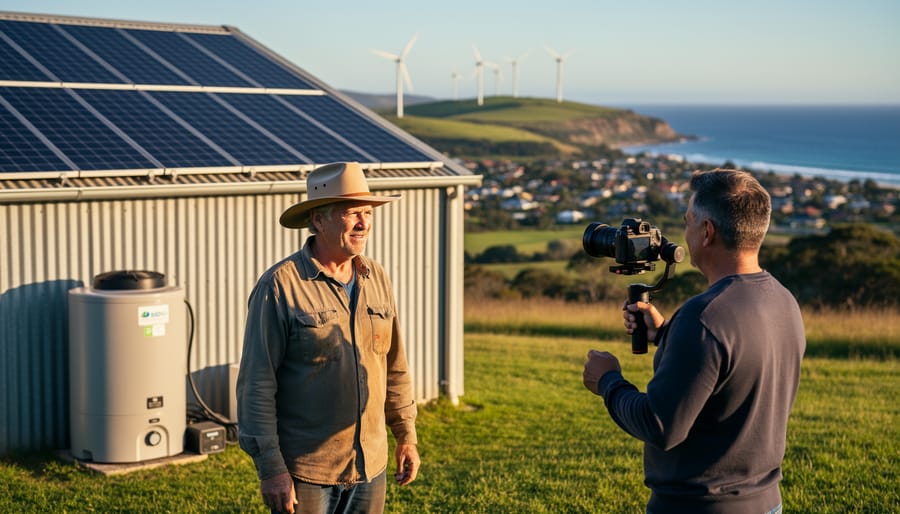
Transform complex sustainability data into compelling narratives that inspire action. Digital storytelling combines multimedia elements with authentic human experiences to make renewable energy transitions feel achievable rather than overwhelming. When communities see their neighbours successfully adopting solar panels or businesses thriving with bioenergy solutions, abstract environmental goals become tangible possibilities.
The seven elements framework provides sustainability communicators with a practical blueprint for crafting stories that resonate emotionally while delivering factual accuracy. These elements—point of view, dramatic question, emotional content, voice, soundtrack, economy, and pacing—work together to transform dry policy documents and technical specifications into narratives that move people from awareness to commitment.
Australian sustainability professionals face a unique challenge: communicating the urgency of renewable energy adoption while maintaining hope and momentum. Generic climate messaging often overwhelms audiences or triggers defensive responses. Digital storytelling cuts through this resistance by centring real people, showcasing practical solutions, and highlighting regional success stories that audiences can relate to directly.
This approach proves particularly effective when promoting bioenergy and renewable solutions across diverse Australian communities. A farmer sharing their journey to energy independence speaks more powerfully than any government report. A coastal town celebrating its transition to clean energy demonstrates feasibility better than any white paper. Indigenous communities protecting Country through traditional land management paired with modern renewable technology offer profound lessons in sustainable living.
Master these seven elements to create sustainability content that doesn’t just inform but genuinely inspires behavioural change. Each element serves a specific purpose in building narratives that acknowledge challenges while illuminating pathways forward, turning passive readers into active participants in Australia’s renewable energy future.
Why Interactive Storytelling Works for Sustainability Education
Traditional environmental education often relies on facts, figures, and scientific data to communicate the urgency of climate action. While these elements are important, they rarely inspire the deep emotional connection needed to drive meaningful behavioral change. This is where interactive storytelling becomes a game-changer for sustainability education programs, transforming complex concepts like renewable energy transition into compelling narratives that resonate with everyday Australians.
Stories work because they tap into how our brains are naturally wired. When we hear statistics about carbon emissions, only the language-processing parts of our brain activate. But when we follow a community’s journey toward energy independence through bioenergy, stories activate multiple brain regions, creating memorable experiences that stick with us long after the story ends.
This neurological response explains why interactive storytelling proves particularly effective for renewable energy topics. When someone reads about a Queensland farmer who transformed agricultural waste into community power, they don’t just understand bioenergy intellectually—they connect emotionally with the possibilities. These narratives make abstract concepts like sustainability tangible and achievable.
Interactive elements amplify this effect further. When audiences can explore different renewable energy scenarios, make choices about sustainable practices, or see personalized impacts of their decisions, they shift from passive recipients to active participants. This involvement creates ownership and accountability, transforming awareness into action. For environmental communicators and educators, this represents a powerful tool for inspiring Australia’s transition toward a cleaner, greener future.
Interactive digital storytelling creates emotional connections that transform how audiences engage with sustainability content.
Element 1: A Clear Point of View
Every compelling story begins with a perspective that draws people in, and digital storytelling is no different. When you establish a clear point of view, you’re inviting your audience to see the world through someone else’s eyes—creating an emotional connection that transforms information into inspiration. Research confirms that this human perspective creates emotional connections that purely factual presentations simply cannot achieve.
In the context of sustainability and renewable energy, this means showcasing real voices from real people who are making a difference. Rather than presenting bioenergy as an abstract concept, you might share the journey of a Queensland sugarcane farmer who transformed crop waste into clean electricity for their community. Their personal narrative—complete with initial doubts, challenges overcome, and ultimate success—becomes the anchor that holds your audience’s attention.
This approach works because it humanizes complex environmental topics. When Sarah, a dairy farmer from regional Victoria, explains how she converted methane from her farm into renewable energy, she’s not just sharing facts—she’s offering her lived experience. Her perspective makes the story relatable, whether your audience comprises fellow farmers, policymakers, or urban Australians curious about renewable solutions.
Australian renewable energy advocates have mastered this technique brilliantly. Community energy groups across Tasmania and South Australia regularly feature local champions who share their sustainability journeys through interactive sustainability stories, making technical concepts accessible and inspiring.
The key is choosing a perspective that resonates with your target audience while remaining authentic. Whether you’re spotlighting a council sustainability officer implementing bioenergy programs, an Aboriginal community leader protecting Country through renewable practices, or a small business owner reducing their carbon footprint, ensure their voice remains genuine and their story truthful.
Remember, people connect with people, not policies. A clear, relatable point of view transforms your digital story from a presentation into a conversation, fostering the kind of engagement that drives meaningful action toward a sustainable future.
Element 2: A Dramatic Question That Hooks Your Audience
Every great story begins with a question that demands an answer. In digital storytelling about sustainability, your dramatic question becomes the hook that transforms passive viewers into invested participants eager to discover what happens next. Research confirms that dramatic questions drive audience engagement in ways that simple declarative statements cannot.
Think about it this way: instead of stating “Solar farms in Queensland generate renewable energy,” pose the question “How is a former cattle station now powering 50,000 homes?” The difference is profound. The first is information; the second is an invitation to a journey.
Your dramatic question should capture the essence of your sustainability challenge whilst creating genuine curiosity. When Melbourne-based bioenergy advocates asked “Can coffee waste fuel our morning commute?” they immediately engaged their audience’s imagination. The question connected something familiar (morning coffee) with something transformative (renewable fuel), making the concept both relatable and intriguing.
The best questions in environmental storytelling often highlight a paradox or unexpected possibility. “What if agricultural waste became more valuable than the crops themselves?” challenges conventional thinking about farming economics. “Could the answer to energy independence be hiding in our rubbish bins?” reframes waste as opportunity rather than problem.
For your sustainability content, craft questions that speak directly to your audience’s concerns and aspirations. If you’re addressing policymakers, ask “How can regional communities become energy self-sufficient within five years?” For industry professionals, try “What’s stopping Australian businesses from cutting energy costs by 40%?”
The key is ensuring your question genuinely matters to your viewers and that your story delivers a satisfying answer. Your dramatic question isn’t a gimmick; it’s a promise that watching, reading, or engaging with your content will provide valuable insights worth their time. When crafted thoughtfully, this question becomes the thread that pulls your audience through your entire narrative, keeping them engaged until the final revelation.
Personal narratives from renewable energy advocates create authentic connections that help audiences understand sustainability transitions.
Element 3: Emotional Content That Resonates
The heart of effective environmental storytelling lies in striking the right emotional balance. When we share stories about climate change and renewable energy, we’re walking a tightrope between inspiring action and triggering paralysis. Research shows that audiences exposed to constant doom-and-gloom environmental messaging often experience eco-anxiety and climate communication challenges that lead to disengagement rather than action. The solution? Lead with possibility.
Consider how the Hornsdale Power Reserve in South Australia transformed the renewable energy conversation. Rather than focusing solely on grid instability problems, the project’s communicators highlighted how Tesla’s big battery solved blackouts whilst creating local jobs and reducing energy costs for everyday Aussies. This approach demonstrates how storytelling creates environmental champions by showing tangible benefits alongside environmental wins.
Successful emotional narratives follow a proven structure: acknowledge the challenge briefly, then dedicate most of your content to solutions and positive outcomes. When discussing the urgency of transitioning away from fossil fuels, pair it immediately with examples like Byron Bay becoming Australia’s first 100% renewable energy town. These success stories provide audiences with a vision they can rally behind.
This approach maintains credibility whilst keeping your audience motivated rather than overwhelmed.
Personal stories amplify emotional connection remarkably well. Share the journey of a Queensland farmer who installed solar panels and now sells excess energy back to the grid, improving both their bottom line and their carbon footprint. These relatable narratives help audiences see themselves in the story, transforming abstract environmental concepts into personal possibilities. Remember, people don’t just need to understand the science behind renewable energy; they need to feel excited about being part of the solution.
Element 4: The Gift of Your Voice
Your authentic voice is the secret ingredient that transforms sustainability education from dry facts into compelling stories that inspire action. When you share environmental information through your personal lens—whether you’re a bioenergy plant manager, a community solar advocate, or a suburban family reducing household waste—you create an immediate human connection that statistics alone cannot achieve. Research confirms that authentic voices build trust in environmental communication, making personal narratives essential to effective sustainability messaging.
In Australia’s sustainability sector, authenticity matters enormously. Audiences are increasingly savvy about greenwashing and can spot inauthentic messaging a mile off. When a Tasmanian farmer explains how switching to agricultural waste-to-energy systems improved their operation’s resilience, or when a Melbourne café owner shares their journey toward zero-waste practices, these genuine voices carry weight that corporate jargon never will.
Your unique perspective adds credibility to complex environmental topics. Industry professionals bring technical expertise grounded in real-world experience, while everyday Australians making sustainable choices demonstrate practical accessibility. A mum from Perth discussing her family’s transition to renewable energy resonates differently than government reports—both valuable, but serving distinct purposes in the storytelling ecosystem.
The beauty of personal narrative in sustainability communication is its relatability. When you speak from genuine experience—sharing both successes and challenges—you give others permission to begin their own sustainability journey imperfectly. Your voice might discuss the practical hurdles of installing solar panels, the unexpected benefits of composting, or the community connections formed through local environmental initiatives.
Don’t underestimate the power of your story. Whether you’re communicating renewable energy policies, showcasing bioenergy innovations, or simply sharing your household’s sustainability wins, your authentic voice makes environmental topics accessible, trustworthy, and ultimately more actionable for your audience.
Element 5: The Power of the Soundtrack
Sound transforms digital stories from visual presentations into immersive experiences that resonate emotionally with audiences. When documenting sustainability initiatives, the right soundtrack can transport viewers directly to wind farms, solar installations, or thriving bioenergy facilities, creating powerful connections that images alone cannot achieve. Research confirms that sound design enhances environmental message retention, making audio strategy essential for effective sustainability communication.
Consider the gentle hum of wind turbines rotating against a clear Australian sky, or the rhythmic processing sounds from a bioenergy plant converting agricultural waste into clean power. These ambient sounds aren’t merely background noise—they’re authentic audio signatures that validate your environmental message and build trust with your audience.
Music selection matters enormously in sustainability storytelling. Uplifting, forward-looking compositions reinforce optimism about renewable energy transitions, while natural soundscapes—birdsong, flowing water, rustling eucalyptus leaves—remind viewers what we’re working to protect. The key is matching audio elements to your narrative’s emotional arc.
For bioenergy stories, consider incorporating sounds that highlight transformation: the crackle of agricultural residue being processed, the whoosh of biogas generators, or interviews with farmers discussing their renewable energy contributions. These authentic audio elements make abstract concepts tangible and relatable.
Voice-over narration deserves special attention too. A warm, conversational Australian voice can guide viewers through complex sustainability topics without overwhelming them, making technical information accessible and engaging. Whether you’re documenting a community solar project or a regional bioenergy success story, thoughtful sound design transforms good content into memorable experiences that inspire action and demonstrate the practical reality of Australia’s renewable energy future.
Authentic voice and personal perspective add credibility to sustainability narratives, whether from industry professionals or everyday advocates.
Element 6: Economy of Story Details
When sharing bioenergy stories, think of yourself as a skilled chef rather than someone emptying the pantry onto the table. Your audience doesn’t need every technical specification about anaerobic digestion or every statistic about carbon sequestration. They need the details that matter most to their understanding and engagement.
Economy of story details means selecting information with purpose. Research shows that information overload reduces sustainability message effectiveness, making careful detail selection essential. Instead of overwhelming viewers with complex biochemical processes, focus on the transformative moment. For instance, when explaining how a Queensland sugarcane farm converted waste into clean energy, you might showcase the single powerful detail that the farm now powers 500 homes rather than listing every technical parameter of the biogas system. That one figure tells the story brilliantly without drowning your audience in data.
This principle particularly matters in sustainability communication because the temptation to prove credibility through technical depth can sabotage engagement. Your audience trusts your expertise when you demonstrate understanding through clarity, not complexity. When discussing carbon reduction achievements, translate tonnes of CO2 into meaningful equivalents – “equivalent to taking 200 cars off the road” resonates more than raw numbers.
Consider what advances your narrative forward. Does mentioning the specific temperature range of a biomass gasification process help viewers connect emotionally with the story, or would showing the farmers who benefit from renewable heat serve your purpose better? Every detail should either deepen understanding, strengthen emotional connection, or advance the narrative arc. If it doesn’t tick at least one of these boxes, it’s likely cluttering your story rather than enhancing it.
Element 7: Pacing Your Narrative for Maximum Impact
Getting the timing right in your digital sustainability story can mean the difference between someone clicking away or becoming a passionate advocate for change. Think of pacing like a good yarn told around the campfire – you need to know when to build tension, when to pause for effect, and when to deliver the moment that shifts everything.
In sustainability education, strategic pacing respects your audience’s learning journey. Research shows that narrative pacing influences behavioral outcomes, making timing critical to educational effectiveness. Start by presenting the challenge – perhaps through an interactive map showing deforestation rates or carbon emissions – then allow time for reflection before introducing solutions. This breathing room lets information sink in without overwhelming viewers. A Victorian bioenergy facility used this approach brilliantly, first showing visitors their daily waste production through an interactive calculator, pausing with a thought-provoking question, then revealing how that same waste could power homes.
Clickable hotspots work beautifully for self-paced exploration. Imagine a digital tour of a solar farm where viewers choose which aspects interest them most – the technology, the economics, or the environmental benefits. They control the rhythm, diving deeper where curiosity strikes. This autonomy creates interactive learning experiences that stick.
Branching scenarios build momentum toward action by presenting real-world choices. “Your business generates 50 tonnes of organic waste monthly – what’s your next move?” Each decision reveals consequences, creating an escalating sense of agency. These decision points should appear at natural intervals, typically after presenting sufficient context but before attention wanes.
The key is building toward a clear call-to-action. Guide viewers through awareness, understanding, and emotional connection, then strike while motivation peaks. A Queensland agricultural cooperative timed their “Calculate Your Savings” tool to appear immediately after an emotional testimonial from a farmer who’d switched to bioenergy – conversion rates jumped 40 percent. That’s pacing with purpose.
Bringing the Elements Together: A Practical Framework
Understanding the seven elements is one thing, but bringing them together effectively requires a structured approach. Research shows that integrated storytelling frameworks drive sustainability action more effectively than isolated information delivery. Here’s how to create compelling interactive sustainability stories that genuinely connect with your audience:
- Start with your emotional hook by identifying the human impact of your sustainability issue. What keeps real Australians up at night about energy costs or climate change?
- Develop your point of view by determining whose story you’ll tell. Is it a farmer switching to bioenergy, a community reducing emissions, or a business transforming its operations?
- Map out a dramatic arc with clear challenges and resolutions. Show the journey from problem to sustainable solution with authentic struggles along the way.
- Layer in multimedia elements that enhance rather than overwhelm. Choose visuals, audio, and interactive features that support your narrative purpose.
- Design pacing that allows moments for reflection between information delivery. Build in pauses where audiences can explore data or personal stories more deeply.
- Incorporate your authentic voice consistently throughout all elements, ensuring it reflects your organization’s values and connects with your audience’s experiences.
- Add a soundtrack that creates emotional resonance, whether through actual music, ambient sounds from renewable energy facilities, or carefully chosen silence.
A brilliant example comes from the Southern Queensland Bioenergy Hub’s education campaign. They told the story of a sugarcane farming family transitioning to producing biofuel. The emotional hook centered on their desire to leave a thriving farm for their grandchildren. The dramatic question, “Can agriculture be part of the climate solution?” drove the narrative forward. Interactive maps showed local fuel production potential, while video testimonials provided authentic voices. The pacing alternated between educational segments about biomass conversion and personal family moments. Natural sounds from the cane fields created an evocative soundtrack.
The campaign achieved remarkable engagement, with 78% of viewers watching through to completion and significant increases in community support for local bioenergy projects. By weaving all seven elements together purposefully, they transformed complex renewable energy concepts into an inspiring, accessible story that motivated genuine action across regional Australia.
Successful renewable energy projects demonstrate how sustainability solutions integrate seamlessly with Australian agricultural landscapes.
When these seven elements come together—point of view, dramatic question, emotional content, voice, soundtrack, economy, and pacing—they create something far more powerful than individual components ever could. Like the interconnected systems within a thriving ecosystem, each element supports and amplifies the others, transforming information into experiences that truly resonate with your audience.
The beauty of this framework lies in its flexibility. Whether you’re championing bioenergy adoption in regional Queensland, promoting solar installations across suburban Melbourne, or advocating for broader environmental action throughout Australia, these storytelling principles adapt to your specific needs. They turn complex sustainability challenges into compelling narratives that inspire action rather than overwhelm audiences.
Think about the success stories we’ve seen across the country—communities embracing renewable energy, businesses transforming their waste into resources, individuals making sustainable choices in their daily lives. These transformations often begin with a well-told story that connected emotionally while delivering practical information.
Now it’s your turn. Start small if you’d like—perhaps with a single social media post or a brief video showcasing a local sustainability win. Apply these seven elements thoughtfully, and you’ll notice the difference in how people engage with your message. Effective sustainability communication isn’t about having the biggest budget or the fanciest technology; it’s about crafting authentic narratives that move people from awareness to action. Your story matters, and with this framework, you’re equipped to tell it brilliantly.