
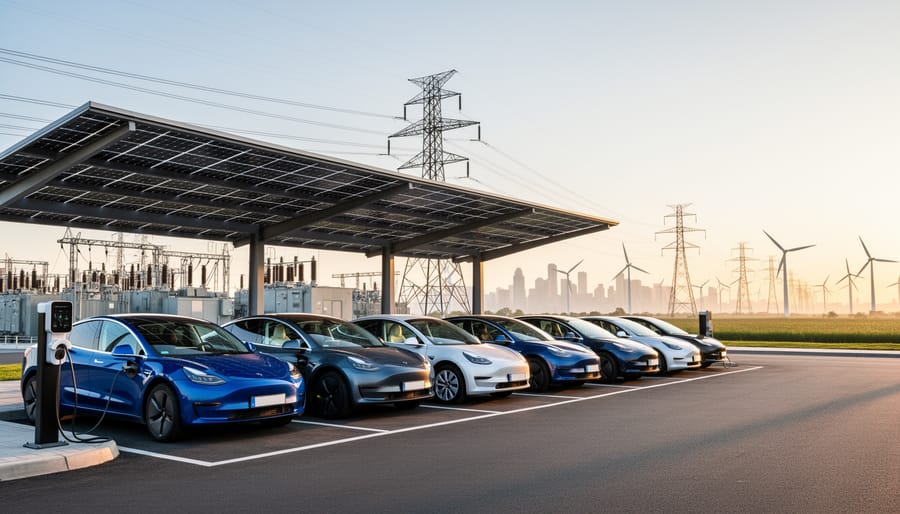
Australia’s electric vehicle revolution hinges on a charging network that works in harmony with our electrical grid, not against it. As EV adoption accelerates across the country, the relationship between where we charge our vehicles and how our grid manages that demand becomes the defining factor in whether this transition succeeds or stumbles.
The challenge is straightforward: without proper integration, thousands of EVs plugging in simultaneously during peak evening hours could strain grid infrastructure designed decades before electric transport emerged. Yet this same challenge presents an extraordinary opportunity. Smart charging infrastructure transforms EVs from potential grid burdens into flexible energy assets that can actually strengthen grid stability.
Consider how charging stations equipped with load management systems automatically adjust power delivery based on grid conditions, shifting heavy charging to off-peak hours when renewable energy from solar and wind farms floods the system. This isn’t theoretical; commercial buildings in Melbourne and Brisbane are already implementing these solutions, reducing electricity costs while supporting grid reliability.
The integration extends beyond timing. Vehicle-to-grid technology, now being trialled across Australian communities, allows parked EVs to return stored energy to the grid during demand spikes, effectively turning car parks into distributed battery systems. When combined with renewable energy sources, including emerging bioenergy solutions, this creates a resilient, sustainable charging ecosystem.
For Australia’s policymakers, industry professionals, and environmentally conscious organizations, understanding this grid-charging relationship isn’t just technical knowledge; it’s the foundation for building transport infrastructure that serves both our mobility needs and our clean energy future. The pathway forward requires coordinated action across energy providers, charging network operators, and vehicle manufacturers to create systems that benefit everyone.
The Real Challenge Behind Every Charging Station
When Everyone Plugs In at 6 PM
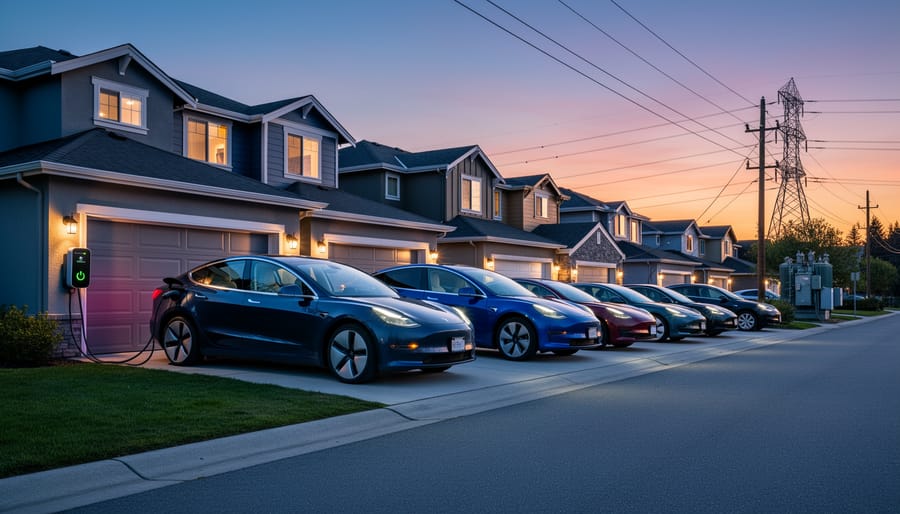
Picture this: it’s a typical Tuesday evening across suburban Brisbane, Melbourne, and Sydney. As the sun dips below the horizon, thousands of Australians arrive home from work, pull into their driveways, and plug in their electric vehicles. It’s convenient, it makes sense, and everyone’s doing it at roughly the same time—around 6 PM.
This seemingly harmless routine creates what energy experts call peak demand, and it’s a genuine challenge for our electricity grid. When everyone plugs in simultaneously, the grid experiences a sudden surge in power demand, much like turning on every appliance in your home at once. Without proper management, this strain can lead to voltage fluctuations, infrastructure stress, and potentially higher electricity costs for everyone.
The problem isn’t the EVs themselves—it’s the timing. A typical household EV charger draws about 7 kilowatts, roughly equivalent to running your air conditioner, electric oven, and kettle all at once. When thousands of these chargers activate simultaneously during the evening peak, they compound the existing demand from households cooking dinner, running heating or cooling systems, and switching on lights.
Fortunately, smart grid technology offers promising solutions. By staggering charging times, offering off-peak incentives, and integrating renewable energy sources, we can transform this challenge into an opportunity for smarter energy management that benefits both EV owners and the broader community.
What Happened in South Australia
South Australia has emerged as a brilliant example of turning early EV charging challenges into opportunities through clever grid integration. When electric vehicle uptake began accelerating in the state, authorities didn’t wait for problems to emerge – they got ahead of the game.
The state government partnered with energy providers to create a smart charging network that works in harmony with South Australia’s impressive renewable energy capacity. Here’s where it gets interesting: the system actively manages when vehicles charge based on grid demand and renewable energy availability. During sunny afternoons when solar power floods the grid, EV owners receive incentives to charge their vehicles, soaking up excess clean energy that might otherwise go to waste.
This approach solved two problems at once – preventing grid strain during peak periods whilst maximising the use of renewable energy. Local councils also jumped on board, installing charging stations powered by rooftop solar and battery storage at community centres and car parks.
The result? South Australia now boasts one of the most resilient EV charging networks in the country, with minimal impact on grid stability. It’s a proper success story that demonstrates how forward-thinking planning and smart technology can transform potential obstacles into wins for both EV drivers and the broader energy system.
Three Types of Charging Infrastructure That Work With Your Grid
Home Charging That Actually Helps the Grid
Most Australian EV owners charge their vehicles at home, making residential charging infrastructure the backbone of our electric transport future. The good news? Home charging can actually benefit the grid when done smartly.
Level 1 charging uses a standard household power point, delivering around 2.4 kilowatts. While slower, it’s perfect for overnight charging and requires no special installation. Level 2 charging, the more popular choice, provides 7 to 22 kilowatts through a dedicated wall box, fully charging most EVs in four to eight hours.
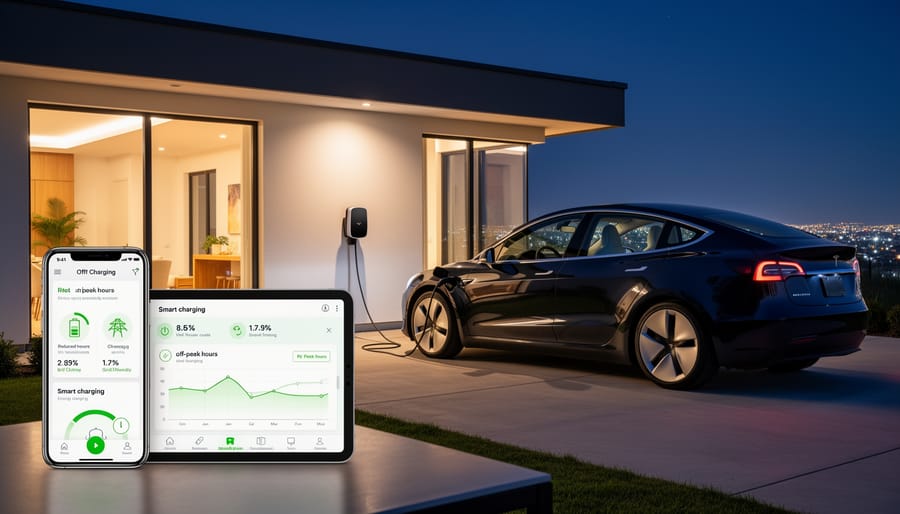
The real game-changer is smart home integration technology. These intelligent systems automatically schedule charging during off-peak hours, typically between 10 pm and 6 am, when electricity demand drops and renewable energy often goes underutilised. This timing shift reduces strain on the grid and slashes charging costs for households.
Take the Ausgrid trial in Sydney, where 200 households used smart charging technology. Participants saved an average of 30 percent on charging costs while helping balance grid demand. The system delayed charging until off-peak periods without any inconvenience, proving that supporting the grid doesn’t mean sacrificing convenience. As more Australians adopt EVs, this coordinated approach transforms individual charging decisions into collective grid benefits, creating a more resilient and sustainable energy system for everyone.
Workplace and Public Charging Hubs
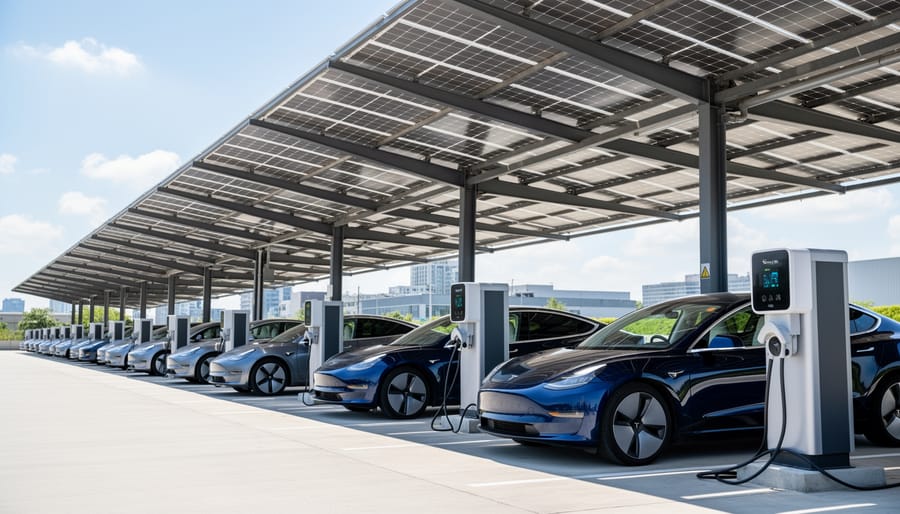
Workplace and public charging hubs represent a smart solution for balancing grid demand while keeping EVs powered throughout the day. Level 2 charging stations at offices, shopping centres, and community facilities allow drivers to top up their vehicles during business hours when they’re parked anyway, spreading electricity demand more evenly across the day rather than concentrating it during evening peak times.
This approach benefits everyone involved. Businesses can attract environmentally conscious customers and staff while contributing to a more stable grid. Employees enjoy the convenience of arriving home with a fully charged vehicle, eliminating range anxiety. From a grid perspective, daytime charging aligns beautifully with solar power generation, meaning vehicles can be powered by clean energy when the sun is shining brightest.
Several Australian councils and shopping centres have already embraced this model with impressive results. Westfield centres across the country now offer charging facilities, demonstrating how retail environments can support the EV transition. Meanwhile, forward-thinking employers are installing workplace chargers as part of their sustainability commitments, creating win-win scenarios that reduce both emissions and grid strain while supporting their teams’ transition to electric mobility.
Fast Charging Without Breaking the Grid
DC fast charging stations deliver power at lightning speed, but they also draw substantial electricity in short bursts. The good news? Smart infrastructure design is making rapid charging grid-friendly across Australia.
Battery storage systems are the unsung heroes here. These large-scale batteries store energy during off-peak hours when electricity is abundant and cheap, then release it during high-demand charging periods. It’s like having a buffer that smooths out the power demand, preventing those sharp spikes that could strain the grid.
Renewable energy integration takes this a step further. Charging stations paired with solar panels and wind turbines can generate their own clean power, while excess energy feeds back into the grid. Some innovative sites are even incorporating bioenergy systems, creating truly sustainable charging hubs.
Take the example of charging stations along major highways in New South Wales. These facilities combine solar arrays with battery storage, enabling rapid charging without overwhelming local grid infrastructure. During peak sunshine hours, they generate more power than needed, storing the surplus for evening charging sessions.
This approach doesn’t just prevent grid overload—it actively strengthens the network while reducing carbon emissions. As more Australians embrace electric vehicles, this integrated infrastructure proves that speed and sustainability can absolutely go hand in hand.
Smart Grid Integration Strategies That Make It All Work
Vehicle-to-Grid Technology: Your EV as a Power Bank
Imagine your electric vehicle doing double duty – not just getting you from A to B, but also helping power your neighbourhood during peak demand. That’s the promise of Vehicle-to-Grid (V2G) technology, which transforms EVs into mobile power banks that can feed electricity back into the grid when it’s needed most.
Here’s how it works: when your EV is plugged in and fully charged, V2G-enabled charging stations can draw power from your car’s battery and send it back to the grid during peak periods, like those scorching summer afternoons when air conditioners are running overtime. You’re compensated for the energy you provide, creating a win-win scenario that reduces strain on the grid whilst putting a few extra dollars in your pocket.
This technology represents a game-changer for Australia’s renewable energy transition. When paired with advanced energy storage systems, V2G creates a distributed network of energy reserves across communities. Think of it as thousands of batteries on wheels, ready to stabilize the grid when solar and wind generation fluctuates.
The Australian National University’s pilot program in Canberra has already demonstrated V2G’s potential, successfully using fleet vehicles to provide grid services during peak demand. As this technology becomes more widespread, EV owners will transition from passive consumers to active participants in Australia’s clean energy future, proving that sustainable transport and grid stability go hand in hand.
Smart Charging and Load Management
Smart charging systems are revolutionising how electric vehicles interact with Australia’s electricity grid, transforming what could be a challenge into an opportunity for greater energy efficiency. These intelligent systems work like digital conductors, coordinating when and how vehicles charge to optimise grid performance and reduce costs for EV owners.
At the heart of smart charging is two-way communication between charging stations and the grid. Rather than every vehicle drawing maximum power the moment it plugs in, these systems assess grid demand, electricity pricing, and renewable energy availability to determine the best charging schedule. Picture this: your EV charging overnight when solar farms in South Australia feed excess capacity into the grid, or pausing briefly during evening peak demand before resuming when the grid settles.
Load management technology takes this further by distributing power across multiple charging points. In apartment buildings or workplace car parks, the system ensures charging stations share available capacity fairly without overloading the local grid connection. This clever balancing act means more vehicles can charge simultaneously without expensive infrastructure upgrades.
The real game-changer comes when smart charging integrates with renewable energy sources. Systems can prioritise charging when wind farms are generating strongly or rooftop solar production peaks. Some innovative Australian businesses are already coupling their EV fleets with on-site bioenergy systems, creating circular energy solutions that reduce grid dependence whilst supporting sustainability goals. This isn’t just about charging vehicles efficiently – it’s about building a cleaner, more resilient energy future for all Australians.
Pairing Solar Power With EV Charging
Across Australia, forward-thinking businesses and communities are discovering the natural synergy between solar panels and EV charging stations, creating a blueprint for sustainable transport infrastructure. This pairing represents more than just good environmental sense—it’s smart economics and practical problem-solving.
Take the City of Sydney’s Town Hall car park, where a solar array powers dedicated EV charging bays. During peak sunshine hours, vehicles charge directly from rooftop panels, slashing electricity costs while reducing grid demand. This solar power integration means EVs run on genuinely clean energy, transforming the entire transport chain from source to wheel.
In regional Queensland, the Toowoomba Shopping Centre has installed a large-scale solar canopy over its car park. The dual-purpose structure provides shade for vehicles while generating enough power to run multiple fast chargers throughout the day. Excess energy feeds back into the building, creating a closed-loop system that maximizes renewable energy use.
Mining companies in Western Australia are also leading the charge, installing solar-powered charging infrastructure at remote sites. These installations reduce diesel generator dependency and demonstrate how solar-EV pairings work brilliantly in off-grid applications.
The formula is straightforward: solar panels generate peak power during daylight hours when many vehicles sit parked at workplaces or shopping centers. This timing alignment creates natural efficiency, proving that Australia’s abundant sunshine makes us perfectly positioned to lead in sustainable transport infrastructure. These success stories show what’s possible when renewable energy meets innovative thinking.
The Renewable Energy Connection
How Bioenergy Fits Into the Charging Picture
While solar panels and wind turbines often steal the spotlight in renewable energy conversations, there’s an unsung hero quietly powering Australia’s transition to cleaner transport: bioenergy. For electric vehicle charging infrastructure, particularly in regional and rural areas, biomass-derived energy offers something that intermittent renewables can’t always deliver on their own—reliable, consistent baseload power.
Think of bioenergy as the steady friend who’s always there when you need them. When the sun sets and the wind drops, organic waste materials from agricultural operations, forestry residues, and even municipal waste can be converted into dependable electricity. This makes bioenergy particularly valuable for charging stations in areas like regional Queensland and New South Wales, where local organic resources are abundant but grid connections might be less robust.
In practical terms, a regional charging hub powered by a combination of solar, battery storage, and bioenergy can operate around the clock without relying entirely on the main grid. Several agricultural communities are already exploring this model, using farm waste to generate power that keeps EV chargers running consistently. This approach doesn’t just reduce emissions—it creates a circular economy where yesterday’s organic waste becomes tomorrow’s clean transport fuel.
For charging infrastructure operators, integrating bioenergy into the mix means fewer concerns about renewable energy gaps and more confidence in meeting customer demand whenever drivers pull up needing a charge.
Building Resilience Into the System
Creating a robust charging network for electric vehicles means thinking beyond sunny days and windy nights. While solar and wind power are fantastic renewable options, they’re naturally subject to weather patterns that can create gaps in energy supply. This is where diversifying our energy mix becomes absolutely essential.
Bioenergy steps in as a reliable teammate in the renewable energy lineup. Unlike its weather-dependent cousins, bioenergy facilities can generate electricity consistently, day or night, rain or shine. In Australia, we’re already seeing this work beautifully in practice. Agricultural waste, forestry residues, and organic materials from councils and businesses are being converted into steady, dispatchable power that keeps EV charging stations humming along even when clouds roll in or winds drop.
Think of it as building a well-rounded footy team rather than relying on a single star player. Queensland’s sugarcane industry, for instance, uses bagasse to generate reliable baseload power. Western Australian wheat farmers are exploring similar opportunities with crop residues. These aren’t just isolated experiments; they’re practical examples of energy resilience in action.
For EV drivers, this diversification means fewer worries about finding a charged station ready when you need it. For grid operators, it means smoother management of charging demands without compromising stability. The beauty of combining bioenergy with solar and wind is that each source compensates for the others’ limitations, creating an infrastructure that’s genuinely dependable and truly sustainable.
What This Means for Regional and Rural Australia
Regional and rural Australia faces distinct challenges when it comes to EV charging infrastructure, but these communities also hold tremendous opportunities for innovative, sustainable solutions. Outside major cities, the electrical grid can be less robust, with longer distances between substations and smaller capacity to handle sudden demand spikes from multiple charging vehicles. However, this challenge is pushing communities toward creative approaches that could make regional areas leaders in sustainable transport infrastructure.
The key lies in thinking differently about energy supply. Rather than simply extending metropolitan charging networks into the bush, many regional communities are exploring decentralised energy systems that combine local renewable generation with charging infrastructure. Solar arrays paired with battery storage are becoming increasingly popular at roadhouses and service centres along major regional highways, providing reliable charging without straining existing grid connections. These installations can operate independently during peak times, drawing from stored energy rather than competing with local homes and businesses for grid capacity.
Agricultural areas hold particular promise through microgrid solutions that incorporate bioenergy. Farms producing organic waste can convert these materials into renewable energy, creating charging stations powered by locally generated electricity. This approach transforms what might seem like a disadvantage into a unique strength, with regional communities becoming self-sufficient in both food and fuel production.
Several regional councils are already pioneering these models. In Western Australia, grain-growing regions are investigating biomass-to-energy systems that could power EV charging networks while managing agricultural residues. Queensland’s sugar cane regions are exploring similar opportunities with bagasse, the fibrous residue from sugar production.
For regional Australians, the transition to electric vehicles doesn’t mean waiting for city-style infrastructure to arrive. Instead, it presents an opportunity to build charging networks that reflect local resources and strengths, creating resilient systems that benefit both travellers and communities while supporting the transition to renewable energy.
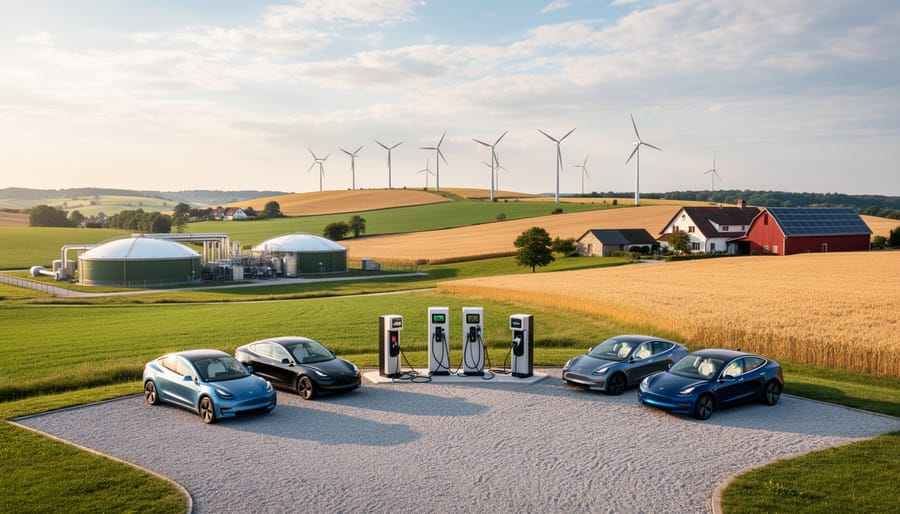
Australia stands at an exciting crossroads where sustainable transport meets renewable energy innovation. The journey toward widespread electric vehicle adoption isn’t just about the cars themselves—it’s about creating an intelligent, integrated ecosystem where charging infrastructure and grid management work in harmony. The good news? We’re already seeing this vision come to life across the country.
From Newcastle’s smart charging hubs powered by solar energy to Perth’s community-led initiatives that time charging with renewable generation peaks, Australian communities are proving that thoughtful infrastructure planning creates benefits for everyone. These success stories demonstrate that when we approach EV charging strategically, we’re not just supporting cleaner transport—we’re strengthening our entire energy system and accelerating the transition to renewables.
The path forward requires collaboration. For individuals considering an electric vehicle, choosing smart charging options and off-peak charging times makes a real difference. Businesses can lead by installing workplace charging that draws on solar power during the day. Community groups and local councils have opportunities to advocate for infrastructure that serves everyone, particularly in regional areas where charging access remains limited.
The technology exists, the renewable energy is flowing, and Australian innovation is powering solutions that other nations are watching closely. What we need now is collective action—embracing charging solutions that support our renewable energy goals rather than working against them.
By integrating our thinking about transport, energy, and infrastructure, we’re building more than just charging stations. We’re creating a sustainable transport future that reduces emissions, stabilizes our grid, and demonstrates what’s possible when innovation meets environmental responsibility. The transition is happening, and every smart charging decision brings us closer to that cleaner, more sustainable Australia we’re all working toward.