
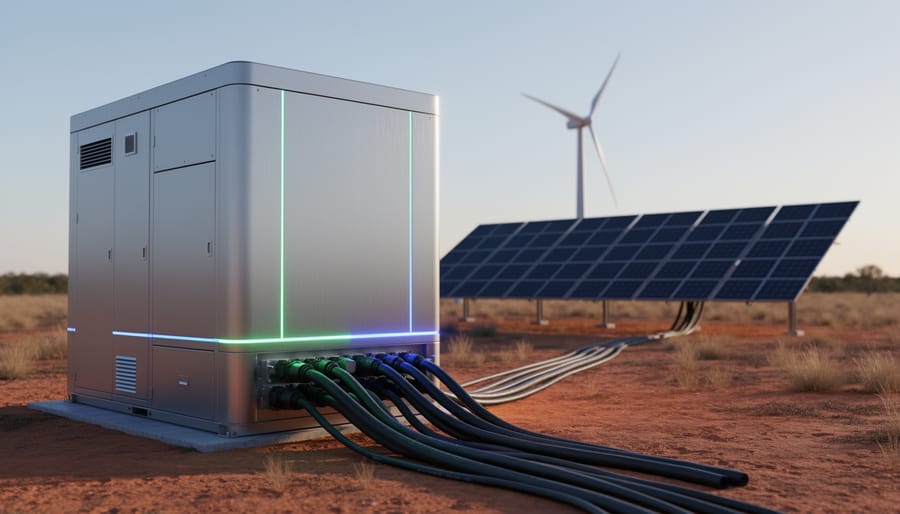
An energy storage management system is the digital brain that monitors, controls, and optimizes how batteries and other storage technologies charge, discharge, and interact with energy grids and renewable sources. Think of it as the sophisticated software and hardware combination that ensures stored energy is used efficiently, safely, and at the right moments to maximize both performance and lifespan of the storage infrastructure.
For Australia’s rapidly expanding renewable energy landscape, these systems have become essential infrastructure. As solar and wind installations multiply across the country, the challenge isn’t just generating clean energy but storing it when the sun sets and the wind drops. Without intelligent management, battery systems risk overcharging, inefficient discharge cycles, and premature degradation. The right management system transforms a simple battery into a responsive asset that can stabilize grid frequency, reduce electricity costs during peak periods, and provide backup power when networks fail.
The technology matters now more than ever because energy storage is bridging the gap between intermittent renewable generation and constant energy demand. Across Australian homes, businesses, and utility-scale projects, these management systems are already coordinating thousands of battery installations, helping owners draw power strategically when electricity prices spike and feed excess solar back to the grid when it’s most valuable.
This article breaks down what energy storage management systems actually do, how they coordinate charging and discharging decisions in real time, the key components that make them work, and where Australians are putting this technology to practical use. You’ll see how this behind-the-scenes intelligence turns renewable energy from an intermittent resource into a reliable power solution, supported by real examples from residential installations to major grid-connected facilities making waves across the country’s energy transition.
What an Energy Storage Management System Really Means
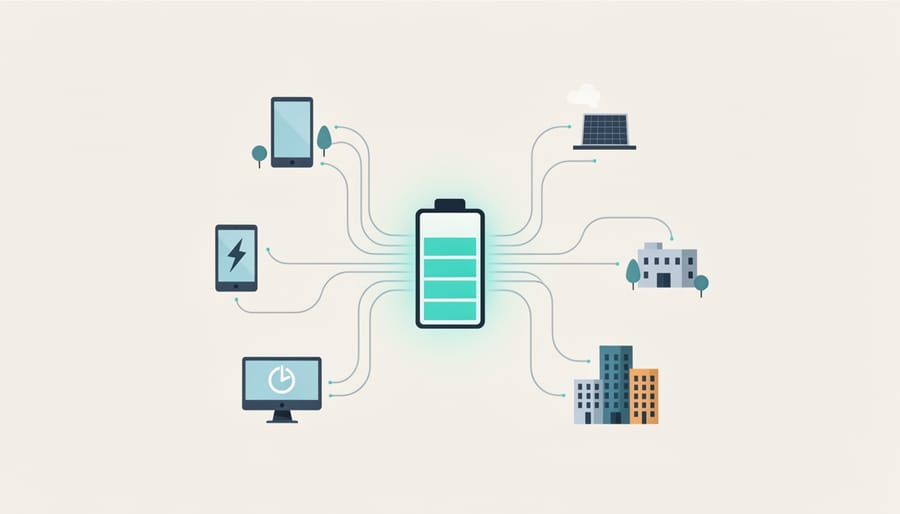
An energy storage management system is the brain behind modern batteries. Think of it as a smart conductor coordinating an orchestra, it continuously monitors your battery’s health, decides the best times to store or release energy, and ensures everything works together safely and efficiently. While the battery itself holds the energy, the ESMS makes thousands of intelligent decisions daily about how to use that stored power in ways that save you money, extend equipment life, and support the broader electricity grid.
At its core, an ESMS combines sophisticated software with specialized sensors and control hardware. The software tracks real-time data from your battery, everything from temperature to charge levels, and uses that information to make split-second decisions. Should the system charge now while solar panels are producing excess power, or wait for cheaper overnight rates? Is the battery too hot and needs cooling? Should it hold energy in reserve for an expected evening peak, or sell surplus power back to the grid when prices spike? The ESMS handles all these questions automatically, without requiring constant human oversight.
To understand the technology properly, a few key terms are worth knowing:
- Energy Storage System
- The complete setup including batteries, inverters, and control equipment that stores electrical energy for later use.
- State of Charge
- The current energy level of a battery expressed as a percentage, similar to the fuel gauge in your car showing how full the tank is.
- Round-Trip Efficiency
- The percentage of energy you get back out compared to what you put in, a battery with 90% efficiency returns 90 kWh for every 100 kWh stored.
- Depth of Discharge
- How much of a battery’s total capacity has been used, typically expressed as a percentage from fully charged.
- Battery Management System
- The specialized hardware and software that monitors individual battery cells, balancing their performance and protecting against damage from overcharging or extreme temperatures.
- Thermal Management
- The system that controls battery temperature through cooling or heating, crucial because batteries perform poorly and degrade faster when too hot or too cold.
The beauty of modern ESMS platforms is that they make complex optimization simple. A farm running irrigation pumps can automatically draw stored solar energy during expensive peak periods, while a suburban home can participate in virtual power plant programs where the system responds to grid needs, all happening in the background while you focus on running your property or business.
How Energy Storage Management Systems Work
Real-Time Monitoring and Data Collection
Every second, the energy storage management system takes thousands of measurements across your battery array, creating a detailed picture of its health and performance. Sensors embedded throughout the system track voltage levels in individual cells, monitoring for inconsistencies that could signal problems before they become serious. Current sensors measure the flow of electricity during charging and discharging, ensuring the battery operates within safe limits and preventing damage from overloading.
Temperature monitoring is critical, particularly in Australia’s hot climate. The system checks thermal conditions at multiple points, watching for hotspots that could accelerate degradation or pose safety risks. State of charge calculations combine all this data to determine precisely how much energy remains available, much like a sophisticated fuel gauge that accounts for battery age, temperature effects, and recent usage patterns.
This continuous data collection extends beyond individual cells to the entire battery array, tracking performance trends over time. The system identifies gradual capacity loss, flags unusual behavior, and builds a comprehensive performance history. All this information flows to the control algorithms that make intelligent decisions about when and how to charge or discharge, ensuring your battery operates safely and efficiently while maximizing its working life.
Intelligent Control and Decision-Making
The real intelligence in energy storage management sits in the software layer, algorithms that weigh multiple factors simultaneously and make split-second decisions about energy flow. These systems constantly balance competing priorities: capturing cheap solar energy when the sun shines, avoiding expensive peak electricity rates, maintaining enough charge for overnight needs, and responding to grid signals that might reward discharge during high-demand periods.
A well-designed system learns your patterns over time. It notices that your packing shed runs refrigeration overnight, that grid prices typically spike between 5pm and 9pm, and that your solar array produces peak power around midday. It forecasts tomorrow’s weather to predict solar generation, checks spot electricity prices, and builds an optimized charging schedule. On a sunny day with low grid demand, it might fully charge your batteries by 2pm. When storms approach and prices soar, it holds that stored energy for evening discharge, potentially earning feed-in credits while powering your operation.
The algorithms also protect battery health by avoiding extreme charge states and managing thermal conditions, extending your investment’s lifespan while maximizing economic returns. This automated decision-making transforms a passive storage system into a strategic energy asset working around the clock.
Communication with Smart Grid Infrastructure
Modern energy storage management systems don’t operate in isolation, they’re designed to talk to the grid, and that conversation is reshaping how Australia manages electricity.
When your battery system communicates with smart grid infrastructure, it’s receiving and responding to signals about wholesale electricity prices, network demand, and renewable energy generation across your region. In South Australia, thousands of home batteries connected through virtual power plant programs automatically discharge power during evening peak demand, earning households credits while stabilizing the grid. The ESMS handles this entire exchange without homeowner intervention.
These platforms speak multiple communication protocols, Modbus, SunSpec, and increasingly sophisticated APIs, allowing them to integrate with demand response programs run by energy retailers and network operators. When the Australian Energy Market Operator signals high demand or low renewable generation, compatible systems can adjust charging schedules or export stored energy at premium rates.
For commercial operations, this connectivity enables participation in frequency control ancillary services, where batteries respond within milliseconds to maintain grid stability. A warehouse in Melbourne might earn revenue by providing this service during business hours, all coordinated through its ESMS communicating with grid management systems.
The result is a truly flexible energy network where distributed storage assets work together, balancing supply and demand across suburbs, regions, and eventually the entire National Electricity Market.
Core Components That Make the System Work
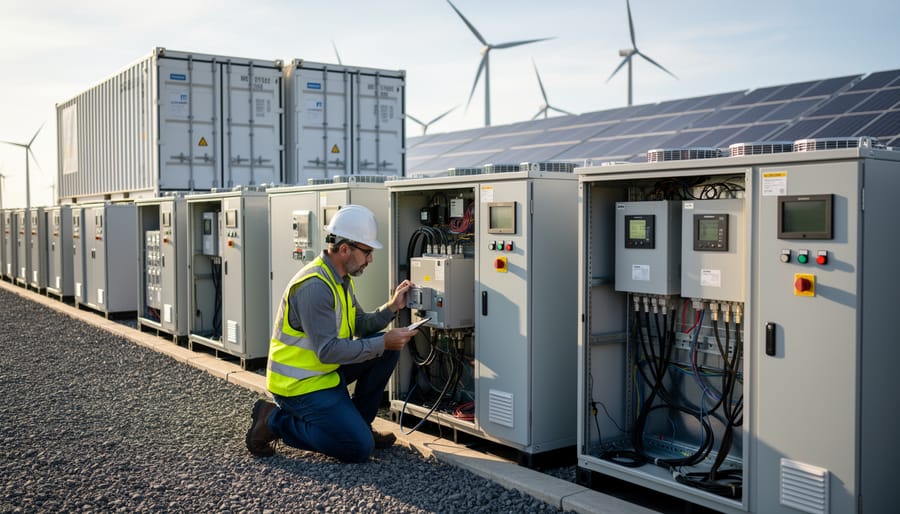
An energy storage management system relies on several interconnected components working in harmony, much like an orchestra where each instrument plays a distinct role. Understanding these elements helps demystify how the technology transforms a collection of batteries into an intelligent energy hub.
At the heart of the system sits the Battery Management System (BMS), the component responsible for safeguarding individual cells and battery modules. The BMS monitors voltage, current, and temperature across every cell, ensuring none drift outside safe operating parameters. It balances charge levels between cells to prevent weak links from degrading overall performance, and tracks the state of charge with precision that lets you know exactly how much usable energy remains available.
The energy management software forms the strategic brain of the operation. This is where demand forecasting meets market intelligence, deciding when to draw power from the grid at cheap off-peak rates, when to discharge stored energy during expensive periods, and when to hold reserves for backup needs. Modern platforms integrate weather data, electricity pricing signals, and usage history to optimize decisions minute by minute, learning patterns over time to improve performance. Some advanced systems incorporate AI predictive maintenance capabilities that forecast component failures before they occur, and others create digital twin examples of the entire system for simulation and testing.
Power electronics and inverters handle the crucial task of converting electricity between DC storage and AC usage. These devices manage the bidirectional flow, transforming solar DC power into stored energy during the day and converting battery power back to usable AC electricity when needed.
The sensor and monitoring infrastructure provides the constant stream of data that drives intelligent decisions. IoT energy monitoring technology has transformed this aspect, enabling real-time tracking of dozens of parameters simultaneously across distributed equipment.
Communication interfaces connect the system to the broader energy ecosystem, from 5G smart meters and grid operators to virtual power plant coordinators and weather services. These links allow participation in demand response programs and enable remote diagnostics and updates.
Finally, the user dashboard translates complex data into accessible insights. Whether accessed via smartphone app or web portal, this interface shows current performance, historical trends, cost savings, and environmental impact in formats that help operators make informed decisions without requiring an engineering degree.
Where Energy Storage Management Systems Are Making a Difference
Residential Solar and Battery Systems
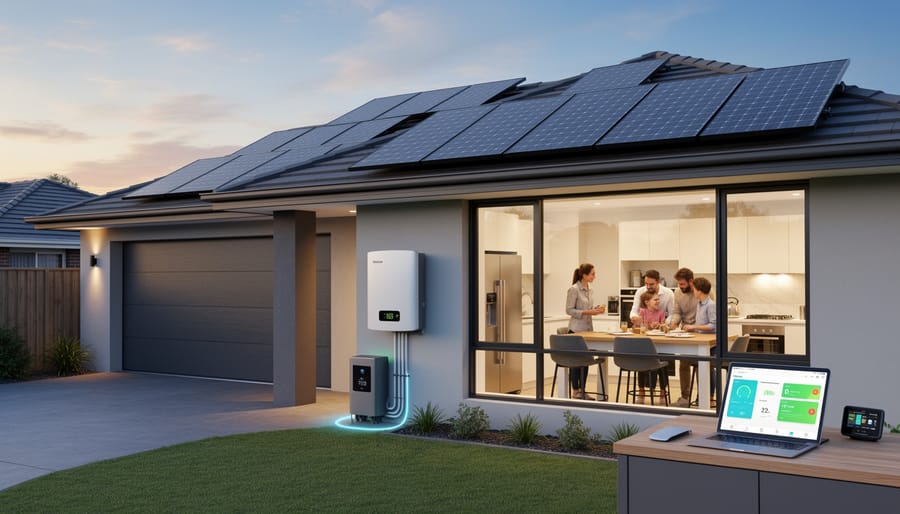
For Australian households with rooftop solar and batteries, an energy storage management system transforms what could be a simple storage setup into an intelligent energy hub. The ESMS learns your daily routines, when you wake up, run the dishwasher, or charge an electric vehicle, and automatically schedules battery charging and discharging to maximize self-consumption of your solar generation rather than exporting cheap power to the grid during the day only to buy it back at premium rates after sunset.
These systems can also slash electricity bills by time-shifting energy use: charging batteries when solar production peaks or grid prices drop, then drawing stored power during expensive evening demand periods. Many homeowners in New South Wales and South Australia now participate in virtual power plant programs, where their ESMS-controlled batteries provide grid stability services during peak demand, earning credits while supporting renewable energy integration.
A Brisbane family running a 10 kW solar system with 13.5 kWh battery storage reported cutting their grid reliance by 82 percent within the first year of adding smart management software. Their system automatically prioritizes powering their home workshop during daylight hours, charges the battery with excess solar, and feeds surplus energy to the grid only after their storage is full. As smart grid cybersecurity improves, these connected home systems will play an even larger role in Australia’s distributed energy future.
Agricultural Operations and Rural Energy
On Australian farms, energy storage management systems are proving invaluable for operations that can’t afford downtime or unpredictable power costs. Consider a dairy farm in Gippsland running refrigeration around the clock and milking equipment twice daily. The ESMS coordinates a solar array and battery system to power cold storage continuously while scheduling energy-intensive processes like milk cooling and grain drying for periods when the batteries are fully charged or solar production peaks.
Irrigation presents another compelling application. Cotton and rice growers in the Murray-Darling Basin use ESMS technology to run pumps during off-peak electricity periods or when their batteries hold surplus solar energy, slashing pumping costs by 40-60% compared to drawing from the grid during expensive daytime rates. The system learns seasonal water demand patterns and adjusts storage strategies accordingly.
Progressive farms are also integrating bioenergy into their managed systems. An ESMS can coordinate biogas generators running on agricultural waste with solar panels and batteries, dispatching power from whichever source makes economic and operational sense at any moment. When the biogas digester produces excess energy overnight, the system diverts it to battery storage for daytime irrigation or processing loads, creating a truly circular energy model.
Commercial and Industrial Facilities
Australian businesses face electricity costs that can make or break quarterly budgets, with peak demand charges often accounting for 30-50% of commercial power bills. An ESMS transforms this challenge into opportunity by learning when a facility uses the most power, typically weekday afternoons when air conditioning runs hard and production lines hum, then strategically discharging stored energy during those expensive peaks while recharging overnight when rates drop by 60% or more.
A Melbourne manufacturing plant using solar-plus-storage with intelligent management cut its peak demand charges by $47,000 in the first year. The system detected when heavy machinery was about to push demand over threshold limits and automatically supplied battery power for just those critical minutes, keeping grid draw below the penalty tier. During a January heatwave that caused local brownouts, the same facility ran continuously on stored energy while competitors shut down production lines, protecting both revenue and customer commitments.
The reliability advantage extends beyond cost savings. Distribution centres, data centres, and food processing facilities use ESMS to provide seamless backup power without the noise, emissions, or maintenance headaches of diesel generators. When the grid fails, transition happens in milliseconds, computers don’t reboot, refrigeration doesn’t stop, and operations continue without interruption.
For businesses pursuing sustainability certifications or corporate renewable energy targets, an ESMS provides verified data showing exactly how much clean energy powers operations. The detailed reporting satisfies auditors and stakeholders while the system quietly maximizes solar self-consumption, sometimes reaching 80-90% on well-designed installations compared to 30-40% without intelligent management.
Grid-Scale and Community Energy Projects
Large-scale battery projects across Australia demonstrate how sophisticated management systems coordinate entire energy ecosystems. The Hornsdale Power Reserve in South Australia, one of the world’s largest lithium-ion batteries, uses advanced ESMS technology to provide grid frequency control within milliseconds, preventing blackouts while storing excess wind energy for evening demand peaks. In Queensland’s renewable energy zones, utility-scale installations manage the transition from daytime solar abundance to night-time consumption, with control systems balancing supply across hundreds of megawatt-hours.
Community microgrid projects in regional areas like Yackandandah and Hepburn showcase how intelligent management platforms coordinate distributed solar, battery storage, and local generation to create resilient energy networks. These systems handle complex tasks: deciding when to store community-generated renewable energy, when to draw from the main grid during low-price periods, and when to island the microgrid during outages. The management software treats dozens of individual installations as a single coordinated resource, delivering grid services while maintaining local energy security, a model that’s expanding across remote Australian communities seeking energy independence.
The Benefits That Matter Most
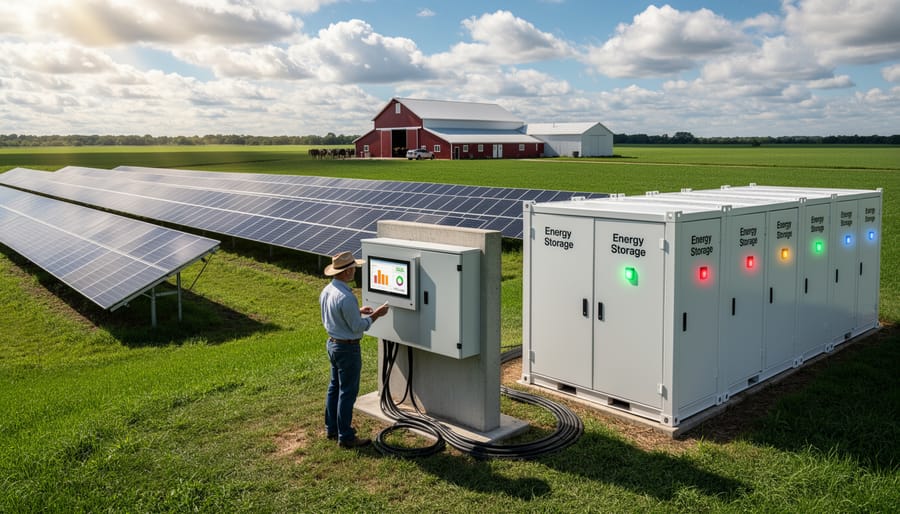
An energy storage management system doesn’t just make batteries work, it makes them work smarter, longer, and cheaper. The benefits reach everyone from individual homeowners to grid operators managing Australia’s energy transition, with tangible advantages that show up in electricity bills, equipment longevity, and carbon footprints.
Battery Lifespan Extension Through Intelligent Management
The most immediate financial benefit is simple: batteries last longer when properly managed. An ESMS prevents the damaging charge and discharge patterns that degrade battery cells prematurely. By maintaining optimal depth of discharge, controlling charge rates based on temperature, and avoiding stress conditions, the system can extend battery life by 30 to 50 percent compared to unmanaged operation. That translates to thousands of dollars saved over the system’s lifetime and deferred replacement costs that would otherwise hit after just five or six years.
Real Cost Savings Across Different Users
The financial advantages vary by stakeholder, but they’re substantial across the board:
- Homeowners save $800 to $1,500 annually through maximized solar self-consumption and participation in virtual power plant programs
- Businesses reduce peak demand charges by 20 to 40 percent through strategic discharge during high-tariff periods
- Grid operators lower infrastructure investment needs by using distributed storage to defer costly network upgrades
- The environment gains measurable emissions reductions as storage enables higher renewable penetration and displaces fossil fuel peaking plants
Australian agricultural operations see particularly strong returns. A dairy farm in Gippsland recently documented a 60 percent reduction in grid electricity costs after installing solar-plus-storage with intelligent management that schedules energy-intensive processes like milk cooling and irrigation pumping for optimal times.
The grid stability benefits matter more as renewable penetration increases. Energy storage management systems respond to frequency fluctuations in milliseconds, providing the ancillary services coal plants once supplied. They balance supply and demand minute by minute, preventing blackouts and reducing the need for expensive standby generators.
Perhaps most importantly, these systems unlock renewable energy’s full potential. They capture solar generation that would otherwise be curtailed, store wind power from overnight generation, and discharge clean energy precisely when it’s needed most. That’s how Australia reaches its 2030 emissions targets, not through massive infrastructure alone, but through intelligent management of the clean energy resources we’re already building.
Common Questions About Energy Storage Management
Most Australians considering energy storage management systems want to know whether the technology will work for their situation before they make the commitment. The questions below address the practical concerns that come up most often.
How much does an energy storage management system cost?
An ESMS typically adds $1,000 to $3,000 to a residential battery installation, though the cost is often bundled into the overall system price. Commercial systems cost more but deliver proportionally greater savings through demand charge reduction and optimized energy arbitrage.
Can I add an ESMS to my existing solar and battery setup?
Many modern battery systems come with integrated management capabilities, but standalone ESMS solutions can be retrofitted to older installations in most cases. Compatibility depends on your battery’s communication protocols and whether it supports third-party management software.
Is operating an energy storage management system complicated?
Not at all. Most systems run automatically once configured by your installer, requiring no daily intervention. You’ll access performance data and adjust settings through a smartphone app or web dashboard designed for homeowners, not engineers.
What maintenance does an ESMS require?
The software requires minimal maintenance beyond periodic updates, which usually happen automatically. The hardware components last as long as your battery system itself, with no consumable parts to replace.
How do software updates work?
Quality systems receive over-the-air updates that improve performance, add new features, and maintain compatibility with evolving grid requirements. These updates typically happen in the background without disrupting your energy supply.
Can an ESMS manage bioenergy systems alongside solar and batteries?
Yes, advanced platforms can coordinate multiple energy sources including biogas generators, agricultural digesters, and biomass systems. The ESMS determines the most cost-effective and sustainable combination of resources to meet your energy needs at any given moment.
The compatibility question deserves a closer look because many Australians already have solar panels installed. Modern ESMS platforms work with most battery brands and inverter types manufactured in the past five years, though you’ll want to verify compatibility before purchasing. Some systems are proprietary and work only with specific battery brands, while others offer open-architecture designs that integrate with various equipment.
For rural properties exploring bioenergy integration, the management system becomes even more valuable. A farm running a biogas digester alongside solar panels and battery storage needs intelligent coordination to balance these multiple inputs efficiently. The ESMS determines when to draw from stored battery power, when to run the biogas generator, and when to pull from or export to the grid based on real-time economics and operational requirements.
The complexity concern often dissolves once people see the interface. Most systems display information visually with colour-coded indicators showing energy flow, battery status, and cost savings. You can set preferences like “maximize self-sufficiency” or “minimize costs” and let the algorithms handle the moment-to-moment decisions.
Energy storage management systems represent far more than technical innovation, they’re the practical bridge between Australia’s renewable energy ambitions and everyday reality. Whether you’re a homeowner wanting to make the most of your rooftop solar, a farmer managing energy-intensive operations, or a business pursuing sustainability goals, intelligent energy management puts you in control of your energy future.
The technology has matured beyond early complexity into accessible, user-friendly systems that work quietly in the background, optimizing your energy use while you focus on what matters. Australian homes, farms, and businesses are already experiencing lower electricity bills, greater energy independence, and the satisfaction of contributing to grid stability and emissions reduction. These aren’t distant possibilities, they’re happening now across the country.
What makes this moment particularly exciting is the convergence of falling battery costs, improving software capabilities, and supportive programs like virtual power plants that turn individual systems into collective strength. You don’t need to be an energy expert to participate. Start by assessing your current energy patterns and exploring options suited to your situation, whether that’s adding battery storage to existing solar, upgrading to smarter management for agricultural operations, or investigating commercial-scale solutions.
The transition to smarter, cleaner energy isn’t just inevitable, it’s already underway, and the tools to participate effectively are within reach. Your next step toward energy independence and sustainability starts with understanding that intelligent energy management works for you, not against you.