
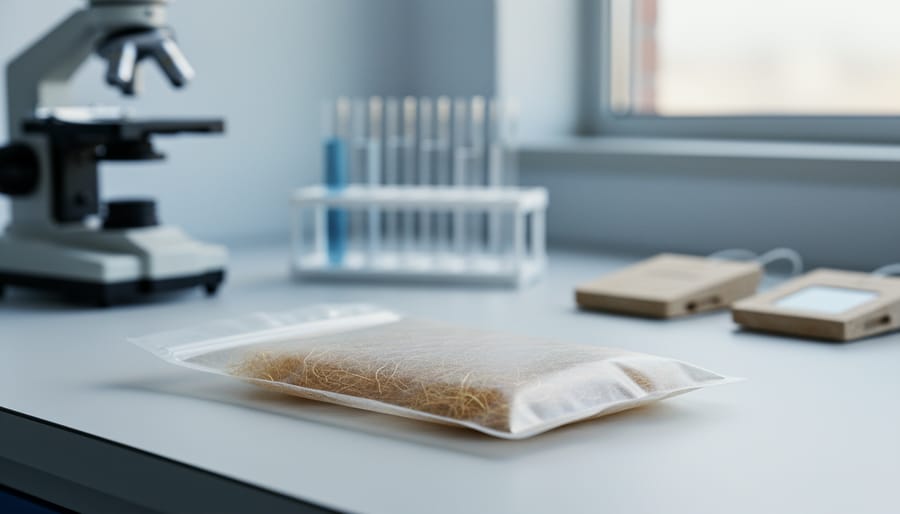
Biodegradable batteries are power sources that break down naturally after use, using materials like cellulose, gelatin, and biocompatible polymers instead of toxic metals and synthetic plastics. They’re being manufactured right now in research labs and pilot facilities worldwide, including Australian universities, with practical applications already emerging in medical devices, environmental sensors, and low-power electronics where safe disposal matters more than long-term performance.
The technology works because organic materials can conduct ions and store electrical charge while remaining environmentally harmless. When a biodegradable battery reaches end-of-life, it decomposes into non-toxic compounds through natural processes, eliminating the mounting electronic waste crisis created by conventional battery storage solutions. Some versions dissolve in water within weeks, others break down in soil over months.
Australian researchers have achieved promising results with batteries that match commercial performance for short-term applications. A team at Monash University developed a biodegradable zinc-air battery using naturally derived carbon materials that lasted 100 charge cycles before safely decomposing. Similar work at RMIT focuses on paper-based batteries for single-use medical diagnostics.
The challenge isn’t whether these batteries work; it’s matching them to the right jobs. They won’t replace your smartphone battery tomorrow, but they’re already suitable for temporary sensors, smart packaging, and medical implants that need to dissolve after healing occurs. For environmentally conscious Australians wondering if this technology is ready for adoption, the answer depends entirely on your application, and this guide will show you exactly where biodegradable batteries fit into Australia’s clean energy future.
What Biodegradable Batteries Are and How They Work
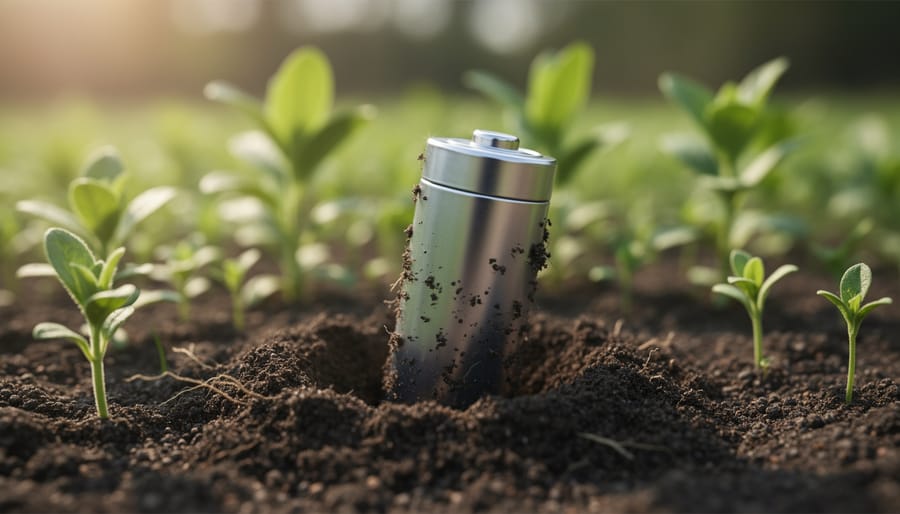
Biodegradable batteries generate electrical current using materials that can safely decompose in natural environments, typically within weeks to months after disposal. Unlike conventional lithium-ion batteries that rely on metal oxides, graphite, and synthetic separators, biodegradable batteries use organic components such as cellulose from plants, chitosan derived from crustacean shells, and paper-based substrates. These materials serve the same fundamental roles, electrodes, electrolytes, and casings, but break down into harmless byproducts when exposed to moisture, microbes, and environmental conditions.
The basic chemistry involves creating an electrochemical cell where electrons flow between two electrodes through an electrolyte solution. In biodegradable designs, researchers use zinc or magnesium as the anode, manganese dioxide or carbon-based materials as the cathode, and water-based or gel electrolytes made from sodium chloride or similar safe compounds. The cellulose or paper substrate acts as the separator, preventing the electrodes from touching while allowing ions to move between them. When the battery completes its useful life, enzymes and microorganisms in soil or water break down the organic materials, leaving minimal environmental trace.
Australian researchers have made notable contributions to this field. Teams at Monash University and RMIT have developed paper-based batteries that generate power for several hours using printed conductive inks and bio-compatible electrolytes. The University of South Australia demonstrated a prototype battery using wax-coated paper that biodegraded completely within 90 days in controlled compost conditions. These prototypes typically produce voltage between 0.5 and 1.5 volts, suitable for medical sensors, temporary tracking devices, and agricultural monitors where long battery life isn’t required.
The trade-off is clear: biodegradable batteries can’t match lithium-ion energy density or longevity. A standard AA lithium battery holds roughly 3,000 milliamp-hours; current biodegradable versions deliver between 50 and 300 milliamp-hours. They work well for applications needing power for days or weeks rather than years, and where environmental impact matters more than maximum performance.
Who Can Benefit: Eligibility and Suitability for Biodegradable Battery Adoption
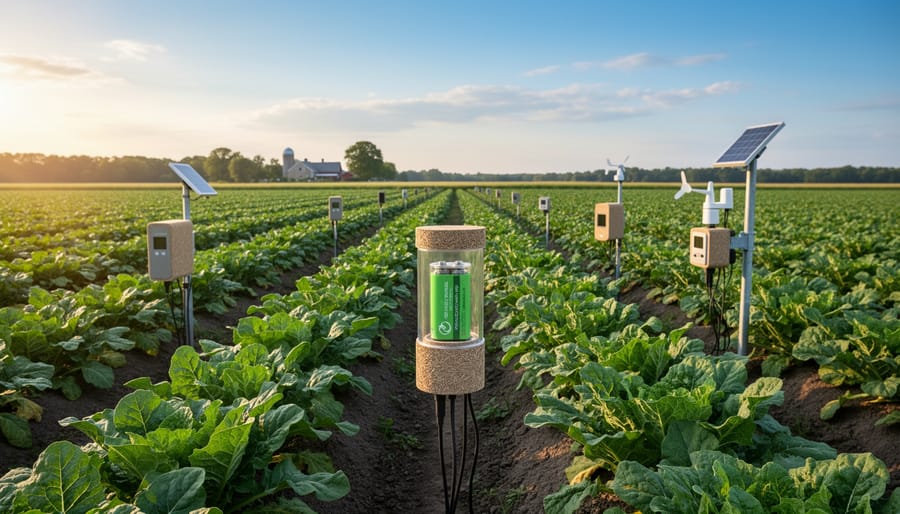
Biodegradable batteries are not yet viable for high-drain applications like electric vehicles or grid-scale storage, but they excel in specific niches where short operational lifespans and environmental sensitivity matter most. As of 2026, the technology is best suited for users who prioritize minimal ecological impact over extended battery life or high power output.
Medical device manufacturers are leading adopters, particularly for single-use diagnostic tools, temporary monitoring patches, and implantable sensors that dissolve harmlessly after completing their function. These applications benefit from biodegradable batteries because the entire device can safely break down in the body or compost bin, eliminating surgical removal or special disposal requirements.
Agricultural operations across regional Australia are finding practical value in biodegradable battery-powered soil sensors and crop monitors. When deployed across vast paddocks, these devices can remain in the field after harvest season, degrading naturally without contributing to electronic waste or requiring costly retrieval. The same logic applies to environmental monitoring equipment used in remote bushland or marine research, where retrieval is impractical or disruptive.
Current biodegradable batteries work best for:
- Wearable health monitors and diagnostic patches requiring 24-48 hours of operation
- Agricultural sensors for soil moisture, temperature, and pH monitoring in temporary field trials
- Single-use electronics for events, exhibitions, or marketing campaigns
- IoT devices in remote environmental monitoring with limited retrieval access
- Smart packaging that tracks freshness or temperature during short-term shipping
- Educational kits and experimental electronics for schools and research institutions
Technical requirements are modest: devices must operate at low power (typically under 10 milliwatts), function for hours to weeks rather than years, and tolerate slightly less predictable discharge curves compared to conventional batteries. Businesses should have clear end-of-life disposal processes in place, even though biodegradation is the goal, to ensure compliance with Australian waste regulations and verify environmental claims. The technology suits organizations willing to prioritize sustainability credentials alongside functional performance, particularly where single-use conventional batteries currently create disposal headaches.
How Biodegradable Batteries Are Manufactured
Sourcing and Preparing Biodegradable Materials
Manufacturers typically source cellulose from agricultural waste streams such as cotton linters, wood pulp, and sugarcane bagasse, materials that would otherwise be discarded. In Australia, wheat and barley processing byproducts offer abundant cellulose feedstock. Chitosan comes from crustacean shells, often collected as seafood industry waste from prawn and crab processing along the Queensland and South Australian coasts. Once sourced, these materials undergo purification to remove impurities and achieve the chemical consistency needed for battery components.
The preparation process varies by material. Cellulose is broken down into nanofibers through mechanical or chemical treatment, creating a flexible substrate that can serve as the battery’s separator or structural base. Chitosan is deacetylated and dissolved to form gel electrolytes or binder solutions. Some manufacturers blend these bio-materials with conductive additives like carbon nanotubes or graphene to improve electrical performance. This approach to manufacturing innovation reduces reliance on petroleum-derived plastics while maintaining the conductivity and structural integrity batteries require.
Assembly and Integration
Once the bio-based materials are ready, manufacturers assemble the battery by layering biodegradable components in a precise sequence. The process starts with positioning the anode, typically made from zinc or magnesium, onto a cellulose or chitosan substrate that acts as both structural support and separator. The cathode, often containing manganese dioxide or carbon-based compounds embedded in biopolymer matrices, is then aligned opposite the anode.
Between these electrodes sits the electrolyte, which can be a gel derived from agar, carrageenan, or salt solutions absorbed into paper-like separators. This aqueous or gel-based electrolyte allows ion flow while avoiding the toxic organic solvents found in conventional batteries. Manufacturers carefully control moisture levels during this stage to prevent premature activation.
The entire assembly is enclosed in a biodegradable casing, usually made from modified cellulose films, chitosan blends, or even compressed agricultural waste. Unlike plastic housings, these casings must balance mechanical protection with eventual decomposition. Australian facilities often use heat-sealing or bio-adhesives to secure the package without introducing synthetic glues.
Final steps include adding biodegradable terminals and testing electrical connectivity. The completed battery is compact, lightweight, and designed to function for weeks or months before safely breaking down in soil or compost environments.

Quality Control and Environmental Testing
Quality assurance for biodegradable batteries demands the same rigour as conventional power sources, with the added complexity of confirming environmental claims. Australian manufacturers conduct multi-stage battery safety testing to verify voltage stability, discharge rates, and shelf life under varied temperatures and humidity levels. Crucially, labs simulate accelerated composting conditions, mimicking soil microbe activity, moisture exposure, and temperature cycling, to measure actual degradation timelines and confirm that materials break down into non-toxic compounds within claimed periods. Third-party certification increasingly backs these tests, giving businesses and consumers confidence that “biodegradable” labels reflect genuine environmental performance rather than marketing spin.
Rights, Responsibilities, and Environmental Standards

Manufacturers and importers of biodegradable batteries in Australia must ensure all environmental claims must be accurate substantiated, and compliant with the Australian Consumer Law, which prohibits misleading or deceptive conduct. Any product marketed as “biodegradable” or “compostable” must meet specific degradation criteria and provide clear information about disposal conditions, whether it breaks down in industrial composting facilities, home compost bins, or natural environments. Businesses can’t simply label a battery “eco-friendly” without supporting evidence; they need third-party testing and certification to back up their claims.
Waste management responsibilities extend across the supply chain. Manufacturers should provide clear end-of-life instructions, while retailers and consumers must dispose of biodegradable batteries according to those guidelines to ensure proper breakdown. Unlike conventional battery recycling programs, biodegradable batteries may require separate collection systems or composting pathways, depending on their composition.
Australia’s certification frameworks for biodegradable electronics are still developing. While international standards like ASTM D6400 and EN 13432 offer guidance on compostability, local verification through organizations such as the Australasian Bioplastics Association helps establish credibility. Emerging industry codes of practice aim to standardize testing protocols and labelling requirements, giving businesses clearer benchmarks and consumers greater confidence. As regulation catches up with innovation, expect stricter requirements around proof of biodegradability, disposal infrastructure disclosures, and supply chain transparency over the next few years.
Real-World Success Stories from Australia and Beyond
Australia stands at the forefront of biodegradable battery innovation through partnerships between universities and industry. At the University of Queensland, researchers developed paper-based batteries using zinc and manganese oxide electrodes that fully decompose within 90 days. The team collaborated with a Brisbane startup to deploy these batteries in soil moisture sensors across cotton farms in the Darling Downs region. Farmers report reliable performance for an entire growing season, after which the sensors and batteries break down naturally in the soil without leaving toxic residue.
Monash University made headlines in 2025 when their chitosan-based battery prototype powered temporary RFID tags for livestock tracking in Western Australia’s pastoral stations. The biodegradable tags, designed to fall off naturally after three months, eliminate the environmental burden of collecting thousands of plastic devices from remote grazing land. The project secured $2.3 million in federal funding and has since expanded to trials in South Australia’s sheep industry.
Medical applications are gaining traction internationally. A Swiss research team created cellulose batteries small enough to power biodegradable drug delivery implants, now undergoing clinical trials in Australia through a partnership with Melbourne’s Alfred Hospital. These implants dissolve completely after releasing medication over several weeks, removing the need for surgical extraction.
In New Zealand, AgriTech startup GreenPulse launched compostable temperature sensors for kiwifruit orchards, powered by starch-based batteries that last through harvest season before decomposing in commercial composting facilities. The success prompted interest from Australian avocado and mango growers seeking similar solutions.
These projects demonstrate that biodegradable batteries have moved beyond laboratory curiosity into real-world deployment. The combination of academic research, agricultural necessity, and environmental commitment positions Australia as a testing ground for technology that could reshape how we power temporary and single-use electronics.
Where to Get Help, Resources, and Support
Australia’s transition to biodegradable battery technology is supported by a network of government programs, research institutions, and industry organizations ready to assist businesses, researchers, and innovators. Whether you’re exploring pilot projects or seeking commercialization support, these resources can accelerate your journey into sustainable energy storage.
The Australian Renewable Energy Agency (ARENA) provides battery grants that cover emerging technologies, including bio-based energy storage solutions. CSIRO’s Manufacturing Business Unit offers technical expertise and testing facilities for biodegradable materials, while the Clean Energy Finance Corporation (CEFC) can connect viable projects with investment pathways.
| Organization | Type of Support | Contact |
|---|---|---|
| Australian Renewable Energy Agency (ARENA) | Grants for emerging battery technology | |
| CSIRO Manufacturing | Technical testing and materials research | |
| Clean Energy Finance Corporation | Investment and commercialization support | |
| Battery Storage and Grid Integration Program | Policy guidance and industry connections |
Universities such as Monash, UNSW, and the University of Queensland run active biodegradable electronics research programs and often welcome industry partnerships. For regulatory questions about environmental claims and product standards, the Australian Competition and Consumer Commission (ACCC) provides clear guidance on substantiation requirements for biodegradability assertions. State-level innovation hubs and Cooperative Research Centres also offer collaboration opportunities tailored to regional industries, particularly in agriculture and medical technology where biodegradable batteries show the most immediate promise.
How to Apply or Complete the Process
There’s no single “application” for biodegradable batteries in the way you’d apply for a government grant or register a product, yet. However, if you’re a business looking to manufacture, import, or distribute these batteries in Australia, you’ll follow the same environmental compliance pathways as any electronic product.
Start by checking with the Australian Competition and Consumer Commission (ACCC) to ensure your environmental claims meet truth-in-advertising standards. If you’re labelling a battery as “biodegradable,” you’ll need verifiable evidence, lab testing results showing decomposition rates and material composition. The ACCC’s Green Marketing Guidelines spell out what counts as misleading.
Next, consult the National Measurement Institute if your battery makes specific performance claims (voltage, lifespan, safety ratings). They oversee product standards and can confirm whether your device needs formal testing or certification.
For waste management obligations, contact your state’s environmental authority. Some jurisdictions may classify biodegradable batteries differently than conventional e-waste, which affects disposal requirements.
Finally, if you’re developing a new biodegradable battery technology, consider reaching out to Standards Australia. They’re working with researchers to establish national benchmarks for bio-based electronics, and early industry input helps shape future regulations.
Common Questions About Biodegradable Batteries
Common Questions About Biodegradable Batteries
Australians considering biodegradable batteries often have similar questions about how these emerging technologies fit into real-world applications and budgets.
How do biodegradable batteries compare in cost to conventional batteries?
Currently, biodegradable batteries cost more per unit than mass-produced alkaline or lithium-ion batteries due to limited production scale and specialized materials. As manufacturing processes mature and demand increases, prices are expected to become more competitive for specific applications like single-use sensors.
How long does it take for these batteries to break down?
Degradation timeframes vary by design and environmental conditions, but most cellulose and chitosan-based batteries break down within weeks to months in compost or soil environments. Paper-based batteries can degrade even faster when exposed to moisture and microbial activity.
What are the main performance limitations?
Biodegradable batteries typically provide lower voltage output and shorter operational lifespans than conventional batteries, making them suitable for low-power devices rather than high-drain applications. They work well for temporary sensors, medical diagnostics, and short-term IoT devices but aren’t yet viable for smartphones or electric vehicles.
Where can Australians purchase biodegradable batteries?
Commercial availability remains limited in 2026, with most biodegradable batteries still in research or pilot production phases. Some specialized suppliers offer prototypes for industrial testing, while broader consumer access is expected as Australian manufacturers scale up production over the next few years.
The practical reality is that biodegradable batteries fill specific niches rather than replacing all conventional batteries overnight. For agricultural monitoring in remote Queensland properties, medical patches that dispose safely after use, or temporary event electronics, the trade-off between performance and environmental impact makes sense. For everyday consumer electronics requiring high power density and long runtime, traditional batteries still dominate. Understanding these boundaries helps businesses and researchers identify where biodegradable batteries can make the biggest difference.
Biodegradable batteries represent more than just an environmental innovation, they’re a practical step toward closing the loop on electronic waste while supporting Australia’s transition to a circular economy. From agricultural sensors monitoring soil conditions in remote paddocks to medical devices that safely dissolve after use, these bio-based power sources are finding real applications across industries that matter to everyday Australians.
The technology isn’t waiting in some distant future. Australian researchers and manufacturers are already prototyping, testing, and refining biodegradable batteries for commercial use. Whether you’re managing a farm, developing IoT solutions, or overseeing medical supply chains, there’s likely a place for this technology in your operations, and plenty of support available to help you explore it.
What makes this moment particularly promising is the alignment of environmental need, technical capability, and growing market demand. Businesses that investigate biodegradable batteries now position themselves at the forefront of sustainable innovation, gaining competitive advantage while contributing to a cleaner future.
The pathway forward is clear: explore the applications relevant to your industry, connect with research institutions and funding programs, and consider how bio-based energy storage might solve specific challenges you’re facing. Australia’s sustainable energy future is being built today, one biodegradable battery at a time.