
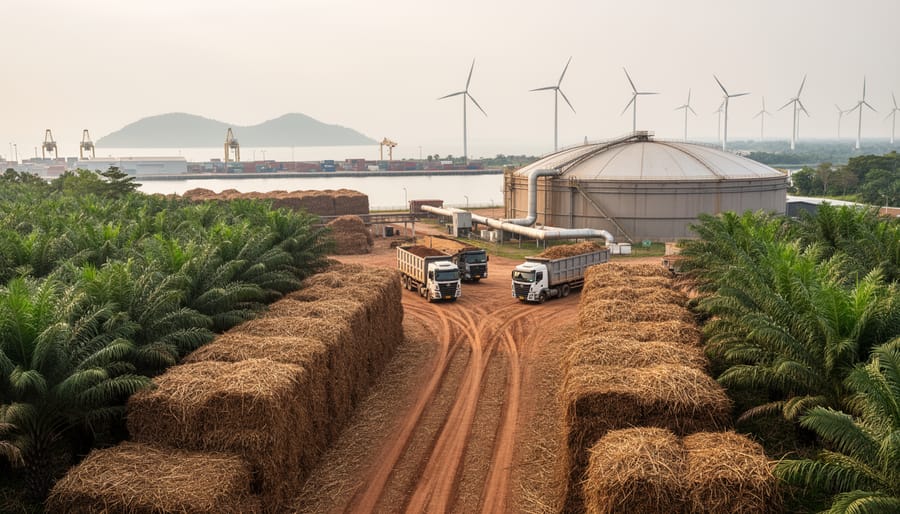
Crossboundary energy in the bioenergy sector refers to the collaborative production, distribution, and use of renewable energy resources across national or regional borders, enabling countries to pool biomass feedstocks, share infrastructure, and optimize energy systems beyond their own geographical limits. This approach transforms how nations tackle renewable energy challenges, turning regional biomass surpluses in one area into reliable power and fuel for neighboring territories that lack sufficient organic resources.
The concept matters because bioenergy doesn’t respect borders, and neither should the solutions. Australia stands to gain enormously from crossboundary partnerships, particularly as Southeast Asian nations ramp up agricultural waste valorization and Pacific island communities seek sustainable energy independence. When Queensland’s sugarcane bagasse processing expertise combines with Indonesia’s palm oil residues or Papua New Guinea’s forestry byproducts, the result is a supply chain that’s more resilient, cost-effective, and scalable than any single-nation effort could achieve.
This article unpacks how crossboundary bioenergy systems actually work, from the logistics of biomass transport to the policy frameworks that make international collaboration viable. You’ll discover the different models being deployed worldwide, including energy trading agreements, shared production facilities, and coordinated feedstock management. Real examples demonstrate how these partnerships already contribute to Australia’s green energy future with practical insights on establishing cross-border projects that deliver measurable environmental and economic returns. The barriers are real, but the proven models show they’re far from insurmountable.
What Crossboundary Energy Means for Bioenergy
Crossboundary energy in bioenergy describes the international movement and exchange of biomass feedstocks, refined biofuels, and renewable energy knowledge across national borders to build stronger, more resilient energy systems. Rather than confining bioenergy production and consumption within a single country, crossboundary approaches connect regions with abundant biomass resources to areas with high energy demand or advanced conversion technologies. A Swedish forestry operation might supply wood pellets to Japanese power stations, while Australian agricultural waste could become sustainable aviation fuel for airlines across Southeast Asia.
This international integration works because bioenergy resources aren’t evenly distributed. Some nations have vast agricultural lands generating biomass that exceeds local energy needs, while others possess cutting-edge conversion facilities but limited feedstock availability. Crossboundary systems bridge these gaps through trade agreements, shared infrastructure, and collaborative research programs managed by international bioenergy expert networks that standardize quality and sustainability practices.
- Bioenergy Feedstock
- Raw organic materials such as wood chips, agricultural residues, or energy crops that are converted into usable energy forms like heat, electricity, or transport fuels.
- Supply Chain Integration
- The coordination of sourcing, processing, transport, and distribution activities across multiple countries to create seamless bioenergy delivery networks.
- Energy Corridors
- Established trade routes and infrastructure networks that facilitate the regular movement of bioenergy products between producing and consuming nations.
- Transnational Infrastructure
- Shared facilities including ports, rail networks, storage terminals, and processing plants designed to support cross-border bioenergy flows efficiently.
The beauty of crossboundary energy lies in its ability to optimize the entire value chain. Countries export what they grow best while importing technologies or fuels they can’t efficiently produce domestically, creating economic opportunities and accelerating the global transition to renewable energy. For Australia, this means potential export revenue from our agricultural biomass while accessing proven conversion technologies developed overseas.
How Crossboundary Energy Systems Work in Practice
The Supply Chain Journey
A crossboundary bioenergy supply chain begins at the farm gate, where agricultural residues like sugarcane bagasse or purpose-grown energy crops are harvested and collected. Farmers bundle or pelletize the raw biomass to reduce volume and stabilize the material for transport. At this stage, moisture content is carefully controlled, typically dried to around 10-15%, to prevent spoilage during the weeks or months ahead.
From the farm, biomass moves to a regional processing facility, often by truck or rail. Here it undergoes further treatment: chipping, grinding, or compressing into standardized pellets that meet international specifications for energy density and handling. Quality testing happens at this point, verifying sustainability credentials and ensuring the biomass meets the importing country’s requirements for carbon emissions and land-use standards.
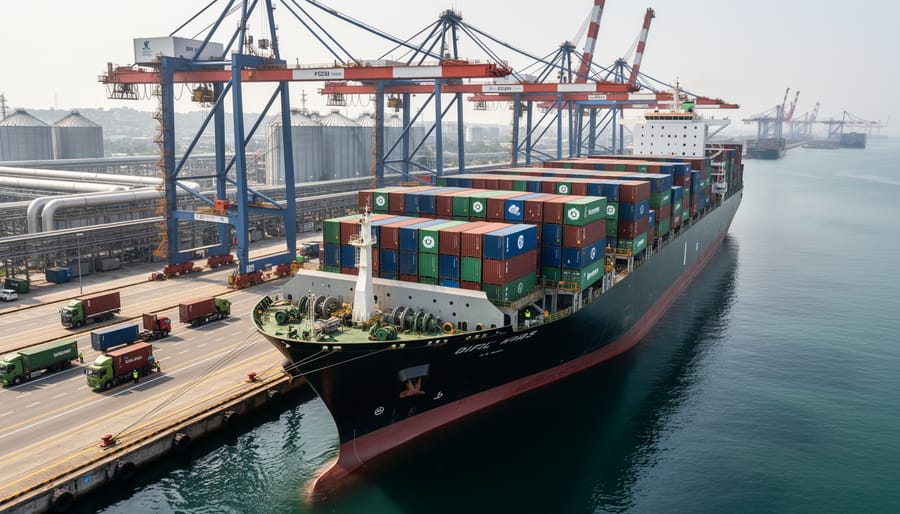
The processed biomass then travels to an export terminal, usually a specialized port facility with covered storage to protect against moisture. It’s loaded into bulk carriers, much like grain shipments, and crosses borders by sea. Shipping routes might run from Brazilian ports to European facilities, or from Australian terminals to Asian markets, with journey times ranging from days to several weeks.
Upon arrival, the biomass is offloaded at the destination port and transported to power plants, industrial heating systems, or biofuel refineries. At these end-use facilities, the imported biomass generates electricity, heat, or liquid transport fuels, completing its transformation from crop residue to clean energy across international borders.
Regulatory and Standards Frameworks
International bioenergy trade doesn’t operate in a regulatory vacuum, it’s governed by overlapping layers of standards that ensure fuel quality, sustainability, and fair market access across borders. At the heart of this framework sit legally binding directives like the EU Renewable Energy Directive which sets strict greenhouse gas reduction thresholds and land-use criteria for imported biomass. These rules determine which feedstocks qualify as sustainable and shape the terms under which producers in Australia or Southeast Asia can export to European markets.
Alongside government regulations, voluntary certification schemes fill critical gaps. Programs like the Roundtable on Sustainable Biomaterials (RSB) and the International Sustainability and Carbon Certification (ISCC) provide third-party verification that biomass meets environmental and social benchmarks from farm to final use. Exporters pursuing crossboundary opportunities must often hold multiple certifications to satisfy different importing countries, a biomass shipment bound for Germany might need ISCC compliance, while the same product heading to Japan requires alignment with that nation’s feed-in tariff standards.
Trade agreements also play a starring role. Bilateral and regional pacts can lower tariffs on biofuel imports, harmonize technical specifications, and streamline customs procedures. Yet this patchwork of rules creates complexity: a single consignment crossing three jurisdictions may face three sets of lab testing protocols, three carbon accounting methodologies, and three documentation systems, all of which add cost and administrative overhead to crossboundary supply chains.
Different Models of Crossboundary Bioenergy Integration

Crossboundary bioenergy doesn’t follow a one-size-fits-all blueprint. The integration models vary widely depending on geography, infrastructure, policy frameworks, and the specific bioenergy products being traded. Understanding these different configurations helps stakeholders identify which approach best suits their circumstances and objectives.
At the simplest level, bilateral feedstock agreements form the foundation of many crossboundary arrangements. These direct partnerships between producers in one country and buyers in another establish reliable supply chains for specific biomass types, whether wood pellets, agricultural residues, or processed biofuels. Such agreements typically include volume commitments, quality specifications, and pricing structures that provide stability for both parties. They’re particularly common when a nation with abundant biomass resources partners with one facing feedstock shortages or seeking to diversify its energy mix.
Regional bioenergy corridors represent a more sophisticated model, where multiple countries within a geographic area coordinate their bioenergy systems to create integrated markets. Scandinavia and the Baltic states have pioneered this approach, harmonizing sustainability standards and facilitating cross-border energy flows that treat biomass almost like a shared resource pool. These corridors reduce transaction costs, streamline regulatory compliance, and enable economies of scale that benefit all participants.
- Bilateral feedstock agreements, direct supply contracts between producers and buyers across borders
- Regional bioenergy corridors, coordinated multi-nation markets with harmonized standards
- Joint-venture processing facilities, shared infrastructure built near borders or ports to serve multiple countries
- Distributed supply networks, complex webs connecting numerous suppliers and buyers across several jurisdictions
Joint-venture processing facilities take collaboration further by pooling capital and expertise to build shared infrastructure. These might include pelletizing plants positioned strategically near international ports, or advanced biorefineries designed to serve markets on both sides of a border. The shared investment model spreads risk while creating facilities larger and more efficient than either partner could justify alone.
The most complex model involves distributed supply networks that connect multiple producers, processors, and end-users across numerous countries. These networks often emerge organically as global bioenergy networks mature, creating resilient systems where supply disruptions in one region can be offset by capacity elsewhere. They require sophisticated logistics coordination and robust data-sharing platforms but offer unparalleled flexibility and security of supply.
Australia’s current engagement spans several models, from straightforward export agreements for eucalyptus chips to exploratory discussions about regional processing hubs serving the Asia-Pacific market. As the domestic bioenergy sector expands, we’ll likely see Australian operators participating in progressively more integrated arrangements.
Real-World Applications and Success Stories
European Bioenergy Corridors
The Scandinavian-to-UK wood pellet trade stands as one of the world’s most established crossboundary bioenergy systems. Since the early 2010s, Sweden, Norway, and Finland have supplied millions of tonnes of compressed wood pellets annually to power stations across Britain and mainland Europe, creating a reliable energy corridor that now generates enough electricity for several million homes.
This model works because Scandinavian forests produce sustainable surplus biomass from timber industry byproducts and purpose-grown energy crops, while British facilities, many converted from coal, provide ready infrastructure and strong renewable energy demand. The pellets travel by bulk carrier ships to UK ports like Liverpool and Immingham, where dedicated handling equipment feeds them directly into power stations within hours of arrival.
What makes this corridor particularly mature is its robust certification framework. Nearly all pellets carry Sustainable Biomass Program verification, tracking the wood from forest to furnace and proving it meets strict carbon and biodiversity standards. This transparency has built trust across borders, allowing utilities to confidently claim renewable credentials while forest managers secure long-term contracts that justify sustainable harvesting investments.
The system demonstrates how geography, industrial capacity, and regulatory alignment can create enduring international bioenergy partnerships.
Asia-Pacific Partnerships
Southeast Asia hosts some of the world’s most dynamic bioenergy trade corridors, with palm oil biodiesel and wood pellets moving regularly between Indonesia, Malaysia, Thailand, and import markets in Japan and South Korea. Indonesia ships millions of tonnes of palm kernel shell annually to Japanese biomass power stations, creating a reliable revenue stream for plantation operators while helping Japan meet renewable energy targets. Malaysia has established certified sustainable palm oil supply chains that feed biodiesel refineries across the region, demonstrating how robust sustainability frameworks can underpin cross-border biofuel commerce.
Australia is carving out a distinct niche in this regional network. Queensland and New South Wales producers export agricultural residues, including bagasse and wheat straw pellets, to South Korean facilities seeking certified low-emission feedstock. Australian companies are also exporting pyrolysis technology and gasification systems to Vietnam and the Philippines, helping those nations convert local waste biomass into power. These partnerships bring economic returns while positioning Australia as both a reliable biomass supplier and a technology partner, strengthening energy security ties across the Asia-Pacific and opening new markets for Australian innovation in renewable energy systems.
Australia’s Growing Opportunities
Australia is emerging as both an exporter and importer in crossboundary bioenergy markets, leveraging its agricultural resources and technological expertise. Producers in Queensland and New South Wales are exporting agricultural residues, sugarcane bagasse, wheat straw, and cotton gin waste, to Japan and South Korea, where these materials fuel industrial heating and power generation. Meanwhile, Australian biofuel refineries are importing sustainably certified palm oil residues from Indonesia and Malaysia to blend with locally produced biodiesel, diversifying feedstock sources and improving supply chain resilience.
Beyond physical trade, Australian companies are contributing to regional bioenergy development through research networks that share advanced gasification and pyrolysis technologies with Southeast Asian partners. This two-way exchange strengthens Australia’s position as a Pacific bioenergy hub, creating revenue opportunities for farmers, reducing waste in agricultural regions, and supporting the nation’s renewable energy targets through smarter integration with neighboring markets.
Benefits and Challenges of Cross-Border Bioenergy Supply Chains
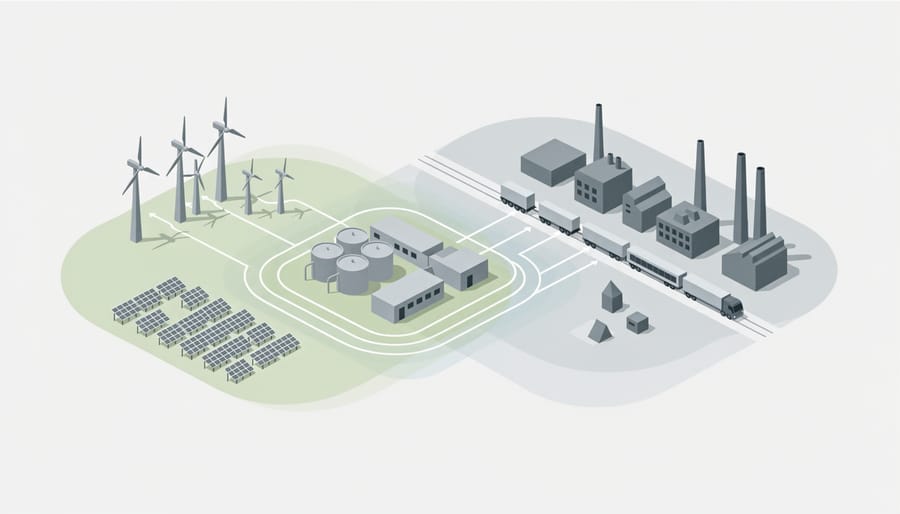
Cross-border bioenergy supply chains deliver significant advantages while presenting practical challenges that require careful navigation. Understanding both sides helps stakeholders make informed decisions about international collaboration.
The benefits are compelling. Energy security improves when countries diversify their bioenergy sources beyond domestic production, reducing vulnerability to local supply disruptions or seasonal variations in biomass availability. Economic development accelerates through new export markets for biomass producers and access to competitively priced feedstock for energy consumers. Emissions reductions become more achievable when nations with limited sustainable biomass can tap into regions with abundant agricultural residues or forestry waste, displacing fossil fuels more rapidly. Technology transfer flows naturally through treatment partnerships allowing developing bioenergy sectors to adopt proven processing methods and quality standards from established markets.
The obstacles, however, are real. Regulatory complexity multiplies when supply chains cross jurisdictions with different sustainability criteria, certification requirements, and energy classifications, what qualifies as renewable in one country may face restrictions in another. Transport costs can erode the environmental and economic advantages of bioenergy, particularly for low-density biomass that travels long distances by ship or truck. Quality assurance becomes harder to maintain across borders, with variations in moisture content, energy density, and contamination levels affecting performance and requiring robust testing protocols at multiple points in the chain. Currency fluctuations and trade policy changes introduce financial uncertainty that domestic supply chains avoid.
Success requires addressing these challenges systematically through standardised certification schemes, strategic infrastructure investment near ports and processing hubs, and long-term bilateral agreements that provide regulatory predictability. The countries making crossboundary bioenergy work treat these obstacles as solvable engineering and policy problems rather than insurmountable barriers.
Common Questions About Crossboundary Energy in Bioenergy
Do you have concerns about how crossboundary energy actually works in practice? Industry professionals and policymakers often grapple with questions about sustainability standards, economic impacts, and Australia’s competitive position in international bioenergy markets. Understanding these practical considerations helps stakeholders make informed decisions about participating in cross-border supply chains.
How do we ensure imported biomass is truly sustainable?
International certification schemes like the Roundtable on Sustainable Biomaterials (RSB) and Sustainable Biomass Program (SBP) provide third-party verification of sustainability claims across borders. These frameworks track the entire chain of custody from forest or farm to final use, ensuring environmental and social standards are met regardless of origin.
What role can Australia play in crossboundary bioenergy systems?
Australia can function both as an exporter of agricultural residues and forestry biomass to Asian markets and as an importer of specialised feedstocks for advanced biofuel production. Our bioenergy innovation centre partnerships position us to share technology and expertise while accessing diverse biomass sources that complement domestic production.
Does crossboundary energy threaten local jobs in the bioenergy sector?
Evidence from European markets shows that cross-border integration typically creates more jobs than it displaces, generating employment in logistics, quality control, and processing facilities. The key is ensuring local industries capture value-added stages rather than simply exporting raw materials.
Is crossboundary bioenergy economically viable compared to fossil fuels?
When carbon pricing and energy security benefits are factored in, crossboundary bioenergy systems achieve cost parity with fossil fuels in many markets. Economies of scale from international trade lower per-unit costs, while diversified supply sources reduce price volatility compared to single-country production models.
The economic case strengthens as transport infrastructure improves and participating countries harmonise regulations. Early participants in crossboundary networks often secure preferred supplier relationships and market access that provide long-term competitive advantages. For Australian producers, the question shifts from whether to participate to how best to position ourselves in emerging regional supply chains that connect Southeast Asian demand with our agricultural and forestry resources.
Crossboundary energy represents more than just a logistics solution for bioenergy, it’s a pathway toward a more resilient, efficient, and sustainable energy future for Australia and the broader Asia-Pacific region. By connecting biomass resources, processing expertise, and end markets across borders, these integrated supply chains unlock opportunities that isolated domestic systems simply can’t match.
Australia stands at a pivotal moment. Our agricultural sector produces abundant biomass feedstock, our research institutions lead in bioenergy innovation, and our geographic position places us at the centre of the world’s fastest-growing energy markets. Crossboundary partnerships allow us to leverage these strengths while accessing complementary resources and technologies from regional neighbours.
The success stories from Europe and emerging Asian networks prove that international bioenergy collaboration works. It creates jobs, reduces emissions, enhances energy security, and accelerates the transition away from fossil fuels across multiple countries simultaneously.
For policymakers, industry leaders, and investors: now is the time to build the frameworks, forge the partnerships, and invest in the infrastructure that will position Australia as a key player in the region’s bioenergy transformation. The potential is substantial, we just need the vision and commitment to pursue it.